Executive Summary:
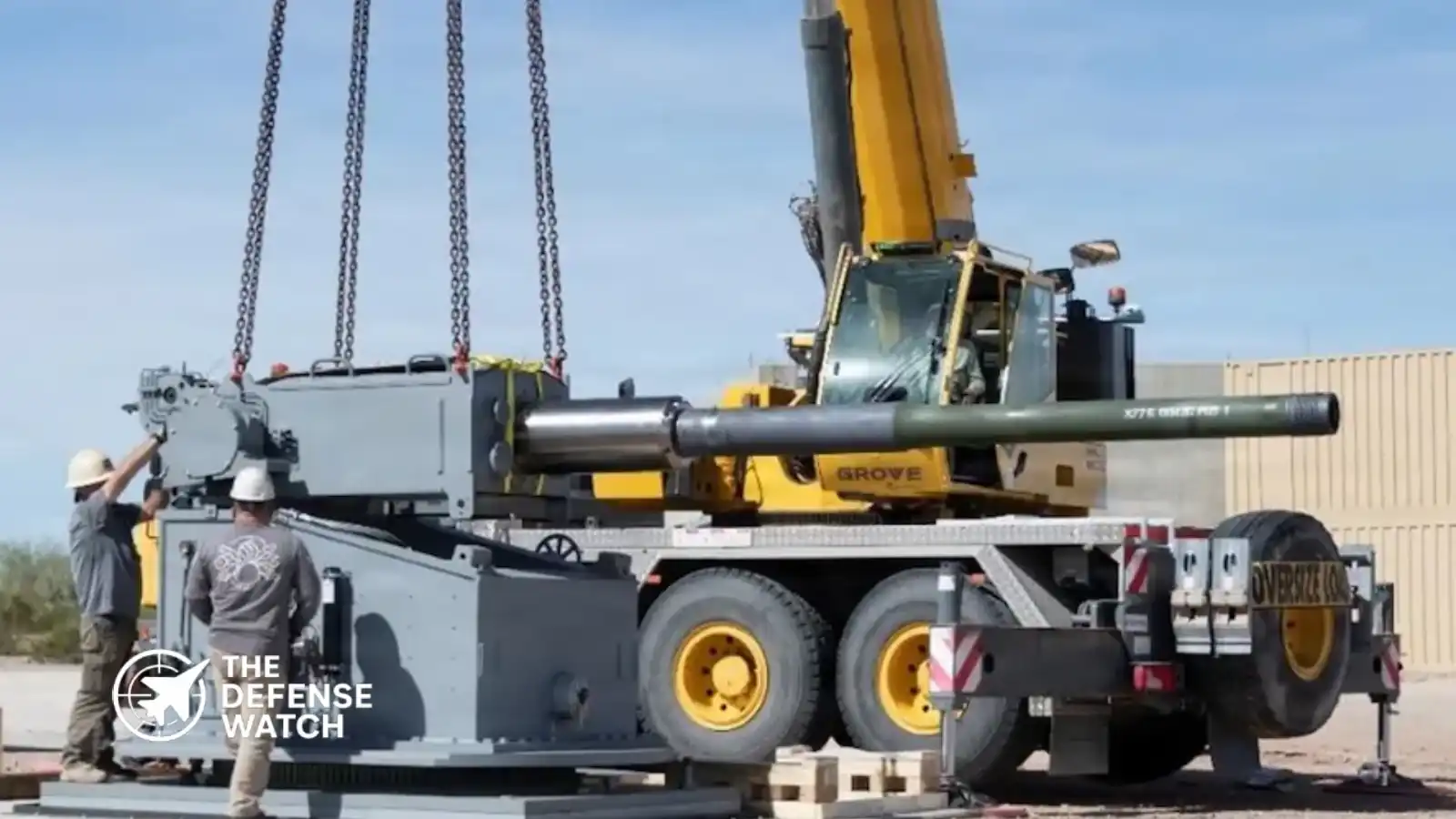
The U.S. Army has deployed a new proof gun system at Yuma Test Center to enhance artillery and ammunition testing operations. The upgrade is expected to improve safety, testing precision, and validation of next generation munitions as the Army accelerates modernization efforts.
U.S. Army Proof Gun System Strengthens Testing Operations
The U.S. Army proof gun system recently deployed at the U.S. Army Yuma Test Center marks a significant upgrade in the Army’s artillery and ammunition testing infrastructure. The new system is designed to support proof testing operations for large caliber ammunition and artillery platforms under increasingly demanding operational requirements.
Located in Yuma Proving Ground, the Yuma Test Center plays a central role in evaluating weapons, combat vehicles, munitions, and emerging defense technologies for the U.S. military. The addition of the new proof gun system reflects broader Army efforts to modernize testing infrastructure in parallel with ongoing weapons development programs.
Proof gun systems are specialized testing platforms used to validate ammunition safety, structural integrity, and ballistic performance before rounds are approved for operational deployment. These systems are critical for ensuring artillery rounds can withstand high pressure firing conditions without catastrophic failure.
The newly deployed system reportedly introduces improved instrumentation, data collection capability, and enhanced safety controls. These upgrades are expected to support faster and more accurate testing cycles for both legacy ammunition stocks and next generation precision munitions.
Why The New Proof Gun System Matters
The deployment comes as the United States Army continues to prioritize long range precision fires under its broader modernization strategy. Advanced artillery systems, extended range cannon programs, and precision guided ammunition all require extensive proof testing before entering operational service.
The U.S. Army proof gun system will likely play an important role in validating ammunition for evolving platforms designed to increase firing range, lethality, and survivability. As artillery systems operate at higher chamber pressures and greater ranges, testing standards become more demanding.
The modernization effort also highlights the growing importance of industrial scale ammunition validation. Western militaries have accelerated artillery ammunition production following lessons observed in the ongoing war in Ukraine, where sustained high volume artillery fire has become a defining feature of modern conflict.
From an operational perspective, improved testing capability can help reduce development delays while increasing confidence in munition reliability. That is particularly important as the Army expands development of precision guided artillery rounds and next generation cannon systems.
Yuma Test Center Remains Critical To U.S. Weapons Development
The U.S. Army Yuma Test Center has long served as one of the Army’s primary developmental testing sites. Its desert environment allows year round evaluation of artillery systems, armored vehicles, aviation platforms, and missile technologies.
The facility supports testing for multiple branches of the U.S. military as well as allied defense programs. The installation’s infrastructure includes firing ranges, instrumentation networks, telemetry systems, and environmental testing facilities capable of handling large scale weapons evaluations.
The deployment of the new U.S. Army proof gun system suggests continued investment in foundational testing capabilities rather than only frontline combat platforms. While public attention often focuses on operational weapons systems, modernization of testing infrastructure is equally important for maintaining military readiness and technological superiority.
Defense analysts increasingly note that rapid weapons innovation requires equally modern testing and certification systems. Without upgraded proving infrastructure, the pace of fielding advanced munitions can slow considerably.
Growing Focus On Ammunition Reliability And Production
The Army’s investment in proof testing infrastructure also aligns with broader Pentagon concerns regarding ammunition stockpiles, industrial capacity, and munition reliability. U.S. and allied defense planners have emphasized the need for faster ammunition production while maintaining strict safety and quality standards.
As artillery rounds become more sophisticated, including precision guidance kits and enhanced propulsion systems, proof testing becomes more technically complex. Modern artillery ammunition often integrates advanced electronics, precision navigation components, and specialized materials that require extensive validation.
The new U.S. Army proof gun system may therefore support not only current artillery inventories but also future developmental programs tied to long range strike capabilities.
In practical terms, stronger testing infrastructure can help accelerate the transition from prototype to operational deployment. That could become increasingly important as geopolitical competition drives demand for rapid military modernization.
Strategic Importance For Army Modernization
The deployment at Yuma reflects a broader strategic reality facing the U.S. defense sector. Modern warfare increasingly depends on reliable, scalable, and rapidly deployable precision firepower. Ensuring that ammunition performs consistently under operational conditions is essential to battlefield effectiveness.
The Army’s modernization roadmap continues to prioritize artillery dominance, survivable strike systems, and improved battlefield logistics. Upgraded proof testing capability directly supports these goals by ensuring that new ammunition types meet safety and performance requirements before entering service.
Although proof gun systems receive limited public visibility compared to frontline weapons programs, they remain essential components of military readiness and defense innovation.