

Executive Summary:
Lithuania has officially unveiled its first HIMARS launchers, marking a major step in the country’s military modernization program and NATO’s regional deterrence posture. The acquisition strengthens Lithuania’s long-range precision strike capability amid continued security concerns along NATO’s eastern flank.
Lithuania HIMARS Launchers Mark Major Capability Upgrade
Lithuania HIMARS launchers have officially entered public view for the first time, signaling a significant enhancement of the Baltic nation’s long-range strike and deterrence capabilities.
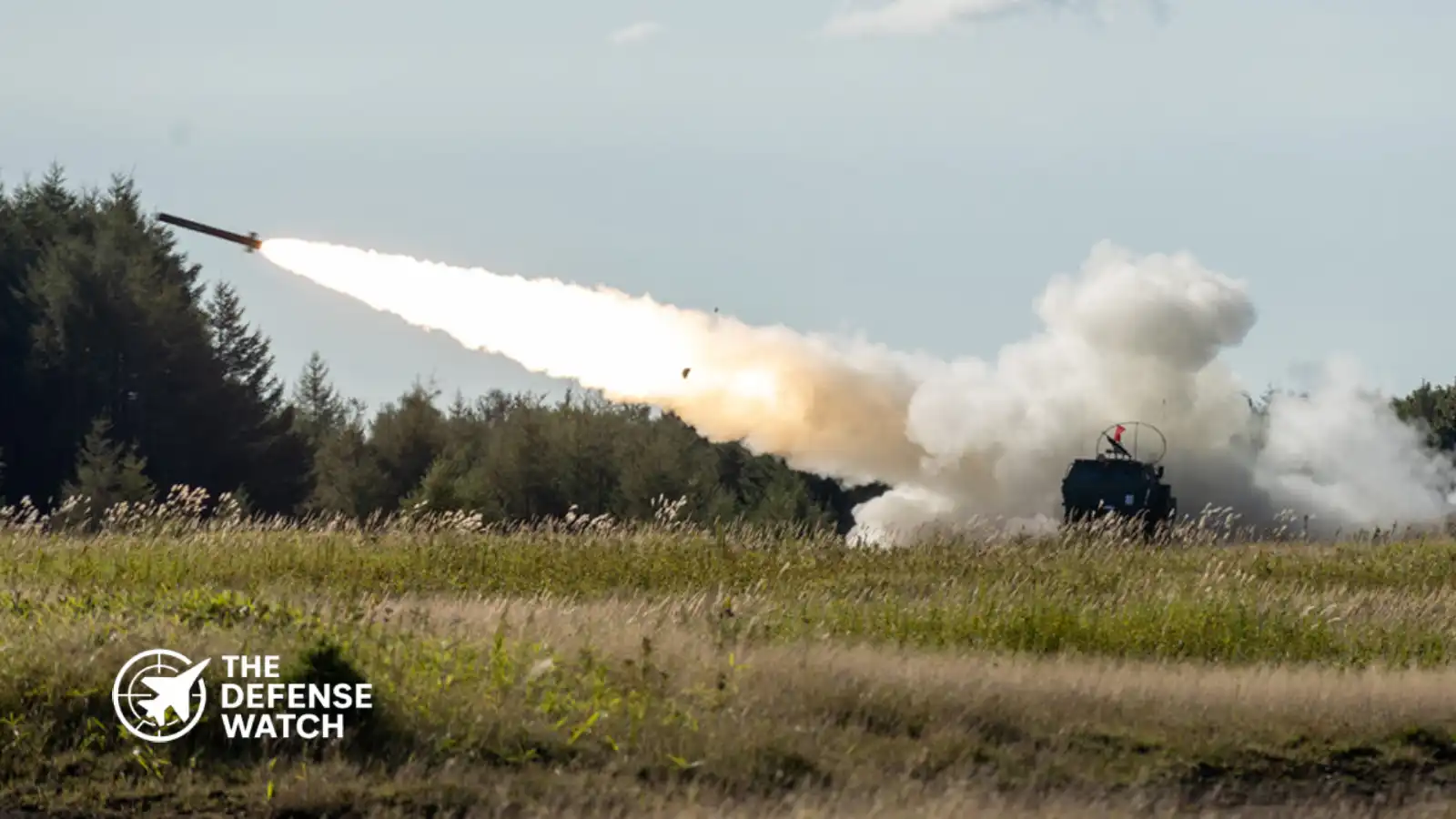
Lithuania presented its first M142 High Mobility Artillery Rocket Systems (HIMARS) as part of an ongoing defense modernization effort coordinated closely with the United States and NATO allies.
The systems were acquired through a Foreign Military Sales agreement approved by the United States in 2022. The package includes launchers, munitions, logistical support, and training. The procurement reflects Lithuania’s accelerated investment in advanced artillery and precision strike systems following heightened regional tensions in Eastern Europe.
The M142 HIMARS, produced by Lockheed Martin, is one of the most combat-proven mobile rocket artillery systems currently in service among NATO members. Mounted on a wheeled chassis, the platform provides rapid deployment capability while maintaining operational flexibility across dispersed battlefields.
Long-Range Strike Capability Expands
The arrival of Lithuania HIMARS launchers gives the Lithuanian Armed Forces a substantially expanded precision engagement range compared with legacy artillery systems.
HIMARS can fire Guided Multiple Launch Rocket System (GMLRS) munitions and, depending on configuration and authorization, longer-range missiles such as the Army Tactical Missile System (ATACMS). The launcher is designed for rapid shoot-and-scoot operations, reducing vulnerability to counterbattery fire.
Lithuania joins a growing list of European NATO states fielding HIMARS systems. Poland, Romania, and other alliance members have also expanded rocket artillery procurement programs in response to evolving regional security concerns.
The deployment reflects a wider NATO emphasis on distributed fires, rapid maneuver, and long-range precision strike capabilities. Military planners increasingly view these systems as critical for deterrence and operational flexibility on the alliance’s eastern flank.
NATO’s Eastern Flank Continues To Reinforce
Lithuania has steadily increased defense spending and modernization programs over the past several years. The country shares geographic proximity with Russia’s Kaliningrad enclave and neighboring Belarus, factors that continue to shape Baltic defense planning.
The introduction of HIMARS adds another layer to Lithuania’s broader force modernization strategy, which also includes air defense improvements, armored vehicle acquisitions, and expanded interoperability with NATO forces.
From an operational perspective, HIMARS provides Lithuania with the ability to rapidly engage targets at greater distances while integrating with allied command-and-control structures. The system’s compatibility with NATO networks and munitions inventory strengthens coalition readiness during multinational operations and exercises.
Defense analysts also note that HIMARS systems have gained increased global attention following their operational use in Ukraine, where precision rocket strikes demonstrated the value of mobile long-range artillery in modern high-intensity warfare.
Strategic Significance Beyond Lithuania
The unveiling of Lithuania HIMARS launchers carries importance beyond the country’s national defense posture.
For NATO, the expansion of precision fires capability across Eastern Europe supports the alliance’s deterrence-by-denial strategy. Rather than relying solely on reinforcement after a crisis begins, frontline states are increasingly investing in systems capable of imposing immediate operational costs on potential adversaries.
The mobility of HIMARS is particularly important in the Baltic region, where terrain, infrastructure, and proximity to potential flashpoints require highly survivable and rapidly deployable systems.
The acquisition also reflects growing defense industrial and military cooperation between the United States and Eastern European allies. Washington has continued supporting regional modernization programs through arms sales, joint training initiatives, and rotational deployments.
Lithuania’s HIMARS procurement aligns with broader allied trends emphasizing precision strike, integrated air and missile defense, and networked battlefield operations.
Training And Operational Integration Underway
Lithuanian personnel have already been conducting HIMARS-related training programs in coordination with U.S. forces and allied instructors. Operational integration is expected to continue over the coming months as crews develop readiness and doctrine for the new capability.
Military modernization efforts across the Baltic states remain focused on ensuring interoperability with NATO forces while improving national response capabilities. The introduction of HIMARS is expected to play a central role in future multinational exercises conducted in the region.
While the number of launchers remains relatively limited compared with larger NATO militaries, the system’s precision and mobility provide disproportionate operational value for smaller frontline states.
Broader European Rearmament Trend Continues
Lithuania’s HIMARS rollout comes amid continued European defense expansion following Russia’s invasion of Ukraine and rising concerns over long-term regional security stability.
Across Europe, governments are accelerating procurement of advanced artillery systems, missile defenses, armored platforms, and airpower assets. Precision fires systems in particular have become a major priority due to lessons observed in recent conflicts.
For Lithuania, the HIMARS acquisition represents both a national defense milestone and a visible demonstration of NATO integration.
As additional launchers, support equipment, and trained crews become operational, Lithuania’s role within the alliance’s regional deterrence architecture is expected to continue expanding.

