

Executive Summary:
France has completed the first firing test of its future long-range rocket artillery system under a program led by Thales and ArianeGroup. The project aims to restore sovereign European deep-strike capabilities as regional security pressures and defense modernization efforts accelerate across NATO.
France Tests New Long-Range Rocket Launcher Capability
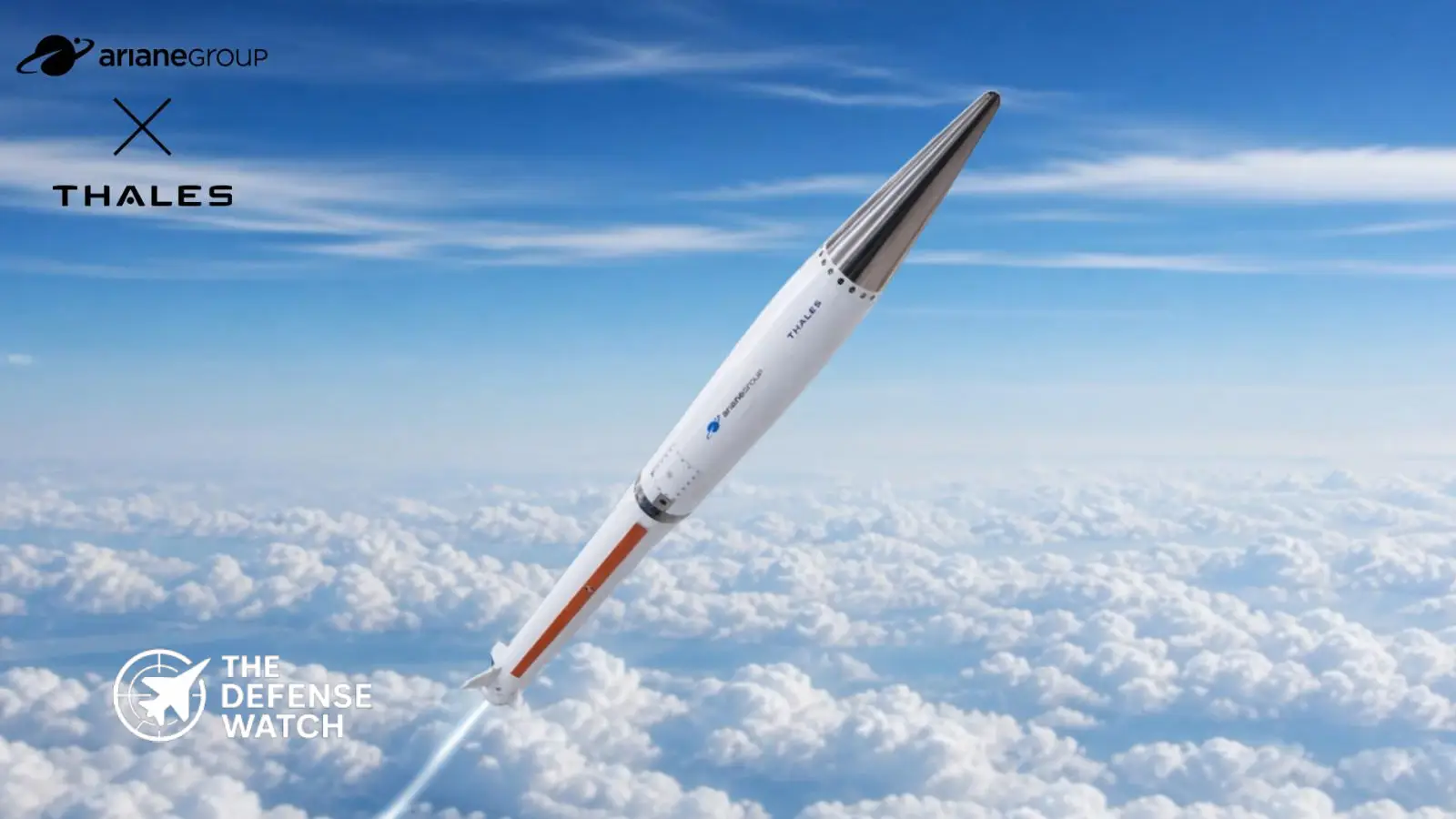
France’s future long-range rocket launcher program reached a key milestone after defense companies Thales and ArianeGroup confirmed the first successful firing of a new rocket motor intended for the French Army’s next-generation artillery system.
The test marks an important step in France’s effort to replace aging rocket artillery assets while reducing dependence on non-European systems.
The firing was conducted under the Future Tactical Ground-to-Ground Missile program, commonly known as Foudre. The project is intended to provide the French military with a modern precision-strike capability capable of engaging targets at significantly longer ranges than current battlefield rocket systems.
French officials expect the first full firing demonstration of the complete launcher system in 2026.
European Defense Industry Pushes For Strategic Autonomy
The French long-range rocket launcher initiative reflects a wider European effort to strengthen defense industrial sovereignty following Russia’s war in Ukraine and growing concerns over ammunition stockpiles, long-range fires, and supply chain dependence.
For years, many European militaries relied heavily on U.S.-made systems such as the M142 HIMARS and M270 Multiple Launch Rocket System. Combat operations in Ukraine demonstrated the operational value of precision-guided rocket artillery against logistics hubs, command centers, and air defense assets.
France’s new launcher program aims to close part of that capability gap while ensuring domestic production capacity for rockets, propulsion systems, and fire-control technologies.
The involvement of Thales and ArianeGroup also highlights how Europe’s aerospace sector is increasingly integrating space-launch expertise into military missile development. ArianeGroup, best known for the Ariane 6 rocket program, brings advanced propulsion and guidance experience that can accelerate military applications.
New Rocket Launcher Designed For Deep Precision Strikes
While technical details remain limited, industry officials indicated the system is being developed to deliver precision-guided long-range fires beyond the capabilities of current French artillery systems.
The French Army currently operates the LRU, an upgraded variant of the M270 platform. However, those launchers are aging and expected to retire in the coming years.
The new French long-range rocket launcher is expected to support:
- Precision deep-strike missions
- Rapid battlefield mobility
- NATO interoperability
- Long-range conventional deterrence
- High-volume rocket production scalability
Defense analysts view long-range precision fires as one of the most important battlefield capabilities emerging from recent conflicts. Modern rocket artillery can strike targets hundreds of kilometers away with significantly lower operational costs than cruise missiles or tactical aircraft missions.
France’s modernization effort also aligns with broader NATO planning focused on survivability, distributed fires, and rapid-response operations in Eastern Europe.
Strategic Importance For NATO And European Security
The French long-range rocket launcher program arrives as European governments sharply increase defense spending and accelerate weapons procurement programs.
Countries including Poland, Germany, and United Kingdom are investing heavily in long-range strike systems, missile defense, and artillery modernization programs.
France has consistently argued that Europe must retain independent industrial and operational military capabilities, particularly in strategic weapons sectors.
The program could eventually become part of broader European cooperative defense initiatives if additional NATO members seek alternatives to existing American or South Korean rocket artillery systems.
The first full launcher demonstration scheduled for 2026 will likely determine future procurement decisions and export potential.
Industrial Competition Intensifies In Global Rocket Artillery Market
The global market for long-range rocket artillery systems has expanded rapidly since 2022. Systems such as HIMARS gained worldwide attention after their combat use in Ukraine demonstrated the operational impact of mobile precision strikes.
European manufacturers are now competing to develop indigenous alternatives that can offer similar operational performance while ensuring regional supply-chain control.
France’s program may eventually compete with systems including:
The success of the French launcher could strengthen Europe’s position in the growing global precision-fire systems market while supporting domestic industrial resilience.
Original Analysis: Why France’s Program Matters Beyond Artillery
France’s long-range rocket launcher effort is not simply an artillery replacement project. It represents a broader shift in European military planning toward sovereign strike capabilities and reduced reliance on external suppliers.
The Ukraine conflict exposed vulnerabilities in European ammunition production and highlighted how rapidly precision-guided munitions can shape battlefield outcomes. By combining Thales’ defense electronics expertise with ArianeGroup’s propulsion experience, France is attempting to create a vertically integrated strike ecosystem inside Europe.
Another major factor is strategic endurance. Countries that control domestic missile production can sustain military operations longer during crises without depending on foreign export approvals or supply priorities.
The program also signals how space-launch and missile technologies are increasingly converging. Aerospace firms once focused mainly on civilian launch vehicles are now playing larger roles in tactical weapons development due to overlapping propulsion and guidance technologies.
If successful, the French long-range rocket launcher may become one of Europe’s most strategically important artillery modernization programs of the decade.
