
Executive Summary:
RTX has received a $1.02 billion U.S. Army contract to produce National Advanced Surface-to-Air Missile Systems (NASAMS) for Kuwait under the Foreign Military Sales program. The agreement expands Kuwait’s layered air defense architecture and reflects growing regional demand for integrated missile and drone defense capabilities across the Gulf.
RTX Awarded $1 Billion NASAMS Contract For Kuwait
RTX has secured a $1.02 billion contract from the U.S. Army to manufacture and deliver National Advanced Surface-to-Air Missile Systems (NASAMS) for Kuwait, marking one of the largest recent Foreign Military Sales air defense awards in the Gulf region. The award was announced through a Pentagon contract notice and will run through May 2031.
According to the contract announcement, the firm-fixed-price agreement covers the procurement of NASAMS fire units for Kuwait. The full contract value, approximately $1.02 billion, was obligated at the time of award using Fiscal Year 2026 Foreign Military Sales funding. Work will primarily be conducted at RTX facilities in Tewksbury, Massachusetts.
The contract is being managed by the U.S. Army Contracting Command at Redstone Arsenal, Alabama, under contract number W31P4Q-26-C-0008. Pentagon documentation indicated that RTX submitted the sole bid for the procurement.
What Kuwait Is Acquiring
The contract follows a U.S. State Department approval issued in 2022 for Kuwait’s proposed NASAMS acquisition package.
That approval included:
System Component Planned Quantity AN/MPQ-64 Sentinel Radar Stations 7 AIM-120C-8 AMRAAM Missiles 63 AMRAAM-ER Missiles 63 AIM-9X Sidewinder Missiles 63 NASAMS Launchers Undisclosed Fire Distribution Centers Undisclosed 
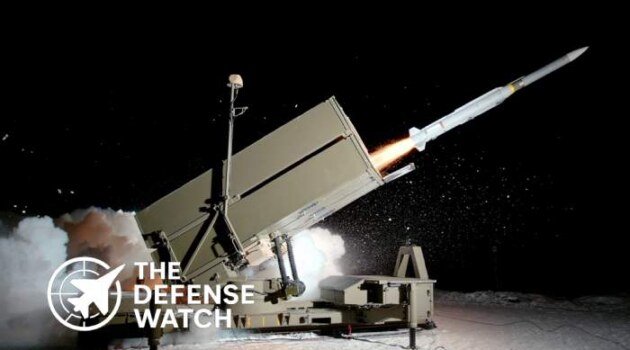
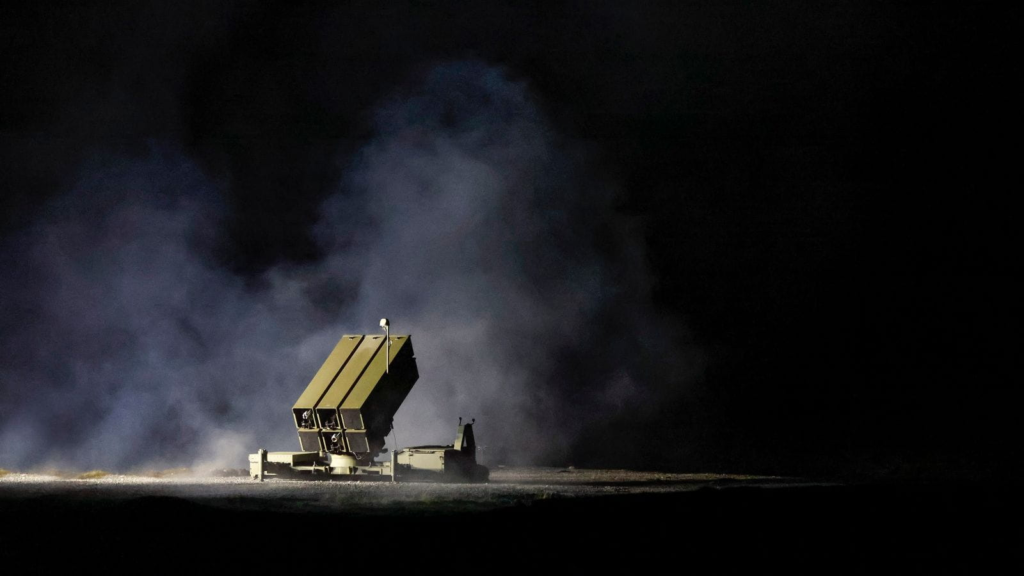
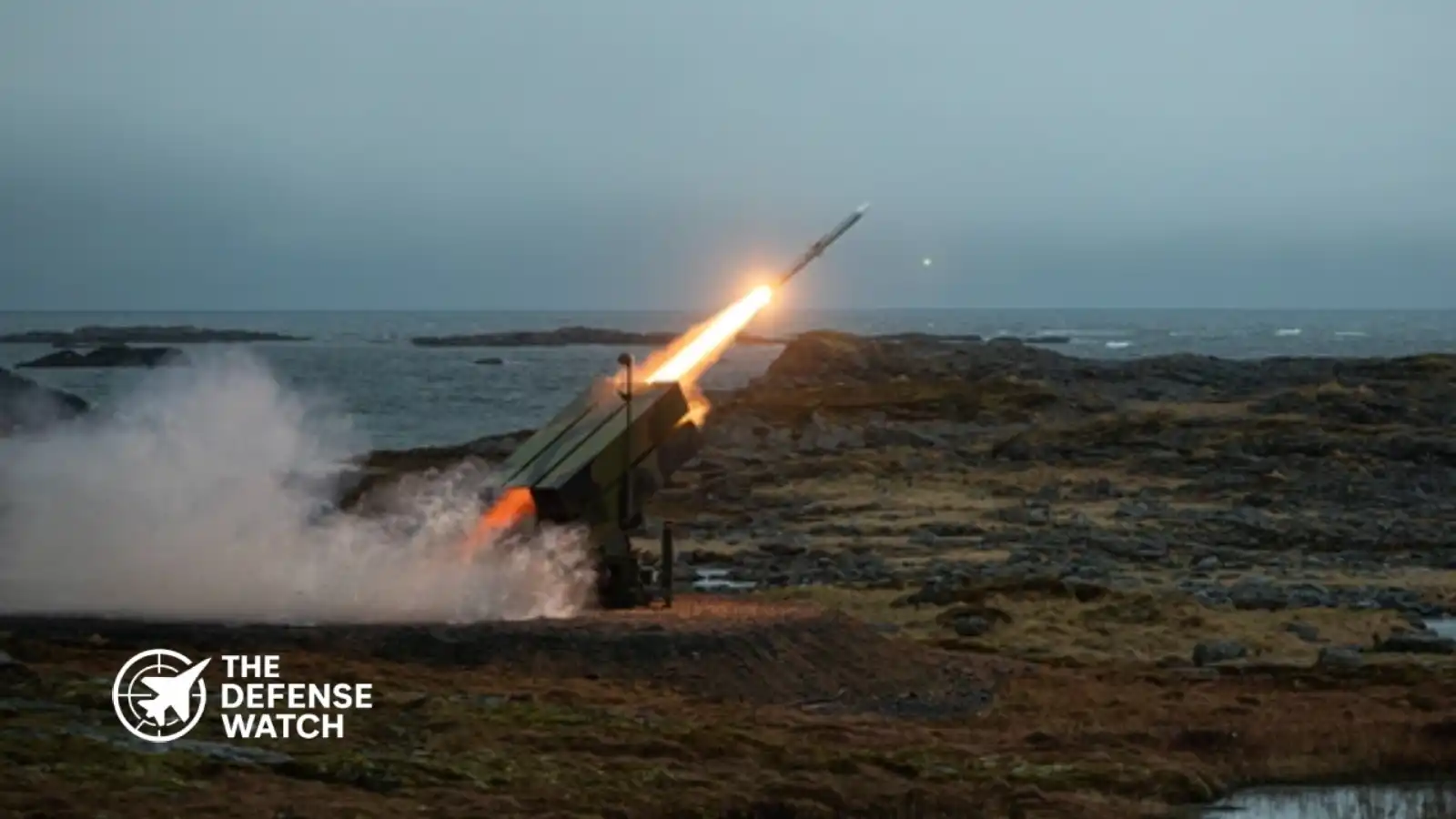
NASAMS is jointly developed by Raytheon, now operating under RTX, and Norway’s Kongsberg Defence & Aerospace. The system combines networked sensors, command-and-control elements, launchers, and multiple interceptor options into a flexible air defense architecture capable of engaging aircraft, helicopters, cruise missiles, drones, and other aerial threats.
Unlike traditional fixed air defense batteries, NASAMS is designed around distributed engagement concepts. Sensors and launchers can be geographically separated while remaining connected through a common battle management network, improving survivability and engagement coverage.
Why NASAMS Matters To Kuwait
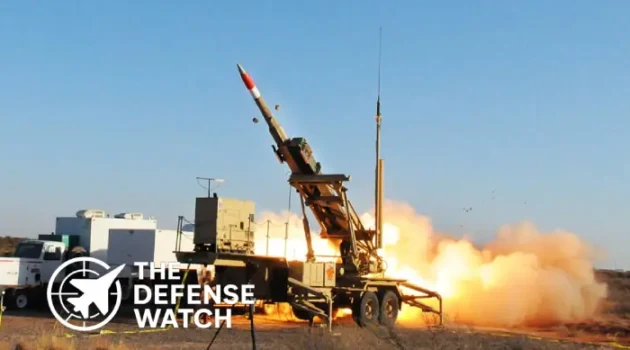
Kuwait’s existing air defense structure relies heavily on the Patriot missile defense system for medium- and long-range threat interception.
The addition of NASAMS provides a complementary layer focused on shorter-range and medium-range threats. This layered approach is increasingly viewed as essential as regional militaries face growing numbers of drones, low-flying cruise missiles, and saturation attacks that can challenge high-end strategic missile defense systems.
The operational logic is straightforward.
Patriot batteries are highly capable against ballistic missile threats but are expensive to employ against every target type. NASAMS offers a more flexible engagement option for lower-cost aerial threats while preserving strategic interceptors for higher-priority targets.
This layered defense concept has become a defining feature of modern air and missile defense planning across NATO and U.S. partner nations.
Growing Demand For NASAMS Worldwide
The Kuwait award reflects a broader expansion of NASAMS production and international demand.
The system has gained significant visibility following its operational use in Ukraine, where it has been employed against Russian cruise missiles, drones, and aircraft. Previous U.S. contracts have funded NASAMS deliveries for Kyiv, while additional procurement efforts have emerged across Europe and the Indo-Pacific.
Recent Foreign Military Sales activity shows a clear trend toward integrated air defense modernization among U.S. allies.
For many nations, NASAMS occupies a critical niche between short-range point defense systems and strategic missile defense platforms such as Patriot or THAAD. Its ability to use existing missile inventories, particularly AIM-120 AMRAAM variants, provides an attractive cost and logistics advantage.
Strategic Implications For Gulf Security
Kuwait’s acquisition comes amid continued regional investment in air and missile defense capabilities.
The Gulf region faces a complex threat environment that includes ballistic missiles, cruise missiles, one-way attack drones, and increasingly sophisticated unmanned systems. Military planners are responding by building multi-layered defensive architectures rather than relying on a single interceptor platform.
Oman and Qatar already operate NASAMS systems, creating the potential for greater interoperability among Gulf Cooperation Council members that use Western air defense networks.
From a U.S. perspective, the contract also reinforces long-term defense industrial relationships with key regional partners. Foreign Military Sales programs provide not only equipment but also training, sustainment support, logistics infrastructure, and operational integration with U.S. and allied forces.
The five-year production timeline suggests Kuwait’s NASAMS deployment will be accompanied by a substantial training and support effort designed to ensure operational readiness throughout the system’s service life.
Industrial Impact For RTX
The contract adds to RTX’s expanding missile defense portfolio at a time when global demand for air defense systems continues to rise.
Across Europe, the Middle East, and the Indo-Pacific, governments are increasing defense spending on integrated air and missile defense networks. Recent RTX contracts involving NASAMS, AMRAAM missile production, Iron Dome-related programs, and advanced radar systems illustrate how air defense has become one of the fastest-growing segments of the global defense market.
For RTX, the Kuwait award secures production activity through 2031 while supporting a broader supply chain that includes missile manufacturing, radar components, launcher systems, software integration, and sustainment services.
Outlook
The Kuwait NASAMS procurement underscores a larger shift in global defense planning toward layered air and missile defense architectures capable of countering increasingly diverse aerial threats.
As drones, cruise missiles, and precision-guided weapons become more widely available, military planners are prioritizing systems that can integrate multiple sensors and interceptors into a unified defensive network. Kuwait’s investment in NASAMS aligns with that trend and strengthens its ability to defend critical military and civilian infrastructure against evolving regional threats.