Executive Summary:
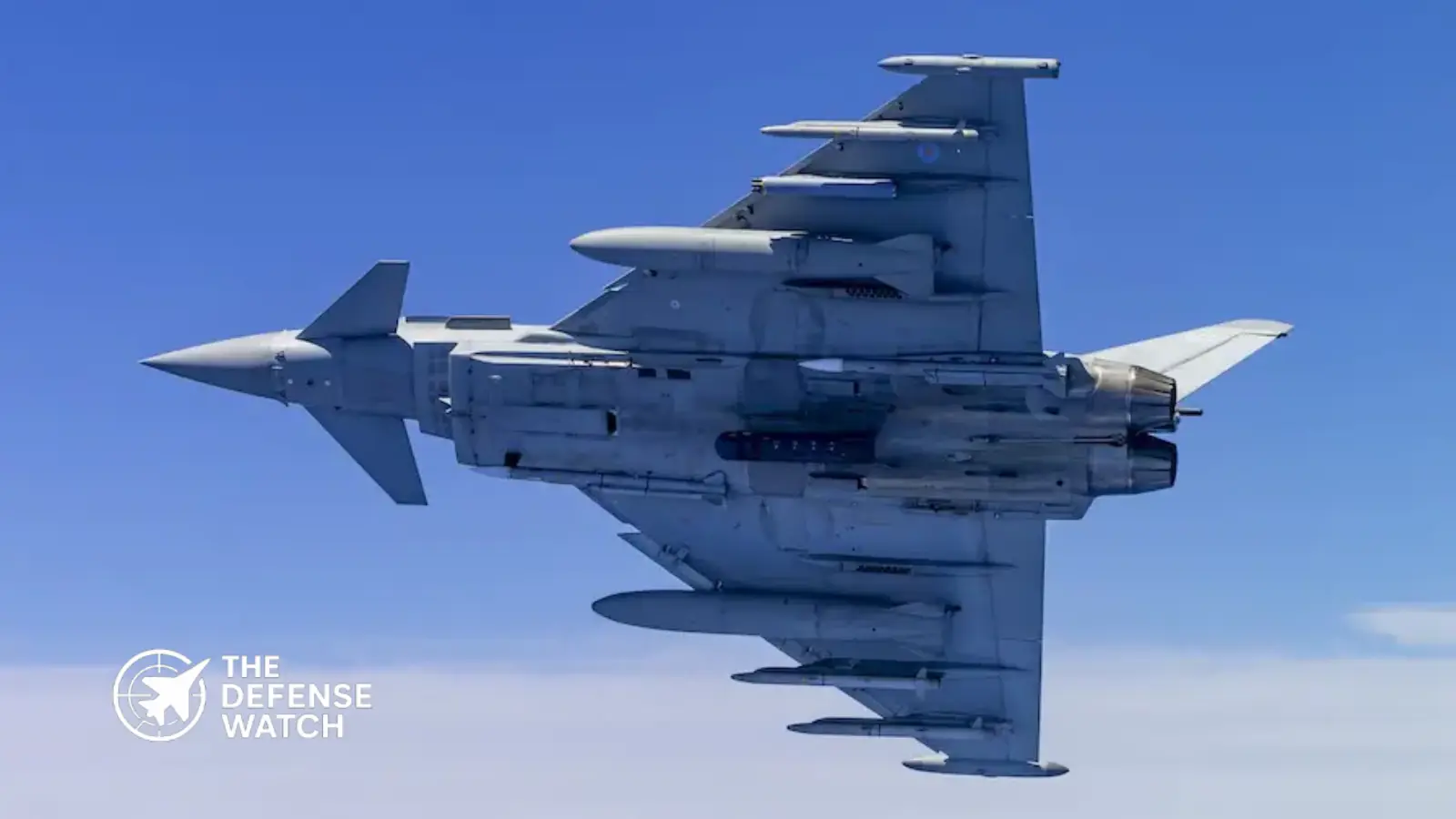
The Royal Air Force has highlighted the operational benefits of the Advanced Precision Kill Weapon System (APKWS), a low cost precision guided weapon now integrated onto Typhoon fighter aircraft. The capability is designed to provide a more affordable and sustainable method of defeating drones and other emerging threats while preserving inventories of higher end air to air missiles.
The system entered operational service in 2026 following an accelerated testing and deployment effort involving the RAF, UK Ministry of Defence, BAE Systems, and QinetiQ.
RAF Highlights APKWS as Key Counter Drone Capability
The Royal Air Force has formally showcased the Advanced Precision Kill Weapon System (APKWS) as a new capability for Eurofighter Typhoon pilots, emphasizing its value against uncrewed aerial systems and other modern battlefield threats.
According to the RAF, APKWS provides a highly accurate and flexible engagement option while significantly reducing the cost of intercepting low value aerial targets. The service described the weapon as part of a broader effort to ensure Typhoon remains effective against rapidly evolving threats, particularly the growing use of inexpensive drones in contested environments.
APKWS converts existing 70 mm Hydra rockets into precision guided munitions through the addition of a laser guidance kit. This approach allows air forces to leverage existing rocket inventories while gaining precision strike capability without the expense associated with traditional missile systems.
Rapid Development Moved Capability From Trials to Operations
One of the most notable aspects of the program was the speed of deployment.
The UK Ministry of Defence, working alongside BAE Systems and QinetiQ, moved the system from testing to operational service in less than two months. Initial ground target trials were completed in March 2026, followed by successful air to air engagements against aerial targets during RAF testing in April. By May, Typhoon aircraft assigned to operational missions in the Middle East were carrying APKWS.
The accelerated fielding effort reflects a growing trend among Western militaries to rapidly integrate proven technologies in response to urgent operational requirements rather than relying exclusively on lengthy procurement cycles.
How APKWS Works
APKWS is manufactured by BAE Systems and is already used across multiple military platforms worldwide.
The weapon uses a laser guidance package installed between the rocket motor and warhead. Once launched, guidance fins deploy and steer the rocket toward a laser designated target.
Key Characteristics
Feature Description Base Weapon Hydra 70 rocket Guidance Semi active laser guidance Primary Role Precision strike and counter drone missions Launch Platforms Fighters, helicopters, drones, and other aircraft Integration on Typhoon Uses existing rocket pods and targeting systems Operational Benefit Lower cost alternative to air to air missiles The RAF notes that Typhoon can employ APKWS using existing Litening targeting pods and standard rocket launchers, minimizing aircraft modifications while rapidly expanding combat options.
Why APKWS Matters for Modern Air Warfare
The growing prevalence of inexpensive drones has created a significant challenge for advanced air forces.
In many recent conflicts, militaries have been forced to use costly air to air missiles against relatively cheap unmanned systems. This creates an unfavorable cost exchange ratio and can quickly deplete missile inventories during prolonged operations.
APKWS addresses that problem by providing a precision engagement option that costs substantially less than traditional interceptor missiles. The RAF specifically highlighted the system’s ability to engage drones at a fraction of the cost of existing air defense methods.
This challenge is not unique to the United Kingdom.
The U.S. Air Force is pursuing its own dual mode APKWS developments aimed at countering large numbers of Group 3 drones and other low cost aerial threats. American officials have identified mass drone attacks as an increasingly urgent operational concern across multiple theaters.
Strategic Implications for NATO and Allied Air Forces
The RAF’s APKWS integration highlights a broader shift occurring across NATO air forces.
For decades, Western fighter aircraft were optimized primarily for high end air combat and strike missions. However, recent conflicts in the Middle East and Eastern Europe have demonstrated that large numbers of low cost drones can impose significant operational and financial burdens on defenders.
The introduction of APKWS offers several advantages:
- Preserves inventories of premium air to air missiles such as Meteor and ASRAAM.
- Improves affordability during sustained counter drone campaigns.
- Expands the number of available engagement opportunities per sortie.
- Reduces the risk of overmatching inexpensive threats with costly weapons.
- Enhances operational flexibility for deployed fighter units.
The capability is particularly relevant for RAF Typhoons operating from RAF Akrotiri and other forward locations where drone threats have become increasingly common.
Technical Challenges and Future Growth
While APKWS offers significant advantages, it is not intended to replace advanced air to air missiles.
Laser guided rockets generally have shorter engagement ranges than dedicated air combat weapons and require target designation throughout the engagement process. As a result, APKWS is best suited for slower aerial targets such as drones, loitering munitions, and lightly protected ground targets rather than high performance fighter aircraft.
The RAF has indicated that further development efforts are already underway. New APKWS variants incorporating additional sensing technologies are being evaluated to improve effectiveness against fast moving and multiple targets while maintaining affordability.
This mirrors ongoing U.S. efforts to develop dual mode APKWS configurations that combine laser guidance with additional seekers to enhance counter UAS performance.
Outlook
The Royal Air Force’s adoption of APKWS represents more than a new weapon integration. It reflects a wider shift in military thinking about how advanced air forces confront mass drone threats while managing costs and preserving high end munitions.
As drones continue to proliferate across global battlefields, affordable precision weapons are becoming an increasingly important component of air power. For the RAF, APKWS provides a practical answer to that challenge, giving Typhoon pilots a scalable and operationally relevant tool for modern combat environments.
Executive Summary:
The U.S. Army and defense industry partners have successfully tested a TRV-150 logistics drone armed with a three-shot APKWS rocket launcher during live-fire demonstrations at Fort Rucker, Alabama. The effort is designed to move precision-strike capabilities closer to frontline battalion-level units while also supporting future counter-drone and expeditionary warfare missions.
The demonstration reflects a broader Pentagon push to increase the lethality and flexibility of unmanned systems using existing weapons inventories and lower-cost precision engagement options.
U.S. Army Tests Armed TRV-150 Drone With APKWS Precision Rockets
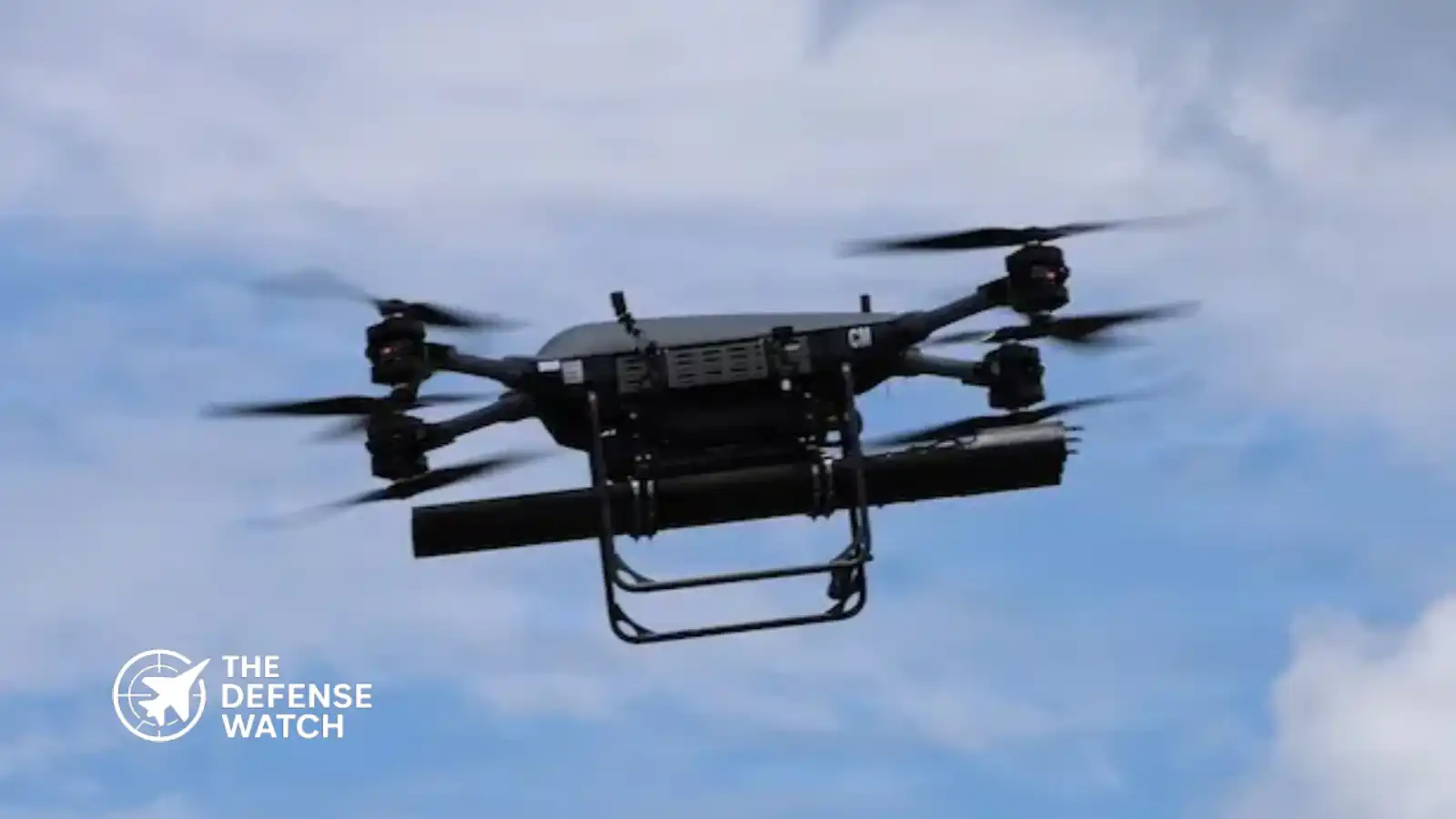
The U.S. Army has conducted a live-fire demonstration of an armed TRV-150 tactical resupply drone equipped with a three-shot Advanced Precision Kill Weapon System (APKWS) launcher, marking a significant step toward expanding precision-strike capabilities at the battalion level.
The May 20 test at Fort Rucker, Alabama, brought together multiple Army aviation and modernization organizations alongside industry partners Survice Engineering and BAE Systems FalconWorks. The demonstration evaluated the performance of the TRV-150 while carrying and firing laser-guided 70 mm rockets from an externally mounted launcher.
According to Army officials, the initiative is intended to provide smaller tactical formations with access to precision-guided fires traditionally delivered by attack helicopters or fixed-wing aircraft.
Logistics Drone Gains Offensive Capability
The TRV-150 was originally developed as a tactical resupply platform for the U.S. Army and U.S. Marine Corps. Designed to transport up to 150 pounds of cargo, the unmanned aircraft has been used to support distributed logistics operations in contested environments.
Survice Engineering integrated the drone with BAE Systems’ APKWS launcher, transforming the aircraft from a logistics asset into a multi-role platform capable of conducting precision engagements against ground and potentially aerial targets.
The APKWS system converts standard Hydra 70 rockets into laser-guided precision munitions through the addition of a guidance kit. The weapon is already operational across several U.S. military platforms, including the AH-64 Apache and various rotary-wing and fixed-wing aircraft.
During testing, engineers evaluated flight stability, launcher integration, software performance, and aircraft response during rocket launches.
Key System Components
Component Description Platform TRV-150 Tactical Resupply Vehicle Manufacturer Survice Engineering Payload Capacity Up to 150 pounds Weapon System APKWS three-shot launcher Rocket Type Laser-guided 70 mm Hydra rockets Test Location Fort Rucker, Alabama Mission Roles Precision strike, logistics, counter-UAS Army Focuses On Battalion-Level Precision Fires
One of the most significant aspects of the demonstration is the Army’s effort to push advanced strike capabilities to lower tactical echelons.
Traditionally, precision-guided rocket attacks require support from attack aviation units, artillery formations, or higher-level command structures. By mounting APKWS rockets on a tactical drone, Army planners are exploring ways to provide battalion commanders with an organic precision-strike capability that can be rapidly deployed without waiting for external support.
Industry officials involved in the program said the project was self-funded beginning in early 2025 rather than developed under a formal government requirement. The goal was to demonstrate a capability that could address emerging battlefield demands before official procurement programs are established.
The Fort Rucker event followed previous APKWS firing tests conducted at Dugway Proving Ground, where the drone reportedly engaged both aerial and ground targets.
Why APKWS Matters In Modern Combat
The growing interest in APKWS reflects a broader shift across Western militaries toward lower-cost precision engagement options.
Unlike larger guided missiles that can cost hundreds of thousands or even millions of dollars per shot, APKWS provides a comparatively affordable precision weapon while maintaining accuracy against a wide range of targets.
The system has increasingly attracted attention for counter-drone operations, where commanders seek ways to defeat low-cost unmanned threats without expending expensive air-defense missiles.
Recent U.S. and allied testing efforts have expanded APKWS employment beyond helicopters. Variants have been demonstrated on MQ-9 Reaper drones, fighter aircraft, and now tactical logistics drones.
This trend reflects lessons learned from conflicts in Ukraine and the Middle East, where large numbers of one-way attack drones and loitering munitions have challenged traditional air-defense architectures.
Technical Challenges Of Armed Tactical Drones
While the concept appears straightforward, integrating guided rockets onto a relatively small unmanned aircraft presents several engineering challenges.
Rocket launches generate sudden impulse forces that can disrupt flight stability, especially on lightweight rotary-wing drones. During the Fort Rucker testing, engineers focused heavily on yaw control, launcher effects, and impulse compensation to ensure the aircraft remained stable after firing.
The TRV-150’s autonomous flight management system played a critical role during testing. The drone uses automated route planning, range calculations, and mission management tools designed to reduce operator workload and simplify deployment in combat environments.
Successfully managing these launch dynamics is essential if armed logistics drones are to become operationally viable.
Operational Implications For Future Battlefields
The demonstration highlights a broader transformation underway across the U.S. military’s unmanned systems strategy.
Rather than fielding drones dedicated solely to logistics, surveillance, or strike missions, military planners increasingly favor modular platforms capable of rapidly changing roles based on operational needs.
The TRV-150 exemplifies that approach. A platform delivering ammunition or medical supplies during one mission could potentially conduct precision strike operations during another simply by changing payload configurations.
Such flexibility could prove valuable in contested environments where traditional aviation assets face elevated risks from enemy air defenses.
The concept also aligns with Pentagon guidance encouraging lethal payload options across unmanned aerial systems portfolios. By leveraging existing Hydra rocket inventories and proven APKWS technology, the Army may be able to field new combat capabilities without waiting for entirely new weapons programs.
Counter-Drone Potential Emerging As Key Mission Area
Beyond ground attack operations, the armed TRV-150 could eventually support counter-unmanned aircraft missions.
Previous testing reportedly included engagements against Group 2 aerial targets, suggesting the platform may have potential as a low-cost interceptor against hostile drones.
This capability is becoming increasingly important as military forces worldwide confront growing threats from mass-produced one-way attack drones. Current air-defense systems often rely on expensive interceptors that create unfavorable cost-exchange ratios.
An autonomous drone carrying multiple APKWS rockets could provide a more affordable engagement option while expanding defensive coverage around forward operating bases and maneuver formations.
Upcoming experimentation at White Sands Missile Range and Eglin Air Force Base is expected to further evaluate these concepts, including base defense and counter-UAS missions.
Strategic Significance
The Fort Rucker demonstration represents more than a simple weapons integration test. It reflects how the Army is adapting to battlefield trends that increasingly favor distributed operations, autonomous systems, and affordable precision effects.
If future testing proves successful, armed logistics drones could help bridge the gap between traditional resupply platforms and dedicated strike aircraft. They could provide commanders with an additional layer of responsive firepower while reducing reliance on scarce aviation assets.
The initiative also illustrates how commercial and defense industry innovation is increasingly driving military experimentation. Rather than waiting for formal acquisition requirements, companies are demonstrating capabilities first and allowing military operators to assess their operational value afterward.
As the Army prepares for future large-scale combat operations, systems like the armed TRV-150 may become part of a broader ecosystem of unmanned platforms delivering logistics, reconnaissance, strike, and counter-drone effects from a single modular architecture.
Executive Summary:
The U.S. Air Force is integrating APKWS laser-guided rockets onto the MQ-9 Reaper to improve counter drone operations against low-cost aerial threats. The move reflects growing Pentagon efforts to develop affordable and scalable air defense options amid the rapid expansion of unmanned systems on modern battlefields.
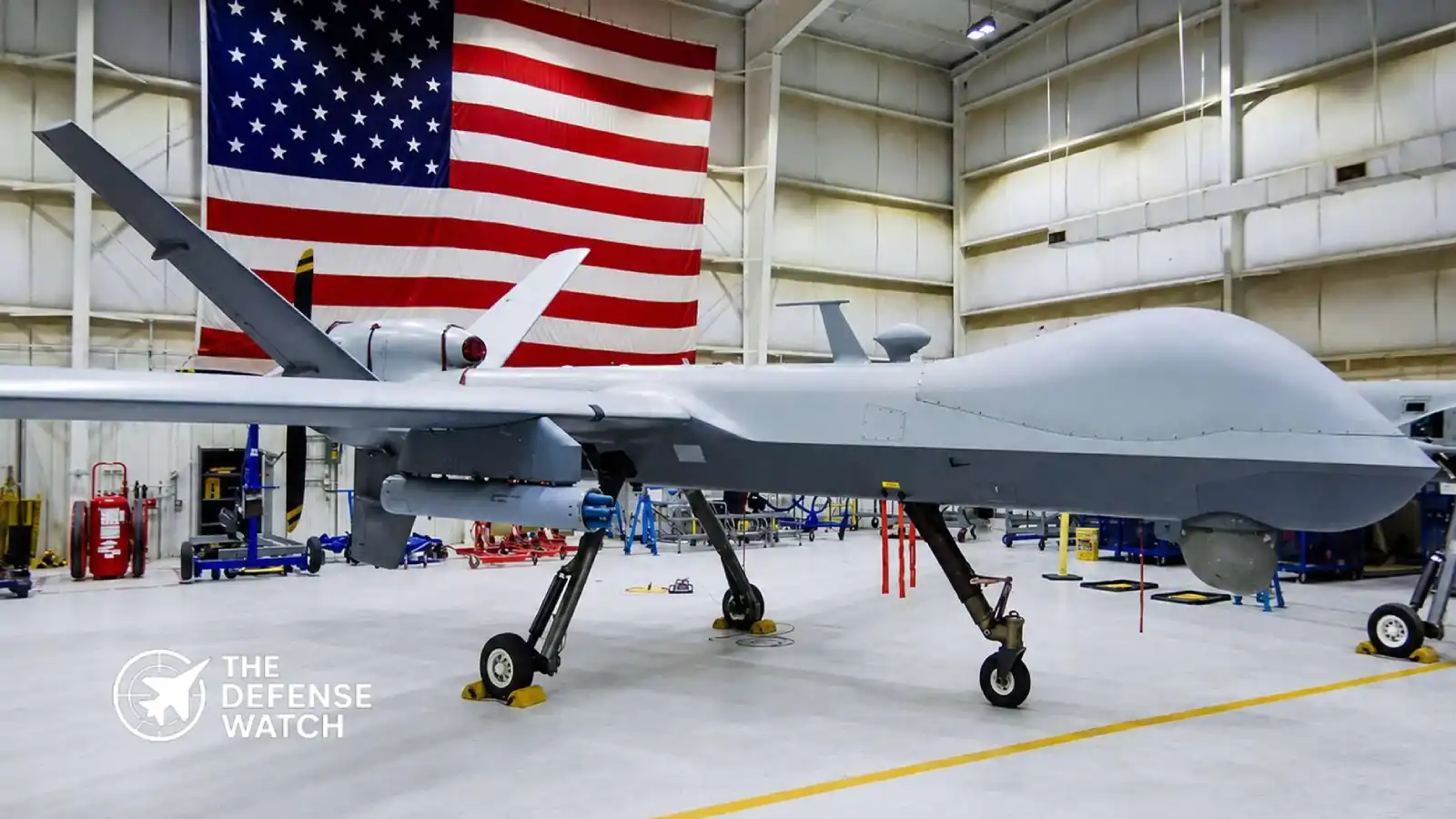
The U.S. Air Force is moving to expand the combat role of the MQ-9 Reaper by integrating Advanced Precision Kill Weapon System (APKWS) rockets for counter drone missions.
The effort highlights a broader shift in U.S. military planning as the Pentagon searches for cost-effective methods to defeat increasingly common unmanned aerial threats. Low-cost drones have become a major operational challenge in conflicts across the Middle East, Eastern Europe, and the Indo-Pacific, forcing militaries to reconsider traditional air defense strategies.
The MQ-9 Reaper, produced by General Atomics Aeronautical Systems, has historically been used for intelligence, surveillance, reconnaissance, and precision strike missions. By adding APKWS-guided rockets, the platform could gain a new role as an aerial counter drone interceptor.
The APKWS system, developed by BAE Systems, converts standard 70mm Hydra rockets into laser-guided precision munitions. The weapon is already widely used by U.S. military aircraft because it provides a lower-cost alternative to larger air-to-air or air-to-ground missiles.
Why The APKWS Matters For Counter Drone Warfare
The growing use of inexpensive one-way attack drones and commercial UAVs has created a major cost imbalance for Western militaries. In many cases, expensive interceptor missiles are being used to destroy relatively cheap drones.
That imbalance has become particularly visible in the Red Sea, Ukraine, and other contested regions where drone saturation attacks are increasingly common. The U.S. military and allied forces have accelerated efforts to field affordable intercept solutions that can operate at scale.
The APKWS offers several operational advantages in that environment:
- Lower cost compared to traditional missiles
- Precision engagement capability
- Compatibility with multiple aircraft platforms
- Reduced collateral damage risk
- Rapid integration on existing systems
Integrating the weapon onto the MQ-9 Reaper could provide a persistent airborne counter drone capability that remains on station for extended periods while engaging multiple low-cost threats.
The Air Force’s interest in this capability also reflects lessons learned from recent operational environments where drones have evolved from niche battlefield tools into central components of modern warfare.
MQ-9 Reaper Continues Mission Evolution
The MQ-9 Reaper has undergone significant modernization over the past decade. Originally optimized for counterterrorism operations, the platform is increasingly being adapted for contested operational environments involving near-peer competitors.
Recent upgrades have focused on:
- Enhanced survivability
- Expanded sensor packages
- Multi-domain integration
- Maritime surveillance
- Electronic warfare support
- Autonomous mission capabilities
The addition of APKWS rockets fits within that broader modernization path.
The Reaper’s endurance remains one of its biggest operational strengths. Unlike manned fighter aircraft that may require frequent refueling or rotation, the MQ-9 can remain airborne for long durations, making it suitable for persistent surveillance and defensive patrol missions.
Defense analysts have increasingly pointed to the value of layered counter drone architectures that combine electronic warfare, directed energy systems, kinetic interceptors, and airborne response platforms. Arming MQ-9 aircraft with APKWS rockets could provide the Air Force with a flexible middle layer between high-end missile defense systems and ground-based counter UAV tools.
Operational And Strategic Implications
The integration effort also signals how unmanned aircraft themselves are becoming part of the counter unmanned systems ecosystem.
Traditionally, drones were viewed primarily as reconnaissance or strike assets. However, the rapid proliferation of UAV threats has pushed militaries to adapt existing platforms for defensive missions as well.
For the United States and allied forces, the challenge is no longer simply deploying drones, but defending against large numbers of them in contested airspace.
The APKWS-equipped MQ-9 could potentially support several operational missions, including:
- Base defense patrols
- Maritime convoy protection
- Border security operations
- Forward force protection
- Counter swarm interception
The approach may also reduce operational strain on high-value fighter aircraft and missile defense systems currently tasked with drone interception duties.
At the same time, integrating low-cost precision weapons into unmanned platforms reflects a wider Pentagon emphasis on affordability and scalability. As drone warfare expands globally, military planners are increasingly focused on ensuring that defensive systems can sustain prolonged operations without exhausting expensive missile inventories.
Broader Pentagon Counter Drone Push
The MQ-9 APKWS integration effort comes amid wider Department of Defense investments in counter unmanned aerial system technologies.
The Pentagon has accelerated testing of:
- Directed energy weapons
- Electronic attack systems
- Autonomous interceptors
- AI-enabled tracking systems
- Mobile air defense platforms
The U.S. military has repeatedly emphasized that future conflicts are expected to involve large numbers of autonomous and semi-autonomous aerial systems operating simultaneously across multiple domains.
As a result, the need for scalable and affordable counter drone solutions has become a major defense priority.
The MQ-9 Reaper’s evolving mission profile demonstrates how existing aircraft are being adapted to meet those emerging operational demands without requiring entirely new platforms.
Executive Summary:
The United States has approved the transfer of 10,000 Precision Kill Weapon Systems to Israel, significantly expanding its precision strike inventory. The deal highlights continued U.S. support while enhancing Israel’s ability to conduct low-collateral, high-accuracy operations.
US Approves Precision Kill Weapon Systems For Israel
The approval of 10,000 Precision Kill Weapon Systems (APKWS) marks a substantial expansion of Israel’s guided munitions inventory, reinforcing its ability to conduct accurate, low-collateral strikes in complex operational environments.
The U.S. decision underscores ongoing military cooperation between Washington and Jerusalem, particularly as regional security dynamics remain volatile.
The APKWS is a laser-guided rocket system that converts standard 70mm unguided rockets into precision-guided munitions. Developed to provide a cost-effective alternative to larger guided missiles, it is widely used by U.S. and allied forces for close air support and counter-insurgency missions.
What The APKWS Brings To The Battlefield
The Precision Kill Weapon Systems capability lies in its simplicity and efficiency. By integrating a guidance kit between the rocket motor and warhead, the system transforms legacy munitions into precision weapons without requiring entirely new platforms.
Operationally, this allows:
- Reduced collateral damage in urban environments
- Lower cost per engagement compared to larger missiles
- Increased flexibility for aircraft and helicopters
- Rapid integration across multiple platforms
Israel already fields advanced airpower capabilities, but the addition of 10,000 APKWS units significantly increases its ability to sustain high-tempo operations while managing costs.
From an operational standpoint, this aligns with a broader trend among modern militaries to prioritize scalable, precision-guided systems over expensive, high-end munitions for routine engagements.
Strategic Context Behind The Approval
The timing of the approval reflects ongoing regional tensions and sustained operational demands on Israel’s military forces.
While the U.S. has long supported Israel’s qualitative military edge, this specific package emphasizes quantity combined with precision, rather than introducing entirely new high-end systems.
That distinction matters.
Instead of focusing solely on advanced platforms like stealth aircraft or long-range missiles, the deal prioritizes munitions that are:
- Readily deployable
- Operationally proven
- Suitable for frequent use
This suggests a recognition that modern conflicts increasingly require sustained precision strike capacity, not just technological superiority.
Cost-Effectiveness And Operational Sustainability
One of the defining features of the APKWS is its cost profile.
Compared to traditional precision-guided missiles, APKWS rounds are significantly cheaper, making them suitable for engagements where deploying a larger missile would be disproportionate.
This has several implications:
- Enables more frequent use without rapidly depleting budgets
- Supports prolonged operations
- Reduces reliance on high-end missile inventories
For Israel, which often operates in densely populated areas, the system offers a balance between precision and practicality.
This reflects a broader shift in defense procurement priorities globally, where affordable precision is becoming as important as cutting-edge capability.
Broader Implications For Regional Security
The transfer of 10,000 Precision Kill Weapon Systems is unlikely to alter the overall military balance in the Middle East on its own. However, it does enhance Israel’s ability to conduct targeted, controlled strikes, which can influence operational dynamics on the ground.
From a strategic perspective, the deal reinforces several key points:
- Continued U.S. commitment to Israel’s defense
- Emphasis on precision engagement over large-scale firepower
- Adaptation to modern conflict environments, especially urban warfare
At the same time, such transfers often draw scrutiny in the context of regional tensions, particularly regarding escalation risks and humanitarian considerations.
Original Analysis: Why Quantity Matters As Much As Technology
A key takeaway from this development is the growing importance of munition stockpiles in modern warfare.
Advanced platforms like fifth-generation aircraft receive significant attention, but their effectiveness ultimately depends on the availability of munitions.
In recent conflicts globally, including in Europe and the Middle East, a consistent pattern has emerged:
- High consumption rates of precision munitions
- Supply chain pressures
- Increased focus on scalable production
The U.S. approval of 10,000 APKWS units reflects this reality.
Rather than prioritizing a small number of highly advanced weapons, the emphasis is shifting toward large quantities of reliable, precision-guided systems that can sustain operations over time.
This approach aligns with lessons learned from recent conflicts, where endurance and logistics have proven just as critical as technological edge.
Integration Across Platforms
Another advantage of the APKWS system is its compatibility with a wide range of platforms.
These include:
- Fixed-wing aircraft
- Attack helicopters
- Unmanned aerial systems (in some configurations)
This flexibility allows operators to deploy the system across multiple mission sets, from close air support to counter-drone operations.
For Israel, which operates a diverse and technologically advanced air fleet, this interoperability enhances overall mission effectiveness without requiring major platform modifications.
Looking Ahead
The approval of 10,000 Precision Kill Weapon Systems represents more than just a routine arms transfer. It highlights a shift in how modern militaries are preparing for sustained, precision-focused operations.
As conflicts become more complex and often occur in urban environments, the demand for accurate, cost-effective, and scalable weapons is expected to grow.
The APKWS fits squarely within this requirement.
- ► BAE Systems delivered its 100,000th APKWS laser guidance kit in 2026.
- ► APKWS converts standard 70mm rockets into precision guided munitions.
- ► System is widely used by U.S. military branches and multiple allied nations.
- ► Production growth reflects sustained demand for affordable precision strike options.
- ► Milestone highlights long term role of guided rockets in modern air and ground operations.
BAE Systems Marks 100,000 APKWS Laser Guidance Kit Delivery
The APKWS laser guidance kit reached a major production milestone as BAE Systems delivered its 100,000th unit, underscoring the system’s central role in precision strike operations for U.S. and allied forces.
The Advanced Precision Kill Weapon System, known as APKWS, converts standard 70mm unguided rockets into laser guided munitions. By integrating a semi active laser seeker and guidance section between the rocket motor and warhead, the system provides precision effects at a fraction of the cost of larger guided missiles.
According to BAE Systems, the 100,000th APKWS laser guidance kit was delivered as demand continues to rise across multiple theaters.
Transforming 70mm Rockets Into Precision Weapons
The APKWS laser guidance kit was developed to address a long standing capability gap between unguided rockets and high cost air to ground missiles such as the AGM 114 Hellfire. By upgrading existing Hydra 70 rockets with a guidance section, operators gain precision engagement capability without replacing entire stockpiles.
The system has been integrated on a range of platforms, including U.S. Marine Corps AH 1Z attack helicopters, U.S. Army AH 64 Apaches, U.S. Air Force F 16 fighter aircraft, and various unmanned systems. It has also been fielded on fixed wing aircraft and ground based launchers.
The U.S. Department of Defense has repeatedly highlighted the need for scalable precision effects in counter insurgency and peer conflict environments. APKWS supports this requirement by enabling accurate engagement of lightly armored vehicles, small boats, and dismounted threats while limiting collateral damage.
Operational Demand And Production Growth
Reaching 100,000 units reflects more than just production scale. It signals sustained operational demand. U.S. military services have used APKWS in multiple theaters, and international customers continue to adopt the system.
The system’s appeal lies in cost efficiency and flexibility. Compared to larger precision missiles, guided 70mm rockets allow forces to carry higher quantities per sortie. This matters in high tempo operations where aircraft payload and cost per shot influence mission planning.
Recent conflicts have reinforced the value of affordable precision munitions. The ability to engage small unmanned systems, fast attack craft, or dispersed ground targets without expending high end missile inventories has become increasingly important. In that context, the APKWS laser guidance kit fills a niche that many militaries now consider essential.
Strategic Context: Affordable Precision In A High Demand Era
The milestone comes amid broader U.S. and allied efforts to expand munitions production capacity. Pentagon officials have repeatedly stressed the need to replenish stocks and increase output of precision weapons following sustained global demand.
The APKWS laser guidance kit stands out because it leverages existing rocket inventories. Rather than building entirely new missile bodies, the guidance section is added to legacy systems. That model aligns with current modernization strategies focused on speed, scalability, and cost control.
In peer conflict scenarios, precision guided rockets can serve as a complement to more advanced long range weapons. They are not a substitute for stand off cruise missiles or high end anti armor systems. Instead, they provide commanders with layered options, allowing high value missiles to be reserved for priority targets.
This layered approach reflects lessons observed in recent conflicts, where both advanced and relatively low cost precision systems have played decisive roles.
Industry And Allied Adoption
BAE Systems has steadily expanded APKWS production to meet U.S. and foreign military sales requirements. The system has been adopted by multiple allied nations seeking to enhance close air support and maritime strike capabilities without incurring the full cost of larger missile programs.
As defense budgets face competing priorities, the value proposition of the APKWS laser guidance kit becomes clearer. It delivers precision using a familiar rocket format, requires minimal platform modification, and integrates into existing logistics chains.
For industry, the 100,000th unit milestone reinforces the long term viability of incremental modernization programs. Rather than waiting for next generation systems, militaries are investing in upgrades that deliver immediate operational benefit.
What The 100,000 Unit Milestone Signals
The delivery of the 100,000th APKWS laser guidance kit is not simply a symbolic number. It highlights a broader shift in how armed forces balance capability, cost, and inventory depth.
As global security challenges evolve, demand for scalable, affordable precision strike options is likely to remain strong. Guided rocket systems like APKWS provide one answer to that demand.
For BAE Systems, the milestone confirms the system’s sustained relevance in U.S. and allied force structures. For operators, it underscores the continued importance of flexible precision tools that bridge the gap between unguided munitions and high end missile systems.