(adsbygoogle = window.adsbygoogle || []).push({});Executive Summary:
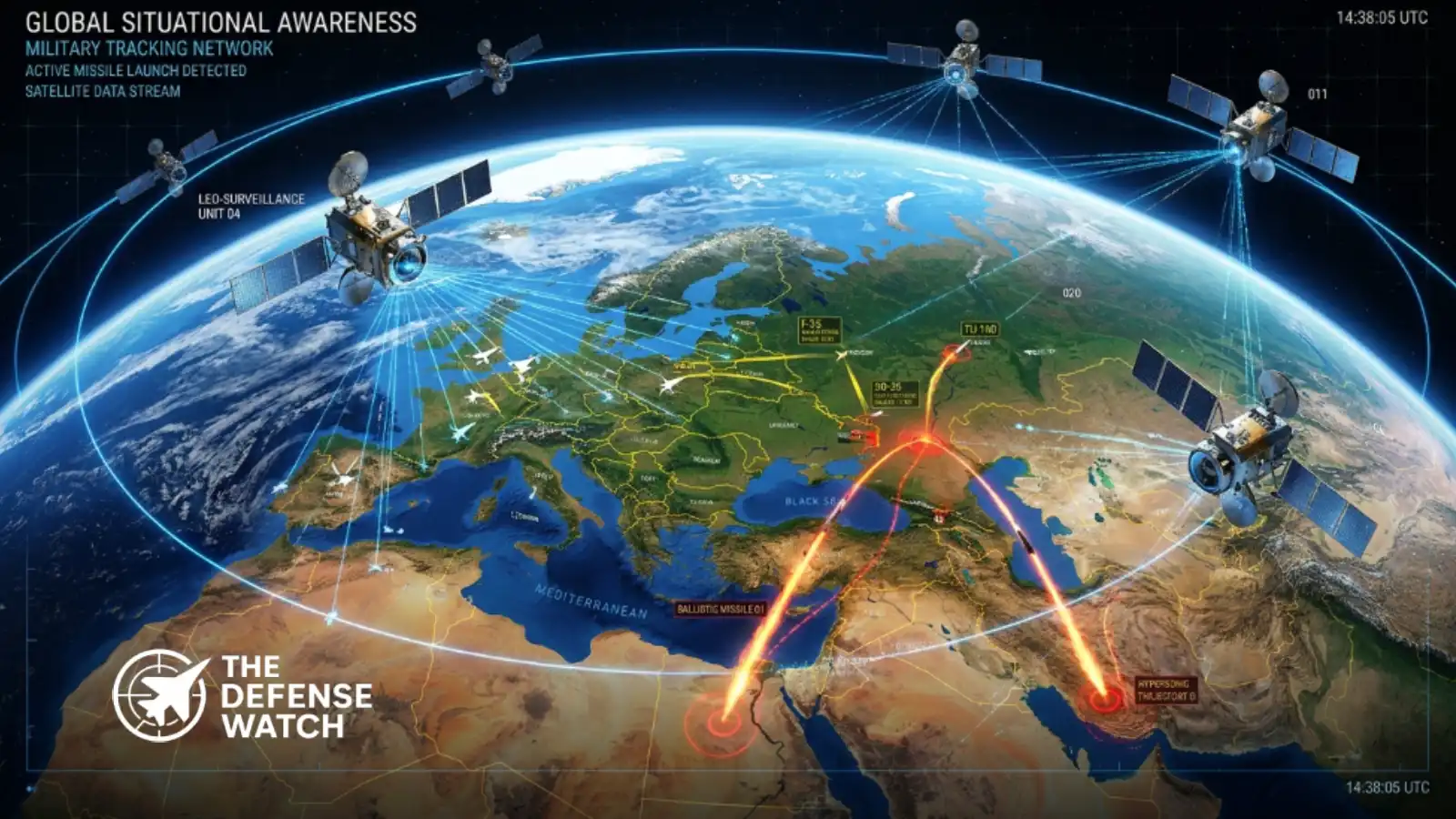
The U.S. Space Force has awarded SpaceX a $4.16 billion contract to accelerate development of a space-based airborne target tracking network capable of monitoring aircraft, drones, cruise missiles, and other airborne threats from orbit. The effort is expected to deliver an initial operational capability by 2028 and represents one of the Pentagon’s most significant moves toward shifting traditionally airborne surveillance missions into space.
SpaceX Award Advances Pentagon Aircraft Tracking From Orbit
The Pentagon’s effort to establish a persistent aircraft tracking capability from space took a major step forward after the U.S. Space Force awarded SpaceX a $4.16 billion contract for the Space-Based Airborne Moving Target Indicator (SB-AMTI) program. The award, announced by Space Systems Command on May 29, is designed to accelerate deployment of an orbital sensing architecture capable of tracking airborne threats across large geographic areas.
- SpaceX Award Advances Pentagon Aircraft Tracking From Orbit
- What Is The Space-Based AMTI Program?
- Connection To Golden Dome Missile Defense
- Why The Pentagon Is Moving Surveillance Missions Into Space
- Impact On The E-7 Wedgetail Program
- Technical Challenges Remain
- Growing SpaceX Role In National Security Space
- Strategic Implications
According to the Space Force, the contract supports development of a space-based sensing layer that will provide continuous battlespace awareness in contested environments where traditional airborne surveillance aircraft face increasing operational risks.
The agreement is expected to help field an initial constellation by 2028, significantly earlier than timelines previously discussed by senior defense officials.
What Is The Space-Based AMTI Program?
The Space-Based Airborne Moving Target Indicator initiative seeks to move a core military surveillance mission from aircraft to satellites.
For decades, the U.S. military has relied on platforms such as the E-3 Sentry Airborne Warning and Control System (AWACS) and future E-7 Wedgetail aircraft to detect, identify, and track airborne targets. These aircraft use powerful radar systems to monitor large sections of airspace and provide commanders with real-time situational awareness.
The Space Force argues that growing anti-access and area-denial capabilities developed by potential adversaries are increasing the vulnerability of large airborne surveillance aircraft operating near contested regions.
Under SB-AMTI, satellites would assume part of that mission by providing:
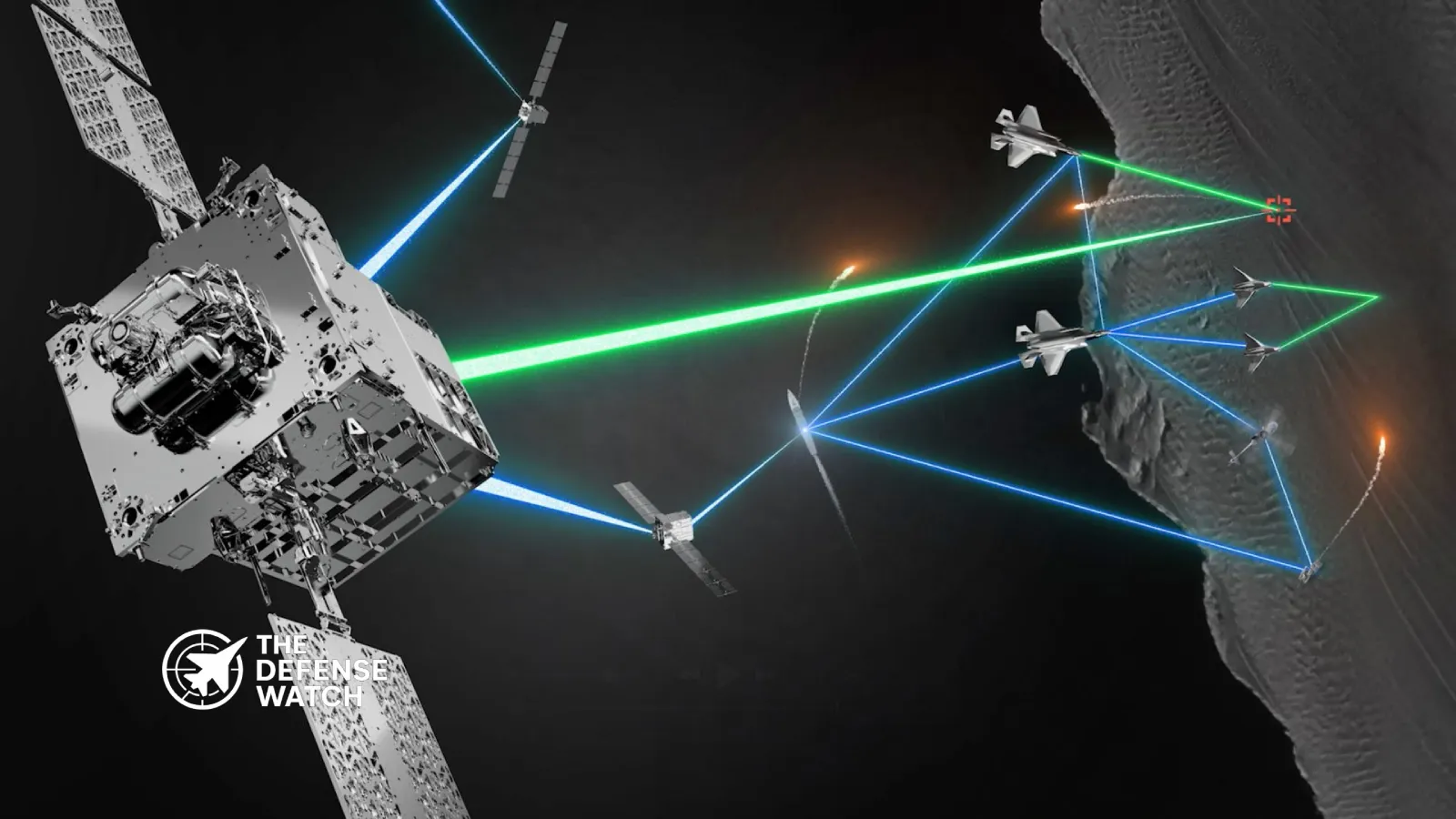
(adsbygoogle = window.adsbygoogle || []).push({});Capability Operational Purpose Airborne target detection Identify aircraft, drones, and missile threats Continuous tracking Maintain custody of moving targets across long distances Global surveillance coverage Reduce geographic coverage gaps Resilient sensing architecture Distribute capabilities across multiple satellites Data integration Feed targeting and command networks in near real time The Space Force described the program as a layered architecture that combines space-based sensors, secure communications networks, and ground processing systems.
Connection To Golden Dome Missile Defense
The award also aligns with the Trump administration’s expanding Golden Dome missile defense initiative.
Golden Dome aims to integrate ground-based defenses, command-and-control systems, interceptors, and space-based sensors into a unified architecture capable of detecting and responding to a wide range of aerial threats.
While much public discussion has focused on missile defense, Pentagon planners increasingly view persistent airborne tracking as an essential component of the broader architecture.
A satellite network capable of monitoring aircraft, cruise missiles, and potentially hypersonic threats could provide earlier warning and more persistent tracking than traditional radar coverage alone.
The SB-AMTI constellation is expected to work alongside other emerging Pentagon space programs, including the Space Data Network Backbone, another major Space Force effort recently awarded to SpaceX under a separate $2.29 billion contract.
(adsbygoogle = window.adsbygoogle || []).push({});Why The Pentagon Is Moving Surveillance Missions Into Space
The strategic significance of SB-AMTI extends beyond replacing individual aircraft.
Traditional airborne early warning platforms remain highly effective, but they face several limitations:
- Limited endurance
- Dependence on forward basing
- Vulnerability to long-range missiles
- Exposure to advanced enemy fighters
- Restricted operational coverage
A proliferated low Earth orbit satellite architecture offers a different model.
Instead of relying on a small number of high-value aircraft, the Pentagon can distribute sensing capabilities across dozens or potentially hundreds of satellites. Such a network could continue functioning even if individual satellites are lost or degraded.
This shift mirrors broader Space Force efforts to create resilient, distributed space architectures rather than relying on a limited number of large and expensive satellites.
Impact On The E-7 Wedgetail Program
The emergence of space-based airborne tracking has also influenced debates surrounding the U.S. Air Force’s future airborne surveillance fleet.
During recent budget discussions, Pentagon officials explored reducing planned procurement of E-7 Wedgetail aircraft, arguing that future orbital tracking systems could eventually assume portions of the mission currently performed by airborne warning and control platforms.
Congress ultimately directed the Air Force to continue moving forward with the E-7 program, citing near-term operational requirements and concerns about the maturity of space-based alternatives.
As a result, the Pentagon is pursuing a parallel approach:
Near-Term Capability
- E-7 Wedgetail aircraft
- Existing AWACS fleets
- Ground-based radar systems
Long-Term Capability
- Space-Based AMTI
- Distributed satellite constellations
- Integrated space sensing networks
This strategy reduces operational risk while allowing the military to evaluate the performance of emerging orbital surveillance technologies.
(adsbygoogle = window.adsbygoogle || []).push({});Technical Challenges Remain
Although the contract marks a significant milestone, building a reliable airborne target tracking capability from orbit remains technically demanding.
Tracking aircraft differs substantially from detecting ballistic missile launches.
The system must continuously monitor moving targets against complex backgrounds while maintaining target custody across large areas and rapidly transferring data to military users.
Key challenges include:
- Sensor sensitivity and resolution
- Data processing latency
- Real-time target correlation
- Secure communications links
- Anti-jamming protection
- Integration with existing command networks
The Pentagon has been conducting experiments with the National Reconnaissance Office and other organizations to assess how effectively space-based sensors can perform these missions.
The 2028 target date suggests defense officials believe the technology has matured sufficiently to support an initial operational deployment.
Growing SpaceX Role In National Security Space
The SB-AMTI award further expands SpaceX’s position within the U.S. national security space sector.
In recent years, the company has become a central provider of launch services, military communications infrastructure, and satellite systems.
The combination of reusable launch vehicles, Starshield military satellite technologies, and large-scale manufacturing capabilities has enabled SpaceX to compete aggressively across multiple defense programs.
The latest award follows the company’s recent Space Data Network Backbone contract and reinforces its role in several key elements of future U.S. missile defense and space surveillance architectures.
Importantly, Space Force officials have emphasized that multiple vendors remain part of the broader SB-AMTI acquisition pool, indicating that future task orders and capability expansions may involve additional industry participants.
Strategic Implications
If successful, the SB-AMTI program could represent one of the most consequential shifts in military surveillance since the introduction of airborne warning and control aircraft during the Cold War.
(adsbygoogle = window.adsbygoogle || []).push({});A persistent orbital tracking architecture would give commanders access to near-global airborne surveillance without requiring aircraft to remain continuously on station.
Such a capability could improve warning timelines, strengthen missile defense networks, enhance targeting processes, and increase resilience against attacks on traditional airborne surveillance assets.
For the Pentagon, the effort is part of a larger transition toward distributed sensing and data-sharing architectures that connect sensors, decision-makers, and weapons systems across multiple domains.
The Space Force now intends to field an initial operational capability by 2028 while continuing development of more advanced second- and third-generation systems through the mid-2030s.