
Executive Summary:
The U.S. Army and NATO allies are integrating intelligence balloons with HIMARS rocket artillery operations to improve battlefield surveillance and targeting accuracy. The effort reflects a broader push toward low-cost, persistent ISR platforms that can support long-range precision fires in contested environments.
U.S. Army And NATO Integrate Intelligence Balloons With HIMARS Operations
The use of HIMARS intelligence balloons is becoming an increasingly important part of how the U.S. Army and NATO partners approach long-range battlefield targeting and surveillance.
Military forces are employing high-altitude balloons equipped with intelligence, surveillance, and reconnaissance (ISR) payloads to support targeting operations for the M142 HIMARS rocket artillery system.
The concept combines long-range precision strike systems with persistent aerial surveillance assets capable of operating at high altitude for extended periods. Military planners increasingly view such systems as a practical solution for maintaining situational awareness in contested areas where drones or traditional aircraft may face operational risks.
Why Intelligence Balloons Matter
Unlike satellites or large ISR aircraft, intelligence balloons offer relatively low operating costs and can remain airborne for long durations while carrying electro-optical sensors, communications relay packages, and electronic intelligence systems.
For NATO operations, this creates a layered reconnaissance architecture that can support artillery targeting, force tracking, and battlefield coordination across wide operational areas.
The renewed interest in balloon-based ISR also reflects lessons learned from the war in Ukraine, where both Russian and Ukrainian forces have relied heavily on persistent surveillance and rapid target acquisition to direct artillery strikes.
Military analysts note that long-range fires are increasingly dependent on real-time targeting networks. Precision systems such as HIMARS require accurate and survivable ISR links to maintain effectiveness against mobile or time-sensitive targets.
HIMARS Continues To Shape NATO Firepower Strategy
The M142 HIMARS has become one of the most prominent artillery systems in NATO service due to its mobility, precision, and combat performance.
Developed by Lockheed Martin, HIMARS can launch guided rockets and tactical missiles against targets at significant ranges while rapidly relocating to avoid counterbattery fire.
The system gained global attention following its operational use in Ukraine, where long-range strikes against logistics hubs, command centers, and ammunition depots demonstrated the strategic impact of precision artillery.
NATO members are now investing heavily in long-range fires modernization programs. Several European states have either acquired HIMARS or announced plans to expand rocket artillery inventories amid growing security concerns tied to Russia’s military posture.
By integrating intelligence balloons into this ecosystem, NATO forces aim to improve targeting resilience while reducing dependence on vulnerable or high-cost ISR platforms.
Low-Cost ISR Gains Strategic Importance
The use of intelligence balloons is part of a wider trend across modern militaries toward distributed and survivable ISR systems.
High-altitude balloons can provide communications relay support in degraded environments, extend sensor coverage, and help maintain targeting data flows during electronic warfare conditions. In some operational scenarios, they may also supplement satellite coverage or support GPS-denied operations.
This approach aligns with broader U.S. Army modernization priorities focused on multi-domain operations, resilient command networks, and long-range precision fires.
The Army has previously explored various high-altitude ISR concepts through experimentation programs involving autonomous balloons, mesh communication systems, and near-space reconnaissance technologies.
Military planners increasingly recognize that future conflicts may involve heavy electronic warfare, anti-satellite threats, and contested airspace. Under such conditions, lower-cost and more expendable ISR assets could provide operational advantages.
NATO Focuses On Integrated Battlefield Networks
The integration of surveillance balloons with HIMARS also highlights NATO’s broader effort to improve sensor-to-shooter connectivity.
Modern battlefield doctrine increasingly depends on rapidly transferring targeting data between reconnaissance assets and strike systems. Faster targeting cycles can significantly improve effectiveness against mobile missile launchers, armored formations, and air defense systems.
The U.S. Army and NATO allies are therefore investing in networked warfare concepts that combine satellites, drones, aircraft, ground sensors, and emerging ISR platforms into unified targeting architectures.
In this environment, intelligence balloons may serve as an additional layer within a distributed battlefield network designed to maintain operational awareness even under contested conditions.
While balloons are not a replacement for drones or satellites, their persistence and low cost make them attractive for specific operational roles, particularly in support of artillery and long-range missile forces.
Strategic Implications For Future Warfare
The growing use of HIMARS intelligence balloons reflects how modern military operations increasingly rely on integrated sensing and precision strike capabilities rather than standalone weapons systems.
Long-range fires are now closely tied to ISR survivability, electronic warfare resilience, and rapid data-sharing networks. As NATO adapts to evolving battlefield requirements, low-cost surveillance systems are likely to play a larger supporting role alongside advanced missile and artillery platforms.
The development also underscores how relatively simple technologies can still provide operational value when integrated into modern digital battlefield architectures.

Executive Summary:
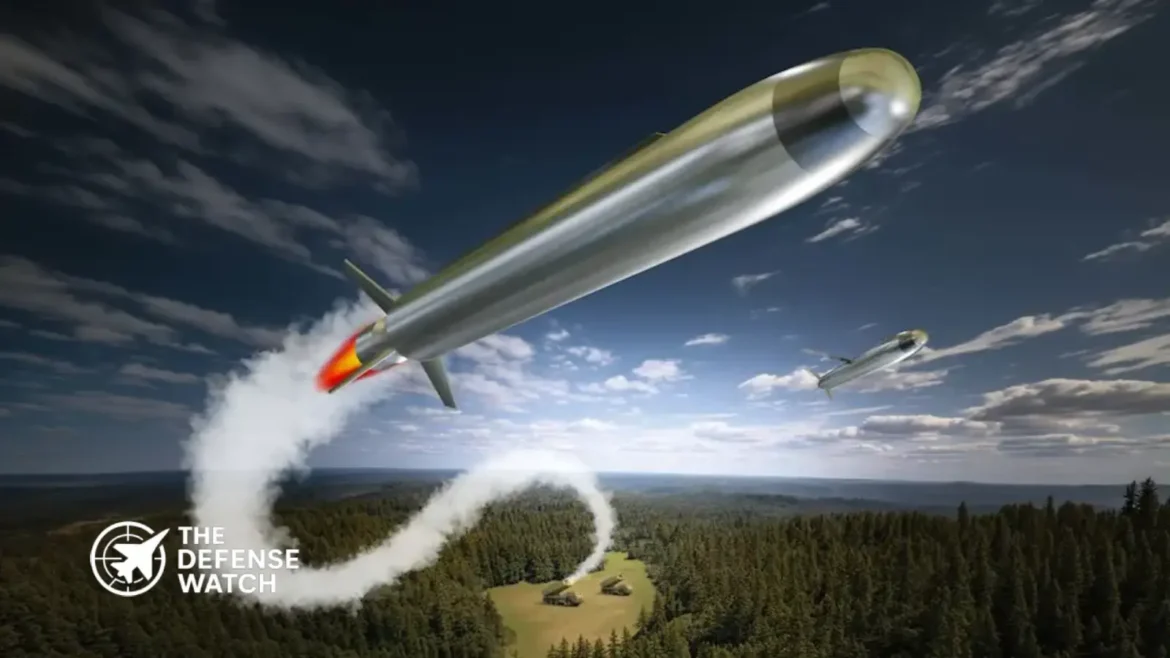
Leidos will manufacture 3,000 low-cost containerized cruise missiles under an agreement with the U.S. Department of Defense. The program aims to expand affordable long-range strike capacity while supporting distributed and rapidly deployable missile operations.
Leidos Containerized Cruise Missiles Expand U.S. Strike Capacity
The new Leidos containerized cruise missiles program marks another step in the Pentagon’s push to field larger numbers of affordable precision weapons for future high-intensity conflicts. The agreement calls for the production of approximately 3,000 low-cost cruise missiles designed for containerized launch operations.
The effort reflects a broader U.S. military modernization strategy focused on survivability, scalability, and distributed strike operations. Containerized missile systems can be transported using standard shipping infrastructure, enabling more flexible deployment options across land and maritime environments.
The U.S. Department of Defense has increasingly emphasized the need for mass-produced precision munitions capable of supporting prolonged operations in contested regions, particularly in the Indo-Pacific theater. Defense planners have warned that current missile inventories may be insufficient during a large-scale peer conflict.
Focus On Affordable Mass Production
Unlike traditional high-cost cruise missile programs, the Leidos containerized cruise missiles initiative appears designed around affordability and production scale. That approach aligns with current Pentagon priorities aimed at increasing munition stockpiles without relying exclusively on expensive legacy systems.
The low-cost missile concept also supports the U.S. military’s growing emphasis on attritable weapons. These systems are intended to be affordable enough for large-scale operational use while still delivering precision strike capability.
Containerized launchers provide additional operational advantages. By using commercial-style containers, missile systems can be rapidly repositioned, concealed, or dispersed across wider operational areas. Military analysts have increasingly linked such concepts to distributed maritime operations and expeditionary warfare strategies.
The agreement also highlights continuing industry demand for scalable manufacturing capacity. The U.S. defense industrial base has faced pressure to accelerate missile production following rising global tensions and continued military aid commitments overseas.
Strategic Relevance In The Indo-Pacific
The Leidos containerized cruise missiles program comes amid heightened U.S. concern over long-range strike competition in the Indo-Pacific region. The Pentagon has repeatedly identified the need for survivable and dispersed missile systems capable of operating inside contested environments.
Containerized systems may complicate enemy targeting by reducing reliance on fixed launch infrastructure. This concept aligns with evolving U.S. operational doctrines focused on mobility and distributed force structures.
Military planners are increasingly prioritizing systems that can be deployed across islands, forward operating bases, or support vessels with limited infrastructure requirements. The ability to rapidly field missile launch capability using containerized systems could provide operational flexibility during regional contingencies.
The production scale of 3,000 missiles also suggests the Pentagon is placing greater emphasis on sustained combat capacity rather than smaller inventories of highly specialized weapons. Analysts have noted that future conflicts may require significantly larger munition stockpiles than previously anticipated.
Defense Industry Implications
For Leidos, the agreement strengthens the company’s role in emerging precision strike and advanced weapons programs. Traditionally known for defense electronics, integration, and technology services, the company has continued expanding into advanced military systems and next-generation defense solutions.
The agreement may also reinforce broader Pentagon efforts to diversify missile suppliers and reduce dependence on a limited number of major prime contractors. Expanding industrial participation is viewed as a critical step toward increasing resilience across the U.S. defense manufacturing sector.
The missile production effort follows a wider trend across the defense industry involving low-cost strike systems, autonomous weapons, and distributed launch concepts. Multiple U.S. and allied defense programs are currently exploring similar approaches to improve operational flexibility while lowering procurement costs.
Growing Demand For Distributed Strike Systems
The Leidos containerized cruise missiles initiative reflects changing assumptions about future warfare. Defense planners increasingly expect future conflicts to involve dispersed operations, contested logistics, and heavy demand for precision munitions.
As a result, military modernization programs are shifting toward systems that can be produced rapidly, deployed flexibly, and sustained at scale. Containerized missile systems fit within that evolving framework by combining mobility, concealment, and lower operational complexity.
The Pentagon has not publicly disclosed full technical specifications for the missiles covered under the agreement. However, the scale of the production plan underscores the growing strategic importance of affordable long-range precision strike systems in U.S. defense planning.
Executive Summary:
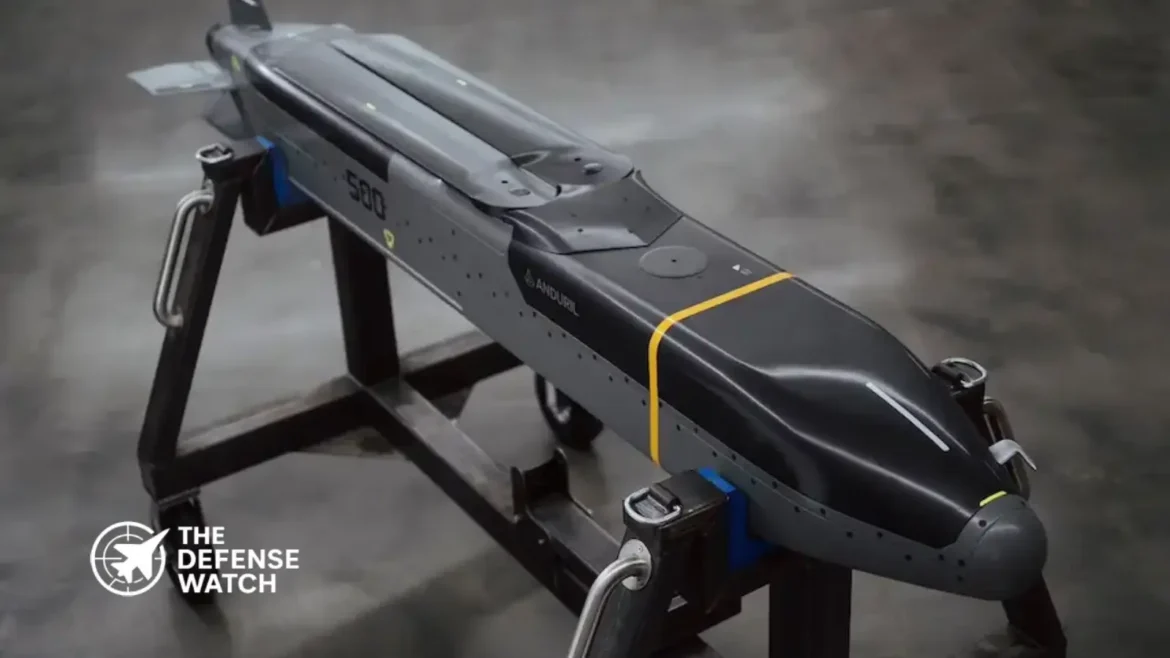
The U.S. Department of Defense and Anduril Industries have signed an agreement focused on scaling production of the Barracuda-500M cruise missile. The initiative supports Washington’s push for affordable, rapidly manufacturable precision weapons suited for high-intensity conflicts and Indo-Pacific deterrence operations.
U.S. Anduril Barracuda-500M Cruise Missile Program Expands
The Barracuda-500M cruise missile program is moving into a new phase after the U.S. government and Anduril Industries reached an agreement focused on mass production and industrial scaling.
The agreement is intended to accelerate production capacity for the Barracuda family of autonomous air vehicles and cruise missiles. The effort reflects broader Pentagon priorities aimed at building larger inventories of affordable precision-guided weapons that can be produced rapidly during wartime.
The Barracuda-500M cruise missile is part of Anduril’s growing portfolio of autonomous and AI-enabled military systems. The platform was designed around modular manufacturing concepts and lower-cost production methods compared with traditional cruise missile programs.
The latest agreement comes as the United States continues to reassess munitions stockpiles and industrial readiness following sustained global demand for precision weapons, particularly after conflicts in Ukraine and the Middle East exposed limitations in existing defense production capacity.
Focus On Affordable Mass Production
A major theme behind the Barracuda-500M cruise missile initiative is scalability.
U.S. defense planners increasingly argue that future conflicts, especially in the Indo-Pacific, may require large quantities of long-range precision weapons rather than limited inventories of expensive systems. That has placed new attention on cost-effective cruise missiles that can be manufactured quickly and in high numbers.
Anduril has positioned the Barracuda system as a response to that requirement. The company says the missile uses simplified manufacturing techniques, commercially derived components where possible, and software-driven architecture intended to reduce both cost and production timelines.
The Barracuda-500M cruise missile reportedly supports autonomous mission capabilities and can integrate with distributed operational concepts now emphasized by the U.S. military. These concepts include dispersed strike operations, networked targeting, and survivable long-range fires in contested environments.
While detailed specifications remain limited, the missile is understood to be designed for flexible deployment options and compatibility with multiple launch platforms.
Pentagon Pushes Defense Industrial Modernization
The agreement also highlights a wider Pentagon effort to modernize the U.S. defense industrial base.
Defense officials have repeatedly warned that current production models for advanced munitions may not sustain the pace required during a prolonged peer-level conflict. The Department of Defense has increasingly partnered with non-traditional defense technology firms to accelerate manufacturing innovation and software integration.
Anduril Industries has become one of the most visible examples of that strategy. Founded in 2017, the company has expanded rapidly across autonomous systems, surveillance technologies, air defense, unmanned platforms, and AI-enabled command systems.
The Barracuda-500M cruise missile program aligns with a broader shift toward attritable and lower-cost precision weapons. Rather than relying entirely on a smaller number of highly expensive cruise missiles, U.S. planners are exploring mixed-force structures that combine advanced premium systems with larger inventories of affordable weapons.
That approach is increasingly viewed as critical for maintaining operational endurance during large-scale conflicts where munitions consumption rates could exceed current stockpile assumptions.
Strategic Importance In The Indo-Pacific
The Barracuda-500M cruise missile could eventually support U.S. operational planning in the Indo-Pacific region, where long-range strike capability remains a core deterrence requirement.
The U.S. military has emphasized the need for survivable, distributed, and rapidly deployable strike systems capable of operating across wide maritime and island environments. Low-cost cruise missiles produced at scale could help address concerns over inventory depletion during sustained operations.
Analysts also note that production speed is becoming as strategically important as missile performance itself. Countries are increasingly measuring military readiness not only by technological sophistication but also by industrial resilience and replenishment capability.
The agreement with Anduril signals continued Pentagon interest in expanding partnerships with defense technology firms capable of shortening development cycles and increasing manufacturing flexibility.
Broader Implications For U.S. Defense Procurement
The Barracuda-500M cruise missile initiative reflects a broader procurement trend inside the U.S. defense sector.
Traditional acquisition timelines for advanced missile systems have often stretched across many years and involved high unit costs. Newer defense firms are attempting to compress those timelines through software-centric development, digital engineering, and commercially influenced manufacturing models.
If successful, the Barracuda program could influence future U.S. procurement strategies for cruise missiles, autonomous weapons, and precision strike systems.
The agreement may also strengthen Anduril’s position within the rapidly expanding market for autonomous defense technologies, an area receiving growing investment from the Pentagon and allied militaries.

Executive Summary:
Britain will procure 72 RCH 155 wheeled artillery systems under a nearly £1 billion ($1.35 billion) modernization program for the British Army. The move restores long range artillery capability after the UK transferred AS90 self propelled guns to Ukraine and deepens industrial defense cooperation with Germany.
Britain Orders 72 RCH 155 Artillery Systems For British Army
The British government has confirmed plans to acquire 72 RCH 155 remote controlled howitzers as part of a major British Army artillery modernization effort designed to restore long range firepower and improve battlefield mobility. The nearly £1 billion procurement program will replace the aging AS90 artillery fleet that Britain previously donated to Ukraine.
The contract was awarded through the Organisation for Joint Armament Cooperation (OCCAR) to ARTEC GmbH, a joint venture between Rheinmetall and KNDS. The RCH 155 system combines a remotely operated 155 mm artillery gun module with the Boxer 8×8 armored vehicle platform.
British Defence Secretary John Healey described the purchase as both a battlefield and industrial investment, with production expected to support more than 500 jobs across the United Kingdom.
Why The British Army Needs New Artillery
The procurement reflects growing concern inside NATO over artillery shortages and long range fires capability after more than two years of high intensity combat lessons from Ukraine.
Britain transferred much of its AS90 self propelled artillery inventory to Ukrainian forces, creating a significant capability gap in British Army heavy fires units. The RCH 155 acquisition is intended to close that gap while introducing a more survivable and mobile artillery platform.
The RCH 155 can reportedly fire targets up to 70 kilometers away, deliver eight rounds per minute, and move at speeds exceeding 100 km/h. Unlike older artillery systems that must stop before firing, the RCH 155 is designed to conduct rapid shoot and scoot operations that reduce exposure to counter battery fire.
The system also operates with a reduced crew because of its automated loading and fire control architecture. Analysts increasingly view automation and mobility as essential for survivability on modern battlefields dominated by drones, precision strike systems, and electronic surveillance.
UK Germany Defense Cooperation Expands
The program also highlights expanding UK Germany defense cooperation under the Trinity House Agreement, a bilateral framework intended to improve European defense integration and industrial collaboration.
Under the arrangement, Rheinmetall will manufacture major weapon system components at its Telford facility in England, while KNDS UK will produce Boxer chassis and engines in Stockport. British steel supplier Sheffield Forgemasters is also expected to contribute materials for the project.
The deal strengthens Britain’s effort to rebuild sovereign industrial capacity in large caliber artillery manufacturing, an area that many NATO countries reduced after the Cold War. The Ukraine conflict exposed how quickly ammunition stockpiles and artillery inventories can be depleted during prolonged conventional warfare.
The British government has increasingly emphasized domestic defense production as part of a broader rearmament strategy tied to rising tensions in Europe and concerns over long term deterrence against Russia.
Mobile Fires Platform Program Gains Momentum
The RCH 155 forms the centerpiece of the British Army’s Mobile Fires Platform program, which aims to replace legacy artillery systems with highly mobile, networked, and longer range platforms.
Britain had temporarily acquired Swedish Archer artillery systems as an interim solution after donating AS90 platforms to Ukraine. However, the RCH 155 is expected to become the Army’s enduring artillery capability through the 2030s.
First deliveries are expected in 2028, with British officials aiming to achieve an initial deployable capability before the end of the decade.
The procurement aligns with wider NATO efforts to rebuild artillery inventories and increase readiness levels following repeated warnings from military planners about ammunition shortages and insufficient heavy firepower capacity across Europe.
Strategic Implications For NATO
The British Army artillery modernization program carries significance beyond the UK itself. NATO planners increasingly see long range artillery as one of the alliance’s most critical battlefield requirements in any potential high intensity conflict.
Russia’s extensive use of artillery in Ukraine has reinforced the importance of deep fires, rapid targeting, and survivable mobile gun systems. European militaries are now accelerating procurement programs for self propelled artillery, rocket systems, and precision guided munitions.
For Britain, the RCH 155 purchase signals a shift toward rebuilding warfighting readiness after years of force reductions and underinvestment. It also demonstrates how European defense industrial cooperation is becoming more central to NATO modernization plans.
While Britain has pledged the largest defense spending increase since World War II, analysts note that many modernization programs still depend on sustained long term funding and faster procurement timelines.


Executive Summary:
South Korea’s Hanwha Aerospace will supply three additional Chunmoo multiple rocket launchers to Estonia under an expanded defense agreement. The move strengthens Estonia’s long-range precision strike capability and reflects continued NATO efforts to reinforce deterrence along the alliance’s eastern border.
Hanwha Aerospace Expands Estonia’s Chunmoo Rocket Launcher Capability
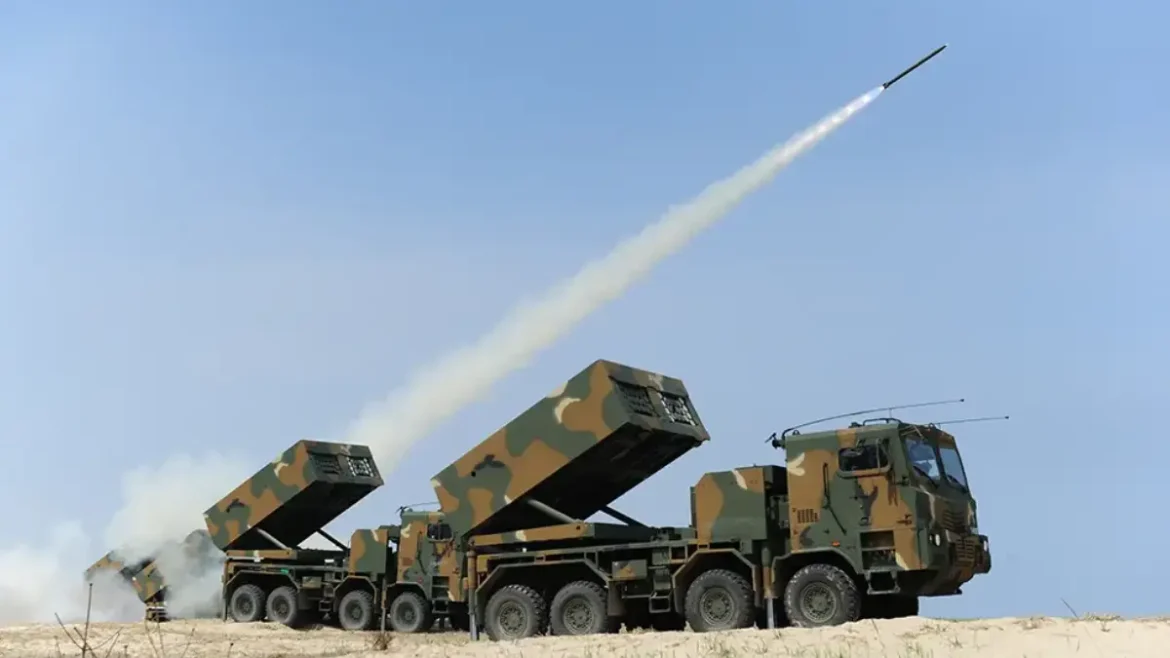
The Chunmoo rocket launcher program in Estonia is expanding after Hanwha Aerospace confirmed a follow-on order for three additional multiple rocket launcher systems for the Estonian Defence Forces.
The agreement was signed on May 11 through a government-to-government framework between Korea Trade-Investment Promotion Agency (KOTRA) and the Estonian Centre for Defence Investments (ECDI). The latest procurement follows a broader €290 million contract signed in December 2025 covering six Chunmoo launchers, missile packages, training, and operational support.
The new order further strengthens Estonia’s long-range precision firepower and expands the country’s growing defense partnership with South Korea.
Estonia Deepens Defense Cooperation With South Korea
Estonia has steadily increased defense spending and modernization efforts in response to changing security dynamics across Eastern Europe and the Baltic region.
The additional Chunmoo rocket launcher systems will complement Estonia’s existing fleet of K9 self-propelled howitzers, also supplied by Hanwha Aerospace. The combination gives the Estonian military expanded indirect fire capabilities ranging from conventional artillery support to long-range precision strikes.
According to Estonian Defense Minister Hanno Pevkur, the additional launchers represent a significant capability enhancement and reflect closer industrial cooperation with South Korea.
The agreement also highlights Estonia’s continued shift toward rapid procurement programs focused on operational readiness and interoperability with NATO forces.
Chunmoo System Provides Long-Range Precision Strike Capability
The Chunmoo rocket launcher is designed for mobility, survivability, and rapid deployment. Mounted on an 8×8 wheeled chassis, the system can fire multiple munition types depending on mission requirements.
The platform supports 239 mm guided rockets with operational ranges of up to 80 kilometers. It can also deploy the CTM-290 tactical ballistic missile, which offers strike ranges reaching approximately 290 kilometers.
This modular design allows operators to configure launchers for different operational scenarios while reducing logistical complexity. Military analysts increasingly view such flexibility as critical in modern high-intensity conflict environments.
The system’s mobility enables rapid repositioning after launch, improving survivability against counter-battery threats.
Strategic Importance For NATO’s Eastern Flank
The expanded Chunmoo rocket launcher fleet strengthens NATO’s deterrence posture along the alliance’s northeastern border.
Estonia occupies a strategically sensitive position near Russia and the Baltic Sea region. Long-range rocket artillery systems provide the ability to engage command nodes, logistics infrastructure, and high-value military targets at extended distances.
The war in Ukraine has accelerated European demand for precision artillery and long-range fires systems. NATO members have increasingly prioritized mobile strike platforms capable of rapid deployment and integration into allied command networks.
South Korean defense systems have gained traction across Europe partly because of faster production schedules and available manufacturing capacity compared with some Western suppliers facing extended procurement timelines.
Hanwha Aerospace Expands European Defense Presence
Hanwha Aerospace continues to expand its footprint in Europe through artillery, armored vehicle, and missile system exports.
The company has secured several major defense agreements with European NATO members in recent years, including large-scale contracts involving K9 howitzers and Chunmoo systems.
Hanwha Aerospace President and CEO Jae-il Son said the new order will help strengthen Estonia’s defense-industrial ecosystem while supporting broader expansion efforts across the Baltic and Nordic regions.
The agreement also reinforces South Korea’s growing position as a major global defense exporter as European militaries accelerate modernization initiatives.
Why The Deal Matters
The follow-on Chunmoo rocket launcher order reflects broader trends reshaping the defense market in Europe.
Countries bordering Russia are investing heavily in long-range fires, air defense systems, and rapid-response military capabilities. Estonia’s procurement strategy demonstrates how smaller NATO states are pursuing layered deterrence through highly mobile and precision-focused systems.
For Hanwha Aerospace, the contract strengthens long-term industrial ties with a NATO customer and reinforces confidence in South Korean defense manufacturing reliability and delivery performance.
As European militaries continue adapting to evolving battlefield requirements, demand for mobile rocket artillery and precision missile systems is expected to remain high.

Executive Summary: Lockheed Martin successfully completed a critical seeker characterization flight test for its QuadStar™ missile — a leading contender in the U.S. Army’s Next-Generation Short-Range Interceptor (NGSRI) competition to replace the legacy Stinger. The test, conducted at White Sands Missile Range, New Mexico, achieved a 100% target acquisition rate and was completed just three months after first flight. The result positions Lockheed Martin as a strong frontrunner as the Army moves toward the next phase of the NGSRI program.
Lockheed Martin’s QuadStar Nails NGSRI Seeker Test — Here’s What It Means for U.S. Army Air Defense
The race to replace the U.S. Army’s aging Stinger missile just reached a pivotal turning point. Lockheed Martin’s QuadStar™ missile recently completed the Next-Generation Short-Range Interceptor (NGSRI) Seeker Characterization Flight Test (SCFT), a critical risk-reduction milestone for the program — and the results were decisive.
Conducted at White Sands Missile Range in New Mexico and announced on May 11, 2026, the test delivered a 100% seeker success rate against a designated target. For a program aimed at replacing one of the most iconic man-portable air defense weapons in U.S. military history, it is a significant step forward.
This milestone signals more than technical progress. It demonstrates that Lockheed Martin’s approach to seeker design, AI-driven signal processing, and open-systems architecture is maturing on schedule — and ahead of it in some respects — as the Army prepares to enter the next competitive phase of the NGSRI acquisition.
What the Test Actually Proved
The Seeker Characterization Flight Test had a clear and demanding mandate: confirm under operationally representative conditions that the missile’s guidance system could detect, acquire, and continuously track a target.
A QuadStar missile launched from a Command Launch Assembly (CLA) and flew a tactical trajectory, demonstrating seeker performance at a range exceeding the legacy system’s capability.
Three specific objectives were on the line: validate the seeker’s ability to capture imagery, process signals onboard in real time, and maintain unbroken target tracking throughout the engagement envelope.
The test confirmed CLA performance, critical system functionality, the innovative and affordable seeker technology, and QuadStar interceptor performance.
The “100% success” designation refers specifically to the seeker’s target-acquisition rate — a benchmark with direct operational consequence. In short-range air defense, engagement windows are measured in seconds. A guidance failure at that critical moment is not recoverable. Demonstrating flawless seeker performance at this stage substantially reduces technical risk ahead of full flight qualification.
Why the NGSRI Program Is Urgent
The Stinger has served the U.S. Army as its primary short-range interceptor since the 1980s. It remains in service today, but the threat environment it was designed to counter has fundamentally shifted.
Modern adversaries field faster and more maneuverable unmanned aerial systems, low-cost drone swarms, rotary-wing platforms, and fixed-wing aircraft capable of operating in radar-contested and GPS-degraded environments. These threats test the limits of legacy infrared seeker technology and single-mode guidance systems.
The NGSRI program is the Army’s formal response — a competition to field a next-generation interceptor capable of engaging the full spectrum of current and emerging air threats at greater ranges, with higher reliability, and at a unit cost that supports large-scale production and fielding.
Lockheed Martin is one of several competitors in the NGSRI acquisition. The Army has structured the program as a competitive downselect process, requiring vendors to demonstrate key technical capabilities before advancing. The test paves the way for continued testing as the U.S. Army moves into the next phase of the future replacement for the legacy Stinger missile.
Speed as a Strategic Differentiator
Perhaps the most striking aspect of this milestone is not what was tested — but how fast it was achieved.
This test follows a three-month sprint from first flight to the SCFT, underscoring Lockheed Martin’s dedication to partnering with the Army to rapidly address their mission needs.
Three months from first flight to a successful seeker characterization test is an aggressive pace by any modern defense acquisition standard. It reflects a deliberate program philosophy: compress risk-reduction timelines, demonstrate capability early, and maintain schedule flexibility for the customer.
In a defense acquisition environment increasingly focused on speed of delivery — particularly following lessons from the war in Ukraine about the rate at which modern air defense munitions are consumed — that tempo carries real programmatic weight.
The Technology Behind QuadStar
The QuadStar missile’s seeker is not a straightforward iteration of prior Lockheed Martin guidance systems. AI-driven signal processing and a modern open-systems architecture enable affordability, ensuring rapid updates and modular upgrades.
This architecture is significant for two reasons. First, it allows the seeker software to be updated in the field or at depot level as new threat signatures emerge — without requiring a hardware redesign. Second, it directly addresses a persistent criticism of legacy short-range interceptors: that their closed architectures make them slow and expensive to adapt as the threat evolves.
The SCFT validates this affordable, unique seeker design can reliably engage unmanned vehicles, rotary, and fixed-wing threats — confirming that the multi-threat engagement requirement at the heart of the NGSRI specification has been addressed at the seeker level, not just on paper.
The use of AI-driven onboard signal processing also implies a departure from purely passive infrared homing. While Lockheed Martin has not disclosed the full seeker modality, the emphasis on imagery capture and signal processing suggests a multi-mode or imaging-infrared approach capable of discriminating between decoys and actual targets — a capability gap that has historically limited short-range interceptor effectiveness.
What Program Officials Are Saying
Randy Crites, Vice President of Lockheed Martin Advanced Programs, stated: “Our team’s shared mission, innovative approach and agility were essential to achieving this milestone. The successful SCFT demonstrates we remain on course to deliver a next-generation interceptor that will defend our warfighters and allies well into the future.”
Chris Murphy, Business Development Lead for Lockheed Martin NGSRI, added: “Completing the seeker characterization in under six months highlights the speed, flexibility and drive the Lockheed Martin team brings to this customer. We remain committed to delivering highly capable, readily manufacturable and affordable solutions that meet the Army’s immediate and future needs.”
Murphy’s reference to “readily manufacturable” solutions is deliberate and notable. One of the standing concerns with next-generation interceptor programs is whether advanced seeker designs can be produced at the quantities the Army would require in a high-intensity conflict. Signaling manufacturability alongside technical performance directly addresses that operational and industrial concern.
Broader Context: Short-Range Air Defense in the Modern Battlespace
The NGSRI program does not exist in a vacuum. It is part of a wider U.S. Army effort to modernize its layered air defense architecture from the ground up.
Across multiple recent conflicts — most notably in Ukraine — short-range air defense systems have been consumed at rates far exceeding pre-conflict stockpile planning assumptions. Drone threats, in particular, have proven both numerically overwhelming and cost-asymmetric: fielding cheap UAS against expensive interceptors creates a sustainability problem that the Army is actively working to solve.
NGSRI addresses the guided interceptor tier of that challenge. The emphasis on affordability throughout Lockheed Martin’s NGSRI public communications — appearing in both the company’s technical description of the seeker and in executive statements — suggests the program team is acutely aware that unit cost will be as important a competitive factor as raw performance in the final downselect.
A successfully characterized, AI-enabled seeker with demonstrated multi-threat capability, achieved in three months and built on an open architecture — that is a compelling combination for an Army that needs large numbers of effective interceptors, quickly.
What Comes Next
With the SCFT complete, Lockheed Martin moves forward in the NGSRI competition having cleared a critical technical gate. This achievement demonstrates core sensor and guidance capabilities, ensuring testing stays on and ahead of schedule.
The next steps in the program will likely involve additional flight tests at expanded engagement envelopes, further validation against representative threat surrogates, and continued refinement of the Command Launch Assembly integration. The Army is expected to advance the NGSRI program toward a more definitive competitive phase, with a future downselect determining which vendor’s interceptor will proceed toward engineering and manufacturing development.
For Lockheed Martin, the QuadStar program now has demonstrated seeker performance, a rapid development timeline, AI-enabled guidance architecture, and explicit manufacturability commitments. The company has placed its markers down.
The Army — and its competitors — are watching.
Executive Summary:
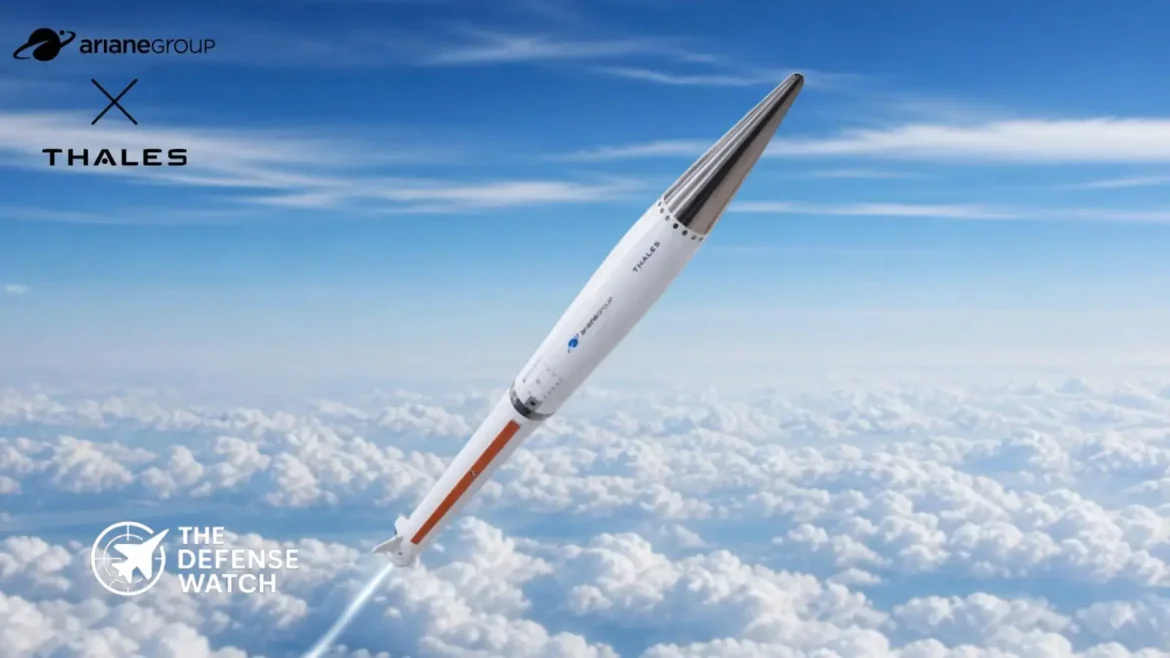
France has completed the first firing test of its future long-range rocket artillery system under a program led by Thales and ArianeGroup. The project aims to restore sovereign European deep-strike capabilities as regional security pressures and defense modernization efforts accelerate across NATO.
France Tests New Long-Range Rocket Launcher Capability
France’s future long-range rocket launcher program reached a key milestone after defense companies Thales and ArianeGroup confirmed the first successful firing of a new rocket motor intended for the French Army’s next-generation artillery system.
The test marks an important step in France’s effort to replace aging rocket artillery assets while reducing dependence on non-European systems.
The firing was conducted under the Future Tactical Ground-to-Ground Missile program, commonly known as Foudre. The project is intended to provide the French military with a modern precision-strike capability capable of engaging targets at significantly longer ranges than current battlefield rocket systems.
French officials expect the first full firing demonstration of the complete launcher system in 2026.
European Defense Industry Pushes For Strategic Autonomy
The French long-range rocket launcher initiative reflects a wider European effort to strengthen defense industrial sovereignty following Russia’s war in Ukraine and growing concerns over ammunition stockpiles, long-range fires, and supply chain dependence.
For years, many European militaries relied heavily on U.S.-made systems such as the M142 HIMARS and M270 Multiple Launch Rocket System. Combat operations in Ukraine demonstrated the operational value of precision-guided rocket artillery against logistics hubs, command centers, and air defense assets.
France’s new launcher program aims to close part of that capability gap while ensuring domestic production capacity for rockets, propulsion systems, and fire-control technologies.
The involvement of Thales and ArianeGroup also highlights how Europe’s aerospace sector is increasingly integrating space-launch expertise into military missile development. ArianeGroup, best known for the Ariane 6 rocket program, brings advanced propulsion and guidance experience that can accelerate military applications.
New Rocket Launcher Designed For Deep Precision Strikes
While technical details remain limited, industry officials indicated the system is being developed to deliver precision-guided long-range fires beyond the capabilities of current French artillery systems.
The French Army currently operates the LRU, an upgraded variant of the M270 platform. However, those launchers are aging and expected to retire in the coming years.
The new French long-range rocket launcher is expected to support:
- Precision deep-strike missions
- Rapid battlefield mobility
- NATO interoperability
- Long-range conventional deterrence
- High-volume rocket production scalability
Defense analysts view long-range precision fires as one of the most important battlefield capabilities emerging from recent conflicts. Modern rocket artillery can strike targets hundreds of kilometers away with significantly lower operational costs than cruise missiles or tactical aircraft missions.
France’s modernization effort also aligns with broader NATO planning focused on survivability, distributed fires, and rapid-response operations in Eastern Europe.
Strategic Importance For NATO And European Security
The French long-range rocket launcher program arrives as European governments sharply increase defense spending and accelerate weapons procurement programs.
Countries including Poland, Germany, and United Kingdom are investing heavily in long-range strike systems, missile defense, and artillery modernization programs.
France has consistently argued that Europe must retain independent industrial and operational military capabilities, particularly in strategic weapons sectors.
The program could eventually become part of broader European cooperative defense initiatives if additional NATO members seek alternatives to existing American or South Korean rocket artillery systems.
The first full launcher demonstration scheduled for 2026 will likely determine future procurement decisions and export potential.
Industrial Competition Intensifies In Global Rocket Artillery Market
The global market for long-range rocket artillery systems has expanded rapidly since 2022. Systems such as HIMARS gained worldwide attention after their combat use in Ukraine demonstrated the operational impact of mobile precision strikes.
European manufacturers are now competing to develop indigenous alternatives that can offer similar operational performance while ensuring regional supply-chain control.
France’s program may eventually compete with systems including:
- M142 HIMARS
- K239 Chunmoo
- PULS
The success of the French launcher could strengthen Europe’s position in the growing global precision-fire systems market while supporting domestic industrial resilience.
Original Analysis: Why France’s Program Matters Beyond Artillery
France’s long-range rocket launcher effort is not simply an artillery replacement project. It represents a broader shift in European military planning toward sovereign strike capabilities and reduced reliance on external suppliers.
The Ukraine conflict exposed vulnerabilities in European ammunition production and highlighted how rapidly precision-guided munitions can shape battlefield outcomes. By combining Thales’ defense electronics expertise with ArianeGroup’s propulsion experience, France is attempting to create a vertically integrated strike ecosystem inside Europe.
Another major factor is strategic endurance. Countries that control domestic missile production can sustain military operations longer during crises without depending on foreign export approvals or supply priorities.
The program also signals how space-launch and missile technologies are increasingly converging. Aerospace firms once focused mainly on civilian launch vehicles are now playing larger roles in tactical weapons development due to overlapping propulsion and guidance technologies.
If successful, the French long-range rocket launcher may become one of Europe’s most strategically important artillery modernization programs of the decade.

Executive Summary:
India has completed the maiden flight trial of the Tactical Advanced Range Augmentation (TARA) glide weapon system, developed by DRDO with support from the Indian Air Force. The low cost precision guidance kit is designed to convert conventional unguided bombs into stand off precision weapons, strengthening India’s domestic smart munitions capability.
India Tests Indigenous TARA Glide Bomb Capability
India has tested a new low cost glide bomb capability aimed at expanding the precision strike reach of the Indian Air Force (IAF). The country’s Defence Research and Development Organisation (DRDO), working alongside the IAF, successfully conducted the first flight trial of the Tactical Advanced Range Augmentation (TARA) weapon system off the coast of Odisha on May 7.
According to India’s Ministry of Defence, the TARA system is the country’s first indigenous glide weapon kit designed to convert conventional unguided bombs into precision guided munitions.
The flight trial involved an IAF SEPECAT Jaguar strike aircraft launching a 500 kg class bomb fitted with the TARA modular guidance and glide kit. The system was developed by DRDO’s Hyderabad based Research Centre Imarat (RCI) with support from other DRDO laboratories and Indian industry partners.
Low Cost Precision Weapons Gain Strategic Importance
The TARA glide bomb program reflects a broader shift in military airpower doctrine toward affordable precision strike weapons that can be deployed in large numbers.
Modern air campaigns increasingly rely on stand off munitions capable of striking targets from outside heavily defended airspace. However, high end cruise missiles and advanced smart weapons remain expensive and difficult to mass produce during prolonged conflict scenarios.
India’s approach mirrors efforts by several major military powers to convert existing “dumb bombs” into guided stand off weapons using modular kits. Similar concepts include the American JDAM family, Russia’s UMPK glide kits, and Turkey’s HGK precision guidance systems.
What makes the TARA program notable is its emphasis on low cost production and domestic manufacturing. Indian officials stated that production activities have already started with development and production partners from the private sector.
That production strategy could allow the IAF to expand its inventory of precision weapons without relying heavily on imported systems.
Designed For Multiple Aircraft Platforms
Although the maiden test was conducted using the Jaguar strike aircraft, Indian defense reports indicate the TARA kit is also intended for integration with several frontline IAF combat platforms.
These reportedly include the Sukhoi Su-30MKI, Mirage 2000, and the indigenous Light Combat Aircraft (LCA) Tejas fleet.
The flexibility of the modular kit is operationally important. Rather than developing entirely new missile systems, the TARA concept allows existing bomb inventories to be upgraded into precision stand off weapons.
According to information presented by Indian industry during Aero India 2025, the weapon may achieve strike ranges between 80 and 100 kilometers when released from high altitude at near transonic speed.
Open source reporting also suggests the system could be offered in different guidance configurations. One version reportedly uses satellite aided navigation with an accuracy under 20 meters circular error probable (CEP), while another variant may employ imaging infrared terminal guidance for significantly greater accuracy.
Expanding India’s Indigenous Precision Strike Portfolio
The TARA test comes amid a wider Indian push to strengthen domestic missile and guided weapon production under the government’s long running defense self reliance strategy.
India has already fielded several indigenous stand off weapon systems in recent years, including the Smart Anti Airfield Weapon (SAAW), BrahMos cruise missile variants, and the long range Gaurav glide bomb program.
TARA appears positioned as a lower cost option within that growing precision strike ecosystem. Its role may focus on enabling mass deployment against fixed ground targets while preserving more expensive missile inventories for higher value targets.
The system could also provide operational flexibility during regional contingencies where large quantities of precision guided munitions may be required over extended periods.
Analysts note that affordable glide bomb kits have gained renewed military relevance following lessons observed in conflicts in Ukraine and the Middle East, where cost effective stand off strike systems have been used extensively against fixed infrastructure and battlefield targets.
Regional Security Context
India’s continued investment in stand off strike weapons reflects broader regional military modernization trends across Asia.
China has rapidly expanded its inventory of precision guided munitions and long range air launched weapons, while Pakistan has also pursued precision strike capabilities through both imported and indigenous systems.
For the IAF, systems such as TARA may help improve survivability by allowing aircraft to release munitions farther from contested air defense zones.
The ability to retrofit existing bomb stockpiles also offers logistical and economic advantages during sustained military operations.
Defense Minister Rajnath Singh described the TARA trial as an important milestone for India’s indigenous defense capabilities, while DRDO Chairman Samir V Kamat congratulated the teams involved in the successful test campaign.
Executive Summary:
Lockheed Martin is expanding cooperation with Australian industry partners to support the country’s growing HIMARS and Precision Strike Missile programs. The effort aligns with Canberra’s broader push to strengthen sovereign defense manufacturing and long-range strike capabilities across the Indo-Pacific region.
Lockheed Martin Expands Australian HIMARS Cooperation
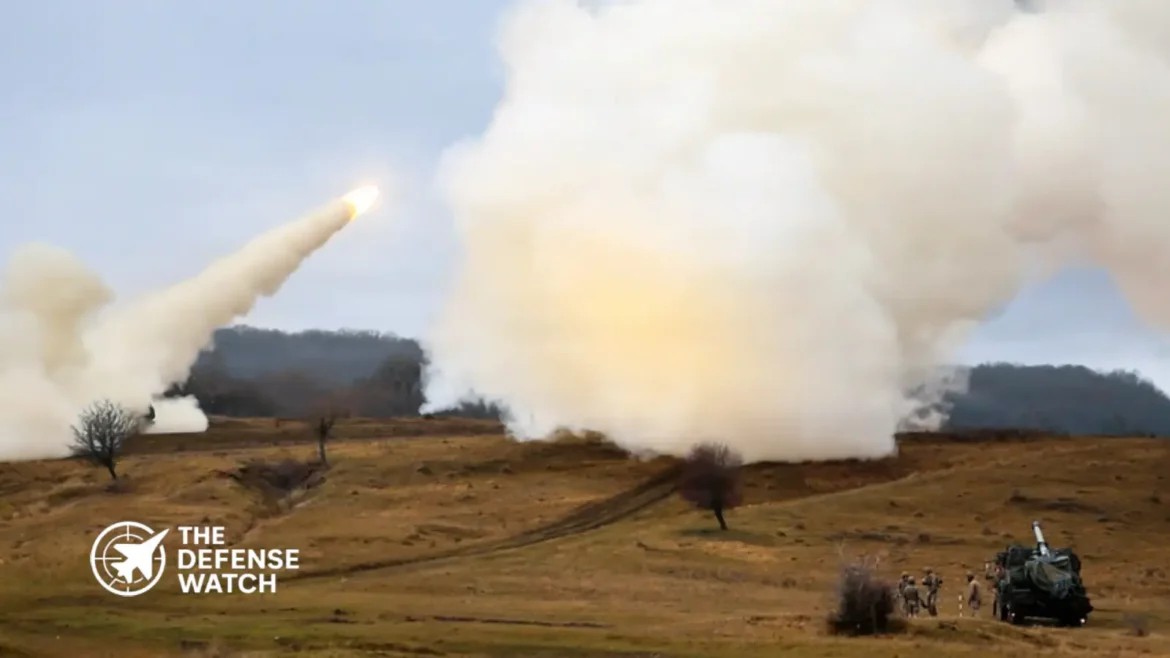
Lockheed Martin is expanding its cooperation with Australian industry as Canberra accelerates plans to field long-range precision strike systems under its broader defense modernization strategy.
The company is increasing collaboration with local suppliers and industrial partners tied to the Australian Army’s acquisition of the M142 HIMARS and the Precision Strike Missile, commonly known as PrSM.
The expansion reflects Australia’s effort to build sovereign industrial capability while improving long-range fires capacity amid growing security competition in the Indo-Pacific.
Australia approved the acquisition of HIMARS launchers in 2023 as part of a wider defense restructuring effort designed to increase mobility, survivability, and strike range. The system has gained significant international attention following its operational use in Ukraine, where it demonstrated high-precision engagement capability against logistics hubs and command infrastructure.
Focus On Sovereign Manufacturing
Lockheed Martin Australia said the latest phase of cooperation centers on increasing participation by domestic companies in manufacturing, sustainment, integration, and future missile support activities.
The company has already signed agreements with several Australian suppliers as Canberra pushes to reduce reliance on overseas sustainment chains. Officials have repeatedly emphasized that future Australian Defense Force procurement programs must generate domestic industrial benefits and improve resilience during potential regional crises.
The HIMARS program is closely linked to Australia’s broader Guided Weapons and Explosive Ordnance initiative, which seeks to establish a domestic missile manufacturing ecosystem over the coming decade.
The addition of the Precision Strike Missile is especially significant. PrSM is designed to replace the aging Army Tactical Missile System, offering substantially greater range, improved survivability, and the ability to strike high-value targets at long distances.
PrSM Expands Long-Range Strike Reach
The Precision Strike Missile is being developed for the U.S. Army as its next-generation long-range precision fires weapon. The missile is expected to exceed the range of legacy ATACMS systems while supporting rapid targeting and network-enabled operations.
For Australia, the introduction of PrSM represents a major expansion in operational reach. Combined with the mobility of the M142 HIMARS, the capability provides the Australian Army with a more flexible deterrence option across dispersed regional environments.
Defense analysts increasingly view long-range fires as central to Indo-Pacific military planning, particularly given the vast maritime distances and the growing importance of distributed operations.
Australia’s 2024 National Defence Strategy identified long-range strike capability as a priority area, alongside integrated air and missile defense, undersea warfare, and northern force posture improvements.
Growing U.S.-Australia Defense Alignment
The HIMARS and PrSM expansion also highlights deepening defense cooperation between Australia and United States.
The two allies have expanded military integration through initiatives linked to AUKUS, rotational force deployments, advanced missile cooperation, and joint exercises across the Indo-Pacific theater.
Washington has encouraged allied nations to develop interoperable precision strike capabilities that can operate across shared command-and-control architectures. Australia’s investment in HIMARS and PrSM aligns directly with that objective.
At the same time, Canberra is attempting to balance rapid capability acquisition with domestic industrial growth. That approach mirrors similar policies adopted by several NATO and Indo-Pacific partners seeking to strengthen defense production capacity after supply chain disruptions exposed vulnerabilities during recent global crises.
Strategic Implications For The Indo-Pacific
The expansion of HIMARS and Precision Strike Missile cooperation comes amid heightened regional military competition and increasing emphasis on deterrence through long-range precision fires.
Australia’s geography places unique importance on mobility and standoff strike capability. Systems such as HIMARS allow rapid deployment across remote operating locations while reducing dependence on fixed infrastructure.
The move also signals a broader shift in Australian force design away from short-range continental defense toward longer-range regional deterrence and integrated allied operations.
While the current focus remains on initial fielding and industrial participation, future cooperation could expand into missile sustainment, component manufacturing, and broader guided weapons integration programs.
Executive Summary:
The United States has approved a $373 million sale of 1,500 JDAM-ER precision guidance kits to Ukraine. The package will significantly enhance Ukraine’s ability to conduct long-range, accurate strikes against Russian positions. The move reflects continued Western efforts to strengthen Kyiv’s stand-off strike capability in a protracted conflict.
U.S. Expands Ukraine’s Precision Strike Arsenal
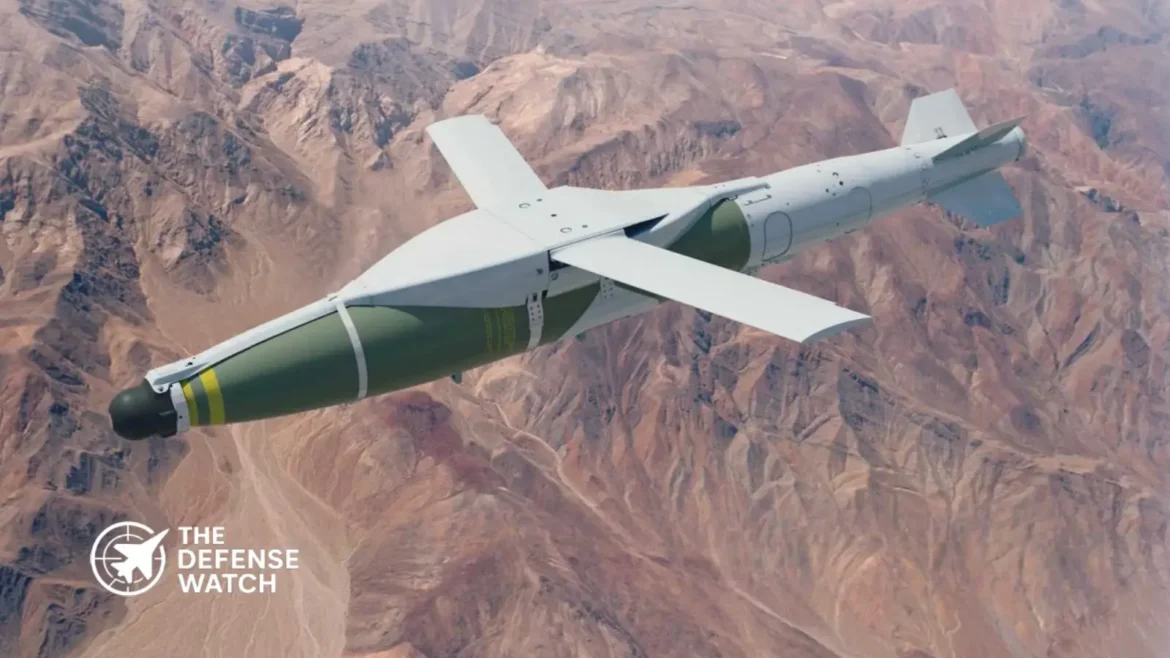
The United States has authorized the transfer of 1,500 Joint Direct Attack Munition-Extended Range (JDAM-ER) kits to Ukraine in a deal valued at $373 million. The systems, produced by Boeing, convert conventional unguided bombs into precision-guided munitions with extended range.
This latest package builds on earlier deliveries of standard JDAM kits and reflects a shift toward longer-range strike solutions. Ukrainian forces have increasingly relied on Western-supplied precision weapons to offset Russia’s numerical advantages in artillery and airpower.
What is JDAM-ER and Why It Matters
The JDAM-ER enhances legacy bombs by adding a GPS guidance system and deployable wings, extending their reach far beyond standard free-fall munitions.
Key Technical Advantages
- Extended Range: Up to 72 km, depending on launch conditions
- High Accuracy: GPS guidance enables strikes within a few meters of target
- Cost Efficiency: Converts existing bomb stockpiles into precision weapons
- All-Weather Capability: Operates in adverse weather conditions
- Stand-off Capability: Allows aircraft to strike without entering high-risk air defense zones
JDAM-ER vs Legacy Unguided Bombs
Feature JDAM-ER Unguided Bombs Range Up to 72 km Limited (free-fall only) Payload Standard bomb compatibility Standard bomb payload Status Operational in Ukraine Legacy systems Key Technology GPS guidance + glide wings None Operational Impact on the Battlefield
The integration of JDAM-ER kits will allow Ukraine to strike logistics hubs, command centers, and fortified positions at greater distances. This reduces exposure of Ukrainian aircraft to Russian air defense systems, a critical factor in contested airspace.
Ukrainian aircraft, including Soviet-era platforms adapted for Western munitions, have already demonstrated the ability to deploy JDAM systems effectively. The ER variant further enhances this capability by increasing stand-off range.
Strategic Context: Shifting Toward Stand-Off Warfare
The delivery comes amid continued fighting in the Russia-Ukraine War, where both sides are investing heavily in precision strike and counter-air defense capabilities.
For the United States, this package underscores a broader strategy:
- Strengthen Ukraine’s deep-strike capability
- Reduce reliance on short-range artillery duels
- Increase pressure on Russian rear-area infrastructure
JDAM-ER also fills a capability gap between traditional artillery and more advanced systems such as cruise missiles, offering a scalable and cost-effective strike option.
Broader Implications for Air Warfare
The deployment of JDAM-ER highlights a growing trend in modern warfare: adapting legacy platforms with precision technology. Instead of relying solely on expensive missiles, militaries are increasingly upgrading existing munitions for greater efficiency and reach.
As the conflict evolves, the emphasis on precision, range, and survivability is likely to intensify, making systems like JDAM-ER central to future air combat operations.