Executive Summary:
The U.S. Department of Defense and Anduril Industries have signed an agreement focused on scaling production of the Barracuda-500M cruise missile. The initiative supports Washington’s push for affordable, rapidly manufacturable precision weapons suited for high-intensity conflicts and Indo-Pacific deterrence operations.
U.S. Anduril Barracuda-500M Cruise Missile Program Expands
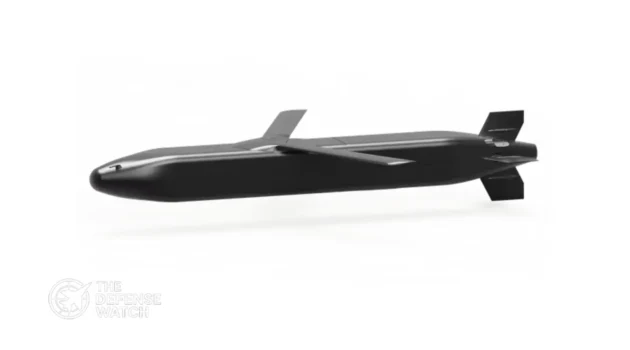
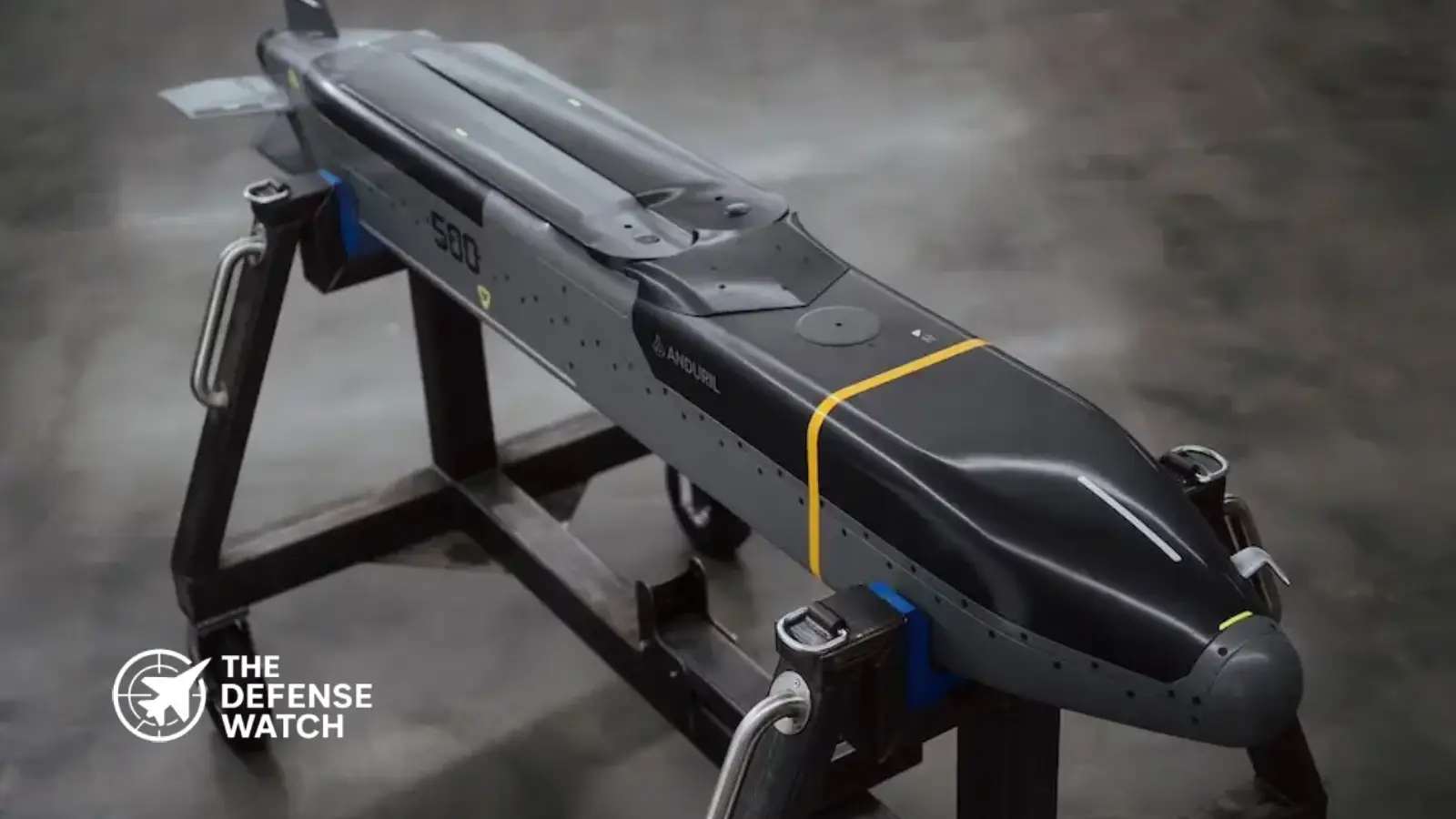
The Barracuda-500M cruise missile program is moving into a new phase after the U.S. government and Anduril Industries reached an agreement focused on mass production and industrial scaling.
The agreement is intended to accelerate production capacity for the Barracuda family of autonomous air vehicles and cruise missiles. The effort reflects broader Pentagon priorities aimed at building larger inventories of affordable precision-guided weapons that can be produced rapidly during wartime.
The Barracuda-500M cruise missile is part of Anduril’s growing portfolio of autonomous and AI-enabled military systems. The platform was designed around modular manufacturing concepts and lower-cost production methods compared with traditional cruise missile programs.
The latest agreement comes as the United States continues to reassess munitions stockpiles and industrial readiness following sustained global demand for precision weapons, particularly after conflicts in Ukraine and the Middle East exposed limitations in existing defense production capacity.
Focus On Affordable Mass Production
A major theme behind the Barracuda-500M cruise missile initiative is scalability.
U.S. defense planners increasingly argue that future conflicts, especially in the Indo-Pacific, may require large quantities of long-range precision weapons rather than limited inventories of expensive systems. That has placed new attention on cost-effective cruise missiles that can be manufactured quickly and in high numbers.
Anduril has positioned the Barracuda system as a response to that requirement. The company says the missile uses simplified manufacturing techniques, commercially derived components where possible, and software-driven architecture intended to reduce both cost and production timelines.
The Barracuda-500M cruise missile reportedly supports autonomous mission capabilities and can integrate with distributed operational concepts now emphasized by the U.S. military. These concepts include dispersed strike operations, networked targeting, and survivable long-range fires in contested environments.
While detailed specifications remain limited, the missile is understood to be designed for flexible deployment options and compatibility with multiple launch platforms.
Pentagon Pushes Defense Industrial Modernization
The agreement also highlights a wider Pentagon effort to modernize the U.S. defense industrial base.
Defense officials have repeatedly warned that current production models for advanced munitions may not sustain the pace required during a prolonged peer-level conflict. The Department of Defense has increasingly partnered with non-traditional defense technology firms to accelerate manufacturing innovation and software integration.
Anduril Industries has become one of the most visible examples of that strategy. Founded in 2017, the company has expanded rapidly across autonomous systems, surveillance technologies, air defense, unmanned platforms, and AI-enabled command systems.
The Barracuda-500M cruise missile program aligns with a broader shift toward attritable and lower-cost precision weapons. Rather than relying entirely on a smaller number of highly expensive cruise missiles, U.S. planners are exploring mixed-force structures that combine advanced premium systems with larger inventories of affordable weapons.
That approach is increasingly viewed as critical for maintaining operational endurance during large-scale conflicts where munitions consumption rates could exceed current stockpile assumptions.
Strategic Importance In The Indo-Pacific
The Barracuda-500M cruise missile could eventually support U.S. operational planning in the Indo-Pacific region, where long-range strike capability remains a core deterrence requirement.
The U.S. military has emphasized the need for survivable, distributed, and rapidly deployable strike systems capable of operating across wide maritime and island environments. Low-cost cruise missiles produced at scale could help address concerns over inventory depletion during sustained operations.
Analysts also note that production speed is becoming as strategically important as missile performance itself. Countries are increasingly measuring military readiness not only by technological sophistication but also by industrial resilience and replenishment capability.
The agreement with Anduril signals continued Pentagon interest in expanding partnerships with defense technology firms capable of shortening development cycles and increasing manufacturing flexibility.
Broader Implications For U.S. Defense Procurement
The Barracuda-500M cruise missile initiative reflects a broader procurement trend inside the U.S. defense sector.
Traditional acquisition timelines for advanced missile systems have often stretched across many years and involved high unit costs. Newer defense firms are attempting to compress those timelines through software-centric development, digital engineering, and commercially influenced manufacturing models.
If successful, the Barracuda program could influence future U.S. procurement strategies for cruise missiles, autonomous weapons, and precision strike systems.
The agreement may also strengthen Anduril’s position within the rapidly expanding market for autonomous defense technologies, an area receiving growing investment from the Pentagon and allied militaries.