Executive Summary:
Britain will procure 72 RCH 155 wheeled artillery systems under a nearly £1 billion ($1.35 billion) modernization program for the British Army. The move restores long range artillery capability after the UK transferred AS90 self propelled guns to Ukraine and deepens industrial defense cooperation with Germany.
Britain Orders 72 RCH 155 Artillery Systems For British Army
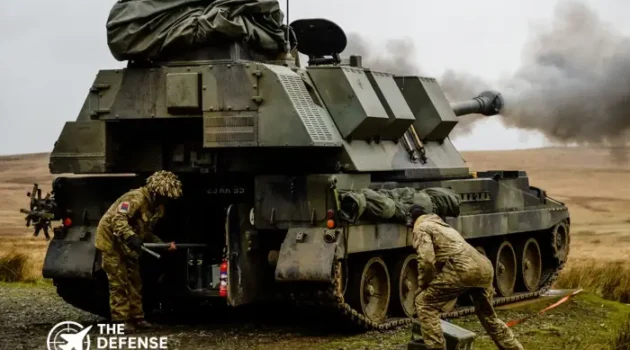
The British government has confirmed plans to acquire 72 RCH 155 remote controlled howitzers as part of a major British Army artillery modernization effort designed to restore long range firepower and improve battlefield mobility. The nearly £1 billion procurement program will replace the aging AS90 artillery fleet that Britain previously donated to Ukraine.
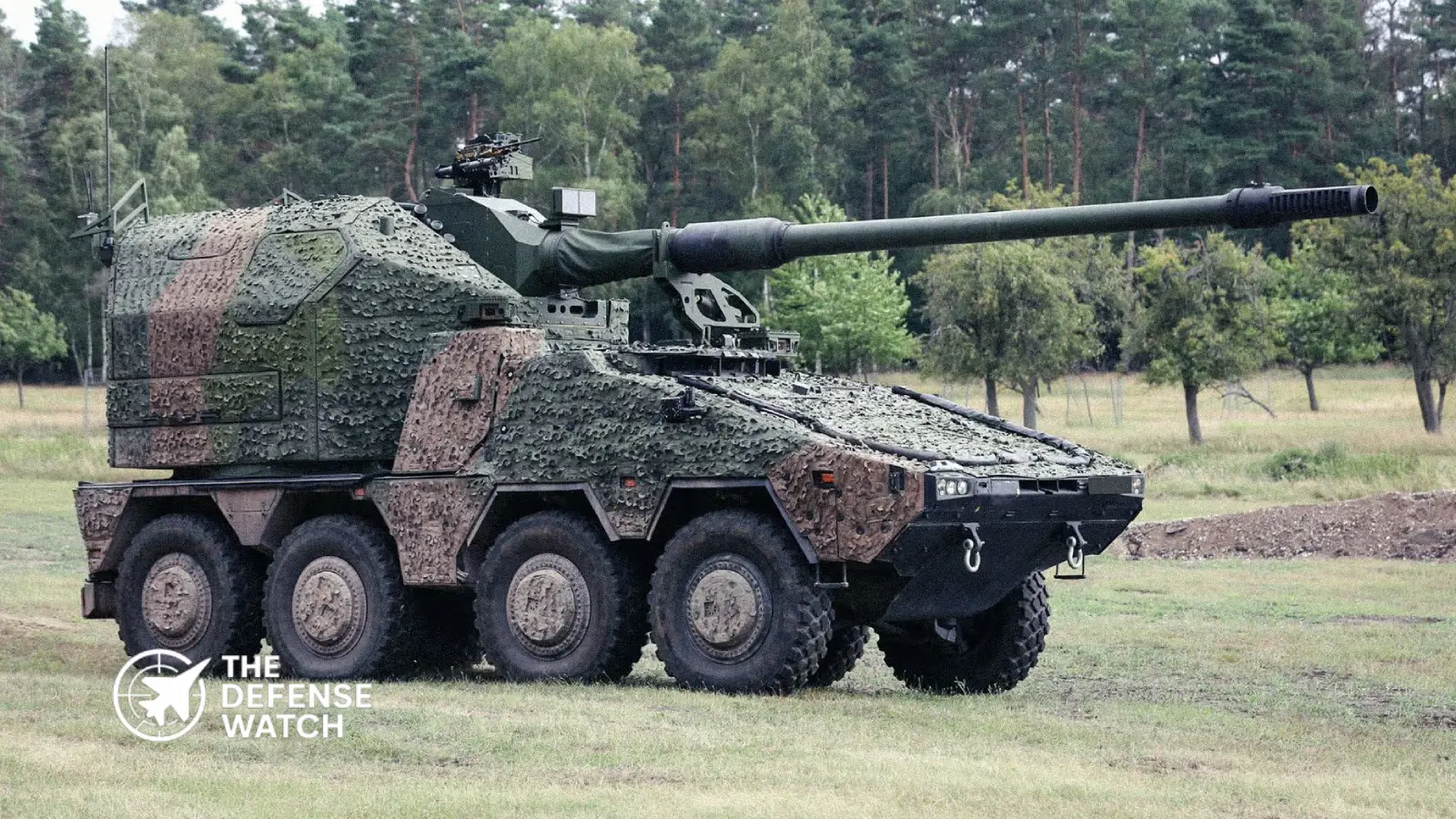
The contract was awarded through the Organisation for Joint Armament Cooperation (OCCAR) to ARTEC GmbH, a joint venture between Rheinmetall and KNDS. The RCH 155 system combines a remotely operated 155 mm artillery gun module with the Boxer 8×8 armored vehicle platform.
British Defence Secretary John Healey described the purchase as both a battlefield and industrial investment, with production expected to support more than 500 jobs across the United Kingdom.
Why The British Army Needs New Artillery
The procurement reflects growing concern inside NATO over artillery shortages and long range fires capability after more than two years of high intensity combat lessons from Ukraine.
Britain transferred much of its AS90 self propelled artillery inventory to Ukrainian forces, creating a significant capability gap in British Army heavy fires units. The RCH 155 acquisition is intended to close that gap while introducing a more survivable and mobile artillery platform.
The RCH 155 can reportedly fire targets up to 70 kilometers away, deliver eight rounds per minute, and move at speeds exceeding 100 km/h. Unlike older artillery systems that must stop before firing, the RCH 155 is designed to conduct rapid shoot and scoot operations that reduce exposure to counter battery fire.
The system also operates with a reduced crew because of its automated loading and fire control architecture. Analysts increasingly view automation and mobility as essential for survivability on modern battlefields dominated by drones, precision strike systems, and electronic surveillance.
UK Germany Defense Cooperation Expands
The program also highlights expanding UK Germany defense cooperation under the Trinity House Agreement, a bilateral framework intended to improve European defense integration and industrial collaboration.
Under the arrangement, Rheinmetall will manufacture major weapon system components at its Telford facility in England, while KNDS UK will produce Boxer chassis and engines in Stockport. British steel supplier Sheffield Forgemasters is also expected to contribute materials for the project.
The deal strengthens Britain’s effort to rebuild sovereign industrial capacity in large caliber artillery manufacturing, an area that many NATO countries reduced after the Cold War. The Ukraine conflict exposed how quickly ammunition stockpiles and artillery inventories can be depleted during prolonged conventional warfare.
The British government has increasingly emphasized domestic defense production as part of a broader rearmament strategy tied to rising tensions in Europe and concerns over long term deterrence against Russia.
Mobile Fires Platform Program Gains Momentum
The RCH 155 forms the centerpiece of the British Army’s Mobile Fires Platform program, which aims to replace legacy artillery systems with highly mobile, networked, and longer range platforms.
Britain had temporarily acquired Swedish Archer artillery systems as an interim solution after donating AS90 platforms to Ukraine. However, the RCH 155 is expected to become the Army’s enduring artillery capability through the 2030s.
First deliveries are expected in 2028, with British officials aiming to achieve an initial deployable capability before the end of the decade.
The procurement aligns with wider NATO efforts to rebuild artillery inventories and increase readiness levels following repeated warnings from military planners about ammunition shortages and insufficient heavy firepower capacity across Europe.
Strategic Implications For NATO
The British Army artillery modernization program carries significance beyond the UK itself. NATO planners increasingly see long range artillery as one of the alliance’s most critical battlefield requirements in any potential high intensity conflict.
Russia’s extensive use of artillery in Ukraine has reinforced the importance of deep fires, rapid targeting, and survivable mobile gun systems. European militaries are now accelerating procurement programs for self propelled artillery, rocket systems, and precision guided munitions.
For Britain, the RCH 155 purchase signals a shift toward rebuilding warfighting readiness after years of force reductions and underinvestment. It also demonstrates how European defense industrial cooperation is becoming more central to NATO modernization plans.
While Britain has pledged the largest defense spending increase since World War II, analysts note that many modernization programs still depend on sustained long term funding and faster procurement timelines.