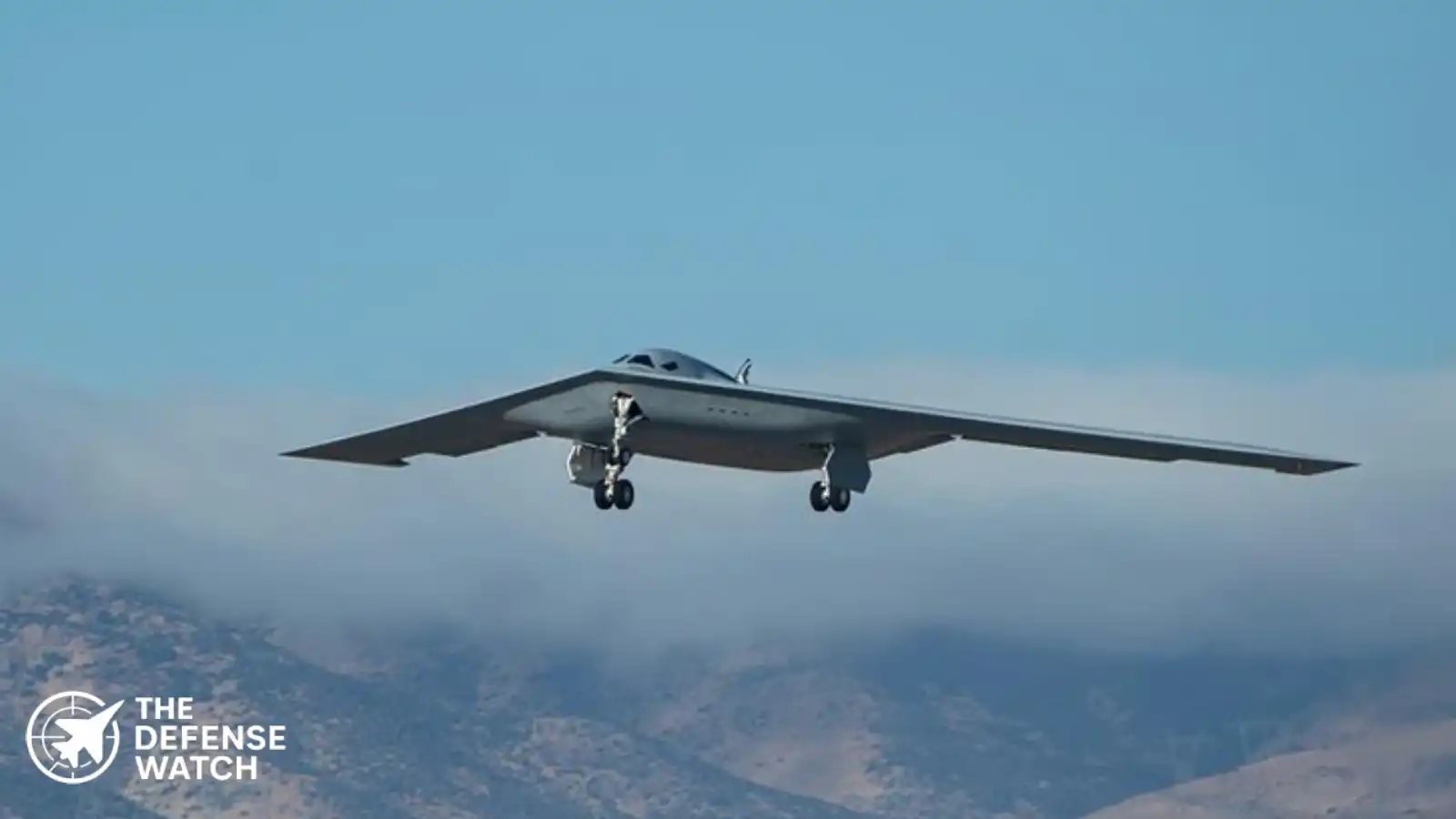
Executive Summary: A U.S. Air Force B-2 Spirit completed a more than 16-hour direct flight from Missouri to RAAF Base Amberley, Australia, during a June 2026 Bomber Task Force deployment. The mission demonstrated the bomber’s ability to project long-range stealth strike power into the Indo-Pacific while integrating with Australian tankers, aircraft and ground personnel.
B-2 Spirit Demonstrates Long-Range Strike Capability In Australia
The B-2 Spirit’s more than 16-hour flight from the continental United States to Australia highlights a central feature of U.S. global strike doctrine: strategic bombers can operate across the Indo-Pacific without requiring the aircraft to begin their missions from a forward combat base. The June 2026 deployment to RAAF Base Amberley was conducted as part of Bomber Task Force operations and Exercise Diamond Storm.
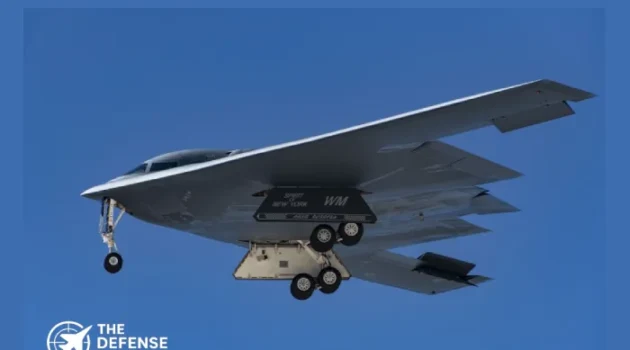
The aircraft, identified as Spirit of Texas and assigned to the 393rd Expeditionary Bomb Squadron of the 509th Bomb Wing at Whiteman Air Force Base, Missouri, reached Australia after an extended flight supported by aerial refueling. The deployment also involved Royal Australian Air Force KC-30A tanker aircraft and U.S. Air Force KC-135 Stratotankers.
The operation provides a useful example of how the United States and Australia are developing the ability to combine strategic strike aircraft, tanker support, fifth-generation fighters and expeditionary infrastructure across a very large operating area.
Why The 16-Hour Flight Matters
The significance of the mission goes beyond the distance covered.
The B-2 is designed to conduct penetrating strike missions against heavily defended targets. Its low-observable design reduces radar, infrared, acoustic, electromagnetic and visual signatures, allowing the aircraft to operate with a lower probability of detection than conventional aircraft. The U.S. Air Force lists an unrefueled range of approximately 6,000 nautical miles, or 9,600 kilometers.
The flight to Australia demonstrates how aerial refueling extends that basic range.
Instead of depending entirely on a forward airfield, the bomber can depart from Whiteman Air Force Base and receive fuel while in transit. This creates additional operational options for U.S. Strategic Command and theater commanders, particularly in regions where airfields, ports and other fixed military infrastructure could face long-range missile threats.
The distinction is important in the Indo-Pacific, where distances between major military bases can be measured in thousands of miles.
Australian KC-30A Adds A Key Allied Capability
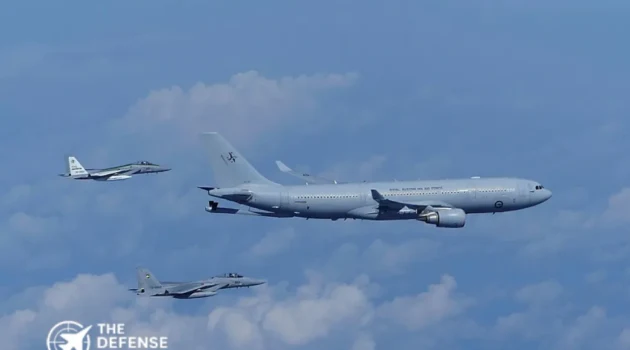
One of the most significant elements of the deployment was the participation of Australia’s KC-30A Multi Role Tanker Transport aircraft.
U.S. Air Force imagery from June 11 shows a B-2 receiving fuel from a Royal Australian Air Force KC-30A over the South Pacific. The operation formed part of the Bomber Task Force deployment and demonstrated the ability of Australian and U.S. aircrews to support the same long-range mission.
Australian ground crews also supported the B-2 at RAAF Base Amberley, including hot-pit refueling operations. Hot-pit refueling allows an aircraft to receive fuel while remaining on the ground with its engines running, reducing some turnaround time between missions.
For the alliance, the practical value is significant. Tanker interoperability can extend the operating radius of combat aircraft while reducing the amount of dependence on a limited number of forward bases.
B-2 Integration With Australian Airpower
The 2026 deployment was not simply a long-distance bomber flight.
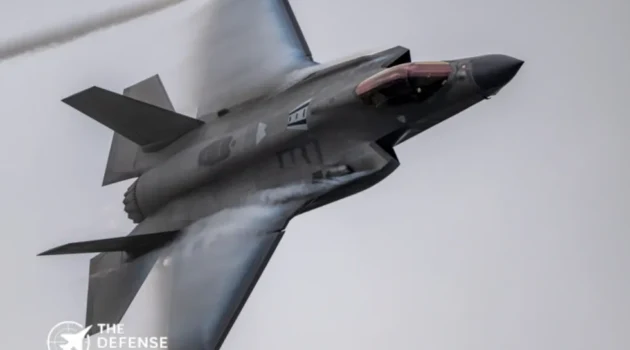
The B-2 operated with Australian aircraft as part of Exercise Diamond Storm, including integration with Royal Australian Air Force F-35A Lightning II fighters. Australian Defence said the activity included fifth-generation integration, air-to-air support, ground-based refueling and security and logistics support at Amberley.
That combination is important because modern air operations increasingly depend on networks rather than individual aircraft.
The B-2 supplies long-range penetrating strike capability. F-35A aircraft can contribute sensing, targeting and air combat capabilities. Tankers extend the endurance of the force, while ground personnel provide the maintenance, security and logistics infrastructure needed to sustain operations.
The result is a more complex force package than a bomber operating independently.
Key B-2 Spirit Capabilities
Capability B-2 Spirit Primary mission Multi-role strategic bomber Crew Two pilots Engines Four General Electric F118-GE-100 Unrefueled range Approximately 6,000 nautical miles Maximum payload 60,000 pounds Maximum takeoff weight 336,500 pounds Maximum altitude Approximately 50,000 feet Speed High subsonic Weapons Conventional and nuclear Operational base Whiteman Air Force Base, Missouri The U.S. Air Force lists 20 B-2 aircraft in the active inventory as of May 2026, including one test aircraft. The fleet remains a highly specialized component of the U.S. long-range strike force.
The B-2 Remains Relevant As The B-21 Enters The Force
The Australian mission also illustrates why the B-2 continues to receive significant attention while the Air Force transitions toward the B-21 Raider.
The B-2 is an aging aircraft, but its combination of stealth, range and payload remains valuable for penetrating strike missions. In July 2026, the Air Force reported that the B-2 Spirit of Ohio had returned to operational service after programmed depot maintenance, reinforcing the importance of keeping individual aircraft available for global missions.
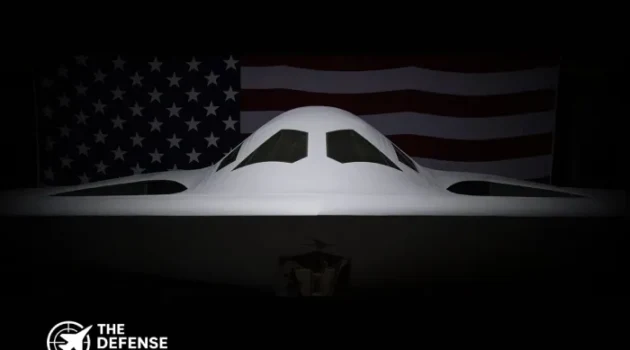
At the same time, the B-21 is being developed as the future backbone of the Air Force’s bomber fleet alongside the B-52. The Department of the Air Force announced in July 2026 that the B-21 will operate with a two-pilot crew and is intended to conduct extended-duration, long-range missions in contested environments.
The B-2 therefore occupies an important transitional position. It provides an operationally proven penetrating stealth bomber capability while the United States develops a larger and more sustainable next-generation bomber force.
Indo-Pacific Operations Depend On More Than Range
The June mission also demonstrates a broader operational reality.
Long-range aircraft do not operate independently of logistics. Even an aircraft with intercontinental range depends on tanker aircraft, maintenance crews, weapons support, secure communications, airfield infrastructure and trained personnel.
The Australian deployment brought several of those elements together.
The U.S. Air Force described the Bomber Task Force deployment as an opportunity to demonstrate Agile Combat Employment and generate combat power in the Indo-Pacific. The Australian Defence Force similarly emphasized that the B-2’s participation in Diamond Storm strengthened interoperability and demonstrated Australia’s ability to provide security, logistics and operational support in a demanding environment.
This matters because the Indo-Pacific presents an unusually challenging geography for air operations. Forces may need to operate over enormous distances while maintaining enough flexibility to shift between bases and mission areas.
The ability to move a B-2 from Missouri to Australia, refuel it in flight, integrate it with allied aircraft and support it at an Australian airbase provides a practical demonstration of that flexibility.
B-2 Expands The U.S. Strategic Options In The Pacific
The B-2 deployment should not be viewed simply as a demonstration flight.
It tested several capabilities that would be relevant to a real contingency: long-distance movement from the continental United States, tanker integration, allied refueling, expeditionary support, stealth bomber operations and coordination with fifth-generation aircraft.
The United States has repeatedly used Bomber Task Force deployments to maintain bomber proficiency and strengthen interoperability with allies. Previous B-2 operations in Australia included a 2024 deployment involving three aircraft and extensive integration with Australian F-35s, F/A-18F Super Hornets, EA-18G Growlers and KC-30A tankers.
The 2026 deployment builds on that pattern.
It also comes as U.S. and allied forces expand the range of capabilities used for Indo-Pacific deterrence. In June 2026, Pacific Air Forces conducted a B-2 live-fire exercise involving the AGM-158C Long Range Anti-Ship Missile north of the Mariana Islands, demonstrating that the bomber can contribute to counter-maritime strike missions as well as traditional long-range strike roles.
Taken together, these activities show how the B-2 is being used as part of a broader network of U.S. and allied capabilities.
What The Mission Demonstrates
The most important lesson from the Australia deployment is not simply that the B-2 can fly for more than 16 hours.
It is that U.S. global strike capability depends on the ability to connect long-range aircraft with tankers, allied bases, combat aircraft and support personnel across vast distances.
For Australia, the deployment provides experience in supporting one of the U.S. military’s most specialized aircraft. For the United States, it provides an additional operating environment and strengthens the practical integration needed for high-end air operations in the Indo-Pacific.
As the B-21 gradually becomes part of the U.S. bomber force, the B-2 will remain an important operational bridge between the current bomber fleet and the next generation of penetrating strike aircraft.
The June 2026 flight to Australia therefore represents more than a long-distance transit. It demonstrates the continued ability of the United States to move a stealth strategic bomber from the continental homeland into the Indo-Pacific and integrate it with an ally’s airpower and support infrastructure.