
- Home
- Defense Systems
- Naval Destroyers (Warships)
- Asagiri-class Destroyer
Asagiri-class Destroyer
Defense Systems Full Specifications
1. General Information
| System Name | Asagiri-class Destroyer |
| Type / Role | Guided-Missile Destroyer / Fleet Escort |
| Manufacturer | Mitsubishi Heavy Industries, IHI |
| Country of Origin | Japan |
| In Service | Yes |
| Year Introduced | 1988 |
| Unit Cost | US$350 to 500 million (estimated historical cost) |
| Crew | Approximately 220 personnel |
2. Dimensions & Structure
| Length | 137 m |
| Beam (Width) | 14.6 m |
| Draft | 4.5 m |
| Displacement | 4,900 tons full load |
| Hull Material | Steel |
| Deck Configuration | Flight deck and enclosed helicopter hangar |
3. Performance & Propulsion
| Propulsion Type | COGAG |
| Engine Model | 4 × Kawasaki-Rolls-Royce Spey Gas Turbines |
| Power Output | Approx. 54,000 shp |
| Maximum Speed | 30 knots |
| Range | 8,000 nautical miles |
| Endurance | Extended blue-water operations |
4. Sensors & Radar Systems
| Primary Radar | OPS-14 Air Search Radar |
| Radar Range | Approx. 150 to 200 km |
| Sonar System | OQS-6 Hull-Mounted Sonar |
| Electro-Optical / IR System | Limited optical tracking systems |
| Electronic Warfare Suite | NOLR ESM System |
| Fire Control Radar | FCS-2 Fire Control System |
5. Weapons & Armament
| Main Gun | 76 mm OTO Melara Naval Gun |
| Vertical Launch System (VLS) Cells | None |
| Missiles | RIM-7 Sea Sparrow SAM |
| Anti-Ship Missiles | 8 × Type 90 (SSM-1B) |
| Anti-Submarine Torpedoes | Type 68 Triple Torpedo Tubes |
| Close-In Weapon System (CIWS) | 2 × Phalanx CIWS |
| Decoy Systems | Chaff and electronic decoys |
6. Aviation & Support
| Helicopter Capability | Yes |
| Hangar Capacity | 1 SH-60J/K Helicopter |
| UAV Operations | Not designed for routine UAV operations |
| Flight Deck Size | Single helicopter deck |
| Replenishment at Sea | Supported |
7. Defensive & Electronic Systems
| Countermeasures | Chaff launchers and decoys |
| ECM / ECCM | Electronic support and countermeasure systems |
| Missile Defense System | Sea Sparrow and Phalanx CIWS |
| Combat Management System | JMSDF Combat Direction System |
| Communication Systems | Secure naval communications suite |
8. Operational Information
| Service Branch | Japan Maritime Self-Defense Force |
| Primary Operator | Japan |
| Operational History | Fleet escort, maritime security, ASW missions |
| Notable Feature | Strong anti-submarine warfare capability with helicopter support |
PROS
- Strong anti-submarine warfare capability
- Long operational range for regional deployments
- Helicopter hangar and flight deck enhance mission flexibility
- Proven and reliable platform with decades of service
- Effective combination of missiles, guns, and torpedoes
CONS
- No modern vertical launch system (VLS)
- Limited area air-defense capability
- Aging sensors compared to newer destroyers
- Reduced stealth characteristics by modern standards
- Requires modernization to remain competitive
Asagiri-class Destroyer: Japan’s Proven Multi-Role Warship
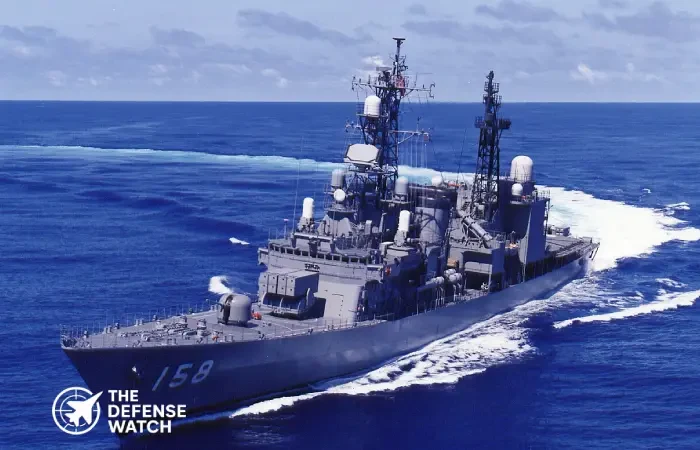
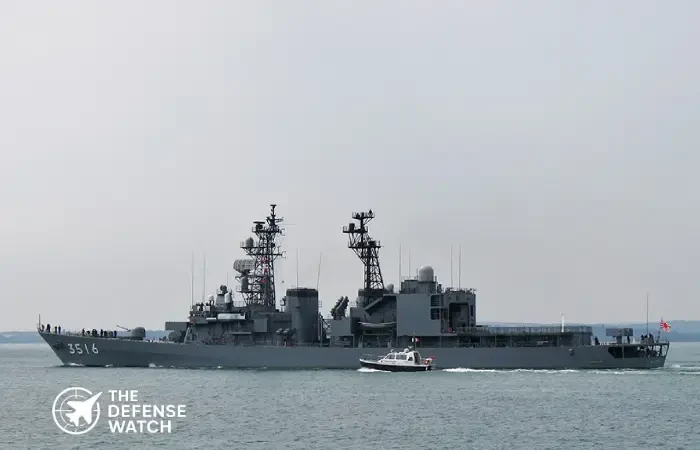
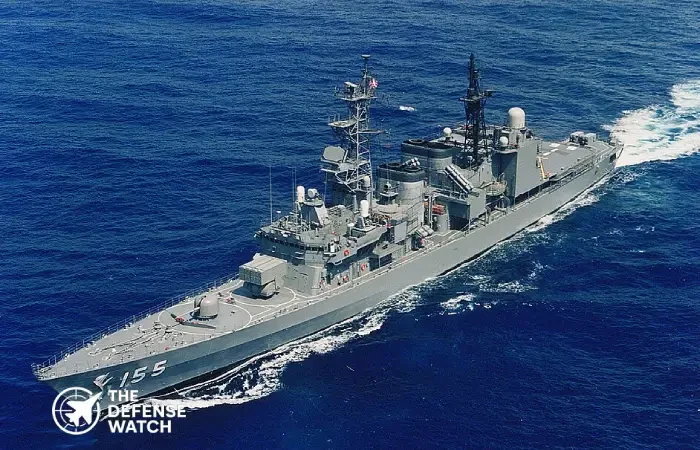
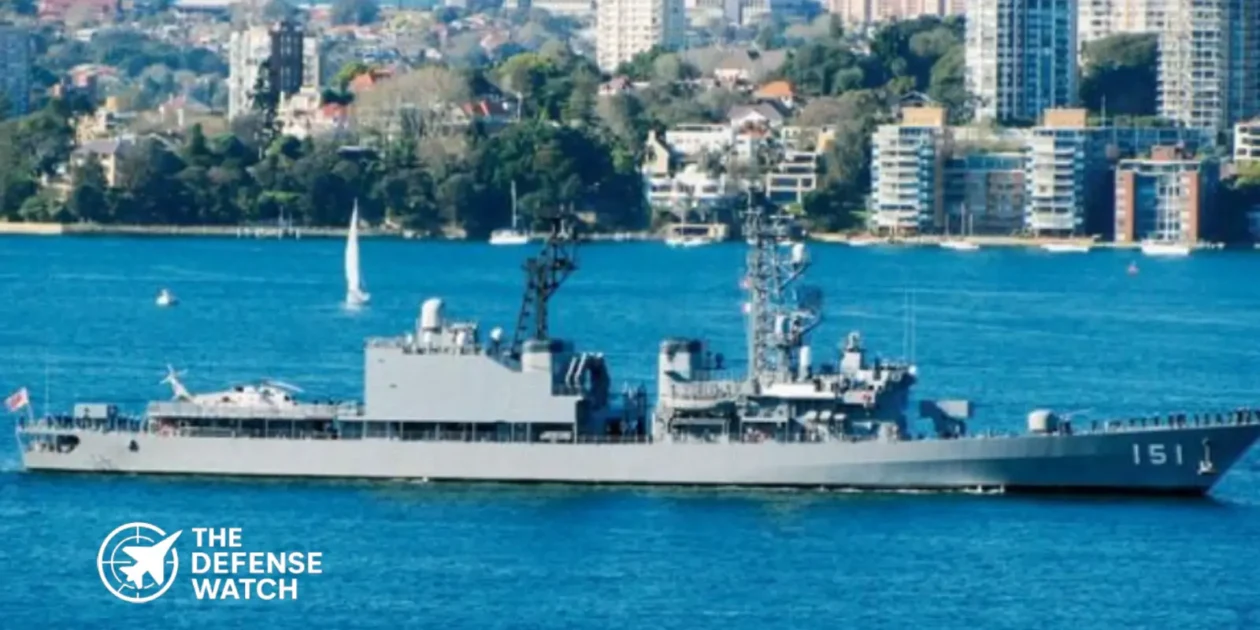
The Asagiri-class destroyer is a class of multi-purpose guided-missile destroyers developed for the Japan Maritime Self-Defense Force (JMSDF). Introduced during the late Cold War era, these ships were designed to provide fleet escort, anti-submarine warfare (ASW), anti-surface warfare (ASuW), and air defense capabilities. Although newer destroyers have entered Japanese service, the Asagiri class remains a respected platform known for reliability, endurance, and balanced combat performance.
Built to protect Japanese maritime interests and sea lines of communication, the class combines missile armament, advanced sonar systems, and embarked helicopters to counter a wide range of naval threats.
Manufacturer
The Asagiri-class destroyers were constructed by leading Japanese shipbuilders, including Mitsubishi Heavy Industries and Ishikawajima-Harima Heavy Industries (IHI). Development was overseen by the Japan Defense Agency to replace older destroyer classes and strengthen Japan’s maritime defense posture.
The vessels feature a combined gas turbine propulsion system, advanced combat management systems, and a flight deck capable of supporting anti-submarine helicopters. Their primary armament includes anti-ship missiles, torpedoes, naval guns, and close-in defense systems.
Speed and Range
Powered by four gas turbines in a COGAG (Combined Gas and Gas) arrangement, the Asagiri-class destroyer can achieve speeds of approximately 30 knots (56 km/h). The class offers an operational range of around 8,000 nautical miles at economical cruising speed, enabling extended deployments throughout the Indo-Pacific region.
Cost/Price
The estimated construction cost of each Asagiri-class destroyer was approximately ¥50 billion to ¥60 billion at the time of procurement, equivalent to roughly US$350 million to US$500 million depending on exchange rates and modernization programs. Actual lifecycle costs vary based on upgrades, maintenance requirements, and operational tempo.
Designed as a balanced and versatile escort vessel, the Asagiri class continues to demonstrate the value of robust naval platforms capable of performing anti-submarine, anti-surface, and limited air defense missions.
Disclaimer Note
The information provided on TheDefenseWatch.com is for general informational purposes only. While we strive to ensure the accuracy, completeness, and timeliness of our content regarding defense and aerospace products, technologies, and specifications, we cannot guarantee that all information is 100% accurate or up-to-date due to the evolving nature of military technology and classified data.TheDefenseWatch.com does not warrant the reliability, suitability, or availability of the information for any specific purpose. Users are advised to consult official sources, such as manufacturers, government publications, or defense agencies, for precise and verified data before making decisions based on our content.We are not affiliated with any defense manufacturers, governments, or military organizations mentioned. Opinions, reviews, and ratings reflect expert analysis but are subjective and should not be considered endorsements. TheDefenseWatch.com is not responsible for any errors, omissions, or consequences arising from the use of this website’s content.External links are provided for convenience and do not imply endorsement. TheDefenseWatch.com reserves the right to update or modify content without prior notice. By using this website, you agree to our Privacy & Cookies Policy.
New Arrivals


Popular Comparisons
-
 J-10C vs JF-17 Thunder: Which Fighter Is More Capable?
View Comparison →
J-10C vs JF-17 Thunder: Which Fighter Is More Capable?
View Comparison → -
Tejas vs Gripen: Key Differences and Capabilities
View Comparison →
-
Tejas vs MiG-21 Bison: How India Replaced Its Iconic Supersonic Fighter
View Comparison →
-
F-35 vs F-16: Stealth, Sensors and Combat Roles
View Comparison →
-
Tejas Fighter Jet vs F-16 Fighting Falcon: Capability Compared
View Comparison →
-
Rafale Fighter Jet vs F-16 Fighting Falcon : Which Fighter Has the Edge?
View Comparison →
-
Su-57 Fighter Jet vs J-20 Fighter Jet: Stealth and Air Combat Compared
View Comparison →
-
Mirage 2000 vs Tejas Mk1A: Legacy Combat Power vs Indigenous Modernization
View Comparison →
-
Rafale Fighter Jet vs F-22 Raptor: Which Air Dominance Fighter Has the Edge?
View Comparison →
-
Tejas Fighter Jet vs. Rafale Fighter Jet: India’s Indigenous Fighter Meets France’s Proven Multirole Combat Aircraft
View Comparison →


- P-800 Oniks Missile: Range, Speed and BrahMos Comparison

- Ukrainian Drone Unit Caused 70% of Simulated U.S. Brigade Casualties in Germany Exercise
- OCCAR Marks 25 Years of European Defense Cooperation With 28 Programs
- Saab Q3 2026 Results Show 30.6% Organic Sales Growth as Orders Surge
- How Much Does a Tomahawk Missile Cost? Price, Range and Blocks
- Faster Than Sound, Unstoppable at Sea: Inside China’s YJ-20 and YJ-17 Hypersonic Missiles
- U.S., Australia and UK Test Maritime Autonomy Under AUKUS
- TAI Anka-3: Turkey’s Stealth Flying-Wing Drone and Specifications
- Lockheed Martin’s Third-Quarter Innovations Span Missile Defense, Aviation and Space
- RTX Plans to Increase Missile Production Up to Fourfold Under Pentagon Contracts


Fighter Jets
-
 SU-57 Felon Stealth Fighter
-
Boeing F/A-XX Fighter
-
JF-17 Thunder Fighter Jet
-
F-47 Fighter Jet
-
MIG-31 Fighter Jet
-
J-10CE Fighter Jet
-
Chengdu J-10 Fighter Jet
-
Chengdu J-10C Fighter Jet
-
Gripen E Fighter Jet
-
Tejas Mk1A Fighter Jet
-
Tejas Mk‑2 Fighter Jet
-
F-16V Viper Block 70 Fighter Jet
-
F-15EX Eagle II Fighter
-
F-15E Strike Eagle Fighter
-
F/A-18E/F Super Hornet Fighter Jet
-
Saab Gripen F Fighter Jet
-
JAS 39E/F Gripen Fighter Jet
-
JAS 39 Gripen Fighter Jet
-
F-35A Lightning II Fighter Jet
-
F/A-18F Super Hornet
-
J-50 Fighter Jet
-
Spanish EF-18 Hornet Fighter
-
F-35i Adir Fighter Jet
-
F-16 Fighting Falcon






Recent Compares
-
J-10C vs JF-17 Thunder: Which Fighter Is More Capable?
View Comparison →
-
Tejas vs Gripen: Key Differences and Capabilities
View Comparison →
-
Tejas vs MiG-21 Bison: How India Replaced Its Iconic Supersonic Fighter
View Comparison →
-
F-35 vs F-16: Stealth, Sensors and Combat Roles
View Comparison →
-
Tejas Fighter Jet vs F-16 Fighting Falcon: Capability Compared
View Comparison →
Latest Defense Systems
10 Compares Defense Systems
-
J-10C vs JF-17 Thunder: Which Fighter Is More Capable?
View Comparison →
-
Tejas vs Gripen: Key Differences and Capabilities
View Comparison →
-
Tejas vs MiG-21 Bison: How India Replaced Its Iconic Supersonic Fighter
View Comparison →
-
F-35 vs F-16: Stealth, Sensors and Combat Roles
View Comparison →
-
Tejas Fighter Jet vs F-16 Fighting Falcon: Capability Compared
View Comparison →
-
Rafale Fighter Jet vs F-16 Fighting Falcon : Which Fighter Has the Edge?
View Comparison →
-
Su-57 Fighter Jet vs J-20 Fighter Jet: Stealth and Air Combat Compared
View Comparison →
-
Mirage 2000 vs Tejas Mk1A: Legacy Combat Power vs Indigenous Modernization
View Comparison →
-
Rafale Fighter Jet vs F-22 Raptor: Which Air Dominance Fighter Has the Edge?
View Comparison →
-
Tejas Fighter Jet vs. Rafale Fighter Jet: India’s Indigenous Fighter Meets France’s Proven Multirole Combat Aircraft
View Comparison →
- P-800 Oniks Missile: Range, Speed and BrahMos Comparison
- Ukrainian Drone Unit Caused 70% of Simulated U.S. Brigade Casualties in Germany Exercise
- OCCAR Marks 25 Years of European Defense Cooperation With 28 Programs
- Saab Q3 2026 Results Show 30.6% Organic Sales Growth as Orders Surge
- How Much Does a Tomahawk Missile Cost? Price, Range and Blocks