
Executive Summary:
Sikorsky, a Lockheed Martin company, has completed the initial ground and flight testing phase of its Nomad 100 autonomous uncrewed aerial system under DARPA’s Early VTOL Aircraft Demonstration (EVADE) program. The milestone advances a new generation of runway independent military aircraft designed to combine helicopter flexibility with fixed wing efficiency for future crewed and uncrewed operations.
Sikorsky Nomad 100 Reaches Major DARPA Flight Test Milestone
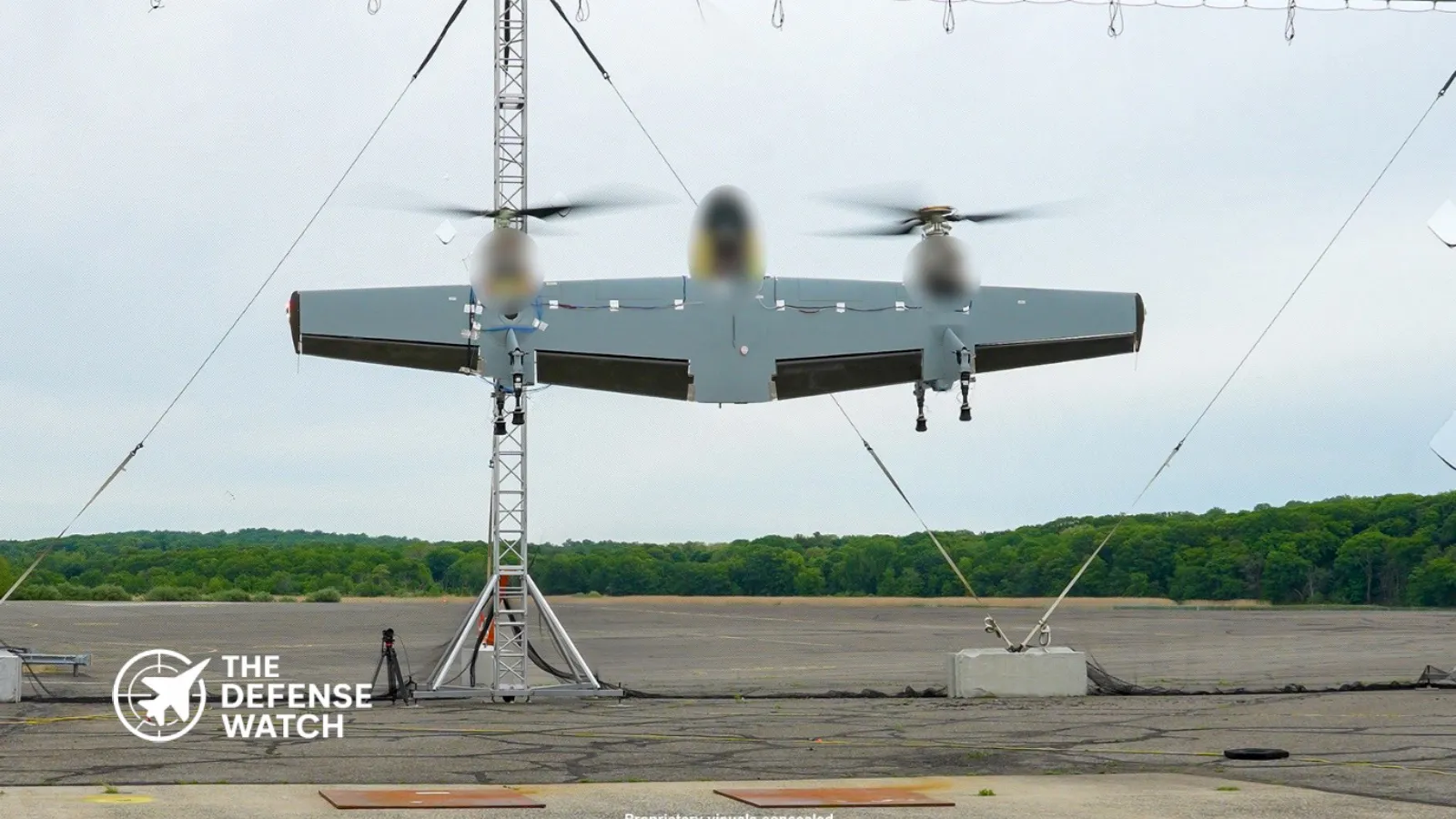
Lockheed Martin’s Sikorsky Nomad 100 has completed its first phase of ground and flight testing as part of the U.S. Defense Advanced Research Projects Agency (DARPA) Early VTOL Aircraft Demonstration (EVADE) program, according to an official company announcement released on July 22 during the Farnborough International Airshow. The achievement marks an important step toward validating autonomous vertical takeoff and landing technologies for future U.S. military missions.
The testing campaign demonstrates that the Nomad 100 is progressing from prototype development toward more demanding government evaluations. Sikorsky confirmed the aircraft will next undergo an expanded flight test campaign at a government facility where it will perform multiple operational mission profiles.
Designed For Future Multi Domain Operations
The Nomad 100 represents Sikorsky’s latest effort to enter the growing military uncrewed aircraft market with a platform capable of operating without traditional runways.
Unlike conventional drones, the aircraft uses a rotor blown wing architecture, combining helicopter style vertical lift with fixed wing cruise performance. This enables operations from locations where traditional aircraft cannot easily deploy.
According to Sikorsky, the platform is capable of:
- Vertical takeoff and landing
- Hover operations
- Fixed wing cruise flight
- Shipboard operations
- Operations from austere forward bases
- All weather missions over land and sea
MATRIX Autonomy Powers The Aircraft
A key feature of the Nomad 100 is its integration of Sikorsky’s MATRIX autonomous flight system, which DARPA selected as the common autonomy solution for all five aircraft participating in the EVADE program.
MATRIX enables operators to assign missions while allowing the aircraft to plan routes, avoid hazards, adapt to changing conditions, and execute complex tasks with reduced pilot workload.
According to Lockheed Martin, MATRIX has accumulated:
| Capability | Reported Status |
|---|---|
| Flight hours | More than 1,000 |
| Flight tests & demonstrations | More than 500 |
| Operators trained | More than 100 |
| Aircraft integrated | More than 20 platforms |
The technology has previously been demonstrated on several autonomous aircraft, including the S-70 UAS U-Hawk and Sikorsky’s Hybrid Electric Demonstrator.
Technical Characteristics
Although Sikorsky has not released full performance specifications, the company confirmed several notable design features.
| Feature | Description |
|---|---|
| Aircraft Type | Autonomous VTOL UAS |
| Takeoff Method | Vertical |
| Propulsion | Twin prop rotor system |
| Configuration | Rotor blown wing |
| Runway Requirement | None |
| Primary Missions | Logistics, resupply, multi role operations |
| Autonomy | MATRIX autonomous flight system |
Some technical details remain intentionally undisclosed because the program is still in development.
Why The Nomad 100 Matters
The Nomad 100 reflects a broader shift across the U.S. defense sector toward autonomous aircraft that can support forces operating in highly contested environments.
Future conflicts may require aircraft capable of launching from dispersed locations rather than established airfields. Vertical takeoff capability combined with autonomous navigation allows military planners to reduce dependence on vulnerable runways while expanding operational flexibility.
The rotor blown wing configuration also attempts to solve a longstanding engineering challenge. Traditional helicopters provide excellent hover capability but have limited speed and endurance. Conventional fixed wing aircraft are more efficient but require prepared runways. By combining both approaches, Sikorsky aims to deliver greater operational reach without sacrificing deployment flexibility.
Equally significant is the platform’s intended role in crewed and uncrewed teaming. Rather than replacing manned aircraft, the Nomad 100 is designed to operate alongside helicopters and other military assets, conducting logistics, reconnaissance, and support missions that reduce risk to human crews. This aligns with broader U.S. Department of Defense modernization priorities emphasizing autonomous systems, distributed operations, and resilient battlefield logistics.
Next Phase Of DARPA Testing
Following completion of the initial flight campaign, Sikorsky plans to move the aircraft into a government operated testing environment where additional missions will evaluate its performance under more operationally representative conditions.
These trials are expected to assess:
- Autonomous mission execution
- Crewed and uncrewed teaming
- Austere landing operations
- Maritime operations
- Multi mission adaptability
The results will help determine how technologies developed through DARPA’s EVADE program could transition into future U.S. military capabilities.
Broader Defense Industry Context
The Nomad 100 arrives as defense organizations worldwide accelerate investment in autonomous aviation. Programs increasingly emphasize runway independent aircraft that can deliver supplies, conduct reconnaissance, and operate in contested environments where conventional logistics are vulnerable.
For Lockheed Martin and Sikorsky, the Nomad family also represents an expansion beyond traditional rotorcraft into scalable autonomous systems supported by artificial intelligence, advanced manufacturing, and electric propulsion technologies. While the company has not announced production timelines, successful completion of the initial flight phase demonstrates measurable progress toward operational maturity.