(adsbygoogle = window.adsbygoogle || []).push({});Executive Summary:
The United States has announced the transfer of a 210-foot Reliance-class cutter to the Philippine Coast Guard, marking another significant step in expanding maritime security cooperation between Washington and Manila. The vessel will strengthen Philippine patrol capacity across contested and remote maritime areas as both countries deepen coordination in response to evolving security challenges in the Indo-Pacific. to their endurance, seakeeping characteristics, and ability to remain deployed for extended periods. stretching from the Philippine Sea to the South China Sea. patrol activities. . by U.S. Coast Guard assets alongside Philippine Navy and Coast Guard vessels. and Security Memorandum of Agreement aimed at improving secure information sharing between both countries. To Philippine Coast Guard”
US Announces Reliance-Class Cutter Transfer To The Philippines
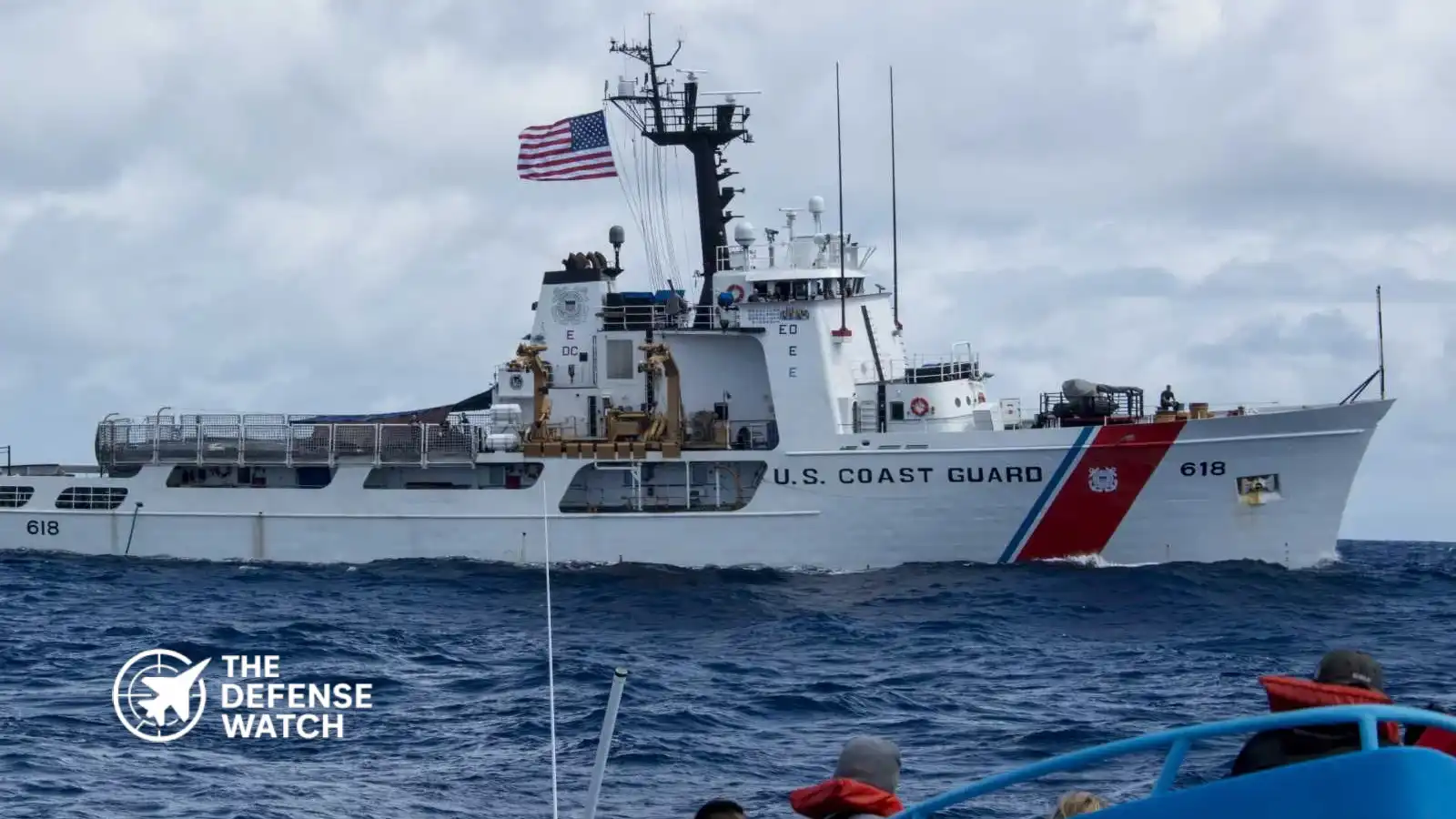
The United States will transfer a decommissioned 210-foot Reliance-class cutter to the Philippine Coast Guard (PCG), providing Manila with an additional medium-endurance vessel capable of extended maritime patrol missions.
The announcement was made by U.S. Defense Secretary Pete Hegseth during meetings with Philippine defense officials on the sidelines of the 2026 Shangri-La Dialogue in Singapore. Philippine Defense Secretary Gilberto Teodoro Jr. and senior military leaders welcomed the transfer as part of broader bilateral security cooperation.
The vessel will join ongoing U.S. efforts to support Philippine maritime modernization, which already include transfers of patrol boats, surveillance aircraft, training programs, and maritime domain awareness initiatives.
What The Reliance-Class Cutter Brings To The Philippine Coast Guard
The Reliance-class is a medium-endurance cutter originally developed for the U.S. Coast Guard to conduct long-duration offshore missions.
Unlike smaller coastal patrol craft, the class was designed for sustained deployments lasting several weeks, making it suitable for surveillance, law enforcement, search and rescue, and maritime security operations over large distances.
Key Characteristics
| Specification | Details |
|---|---|
| Class | Reliance-class Medium Endurance Cutter |
| Length | 210 feet (64 meters) |
| Mission Type | Offshore patrol and maritime security |
| Endurance | Up to several weeks at sea |
| Range | More than 6,000 nautical miles |
| Crew | Approximately 75 to 100 personnel |
| Primary Roles | Patrol, law enforcement, SAR, maritime surveillance |
While older than many modern patrol vessels, the cutter offers substantially greater endurance than many existing Philippine Coast Guard platforms currently used for routine patrol duties.
Why The Transfer Matters
The transfer arrives as the Philippines continues to expand its maritime presence across its exclusive economic zone and disputed areas of the South China Sea.
The Philippine Coast Guard has increasingly become the frontline agency responding to maritime incidents involving foreign vessels. This has created demand for ships capable of remaining at sea longer and operating farther from shore without frequent logistical support.
A medium-endurance cutter fills an important operational niche between smaller patrol boats and larger offshore patrol vessels. The platform provides greater persistence, allowing crews to maintain patrols in remote areas for extended periods.
Growing US-Philippines Maritime Cooperation
The cutter transfer is part of a broader trend of deepening maritime cooperation between Washington and Manila.
In February 2026, the United States finalized the transfer of three Beechcraft King Air surveillance aircraft to the Philippine Coast Guard to strengthen maritime domain awareness and search and rescue capabilities. The two countries have also expanded joint maritime activities, information sharing, and interoperability efforts.
(adsbygoogle = window.adsbygoogle || []).push({});Recent Maritime Cooperative Activities conducted by U.S. and Philippine forces further demonstrate the increasing operational coordination between the allies in the Indo-Pacific region.
The transfer also coincides with the 75th anniversary of the U.S.-Philippines Mutual Defense Treaty, a milestone that both governments have used to highlight their commitment to regional security cooperation.
Strategic Analysis: More Than A Ship Transfer
From a strategic perspective, the significance of the transfer extends beyond the vessel itself.
The Reliance-class cutter is not a frontline combatant and will not fundamentally alter the military balance in the South China Sea. However, it addresses a critical challenge facing many maritime security agencies: maintaining continuous presence across vast maritime areas.
Persistent presence often matters as much as raw combat capability in maritime disputes. Coast guards play a central role in monitoring activity, enforcing maritime law, supporting fishermen, conducting search and rescue operations, and documenting incidents at sea.
For the Philippines, acquiring a medium-endurance cutter through transfer programs offers a relatively rapid and cost-effective way to expand patrol capacity compared with commissioning an entirely new vessel. Similar U.S. cutter transfers have previously strengthened the maritime fleets of allied and partner nations, demonstrating Washington’s continued use of excess defense assets as a tool of security cooperation.
The transfer also aligns with broader U.S. Indo-Pacific strategy, which emphasizes strengthening the capabilities of regional allies and partners to monitor and secure their maritime approaches without requiring a permanent expansion of U.S. forces in every operating area.
Operational Challenges Ahead
Although the transfer offers immediate benefits, integration will require investment.
The Philippine Coast Guard will need to establish training pipelines, maintenance support, spare parts inventories, and sustainment plans for the aging platform. Operating older vessels can increase maintenance demands compared with acquiring newly built ships.
Nevertheless, many countries continue to operate former U.S. Coast Guard cutters successfully after transfer, suggesting the class remains capable of providing useful service life when properly maintained.
(adsbygoogle = window.adsbygoogle || []).push({});Outlook
The planned transfer of a Reliance-class cutter represents another step in the ongoing modernization of the Philippine Coast Guard and reflects the growing maritime security partnership between Washington and Manila.
While not a transformational capability on its own, the vessel will enhance the Philippines’ ability to conduct extended offshore patrols, support maritime law enforcement missions, and maintain a more persistent presence across strategically important waters in the Indo-Pacific.