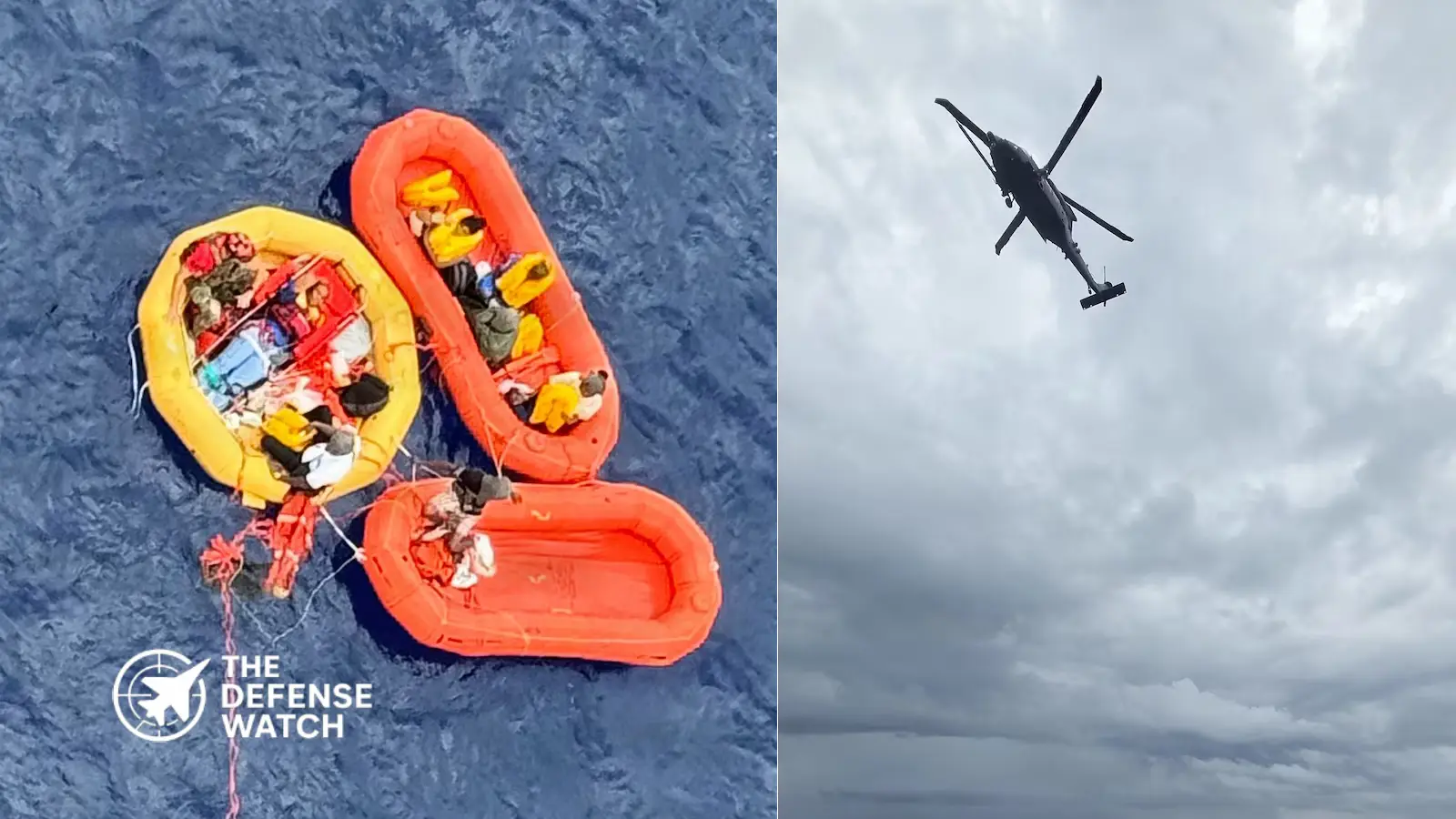
A routine Air Force Reserve training flight turned into a real-world Atlantic Ocean rescue mission that saved 11 survivors after a civilian aircraft went down off Florida’s coast.
Executive Summary:
Air Force Reserve personnel from the 920th Rescue Wing rescued 11 survivors after a civilian aircraft crashed into the Atlantic Ocean east of Melbourne, Florida. The mission demonstrated the wing’s rapid response capability and coordination with U.S. Coast Guard rescue assets during a real-world emergency operation.
Air Force Reserve Rescue Wing Responds To Atlantic Ocean Aircraft Emergency
The Air Force Reserve rescue mission off the Florida coast on May 12 highlighted the operational readiness of the U.S. military’s dedicated combat search and rescue forces. Airmen assigned to the 920th Rescue Wing assisted in rescuing 11 survivors after a civilian aircraft went down approximately 80 miles east of Melbourne, Florida.
According to official details released by the U.S. Air Force, the rescue effort began after Coast Guard Southeast District watch standers detected an emergency locator transmitter signal from a small aircraft operating over the Atlantic Ocean.
At the time of the alert, a U.S. Air Force HH-60W Jolly Green II helicopter crew from the reserve wing was already airborne conducting a routine training mission. The crew was immediately redirected to support the developing search and rescue operation.
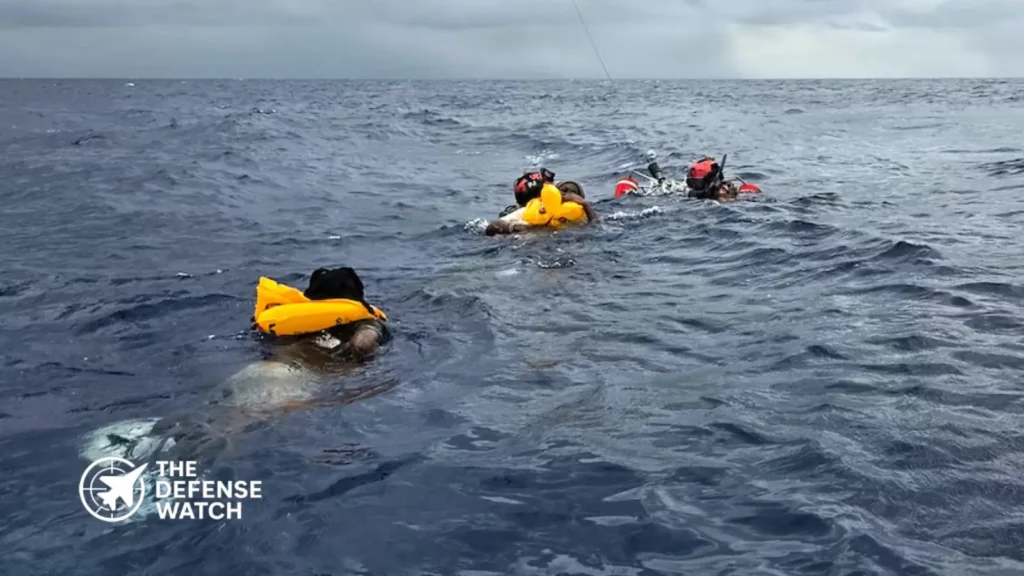
The rescue mission quickly evolved into a coordinated interagency response involving the U.S. Coast Guard and multiple Air Force rescue aircraft. Working together, crews located a life raft near the downed civilian aircraft and recovered 11 Bahamian adults stranded at sea.
Airmen aboard the HH-60W helicopter conducted hoist operations to safely recover all survivors before transporting them to emergency medical personnel waiting at Melbourne Orlando International Airport.
Officials stated that all 11 individuals were reported in stable condition following the rescue.
The aircraft involved reportedly departed Marsh Harbour in the Bahamas and was traveling to Freeport when it suffered engine failure over the Atlantic. Bahamian authorities are expected to investigate the incident.
920th Rescue Wing Demonstrates Operational Readiness
The operation underscored the importance of maintaining dedicated combat search and rescue units capable of rapidly transitioning from training scenarios to live emergency operations.
Air Force Col. Chadd Bloomstine, commander of the 920th Operations Group, said the rescue reflected the professionalism and interoperability that rescue aircrews train for regularly.
The incident also demonstrated how Air Force Reserve rescue assets continue to support civilian emergency response missions in addition to military operations. While the 920th Rescue Wing primarily supports combat search and rescue requirements, its crews are routinely tasked with assisting civil authorities during maritime emergencies, humanitarian operations, and disaster response efforts.
That dual-role capability has become increasingly important as the U.S. military expands domestic support coordination with agencies such as the U.S. Coast Guard and FEMA.
Multiple Rescue Aircraft Supported Search Effort
Additional support came from a United States Coast Guard Air Station Clearwater C-27 Spartan aircrew and an HC-130J Combat King II aircraft operating from Patrick Space Force Base.
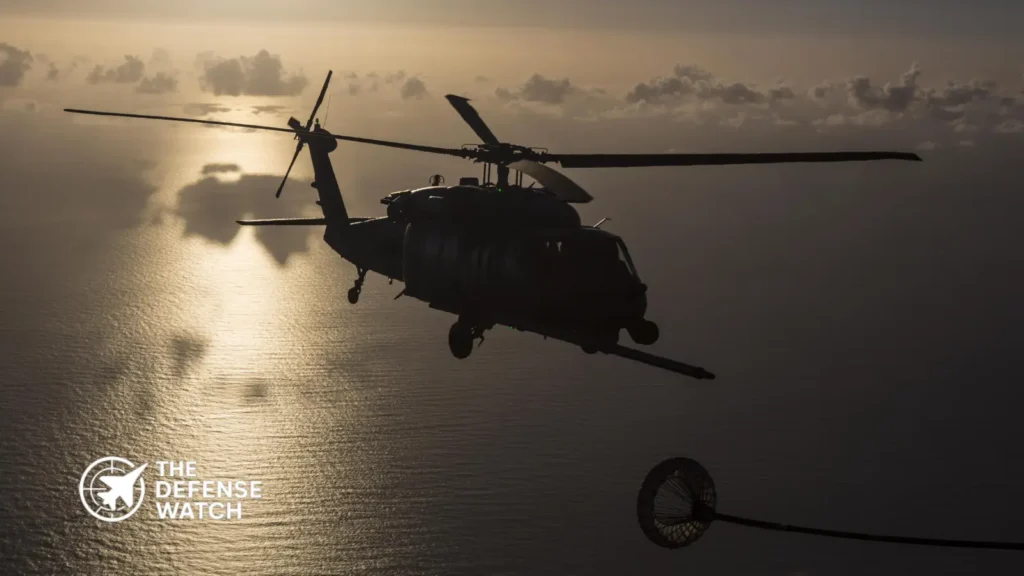
The HC-130J Combat King II serves as one of the Air Force’s primary long-range personnel recovery platforms, designed to coordinate rescue missions in contested and remote environments. In operations such as the Florida rescue mission, the aircraft provides extended search coverage, airborne command-and-control support, and refueling coordination for rotary-wing rescue assets.
The successful rescue also highlighted the expanding operational role of the HH-60W Jolly Green II helicopter fleet. Developed to replace aging HH-60G Pave Hawk helicopters, the aircraft provides improved survivability, advanced communications systems, expanded fuel capacity, and greater operational range for combat and civilian rescue missions.
While primarily designed for contested combat rescue operations, the platform continues proving valuable in domestic emergency response missions across U.S. coastal regions.
Strategic Importance Of Combat Search And Rescue Forces
The 920th Rescue Wing remains the Air Force Reserve’s only combat search and rescue wing, making it a critical component of U.S. personnel recovery operations.
Its mission set includes:
- Combat search and rescue
- Maritime emergency response
- Humanitarian assistance
- Disaster relief support
- Civil authority assistance operations
The rescue off Florida illustrates how military aviation assets frequently provide immediate response capability during civilian emergencies, particularly in maritime regions where response times can determine survival outcomes.
For the U.S. Air Force, these operations also reinforce the operational relevance of personnel recovery forces at a time when the Pentagon continues emphasizing rapid-response capabilities across multiple theaters.