• Home
  • About
  • Defense Systems
  • Manufacturer
  • Comparisons
  • Compare 
  • Tools
TheDefenseWatch.com
  • Aerospace & Aviation
  • Military & Ordnance
  • Naval & Maritime
  • Cyber & Space Defense
  • Policy & Strategy
  • Global News
  • Tools Library
    • Smart Calculator
    • Drone Flight Time Calculator
    • Drone Range Calculator
    • Counter-Drone Jammer Effective Range Calculator
    • Counter-Battery Radar Detection Calculator
    • Artillery Fire Correction Calculator
    • Thermal Camera Detection Range Calculator
    • Missile Range & Time-of-Flight Calculator
    • Radar Detection Range Calculator
    • FPV Strike Drone Payload vs Range Calculator
    • Loitering Munition Endurance Calculator
    • Sniper Ballistic Drop & Windage Calculator
    • Bullet Drop Calculator
    • U.S. Army Combat Fitness Test (ACFT) Calculator
    • Military Pension Calculator
    • Military Retirement Calculator
    • Military Pension Calculator
    • Large Number Calculator
Font ResizerAa

TheDefenseWatch.com

The Defense Watch | U.S. & Global Defense News, Analysis & Military Updates

Search
  • Home
  • About
  • Defense Systems
  • Manufacturer
  • Comparisons
  • Compare 
  • Tools

Stay Updated

Get the latest update

Subscribe

Explore

  • Drone
  • Fighter Jets & Military Aircraft
  • Hypersonic Weapons
  • Aircraft Carriers
  • Strategic History & Missions
  • Tools Library
Home » Rocket Lab Prepares Hypersonic Test Mission For Defense Innovation Unit Using Electron Rocket
Global News

Rocket Lab Prepares Hypersonic Test Mission For Defense Innovation Unit Using Electron Rocket

Daniel Mercer / Defense & Aerospace Analyst
Last updated: September 9, 2026 1:10 am
Daniel Mercer / Defense & Aerospace Analyst
Share
7 Min Read
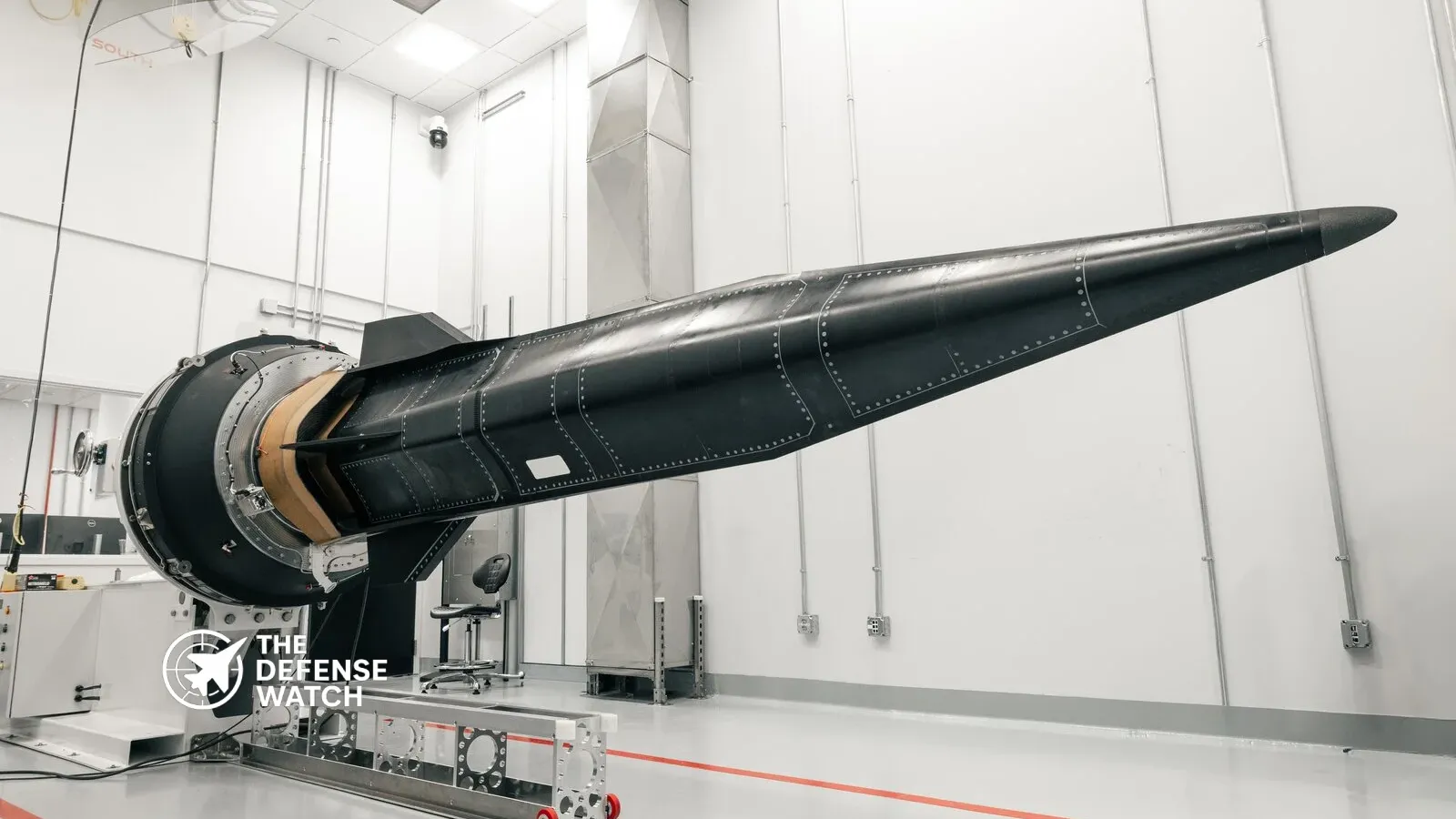
Rocket Lab hypersonic test mission
Image : Rocket Lab
SHARE
■ KEY FACTS AT A GLANCE
  • ► Rocket Lab preparing new hypersonic test mission for U.S. Defense Innovation Unit.
  • ► Mission to launch aboard Electron rocket to support rapid flight testing.
  • ► Part of Pentagon effort to increase test cadence for hypersonic weapons.
  • ► Commercial launch providers used to reduce cost and scheduling constraints.
  • ► Reflects growing integration of private space firms into U.S. defense programs.

Rocket Lab Hypersonic Test Mission Advances U.S. Defense Testing Goals

The Rocket Lab hypersonic test mission for the Defense Innovation Unit marks another step in expanding commercial support for U.S. military hypersonic flight testing. The company confirmed it is preparing to launch its latest mission on behalf of the Defense Innovation Unit, or DIU, using its Electron rocket.

Contents
  • Rocket Lab Hypersonic Test Mission Advances U.S. Defense Testing Goals
  • Expanding Commercial Support For Hypersonic Testing
  • Why Test Cadence Matters
  • Strategic Context
  • Operational Implications
  • Broader Defense Industry Impact
(adsbygoogle = window.adsbygoogle || []).push({});

The mission is part of a broader Pentagon effort to accelerate hypersonic system development through more frequent and lower cost test opportunities. DIU has been working to tap commercial launch providers to supplement traditional government managed test programs, which often face scheduling bottlenecks and higher costs.

Rocket Lab’s role centers on providing dedicated launch services that enable rapid turnaround and tailored flight profiles, supporting the Defense Department’s push for faster experimentation cycles.

Expanding Commercial Support For Hypersonic Testing

The Rocket Lab hypersonic test mission builds on the company’s previous work with DIU to provide responsive launch services. Under DIU’s hypersonic and high speed systems portfolio, the Pentagon is seeking to increase the pace of flight testing to validate technologies such as guidance systems, thermal protection, and maneuvering capabilities at high Mach speeds.

- Advertisement -

According to Rocket Lab, the upcoming launch will use its Electron small launch vehicle, designed to place payloads into low Earth orbit but also adaptable for suborbital and specialized test missions. Electron’s dedicated launch model allows defense customers to avoid rideshare delays and gain precise control over mission timing and trajectory.

DIU has emphasized that rapid access to flight testing is critical as the United States competes with peer adversaries in the hypersonic domain. The Department of Defense has repeatedly stated that China and Russia have fielded operational hypersonic capabilities, prompting Washington to accelerate its own programs.

(adsbygoogle = window.adsbygoogle || []).push({});

The use of commercial rockets aligns with the Pentagon’s broader strategy to leverage private sector innovation. The U.S. Space Force and other defense agencies have increasingly relied on firms like Rocket Lab and SpaceX to provide flexible and cost effective launch solutions.

Why Test Cadence Matters

Hypersonic weapons travel at speeds above Mach 5 and often maneuver unpredictably, placing extreme demands on propulsion, materials, and guidance systems. Unlike traditional ballistic missiles, many hypersonic glide vehicles and cruise missiles operate within the atmosphere, where thermal stress and aerodynamic forces are severe.

Frequent flight testing allows engineers to gather real world data on these stresses. It also reduces program risk by identifying integration issues early. Historically, hypersonic development programs have faced delays tied to limited range availability and scheduling constraints at government launch sites.

By using commercial launch providers, DIU aims to expand the number of available test windows. That approach supports the Pentagon’s stated goal of moving from occasional demonstration launches to a more regular testing rhythm.

(adsbygoogle = window.adsbygoogle || []).push({});

The Rocket Lab hypersonic test mission therefore represents more than a single launch. It reflects a shift toward distributed, commercially enabled test infrastructure.

Strategic Context

The Department of Defense’s 2023 budget documents highlighted continued investment in hypersonic strike and defense systems. Programs such as the Army’s Long Range Hypersonic Weapon and the Navy’s Conventional Prompt Strike have advanced through successive test milestones.

- Advertisement -

At the same time, the Missile Defense Agency and other organizations are exploring counter hypersonic capabilities. Accelerating test campaigns supports both offensive and defensive research.

Industry participation has expanded accordingly. Rocket Lab’s involvement through DIU illustrates how smaller launch providers are carving out roles in national security missions that were once dominated by larger legacy contractors.

(adsbygoogle = window.adsbygoogle || []).push({});

Analysts note that commercial providers offer not only cost advantages but also production agility. Electron rockets can be manufactured and prepared for flight on shorter timelines compared to traditional heavy launch vehicles.

Operational Implications

If successful, the Rocket Lab hypersonic test mission could reinforce the viability of using small launch vehicles for high speed weapon experimentation. That could open the door to more distributed test campaigns across multiple sites, increasing resilience and reducing reliance on a limited number of government ranges.

For the Defense Innovation Unit, demonstrating reliable commercial launch partnerships strengthens its mandate to bridge Silicon Valley and the Pentagon. DIU was established to speed the adoption of commercial technology for military use, and hypersonic testing is now a prominent example of that effort.

The mission also signals confidence in Electron’s performance envelope for specialized defense applications. While primarily known for deploying small satellites, the rocket’s adaptability positions it as a flexible platform for suborbital and research missions.

Broader Defense Industry Impact

The integration of companies like Rocket Lab into sensitive defense programs reflects a wider transformation in U.S. military acquisition. Commercial space firms are increasingly seen as strategic assets, not just service providers.

(adsbygoogle = window.adsbygoogle || []).push({});

This trend mirrors developments in satellite communications, space domain awareness, and responsive launch. The Rocket Lab hypersonic test mission adds hypersonic experimentation to that list.

As global competition intensifies, the ability to iterate quickly and test often may prove decisive. Commercial partnerships provide one path to achieving that speed.


TAGGED:Defense Innovation UnitElectron RocketHypersonic weaponsRocket LabU.S. Military Testing
Share This Article
Facebook Copy Link Print
ByDaniel Mercer / Defense & Aerospace Analyst
Follow:
Daniel Mercer is a defense and aerospace analyst at TheDefenseWatch.com covering military aviation, aerospace technology, unmanned systems, air warfare, and defense procurement. His reporting uses official documents, government and military statements, company announcements, and other public sources.
Leave a Comment

Leave a Reply Cancel reply

Your email address will not be published. Required fields are marked *

Latest Defense Systems

  • John F. Kennedy Aircraft Carrier John F. Kennedy Aircraft Carrier
  • Voyager Tanker Voyager Tanker
  • YU-20 Tanker YU-20 Tanker
  • China KJ-500 Aircraft China KJ-500 Aircraft
  • SPY-6 Radar SPY-6 Radar
  • Boeing VC-25B Presidential Aircraft Boeing VC-25B Presidential Aircraft
  • SM-3 Block IB Missile SM-3 Block IB Missile
  • USS Abraham Lincoln Aircraft Carrier USS Abraham Lincoln Aircraft Carrier
  • M142 HIMARS M142 HIMARS

Recent Compares

  • Tejas vs Gripen: Key Differences and Capabilities Tejas vs Gripen: Key Differences and Capabilities View Comparison →
  • Tejas vs MiG-21 Bison: How India Replaced Its Iconic Supersonic Fighter Tejas vs MiG-21 Bison: How India Replaced Its Iconic Supersonic Fighter View Comparison →
  • F-35 vs F-16: Stealth, Sensors and Combat Roles F-35 vs F-16: Stealth, Sensors and Combat Roles View Comparison →
  • Tejas Fighter Jet vs F-16 Fighting Falcon: Capability Compared Tejas Fighter Jet vs F-16 Fighting Falcon: Capability Compared View Comparison →
  • Rafale Fighter Jet vs F-16 Fighting Falcon : Which Fighter Has the Edge? Rafale Fighter Jet vs F-16 Fighting Falcon : Which Fighter Has the Edge? View Comparison →
  • Su-57 Fighter Jet vs J-20 Fighter Jet: Stealth and Air Combat Compared Su-57 Fighter Jet vs J-20 Fighter Jet: Stealth and Air Combat Compared View Comparison →
  • Mirage 2000 vs Tejas Mk1A: Legacy Combat Power vs Indigenous Modernization Mirage 2000 vs Tejas Mk1A: Legacy Combat Power vs Indigenous Modernization View Comparison →
  • Rafale Fighter Jet vs F-22 Raptor: Which Air Dominance Fighter Has the Edge? Rafale Fighter Jet vs F-22 Raptor: Which Air Dominance Fighter Has the Edge? View Comparison →
  • Tejas Fighter Jet vs. Rafale Fighter Jet: India’s Indigenous Fighter Meets France’s Proven Multirole Combat Aircraft Tejas Fighter Jet vs. Rafale Fighter Jet: India’s Indigenous Fighter Meets France’s Proven Multirole Combat Aircraft View Comparison →
  • F-22 Raptor vs. F-35 Joint Strike Fighter: Which Fifth Generation Fighter Has the Edge? F-22 Raptor vs. F-35 Joint Strike Fighter: Which Fifth Generation Fighter Has the Edge? View Comparison →

Recent Posts

  • US Rejects Automatic Body Camera Activation for ICE Officers
  • Iron Dome Architect Develops New Counter-Swarm Drone Defense System
  • U.S. Navy Conducts First F-35C Landing on USS John F. Kennedy
  • Huntington Ingalls Wins $56.2 Million Contract for Foreign Nuclear Submarine Support
  • US Forces Disable Cargo Ship Attempting to Evade Iran Blockade

You Might Also Like

French Rafale Baltic deployment
Global News

France Deploys Rafale Jets To Lead Baltic Air Policing Mission Amid NATO Pressure

September 7, 2026
India Rafale fighter deal
Global News

India Set to Approve $36 Billion Rafale Fighter Deal With France

January 13, 2026
Global News

Trump Says US Is Only Power Able to Secure Greenland, Cites World War II Precedent

January 21, 2026
electro optic systems laser defence
Global News

Australian Laser Maker EOS Plans European Base as Defence Demand Soars

January 31, 2026

Logo

Copyright © 2026 TheDefenseWatch.com

Helpful Links

  • Home
  • About Us
  • Privacy Policy
  • Terms of Use / Disclaimer
  • U.S. Privacy Notice – CCPA Compliance

Defense Systems

  • Defense Systems
  • Comparisons 
  • Manufacturer
  • Tactical Calculators

Popuplar

Which 5 Air Forces Possess the Costliest Fighter Jet Fleets in the World
Evolving Strategic Value: Carrier Strike Groups in the Indo-Pacific’s Future Security Architecture
Autonomous Weapon Systems Spark U.S. Ethics Debate Amid Rapid Military AI Integration

We report on developments involving military forces, governments, defense companies, research organizations, and security institutions around the world. 

Welcome Back!

Sign in to your account

Username or Email Address
Password

Lost your password?