• Home
  • About
  • Defense Systems
  • Manufacturer
  • Comparisons
  • Compare 
  • Tools
TheDefenseWatch.com
  • Aerospace & Aviation
  • Military & Ordnance
  • Naval & Maritime
  • Cyber & Space Defense
  • Policy & Strategy
  • Global News
  • Tools Library
    • Smart Calculator
    • Drone Flight Time Calculator
    • Drone Range Calculator
    • Counter-Drone Jammer Effective Range Calculator
    • Counter-Battery Radar Detection Calculator
    • Artillery Fire Correction Calculator
    • Thermal Camera Detection Range Calculator
    • Missile Range & Time-of-Flight Calculator
    • Radar Detection Range Calculator
    • FPV Strike Drone Payload vs Range Calculator
    • Loitering Munition Endurance Calculator
    • Sniper Ballistic Drop & Windage Calculator
    • Bullet Drop Calculator
    • U.S. Army Combat Fitness Test (ACFT) Calculator
    • Military Pension Calculator
    • Military Retirement Calculator
    • Military Pension Calculator
    • Large Number Calculator
Font ResizerAa

TheDefenseWatch.com

The Defense Watch | U.S. & Global Defense News, Analysis & Military Updates

Search
  • Home
  • About
  • Defense Systems
  • Manufacturer
  • Comparisons
  • Compare 
  • Tools

Stay Updated

Get the latest update

Subscribe

Explore

  • Drone
  • Fighter Jets & Military Aircraft
  • Hypersonic Weapons
  • Aircraft Carriers
  • Strategic History & Missions
  • Tools Library
Home » Hegseth Highlights B-2 Bomber Strike on Iran as Proof of U.S. Long-Range Strike Power
Aerospace & AviationFighter Jets & Military Aircraft

Hegseth Highlights B-2 Bomber Strike on Iran as Proof of U.S. Long-Range Strike Power

Daniel Mercer / Defense & Aerospace Analyst
Last updated: November 13, 2026 6:10 am
Daniel Mercer / Defense & Aerospace Analyst
Share
3 Min Read
B-2 bomber strike on Iran
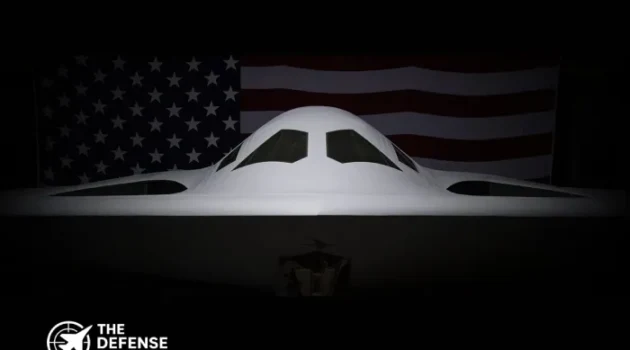
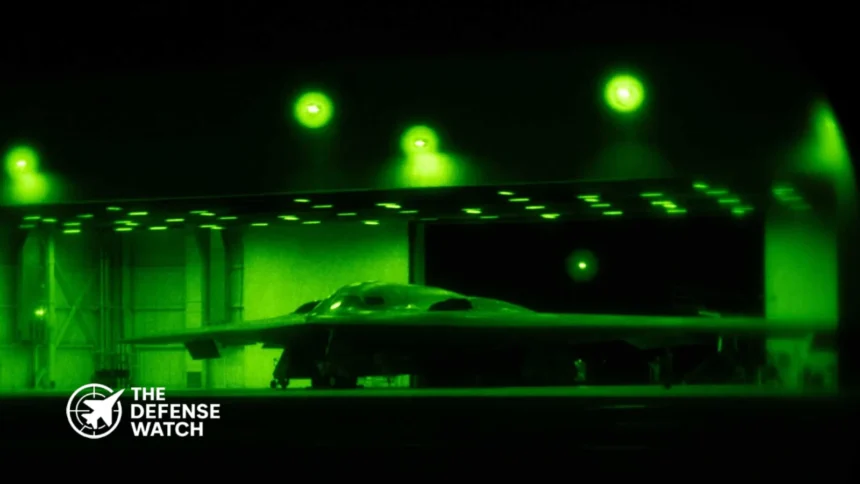
A U.S. Air Force B-2 Spirit is prepared at Whiteman Air Force Base, Missouri, in June 2025 ahead of Operation Midnight Hammer, which demonstrated U.S. long-range strike capability against Iran’s nuclear facilities. (Picture source: U.S. Department of War/Defense)
SHARE

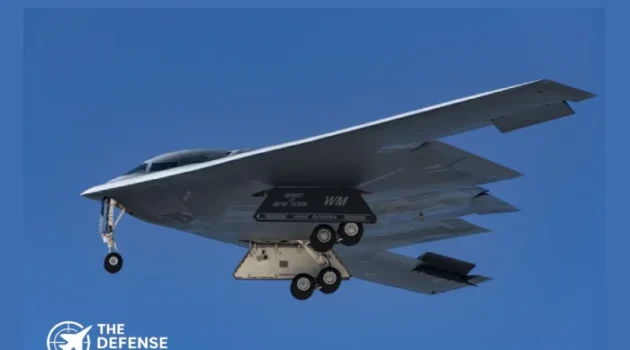
U.S. Secretary of War Pete Hegseth has renewed attention on the U.S. Air Force B-2 Spirit stealth bomber, describing its role in the June 2025 strikes against Iranian nuclear facilities as an example of American long-range military power.

Contents
Operation Midnight Hammer: How the B-2 Force Reached IranGBU-57 Penetrating Bombs Were Central to the MissionWhy the B-2 Remains Important to U.S. Military StrategyHegseth Connects Midnight Hammer to the Wider Iran CampaignLong-Range Strike Power Depends on More Than the Bomber

Speaking during a Pentagon press conference on November 10, 2026, Hegseth revisited Operation Midnight Hammer, the U.S. military operation that used B-2 bombers to attack Iran’s nuclear infrastructure at Fordow and Natanz, alongside submarine-launched Tomahawk missiles targeting facilities at Isfahan.

Hegseth described the operation as the largest and most successful B-2 strike in American history. His comments emphasized the ability of U.S. forces to launch strategic air operations from the continental United States and reach heavily protected targets thousands of miles away.

The remarks were a retrospective assessment of the 2025 operation, rather than an announcement of a new B-2 strike.

- Advertisement -

Operation Midnight Hammer: How the B-2 Force Reached Iran

Operation Midnight Hammer took place on June 21-22, 2025, when U.S. forces conducted coordinated strikes against three Iranian nuclear facilities.

According to the Department of Defense briefing delivered by Hegseth and Chairman of the Joint Chiefs of Staff General Dan Caine on June 22, seven B-2 Spirit bombers departed from the continental United States as part of the main strike package.

  • B-2 Spirit Bomber

    B-2 Spirit Bomber

    • Maximum Speed: 628 mph (Mach 0.95)
    • Range: 6,000+ nmi (11,000 km)
    • Payload Capacity: 40,000 lb (18,000 kg)
    • Crew: 2
    • View Details →
    8.8

    The aircraft flew east toward Iran, completing multiple aerial refueling operations during an approximately 18-hour flight to the target area.

    The operation also incorporated deception measures. A separate group of aircraft flew west toward the Pacific as a decoy, while the main bomber formation maintained minimal communications during its approach.

    U.S. fighter aircraft and other supporting platforms helped coordinate the mission and manage potential threats from Iranian air defenses.

    The Pentagon described the operation as a large joint-force effort involving more than 125 U.S. aircraft, including tankers, fighter aircraft, intelligence and surveillance platforms, and a guided-missile submarine.

    This support was essential. The mission demonstrated not simply the range of an individual bomber, but the ability of the United States to coordinate a complex strike package across substantial geographic distances.

    GBU-57 Penetrating Bombs Were Central to the Mission

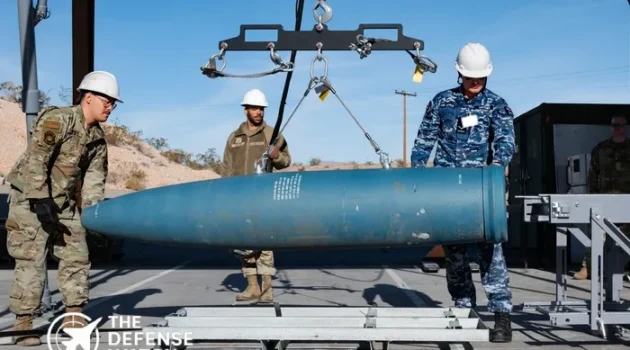
    The B-2 Spirit’s primary contribution to Operation Midnight Hammer was the delivery of the GBU-57 Massive Ordnance Penetrator (MOP).

    Developed for attacks against deeply buried and hardened facilities, the GBU-57 is a precision-guided weapon weighing approximately 30,000 pounds.

    The Pentagon confirmed that U.S. forces employed 14 GBU-57 bombs during the operation, marking the weapon’s first operational combat employment.

    • GBU-57 Bomb

      GBU-57 Bomb

      • Warhead Type: High explosive penetrator
      • Delivery Platforms: B-2 Spirit, B-52 Stratofortress
      • Guidance: GPS guided
      • Operational Role: Destruction of deeply buried hardened targets
      • View Details →
      8.0

      The bombs were directed against the underground nuclear infrastructure at Fordow and Natanz.

      Isfahan was targeted separately using more than two dozen Tomahawk land-attack cruise missiles launched from a U.S. Navy submarine.

      This distinction is important when assessing the operation. Although all three facilities were targeted during the same mission, the B-2 bombers and the submarine employed different weapons against different target sets.

      The GBU-57 gave U.S. commanders an option for attacking hardened underground infrastructure that conventional air-delivered weapons might not penetrate effectively.

      However, the actual extent of damage beneath the Iranian facilities remains a separate assessment issue from the number of weapons delivered.

      Why the B-2 Remains Important to U.S. Military Strategy

      The B-2 Spirit occupies a specialized position in the U.S. strategic bomber fleet.

      Its flying-wing design, low-observable characteristics and ability to carry substantial conventional or nuclear payloads make it suitable for missions against targets protected by advanced air defense systems.

      Unlike conventional bombers that may depend heavily on stand-off weapons, the B-2 can carry weapons designed for direct delivery against selected hardened targets.

      Its operational value therefore extends beyond the aircraft’s ability to travel long distances.

      The combination of stealth, weapons integration, aerial refueling and intelligence support gives the U.S. military an option for striking strategically important targets without relying entirely on forward-based tactical aircraft.

      Nevertheless, stealth does not make the aircraft invulnerable. Its effectiveness depends on mission planning, intelligence quality, electronic support, airspace conditions and the capabilities of opposing air defenses.

      Operation Midnight Hammer demonstrated how these elements could be coordinated in a single large-scale mission.

      Hegseth Connects Midnight Hammer to the Wider Iran Campaign

      During his November 10 remarks, Hegseth also referred to Operation Epic Fury, the subsequent U.S. military campaign against Iran in 2026.

      He presented Midnight Hammer and Epic Fury as separate operations within the administration’s broader military approach toward Iran.

      The distinction matters because the two operations involved different objectives and operational circumstances.

      Midnight Hammer focused on Iranian nuclear facilities in June 2025, using B-2 bombers and GBU-57 penetrating weapons alongside submarine-launched cruise missiles.

      Epic Fury involved a much wider campaign against Iranian military capabilities, including command infrastructure, air defenses, missile systems and other military targets.

      Hegseth described both operations as successful, but his statements about the overall destruction of Iranian military and nuclear capabilities should be treated as official U.S. assessments rather than independently established measurements of every target’s condition.

      The secretary also said the United States would continue monitoring Iranian nuclear facilities and retain the ability to respond if developments warranted further military action.

      Long-Range Strike Power Depends on More Than the Bomber

      The B-2 mission against Iran provides an important example of the United States’ ability to conduct long-range conventional air operations.

      However, the operation should not be understood as an isolated demonstration of bomber performance.

      Its execution depended on an extensive network of supporting capabilities, including aerial refueling, intelligence collection, fighter support, mission coordination and precision-guided weapons.

      These requirements have implications for any country seeking to develop comparable long-range strike capabilities.

      An aircraft may have substantial range and advanced low-observable characteristics, but conducting a complex mission against defended targets also requires trained personnel, reliable logistics, weapons integration and access to supporting infrastructure.

      For the U.S. Air Force, the operation demonstrated the continued importance of maintaining a bomber force capable of reaching distant targets without depending exclusively on overseas bases.

      It also illustrated why the B-2 remains relevant as the United States prepares for the introduction of its next-generation B-21 Raider stealth bomber.

      The B-21 is intended to provide a future component of the U.S. long-range strike force, while the B-2 continues to perform missions requiring its existing stealth and penetrating-strike capabilities.

      • B-21 Raider Bomber

        B-21 Raider Bomber

        • Maximum Speed: High subsonic (Mach 0.8+)
        • Range: (est. 6,000+ nm unrefueled)
        • Payload Capacity: Est. 20,000–30,000 lb internal
        • Crew: 2
        • View Details →
        9.4

        Hegseth’s latest comments reinforce the administration’s assessment of Midnight Hammer as a major demonstration of American airpower. The operational record provides a more specific measure of that achievement: seven B-2 bombers, 14 first-use GBU-57 weapons, extensive aerial refueling and a coordinated joint-force mission reaching Iranian nuclear facilities from the United States.
TAGGED:B-2 SpiritIranOperation Midnight HammerU.S. Air Force
Share This Article
Facebook Copy Link Print
ByDaniel Mercer / Defense & Aerospace Analyst
Follow:
Daniel Mercer is a defense and aerospace analyst at TheDefenseWatch.com covering military aviation, aerospace technology, unmanned systems, air warfare, and defense procurement. His reporting uses official documents, government and military statements, company announcements, and other public sources.

Search Defense Systems

Latest Defense Systems

  • TRML-4D Radar TRML-4D Radar
  • F-47A Fighter Jet F-47A Fighter Jet
  • China DF-61 Missile China DF-61 Missile
  • B61 Nuclear Bomb B61 Nuclear Bomb
  • Japan E-767 Airborne Japan E-767 Airborne
  • Remington 870 Shotgun Remington 870 Shotgun
  • RUTA B1 Cruise Missile RUTA B1 Cruise Missile
  • XQ-67A Drone XQ-67A Drone
  • B-25 Mitchell Bomber B-25 Mitchell Bomber

Recent Compares

  • J-10C vs JF-17 Thunder: Which Fighter Is More Capable? J-10C vs JF-17 Thunder: Which Fighter Is More Capable? View Comparison →
  • Tejas vs Gripen: Key Differences and Capabilities Tejas vs Gripen: Key Differences and Capabilities View Comparison →
  • Tejas vs MiG-21 Bison: How India Replaced Its Iconic Supersonic Fighter Tejas vs MiG-21 Bison: How India Replaced Its Iconic Supersonic Fighter View Comparison →
  • F-35 vs F-16: Stealth, Sensors and Combat Roles F-35 vs F-16: Stealth, Sensors and Combat Roles View Comparison →
  • Tejas Fighter Jet vs F-16 Fighting Falcon: Capability Compared Tejas Fighter Jet vs F-16 Fighting Falcon: Capability Compared View Comparison →
  • Rafale Fighter Jet vs F-16 Fighting Falcon : Which Fighter Has the Edge? Rafale Fighter Jet vs F-16 Fighting Falcon : Which Fighter Has the Edge? View Comparison →
  • Su-57 Fighter Jet vs J-20 Fighter Jet: Stealth and Air Combat Compared Su-57 Fighter Jet vs J-20 Fighter Jet: Stealth and Air Combat Compared View Comparison →
  • Mirage 2000 vs Tejas Mk1A: Legacy Combat Power vs Indigenous Modernization Mirage 2000 vs Tejas Mk1A: Legacy Combat Power vs Indigenous Modernization View Comparison →
  • Rafale Fighter Jet vs F-22 Raptor: Which Air Dominance Fighter Has the Edge? Rafale Fighter Jet vs F-22 Raptor: Which Air Dominance Fighter Has the Edge? View Comparison →
  • Tejas Fighter Jet vs. Rafale Fighter Jet: India’s Indigenous Fighter Meets France’s Proven Multirole Combat Aircraft Tejas Fighter Jet vs. Rafale Fighter Jet: India’s Indigenous Fighter Meets France’s Proven Multirole Combat Aircraft View Comparison →

Recent Posts

  • Hegseth Highlights B-2 Bomber Strike on Iran as Proof of U.S. Long-Range Strike Power
  • China and US Militaries Hold Crisis Communication Talks in Washington
  • L3Harris Completes FleetLink Communications Testing on U.S. Navy Destroyer
  • Lockheed Martin Wins $88.2 Million Navy Submarine Systems Integration Contract
  • U.S. Army Tests Long-Range Maritime Air Assault With Allies in Hawaii

You Might Also Like

5th Generation Fighter Jets in the World
Aerospace & AviationStealth Technology

5th Generation Fighter Jets in the World, Capabilities, Programs, and Global Airpower Balance

September 11, 2026
U.S. Air Force fighter shortage
Defense Budgets & PolicyPolicy & Strategy

U.S. Air Force Races To Acquire 100 New Fighters Annually Amid Growing Threats

April 16, 2026
UK F 35 kill switch
Aerospace & AviationDrones & UAVs

UK Rejects F 35 Kill Switch Claims, Cites Allied Control Framework

February 3, 2026
Anduril Fury FQ-44
Aerospace & AviationDrones & UAVs

Anduril Moves To Produce Fury FQ-44 Drone Fighter As U.S. Air Force Expands Collaborative Combat Aircraft Program

September 8, 2026

Logo

Copyright © 2026 TheDefenseWatch.com

Helpful Links

  • Home
  • About Us
  • Privacy Policy
  • Terms of Use / Disclaimer
  • U.S. Privacy Notice – CCPA Compliance

Defense Systems

  • Defense Systems
  • Comparisons 
  • Manufacturer
  • Tactical Calculators

Popuplar

Which 5 Air Forces Possess the Costliest Fighter Jet Fleets in the World
Evolving Strategic Value: Carrier Strike Groups in the Indo-Pacific’s Future Security Architecture
Autonomous Weapon Systems Spark U.S. Ethics Debate Amid Rapid Military AI Integration

We report on developments involving military forces, governments, defense companies, research organizations, and security institutions around the world. 

Welcome Back!

Sign in to your account

Username or Email Address
Password

Lost your password?