Lockheed Martin Achieves Strong 2025 Performance Amid Defense Modernization Surge
BETHESDA, Md. – January 29, 2026 – Lockheed Martin Corporation reported fourth-quarter 2025 sales of $20.3 billion and full-year revenue of $75.0 billion, representing 6% year-over-year growth, the company announced today. The defense contractor’s backlog reached a record $194 billion, driven by sustained global demand for signature platforms including the F-35 fighter jet and integrated air defense systems.
The Bethesda-based aerospace and defense manufacturer posted net earnings of $5.0 billion for 2025, or $21.49 per share, which included a $479 million pension settlement charge. Excluding this charge, earnings totaled $5.4 billion. Free cash flow reached $6.9 billion for the year, exceeding prior company guidance, despite an $860 million pension contribution that satisfied 2026 obligations.
“With a record $194 billion backlog, 6% year-over-year sales growth, and free cash flow generation above our prior expectation, 2025 marked a year of unprecedented demand for Lockheed Martin capabilities,” said Chairman, President and CEO Jim Taiclet during the earnings call. “This escalating demand for our signature programs and systems has been driven by combat-proven performance over recent years.”
Fourth Quarter Performance Highlights Strong Momentum
Fourth-quarter sales of $20.3 billion represented a 9% increase compared to $18.6 billion in Q4 2024. Net earnings for the quarter totaled $1.3 billion, or $5.80 per share, compared to $527 million in the year-ago period. The quarter’s performance reflected recovery from classified program losses recognized in 2024, which had impacted $1.7 billion in operating profit.
Cash from operations reached $3.2 billion in Q4 2025, up from $1.0 billion in Q4 2024, with free cash flow of $2.8 billion compared to $441 million in the prior-year quarter. The company attributed improved cash generation to favorable working capital timing, particularly in accounts payable and contract liabilities at its Rotary and Mission Systems division.
Business Segment Performance Demonstrates Mixed Results
Aeronautics Division: The division posted sales of $30.3 billion for 2025, up 6% from $28.6 billion in 2024, driven primarily by F-35 program growth. Fourth-quarter sales reached $8.5 billion, a 6% increase year-over-year. However, operating profit for the year declined 17% to $2.1 billion due to a $950 million loss on a classified program recognized in Q2 2025 and $140 million in unfavorable adjustments on the C-130 program. Operating margin for 2025 stood at 6.9%, down from 8.8% in 2024.
Missiles and Fire Control: This segment delivered the strongest performance with 14% sales growth to $14.5 billion in 2025, up from $12.7 billion in 2024. Operating profit surged 382% to $2.0 billion from $413 million in 2024, reflecting recovery from a $1.4 billion classified program loss in the prior year. The segment benefited from production ramp-up on tactical and strike missile programs including JASSM, LRASM, and precision fires, as well as increased PAC-3 missile production. Operating margin reached 13.8% compared to 3.3% in 2024.
Rotary and Mission Systems: Sales remained relatively flat at $17.3 billion compared to $17.3 billion in 2024. Operating profit decreased 31% to $1.3 billion from $1.9 billion, primarily due to $665 million in combined losses on the Canadian Maritime Helicopter Program (CMHP) and Turkish Utility Helicopter Program (TUHP) recognized in Q2 2025. Operating margin declined to 7.6% from 11.1% in 2024. Despite program challenges, the segment saw increased Black Hawk helicopter production and growth in the River Class Destroyer program.
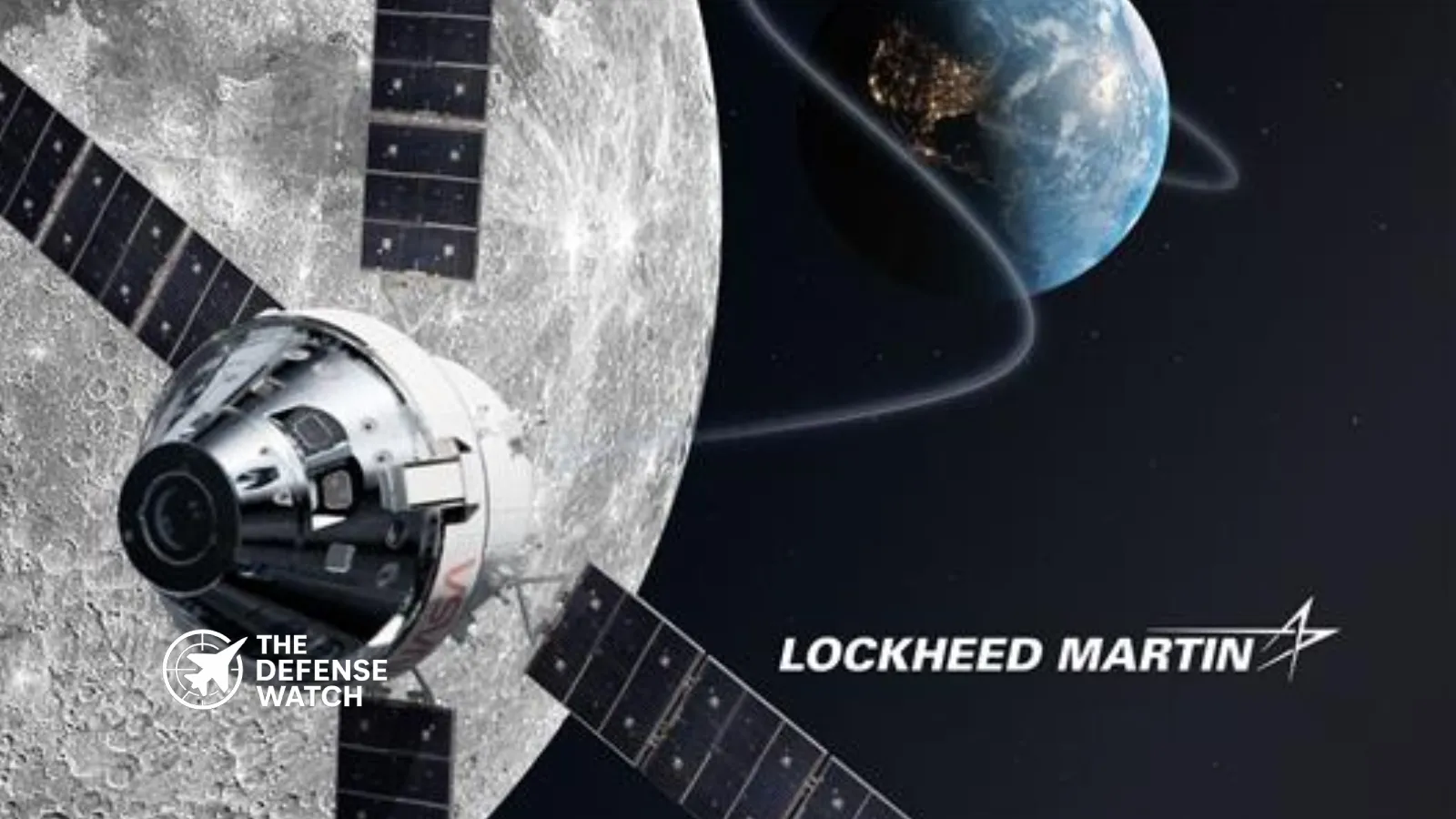
Space Division: Sales increased 4% to $13.0 billion from $12.5 billion in 2024, driven by Next Generation Interceptor (NGI), Fleet Ballistic Missile (FBM), and Orion programs. Operating profit grew 10% to $1.3 billion, with operating margin improving to 10.3% from 9.8% in 2024. The segment’s joint venture, United Launch Alliance, contributed minimal equity earnings compared to $45 million in 2024.
F-35 Production Acceleration Drives Aeronautics Growth
The F-35 Joint Strike Fighter program remained a significant revenue driver for Lockheed Martin in 2025. The company delivered 191 F-35 aircraft during the year, a substantial increase from 110 deliveries in 2024. Fourth-quarter deliveries totaled 48 aircraft, down from 62 in Q4 2024, reflecting normal quarterly production variations.
F-35 sales contributed approximately $1.9 billion in increased revenue for the Aeronautics segment in 2025, attributed to higher production volume and sustainment contract activity. The program accounted for the majority of Aeronautics’ 6% year-over-year sales growth despite headwinds from classified program performance.
PAC-3 Framework Agreement Signals Acquisition Reform Alignment
Taiclet highlighted the company’s landmark seven-year framework agreement for PAC-3 missiles as evidence of alignment with the Department of War’s Acquisition Transformation Strategy. We are well positioned to perform under the Department of War’s Acquisition Transformation Strategy, as evidenced by our landmark, seven-year framework agreement for PAC-3 missiles early in the first quarter,” Taiclet stated.
The framework agreement represents a departure from traditional year-by-year contracting approaches, potentially enabling more efficient production planning and economies of scale. However, the company noted the agreement has not yet been definitized into a firm contract. PAC-3 missile production contributed $450 million to the Missiles and Fire Control segment’s 14% revenue growth in 2025.
Industry analysts view multi-year framework agreements as a potential catalyst for improved defense industrial base efficiency, though execution risks remain until contracts are fully negotiated. The agreement’s structure may serve as a template for future large-scale weapons acquisitions if successfully implemented.
Program Losses Impact Profitability Metrics
Lockheed Martin’s 2025 financial performance was significantly affected by $1.6 billion in program losses recognized during the second quarter. The losses included:
- $950 million on an undisclosed classified program at Aeronautics
- $570 million on the Canadian Maritime Helicopter Program (CMHP) at Rotary and Mission Systems
- $95 million on the Turkish Utility Helicopter Program (TUHP) at Rotary and Mission Systems
- $140 million in unfavorable adjustments on C-130 programs
These charges reduced diluted earnings per share by approximately $7.03 for the full year. The company also recorded a $479 million non-operational pension settlement charge in Q4 2025 related to transferring $943 million in gross defined benefit pension obligations to insurance companies, reducing earnings per share by an additional $1.63.
Excluding program losses and one-time charges, the company’s underlying operational performance showed improvement, with business segment operating profit increasing 11% to $6.7 billion from $6.1 billion in 2024.
Capital Allocation Prioritizes Shareholder Returns and Capacity Investment
Lockheed Martin returned $6.1 billion to shareholders during 2025 through $3.1 billion in dividends and $3.0 billion in share repurchases. The company repurchased 6.6 million shares at an average price of approximately $455 per share, reducing outstanding shares to 229 million from 234 million at year-end 2024.
Capital expenditures totaled $1.6 billion in 2025, down slightly from $1.7 billion in 2024. The company emphasized that total investment in production capacity and next-generation technologies exceeded $3.5 billion during the year when including research and development spending of $2.0 billion.
The capital allocation strategy reflects confidence in sustained defense spending and positions the company to meet growing international and domestic demand for advanced weapons systems. Management indicated 2026 capital expenditures will increase to $2.5-$2.8 billion to support production expansion.
2026 Financial Outlook Projects Continued Growth
Lockheed Martin provided 2026 financial guidance projecting continued revenue and earnings growth:
- Sales: $77.5 billion to $80.0 billion (approximately 5% midpoint growth)
- Business segment operating profit: $8.4 billion to $8.7 billion (approximately 25% midpoint growth)
- Diluted earnings per share: $29.35 to $30.25 (approximately 38% midpoint growth)
- Free cash flow: $6.5 billion to $6.8 billion
- Capital expenditures: $2.5 billion to $2.8 billion
The significant projected increase in operating profit and earnings per share reflects the absence of 2025’s $1.6 billion in program losses and improved operational performance across all business segments. Management emphasized the guidance does not incorporate potential impacts from government shutdowns or recently issued executive orders.
The 2026 outlook assumes approximately $1.4 billion in total FAS/CAS pension adjustments and benefits from tax provisions in the “One Big Beautiful Bill Act” passed in late 2025. The company expects effective tax rates to remain in the mid-teens percentage range.
Backlog Growth Indicates Strong Future Revenue Pipeline
Lockheed Martin’s total backlog increased 10% to $193.6 billion at December 31, 2025, compared to $176.0 billion at year-end 2024. Backlog growth was distributed across all four business segments:
- Aeronautics: $59.4 billion (down from $62.8 billion, reflecting F-35 production execution)
- Missiles and Fire Control: $46.7 billion (up 20% from $38.8 billion)
- Rotary and Mission Systems: $47.7 billion (up 25% from $38.1 billion)
- Space: $39.8 billion (up 9% from $36.4 billion)
The Missiles and Fire Control backlog increase reflects strong international and domestic orders for air defense systems, tactical missiles, and precision munitions. Rotary and Mission Systems backlog growth was driven by multi-year helicopter contracts and increased sensor and radar program awards.
(adsbygoogle = window.adsbygoogle || []).push({});Management expects the backlog to continue growing in 2026 as allied nations accelerate defense modernization efforts in response to evolving global security threats. The record backlog provides revenue visibility extending multiple years into the future for most major programs.
Operational Excellence Initiatives Target Cost Efficiency
During the earnings call, management emphasized ongoing initiatives to improve operational efficiency and product affordability across all business segments. The company’s digital transformation efforts aim to reduce production costs and accelerate delivery timelines for key platforms.
Lockheed Martin invested heavily in advanced manufacturing technologies during 2025, including expanded use of automation, additive manufacturing, and digital twin capabilities. These investments are expected to yield cost savings and quality improvements as production volumes increase on programs like F-35, PAC-3, and Black Hawk helicopters.
The company also highlighted supply chain resilience efforts, working with suppliers to secure critical components and materials needed for increased production rates. Raw material availability, particularly for rare earth minerals used in advanced electronics, remains a focus area for risk mitigation.
International Sales Remain Strong Revenue Component
International military sales contributed significantly to Lockheed Martin’s 2025 performance, though the company does not break out specific percentages. F-35 Foreign Military Sales (FMS) and direct commercial sales to partner nations accounted for a substantial portion of the 191 aircraft delivered in 2025.
The company delivered 16 F-16 Fighting Falcon aircraft during 2025, primarily to international customers including several Middle Eastern nations. Black Hawk international deliveries totaled 17 helicopters, while the company delivered 2 C-130J Super Hercules airlifters for the year, down from 21 in 2024 due to production sequencing.
International demand for integrated air and missile defense systems, particularly PAC-3 missiles, contributed to the Missiles and Fire Control segment’s strong backlog growth. European nations have significantly increased orders for air defense capabilities following escalating regional security concerns.
Defense Industry Implications and Market Position
Lockheed Martin’s strong 2025 performance and record backlog underscore the company’s dominant position in the U.S. defense industrial base. The company remains the world’s largest defense contractor by revenue, maintaining leadership positions in tactical aircraft, rotorcraft, missile systems, and space technologies.
The financial results reflect broader trends in global defense spending, with allied nations prioritizing modernization of air defense, precision strike, and advanced aircraft capabilities. Lockheed Martin’s portfolio directly addresses these priority areas, positioning the company to capture significant share of increased defense budgets.
Competition remains intense in most market segments, with companies like RTX Corporation, Northrop Grumman, and Boeing competing for major program awards. However, Lockheed Martin’s incumbency on flagship programs like F-35, PAC-3, and Sikorsky helicopters provides competitive advantages in sustainment and follow-on orders.
Forward-Looking Considerations and Risk Factors
While Lockheed Martin’s 2025 results demonstrated strong underlying business performance, several factors could impact future financial outcomes:
Program Execution Risk: The $1.6 billion in losses on classified and international helicopter programs in 2025 illustrates ongoing risks in fixed-price development contracts. Management emphasized improved risk management processes, but complex programs inherently carry execution uncertainty.
Government Budget Environment: The 2026 outlook does not incorporate potential impacts from government shutdowns or changing administration priorities. Extended continuing resolutions or budget cuts could delay program funding and affect revenue timing.
Acquisition Reform Implementation: The Department of War’s Acquisition Transformation Strategy and framework contracting approach present both opportunities and risks. Successful implementation could improve margins and cash flow, but transitional challenges may arise as new processes are adopted.
Supply Chain Constraints: Accelerating production rates on multiple programs simultaneously could strain supplier capacity for critical components. The company’s ability to meet delivery commitments depends partly on supply chain health beyond its direct control.
International Trade Policy: Changes in export controls, foreign military sales approval processes, or trade restrictions could affect international order flow and revenue mix. The company’s global customer base provides diversification but also exposes it to geopolitical uncertainties.
Industry Expert Analysis
Defense industry analysts generally viewed Lockheed Martin’s 2025 results positively, noting the company’s ability to generate strong cash flow despite significant program charges. The record backlog and 2026 guidance suggesting 25% operating profit growth were cited as indicators of improving business fundamentals.
Analysts emphasized that absent the discrete $1.6 billion in program losses, Lockheed Martin’s underlying earnings growth would have been substantially higher in 2025. The projected 2026 earnings per share of $29.35-$30.25 represents approximately 38% growth from 2025’s $21.49, primarily reflecting absence of prior-year charges rather than pure operational improvement.
(adsbygoogle = window.adsbygoogle || []).push({});The company’s share repurchase activity during 2025 was characterized as prudent capital allocation given the strong backlog visibility and cash generation capability. With $4.1 billion in cash and cash equivalents at year-end and $20.5 billion in long-term debt, the balance sheet was assessed as appropriately leveraged for the defense sector.
About Lockheed Martin Corporation
Lockheed Martin Corporation is a global aerospace and defense technology company headquartered in Bethesda, Maryland. The company operates through four business segments: Aeronautics, Missiles and Fire Control, Rotary and Mission Systems, and Space. Major products and programs include the F-35 Lightning II, F-16 Fighting Falcon, C-130 Hercules, Sikorsky helicopters, PAC-3 missiles, THAAD missile defense, and numerous classified space and intelligence systems.
The company employs approximately 122,000 people worldwide and derives the majority of revenue from contracts with the U.S. Department of Defense and allied foreign governments. Lockheed Martin stock trades on the New York Stock Exchange under ticker symbol LMT.