
- Home
- Defense Systems
- Bombers & Strategic Aircraft
- YU-20 Tanker
YU-20 Tanker
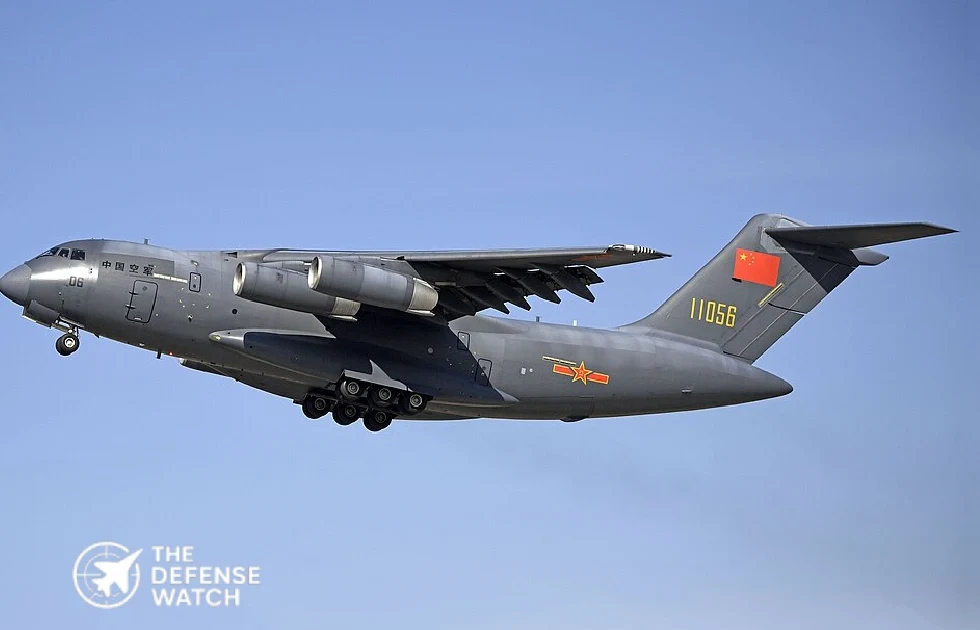
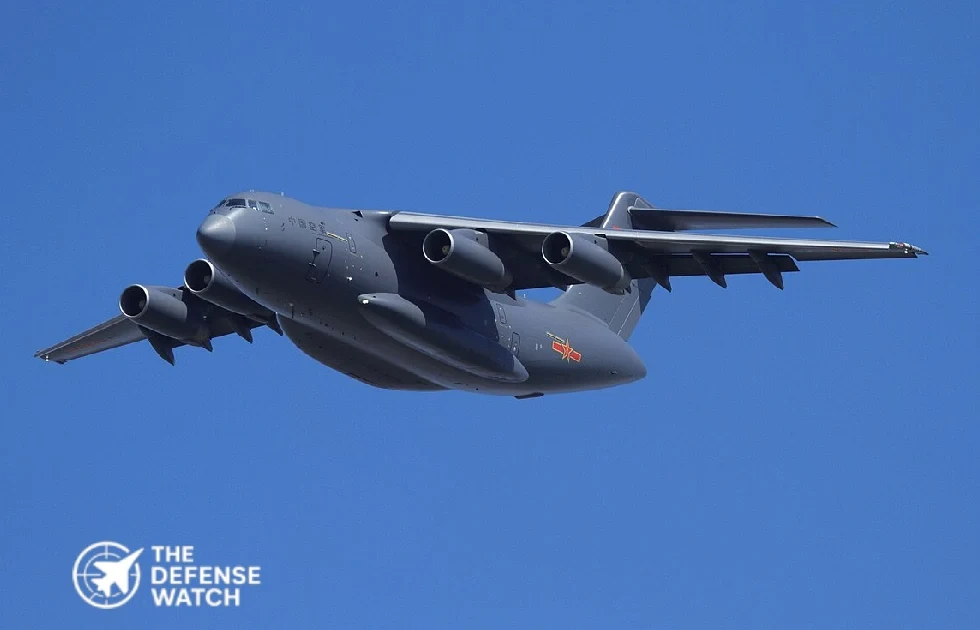
Defense Systems Full Specifications
1. General Information
| Name | YU-20 Aerial Refueling Tanker |
| Manufacturer | Associated with AVIC and China's Y-20 development program |
| Country of Origin | China |
| Introduction / In Service Since | Entered service in the early 2020s, exact initial operational date not publicly confirmed |
| Status | In service, according to public reporting |
| Category | Aerial refueling tanker |
| Crew | Not publicly confirmed |
| Unit Cost | Not disclosed |
2. Dimensions & Structure
| Length | Approximately 47 meters, based on the Y-20 airframe |
| Wingspan | Approximately 50 meters, based on the Y-20 airframe |
| Height | Approximately 15 meters, based on the Y-20 airframe |
| Wing Area | Not reliably confirmed for the YU-20 |
| Empty Weight | Not publicly confirmed for the tanker configuration |
| Maximum Takeoff Weight (MTOW) | Approximately 200 metric tons, commonly reported for the Y-20 family; tanker-specific figure unconfirmed |
3. Performance
| Maximum Speed | Exact YU-20 figure not disclosed |
| Range | Not publicly confirmed |
| Combat Radius | Not applicable as a standard tanker specification; mission radius not disclosed |
| Service Ceiling | Not publicly confirmed for the YU-20 |
| Rate of Climb | Not publicly confirmed |
4. Powerplant
| Engine Type | Four turbofan engines; exact YU-20 production configuration should be verified |
| Thrust (per engine) | Not confirmed for the tanker configuration |
| Total Thrust | Not confirmed |
5. Payload & Armament
| Internal Payload Capacity | No conventional cargo payload figure confirmed for the tanker configuration |
| Weapons Bay | None publicly identified |
| Compatible Weapons | No publicly confirmed offensive weapons fit |
| Hardpoints | No publicly confirmed offensive weapons fit |
6. Avionics & Systems
| Radar System | Exact model not publicly confirmed |
| Navigation | Detailed configuration not publicly disclosed |
| Electronic Warfare (EW) | Specific defensive systems not publicly confirmed |
| Stealth Features | No publicly identified dedicated stealth design |
7. Operational History
| Primary Operator | People's Liberation Army Air Force (PLAAF) |
| Conflict Usage | No publicly confirmed combat use identified |
| Notable Missions | Training, aerial refueling, and support for extended-range air operations |
8. Additional Information
| Variants | YU-20 tanker configuration; detailed subvariants not publicly confirmed |
| Successor / Future Replacement | No publicly announced direct replacement |
| Notable Features | Y-20-derived heavy airframe, four-engine configuration, reported hose-and-drogue refueling |
| Estimated Operational Life | Not publicly disclosed |
PROS
- Extends the flight endurance of compatible Chinese military aircraft.
- Supports longer-range fighter deployments and patrol missions.
- Uses an established heavy transport aircraft design.
- Improves aerial refueling support for expeditionary operations.
- Contributes to China's domestic military aviation and logistics capacity.
CONS
- Publicly confirmed performance and fuel-transfer figures are limited.
- No independently verified unit cost is available.
- Refueling compatibility depends on receiver aircraft configuration.
- Tanker operations require trained crews, maintenance, and dedicated support.
- A large tanker remains vulnerable in contested airspace without adequate protection.
China YU-20 Tanker: Aerial Refueling Aircraft
The China YU-20 is an aerial refueling tanker developed to extend the endurance and operating range of the People’s Liberation Army Air Force (PLAAF). Based on China’s Y-20 heavy transport aircraft, the YU-20 supports long-range air operations by transferring fuel to compatible aircraft in flight. Its introduction reflects China’s effort to improve aerial mobility and sustain fighter and bomber operations farther from mainland air bases.
The aircraft uses a large airframe derived from the Y-20 transport design and is associated with China’s expanding military airlift and aerial refueling capabilities. Publicly available information indicates that the YU-20 uses a hose-and-drogue refueling system. This arrangement can support compatible aircraft equipped with probe refueling connections. The tanker is intended to support fighter deployments, training, patrols, and other missions requiring extended flight endurance.
Manufacturer
The YU-20 is associated with the Aviation Industry Corporation of China (AVIC), which developed the Y-20 transport aircraft platform. Its production and integration support China’s domestic military aerospace industry. The YU-20 designation identifies the tanker configuration, although detailed information about its production arrangements, onboard systems, and total fleet size remains limited in public sources.
Speed and Range
The YU-20 retains the general performance characteristics of the Y-20 airframe, which is powered by four turbofan engines. Exact tanker-specific maximum speed, operational range, fuel offload capacity, and transfer rates have not been comprehensively disclosed. Its principal operational advantage is the ability to transfer fuel in flight, allowing compatible aircraft to remain airborne longer and operate farther from their normal bases. Actual performance depends on fuel load, receiver aircraft, flight profile, and mission conditions.
Cost/Price
China has not publicly disclosed a verified unit price for the YU-20 tanker. Its cost likely depends on production quantities, modifications, engines, avionics, and support equipment. Any specific price estimate should therefore be treated cautiously. The aircraft’s value lies in improving the endurance of China’s combat aviation fleet and supporting longer-range air operations without requiring every aircraft to return to base for refueling.
Disclaimer Note
The information provided on TheDefenseWatch.com is for general informational purposes only. While we strive to ensure the accuracy, completeness, and timeliness of our content regarding defense and aerospace products, technologies, and specifications, we cannot guarantee that all information is 100% accurate or up-to-date due to the evolving nature of military technology and classified data.TheDefenseWatch.com does not warrant the reliability, suitability, or availability of the information for any specific purpose. Users are advised to consult official sources, such as manufacturers, government publications, or defense agencies, for precise and verified data before making decisions based on our content.We are not affiliated with any defense manufacturers, governments, or military organizations mentioned. Opinions, reviews, and ratings reflect expert analysis but are subjective and should not be considered endorsements. TheDefenseWatch.com is not responsible for any errors, omissions, or consequences arising from the use of this website’s content.External links are provided for convenience and do not imply endorsement. TheDefenseWatch.com reserves the right to update or modify content without prior notice. By using this website, you agree to our Privacy & Cookies Policy.
More Defense Systems from Xi'an Aircraft Industrial Corporation (AVIC)
New Arrivals











Popular Comparisons
-
 Tejas vs Gripen: Key Differences and Capabilities
View Comparison →
Tejas vs Gripen: Key Differences and Capabilities
View Comparison → -
Tejas vs MiG-21 Bison: How India Replaced Its Iconic Supersonic Fighter
View Comparison →
-
F-35 vs F-16: Stealth, Sensors and Combat Roles
View Comparison →
-
Tejas Fighter Jet vs F-16 Fighting Falcon: Capability Compared
View Comparison →
-
Rafale Fighter Jet vs F-16 Fighting Falcon : Which Fighter Has the Edge?
View Comparison →
-
Su-57 Fighter Jet vs J-20 Fighter Jet: Stealth and Air Combat Compared
View Comparison →
-
Mirage 2000 vs Tejas Mk1A: Legacy Combat Power vs Indigenous Modernization
View Comparison →
-
Rafale Fighter Jet vs F-22 Raptor: Which Air Dominance Fighter Has the Edge?
View Comparison →
-
Tejas Fighter Jet vs. Rafale Fighter Jet: India’s Indigenous Fighter Meets France’s Proven Multirole Combat Aircraft
View Comparison →
-
F-22 Raptor vs. F-35 Joint Strike Fighter: Which Fifth Generation Fighter Has the Edge?
View Comparison →


- RAF Voyager Completes 14 Missions During Saudi Arabia Deployment

- L3Harris Wins $250 Million GMLRS Rocket Motor Contract
- L3Harris Wins $55 Million U.S. Army Contract for NOVA Night-Vision Goggles
- Lockheed Martin Outlines Layered Air Defense Plans, Debuts PAC-3 Edge
- China-Egypt Air Drills Highlight J-16, KJ-500 Teaming Against Rafale Fighters
- China’s Airshow China 2026 to Feature New PLA Aircraft and Naval Equipment
- Raytheon Tests Faster Coyote Interceptor With New Rocket Motor
- Raytheon to Develop Software Upgrades for U.S. Navy Radar Detection
- Kim Jong Un Opens North Korea Weapons Museum as Pyongyang Claims Missile Test Success
- Pentagon Certifies Bath Iron Works for Second Arleigh Burke Destroyer


Fighter Jets
-
 MIG-31 Fighter Jet
-
J-10CE Fighter Jet
-
Chengdu J-10 Fighter Jet
-
Chengdu J-10C Fighter Jet
-
Gripen E Fighter Jet
-
Tejas Mk1A Fighter Jet
-
Tejas Mk‑2 Fighter Jet
-
F-16V Viper Block 70 Fighter Jet
-
F-15EX Eagle II Fighter
-
Boeing F/A-XX Fighter
-
F-15E Strike Eagle Fighter
-
F/A-18E/F Super Hornet Fighter Jet
-
Saab Gripen F Fighter Jet
-
JAS 39E/F Gripen Fighter Jet
-
JAS 39 Gripen Fighter Jet
-
F-35A Lightning II Fighter Jet
-
F/A-18F Super Hornet
-
J-50 Fighter Jet
-
Spanish EF-18 Hornet Fighter
-
F-47 Fighter Jet
-
F-35i Adir Fighter Jet
-
F-16 Fighting Falcon
-
AIDC T-5 Brave Eagle
-
F-CK-1 Ching-Kuo Fighter








Recent Compares
-
Tejas vs Gripen: Key Differences and Capabilities
View Comparison →
-
Tejas vs MiG-21 Bison: How India Replaced Its Iconic Supersonic Fighter
View Comparison →
-
F-35 vs F-16: Stealth, Sensors and Combat Roles
View Comparison →
-
Tejas Fighter Jet vs F-16 Fighting Falcon: Capability Compared
View Comparison →
-
Rafale Fighter Jet vs F-16 Fighting Falcon : Which Fighter Has the Edge?
View Comparison →
Latest Defense Systems
10 Compares Defense Systems
-
Tejas vs Gripen: Key Differences and Capabilities
View Comparison →
-
Tejas vs MiG-21 Bison: How India Replaced Its Iconic Supersonic Fighter
View Comparison →
-
F-35 vs F-16: Stealth, Sensors and Combat Roles
View Comparison →
-
Tejas Fighter Jet vs F-16 Fighting Falcon: Capability Compared
View Comparison →
-
Rafale Fighter Jet vs F-16 Fighting Falcon : Which Fighter Has the Edge?
View Comparison →
-
Su-57 Fighter Jet vs J-20 Fighter Jet: Stealth and Air Combat Compared
View Comparison →
-
Mirage 2000 vs Tejas Mk1A: Legacy Combat Power vs Indigenous Modernization
View Comparison →
-
Rafale Fighter Jet vs F-22 Raptor: Which Air Dominance Fighter Has the Edge?
View Comparison →
-
Tejas Fighter Jet vs. Rafale Fighter Jet: India’s Indigenous Fighter Meets France’s Proven Multirole Combat Aircraft
View Comparison →
-
F-22 Raptor vs. F-35 Joint Strike Fighter: Which Fifth Generation Fighter Has the Edge?
View Comparison →
- RAF Voyager Completes 14 Missions During Saudi Arabia Deployment
- L3Harris Wins $250 Million GMLRS Rocket Motor Contract
- L3Harris Wins $55 Million U.S. Army Contract for NOVA Night-Vision Goggles
- Lockheed Martin Outlines Layered Air Defense Plans, Debuts PAC-3 Edge
- China-Egypt Air Drills Highlight J-16, KJ-500 Teaming Against Rafale Fighters