
- Home
- Defense Systems
- Radar and Jamming Systems
- SPY-6 Radar
SPY-6 Radar
Defense Systems Full Specifications
1. General Information
| Name / Designation | AN/SPY-6, Family of Radars |
| Manufacturer | Raytheon, an RTX business |
| Country of Origin | United States |
| Type / Role | Shipborne air and missile defense radar |
| Operational Domain | Naval |
| Status | In production and fleet introduction, with multiple variants at different stages |
2. Technical Specifications
| Frequency Band | S-band |
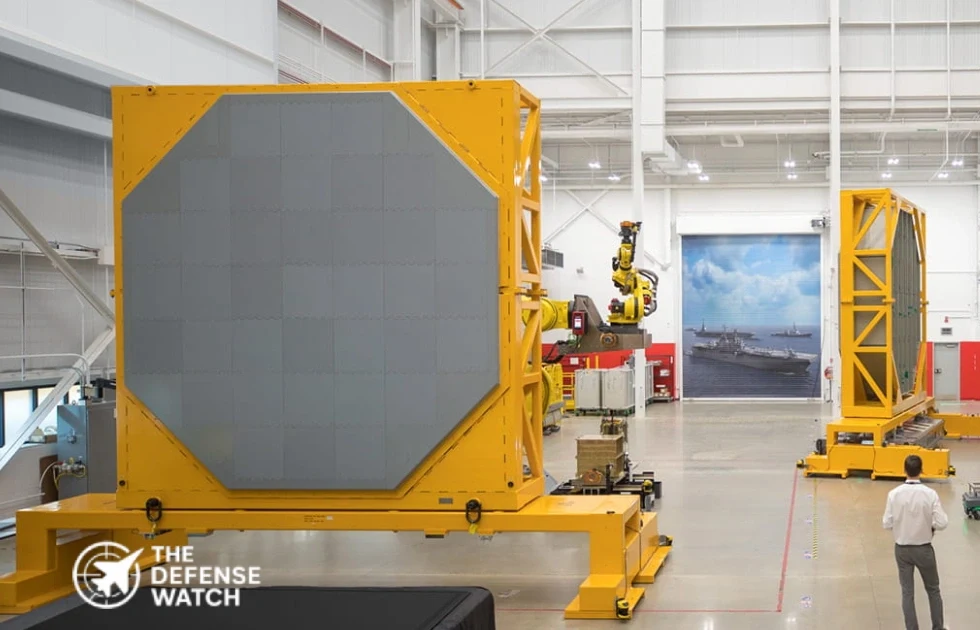
| Antenna Type | AESA, solid-state radar |
| Antenna Aperture / Size | Variant-dependent; exact dimensions not publicly disclosed |
| Power Output | Exact transmitter power not publicly disclosed |
| Detection Range | Long-range; specific maximum not publicly disclosed |
| Tracking Range | Exact maximum not publicly disclosed |
| Target Tracking Capacity | Exact number of simultaneous tracks not publicly disclosed |
| Elevation Coverage | Designed for three-dimensional air surveillance; exact limits are variant-dependent or undisclosed |
| Azimuth Coverage | 360-degree surveillance on the four-face fixed-array AN/SPY-6(V)1 configuration |
| Beam Steering | Electronic beam steering |
| Pulse Repetition Frequency (PRF) | Detailed operating values not publicly disclosed |
| Resolution | Exact numerical resolution not publicly disclosed |
| Update Rate | Mission and software dependent; exact rate not publicly disclosed |
| Clutter Rejection / ECCM | Advanced signal processing and electronic counter-countermeasure functions; detailed performance classified or not publicly released |
3. Functional Capabilities
| Primary Functions | Air surveillance, target tracking, ballistic missile defense support and integrated air and missile defense |
| Target Types | Aircraft, cruise missiles, ballistic missile threats and surface targets, depending on mission and configuration |
| Integration / Networking | Integrates with compatible ship combat systems |
| IFF Capability | Supports integration with shipboard identification systems; specific radar-native IFF details are not publicly established |
| Data Link / Networking | Supplies surveillance and tracking information to the ship combat system; wider network functions depend on connected systems |
| Weather & Terrain Resistance | Designed for maritime operations; performance varies with weather and propagation conditions |
| Mobility / Mounting | Fixed shipboard installation; not a mobile land-based radar |
4. Physical & Operational Characteristics
| Dimensions | Variant-dependent; full dimensions not publicly disclosed |
| Weight | Exact system weight not publicly disclosed |
| Power Requirement | Shipboard electrical supply; exact requirements not publicly disclosed |
| Cooling System | Ship-integrated thermal management; detailed specifications not publicly disclosed |
| Operating Temperature Range | Exact limits not publicly disclosed |
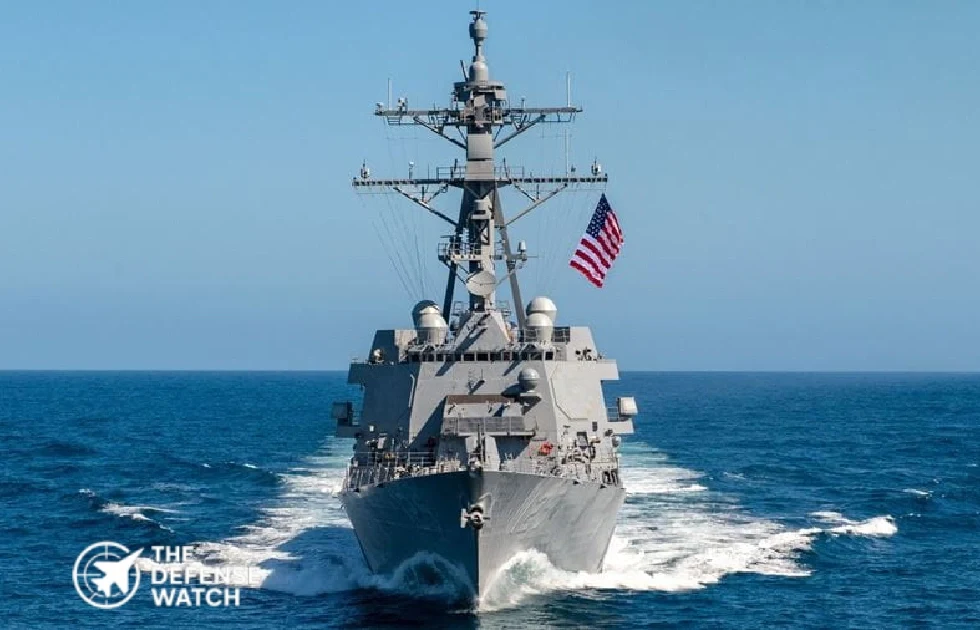
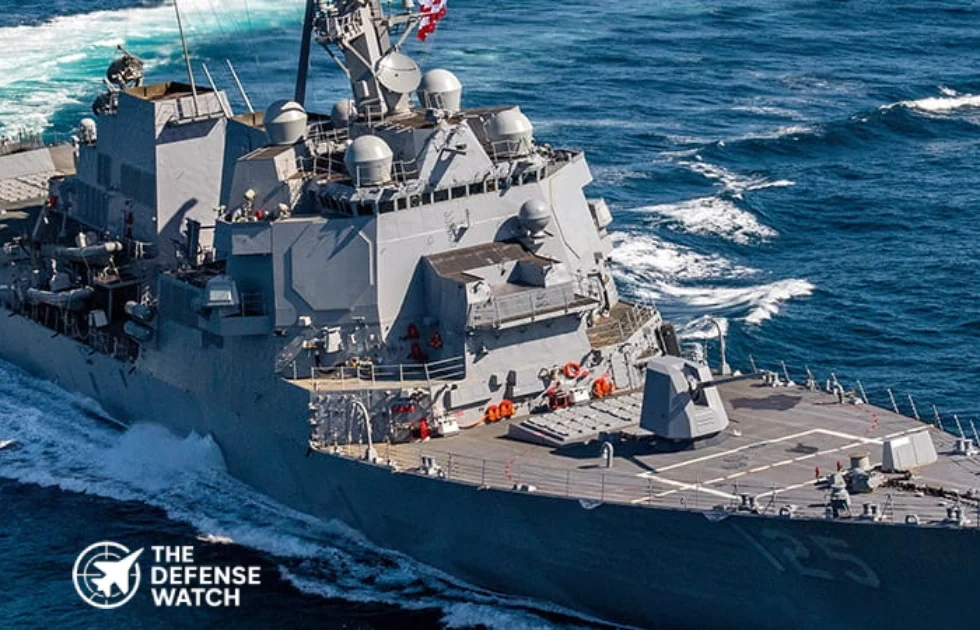
| Deployment Platform | Arleigh Burke-class Flight III destroyers for the AN/SPY-6(V)1; other variants support additional ship configurations |
| Crew Requirement | Operated and maintained by the ship's combat systems personnel; dedicated staffing figures not publicly disclosed |
5. Software & Processing
| Signal Processor Type | Digital radar signal processing; detailed processor architecture not publicly disclosed |
| Processing Speed | No verified public numerical figure |
| AI / Automation Features | Automated detection and tracking functions; no verified public basis for assigning a specific AI capability |
| Data Output / Interface | Radar surveillance and tracking data supplied to compatible combat systems |
| Software Upgradeability | Supported; Navy contracts include software upgrades and integration work |
6. Operational History
| Year Introduced | Development program began in the 2010s; fleet introduction followed in the 2020s |
| Users / Operators | United States Navy; foreign availability subject to U.S. government approval |
| Notable Deployments | Integrated with the USS Jack H. Lucas (DDG 125), an Arleigh Burke-class Flight III destroyer |
| Successor / Predecessor | Intended to improve on the AN/SPY-1 family; no officially designated direct successor publicly established |
7. Export / Compliance Data
| Export Availability | Potential foreign military sales, subject to U.S. government authorization |
| ITAR / MTCR Status | Defense export controls apply; exact licensing classification should be confirmed with the U.S. government |
| Cost Estimate | No universal unit price publicly established; contract values include different combinations of hardware, integration and support |
PROS
- AESA technology supports rapid electronic beam steering and multi-target surveillance.
- Designed to improve detection and tracking of advanced air and missile threats.
- Modular architecture supports multiple ship classes and radar configurations.
- Integrates with naval combat systems for coordinated threat assessment and engagement.
- Software upgrades and common hardware elements can support capability improvements across the family.
CONS
- Exact detection range and tracking capacity are not publicly available for independent comparison.
- Installation and integration require substantial shipboard engineering.
- Power, cooling and maintenance requirements add demands to ship design and support.
- Procurement and modernization costs can be significant.
- Performance depends on the radar variant, combat-system integration and operating conditions.
SPY-6 Radar: U.S. Navy Air and Missile Defense System
The AN/SPY-6 is a family of advanced shipborne radars developed to improve the U.S. Navy’s ability to detect, track and help counter modern air and missile threats. Designed for integrated air and missile defense, it supports surveillance against aircraft, cruise missiles and ballistic missile threats, including increasingly demanding target profiles.
SPY-6 uses active electronically scanned array (AESA) technology and a modular design that allows different variants to support different ship classes and mission requirements. The AN/SPY-6(V)1 is designed for Arleigh Burke-class Flight III guided-missile destroyers, while other variants support additional surface combatant configurations. The radar provides information for combat systems to build a shared air and missile threat picture.
Manufacturer
Raytheon, an RTX business, developed the SPY-6 family for the U.S. Navy. The program is part of the service’s effort to improve integrated air and missile defense and replace or supplement older radar systems across its surface fleet.
Speed and Range
Radar systems do not have a vehicle speed or endurance rating. Their detection performance depends on the variant, target size, altitude, radar cross-section, environmental conditions and operating configuration. The U.S. Navy has not published a single universal maximum detection range or target-tracking capacity for the entire SPY-6 family. Specific performance figures should therefore be treated as undisclosed unless tied to an authoritative source and a defined variant.
Cost/Price
SPY-6 does not have a single retail price. Procurement contracts cover radar hardware, integration, testing, engineering and support. In June 2026, Raytheon announced a $515 million Navy contract for SPY-6 family integration and production support, including work associated with the SPY-6(V)4 upgrade for Flight IIA destroyers. That contract value is not the price of one radar.
FAQs
What is the SPY-6 radar?
SPY-6 is a U.S. Navy family of shipborne AESA radars designed for air surveillance, target tracking and integrated air and missile defense.
Who manufactures the SPY-6 radar?
Raytheon, part of RTX, manufactures the radar family for the U.S. Navy.
What is the detection range of SPY-6?
The Navy has not published one universal maximum detection range for all SPY-6 variants. Actual performance depends on the variant and the target being detected.
Which U.S. Navy ships use SPY-6?
The AN/SPY-6(V)1 is designed for Arleigh Burke-class Flight III destroyers. Other family variants are intended for additional ship configurations, including Flight IIA destroyer modernization.
How much does the SPY-6 radar cost?
There is no single public unit price applicable to every variant. Contract awards cover different quantities, configurations, integration work and support services.
Disclaimer Note
The information provided on TheDefenseWatch.com is for general informational purposes only. While we strive to ensure the accuracy, completeness, and timeliness of our content regarding defense and aerospace products, technologies, and specifications, we cannot guarantee that all information is 100% accurate or up-to-date due to the evolving nature of military technology and classified data.TheDefenseWatch.com does not warrant the reliability, suitability, or availability of the information for any specific purpose. Users are advised to consult official sources, such as manufacturers, government publications, or defense agencies, for precise and verified data before making decisions based on our content.We are not affiliated with any defense manufacturers, governments, or military organizations mentioned. Opinions, reviews, and ratings reflect expert analysis but are subjective and should not be considered endorsements. TheDefenseWatch.com is not responsible for any errors, omissions, or consequences arising from the use of this website’s content.External links are provided for convenience and do not imply endorsement. TheDefenseWatch.com reserves the right to update or modify content without prior notice. By using this website, you agree to our Privacy & Cookies Policy.


New Arrivals








Popular Comparisons
-
 Tejas vs Gripen: Key Differences and Capabilities
View Comparison →
Tejas vs Gripen: Key Differences and Capabilities
View Comparison → -
Tejas vs MiG-21 Bison: How India Replaced Its Iconic Supersonic Fighter
View Comparison →
-
F-35 vs F-16: Stealth, Sensors and Combat Roles
View Comparison →
-
Tejas Fighter Jet vs F-16 Fighting Falcon: Capability Compared
View Comparison →
-
Rafale Fighter Jet vs F-16 Fighting Falcon : Which Fighter Has the Edge?
View Comparison →
-
Su-57 Fighter Jet vs J-20 Fighter Jet: Stealth and Air Combat Compared
View Comparison →
-
Mirage 2000 vs Tejas Mk1A: Legacy Combat Power vs Indigenous Modernization
View Comparison →
-
Rafale Fighter Jet vs F-22 Raptor: Which Air Dominance Fighter Has the Edge?
View Comparison →
-
Tejas Fighter Jet vs. Rafale Fighter Jet: India’s Indigenous Fighter Meets France’s Proven Multirole Combat Aircraft
View Comparison →
-
F-22 Raptor vs. F-35 Joint Strike Fighter: Which Fifth Generation Fighter Has the Edge?
View Comparison →


- Raytheon Tests Faster Coyote Interceptor With New Rocket Motor

- Raytheon to Develop Software Upgrades for U.S. Navy Radar Detection
- Kim Jong Un Opens North Korea Weapons Museum as Pyongyang Claims Missile Test Success
- Pentagon Certifies Bath Iron Works for Second Arleigh Burke Destroyer
- North Korea Fires Unidentified Projectile Toward East Coast, Seoul Says
- USS Oregon Visits Norway as U.S. Navy Maintains High North Presence
- Lockheed Martin Unveils PAC-3 Edge Interceptor for U.S. Army
- Northrop Grumman Completes B-2 Spirit of Kitty Hawk Overhaul
- Army Report Finds Systemic Failures Behind Fatal 2025 Midair Collision
- Lockheed Martin to Supply Black Hawk Training Systems to Philippine Air Force



Fighter Jets
-
 MIG-31 Fighter Jet
-
J-10CE Fighter Jet
-
Chengdu J-10 Fighter Jet
-
Chengdu J-10C Fighter Jet
-
Gripen E Fighter Jet
-
Tejas Mk1A Fighter Jet
-
Tejas Mk‑2 Fighter Jet
-
F-16V Viper Block 70 Fighter Jet
-
F-15EX Eagle II Fighter
-
Boeing F/A-XX Fighter
-
F-15E Strike Eagle Fighter
-
F/A-18E/F Super Hornet Fighter Jet
-
Saab Gripen F Fighter Jet
-
JAS 39E/F Gripen Fighter Jet
-
JAS 39 Gripen Fighter Jet
-
F-35A Lightning II Fighter Jet
-
F/A-18F Super Hornet
-
J-50 Fighter Jet
-
Spanish EF-18 Hornet Fighter
-
F-47 Fighter Jet
-
F-35i Adir Fighter Jet
-
F-16 Fighting Falcon
-
AIDC T-5 Brave Eagle
-
F-CK-1 Ching-Kuo Fighter







Recent Compares
-
Tejas vs Gripen: Key Differences and Capabilities
View Comparison →
-
Tejas vs MiG-21 Bison: How India Replaced Its Iconic Supersonic Fighter
View Comparison →
-
F-35 vs F-16: Stealth, Sensors and Combat Roles
View Comparison →
-
Tejas Fighter Jet vs F-16 Fighting Falcon: Capability Compared
View Comparison →
-
Rafale Fighter Jet vs F-16 Fighting Falcon : Which Fighter Has the Edge?
View Comparison →
Latest Defense Systems
10 Compares Defense Systems
-
Tejas vs Gripen: Key Differences and Capabilities
View Comparison →
-
Tejas vs MiG-21 Bison: How India Replaced Its Iconic Supersonic Fighter
View Comparison →
-
F-35 vs F-16: Stealth, Sensors and Combat Roles
View Comparison →
-
Tejas Fighter Jet vs F-16 Fighting Falcon: Capability Compared
View Comparison →
-
Rafale Fighter Jet vs F-16 Fighting Falcon : Which Fighter Has the Edge?
View Comparison →
-
Su-57 Fighter Jet vs J-20 Fighter Jet: Stealth and Air Combat Compared
View Comparison →
-
Mirage 2000 vs Tejas Mk1A: Legacy Combat Power vs Indigenous Modernization
View Comparison →
-
Rafale Fighter Jet vs F-22 Raptor: Which Air Dominance Fighter Has the Edge?
View Comparison →
-
Tejas Fighter Jet vs. Rafale Fighter Jet: India’s Indigenous Fighter Meets France’s Proven Multirole Combat Aircraft
View Comparison →
-
F-22 Raptor vs. F-35 Joint Strike Fighter: Which Fifth Generation Fighter Has the Edge?
View Comparison →
- Raytheon Tests Faster Coyote Interceptor With New Rocket Motor
- Raytheon to Develop Software Upgrades for U.S. Navy Radar Detection
- Kim Jong Un Opens North Korea Weapons Museum as Pyongyang Claims Missile Test Success
- Pentagon Certifies Bath Iron Works for Second Arleigh Burke Destroyer
- North Korea Fires Unidentified Projectile Toward East Coast, Seoul Says