Chinese and Egyptian air forces used their 2026 Eagles of Civilization exercise to train against different fighter types, practice beyond-visual-range engagements and conduct aerial refueling, with Chinese state media reporting that airborne surveillance and electronic jamming played important roles in a simulated four-versus-six air combat scenario.
- Four Chinese fighters faced six Egyptian aircraft
- Why the KJ-500 matters to the J-16
- Electronic jamming emerges as a training focus
- Rafale and MiG-29 performance in close-range engagements
- YU-20A refueling gives Egyptian pilots additional experience
- What the exercise says about China’s overseas air operations
- What the reported results do and do not establish
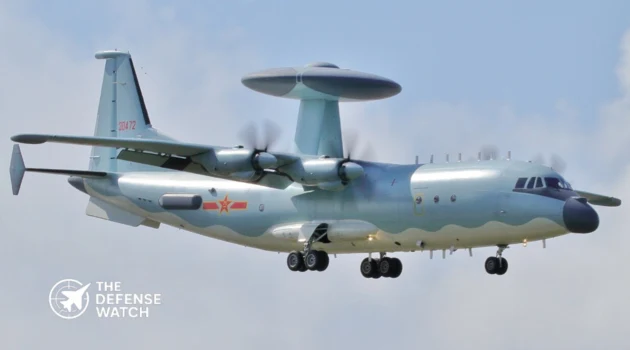
The exercise, held at Egyptian air bases from August to early September, brought China’s J-16 multirole fighters together with Egyptian Rafale and MiG-29 aircraft. China’s KJ-500 airborne early warning and control aircraft also participated, providing a platform for training in coordinated air operations.
The latest details, reported by China’s state broadcaster CCTV and published by the Global Times on October 12, offer a glimpse into how the People’s Liberation Army Air Force approaches integrated air combat. However, the reports do not provide independent measurements of the exercise’s results, simulated losses or the effectiveness of individual weapons and countermeasures.
Four Chinese fighters faced six Egyptian aircraft
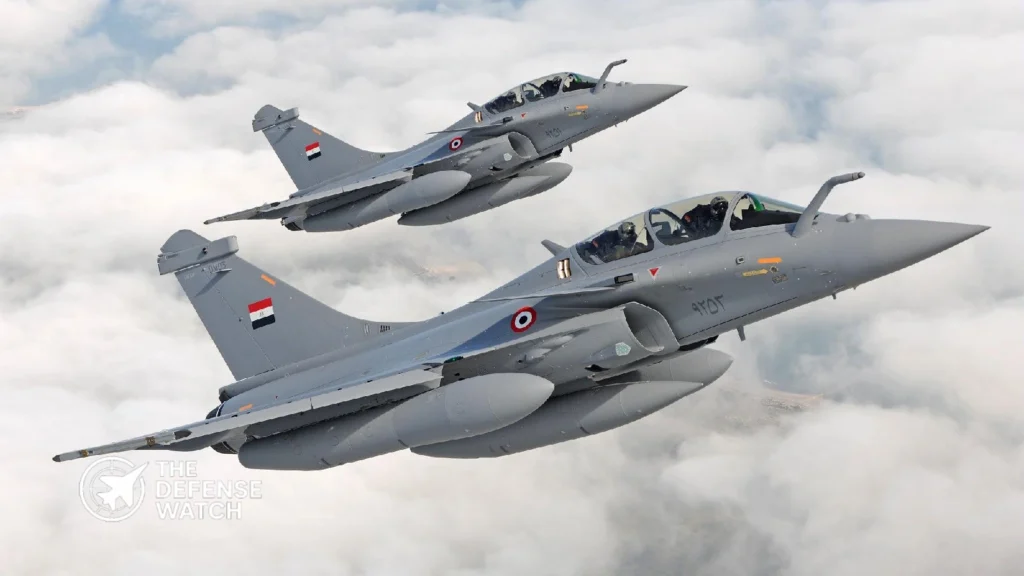
One of the most revealing scenarios took place on the third day of flight training. According to CCTV, China deployed four J-16 fighters against an Egyptian formation consisting of two Rafales and four MiG-29s in a beyond-visual-range engagement.
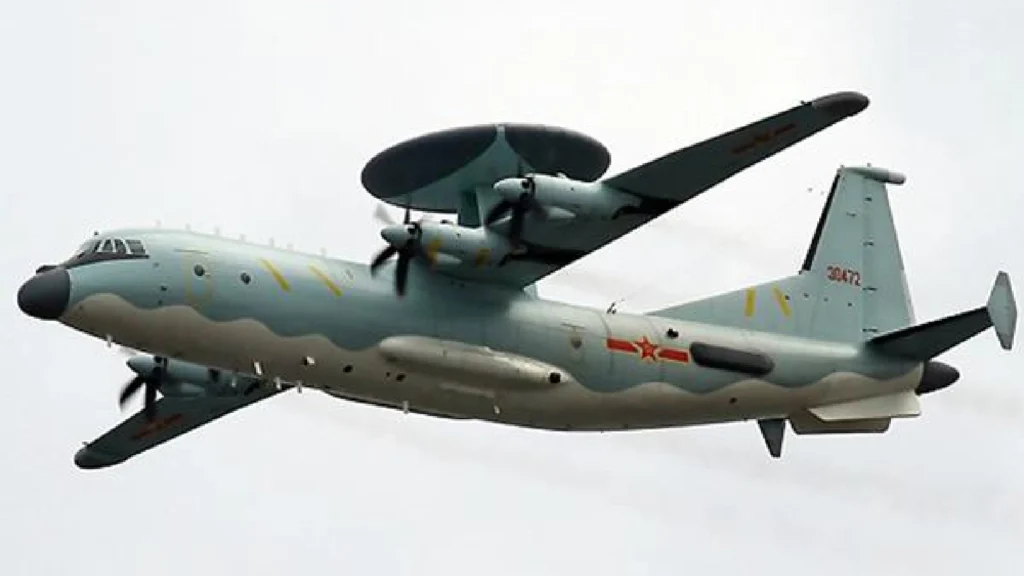
The scenario placed the Chinese formation at a numerical disadvantage. China responded by incorporating a KJ-500 airborne early warning and control aircraft into the exercise, shifting the focus from a fighter-only engagement to a coordinated operation involving airborne surveillance and command support.
Wei Yuexin, a Chinese Air Force pilot who served in a tower command role during the first day’s training, told CCTV that tactical coordination and attention to missile evasion were central to the engagement.
The report did not disclose the simulated engagement rules, the initial detection ranges, the weapons assigned to either side or the final exercise score. Those omissions make it impossible to determine from the public account whether one formation achieved a decisive tactical advantage.
The scenario nevertheless illustrates a central principle of modern air combat: fighter numbers alone do not determine the outcome of an engagement. Detection, information sharing, weapon employment, electronic warfare and coordination can all influence how aircraft operate against a larger force.
Why the KJ-500 matters to the J-16
The KJ-500 is designed to provide airborne surveillance and command support. Its role is different from that of a fighter: it helps build and distribute an air picture, allowing participating aircraft to coordinate their actions with information beyond what an individual pilot may obtain from onboard sensors alone.
In a beyond-visual-range engagement, this support can help fighters organize their search, maintain awareness of other aircraft and coordinate responses to emerging threats. The actual benefit depends on the quality and timeliness of the information, communications reliability, mission planning and the opposing force’s ability to disrupt or deceive the network.
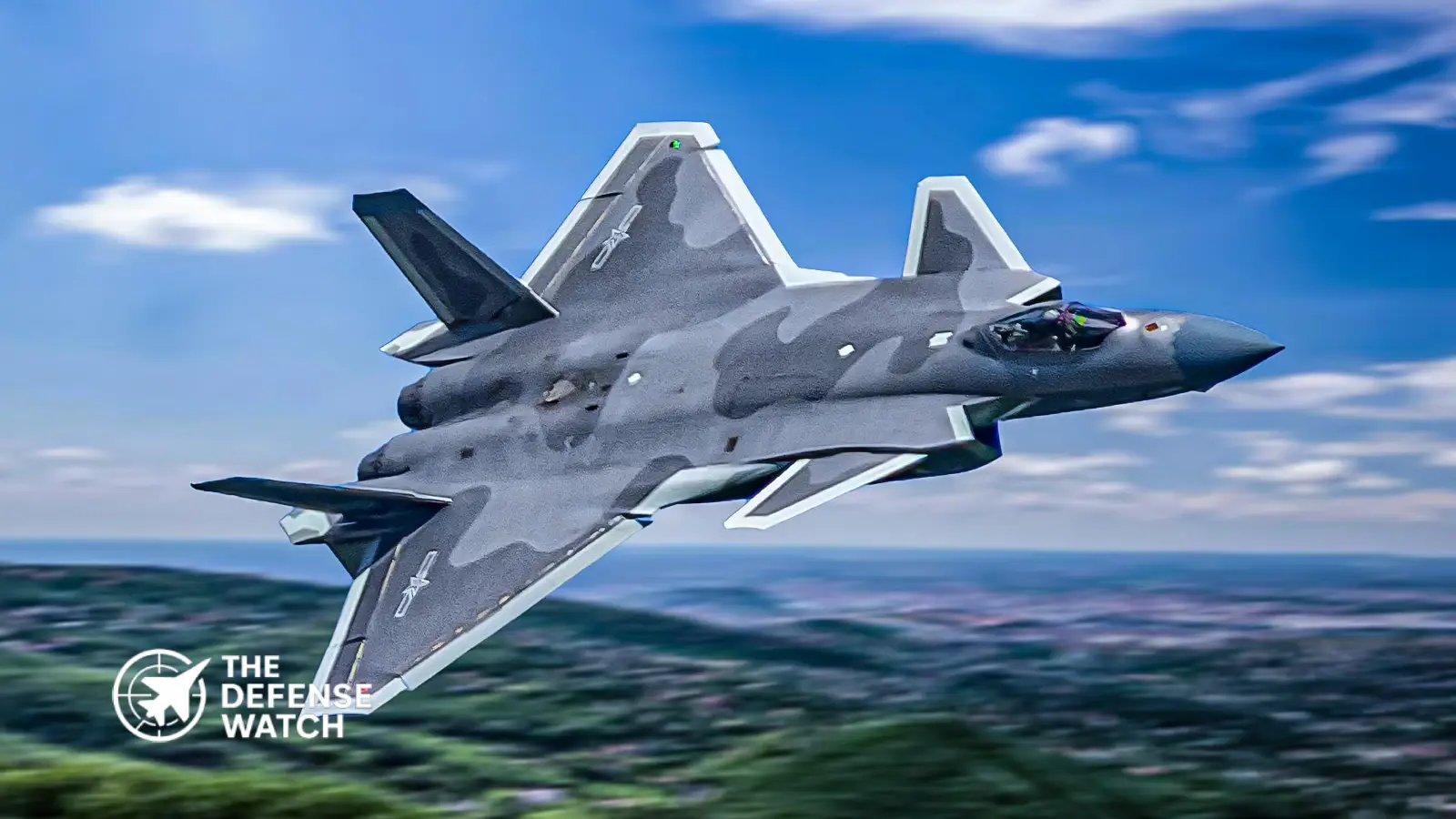
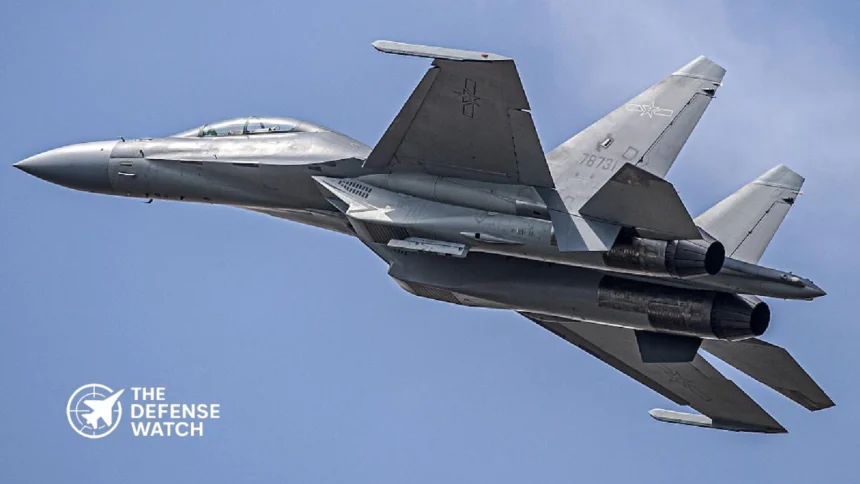
The J-16, meanwhile, is a twin-seat, multirole fighter designed for a combination of air-to-air and strike missions. Its size and intended mission set allow it to carry a substantial weapons load, although the precise loadout used during the Egyptian exercise has not been disclosed.
Chinese military commentator Song Zhongping told the Global Times that the KJ-500 could help the J-16 exploit its strengths in engagements beyond visual range. That is an attributed assessment, not independent proof that the Chinese formation outperformed the Egyptian aircraft.
The wider lesson is that a fighter’s operational value cannot be assessed solely by its maneuverability or published specifications. Its sensors, weapons, supporting aircraft and command arrangements also shape its effectiveness.
Electronic jamming emerges as a training focus
Electronic warfare was another prominent theme in the Chinese pilots’ account.
Wei said Egyptian pilots expressed interest in China’s use of electronic jamming, particularly the timing of its employment during air combat training. CCTV’s report did not identify the specific jamming equipment used, the frequencies involved or the effects achieved against Egyptian aircraft.
That distinction matters. Electronic warfare can interfere with radar tracking, communications and other parts of an adversary’s sensor network, but its effectiveness depends on the equipment involved, the threat environment and the countermeasures available to the opposing force.
Jamming is also not a substitute for sound tactical coordination. Aircrews must combine electronic protection and attack measures with situational awareness, maneuvering, weapon employment and communications procedures.
The exercise provided an opportunity for both air forces to observe unfamiliar tactics and compare operating procedures. It does not establish that Chinese jamming systems would produce the same effects against every opponent or under combat conditions.
Rafale and MiG-29 performance in close-range engagements
The initial training reportedly included engagements between Chinese J-16s and Egyptian Rafale and MiG-29 fighters. Wei said the Egyptian aircraft demonstrated strong maneuverability in close combat during the first day’s flying.

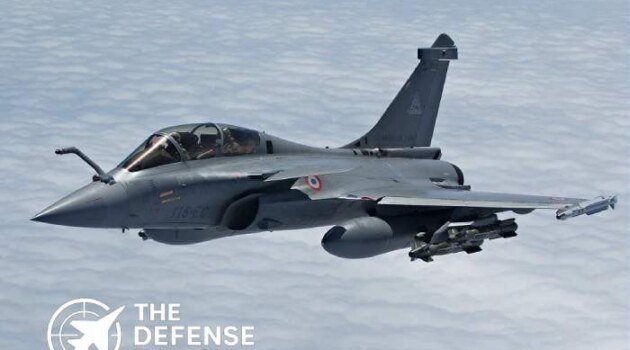
Egyptian Air Force Rafale fighter. Song assessed that the Rafale and MiG-29 could present challenges in close-range engagements, while the J-16’s larger airframe and multirole design made it particularly relevant to longer-range air combat and strike missions.
These aircraft serve different operational requirements, and the exercise account does not provide enough information to rank them by overall combat effectiveness.
The Rafale is a French-built multirole fighter operated by Egypt, while the MiG-29 is a Soviet-origin fighter available in several configurations. Differences in sensors, weapons, pilot training and mission profiles can matter as much as airframe performance.
A close-range training engagement also measures a different set of skills from a beyond-visual-range scenario. The former places greater emphasis on visual acquisition, maneuvering and short-range weapons employment. The latter places greater weight on detection, tracking, information sharing and engagement decisions before opposing pilots can see one another.
Without the exercise’s rules and results, the reported observations should be treated as lessons from a training event rather than a definitive comparison of the three fighter types.
YU-20A refueling gives Egyptian pilots additional experience
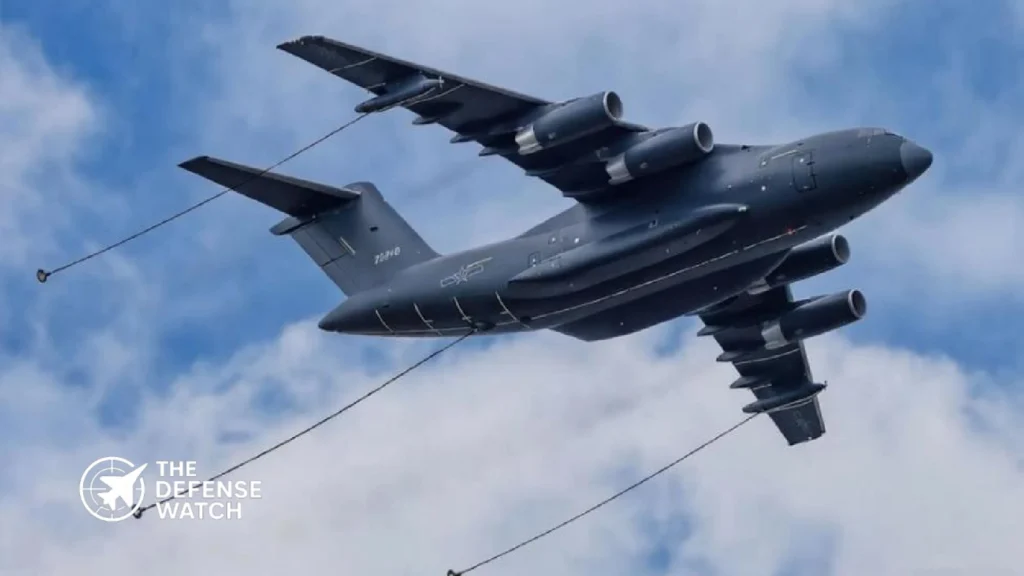
The exercise also provided practical training in aerial refueling, with CCTV footage showing a Chinese YU-20A tanker refueling Egyptian Rafale fighters.
Egypt’s Ministry of Defense confirmed that aerial refueling formed part of the joint training. Its September 7 announcement marking the exercise’s conclusion also described sorties involving attacks on simulated hostile targets and the defense of important sites.
For Egypt, practicing with a foreign tanker offers experience in coordinating with a different aircraft and crew, including rendezvous procedures, formation positioning and fuel transfer. The operational benefit depends on compatibility between the tanker and receiving aircraft, the training profile and the ability to sustain such support during real missions.
Wei told CCTV that Egyptian pilots improved their refueling performance during the exercise. The report did not provide numerical success rates or specify how many refueling contacts were completed.
The distinction between aerial refueling and fighter-to-fighter buddy refueling is also important. A dedicated tanker can transfer fuel without requiring a combat aircraft to act as the fuel provider. Buddy refueling, by contrast, uses a suitably equipped fighter to refuel another aircraft of a compatible type, tying up both aircraft and consuming fuel that could otherwise support their missions.
The Chinese account characterized buddy refueling between Egyptian MiG-29s as a limited alternative. Public information provided with the report does not establish the full range of Egypt’s tanker access, refueling equipment or operational arrangements, so the claim should not be treated as a complete inventory of Egyptian refueling capabilities.
For both air forces, the training offered a chance to practice procedures that can extend flight endurance and improve the flexibility of air operations.
What the exercise says about China’s overseas air operations
Eagles of Civilization 2026 was also an opportunity for China to demonstrate its ability to deploy aircraft and supporting personnel far beyond its home bases.
The Chinese deployment included J-16 fighters, YU-20-series tankers and KJ-500 airborne early warning aircraft. Earlier reporting described a long-distance movement to Egypt, while the exercise itself allowed the participating forces to practice joint planning and flying operations in an unfamiliar environment.
Operating abroad requires more than capable aircraft. A force must coordinate personnel, maintenance, spare parts, fuel, communications and mission planning while sustaining flying operations away from its established support infrastructure.
Egypt’s Ministry of Defense said the exercise involved several Egyptian air bases and included classroom instruction, joint sorties and training in the planning and management of air combat missions. The ministry announced the exercise’s conclusion on September 7.
The exercise also provides a setting for the two countries to learn about each other’s equipment and operating practices. Chinese pilots gained exposure to Egyptian Rafales and MiG-29s, while Egyptian crews practiced alongside Chinese fighters and a tanker.
However, participation in a bilateral exercise does not by itself establish that the two air forces could operate as a fully integrated combat force. That would require evidence about shared communications, tactical procedures, data exchange, command arrangements and performance under more demanding conditions.
What the reported results do and do not establish
The Chinese account offers useful details about the scenarios flown, but its limitations should remain clear.
The reported four-versus-six engagement was a training scenario, not a combat encounter. No verified record of simulated kills, weapon effectiveness, radar detection performance or electronic warfare results was included in the available reporting.
Similarly, the reported interest of Egyptian pilots in Chinese jamming techniques does not establish that the systems would defeat a particular adversary’s radar or electronic protection measures.
The exercise is best understood as a practical exchange of tactics, procedures and operational experience. It demonstrates that China and Egypt trained with multiple aircraft types and practiced coordinated air operations, including beyond-visual-range engagements and aerial refueling.
For analysts assessing China’s air force, the more consequential question is how effectively the PLA can combine fighters, airborne surveillance, electronic warfare and logistical support in a coordinated force. The Egyptian exercise offered a public example of that approach, but the released information is insufficient to establish its effectiveness against a modern opponent in combat.