









@2026 – All Right Reserved. TheDefenseWatch.com
- Home
- Defense Systems
- Bombers & Strategic Aircraft
- SR-71 Blackbird Aircraft
SR-71 Blackbird Aircraft
Defense Systems Full Specifications
1. General Information
| Name | SR-71 Blackbird |
| Manufacturer | Lockheed Skunk Works |
| Country of Origin | United States |
| Introduction / In Service Since | 1966 |
| Status | Retired |
| Category | Strategic reconnaissance aircraft |
| Crew | 2 |
| Unit Cost | No current procurement price; historical program cost varied |
2. Dimensions & Structure
| Length | 107.4 ft |
| Wingspan | 55.6 ft |
| Height | 18.5 ft |
| Wing Area | Approximately 1,800 sq ft |
| Empty Weight | Approximately 60,000 lb |
| Maximum Takeoff Weight (MTOW) | Approximately 140,000 lb |
3. Performance
| Maximum Speed | Mach 3.2+ |
| Range | 2,000 miles unrefueled |
| Combat Radius | Not applicable to reconnaissance mission |
| Service Ceiling | More than 85,000 ft |
| Rate of Climb | Not consistently published |
4. Powerplant
| Engine Type | 2 × Pratt & Whitney J58 |
| Thrust (per engine) | 32,500 lb with afterburner |
| Total Thrust | 65,000 lb with afterburner |
5. Payload & Armament
| Internal Payload Capacity | Mission-specific reconnaissance equipment |
| Weapons Bay | Sensor bays |
| Compatible Weapons | None |
| Hardpoints | None |
6. Avionics & Systems
| Radar System | No conventional search radar |
| Navigation | Advanced inertial navigation and mission navigation systems |
| Electronic Warfare (EW) | Electronic intelligence and electronic countermeasures |
| Stealth Features | Reduced radar cross-section design, specialized shaping and coatings |
7. Operational History
| Primary Operator | U.S. Air Force |
| Conflict Usage | Vietnam War and Cold War reconnaissance |
| Notable Missions | Strategic intelligence and photographic reconnaissance |
8. Additional Information
| Variants | SR-71A, SR-71B, SR-71C |
| Successor / Future Replacement | No direct operational replacement |
| Notable Features | Titanium construction, Mach 3+ cruise, high-altitude reconnaissance |
| Estimated Operational Life | 1966 to 1990 in primary USAF service; NASA operations continued into 1999 |
PROS
- Exceptional Mach 3+ speed
- Very high operating altitude
- Long-range reconnaissance capability
- Advanced intelligence sensors
- Reduced radar observability and electronic countermeasures
CONS
- Extremely expensive to operate
- High maintenance requirements
- Required specialized JP-7 fuel
- Depended heavily on aerial refueling
- No conventional armament
SR-71 Blackbird: Mach 3 Strategic Reconnaissance Aircraft
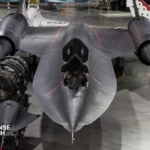
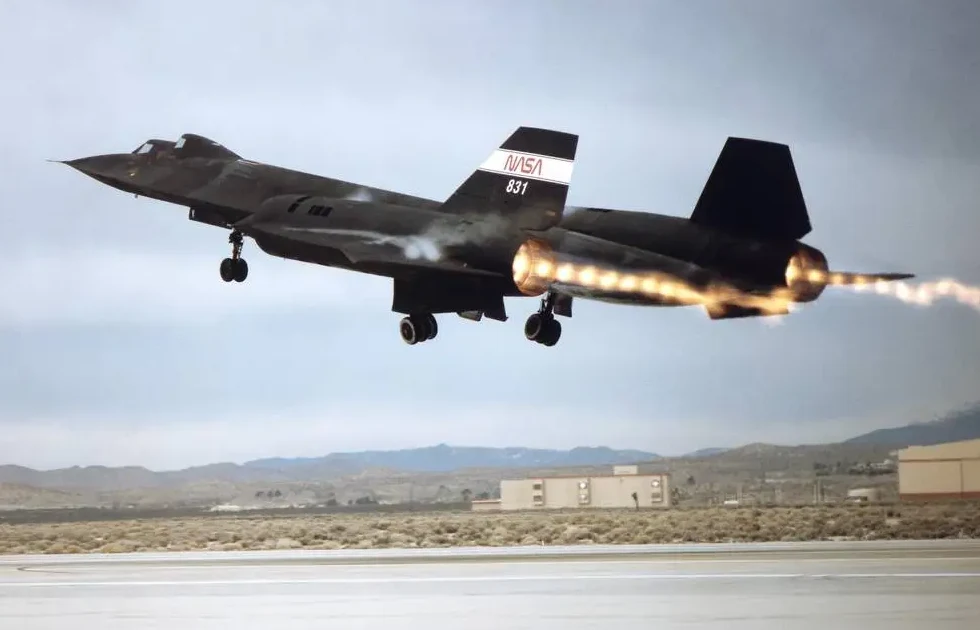
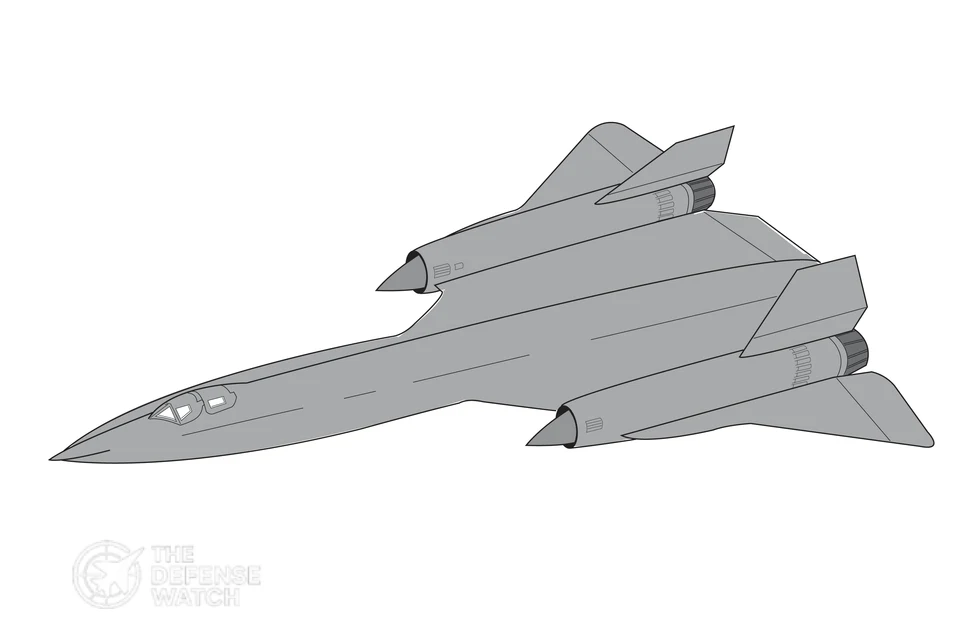
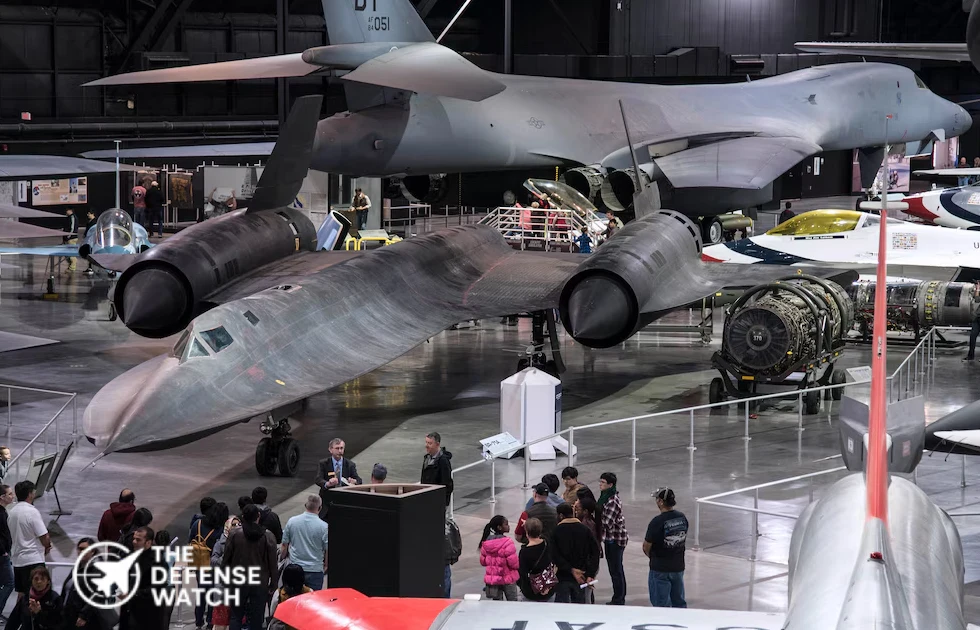
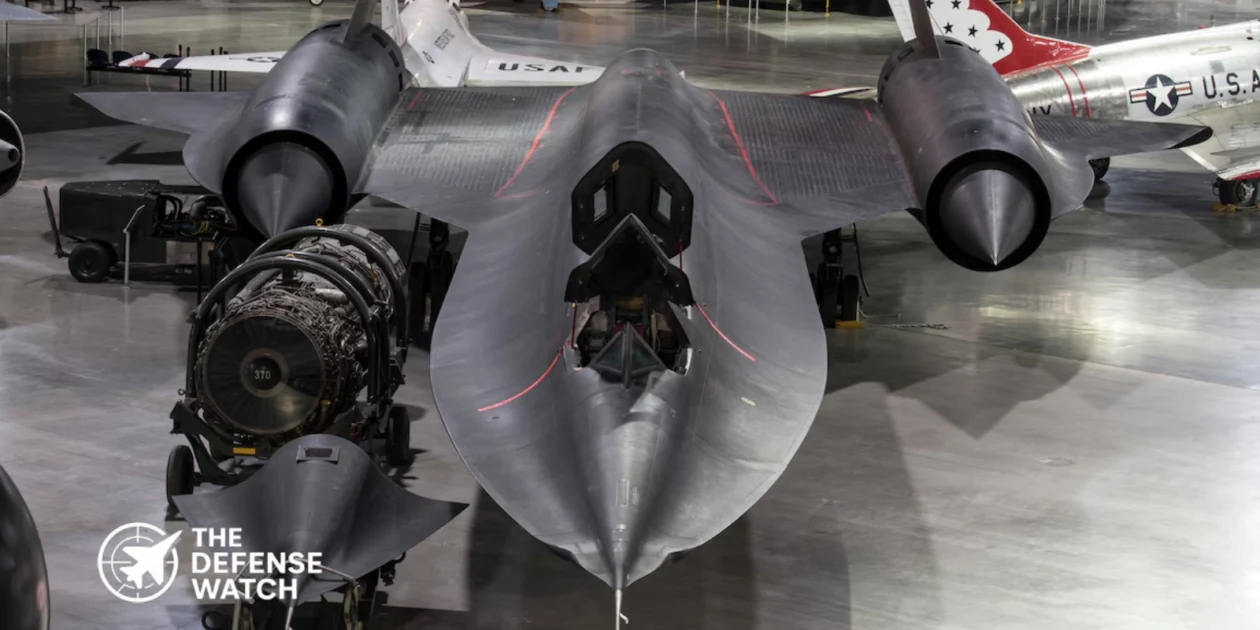
The SR-71 Blackbird was a U.S. long-range strategic reconnaissance aircraft designed to collect intelligence at extreme speed and altitude. Developed by Lockheed’s Advanced Development Company, known as the Skunk Works, under Clarence Kelly Johnson, the aircraft evolved from the A-12 and YF-12 programs. The SR-71 first flew on December 22, 1964, and entered U.S. Air Force service in 1966.
Built primarily from titanium alloys, the Blackbird was engineered to withstand the intense aerodynamic heating generated during sustained Mach 3 flight. Its mission equipment included photographic cameras, electronic intelligence systems, and defensive electronic countermeasures. It carried no conventional weapons and relied on speed, altitude, reduced radar observability, and electronic countermeasures for survivability.
Manufacturer
Lockheed Skunk Works, now part of Lockheed Martin, developed and manufactured the SR-71 for the U.S. Air Force. The aircraft operated primarily from Beale Air Force Base, Kadena Air Base in Okinawa, and RAF Mildenhall.
Speed and Range
The SR-71 could cruise at more than Mach 3, with NASA documenting a maximum speed above Mach 3.2. Its July 1976 record reached 2,193.167 mph, while its service ceiling exceeded 85,000 feet. Published figures vary by source and mission configuration, with NASA listing approximately 2,000 miles unrefueled and the U.S. Air Force National Museum listing more than 2,900 statute miles.
Cost/Price
The SR-71 has no current procurement price because production and operational service ended decades ago. Operating costs were substantial, reflecting specialized JP-7 fuel, aerial refueling, maintenance, and complex support requirements. One Air Force account cites approximately $85,000 per flight hour during its later operational era.
Disclaimer Note
The information provided on TheDefenseWatch.com is for general informational purposes only. While we strive to ensure the accuracy, completeness, and timeliness of our content regarding defense and aerospace products, technologies, and specifications, we cannot guarantee that all information is 100% accurate or up-to-date due to the evolving nature of military technology and classified data.TheDefenseWatch.com does not warrant the reliability, suitability, or availability of the information for any specific purpose. Users are advised to consult official sources, such as manufacturers, government publications, or defense agencies, for precise and verified data before making decisions based on our content.We are not affiliated with any defense manufacturers, governments, or military organizations mentioned. Opinions, reviews, and ratings reflect expert analysis but are subjective and should not be considered endorsements. TheDefenseWatch.com is not responsible for any errors, omissions, or consequences arising from the use of this website’s content.External links are provided for convenience and do not imply endorsement. TheDefenseWatch.com reserves the right to update or modify content without prior notice. By using this website, you agree to our Privacy & Cookies Policy.
New Arrivals
-
 Boeing F/A-XX Fighter
-
F-15E Strike Eagle Fighter
-
F/A-18E/F Super Hornet Fighter Jet
-
Saab Gripen F Fighter Jet
-
JAS 39E/F Gripen Fighter Jet
-
JAS 39 Gripen Fighter Jet
-
F-35A Lightning II Fighter Jet
-
F/A-18F Super Hornet
-
PAC-2 Patriot Missile System
-
Patriot PAC-3 Missile Defense System
-
EA-18G Growler
-
J-50 Fighter Jet
Popular Comparisons
-
 F-35 vs F-16: Stealth, Sensors and Combat Roles
View Comparison →
F-35 vs F-16: Stealth, Sensors and Combat Roles
View Comparison → -
Tejas Fighter Jet vs F-16 Fighting Falcon: Capability Compared
View Comparison →
-
Rafale Fighter Jet vs F-16 Fighting Falcon : Which Fighter Has the Edge?
View Comparison →
-
Su-57 Fighter Jet vs J-20 Fighter Jet: Stealth and Air Combat Compared
View Comparison →
-
Mirage 2000 vs Tejas Mk1A: Legacy Combat Power vs Indigenous Modernization
View Comparison →
-
Rafale Fighter Jet vs F-22 Raptor: Which Air Dominance Fighter Has the Edge?
View Comparison →
-
Tejas Fighter Jet vs. Rafale Fighter Jet: India’s Indigenous Fighter Meets France’s Proven Multirole Combat Aircraft
View Comparison →
-
F-22 Raptor vs. F-35 Joint Strike Fighter: Which Fifth Generation Fighter Has the Edge?
View Comparison →
-
F-35A vs. F-22 Raptor: Which U.S. Stealth Fighter Dominates Modern Air Combat?
View Comparison →
-
AGM-114 Hellfire vs. AGM-179 JAGM: Which U.S. Precision Missile Is Better?
View Comparison →
- NASA Armstrong Marks 80 Years of Flight Research From X-1 to X-59

- NASA Moves SR-71 Tail 844 Into Hangar Amid Return-to-Flight Assessment
- Belgium to Accelerate Delivery of Three F-16s to Ukraine by End of 2026
- Saudi Arabia Rejects Israeli Request to Retrieve Passengers From Diverted Flydubai Flight
- Boeing Wins $26.2M F-15E Windows 11 Upgrade Contract
- Boeing Wins U.S. Navy F/A-XX Contract Worth More Than $20 Billion
- Sweden to Deploy Gripen Fighters Over Poland for NATO Air Defense and Ukraine Aid Protection
- L3 Technologies Wins $10.75M Navy Contract for 176 Modernized Radios
- Lockheed Martin Gets $52.1M F-35 Lot 18-19 Engineering Modification
- Lockheed Martin Wins $245 Million Navy F/A-18 IRST Block II Contract