
- Home
- Defense Systems
- Aircraft Carriers
- John F. Kennedy Aircraft Carrier
John F. Kennedy Aircraft Carrier
Defense Systems Full Specifications
1. Physical Characteristics
| Ship Type | Nuclear-powered aircraft carrier |
| Class | Gerald R. Ford-class |
| Length | 1,092 ft |
| Beam (Width) | 134 ft |
| Flight Deck Width | 256 ft |
| Draft | Approx. 38.7 ft |
| Displacement (Full Load) | Approx. 100,000 long tons |
2. Propulsion & Performance
| Propulsion Type | Nuclear |
| Powerplant | Two nuclear reactors |
| Shafts | 4 |
| Maximum Speed | 30+ knots |
| Range | Effectively unlimited by fuel |
| Endurance | Extended deployment endurance |
3. Flight Operations
| Aircraft Launch System | CATOBAR |
| Catapult Type | EMALS |
| Recovery System | Advanced Arresting Gear |
| Total Aircraft Capacity | 75+ |
| Hangar Capacity | Large full-length carrier hangar |
| Aircraft Types Supported | Strike fighters, EW aircraft, AEW aircraft, helicopters and unmanned aircraft |
4. Sensors & Electronics
| Primary Radar | AN/SPY-6(V)3 Enterprise Air Surveillance Radar |
| Navigation Radar | Naval navigation systems |
| Fire Control Radar | Integrated air-defense sensors |
| Electronic Warfare Suite | Integrated electronic warfare capabilities |
| Communication Systems | Tactical, satellite and data-link communications |
5. Weapons & Defense Systems
| CIWS | Phalanx |
| Short-Range SAMs | Centralized command and control functions |
| Missile Launchers | Carrier air operations management |
| Decoy Systems | Tactical and satellite communications |
6. Command & Control
| Combat Management System | Integrated carrier combat systems |
| Combat Information Center (CIC) | Centralized command and control functions |
| Air Operations Center | Approximately 4,500+ ship, air wing and staff personnel |
| Data Links | Tactical and satellite communications |
7. Crew & Capacity
| Ship Crew | Ford-class reduced-manning design |
| Air Wing Personnel | Varies by embarked air wing |
| Total Complement | Approximately 4,500+ ship, air wing and staff personnel |
8. Construction & Cost
| Shipbuilder/Manufacturer | Huntington Ingalls Industries, Newport News Shipbuilding |
| Construction Started | 2015 |
| Commissioned | Not yet commissioned |
| Estimated Cost | Approximately $13.2 billion |
PROS
- Nuclear propulsion provides exceptional endurance
- EMALS supports modern carrier aircraft operations
- AAG improves aircraft recovery capability
- Large air wing supports multiple mission types
- Advanced sensors and layered defenses
CONS
- Very high acquisition cost
- Complex systems require specialized maintenance
- Large crew and extensive logistics support are required
- Delivery has experienced schedule delays
- Carrier operations depend on a wider strike group for protection
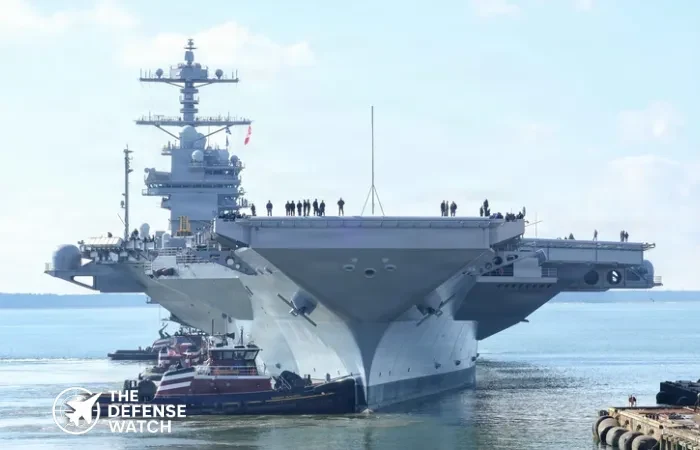
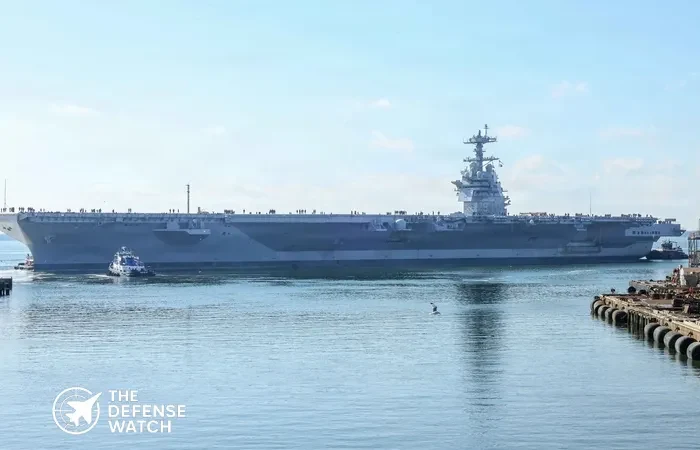
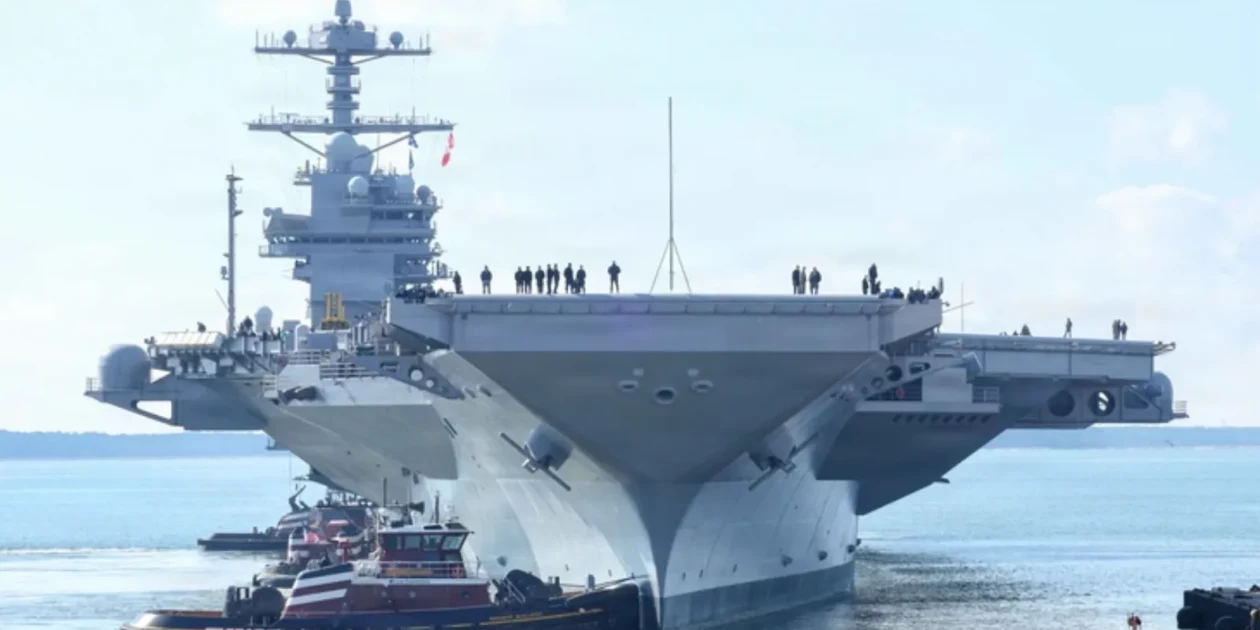
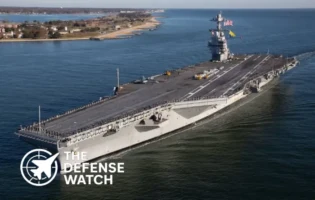
The John F. Kennedy CVN 79 is the second ship of the U.S. Navy’s Gerald R. Ford-class of nuclear-powered aircraft carriers. Built by Huntington Ingalls Industries’ Newport News Shipbuilding in Virginia, the carrier is designed to provide sea-based airpower, forward presence, maritime security, power projection, and support for joint operations.
At 1,092 feet long and approximately 100,000 long tons, CVN 79 is designed to operate at more than 30 knots. Its nuclear propulsion provides long endurance without the need for routine refueling, allowing the carrier to remain deployed for extended periods when supported by logistics and crew requirements.
Carrier Aviation and Technology
CVN 79 uses the Electromagnetic Aircraft Launch System (EMALS), replacing traditional steam catapults. EMALS provides computer-controlled aircraft launches and is designed to support aircraft ranging from unmanned systems to heavy strike fighters. The carrier also incorporates the Advanced Arresting Gear (AAG) for aircraft recovery.
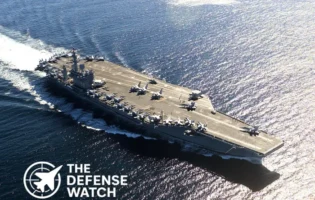
Its sensor and defensive architecture includes the AN/SPY-6(V)3 Enterprise Air Surveillance Radar, Ship Self Defense System, Rolling Airframe Missiles, Evolved Sea Sparrow Missiles, and Phalanx close-in weapon systems. The carrier can accommodate an air wing of more than 75 aircraft, including strike fighters, electronic warfare aircraft, airborne early warning aircraft, and helicopters.
As of August 2026, CVN 79 remains a future carrier rather than a commissioned U.S. Navy ship. It completed builder’s sea trials in February and departed Newport News on August 12, 2026, for acceptance trials. The Navy’s FY2026 budget documentation estimated total procurement cost at approximately $13.2 billion and scheduled delivery for March 2027.
Disclaimer Note
The information provided on TheDefenseWatch.com is for general informational purposes only. While we strive to ensure the accuracy, completeness, and timeliness of our content regarding defense and aerospace products, technologies, and specifications, we cannot guarantee that all information is 100% accurate or up-to-date due to the evolving nature of military technology and classified data.TheDefenseWatch.com does not warrant the reliability, suitability, or availability of the information for any specific purpose. Users are advised to consult official sources, such as manufacturers, government publications, or defense agencies, for precise and verified data before making decisions based on our content.We are not affiliated with any defense manufacturers, governments, or military organizations mentioned. Opinions, reviews, and ratings reflect expert analysis but are subjective and should not be considered endorsements. TheDefenseWatch.com is not responsible for any errors, omissions, or consequences arising from the use of this website’s content.External links are provided for convenience and do not imply endorsement. TheDefenseWatch.com reserves the right to update or modify content without prior notice. By using this website, you agree to our Privacy & Cookies Policy.

New Arrivals





Popular Comparisons
-
 Tejas vs Gripen: Key Differences and Capabilities
View Comparison →
Tejas vs Gripen: Key Differences and Capabilities
View Comparison → -
Tejas vs MiG-21 Bison: How India Replaced Its Iconic Supersonic Fighter
View Comparison →
-
F-35 vs F-16: Stealth, Sensors and Combat Roles
View Comparison →
-
Tejas Fighter Jet vs F-16 Fighting Falcon: Capability Compared
View Comparison →
-
Rafale Fighter Jet vs F-16 Fighting Falcon : Which Fighter Has the Edge?
View Comparison →
-
Su-57 Fighter Jet vs J-20 Fighter Jet: Stealth and Air Combat Compared
View Comparison →
-
Mirage 2000 vs Tejas Mk1A: Legacy Combat Power vs Indigenous Modernization
View Comparison →
-
Rafale Fighter Jet vs F-22 Raptor: Which Air Dominance Fighter Has the Edge?
View Comparison →
-
Tejas Fighter Jet vs. Rafale Fighter Jet: India’s Indigenous Fighter Meets France’s Proven Multirole Combat Aircraft
View Comparison →
-
F-22 Raptor vs. F-35 Joint Strike Fighter: Which Fifth Generation Fighter Has the Edge?
View Comparison →


- Iron Dome Architect Develops New Counter-Swarm Drone Defense System

- U.S. Navy Conducts First F-35C Landing on USS John F. Kennedy
- Huntington Ingalls Wins $56.2 Million Contract for Foreign Nuclear Submarine Support
- US Forces Disable Cargo Ship Attempting to Evade Iran Blockade
- Netherlands Deploys Nuclear-Capable F-35s for NATO Steadfast Noon
- Pakistan Tests Extended-Range Fatah-2 Hypersonic Ballistic Missile
- CSG Acquires 9.5% Stake in MDA Space, Expanding Into Space Technology
- RAF Voyager Completes 14 Missions During Saudi Arabia Deployment
- L3Harris Wins $250 Million GMLRS Rocket Motor Contract
- L3Harris Wins $55 Million U.S. Army Contract for NOVA Night-Vision Goggles



Fighter Jets
-
 MIG-31 Fighter Jet
-
J-10CE Fighter Jet
-
Chengdu J-10 Fighter Jet
-
Chengdu J-10C Fighter Jet
-
Gripen E Fighter Jet
-
Tejas Mk1A Fighter Jet
-
Tejas Mk‑2 Fighter Jet
-
F-16V Viper Block 70 Fighter Jet
-
F-15EX Eagle II Fighter
-
Boeing F/A-XX Fighter
-
F-15E Strike Eagle Fighter
-
F/A-18E/F Super Hornet Fighter Jet
-
Saab Gripen F Fighter Jet
-
JAS 39E/F Gripen Fighter Jet
-
JAS 39 Gripen Fighter Jet
-
F-35A Lightning II Fighter Jet
-
F/A-18F Super Hornet
-
J-50 Fighter Jet
-
Spanish EF-18 Hornet Fighter
-
F-47 Fighter Jet
-
F-35i Adir Fighter Jet
-
F-16 Fighting Falcon
-
AIDC T-5 Brave Eagle
-
F-CK-1 Ching-Kuo Fighter









Recent Compares
-
Tejas vs Gripen: Key Differences and Capabilities
View Comparison →
-
Tejas vs MiG-21 Bison: How India Replaced Its Iconic Supersonic Fighter
View Comparison →
-
F-35 vs F-16: Stealth, Sensors and Combat Roles
View Comparison →
-
Tejas Fighter Jet vs F-16 Fighting Falcon: Capability Compared
View Comparison →
-
Rafale Fighter Jet vs F-16 Fighting Falcon : Which Fighter Has the Edge?
View Comparison →
Latest Defense Systems
10 Compares Defense Systems
-
Tejas vs Gripen: Key Differences and Capabilities
View Comparison →
-
Tejas vs MiG-21 Bison: How India Replaced Its Iconic Supersonic Fighter
View Comparison →
-
F-35 vs F-16: Stealth, Sensors and Combat Roles
View Comparison →
-
Tejas Fighter Jet vs F-16 Fighting Falcon: Capability Compared
View Comparison →
-
Rafale Fighter Jet vs F-16 Fighting Falcon : Which Fighter Has the Edge?
View Comparison →
-
Su-57 Fighter Jet vs J-20 Fighter Jet: Stealth and Air Combat Compared
View Comparison →
-
Mirage 2000 vs Tejas Mk1A: Legacy Combat Power vs Indigenous Modernization
View Comparison →
-
Rafale Fighter Jet vs F-22 Raptor: Which Air Dominance Fighter Has the Edge?
View Comparison →
-
Tejas Fighter Jet vs. Rafale Fighter Jet: India’s Indigenous Fighter Meets France’s Proven Multirole Combat Aircraft
View Comparison →
-
F-22 Raptor vs. F-35 Joint Strike Fighter: Which Fifth Generation Fighter Has the Edge?
View Comparison →
- Iron Dome Architect Develops New Counter-Swarm Drone Defense System
- U.S. Navy Conducts First F-35C Landing on USS John F. Kennedy
- Huntington Ingalls Wins $56.2 Million Contract for Foreign Nuclear Submarine Support
- US Forces Disable Cargo Ship Attempting to Evade Iran Blockade
- Netherlands Deploys Nuclear-Capable F-35s for NATO Steadfast Noon