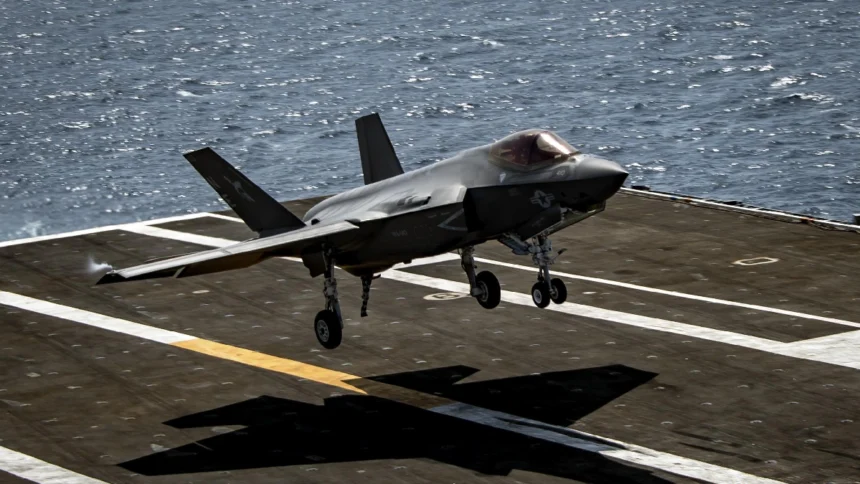
The reported first landing of an F-35C Lightning II on the future USS John F. Kennedy (CVN 79) would be an important step in testing the U.S. Navy’s second Gerald R. Ford-class aircraft carrier. The event would demonstrate progress toward integrating the Navy’s carrier-based stealth fighter with a new ship designed around electromagnetic aircraft launch and advanced recovery systems.
The milestone is particularly relevant because Kennedy is expected to enter fleet service with the infrastructure needed to operate the F-35C, rather than relying on a later major modification to accommodate the aircraft. However, the precise date, test conditions and official Navy confirmation of the reported landing require verification.
Why the F-35C Landing Matters
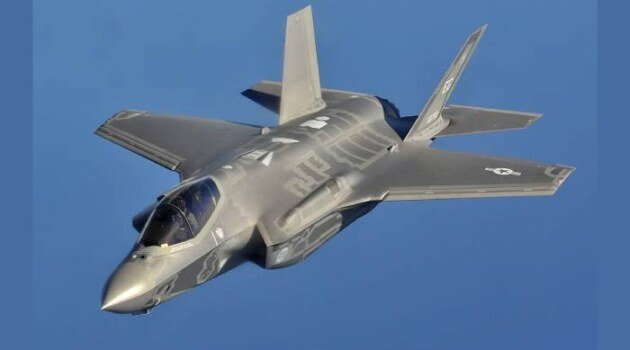
The F-35C is the carrier variant of the Lockheed Martin Lightning II family. It is designed for conventional catapult launches and arrested recoveries aboard large-deck aircraft carriers, with features adapted to the demands of shipboard aviation.
Its larger wing area, reinforced landing gear and carrier-specific structure distinguish it from the land-based F-35A. The aircraft also combines low-observable design features with onboard sensors and data-fusion systems intended to help pilots detect, identify and engage threats in contested airspace.
Integrating the aircraft aboard Kennedy involves more than confirming that it can touch down on the flight deck. Carrier operations require compatible launch and recovery equipment, trained flight-deck crews, established maintenance procedures and coordination between the ship and its embarked air wing.
An initial landing is therefore one part of a broader qualification process. It does not, by itself, establish that the carrier has completed all testing required for routine F-35C operations or that an operational squadron is ready to deploy from the ship.
Kennedy’s New Carrier Architecture
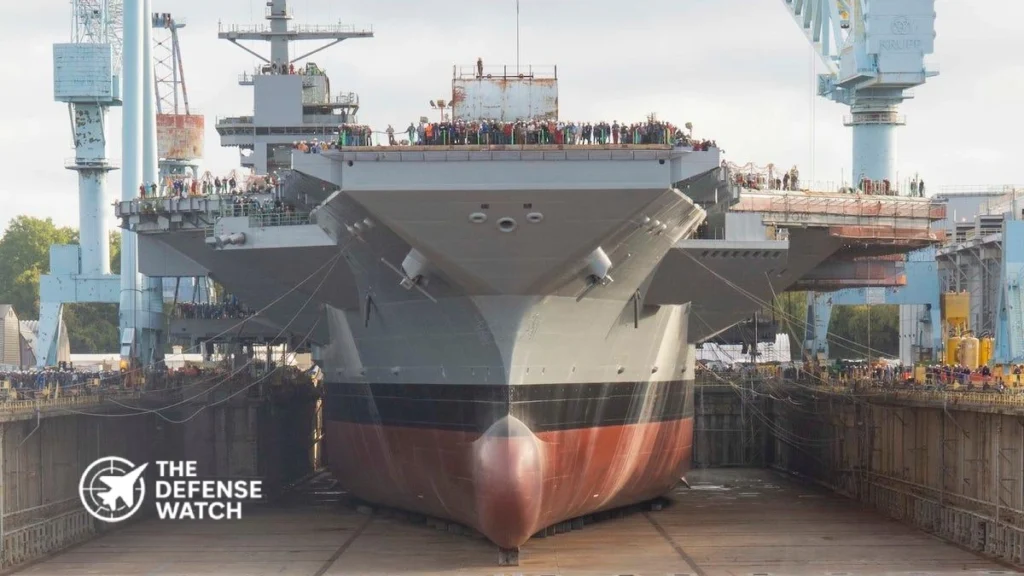
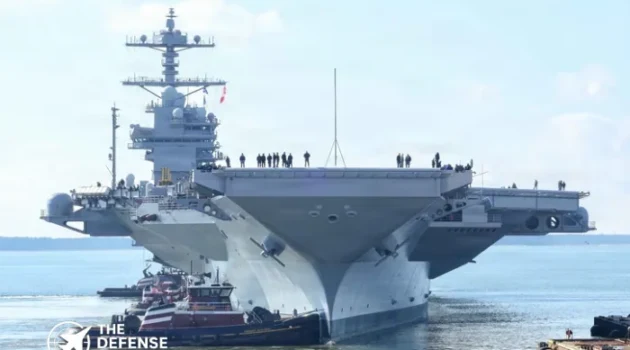
Kennedy is the second ship in the Ford class, following USS Gerald R. Ford (CVN 78). Built by Huntington Ingalls Industries‘ Newport News Shipbuilding division in Virginia, the carrier incorporates the class’s electromagnetic aircraft launch system (EMALS) and Advanced Arresting Gear (AAG).

Image : U.S. Navy EMALS uses electromagnetic energy to accelerate aircraft along the flight deck. AAG is designed to recover aircraft through an advanced energy-absorption system. Together, these systems replace the steam catapults and legacy arresting equipment used on Nimitz-class carriers.
The new architecture is intended to improve aircraft handling and support a higher sustained rate of flight operations. Actual output will still depend on factors including maintenance, aircraft availability, weather, crew readiness and the composition of the embarked air wing.
For the F-35C, the significance is practical: the carrier must be able to support the aircraft’s operating requirements while coordinating it with other aircraft, weapons-handling systems and shipboard maintenance activities.
From Ship Trials to Operational Carrier Aviation
Kennedy’s progress toward service has involved several distinct stages of testing and acceptance.
Huntington Ingalls Industries reported that the ship completed builder’s sea trials in early February 2026. It subsequently completed acceptance sea trials in August, before receiving preliminary acceptance in September.
These milestones should not be confused with commissioning or operational deployment. Sea trials assess ship systems under way, while subsequent testing and evaluation help the Navy determine whether the carrier and its equipment meet requirements. Preliminary acceptance allows further Navy-led activities, but does not mean that every aviation system has completed qualification.
The F-35C landing report adds an aviation-integration dimension to that timeline. Yet the available information does not establish whether the event was part of a formal developmental test, a landing qualification exercise or another evaluation activity.
That distinction matters because the Navy must verify more than basic aircraft compatibility before the carrier can support sustained flight operations. The service also needs to establish safe deck procedures, validate equipment performance and train personnel to handle the aircraft during repeated launch-and-recovery cycles.
What the F-35C Adds to the Carrier Air Wing
The F-35C is intended to complement the Navy’s F/A-18E/F Super Hornet and EA-18G Growler, rather than replace every aircraft type aboard a carrier.
The Lightning II provides low-observable strike capability, advanced sensing and the ability to share information with other platforms. Super Hornets continue to provide multirole fighter and strike capacity, while Growlers conduct airborne electronic attack. E-2D Advanced Hawkeye aircraft provide airborne early warning and command-and-control support.
Combining these aircraft allows a carrier air wing to distribute tasks across different platforms. The F-35C can contribute to sensing and targeting, while other aircraft support electronic warfare, air defense and strike missions.
The value of that combination depends on how effectively the aircraft exchange information and coordinate operations. A successful landing is a necessary step toward using the aircraft from a new carrier, but it does not independently demonstrate the performance of the complete air wing.
Why the Milestone Matters for U.S. Naval Aviation
Kennedy’s eventual entry into service will give the Navy a second Ford-class carrier with a design intended to improve aviation operations and accommodate evolving aircraft requirements.
The ship’s progress is also relevant to the Navy’s longer-term transition toward a more diverse carrier air wing. The service is developing the MQ-25 Stingray unmanned aircraft to perform aerial refueling, a role intended to free some manned fighters from tanker duties and help extend the reach of carrier-based aviation. The MQ-25 is a separate program, however, and its planned capabilities should not be treated as an existing operational feature of Kennedy.
The carrier’s ability to support fifth-generation aircraft will ultimately depend on the combined performance of its flight deck, launch and recovery equipment, maintenance facilities, crew training and embarked aviation units.
For now, the reported F-35C landing should be viewed as a potential step in Kennedy’s aviation integration program, not proof that the ship is ready for combat deployment. Official confirmation of the event’s date, aircraft unit and test objectives would help establish exactly what the Navy demonstrated.