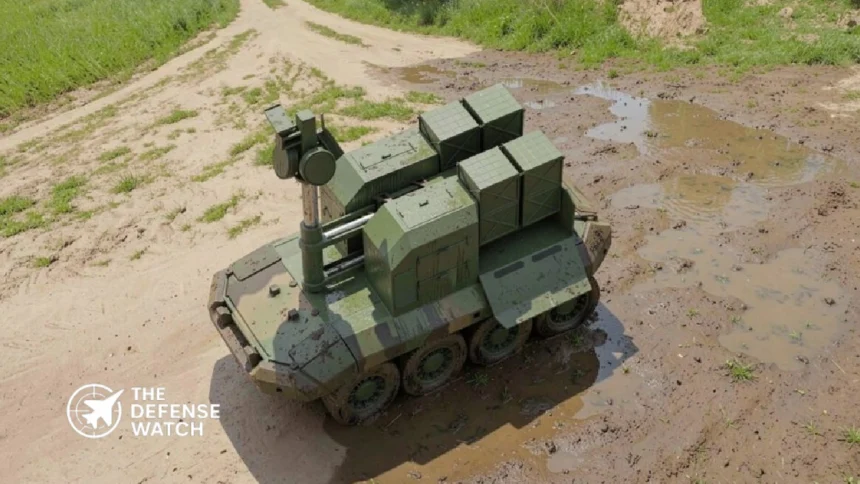
An Israeli-American defense startup led by a veteran architect of Israel’s Iron Dome and David’s Sling air defense programs is developing a system designed to intercept large numbers of drones simultaneously, targeting a growing weakness in conventional air defense.
Skapion says its Native Counter-Swarm platform is designed to detect, track and engage coordinated drone attacks through a mobile, integrated architecture. The company claims the system can handle more than 100 simultaneous engagements, with an interception rate above 97 percent, although these figures have not been independently verified in the public information reviewed for this article.
The system is associated with Brig. Gen. (ret.) Pini Yungman, Skapion’s founding architect and a former general manager of Rafael’s Air and Missile Defense Systems division. His background includes work on Israeli air defense programs such as Iron Dome and David’s Sling.
The central challenge is not simply detecting individual drones. It is defending military units, installations and critical infrastructure when an attacker launches enough relatively inexpensive aircraft to overwhelm available interceptors, sensors or command systems.
Why drone swarms create a different air defense problem
Conventional air defense systems are built around particular threat categories, engagement envelopes and available interceptors. Their effectiveness against a coordinated drone attack depends on more than whether they can destroy an individual target.
A large raid can force defenders to identify and prioritize multiple tracks, allocate weapons, manage engagement timing and preserve ammunition for subsequent attacks. Small drones can also present detection challenges, depending on their size, flight profile, operating environment and the sensors available to the defender.
The economic imbalance is another concern. An attacker may use relatively inexpensive unmanned aircraft against a defender that relies on costly guided interceptors. Even successful interceptions can become difficult to sustain if the attacking force can replenish its drones faster than the defender can replace its weapons.
These problems have encouraged militaries and defense companies to pursue lower-cost interception options, including electronic warfare, guns, interceptor drones and directed-energy weapons.
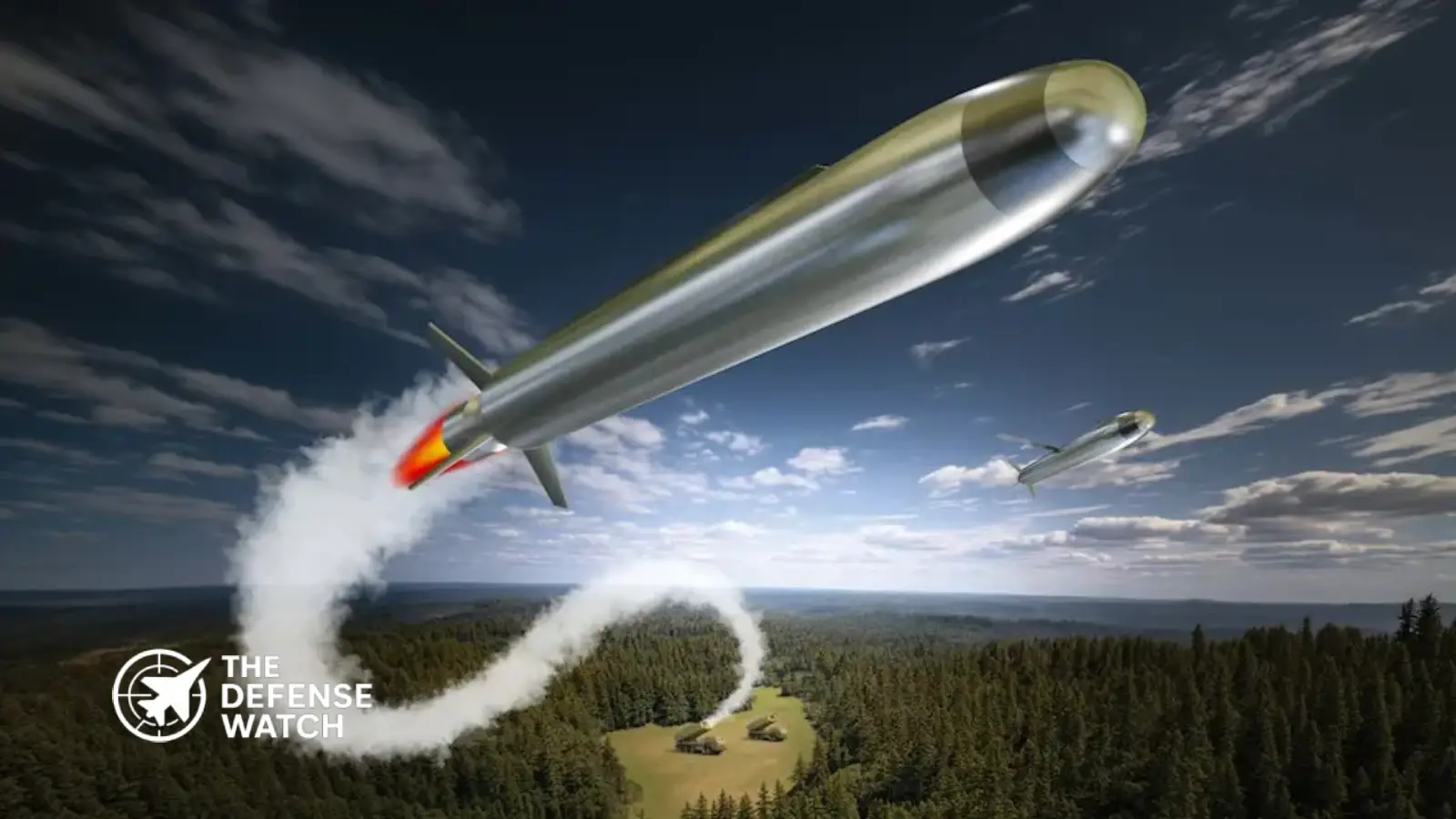
Skapion’s approach is to design its system around multiple simultaneous engagements from the beginning, rather than adapting an architecture primarily intended for individual targets. The company describes this as a many-to-many approach, linking multiple incoming threats with multiple interceptors.
How Skapion says its system works
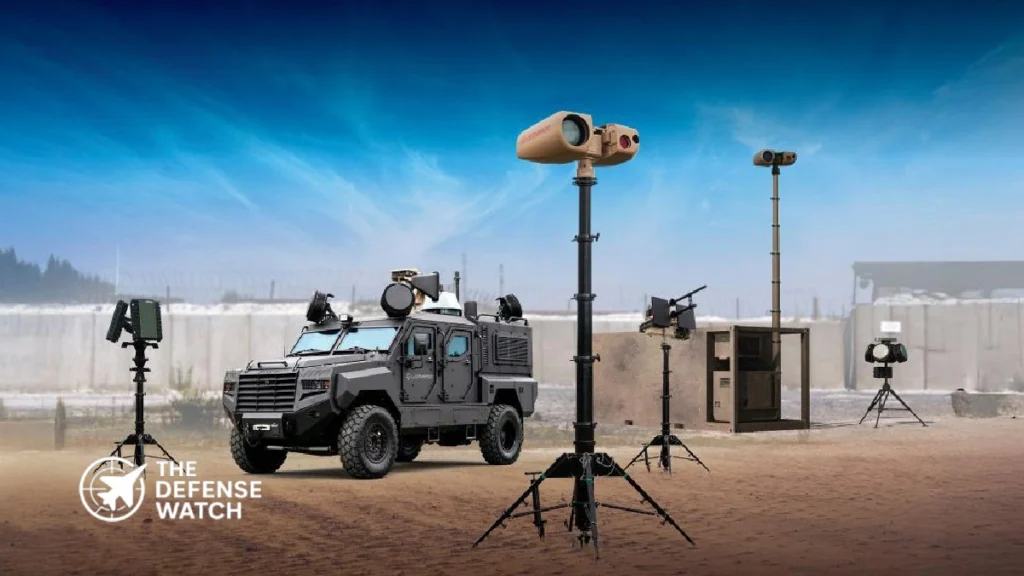
Skapion describes its platform as an integrated system combining sensing, command and control, and interception. Its stated architecture includes several elements intended to support operations against large numbers of unmanned aircraft.
- Simultaneous engagements: The company says the system is designed to engage more than 100 targets at once, although public independent test evidence establishing that performance was not identified.
- Integrated command and control: An AI-enabled architecture is intended to assess threats, prioritize targets and assign interceptors in real time.
- Mobile and distributed deployment: Skapion describes multiple mobile nodes that can operate independently or as part of a wider defensive network.
- Sensor integration: The company says its architecture can use its own sensors or information from third-party systems.
- Kinetic interception: The platform is described as using physical interception rather than relying exclusively on electronic disruption.
These are company-reported design features, not a verified account of operational performance. Public information reviewed for this article does not establish the system’s tested detection range, interceptor speed, engagement altitude, endurance or effectiveness against different classes of drones.
The company also describes a range of potential applications, including protection of mobile forces, borders, maritime assets, infrastructure and existing air defense installations. Actual suitability for each mission would depend on testing, deployment configuration and integration with other systems.
The Iron Dome connection, and where the comparison ends
Iron Dome provides useful context for understanding Yungman’s experience, but the two systems address different operational requirements.
Israel’s Iron Dome was declared operational in 2011 and forms part of the country’s layered air and missile defense architecture. According to the Israeli Ministry of Defense, the system has undergone further upgrades to address rockets, cruise missiles and unmanned aerial threats, with recent testing also examining integration with the Iron Beam laser system.
Iron Dome’s established operational role provides a reference point for Skapion’s ambitions. However, experience developing an established air defense system does not, by itself, demonstrate that a new startup’s technology will achieve its stated performance.
| Attribute | Iron Dome | Skapion Native Counter-Swarm |
|---|---|---|
| Primary context | Operational air and missile defense | Developing counter-swarm defense platform |
| Threat focus | Rockets and other aerial threats | Coordinated attacks by unmanned aircraft |
| Engagement approach | Interceptor-based defense | Company describes multiple simultaneous kinetic interceptions |
| Operational status | Declared operational in 2011 | Public operational deployment not established by the sources reviewed |
| Performance evidence | Government-reported testing and operational history | Public performance figures remain company claims |
The comparison is about mission and development status, not a claim that one system is superior to the other. Skapion’s concept focuses on a specific problem: maintaining interception capacity when a large number of relatively inexpensive aerial targets arrive together.
Funding and development status
Skapion announced a $36 million seed funding round in July 2026, according to reporting by The Jerusalem Post. The round was co-led by UP.Partners and Khosla Ventures, with additional participation from other investors. The funding was intended to support engineering development, recruitment and system validation.
The company is headquartered in Washington, D.C., and has a research and development center in Ramat Gan, Israel, according to the same report. Its leadership combines defense industry, military and engineering experience.
The funding provides resources for further development, but it should not be confused with a production contract, a confirmed military purchase or evidence of operational deployment. Publicly available information reviewed for this article does not establish a named military customer, a procurement schedule or a fielded operational unit.
For potential military customers, the next important evidence would be results from representative trials. These would need to show how the system performs against coordinated attacks under realistic conditions, including sensor interference, simultaneous target arrivals and limited interceptor supplies.
The key test is cost, capacity and reliability
The ability to intercept many targets simultaneously is only one measure of an effective counter-drone system. Militaries will also need to assess the total cost of each engagement, the time required to replenish interceptors, reliability in poor weather and the ability to distinguish hostile drones from friendly or civilian aircraft.
Electronic warfare can offer a lower-cost response against some remotely controlled or satellite-navigation-dependent drones, but its effectiveness varies with the aircraft’s control and navigation methods. Kinetic interceptors can address threats that are resistant to electronic disruption, although they introduce their own ammunition, safety and logistics requirements.
For that reason, a practical counter-swarm defense may need several complementary methods rather than a single universal interceptor. Israel’s own approach to layered air defense, including its integration of Iron Dome and Iron Beam, illustrates the value of combining different defensive technologies for different engagement conditions.
Skapion’s proposal addresses a real operational problem, but its claimed engagement capacity and interception rate remain to be demonstrated independently. Until representative test results, customer decisions and deployment details become public, the system is best understood as a developing counter-swarm concept rather than an established replacement for existing air defense systems.