U.S. Central Command says a U.S. military fighter aircraft disabled the Panama-flagged commercial cargo vessel M/V Ocean Molica in the Gulf of Oman on October 10, after its crew allegedly ignored repeated warnings to comply with the American naval blockade against Iran. The strike disabled the ship’s propulsion system, according to CENTCOM, which said the crew was not harmed.
The incident adds another enforcement action to a blockade that Washington says is intended to restrict maritime traffic entering and leaving Iranian ports. It also illustrates the growing risks for commercial shipping operating near the Gulf of Oman and the Strait of Hormuz, where military operations and competing restrictions have complicated passage for merchant vessels.
Fighter aircraft strikes vessel’s stern
According to CENTCOM’s October 10 statement, the vessel, identified as the M/V Ocean Molica and also known as the Arika Sun, had previously departed an Iranian port before attempting to transit regional waters.
A U.S. military fighter jet struck the vessel’s stern with a precision munition after the crew allegedly failed to respond to repeated warnings. CENTCOM said the strike completely disabled the ship’s propulsion without injuring its crew.
The command did not identify the aircraft type, the specific munition used, the vessel’s cargo, or its intended destination. It also did not provide details about the ship’s subsequent status, including whether it was boarded, towed or placed under military control.
Those distinctions matter. Disabling a ship’s propulsion can prevent it from continuing along a planned route without necessarily sinking it or destroying its cargo. The available public information does not establish the extent of any damage beyond the reported loss of propulsion.
Reuters reported that it was unable to immediately reach the vessel’s operator for comment. The account of the ship’s attempted blockade violation therefore remains based primarily on the U.S. military’s explanation of the incident.
Blockade enforcement expands beyond a single vessel
The Ocean Molica incident is part of a wider American maritime enforcement campaign.
CENTCOM said the United States resumed its blockade of ships entering or departing Iranian ports on July 14, 2026. In its October 10 statement, the command reported that U.S. forces had disabled four commercial vessels and turned back 135 ships during approximately three months of enforcement. It also said American forces had destroyed 10 tankers linked to what it described as the Islamic Revolutionary Guard Corps’ shadow network.
These figures are official military claims, not an independently audited account of all maritime traffic affected by the operation. The statement did not provide a vessel-by-vessel breakdown, identify every ship involved, or explain the criteria used to classify the tankers as linked to the IRGC network.
The reported figures nevertheless indicate that the operation extends beyond direct engagements. Turning ships around, monitoring commercial traffic and communicating restrictions to merchant crews are also central elements of blockade enforcement.
CENTCOM has instructed mariners operating in the Gulf of Oman and approaches to the Strait of Hormuz to monitor Notices to Mariners and contact U.S. naval forces on bridge-to-bridge radio channel 16.
For commercial operators, these instructions create an immediate operational requirement: crews must understand the applicable restrictions and the procedures for communicating with military forces. A failure to comply with an order can expose a commercial vessel to interception or physical force, although the circumstances and applicable legal rules differ by incident.
Why the Gulf of Oman matters
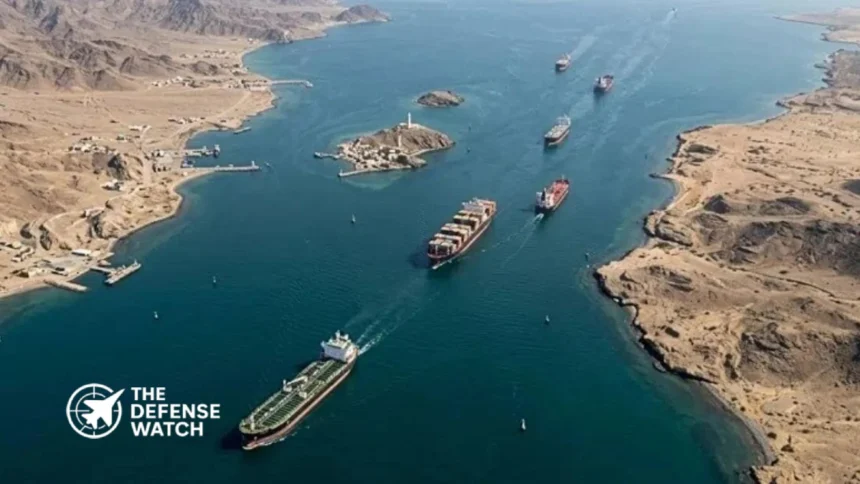
The Gulf of Oman connects the Arabian Sea to the Strait of Hormuz, the narrow maritime passage linking the Persian Gulf with international waters. Ships using Iranian ports and other regional terminals may operate through these waters, making the area strategically important to both military forces and commercial shipping.
Before the current conflict, roughly one-fifth of global oil consumption passed through the Strait of Hormuz, according to Reuters. Disruptions in this corridor can affect energy transportation, shipping schedules and insurance costs well beyond the immediate conflict zone.
The blockade and the risks surrounding the strait are separate but interacting issues. U.S. restrictions target maritime traffic associated with Iranian ports, while attacks and navigation restrictions in and around the strait can threaten vessels regardless of whether they are directly involved in Iranian trade.
Reuters reported on October 11 that vessel traffic through the strait had fallen to its lowest level in more than two months, following an increase in attacks on tankers. The report linked the decline to heightened shipping risks amid the continuing U.S.-Israeli war with Iran.
That wider environment makes individual enforcement actions important beyond the immediate vessel involved. Commercial operators must weigh route availability, security risks, potential delays and the consequences of entering waters subject to competing military restrictions.
A different problem from conventional naval combat
The strike against Ocean Molica also illustrates a distinct operational challenge for naval forces: enforcing maritime restrictions against commercial ships without necessarily sinking them.
A vessel that ignores warnings may require physical intervention to prevent it from continuing along a prohibited route. In this case, CENTCOM said a fighter aircraft used a precision munition against the ship’s stern to disable propulsion.
The reported method differs from an interception in which a warship directs a vessel to change course, or a boarding operation in which personnel take control of the ship. The available statement does not establish whether U.S. forces considered or attempted those alternatives before the strike.
Disabling propulsion can limit a ship’s ability to proceed, but it creates follow-on requirements. A vessel that can no longer maneuver may need assistance, towing or other arrangements to avoid becoming a hazard to navigation. The public statement did not specify how those issues were handled after the Ocean Molica strike.
The incident also raises questions about the risks to civilian crews and cargo during enforcement operations. CENTCOM reported no crew injuries, but it did not publish a detailed damage assessment or independently verifiable account of the ship’s condition.
Commercial shipping faces competing maritime restrictions
The U.S. blockade is unfolding alongside Iranian efforts to impose their own restrictions on maritime movement through the Strait of Hormuz.
In its October 11 report, Al Jazeera, citing the United Kingdom Maritime Trade Operations agency, said authorities were investigating a separate incident involving a vessel struck by an unidentified projectile in the strait. The report also described an Iranian Revolutionary Guard Corps claim that it had struck a liquefied petroleum gas carrier attempting to use a route Tehran considered unauthorized. Those reports concern separate incidents and should not be conflated with the Ocean Molica strike.
The competing measures create a difficult operating environment for shipowners, charterers and crews. A route that one authority considers acceptable may be challenged by another, while military warnings and attacks can force operators to reconsider whether a voyage is commercially or operationally viable.
For governments, enforcing a blockade requires more than maintaining a naval presence. Forces must identify vessels, communicate restrictions, assess compliance and decide how to respond when a ship does not follow instructions. For commercial operators, uncertainty over those decisions can translate into delays, higher operating costs and increased exposure to physical damage.
The Ocean Molica case demonstrates the use of direct force to stop a vessel that CENTCOM said had ignored its warnings. It does not, by itself, establish how consistently the blockade is being enforced across the region or how the incident will affect subsequent shipping decisions.
The vessel’s final status, the identity of the aircraft and munition used, and the circumstances surrounding its earlier departure from Iran remain undisclosed in the public statements reviewed for this report.