















@2026 – All Right Reserved. TheDefenseWatch.com
- Home
- Defense Systems
- Missiles & Precision Weapons
- Rapier Missile System
Rapier Missile System
Defense Systems Full Specifications
1. General Information
| Name / Designation | Rapier Surface-to-Air Missile |
| Type / Role | Short-Range Surface-to-Air Missile (SAM) |
| Country of Origin | United Kingdom |
| Manufacturer | British Aircraft Corporation (later MBDA UK) |
| Service Entry / Year Introduced | 1971 |
| Operational Status | Active with selected international operators, retired from UK service |
2. Performance & Range
| Range | Approximately 8 km |
| Speed | Mach 2.5 |
| Ceiling / Altitude Limit | Up to 3,000 m |
| Accuracy (CEP) | High interception accuracy through command guidance (CEP not applicable) |
| Warhead Type | High-Explosive Fragmentation |
3. Guidance & Targeting
| Guidance System | Command guidance with radar/optical tracking |
| Targeting Mode | Command-guided |
| Launch Platform Compatibility | Ground launcher |
| Seeker Type | No onboard seeker, command-guided |
4. Physical Characteristics
| Length | 2.24 m |
| Diameter | 0.133 m |
| Wingspan | 0.51 m |
| Launch Weight | Approximately 45 kg |
| Propulsion | Solid-fuel rocket motor |
5. Warhead & Payload
| Warhead Weight | Approximately 1.4 kg |
| Explosive Type | High-Explosive Fragmentation |
| Detonation Mechanism | Proximity and Impact Fuze |
| Payload Options | Conventional |
6. Operational Use & Capabilities
| Operational Range Type | Short |
| Deployment Platform | Ground |
| Target Types | Aircraft, helicopters, low-flying aerial targets, UAVs (limited capability) |
| Combat Proven | Yes |
| Users / Operators | United Kingdom (former), Australia (former), Iran, Indonesia, Malaysia, Singapore, Turkey and others |
PROS
- High interception speed for short-range threats.
- Accurate command-guided engagement.
- Proven operational history with multiple countries.
- Effective day and night operation in later variants.
- Mobile launcher suitable for rapid deployment.
CONS
- Short engagement range compared to modern SAM systems.
- Not designed for ballistic missile defense.
- Requires continuous target tracking during engagement.
- Older variants have limited capability against modern stealth targets.
- Largely retired by several original operators.
Rapier Surface-to-Air Missile System
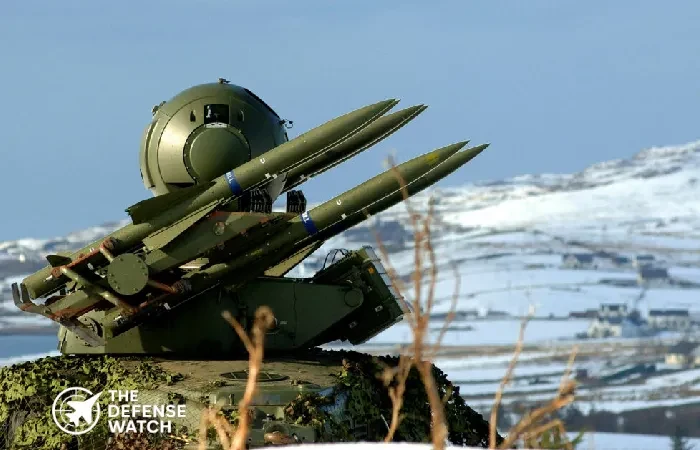
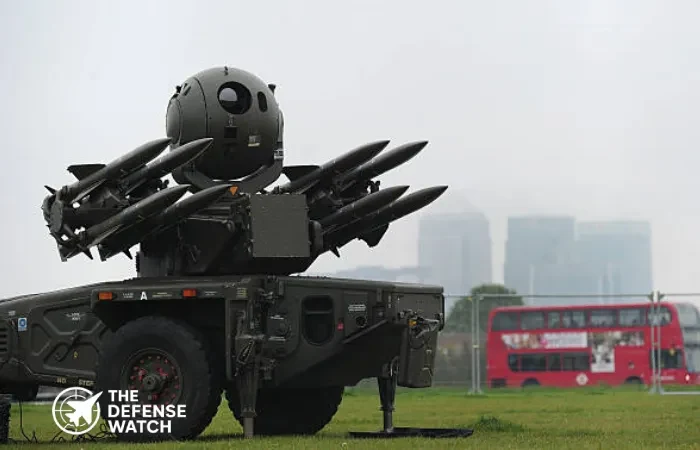
The Rapier Missile is a British-developed short-range surface-to-air missile (SAM) system designed to defend military bases, airfields, and critical infrastructure against low-flying aircraft and helicopters. Developed during the Cold War, the Rapier became one of the United Kingdom’s primary point air defense systems and was exported to numerous allied nations. Over several decades, it received multiple upgrades that significantly improved its radar, guidance, and night engagement capabilities. Although the UK has retired the system in favor of newer air defense platforms, Rapier remains in service with several international operators.
Manufacturer
The Rapier missile system was developed by British Aircraft Corporation (BAC), which later became part of MBDA UK. Production and modernization programs involved several British defense companies, resulting in improved variants such as Rapier Field Standard B2 (FSB2).
Speed
The Rapier missile reaches a maximum speed of approximately Mach 2.5, enabling rapid interception of fast-moving aerial threats at short distances.
Range
Depending on the variant, the Rapier has an operational engagement range of approximately 8 km with an effective engagement altitude of up to 3,000 meters (9,840 ft). It is optimized for short-range air defense against aircraft, helicopters, and certain unmanned aerial systems.
Cost / Price
Official procurement prices vary depending on the production batch, support package, and modernization configuration. Historical estimates place the cost at approximately US$250,000 to US$500,000 per missile, while complete Rapier batteries have been valued in the tens of millions of U.S. dollars depending on sensors, launchers, and logistics packages.
The Rapier uses command guidance supported by optical tracking and radar systems, providing high engagement accuracy against maneuvering targets. Later versions incorporated advanced surveillance radars, electro-optical tracking, and improved digital fire-control systems for all-weather and night operations. The system has seen operational deployment with the British Army and numerous export customers, demonstrating reliable point air defense capabilities throughout its service life.
Disclaimer Note
The information provided on TheDefenseWatch.com is for general informational purposes only. While we strive to ensure the accuracy, completeness, and timeliness of our content regarding defense and aerospace products, technologies, and specifications, we cannot guarantee that all information is 100% accurate or up-to-date due to the evolving nature of military technology and classified data.TheDefenseWatch.com does not warrant the reliability, suitability, or availability of the information for any specific purpose. Users are advised to consult official sources, such as manufacturers, government publications, or defense agencies, for precise and verified data before making decisions based on our content.We are not affiliated with any defense manufacturers, governments, or military organizations mentioned. Opinions, reviews, and ratings reflect expert analysis but are subjective and should not be considered endorsements. TheDefenseWatch.com is not responsible for any errors, omissions, or consequences arising from the use of this website’s content.External links are provided for convenience and do not imply endorsement. TheDefenseWatch.com reserves the right to update or modify content without prior notice. By using this website, you agree to our Privacy & Cookies Policy.
New Arrivals
Popular Comparisons
-
 Tejas Fighter Jet vs F-16 Fighting Falcon: Capability Compared
View Comparison →
Tejas Fighter Jet vs F-16 Fighting Falcon: Capability Compared
View Comparison → -
Rafale Fighter Jet vs F-16 Fighting Falcon : Which Fighter Has the Edge?
View Comparison →
-
Su-57 Fighter Jet vs J-20 Fighter Jet: Stealth and Air Combat Compared
View Comparison →
-
Mirage 2000 vs Tejas Mk1A: Legacy Combat Power vs Indigenous Modernization
View Comparison →
-
Rafale Fighter Jet vs F-22 Raptor: Which Air Dominance Fighter Has the Edge?
View Comparison →
-
Tejas Fighter Jet vs. Rafale Fighter Jet: India’s Indigenous Fighter Meets France’s Proven Multirole Combat Aircraft
View Comparison →
-
F-22 Raptor vs. F-35 Joint Strike Fighter: Which Fifth Generation Fighter Has the Edge?
View Comparison →
-
F-35A vs. F-22 Raptor: Which U.S. Stealth Fighter Dominates Modern Air Combat?
View Comparison →
-
AGM-114 Hellfire vs. AGM-179 JAGM: Which U.S. Precision Missile Is Better?
View Comparison →
-
Patriot (PAC-3) vs. THAAD: Complete Missile Defense System Comparison, Capabilities, Range, and Strategic Roles
View Comparison →
- China’s J-XDS Prototype May Be Testing a New Radar

- L3Harris Pushes Modular, Distributed Architecture for Electronic Warfare
- Northrop Grumman to Deliver GHOST-R Prototype for U.S. Space Force
- Airborne Early Warning Aircraft Ranked: E-7 vs E-2D vs A-50
- Lockheed Martin Shifts Hypersonic Focus From Peak Speed to Sustained Flight and Production
- Spanish F-18s Conduct 15 Scrambles in Romania During First Month of NATO Mission
- South Korean Army Helicopter Crossed DMZ After Firefighting Mission Error
- Trump Announces Greenland Security Agreement With Denmark and Greenland
- Bell Boeing Wins $19.8M V-22 Tactical Software Support Contract
- Honeywell Wins $53.9M Navy Contract for WSN-7 Gyro Components