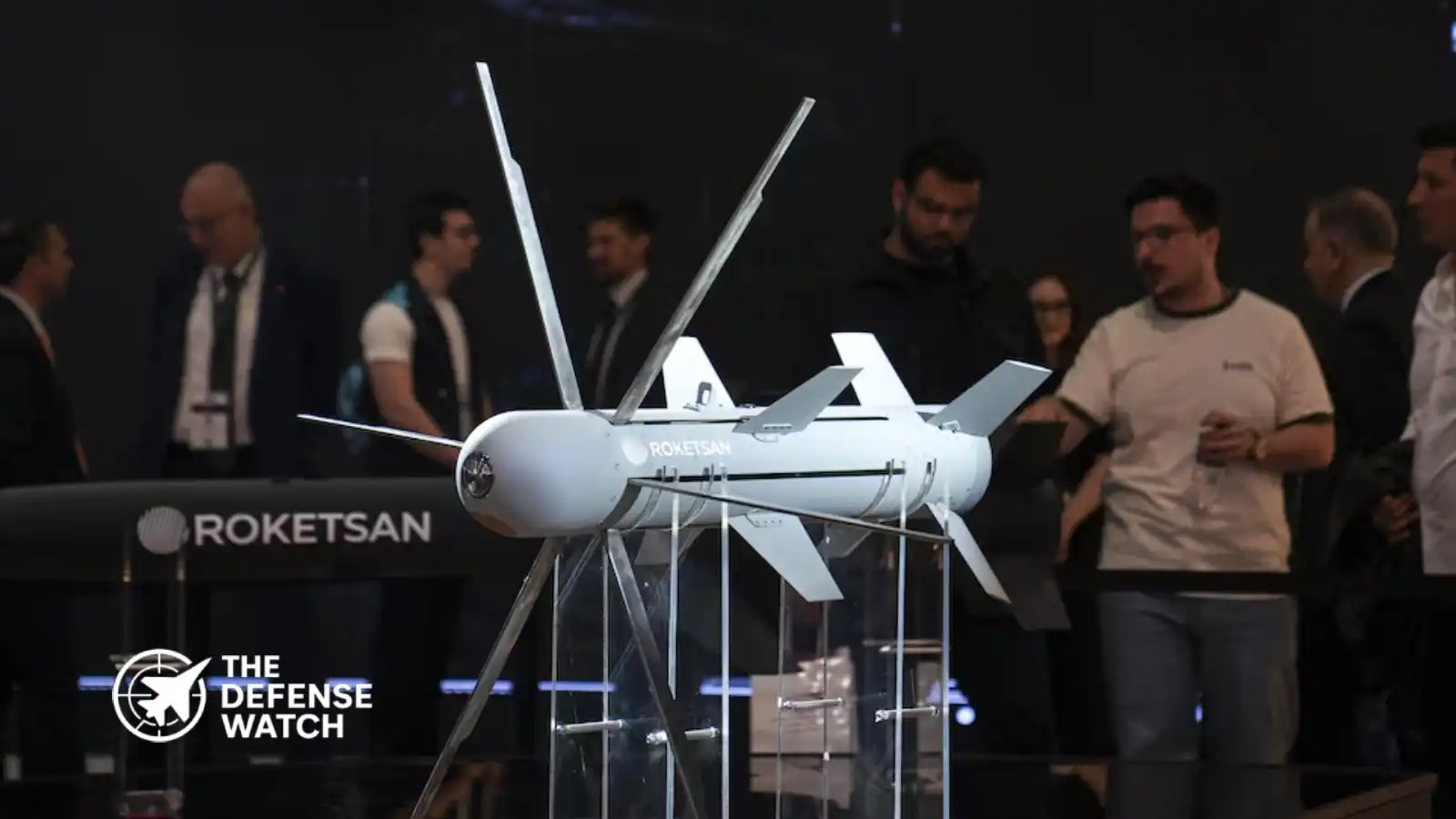
Executive Summary: Canada is actively pursuing a defense and industrial partnership with Turkey, with Ottawa’s Secretary of State for Defense Procurement Stephen Fuhr visiting Istanbul for the first time during SAHA Expo 2026. The initiative reflects Canada’s broader strategy to build self-reliant defense capacity through mid-power alliances as Washington recalibrates its global security commitments. The two NATO members are looking past a prior arms embargo period and toward co-development in drones, counter-drones, and ammunition production.
Canada Turns to Turkey as a Model for Defense Industrial Independence
ISTANBUL, Turkey — May 11, 2026 — Canada is accelerating efforts to forge a substantive defense industrial partnership with Turkey, framing the relationship as a cornerstone of a new middle-power security architecture that Ottawa believes is essential in today’s shifting geopolitical landscape.
Canadian Secretary of State for Defense Procurement Stephen Fuhr made the overture during SAHA Expo 2026 in Istanbul, describing Ankara as a “trusted partner” and “valuable ally.” It was Fuhr’s first visit to Turkey in his current role.
The visit signals a deliberate and meaningful shift in Canadian defense posture — one driven less by traditional transatlantic reflexes and more by a pragmatic recognition that middle-tier powers must organize collectively if they are to maintain strategic relevance.
“Individually We’re Not Big Enough”
Fuhr articulated the rationale bluntly: “The middle powers have to come together in a way they didn’t before. Individually we’re just not big enough, but collectively we are.”
That framing captures a growing anxiety in Ottawa. With the United States recalibrating its commitments — from NATO burden-sharing pressure to a broader re-evaluation of forward security guarantees — Canada is finding that bilateral reliance on Washington is no longer a sufficient defense posture. Building alternative industrial and capability partnerships is now a strategic imperative, not merely an option.
Turkey, with its rapidly matured domestic defense sector, represents precisely the kind of partner Canada is looking for: a mid-sized NATO ally with demonstrated success in building sovereign defense production.
Turkey’s Industrial Model: A Blueprint for Ottawa
Fuhr pointed to Turkey’s success in developing an indigenous defense industrial base as offering concrete lessons for Canada, specifically in areas where Ankara has achieved rapid technological growth and supply-chain independence. He compared Turkey’s progress to that of South Korea and France.
This is a significant comparison. South Korea and France represent two of the most successful cases globally of countries that built world-class defense export industries from limited starting points. Placing Turkey in that company reflects how dramatically Ankara’s defense sector has matured over the past decade — and how seriously Canada is taking the lessons.
Key areas of interest identified by Fuhr include ammunition production, drones, counter-drone systems, and autonomous technologies. He noted these were “pretty obvious places” for near-term collaboration and suggested that future programs could take the form of co-development rather than simple off-the-shelf procurement.
Canada’s New Defense Industrial Strategy: Build, Partner, Buy
Ottawa’s ambitions are codified in its newly accepted Defence Industrial Strategy and the creation of a new Defence Investment Agency. Fuhr summarized the approach as: “If it’s urgent, we’ll probably have to go and buy it. If it’s something they can wait for, we’ll have to co-develop it.”
This “build, partner, buy” framework is a direct acknowledgment that Canada has fallen behind on domestic defense production — a gap that has become increasingly urgent as NATO allies face pressure to meet the alliance’s 2% GDP defense spending threshold and as global demand for munitions and platforms has surged in the wake of the Russia-Ukraine war.
The strategy also signals that Canada is not simply looking to be a buyer in foreign defense markets. Fuhr explicitly described Canada as a stable investment destination, pointing to the country’s financial system, investment climate, and policies designed to encourage foreign direct investment — positioning Canada as a partner of choice, not just a customer.
Past Tensions Set Aside
The Canada-Turkey defense relationship has not always been smooth. Between 2019 and January 2024, Canada imposed restrictions on arms sales to Turkey and cancelled a number of export permits, effectively creating a de-facto weapons embargo. The restrictions were tied to concerns over the use of Canadian-supplied optics on Turkish Bayraktar TB2 drones during the Nagorno-Karabakh conflict in 2020.
When asked about whether the embargo was politically worth it, Fuhr — who was elected in 2025 — deflected, saying Canada is focused on the future. “Nobody’s raised any past information or anything that’s happened in the past,” he said. “Everyone is focused on responding to the moment and how we can work together moving forward.”
That diplomatic posture is deliberate. Both sides appear to have concluded that the strategic value of the partnership outweighs the political costs of re-litigating past grievances — a pragmatism that reflects the urgency both governments feel about the current security environment.
First Concrete Step: Kraken Robotics and SISAM MoU
Cooperation between the two countries is already producing tangible results. During SAHA Expo 2026, Canada-based Kraken Robotics signed a Memorandum of Understanding with the Strategic and Unmanned Systems Research Center (SİSAM) of Turkey’s Sefine Shipyard. Under the agreement, Kraken will work to integrate its KATFISH towed synthetic aperture sonar system into SİSAM’s mission planning software and develop automatic target recognition capabilities. defensenews
This MoU is notable on multiple levels. It pairs a Canadian firm with a strong niche in underwater sensing technology with a Turkish shipyard research center focused on unmanned systems — a pairing that could yield operationally significant capabilities in mine countermeasures, submarine detection, and autonomous maritime operations.
It is also a signal that the partnership is not aspirational only. Concrete industrial linkages are being formed now, at the working level, even as high-level political engagement continues to develop.
High-Level Engagement on the Horizon
Fuhr also pointed to upcoming high-level political engagement, including planned visits by Prime Minister Mark Carney to Turkey and ongoing discussions surrounding a possible Canada-Turkey free trade agreement.
If a free trade agreement moves forward, it would dramatically lower barriers for two-way defense industrial investment — enabling joint ventures, technology transfer, and co-production arrangements that go well beyond individual procurement contracts.
Analysis: Why This Partnership Matters Now
The Canada-Turkey alignment is more than a bilateral defense story. It reflects a broader restructuring of the NATO security ecosystem below the level of the United States.
Middle powers like Canada, Turkey, South Korea, Australia, and select European states are increasingly recognizing that they need direct industrial and capability ties with one another — not just mediated through Washington. That logic has been reinforced by supply chain disruptions, surging global demand for munitions, and uncertainty about U.S. commitment to collective defense frameworks.
Turkey brings proven capacity: Bayraktar drones have demonstrated combat effectiveness across multiple theaters, and Ankara’s defense export revenues have grown sharply over the past five years. Canada brings capital, a stable investment environment, and a large industrial base seeking modernization.
Together, they represent the kind of complementary partnership that could accelerate both countries’ defense industrial timelines — and contribute meaningfully to NATO’s collective readiness at a moment when that readiness is under pressure.