

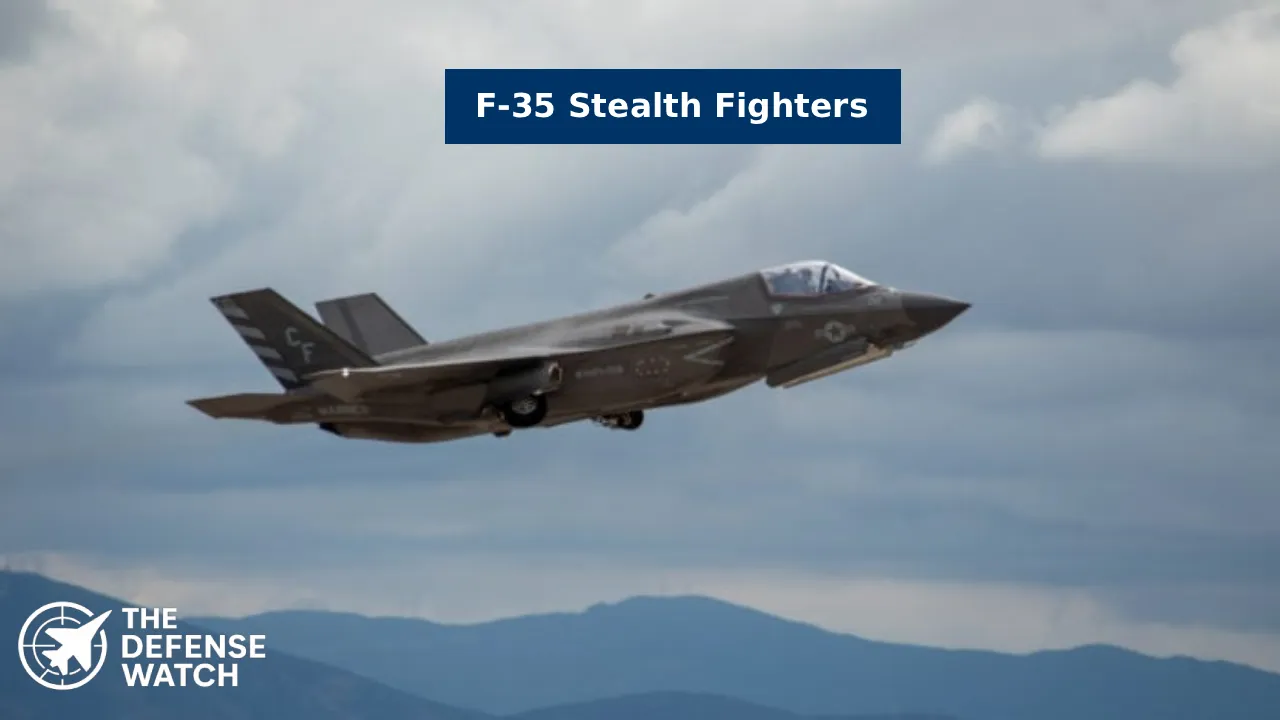
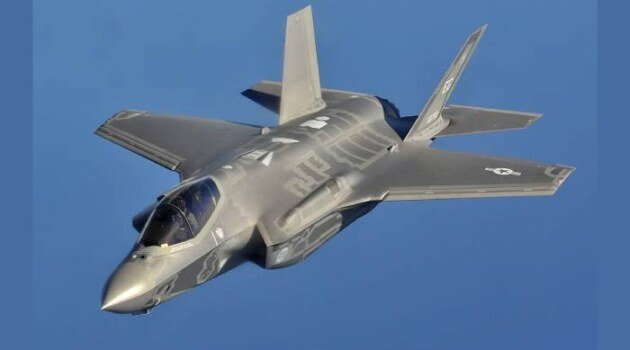
The United States is considering the sale of up to 48 F-35 Lightning II stealth fighters to Saudi Arabia — a multi-billion-dollar arms arrangement that analysts warn could fundamentally rewrite regional security dynamics. The proposal, which reportedly tops $100 billion when factoring in sustainment, infrastructure, and long-term support, accompanies a broader U.S.–Saudi strategic and investment package.
Key milestones: the request cleared a major Pentagon hurdle earlier in November 2025. The prospective sale dovetails with Saudi Crown Prince Mohammed bin Salman’s high-profile visit to Washington, during which defense, nuclear, and AI-cooperation agreements are on the table.
Why It Matters
If greenlit, this would mark the first time Saudi Arabia acquires fifth-generation U.S. stealth jets, significantly altering the military balance in the Middle East and challenging long-standing U.S. policy to preserve Israel’s qualitative military edge (QME).
At the same time, there are growing national security concerns: U.S. intelligence officials warn that Chinese espionage could exploit Saudi ties and infrastructure to access sensitive F-35 technologies. Some analysts describe the arrangement not just as a sale, but a geopolitical gambit — exchanging cutting-edge weaponry for political alignment, normalization, and a realignment of Riyadh’s external partnerships.
Key Details & Terms
Technical Constraints on Saudi F-35s
- According to defense analysts, Saudi Arabia is expected to receive a downgraded version of the F-35A rather than the fully customized variants flown by Israel.
- Limitations reportedly include no access to source code, no mission-software autonomy, and no ability to integrate its own electronic-warfare systems without U.S. approval.
- Moreover, the Saudi fleet is likely to remain tethered to U.S.-controlled sustainment architectures (such as ALIS/ODIN), giving Washington substantial leverage.
Strategic Stakes
Defense analysts and policy thinkers break down the F-35 deal into three interconnected pillars: normalization, China decoupling, and a long-term generational commitment.
- Normalization with Israel / Regional Architecture
- For Israel to accept a Saudi F-35 fleet, many believe it will demand real, verifiable steps toward security guarantees and diplomatic relations.
- China Firewall
- U.S. officials are reportedly pressing Riyadh to limit its dependence on Chinese defense systems, citing espionage risks through supply chains and maintenance networks.
- Generational Commitment to Israel
- To preserve Israel’s QME, analysts argue Washington must promise preferential access for Israel to next-generation fighters and technologies — potentially locking the U.S. defense base into a long-term political bargain.
Espionage & Corruption Risk
- Pentagon intelligence reportedly warns that a Saudi F-35 fleet — with its maintenance, logistics, and data linking infrastructure — could provide a backdoor for Chinese access to U.S. stealth secrets.
- Observers also note risks of corruption and mismanagement: given the scale of the deal, there are concerns about opaque offset mechanisms, lobbying, and misuse of funds.
Impact on Israel
- Israel has long been guaranteed a qualitative military edge in the region, and many Israeli analysts view the F-35 deal as a potential erosion of that advantage.
- According to some policy analysts, Israel may demand operational restrictions, such as limits on where Saudi F-35s can be based, to mitigate the risk of them being used against Israeli territory.
Expert & Policy Perspective
From a policy standpoint, this F-35 proposal marks a tectonic shift in Washington’s export philosophy: a move from outright denial of high-end systems to “managed proliferation,” where cutting-edge capabilities are leased on conditional, strategic terms.
- Strategic alignment over denial: By tying the jets to normalization and long-term commitments, the U.S. may be using its most sensitive military exports as a lever to shape Saudi geopolitical behavior.
- Risk vs. reward: Proponents argue that the deal could anchor Riyadh firmly in the U.S.-led security order. Skeptics counter that the moment China or other actors infiltrate Saudi defense infrastructure, the strategic costs could vastly outweigh benefits.
- Entrapment risk: Committing to Israel’s next-generation superiority (e.g., priority on NGAD or sixth-gen platforms) could become a long-term burden for U.S. R&D and procurement — especially every time the regional balance shifts.
What Comes Next
- Congressional Review: Final approval still requires Congress, which could raise objections on human rights grounds, strategic risk, or budget constraints.
- Technological Safeguards: The U.S. will likely demand stringent “firewalls” to prevent data leakage, especially around maintenance, diagnostics, and software architecture.
- Israel’s Response: Diplomatic pressure from Israel may intensify, seeking binding guarantees on basing, software, and operational use.
- Operational Timeline: Even if agreed, full operational capability (FOC) for the Saudi F-35 fleet would likely not be achieved for several years — possibly well into the early-to-mid 2030s given the infrastructure, training, and software dependencies.
Bottom Line
The proposed $100 billion-plus F-35 deal would not just deepen U.S.–Saudi defense ties — it could redefine the rules of regional arms competition, U.S. export policy, and the very foundations of Middle East deterrence. But the stakes are high: without airtight constraints, the deal could create pathways for espionage, erode Israel’s strategic edge, and lock Washington into a geopolitical bargain with long-term obligations.

16 comments
[…] most expansive in the Middle East. Over the past year, Tehran has conducted launches in response to regional security incidents, support operations for proxy factions, and domestic demonstrations of capability. Many […]
[…] regional security dynamics — including tensions on the Korean Peninsula and broader Indo‑Pacific strategic competition — […]
[…] matters especially given East Asia’s already tense security environment. With overlapping maritime and air claims — around the East China Sea and the […]
[…] theater. The Caribbean Sea remains a vital corridor for commercial shipping, energy flows, and regional security […]
[…] protests represent one of the deadliest episodes of civil unrest in Iran in decades, amplifying regional security concerns at a time of already heightened Middle East […]
[…] officials have yet to formally respond, but the announcement underscores the EU’s commitment to regional security. Analysts note that Greenland’s strategic location in the North Atlantic makes it a key asset for […]
[…] invitation to his Board of Peace, a platform aimed at addressing international conflicts and regional security, highlighting growing political […]
[…] missiles are often launched during moments of perceived strategic transition, according to regional security […]
[…] including from opposition parties in the parliament, has emerged for higher spending to address regional security threats, including Russia’s military actions in Ukraine and wider concerns about European defense […]
[…] order for the platform. TUSAS officials have indicated that negotiations with additional countries — including potential interest reported from Saudi Arabia and Spain — are ongoing, though no additional firm orders have been publicly […]
[…] to multiple regional security sources cited by Reuters and the Wall Street Journal, Saudi Arabia and other Gulf partners have […]
[…] to refine their operational skills alongside a technologically advanced partner. It also supports Saudi Arabia’s broader defense objectives, which include safeguarding maritime infrastructure, energy export […]
[…] which China rebuilt over three years with extensive financial backing, has been a focal point of regional security concerns and a symbol of Beijing’s expanding influence in Southeast […]
[…] the United States, several NATO members, Japan, South Korea, and Israel in the Middle East. Saudi Arabia’s entry into that group would reshape regional airpower […]
[…] broader regional security environment has seen frequent air policing and intercept missions. British fighter jets deployed […]
[…] Other NATO allies are expected to support the British deployment as part of coordinated alliance efforts to strengthen northern defenses. The Arctic Sentry mission framework provides a multilateral structure for coordinating various national contributions to regional security. […]