







@2026 – All Right Reserved. TheDefenseWatch.com
- Home
- Defense Systems
- Missiles & Precision Weapons
- Yıldırımhan Ballistic Missile
Yıldırımhan Ballistic Missile
Defense Systems Full Specifications
1. General Information
| Name / Designation | Yıldırımhan |
| Type / Role | Intercontinental Ballistic Missile (ICBM) |
| Country of Origin | Türkiye |
| Manufacturer | ROKETSAN |
| Service Entry / Year Introduced | 2026 (Unveiled) |
| Operational Status | In Development / Initial Production |
2. Performance & Range
| Range | 6,000 km |
| Speed | Mach 9 to Mach 25 |
| Ceiling / Altitude Limit | Exo-atmospheric |
| Accuracy (CEP) | High-precision (Maneuverable Re-entry) |
| Warhead Type | High Explosive (HE) / Strategic Payload |
3. Guidance & Targeting
| Guidance System | GPS / INS / Satellite Link |
| Targeting Mode | Pre-programmed / Terminal Guidance |
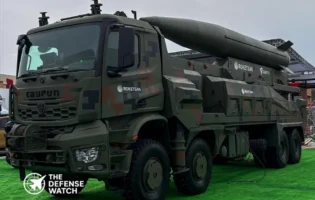
| Launch Platform Compatibility | Land-based Mobile (DERMAN 8x8 Towed) |
| Seeker Type | Multi-mode Re-entry Vehicle |
4. Physical Characteristics
| Length | Estimated 12–15 m |
| Diameter | Large-scale (Multi-stage) |
| Wingspan | N/A (Stabilizing fins) |
| Launch Weight | Estimated 25,000+ kg |
| Propulsion | Liquid Fuel (Nitrogen Tetroxide N₂O₄) |
5. Warhead & Payload
| Warhead Weight | Up to 3,000 kg |
| Explosive Type | Multiple Options (Penetrator/Fragmentation) |
| Detonation Mechanism | High-altitude / Impact Fuse |
| Payload Options | Conventional / Multi-payload Capable |
6. Operational Use & Capabilities
| Operational Range Type | Intercontinental (ICBM) |
| Deployment Platform | Mobile Ground Launcher |
| Target Types | Mobile Ground Launcher |
| Combat Proven | No |
| Users / Operators | Türkiye |
PROS
- Global Reach: 6,000 km range covers the entirety of Europe, the Middle East, and most of Russia and Africa.
- Hypersonic Speed: Re-entry speeds up to Mach 25 make kinetic interception nearly impossible for current defenses.
- Large Payload: Capable of carrying up to 3,000 kg, far exceeding standard tactical ballistic missiles.
- Strategic Autonomy: Developed domestically, reducing dependence on NATO or foreign military technology.
- Advanced Guidance: Features a sophisticated suite of GPS/INS and potentially terminal seekers for precision strikes.
CONS
- Logistical Complexity: Liquid-fuel propulsion requires specialized handling and longer fueling times compared to solid fuel.
- Large Signature: The massive size and multi-stage launch create a significant thermal signature for satellite detection.
- High Cost: Extremely expensive to produce and maintain compared to the shorter-range Tayfun series.
- Geopolitical Pressure: Unveiling an ICBM-class missile may lead to increased international scrutiny and sanctions.
- Limited Mobility: Requires massive truck-and-trailer configurations, making it harder to hide than smaller SRBMs.
Yıldırımhan Ballistic Missile: Turkey’s New Strategic Asset
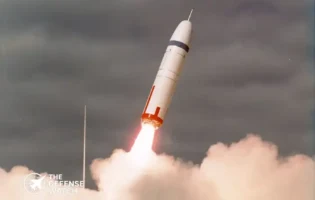
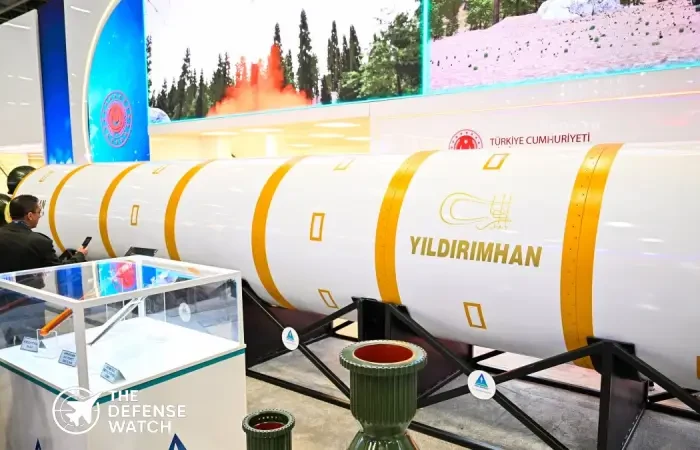
The Yıldırımhan marks a historic shift in Türkiye’s defense posture, transitioning the nation from a regional power to a transcontinental strategic actor. Unveiled at the SAHA 2026 defense exhibition in Istanbul, the Yıldırımhan is Türkiye’s first Intercontinental Ballistic Missile (ICBM). Developed by the National Defense Ministry’s R&D Center (MSB ARGE) in collaboration with domestic giants like ROKETSAN, this system is designed to provide an autonomous deterrent capable of reaching targets across Europe, Africa, and deep into Asia. Its debut signifies Türkiye’s entry into the elite group of nations possessing long-range ballistic strike capabilities.
Manufacturer
The primary developer is the National Defense Ministry’s R&D Center, with heavy industrial support from ROKETSAN. Unlike earlier Turkish solid-fuel missiles like the Bora or Tayfun, the Yıldırımhan utilizes a sophisticated liquid-fuel propulsion system. This shift in engineering suggests a focus on maximizing payload capacity and range, allowing the missile to carry heavy conventional warheads or potentially Multiple Independently Targetable Re-entry Vehicles (MIRVs) in future iterations.
Speed and Range
The Yıldırımhan boasts a reported range of 6,000 kilometers (approx. 3,728 miles), firmly placing it in the lower-tier ICBM category. It features a multi-stage architecture powered by four rocket propulsion engines in its first stage. In terms of velocity, the missile achieves staggering speeds ranging from Mach 9 to Mach 25 during its flight phases. This extreme hypersonic velocity, combined with the maneuverable re-entry vehicle (MaRV) geometry seen on its nose cone, is specifically designed to overcome modern Aegis and Patriot-based interceptor systems.
Cost/Price
As a newly unveiled strategic asset, the exact unit cost remains classified. However, given the transition to liquid nitrogen tetroxide (N₂O₄) fuel systems and the scale of a 6,000 km vector, defense analysts estimate development and production costs per unit to exceed $25 million to $35 million. This reflects the investment in high-end guidance, multi-stage separation technology, and the specialized mobile launch infrastructure required for such a large-scale platform.
Disclaimer Note
The information provided on TheDefenseWatch.com is for general informational purposes only. While we strive to ensure the accuracy, completeness, and timeliness of our content regarding defense and aerospace products, technologies, and specifications, we cannot guarantee that all information is 100% accurate or up-to-date due to the evolving nature of military technology and classified data.TheDefenseWatch.com does not warrant the reliability, suitability, or availability of the information for any specific purpose. Users are advised to consult official sources, such as manufacturers, government publications, or defense agencies, for precise and verified data before making decisions based on our content.We are not affiliated with any defense manufacturers, governments, or military organizations mentioned. Opinions, reviews, and ratings reflect expert analysis but are subjective and should not be considered endorsements. TheDefenseWatch.com is not responsible for any errors, omissions, or consequences arising from the use of this website’s content.External links are provided for convenience and do not imply endorsement. TheDefenseWatch.com reserves the right to update or modify content without prior notice. By using this website, you agree to our Privacy & Cookies Policy.
More Defense Systems from Roketsan
New Arrivals
Popular Comparisons
-
 Tejas Fighter Jet vs F-16 Fighting Falcon: Capability Compared
View Comparison →
Tejas Fighter Jet vs F-16 Fighting Falcon: Capability Compared
View Comparison → -
Rafale Fighter Jet vs F-16 Fighting Falcon : Which Fighter Has the Edge?
View Comparison →
-
Su-57 Fighter Jet vs J-20 Fighter Jet: Stealth and Air Combat Compared
View Comparison →
-
Mirage 2000 vs Tejas Mk1A: Legacy Combat Power vs Indigenous Modernization
View Comparison →
-
Rafale Fighter Jet vs F-22 Raptor: Which Air Dominance Fighter Has the Edge?
View Comparison →
-
Tejas Fighter Jet vs. Rafale Fighter Jet: India’s Indigenous Fighter Meets France’s Proven Multirole Combat Aircraft
View Comparison →
-
F-22 Raptor vs. F-35 Joint Strike Fighter: Which Fifth Generation Fighter Has the Edge?
View Comparison →
-
F-35A vs. F-22 Raptor: Which U.S. Stealth Fighter Dominates Modern Air Combat?
View Comparison →
-
AGM-114 Hellfire vs. AGM-179 JAGM: Which U.S. Precision Missile Is Better?
View Comparison →
-
Patriot (PAC-3) vs. THAAD: Complete Missile Defense System Comparison, Capabilities, Range, and Strategic Roles
View Comparison →
- Finland deepens European F-35 cooperation with first pilot flight in Europe

- Luxembourg Deploys Additional Detection Assets After Drone Sightings
- China’s J-XDS Prototype May Be Testing a New Radar
- L3Harris Pushes Modular, Distributed Architecture for Electronic Warfare
- Northrop Grumman to Deliver GHOST-R Prototype for U.S. Space Force
- Airborne Early Warning Aircraft Ranked: E-7 vs E-2D vs A-50
- Lockheed Martin Shifts Hypersonic Focus From Peak Speed to Sustained Flight and Production
- Spanish F-18s Conduct 15 Scrambles in Romania During First Month of NATO Mission
- South Korean Army Helicopter Crossed DMZ After Firefighting Mission Error
- Trump Announces Greenland Security Agreement With Denmark and Greenland