• Home
  • About
  • Defense Systems
  • Manufacturer
  • Comparisons
  • Compare 
  • Tools
TheDefenseWatch.com
  • Aerospace & Aviation
  • Military & Ordnance
  • Naval & Maritime
  • Cyber & Space Defense
  • Policy & Strategy
  • Global News
  • Tools Library
    • Smart Calculator
    • Drone Flight Time Calculator
    • Drone Range Calculator
    • Counter-Drone Jammer Effective Range Calculator
    • Counter-Battery Radar Detection Calculator
    • Artillery Fire Correction Calculator
    • Thermal Camera Detection Range Calculator
    • Missile Range & Time-of-Flight Calculator
    • Radar Detection Range Calculator
    • FPV Strike Drone Payload vs Range Calculator
    • Loitering Munition Endurance Calculator
    • Sniper Ballistic Drop & Windage Calculator
    • Bullet Drop Calculator
    • U.S. Army Combat Fitness Test (ACFT) Calculator
    • Military Pension Calculator
    • Military Retirement Calculator
    • Military Pension Calculator
    • Large Number Calculator
Font ResizerAa

TheDefenseWatch.com

The Defense Watch | U.S. & Global Defense News, Analysis & Military Updates

Search
  • Home
  • About
  • Defense Systems
  • Manufacturer
  • Comparisons
  • Compare 
  • Tools

Stay Updated

Get the latest update

Subscribe

Explore

  • Drone
  • Fighter Jets & Military Aircraft
  • Hypersonic Weapons
  • Aircraft Carriers
  • Strategic History & Missions
  • Tools Library
Home » North Korea Fires Ballistic Missiles as US Signals Reduced Role on Korean Peninsula
Global News

North Korea Fires Ballistic Missiles as US Signals Reduced Role on Korean Peninsula

Daniel Mercer / Defense & Aerospace Analyst
Last updated: January 27, 2026 5:54 am
Daniel Mercer / Defense & Aerospace Analyst
Share
1 Min Read
North Korea ballistic missiles
SHARE

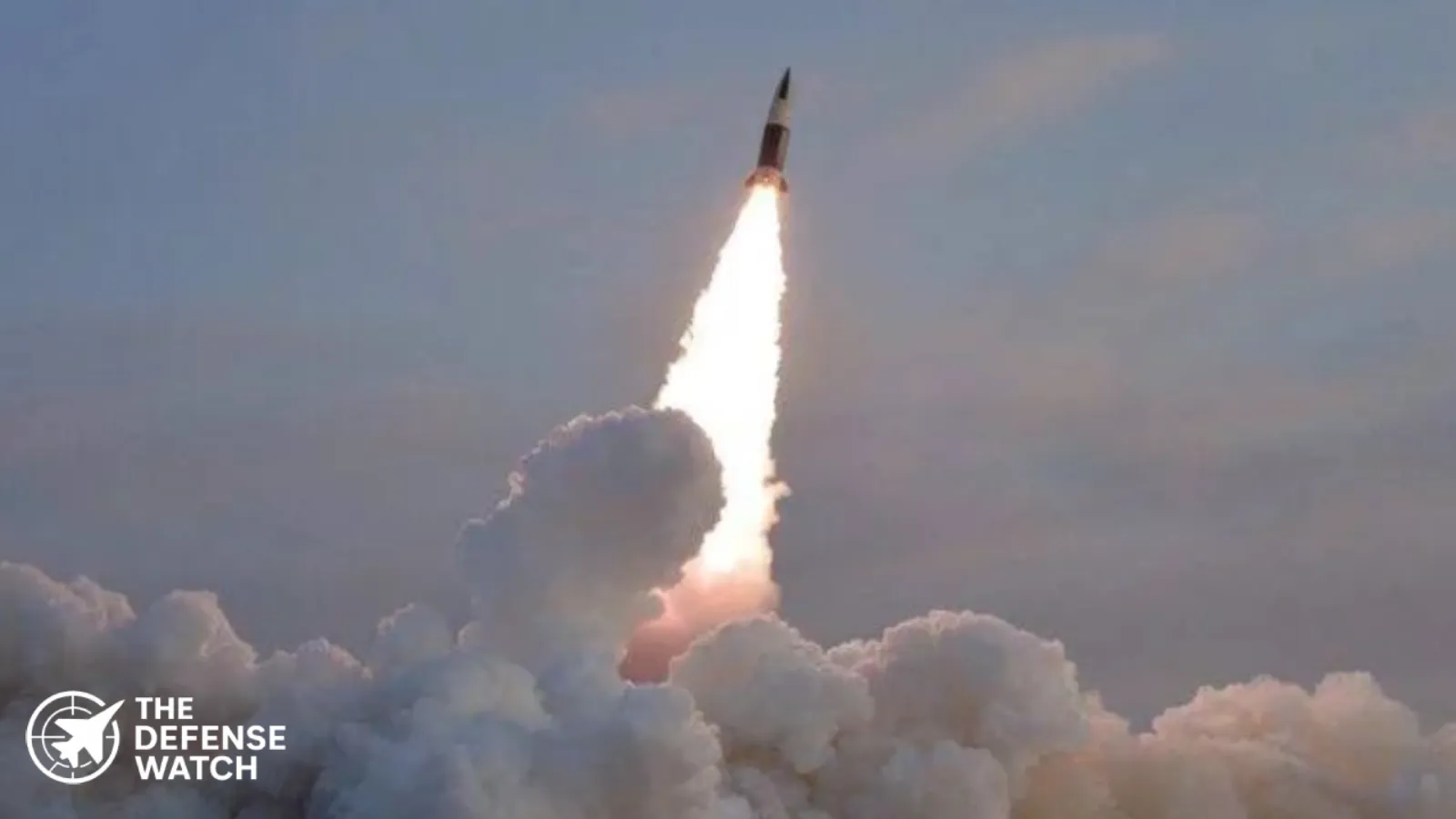
North Korea ballistic missiles were launched toward the Sea of Japan on Tuesday, marking the regime second known weapons test this month and drawing renewed attention to security dynamics on the Korean Peninsula. The launches come as the United States signals a shift toward reduced military involvement in Korea, raising concerns among regional allies about deterrence and stability.

Contents
  • Missile Launch Details Confirmed by Seoul and Tokyo
  • Second Test This Month Signals Persistent Capability Development
  • US Signals Reduced Role on the Korean Peninsula
  • Regional Response and Strategic Implications
  • Broader Security Context

South Korea and Japan confirmed the missile activity within minutes, underscoring the continued pace of North Korean testing despite ongoing diplomatic and economic pressure.

Missile Launch Details Confirmed by Seoul and Tokyo

South Korea Joint Chiefs of Staff said it detected multiple projectiles launched from North Korea east coast. Japan Defense Ministry separately confirmed that at least two ballistic missiles were fired.

According to Japan Coast Guard, the missiles splashed down about four minutes after detection and landed outside Japan exclusive economic zone. No damage to vessels or aircraft was reported, and no immediate alerts were issued to civilian shipping or aviation beyond standard safety notices.

- Advertisement -

Officials in both countries described the weapons as suspected ballistic missiles based on their flight profile and detection data. Further analysis is underway to assess range, altitude, and launch platform.

Second Test This Month Signals Persistent Capability Development

The launch represents North Korea second known ballistic missile test this month, continuing a long pattern of frequent weapons demonstrations. Pyongyang has consistently used missile launches to signal military capability, test new systems, and apply political pressure during periods of regional or diplomatic change.

Analysts note that even limited launches serve operational purposes, including crew training, system validation, and message signaling to Washington, Seoul, and Tokyo.

The United Nations Security Council prohibits North Korea from conducting ballistic missile tests, a restriction Pyongyang rejects as illegitimate.

US Signals Reduced Role on the Korean Peninsula

The missile activity coincides with recent US statements indicating a reassessment of military posture on the Korean Peninsula. While US officials have emphasized continued alliance commitments, they have also signaled interest in encouraging greater regional burden sharing and reducing direct involvement where possible.

This messaging has drawn close scrutiny in Seoul and Tokyo, where extended deterrence and visible US presence are viewed as critical to regional stability. North Korea ballistic missiles are often launched during moments of perceived strategic transition, according to regional security experts.

Regional Response and Strategic Implications

South Korea military said it remains ready to respond to any contingency and continues close coordination with US and Japanese forces. Japan Prime Minister office confirmed that information sharing with allies remains active.

defense officials in both countries stressed that the launches do not change existing defense postures but reinforce the need for missile defense readiness and trilateral cooperation.

- Advertisement -

Broader Security Context

North Korea ballistic missiles remain central to the regime deterrence strategy, particularly as regional security dynamics evolve. The combination of continued testing and shifting US policy signals adds complexity to deterrence calculations in Northeast Asia.

Authoritative assessments from South Korea Joint Chiefs of Staff and Japan Defense Ministry indicate no immediate escalation, but officials warned that further launches remain possible.


TAGGED:Japan Sea launchKorean Peninsula securityNorth Korea missilesregional military tensionsUS Asia policy
Share This Article
Facebook Copy Link Print
ByDaniel Mercer / Defense & Aerospace Analyst
Follow:
Daniel Mercer is a defense and aerospace analyst at TheDefenseWatch.com covering military aviation, aerospace technology, unmanned systems, air warfare, and defense procurement. His reporting uses official documents, government and military statements, company announcements, and other public sources.
Leave a Comment

Leave a Reply Cancel reply

Your email address will not be published. Required fields are marked *

Latest Defense Systems

  • RUTA B1 Cruise Missile RUTA B1 Cruise Missile
  • XQ-67A Drone XQ-67A Drone
  • B-25 Mitchell Bomber B-25 Mitchell Bomber
  • F-100 Super Sabre F-100 Super Sabre
  • North American F-86 Sabre North American F-86 Sabre
  • North American XB-70 Valkyrie North American XB-70 Valkyrie
  • Northrop YF-23 Fighter Northrop YF-23 Fighter
  • P-51 Mustang Fighter Aircraft P-51 Mustang Fighter Aircraft
  • Rafale F5 Fighter Rafale F5 Fighter

Recent Compares

  • J-10C vs JF-17 Thunder: Which Fighter Is More Capable? J-10C vs JF-17 Thunder: Which Fighter Is More Capable? View Comparison →
  • Tejas vs Gripen: Key Differences and Capabilities Tejas vs Gripen: Key Differences and Capabilities View Comparison →
  • Tejas vs MiG-21 Bison: How India Replaced Its Iconic Supersonic Fighter Tejas vs MiG-21 Bison: How India Replaced Its Iconic Supersonic Fighter View Comparison →
  • F-35 vs F-16: Stealth, Sensors and Combat Roles F-35 vs F-16: Stealth, Sensors and Combat Roles View Comparison →
  • Tejas Fighter Jet vs F-16 Fighting Falcon: Capability Compared Tejas Fighter Jet vs F-16 Fighting Falcon: Capability Compared View Comparison →
  • Rafale Fighter Jet vs F-16 Fighting Falcon : Which Fighter Has the Edge? Rafale Fighter Jet vs F-16 Fighting Falcon : Which Fighter Has the Edge? View Comparison →
  • Su-57 Fighter Jet vs J-20 Fighter Jet: Stealth and Air Combat Compared Su-57 Fighter Jet vs J-20 Fighter Jet: Stealth and Air Combat Compared View Comparison →
  • Mirage 2000 vs Tejas Mk1A: Legacy Combat Power vs Indigenous Modernization Mirage 2000 vs Tejas Mk1A: Legacy Combat Power vs Indigenous Modernization View Comparison →
  • Rafale Fighter Jet vs F-22 Raptor: Which Air Dominance Fighter Has the Edge? Rafale Fighter Jet vs F-22 Raptor: Which Air Dominance Fighter Has the Edge? View Comparison →
  • Tejas Fighter Jet vs. Rafale Fighter Jet: India’s Indigenous Fighter Meets France’s Proven Multirole Combat Aircraft Tejas Fighter Jet vs. Rafale Fighter Jet: India’s Indigenous Fighter Meets France’s Proven Multirole Combat Aircraft View Comparison →

Recent Posts

  • Iran Releases Footage of Underground Missile Tunnels Amid Rising US Military Tensions
  • China Says HQ Missile Systems Intercepted Two New Missile Types in PLA Drill
  • Phoenix Defense Ventures Wins $310.5 Million HH-60W Training Contract
  • Rolls-Royce Showcases Naval Engines and Automation Systems at Euronaval 2026
  • North Korea Tests Cruise Missile With Dispersal Warhead, KCNA Says

You Might Also Like

NATO commander Arctic security
Global News

NATO Commander: Nordic Forces Strengthen Arctic Military Posture

January 25, 2026
Ukraine FP-5 Flamingo missile
Global News

Ukraine Unveils FP-5 Flamingo Cruise Missile To Expand NATO Deep Strike Capability

September 12, 2026
F-16 Block 70 sale negotiations
Global News

US and Türkiye Press Ahead With F-16 Block 70 Sale Talks, Navigate Pricing and Tech Terms

January 6, 2026
Qatari-Gifted Air Force One
Global News

Qatari-Gifted Air Force One Emergency Slide Deploys Before Trump Flight

September 10, 2026

Logo

Copyright © 2026 TheDefenseWatch.com

Helpful Links

  • Home
  • About Us
  • Privacy Policy
  • Terms of Use / Disclaimer
  • U.S. Privacy Notice – CCPA Compliance

Defense Systems

  • Defense Systems
  • Comparisons 
  • Manufacturer
  • Tactical Calculators

Popuplar

Which 5 Air Forces Possess the Costliest Fighter Jet Fleets in the World
Evolving Strategic Value: Carrier Strike Groups in the Indo-Pacific’s Future Security Architecture
Autonomous Weapon Systems Spark U.S. Ethics Debate Amid Rapid Military AI Integration

We report on developments involving military forces, governments, defense companies, research organizations, and security institutions around the world. 

Welcome Back!

Sign in to your account

Username or Email Address
Password

Lost your password?