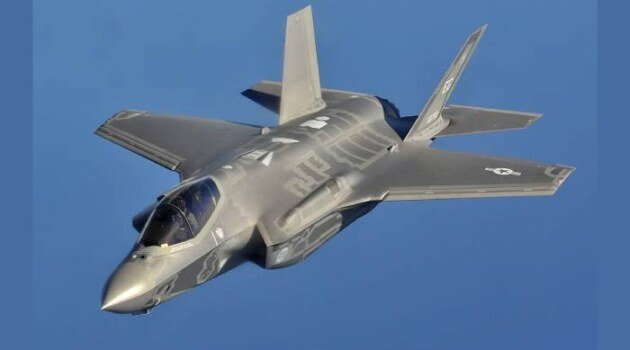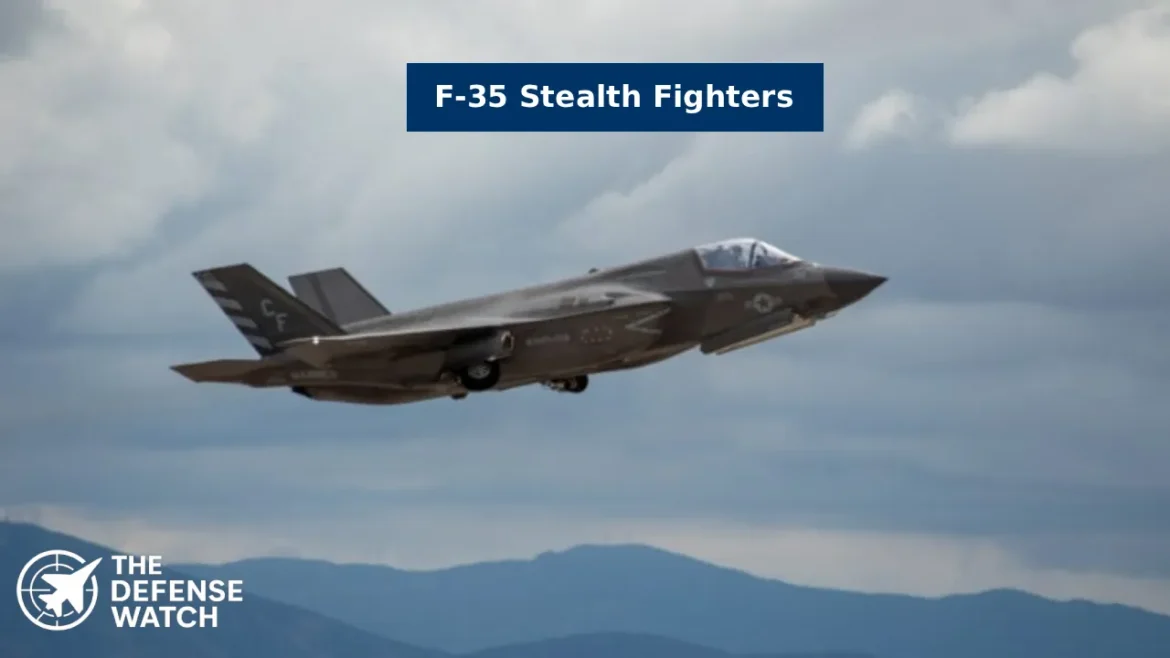
The United States is considering the sale of up to 48 F-35 Lightning II stealth fighters to Saudi Arabia — a multi-billion-dollar arms arrangement that analysts warn could fundamentally rewrite regional security dynamics. The proposal, which reportedly tops $100 billion when factoring in sustainment, infrastructure, and long-term support, accompanies a broader U.S.–Saudi strategic and investment package.
Key milestones: the request cleared a major Pentagon hurdle earlier in November 2025. The prospective sale dovetails with Saudi Crown Prince Mohammed bin Salman’s high-profile visit to Washington, during which defense, nuclear, and AI-cooperation agreements are on the table.
Why It Matters
If greenlit, this would mark the first time Saudi Arabia acquires fifth-generation U.S. stealth jets, significantly altering the military balance in the Middle East and challenging long-standing U.S. policy to preserve Israel’s qualitative military edge (QME).
At the same time, there are growing national security concerns: U.S. intelligence officials warn that Chinese espionage could exploit Saudi ties and infrastructure to access sensitive F-35 technologies. Some analysts describe the arrangement not just as a sale, but a geopolitical gambit — exchanging cutting-edge weaponry for political alignment, normalization, and a realignment of Riyadh’s external partnerships.
Key Details & Terms
Technical Constraints on Saudi F-35s
- According to defense analysts, Saudi Arabia is expected to receive a downgraded version of the F-35A rather than the fully customized variants flown by Israel.
- Limitations reportedly include no access to source code, no mission-software autonomy, and no ability to integrate its own electronic-warfare systems without U.S. approval.
- Moreover, the Saudi fleet is likely to remain tethered to U.S.-controlled sustainment architectures (such as ALIS/ODIN), giving Washington substantial leverage.
Strategic Stakes
Defense analysts and policy thinkers break down the F-35 deal into three interconnected pillars: normalization, China decoupling, and a long-term generational commitment.
- Normalization with Israel / Regional Architecture
- For Israel to accept a Saudi F-35 fleet, many believe it will demand real, verifiable steps toward security guarantees and diplomatic relations.
- China Firewall
- U.S. officials are reportedly pressing Riyadh to limit its dependence on Chinese defense systems, citing espionage risks through supply chains and maintenance networks.
- Generational Commitment to Israel
- To preserve Israel’s QME, analysts argue Washington must promise preferential access for Israel to next-generation fighters and technologies — potentially locking the U.S. defense base into a long-term political bargain.
Espionage & Corruption Risk
- Pentagon intelligence reportedly warns that a Saudi F-35 fleet — with its maintenance, logistics, and data linking infrastructure — could provide a backdoor for Chinese access to U.S. stealth secrets.
- Observers also note risks of corruption and mismanagement: given the scale of the deal, there are concerns about opaque offset mechanisms, lobbying, and misuse of funds.
Impact on Israel
- Israel has long been guaranteed a qualitative military edge in the region, and many Israeli analysts view the F-35 deal as a potential erosion of that advantage.
- According to some policy analysts, Israel may demand operational restrictions, such as limits on where Saudi F-35s can be based, to mitigate the risk of them being used against Israeli territory.
Expert & Policy Perspective
From a policy standpoint, this F-35 proposal marks a tectonic shift in Washington’s export philosophy: a move from outright denial of high-end systems to “managed proliferation,” where cutting-edge capabilities are leased on conditional, strategic terms.
- Strategic alignment over denial: By tying the jets to normalization and long-term commitments, the U.S. may be using its most sensitive military exports as a lever to shape Saudi geopolitical behavior.
- Risk vs. reward: Proponents argue that the deal could anchor Riyadh firmly in the U.S.-led security order. Skeptics counter that the moment China or other actors infiltrate Saudi defense infrastructure, the strategic costs could vastly outweigh benefits.
- Entrapment risk: Committing to Israel’s next-generation superiority (e.g., priority on NGAD or sixth-gen platforms) could become a long-term burden for U.S. R&D and procurement — especially every time the regional balance shifts.
What Comes Next
- Congressional Review: Final approval still requires Congress, which could raise objections on human rights grounds, strategic risk, or budget constraints.
- Technological Safeguards: The U.S. will likely demand stringent “firewalls” to prevent data leakage, especially around maintenance, diagnostics, and software architecture.
- Israel’s Response: Diplomatic pressure from Israel may intensify, seeking binding guarantees on basing, software, and operational use.
- Operational Timeline: Even if agreed, full operational capability (FOC) for the Saudi F-35 fleet would likely not be achieved for several years — possibly well into the early-to-mid 2030s given the infrastructure, training, and software dependencies.
Bottom Line
The proposed $100 billion-plus F-35 deal would not just deepen U.S.–Saudi defense ties — it could redefine the rules of regional arms competition, U.S. export policy, and the very foundations of Middle East deterrence. But the stakes are high: without airtight constraints, the deal could create pathways for espionage, erode Israel’s strategic edge, and lock Washington into a geopolitical bargain with long-term obligations.