• Home
  • About
  • Defense Systems
  • Manufacturer
  • Comparisons
  • Compare 
  • Tools
TheDefenseWatch.com
  • Aerospace & Aviation
  • Military & Ordnance
  • Naval & Maritime
  • Cyber & Space Defense
  • Policy & Strategy
  • Global News
  • Tools Library
    • Smart Calculator
    • Drone Flight Time Calculator
    • Drone Range Calculator
    • Counter-Drone Jammer Effective Range Calculator
    • Counter-Battery Radar Detection Calculator
    • Artillery Fire Correction Calculator
    • Thermal Camera Detection Range Calculator
    • Missile Range & Time-of-Flight Calculator
    • Radar Detection Range Calculator
    • FPV Strike Drone Payload vs Range Calculator
    • Loitering Munition Endurance Calculator
    • Sniper Ballistic Drop & Windage Calculator
    • Bullet Drop Calculator
    • U.S. Army Combat Fitness Test (ACFT) Calculator
    • Military Pension Calculator
    • Military Retirement Calculator
    • Military Pension Calculator
    • Large Number Calculator
Font ResizerAa

TheDefenseWatch.com

The Defense Watch | U.S. & Global Defense News, Analysis & Military Updates

Search
  • Home
  • About
  • Defense Systems
  • Manufacturer
  • Comparisons
  • Compare 
  • Tools

Stay Updated

Get the latest update

Subscribe

Explore

  • Drone
  • Fighter Jets & Military Aircraft
  • Hypersonic Weapons
  • Aircraft Carriers
  • Strategic History & Missions
  • Tools Library
Home » Iranian Attack Damages U.S. E-3 Sentry AWACS Aircraft At Prince Sultan Air Base
Global News

Iranian Attack Damages U.S. E-3 Sentry AWACS Aircraft At Prince Sultan Air Base

Kaleem Sheikh | Regional Defense Correspondent
Last updated: September 12, 2026 7:20 pm
Kaleem Sheikh | Regional Defense Correspondent
Share
2 Min Read
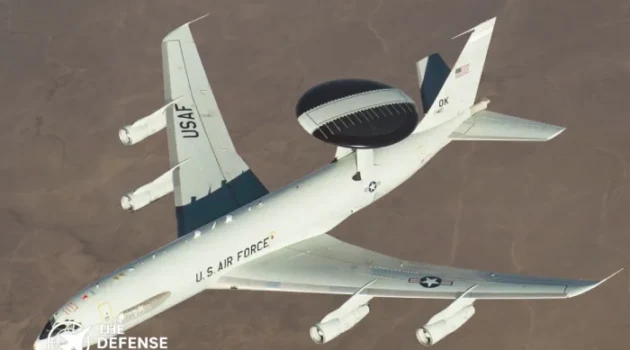
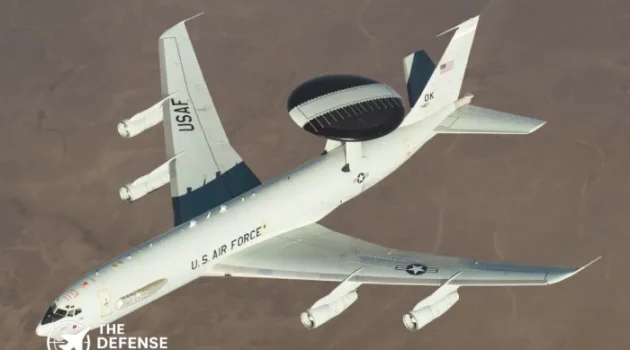
Iranian attack on AWACS aircraft
Image: U.S. Air Force.
SHARE
¦ KEY FACTS AT A GLANCE
  • Iranian attack reportedly damaged a U.S. E-3 Sentry AWACS aircraft at Prince Sultan Air Base in Saudi Arabia.
  • The E-3 Sentry provides airborne early warning, battle management, and command and control capabilities.
  • The strike highlights growing risks from missile and drone threats to high-value air assets in the Middle East.
  • Prince Sultan Air Base hosts U.S. forces and serves as a key hub for regional air operations.
  • Damage to AWACS platforms could impact situational awareness and command capabilities in contested environments.

Iranian Attack Damages U.S. E-3 Sentry AWACS Aircraft At Saudi Base

Iranian attack on AWACS aircraft has reportedly damaged a U.S. Air Force E-3 Sentry at Prince Sultan Air Base in Saudi Arabia, marking a rare strike against one of the most critical airborne command and control assets in the U.S. military inventory.

Contents
Iranian Attack Damages U.S. E-3 Sentry AWACS Aircraft At Saudi BaseThe Big PictureWhat’s HappeningWhy It MattersStrategic ImplicationsCompetitor ViewWhat To Watch NextCapability GapThe Bottom Line

The reported incident, cited by defense industry sources, underscores the evolving threat posed by Iranian missile and drone capabilities and raises new questions about the survivability of high-value air assets in forward-deployed environments.

The Big Picture

U.S. airborne early warning and control platforms remain central to modern air warfare. The E-3 Sentry enables real-time surveillance, battle management, and coordination of air operations across large theaters.

  • E-3 Sentry AWACS Aircraft

    E-3 Sentry AWACS Aircraft

    • Maximum Speed: 530 mph (Mach 0.8)
    • Range: 8,000 km+
    • Payload Capacity: Mission systems and crew equipment
    • Crew: 18–25
    • View Details →
    7.2

    The United States relies heavily on these aircraft to maintain air superiority, particularly in regions such as the Middle East where multiple actors operate advanced missile and drone systems.

    Prince Sultan Air Base has served as a critical hub for U.S. air operations in Saudi Arabia, supporting coalition missions and regional deterrence efforts. Any disruption to assets based there carries broader implications for U.S. force posture and readiness.

    What’s Happening

    Reports indicate that an Iranian attack damaged a U.S. E-3 Sentry AWACS aircraft stationed at Prince Sultan Air Base.

    The strike appears to be part of a broader pattern of Iranian use of long-range precision strike systems, including ballistic missiles and one-way attack drones.

    While specific details on the extent of the damage remain limited, the targeting of an AWACS aircraft represents a notable escalation in terms of both intent and capability.

    The E-3 Sentry is a high-value asset with limited numbers in service, making any damage operationally significant even if the aircraft is repairable.

    Why It Matters

    The Iranian attack on AWACS aircraft matters because the E-3 Sentry functions as a force multiplier.

    The platform provides:

    • Airspace surveillance over hundreds of miles
    • Early warning of incoming threats
    • Command and control for fighter aircraft and air defense systems

    Damage to such an aircraft reduces situational awareness and complicates coordinated responses to threats.

    • Boeing E 3A Sentry Aircraft

      Boeing E 3A Sentry Aircraft

      • Maximum Speed: 855 km/h
      • Range: 7,400 km
      • Payload Capacity: Mission systems and crew stations
      • Crew: 13 to 19
      • View Details →
      6.2

      The incident also highlights the vulnerability of large, non-stealthy aircraft on the ground. Unlike hardened shelters or dispersed assets, parked AWACS platforms present high-value targets that are difficult to conceal.

      Strategic Implications

      The strike has immediate implications for U.S. military readiness in the Middle East.

      Reduced availability of AWACS coverage can affect:

      • Air defense coordination
      • Missile warning timelines
      • Joint force integration across air and ground units

      The incident also reinforces the importance of layered air and missile defense systems to protect forward operating bases.

      From a deterrence perspective, the ability of Iranian systems to reach and damage such assets signals a growing capability to challenge U.S. operational freedom in the region.

      Competitor View

      Iran likely views this development as validation of its investment in asymmetric strike capabilities.

      Tehran has prioritized missile and drone systems that can bypass traditional air defenses and target high-value assets at long range.

      Russia and China may also study the incident as a case example of how to degrade U.S. command and control infrastructure in a conflict scenario.

      Both countries have emphasized targeting enabling systems such as AWACS, tankers, and ISR platforms as part of their anti-access and area denial strategies.

      What To Watch Next

      U.S. response measures will be critical in the near term.

      Key areas to monitor include:

      • Deployment of additional air defense systems to regional bases
      • Increased dispersal of high-value aircraft
      • Potential acceleration of next-generation airborne early warning platforms

      Maintenance and repair timelines for the damaged E-3 Sentry will also indicate how quickly the U.S. can restore full operational capability.

      Capability Gap

      The Iranian attack on AWACS aircraft highlights a persistent gap in base defense against low-cost, high-impact threats.

      While advanced systems such as Patriot and THAAD provide strong ballistic missile defense, they are less optimized for:

      • Low-flying drones
      • Saturation attacks
      • Precision strikes on parked aircraft

      The incident underscores the need for integrated air defense solutions that combine kinetic interceptors with electronic warfare and directed energy systems.

      It also points to the importance of operational practices such as dispersal, hardening, and deception to protect critical assets.

      The Bottom Line

      Iranian attack on AWACS aircraft exposes a critical vulnerability in U.S. forward air operations, reinforcing the need for stronger base defense and asset protection in contested regions.
TAGGED:AWACSIranSaudi Arabiaus air force
Share This Article
Facebook Copy Link Print
ByKaleem Sheikh | Regional Defense Correspondent
Follow:
Kaleem Sheikh is a regional defense correspondent at TheDefenseWatch.com covering defense and security developments across Asia and the Middle East, including military operations, procurement, and regional security issues.
Leave a Comment

Leave a Reply Cancel reply

Your email address will not be published. Required fields are marked *

Search Defense Systems

Latest Defense Systems

  • TRML-4D Radar TRML-4D Radar
  • F-47A Fighter Jet F-47A Fighter Jet
  • China DF-61 Missile China DF-61 Missile
  • B61 Nuclear Bomb B61 Nuclear Bomb
  • Japan E-767 Airborne Japan E-767 Airborne
  • Remington 870 Shotgun Remington 870 Shotgun
  • RUTA B1 Cruise Missile RUTA B1 Cruise Missile
  • XQ-67A Drone XQ-67A Drone
  • B-25 Mitchell Bomber B-25 Mitchell Bomber

Recent Compares

  • J-10C vs JF-17 Thunder: Which Fighter Is More Capable? J-10C vs JF-17 Thunder: Which Fighter Is More Capable? View Comparison →
  • Tejas vs Gripen: Key Differences and Capabilities Tejas vs Gripen: Key Differences and Capabilities View Comparison →
  • Tejas vs MiG-21 Bison: How India Replaced Its Iconic Supersonic Fighter Tejas vs MiG-21 Bison: How India Replaced Its Iconic Supersonic Fighter View Comparison →
  • F-35 vs F-16: Stealth, Sensors and Combat Roles F-35 vs F-16: Stealth, Sensors and Combat Roles View Comparison →
  • Tejas Fighter Jet vs F-16 Fighting Falcon: Capability Compared Tejas Fighter Jet vs F-16 Fighting Falcon: Capability Compared View Comparison →
  • Rafale Fighter Jet vs F-16 Fighting Falcon : Which Fighter Has the Edge? Rafale Fighter Jet vs F-16 Fighting Falcon : Which Fighter Has the Edge? View Comparison →
  • Su-57 Fighter Jet vs J-20 Fighter Jet: Stealth and Air Combat Compared Su-57 Fighter Jet vs J-20 Fighter Jet: Stealth and Air Combat Compared View Comparison →
  • Mirage 2000 vs Tejas Mk1A: Legacy Combat Power vs Indigenous Modernization Mirage 2000 vs Tejas Mk1A: Legacy Combat Power vs Indigenous Modernization View Comparison →
  • Rafale Fighter Jet vs F-22 Raptor: Which Air Dominance Fighter Has the Edge? Rafale Fighter Jet vs F-22 Raptor: Which Air Dominance Fighter Has the Edge? View Comparison →
  • Tejas Fighter Jet vs. Rafale Fighter Jet: India’s Indigenous Fighter Meets France’s Proven Multirole Combat Aircraft Tejas Fighter Jet vs. Rafale Fighter Jet: India’s Indigenous Fighter Meets France’s Proven Multirole Combat Aircraft View Comparison →

Recent Posts

  • Raytheon JR3 Rocket: History, Design and Military Role
  • Raytheon Wins DARPA Contract to Develop All-Optical Signal Processing Technology
  • Lockheed Martin Delivers 100,000th GMLRS Rocket as Production Reaches 14,000 a Year
  • L3Harris CEO Sam Mehta Discusses Defense Spending and Missile Production on CNBC
  • L3Harris Demonstrates Multi-Domain Defense Network for Pacific Security

You Might Also Like

Iran AI infrastructure strategy
AI & Electronic WarfareCyber & Space Defense

Iran Moves To Target Big Tech Data Centers In Gulf As AI Infrastructure Race Intensifies

April 2, 2026
US strikes drug facility Venezuela
Global News

US Strikes Drug Boat Loading Facility in Venezuela, Trump Confirms Military Action

December 30, 2025
Ramstein military aid Ukraine
Global News

Ramstein Format Countries Announce $4 Billion In New Military Support For Ukraine Including Air Defense, Artillery, And Drones

September 8, 2026
Project Grayburn UK small arms
Global News

UK’s Project GRAYBURN Set to Cover Full Small Arms Suite from Pistols to Machine Guns

January 23, 2026

Logo

Copyright © 2026 TheDefenseWatch.com

Helpful Links

  • Home
  • About Us
  • Privacy Policy
  • Terms of Use / Disclaimer
  • U.S. Privacy Notice – CCPA Compliance

Defense Systems

  • Defense Systems
  • Comparisons 
  • Manufacturer
  • Tactical Calculators

Popuplar

Which 5 Air Forces Possess the Costliest Fighter Jet Fleets in the World
Evolving Strategic Value: Carrier Strike Groups in the Indo-Pacific’s Future Security Architecture
Autonomous Weapon Systems Spark U.S. Ethics Debate Amid Rapid Military AI Integration

We report on developments involving military forces, governments, defense companies, research organizations, and security institutions around the world. 

Welcome Back!

Sign in to your account

Username or Email Address
Password

Lost your password?