• Home
  • About
  • Defense Systems
  • Manufacturer
  • Comparisons
  • Compare 
  • Tools
TheDefenseWatch.com
  • Aerospace & Aviation
  • Military & Ordnance
  • Naval & Maritime
  • Cyber & Space Defense
  • Policy & Strategy
  • Global News
  • Tools Library
    • Smart Calculator
    • Drone Flight Time Calculator
    • Drone Range Calculator
    • Counter-Drone Jammer Effective Range Calculator
    • Counter-Battery Radar Detection Calculator
    • Artillery Fire Correction Calculator
    • Thermal Camera Detection Range Calculator
    • Missile Range & Time-of-Flight Calculator
    • Radar Detection Range Calculator
    • FPV Strike Drone Payload vs Range Calculator
    • Loitering Munition Endurance Calculator
    • Sniper Ballistic Drop & Windage Calculator
    • Bullet Drop Calculator
    • U.S. Army Combat Fitness Test (ACFT) Calculator
    • Military Pension Calculator
    • Military Retirement Calculator
    • Military Pension Calculator
    • Large Number Calculator
Font ResizerAa

TheDefenseWatch.com

The Defense Watch | U.S. & Global Defense News, Analysis & Military Updates

Search
  • Home
  • About
  • Defense Systems
  • Manufacturer
  • Comparisons
  • Compare 
  • Tools

Stay Updated

Get the latest update

Subscribe

Explore

  • Drone
  • Fighter Jets & Military Aircraft
  • Hypersonic Weapons
  • Aircraft Carriers
  • Strategic History & Missions
  • Tools Library
Home » Northrop Grumman Advances IVEWS Production for F-16 Fleet with First Units Assigned to Middle East Deployment
Global News

Northrop Grumman Advances IVEWS Production for F-16 Fleet with First Units Assigned to Middle East Deployment

TeamDefenseWatch
Last updated: November 1, 2025 9:16 am
TeamDefenseWatch
Share
2 Min Read
IVEWS
SHARE

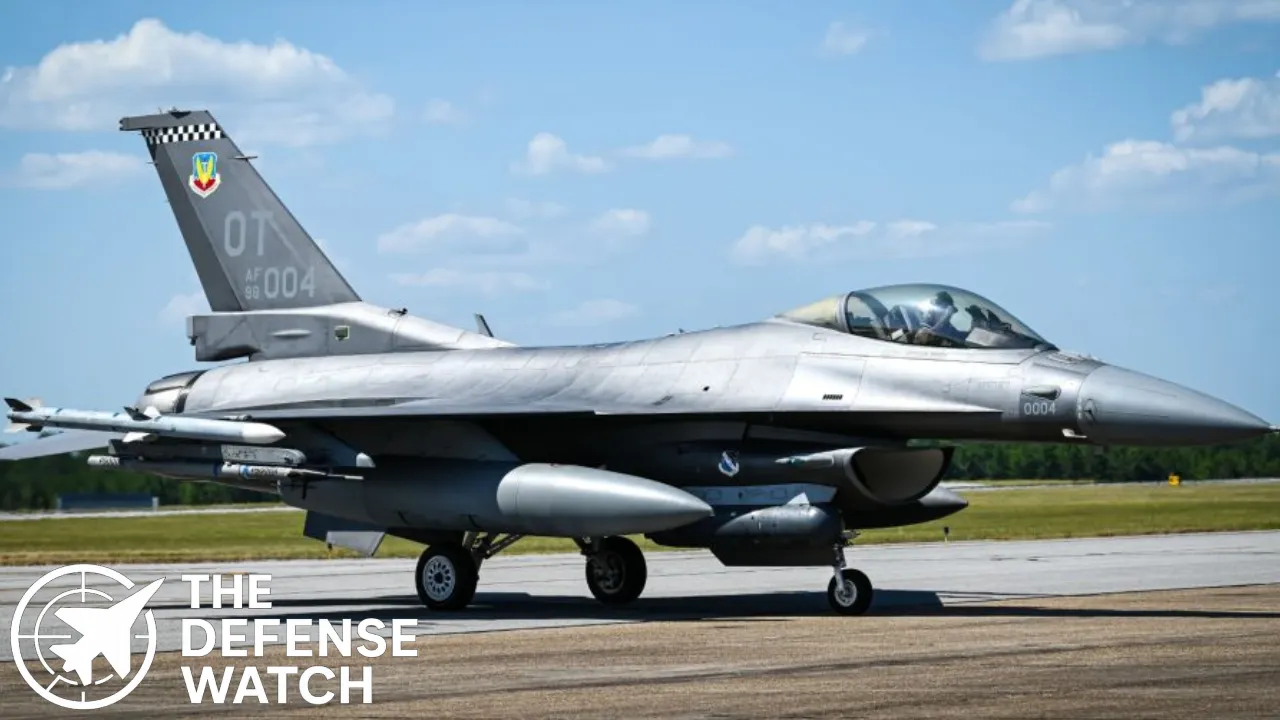
The Northrop Grumman Corporation ALQ-257 Integrated Viper Electronic Warfare Suite (IVEWS) for the F‑16 Fighting Falcon is poised to enter production, with the first tranche of 72 units scheduled for deployment to the Middle East under an urgent operational requirement. The U.S. Air Force began green-lighting the programmed in late 2025, with production slated to start as early as next year.

Contents
BackgroundDetails of the ProgramExpert and Policy PerspectiveImpact and What’s Next

Background

The F-16, a workhorse fourth-generation fighter in U.S. and allied service, has faced increasingly advanced air-defense and electronic-threat environments, particularly in contested theatres. In response, IVEWS was selected in 2019 as the dedicated EW suite for the U.S. F-16 fleet. The ALQ-257 design integrates ultra-wideband detection, digital radar warning receivers and jamming capability, enabling the F-16 to operate in dense electromagnetic spectrum threat environments. It is also architected to work in conjunction with the SABR AESA radar (AN/APG-83) on modernized F-16 variants.

Details of the Program

According to Northrop Grumman’s vice president of targeting and survivability, Jim Conroy, the upcoming production run will initially equip 72 Block 50 F-16s, as directed by a Urgent Operational Need (UON) from United States Air Forces Central Command (AFCENT) for operations in the Middle East.

Funding for the initiative has been bolstered by congressional action: a reconciliation bill allocated US$187 million to conclude final engineering and manufacturing development and initiate initial production. The proposed FY 2026 appropriations include an additional US$250 million for full-rate production.

- Advertisement -

From a technical standpoint, IVEWS is a fully internal, line-replaceable module for the F-16, unlike previous external EW pods such as the ALQ-131 or ALQ-184. This internal integration frees up external stations for additional fuel or weapons.

Flight testing concluded its operational assessment phase in April 2024 after about 250 flight hours and testing against representative threats. The suite demonstrated interoperability with the SABR AESA radar system, allowing radar and EW functions to operate pulse-to-pulse without interference.

Industry officials say the urgency of the Middle East deployment stems from the evolving threat environment — mobile radars, frequency-hopping emitters and dense spectrum congestion challenge legacy EW architectures. Conroy noted that “you can’t just pre-plan how you’re going to execute your mission, because you don’t know where the threats are going to be.”

One senior Northrop program lead described the IVEWS capability as effectively giving the F-16 “mini EA-18G Growler-like” electronic attack functionality, enabling the platform to detect, geo-locate and jam threats from within the aircraft itself, rather than relying on external escort assets.

Expert and Policy Perspective

From a policy and force-structure perspective, the deployment of IVEWS underlines a growing recognition within the U.S. Air Force that legacy fourth-generation platforms must be upgraded not only for weapons and sensors but for survivability in contested, electromagnetic environments. A service spokesperson stated that “the Air Force has identified multiple scenarios where enhanced electronic warfare systems can help meet … operational needs across different AORs,” referencing the IVEWS program by name.

For allied partners operating F-16s, the exportability of IVEWS is noteworthy. The system is marketed for global F-16 operators and aligns with Northrop’s ultra-wideband EW architecture for future threat environments.

Operationally, the Middle East theatre presents acute requirements: F-16s deployed in the region have recently engaged advanced surface-to-air missile systems, drone threats, and adversary aircraft from near-peer sources. The addition of IVEWS is intended to bolster survivability for those missions.

Impact and What’s Next

The ramp-up of IVEWS production marks a significant milestone for F-16 modernisation. With the first units committed to Middle East deployment, the U.S. and partner air forces signal an elevated focus on electronic warfare as a core component of air-dominance and platform survivability.

- Advertisement -

The next steps include full-rate production later in FY 2026, broader installation across the F-16 fleet (potentially up to 600 aircraft) and continued integration of new threat libraries and software updates under the system’s modular EW architecture.

Ultimately, the IVEWS deployment seeks to extend the relevance of the F-16 among fourth-generation fighters by equipping them with EW capability approaching that of fifth-generation aircraft—a strategic gain in an era of proliferated air and missile defenses.


TAGGED:DefenseTechnologyElectronicWarfareF16UpgradeIVEWSMiddleEastSecurityNorthropGrumman
Share This Article
Facebook Copy Link Print
ByTeamDefenseWatch
TeamDefenseWatch is the official editorial byline of TheDefenseWatch.com. Working under one umbrella, TheDefenseWatch.com, the team delivers verified, factual reporting on global defense, military technology, aerospace systems, and security developments. Articles are sourced from official statements, defense industry releases, and trusted media, with editorial review to ensure accuracy and clarity.Contact: info@TheDefenseWtach.com
8 Comments
  • Pingback: Lockheed Martin Accelerates F-16V Deliveries to Taiwan Amid Rising Strait Tensions
  • Pingback: US Aircraft Carrier Nears Venezuela in Strategic Show of Force | TheDefenseWatch.com
  • Pingback: Pentagon Overhauls Acquisition System: Hegseth Launches “Warfighting Acquisition System” to Prioritize Speed
  • Pingback: Pentagon Activates First U.S. One-Way Attack Drone Squadron Based on Shahed-136 – LUCAS Drones Deployed to Middle East
  • Pingback: BAE Systems to Upgrade IFF System on South Korea's KF-21 Boramae Fighter
  • Pingback: L3Harris Wins $9.57M Navy Contract for F/A-18 RF Amplifiers | TheDefenseWatch.com
  • Pingback: Pete Hegseth Says Trumps $1.5 Trillion Defense Budget Aims to Rebuild US Forces | TheDefenseWatch.com
  • Pingback: Israel Receives Three New F-35i Adir Fighters at Nevatim Air Base | TheDefenseWatch.com

Leave a Reply Cancel reply

Your email address will not be published. Required fields are marked *

Search Defense Systems

Latest Defense Systems

  • F-47A Fighter Jet F-47A Fighter Jet
  • China DF-61 Missile China DF-61 Missile
  • B61 Nuclear Bomb B61 Nuclear Bomb
  • Japan E-767 Airborne Japan E-767 Airborne
  • Remington 870 Shotgun Remington 870 Shotgun
  • RUTA B1 Cruise Missile RUTA B1 Cruise Missile
  • XQ-67A Drone XQ-67A Drone
  • B-25 Mitchell Bomber B-25 Mitchell Bomber
  • F-100 Super Sabre F-100 Super Sabre

Recent Compares

  • J-10C vs JF-17 Thunder: Which Fighter Is More Capable? J-10C vs JF-17 Thunder: Which Fighter Is More Capable? View Comparison →
  • Tejas vs Gripen: Key Differences and Capabilities Tejas vs Gripen: Key Differences and Capabilities View Comparison →
  • Tejas vs MiG-21 Bison: How India Replaced Its Iconic Supersonic Fighter Tejas vs MiG-21 Bison: How India Replaced Its Iconic Supersonic Fighter View Comparison →
  • F-35 vs F-16: Stealth, Sensors and Combat Roles F-35 vs F-16: Stealth, Sensors and Combat Roles View Comparison →
  • Tejas Fighter Jet vs F-16 Fighting Falcon: Capability Compared Tejas Fighter Jet vs F-16 Fighting Falcon: Capability Compared View Comparison →
  • Rafale Fighter Jet vs F-16 Fighting Falcon : Which Fighter Has the Edge? Rafale Fighter Jet vs F-16 Fighting Falcon : Which Fighter Has the Edge? View Comparison →
  • Su-57 Fighter Jet vs J-20 Fighter Jet: Stealth and Air Combat Compared Su-57 Fighter Jet vs J-20 Fighter Jet: Stealth and Air Combat Compared View Comparison →
  • Mirage 2000 vs Tejas Mk1A: Legacy Combat Power vs Indigenous Modernization Mirage 2000 vs Tejas Mk1A: Legacy Combat Power vs Indigenous Modernization View Comparison →
  • Rafale Fighter Jet vs F-22 Raptor: Which Air Dominance Fighter Has the Edge? Rafale Fighter Jet vs F-22 Raptor: Which Air Dominance Fighter Has the Edge? View Comparison →
  • Tejas Fighter Jet vs. Rafale Fighter Jet: India’s Indigenous Fighter Meets France’s Proven Multirole Combat Aircraft Tejas Fighter Jet vs. Rafale Fighter Jet: India’s Indigenous Fighter Meets France’s Proven Multirole Combat Aircraft View Comparison →

Recent Posts

  • Royal Navy Launches First Autonomous Squadron for Uncrewed Boat Operations
  • Raytheon Completes Third DeepStrike JR3 Rocket Flight Test for U.S. Army
  • Acting Navy Secretary Tours Blount Island Marine Logistics Hub
  • Defense Logistics Agency Commits $2 Billion to Critical Materials Stockpile
  • Marine One Explained: The Presidential Helicopter, Its Fleet and the VH-92A Transition

You Might Also Like

Russian drones Polish airspace
Global News

Eight Russian Drones Violate Polish Airspace as NATO Scrambles F-35s in Joint Defense Response

September 12, 2026
Diehl Defence Ziesel unmanned ground vehicle launching a SPIKE LR anti tank missile during live fire testing in Europe
Global News

Diehl Defence Expands Anti Tank Capability With SPIKE LR Missile Armed Ziesel UGV

September 7, 2026
B-2 strikes in Iran
Global News

US B-2 Spirit Stealth Bombers Strike 200 Targets In Iran During 72 Hour Operation

September 12, 2026
North Korea cruise anti-ship missile
Global News

North Korea Races To Expand Nuclear Arsenal With Seventh Ballistic Missile Launch Of 2026

September 7, 2026

Logo

Copyright © 2026 TheDefenseWatch.com

Helpful Links

  • Home
  • About Us
  • Privacy Policy
  • Terms of Use / Disclaimer
  • U.S. Privacy Notice – CCPA Compliance

Defense Systems

  • Defense Systems
  • Comparisons 
  • Manufacturer
  • Tactical Calculators

Popuplar

Which 5 Air Forces Possess the Costliest Fighter Jet Fleets in the World
Evolving Strategic Value: Carrier Strike Groups in the Indo-Pacific’s Future Security Architecture
Autonomous Weapon Systems Spark U.S. Ethics Debate Amid Rapid Military AI Integration

We report on developments involving military forces, governments, defense companies, research organizations, and security institutions around the world. 

Welcome Back!

Sign in to your account

Username or Email Address
Password

Lost your password?