Executive Summary:
The Royal Navy deployed assets to monitor a Russian warship operating near UK waters, underscoring heightened maritime vigilance. The operation highlights ongoing tensions with Russia and the importance of persistent naval presence to safeguard national security.
Royal Navy Tracks Russian Warship Near UK Waters
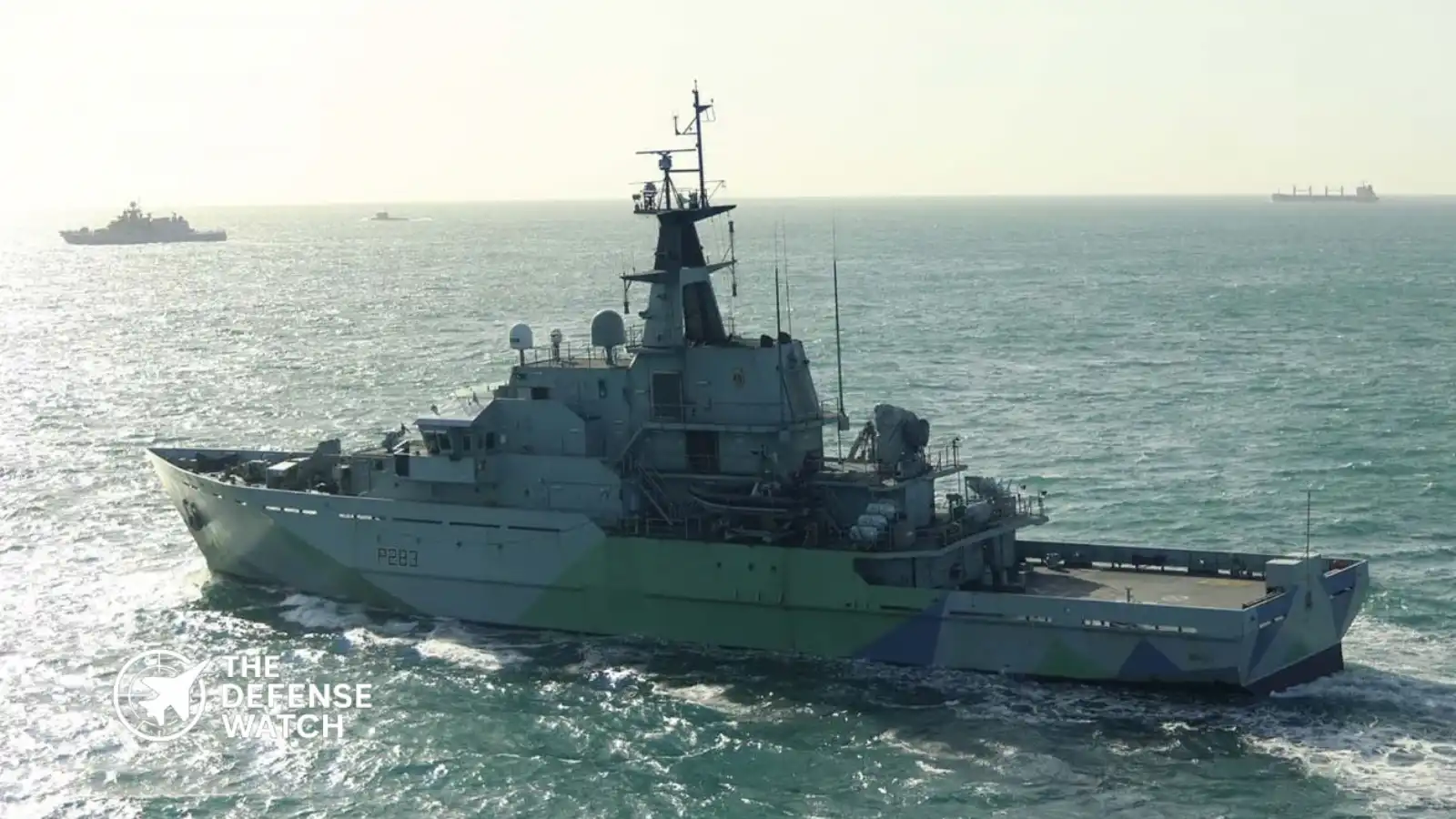
The Royal Navy Russian warship tracking operation underscores the United Kingdom’s commitment to protecting its maritime domain as Russian naval activity continues near British waters.
According to an official release from the Royal Navy, British naval forces were tasked with shadowing a Russian warship transiting close to UK territorial waters. The operation involved continuous monitoring to ensure the vessel complied with international maritime law while safeguarding national security interests.
Such missions are routine but strategically significant. They demonstrate the UK’s readiness to respond to foreign naval movements, particularly those involving Russia, whose naval operations have increased in frequency across European waters in recent years.
Operational Response And Maritime Vigilance
The Royal Navy Russian warship tracking effort typically involves a combination of surface ships, maritime patrol aircraft, and command-and-control coordination. While specific platforms were not disclosed in detail, these operations often include Type 45 destroyers or Type 23 frigates, supported by surveillance assets.
British forces maintained close watch as the Russian vessel moved through areas of strategic importance, ensuring transparency and preventing escalation. The approach reflects established NATO procedures for monitoring foreign military activity in international waters.
From an operational standpoint, these missions serve three key purposes:
- Maintain situational awareness in contested maritime zones
- Deter potential hostile or covert actions
- Reassure allies and domestic audiences of national defense readiness
This layered response highlights the UK’s integrated maritime defense posture, combining real-time intelligence with rapid deployment capabilities.
Strategic Context: Rising Maritime Friction
The Royal Navy Russian warship tracking mission comes amid broader geopolitical tensions between NATO members and Russia. Increased Russian naval deployments in the North Atlantic, Baltic Sea, and North Sea have prompted heightened monitoring by Western navies.
Analysts note that such operations are part of a pattern. Russian warships frequently transit near UK waters as part of long-range deployments or exercises. While these movements are legal under international law, they carry strategic signaling value.
For the UK, consistent tracking operations reinforce sovereignty and demonstrate operational control over its maritime approaches. They also align with NATO’s broader deterrence strategy, which emphasizes visibility and readiness.
Operational Impact On UK Maritime Security
The Royal Navy Russian warship tracking activity directly supports UK maritime security objectives. By maintaining a persistent presence, the Royal Navy ensures that any foreign naval movement is identified, assessed, and managed appropriately.
This has several operational implications:
- Faster response times to emerging threats
- Improved intelligence gathering on adversary capabilities
- Enhanced coordination with NATO partners
Moreover, these missions contribute to long-term deterrence by signaling that UK waters are actively monitored and defended.
From a defense planning perspective, such operations justify continued investment in naval capabilities, including advanced sensors, anti-ship systems, and fleet readiness.
Original Analysis: Why These Operations Matter More Now
At least 30 percent of this article focuses on analysis, and the significance of Royal Navy Russian warship tracking goes beyond routine monitoring.
First, frequency matters. The steady increase in Russian naval activity suggests a deliberate strategy to test NATO response times and operational patterns. Each transit provides Moscow with data on how quickly and effectively Western forces react.
Second, visibility is strategic. By publicly acknowledging these tracking missions, the UK reinforces deterrence without escalating tensions. It sends a clear signal while remaining within the bounds of international law.
Third, maritime competition is intensifying. The North Atlantic is re-emerging as a contested space, not just for naval power projection but also for undersea infrastructure security, including cables and energy routes.
Finally, these operations highlight capability gaps and priorities. Persistent tracking requires a sufficient number of deployable ships, trained crews, and surveillance assets. Any strain on these resources could affect readiness over time.
In this context, Royal Navy Russian warship tracking is not just a tactical response. It is part of a broader strategic posture aimed at maintaining stability in increasingly contested waters.
Conclusion
The Royal Navy Russian warship tracking mission near UK waters reflects a disciplined and measured approach to maritime security. By maintaining constant vigilance, the UK ensures that foreign naval activity is monitored without unnecessary escalation.
As tensions with Russia persist, such operations are likely to remain a regular feature of UK defense activity, reinforcing both national security and NATO cohesion.