

Takeaways
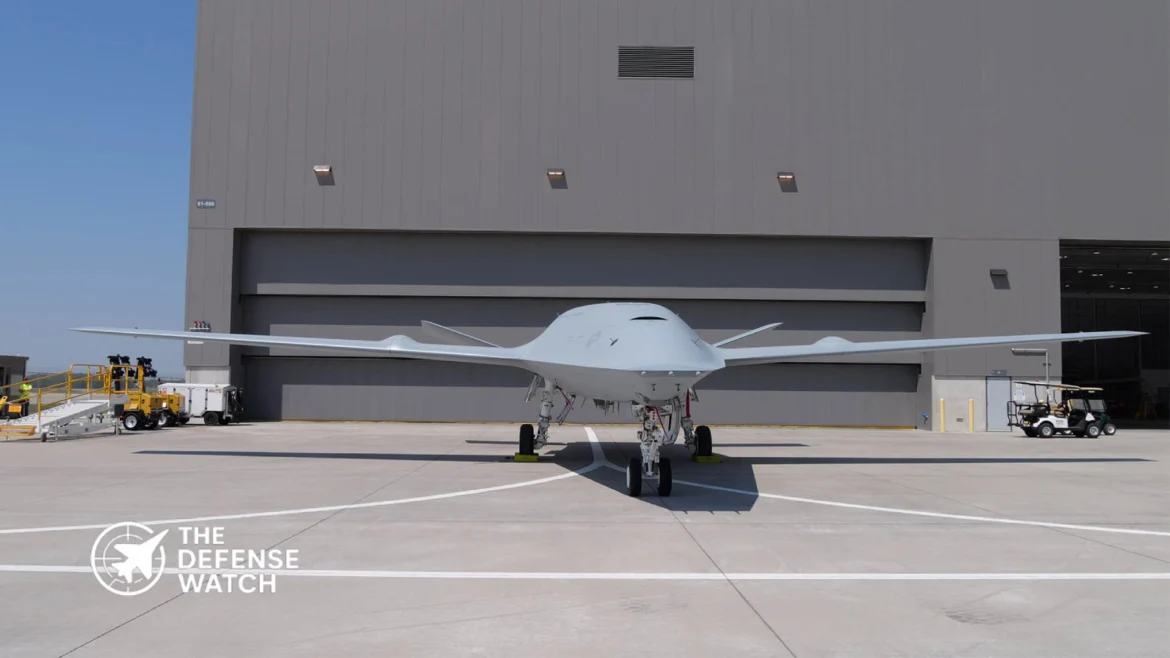
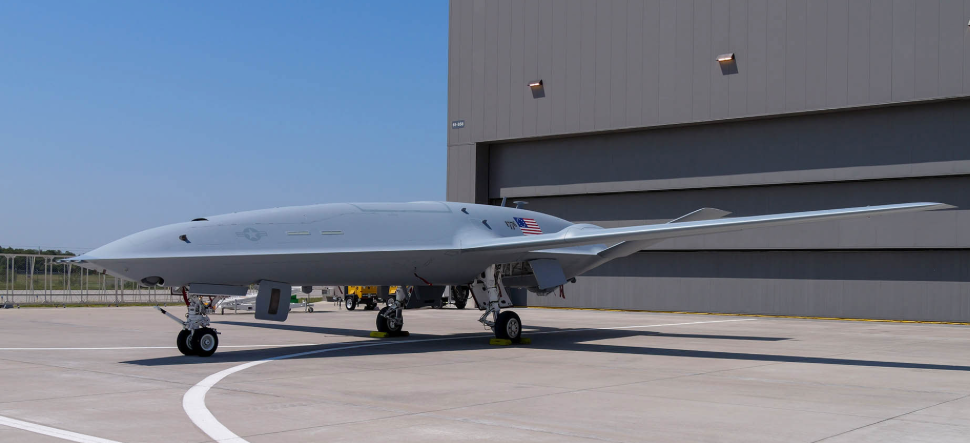
The U.S. Navy is moving the MQ-25A Stingray from development into low-rate production, establishing the first production path for a carrier-based unmanned aerial refueling aircraft.
Boeing MQ-25A Stingray Contract Moves Navy Into Production
The Boeing MQ-25A Stingray program has entered a significant production phase after the U.S. Navy awarded Boeing a major modification covering three Low Rate Initial Production Lot 1 aircraft and advance procurement for three additional Lot 2 aircraft. The modification provided in the contract notice is valued at up to $552.053 million and extends work through July 2031.
The Navy separately described the overall Sept. 14 production award as a $562 million fixed-price incentive contract, with initial Lot 1 deliveries expected to begin in 2029. The difference reflects the distinction between the modification value specified in the contract language and the Navy’s rounded public description of the production award.
The action is being executed under contract N0001922C0048, originally awarded to Boeing in 2022 for MQ-25A Lot 1 advance acquisition work. Naval Air Systems Command, based at Patuxent River, Maryland, is the contracting activity.
What the MQ-25A Contract Buys
The latest modification covers two closely related procurement activities.
| Item | Current Contract Action |
|---|---|
| Contractor | Boeing |
| Aircraft | MQ-25A Stingray |
| Lot | Lot 1 LRIP |
| Lot 1 aircraft | 3 |
| Lot 2 advance procurement | Long lead components for 3 aircraft |
| Contract modification | Up to $552.053 million |
| Navy public award value | $562 million |
| Completion | July 2031 |
| Contract type | Undefinitized fixed-price incentive modification |
| Competition | Not competed |
| Contracting activity | Naval Air Systems Command |
The Navy said the production contract funds three Lot 1 aircraft and advance acquisition of long lead components for three Lot 2 aircraft. The service also said the MQ-25 program of record contains 76 aircraft, including developmental and test aircraft already associated with the program.
At award, the Navy is obligating $100 million in fiscal 2025 aircraft procurement funds and $64.42848 million in fiscal 2026 aircraft procurement funds, for a combined initial obligation of about $164.43 million.
The remaining contract value will be obligated as the program progresses.
MQ-25A Reaches Production After First Flight
The production decision follows two major milestones in 2026.
The MQ-25A completed its first flight on April 25, 2026, flying for approximately two hours from Boeing’s facility at MidAmerica Airport in Mascoutah, Illinois. Navy and Boeing air vehicle pilots controlled the aircraft through the Unmanned Carrier Aviation Mission Control System. The flight tested basic flight controls, engine performance and handling characteristics.
The Navy subsequently announced Milestone C approval on May 19, allowing the aircraft to enter Low Rate Initial Production. At the time, the service said the initial production award would cover three Lot 1 aircraft and include options for later production lots.
The sequence is important because the MQ-25A is not simply another unmanned aircraft procurement. The program is intended to establish an operational unmanned aircraft inside the carrier air wing, where the aircraft must function within one of the most demanding aviation environments in the U.S. military.
Why the MQ-25A Matters to the Carrier Air Wing
The primary mission of the MQ-25A is aerial refueling.
The Navy intends to use the aircraft as an organic carrier-based tanker, reducing the requirement for F/A-18E/F Super Hornets to perform tanker duties. That can allow more crewed fighters to remain available for combat missions rather than being assigned primarily to tanker operations.
NAVAIR describes the MQ-25A as the Navy’s first operational carrier-based unmanned aircraft and says its integration will extend the range of carrier aircraft while improving the use of combat strike fighters.
This creates an important operational distinction. The MQ-25A is not designed primarily to replace the carrier’s strike fighters. Its value comes from changing how those aircraft are employed.
A carrier air wing has a finite number of aircraft and a finite amount of fuel available in the carrier operating area. A dedicated unmanned tanker can absorb the refueling mission while allowing fighters, electronic warfare aircraft and other receiver-capable platforms to retain greater mission availability.
The Navy has already demonstrated the basic concept with earlier MQ-25A testing. Test aircraft have conducted aerial refueling with the F/A-18 Super Hornet, F-35C Lightning II and E-2D Advanced Hawkeye.
Production Is Only One Part of the MQ-25A System
The MQ-25A program is broader than the aircraft itself.
NAVAIR identifies two major elements: the MQ-25A air vehicle and the Unmanned Carrier Aviation Mission Control System, which provides command and control for the aircraft. Carrier integration also involves deck handling, taxiing, launch and recovery procedures.
That integration requirement is one of the program’s most important technical challenges.
A conventional land-based unmanned aircraft can operate from a prepared runway with relatively predictable ground infrastructure. The MQ-25A must operate from a moving aircraft carrier, where launch and recovery involve catapult and arresting systems, deck handling procedures, limited space and complex interactions with crewed aircraft.
The aircraft must therefore be integrated into the carrier’s existing aviation cycle rather than treated as an independent unmanned system.
Long Lead Components Signal Continued Production Planning
The inclusion of long lead components for three Lot 2 aircraft is particularly significant from an industrial perspective.
Long lead procurement allows the Navy and Boeing to begin acquiring components that require substantial manufacturing time before the complete aircraft are assembled. This can reduce the risk of production delays when subsequent aircraft move through the manufacturing process.
The approach also provides an early indication that the Navy is planning beyond the initial three aircraft.
The Department of the Navy’s FY2026 budget documentation had already identified funding for three MQ-25A low-rate initial production aircraft and advance procurement for long lead material for subsequent aircraft.
The Navy’s broader program planning calls for a total inventory of 76 MQ-25A aircraft. Its FY2026 budget documents describe a fleet structure that includes operational squadrons, detachments and supporting mission-control systems.
The Industrial Base Is Spread Across the United States and Canada
The modification also illustrates the distributed industrial base supporting the MQ-25A.
The work allocation in the contract includes:
Location Share of Work St. Louis, Missouri 56% Torrance, California 8% Indianapolis, Indiana 4% Quebec, Canada 3% McKinney, Texas 2% Ontario, Canada 2% Kansas City, Missouri 1% Wichita, Kansas 1% Irvine, California 1% Other locations 22% St. Louis remains the dominant location, reflecting Boeing’s central role in MQ-25 production and program activity.
The distributed work structure also demonstrates how a single unmanned aircraft program supports suppliers and manufacturing operations across several U.S. states and Canadian provinces.
MQ-25A Production Comes With a Long Test and Integration Path
The move into LRIP does not mean the MQ-25A has completed all operational testing.
The Navy’s first flight in April began a broader flight test program intended to expand the aircraft’s performance envelope and verify mission systems.
GAO’s 2026 weapons systems assessment identifies the MQ-25A as a catapult-launched uncrewed aircraft intended for carrier operations and aerial refueling. GAO’s program timeline places the initial operational capability period around 2029 and the full-rate production decision around 2030.
That timeline puts the current production award in context. The Navy is buying production aircraft while the program continues through the testing and operational evaluation process required before full-rate production.
This is normal for a major defense acquisition program entering LRIP. The purpose of LRIP is to establish production capacity and produce a limited number of operationally representative aircraft while testing, evaluation and manufacturing processes continue.
What the MQ-25A Changes for U.S. Naval Aviation
The most important consequence of the MQ-25A program is not simply the addition of an unmanned tanker.
It is the introduction of an unmanned aircraft into the carrier air wing as an operational asset that works alongside crewed aircraft.
The Navy has described the Stingray as a pathfinder for future unmanned carrier aviation. Its mission-control architecture, carrier integration and manned-unmanned operating concept provide a foundation for additional unmanned systems that could eventually operate from carriers.
For the carrier air wing, the immediate benefit is tanker capacity. The longer-term significance lies in demonstrating that unmanned aircraft can be integrated into the launch, recovery, command-and-control and maintenance cycles of a nuclear-powered aircraft carrier.
That distinction matters as the Navy develops a future carrier air wing that is expected to combine crewed and uncrewed systems.
The MQ-25A therefore represents both an aircraft procurement and an operational integration effort.
A New Production Baseline for the Stingray
Boeing’s latest contract establishes the first LRIP production baseline for the MQ-25A.
Three Lot 1 aircraft will be produced while long lead components are acquired for three Lot 2 aircraft. Initial Lot 1 deliveries are expected to begin in 2029, according to the Navy.
The next major milestones will be continued flight testing, carrier integration, operational evaluation and preparation for fleet introduction.
The MQ-25’s eventual impact will depend on how effectively the Navy integrates the aircraft into carrier operations and how reliably it can provide tanker support without creating additional burdens on the carrier deck.
For now, the latest Boeing contract marks a clear transition: the MQ-25A Stingray is moving from a development program toward production and eventual fleet service as the U.S. Navy’s first operational carrier-based unmanned aircraft.

Boeing Receives $31.5 Million P-8A Sustainment Modification
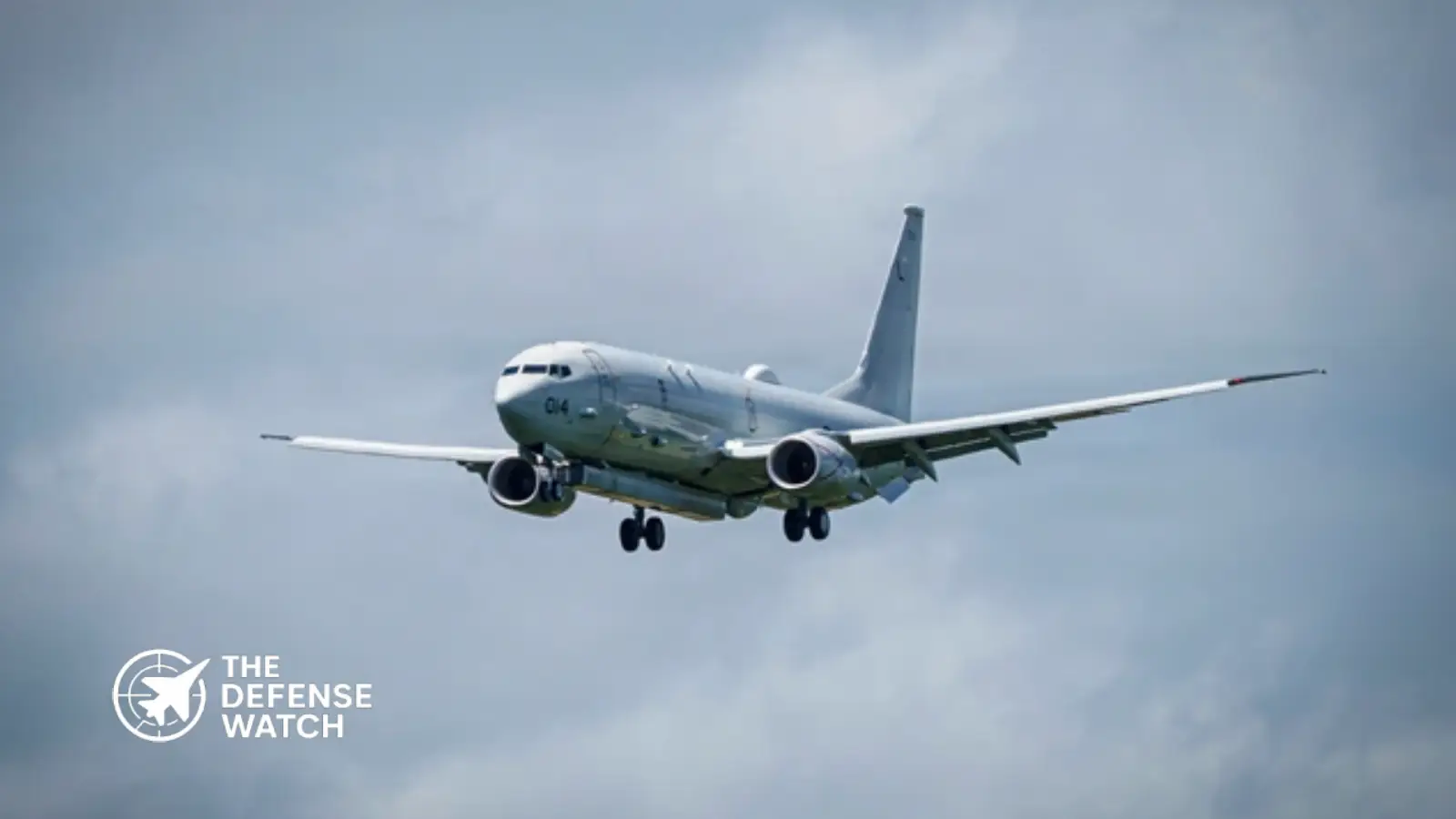
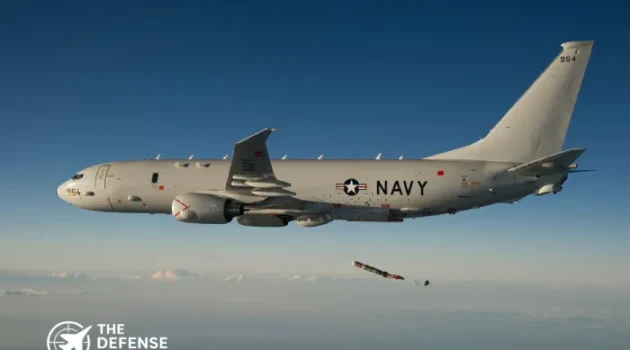
Boeing has received a $31,505,637 modification from the U.S. Navy for P-8A Poseidon sustainment support, covering the U.S. fleet and six allied operators. The award exercises options under cost-plus-fixed-fee order N0001925F0254, issued against basic ordering agreement N0001921G0006, and is expected to run through September 2027.
Takeaways
Boeing is receiving a $31.5 million modification to sustain P-8A Poseidon fleets operated by the U.S. Navy and six allied countries through September 2027.
The modification covers four broad areas: P-8A platform sustainment, support equipment maintenance, engineering investigations and integrated maintenance augmentation support.
The work supports the U.S. Navy and P-8A operators in Australia, the United Kingdom, Norway, New Zealand, the Republic of Korea and Germany. The award was not competed, with Naval Air Systems Command in Patuxent River, Maryland, serving as the contracting activity.
The contract announcement was reported as part of the Department of War contract awards for Sept. 3, 2026.
Funding Covers Multiple U.S. And Allied Accounts
The Navy and its international partners will use several funding sources for the modification.
Funding source Amount FY2024 Aircraft Procurement, Navy $8,576,380 FY2026 Operations and Maintenance, Navy $8,922,792 Foreign Military Sales customer funds $2,745,842 Royal Australian Air Force cooperative funds $277,003 Total obligated at award $20,522,017 The total amount obligated at the time of award is therefore about $20.5 million, below the full $31.5 million modification value. The difference reflects the distinction between the value of the modification and funding obligated when the award is made.
The modification also follows the original September 2025 order under the same basic ordering agreement and order number. That earlier order was valued at approximately $40 million and covered the same broad sustainment mission for the Navy and the six foreign operators.
P-8A Support Spans A Global Operating Network
The geographic distribution of the new work is notable because the P-8A is not operated solely from U.S. bases.
Jacksonville, Florida, accounts for 25% of the work, while Whidbey Island, Washington, accounts for another 15%. Additional major work locations include Sigonella, Italy; Manama, Bahrain; Kaneohe Bay, Hawaii; Patuxent River, Maryland; Keflavik, Iceland; Kadena and Misawa in Japan; and multiple locations across the continental United States.
Location Share of work Jacksonville, Florida 25% Whidbey Island, Washington 15% Sigonella, Italy 6% Manama, Bahrain 6% Kaneohe Bay, Hawaii 5% Patuxent River, Maryland 5% Keflavik, Iceland 5% Kadena, Japan 5% Misawa, Japan 5% Seattle, Washington 2.5% Oceana, Virginia 2.5% Fayetteville, Tennessee 2.5% Mesa, Arizona 2.5% Dayton, Ohio 2.5% Columbus, Ohio 2.5% Fort Walton Beach, Florida 2.5% Huntsville, Alabama 2.5% Other U.S. locations 1% Other overseas locations 2% The locations illustrate the operational problem sustainment contracts must address. P-8A aircraft regularly deploy far from their home stations, requiring maintenance expertise, engineering support, spare parts and technical assistance to be available across multiple regions.
That requirement becomes more important as maritime patrol aircraft operate for extended periods in areas where access to major maintenance facilities may be limited.
P-8A Has Become A Common Allied Maritime Patrol Platform
The P-8A is the U.S. Navy’s primary multi-mission maritime patrol and reconnaissance aircraft. NAVAIR identifies anti-submarine warfare, anti-surface warfare and intelligence, surveillance and reconnaissance as core missions, with the aircraft also supporting broad-area maritime and littoral operations and search and rescue.
Boeing’s current program information lists the United States, Australia, the United Kingdom, Norway, New Zealand, South Korea and Germany among P-8A operators, with Canada also under contract to become an additional P-8A operator. India operates the related P-8I variant.
This common aircraft architecture creates an important advantage for multinational maritime operations. Crews and maintainers operating the same basic platform can share procedures, technical knowledge and operational experience, while aircraft can be integrated into broader allied maritime surveillance networks.
The U.S. Navy has already demonstrated the importance of this cooperation. In 2025, NAVAIR described a joint P-8A sustainment effort involving the U.S. Navy, Royal Australian Air Force and Boeing Defence Australia that resulted in repairs to a U.S. P-8A in Australia after the aircraft suffered structural damage while deployed in the Indo-Pacific.
That event demonstrated why sustainment infrastructure outside the United States matters. A deployed maritime patrol aircraft can be operationally valuable only if it can be repaired and returned to service when problems occur.
Sustainment Supports A Rapidly Upgraded Aircraft
The new contract also comes as the P-8A continues to receive significant modernization.
In April 2026, NAVAIR announced that P-8A Increment 3 Block 2 had reached initial operational capability following initial operational testing. The upgrade includes changes to the aircraft’s airframe and avionics systems, including new racks, radome, antennas, sensors and wiring.
NAVAIR has described the P-8A modernization approach as an incremental acquisition strategy using Engineering Change Proposals. The approach allows new capabilities to be introduced without waiting for a completely new maritime patrol aircraft.
That approach creates a direct connection between modernization and sustainment.
As new sensors, communications systems, software and mission equipment enter the fleet, maintenance organizations must support an increasingly complex configuration. Engineering investigations become particularly important when aircraft encounter technical problems involving newer systems or interactions between upgraded components.
For Boeing and the Navy, sustainment therefore involves more than routine aircraft maintenance. It includes helping the fleet manage the technical changes required to keep the platform operational as its mission systems evolve.
P-8A Sustainment Is Critical To Anti-Submarine Warfare
The operational importance of the P-8A extends beyond aircraft availability.
The aircraft is designed to conduct long-range anti-submarine warfare using acoustic sensors, sonobuoys and other onboard systems. It also performs anti-surface warfare and maritime ISR missions, making it one of the primary airborne sensors supporting the Navy’s maritime operating picture.
For anti-submarine warfare in particular, readiness has a direct operational consequence. A patrol aircraft that is unavailable because of a maintenance issue cannot contribute to submarine search, tracking or maritime surveillance.
This makes sustainment contracts an important part of force structure even though they do not add new aircraft to the inventory.
The Navy previously highlighted this relationship when its P-8A sustainment and readiness team received recognition for improving aircraft availability. The service reported that the team achieved an 86% increase in average fully mission capable aircraft availability compared with the previous year in the 2021 reporting period.
Allied P-8A Integration Adds Strategic Value
The multinational nature of the contract is significant for another reason: P-8A operators are concentrated in strategically important maritime regions.
The United Kingdom, Norway and Germany provide P-8A capability across the North Atlantic and European theater. Australia and New Zealand extend the common platform into the Indo-Pacific, while South Korea operates the aircraft in an environment where maritime surveillance and anti-submarine warfare are central security requirements.
The aircraft’s geographic reach is supported by a growing network of common training, operations and sustainment relationships.
In February 2026, U.S., British, Norwegian, Canadian and German maritime patrol forces participated in a multinational P-8A symposium at Naval Air Station Sigonella focused on synchronizing operations across the European theater.
This matters because interoperability depends on more than compatible aircraft. It also requires compatible maintenance procedures, technical data, logistics arrangements and processes for dealing with aircraft that become unavailable away from their home bases.
Distributed Logistics Will Remain A Major Requirement
The distribution of work under the Boeing modification provides a useful indication of how P-8A sustainment is structured.
The largest individual shares are assigned to Jacksonville and Whidbey Island, but significant work is spread across Europe, the Middle East, the Pacific and multiple U.S. locations.
That structure supports a distributed approach in which technical and maintenance resources can be positioned closer to deployed aircraft.
NAVAIR’s recent P-8A sustainment work with Australia provides a practical example. After a U.S. P-8A experienced wingtip damage while deployed in Guam, the aircraft received temporary repairs and was subsequently flown to Australia for permanent repairs. The effort involved the U.S. Navy, Australian defense organizations, Boeing Defence Australia and AAR Corp.
For future operations, similar arrangements could reduce the time required to recover aircraft from maintenance events far from U.S. facilities. The immediate benefit is improved availability, while the broader effect is greater flexibility for commanders planning maritime patrol coverage.
Boeing’s Role Extends Beyond Aircraft Production
The modification also demonstrates how Boeing’s role in the P-8A program extends well beyond aircraft manufacturing.
Boeing identifies sustainment, maintenance and worldwide logistics support as major elements of the P-8 program. The company also highlights the aircraft’s open mission systems architecture as an enabler for future technology insertion.
That combination of production, engineering and sustainment support becomes increasingly important as the P-8A fleet expands across multiple countries.
A common platform can simplify multinational operations, but only if its operators can maintain aircraft to consistent standards and introduce upgrades without creating major differences between national fleets.
The latest $31.5 million modification is therefore best understood as part of the continuing support structure behind a multinational maritime patrol fleet rather than as a standalone maintenance award.
Outlook For The P-8A Fleet
The P-8A is entering a period in which sustainment and modernization will increasingly operate together.
The aircraft is receiving Increment 3 Block 2 capabilities while the number of international operators continues to grow. Boeing said in July 2026 that more than 200 P-8 aircraft were either in service or under contract across nine countries, including the United States, Australia, Canada, Germany, India, New Zealand, Norway, South Korea and the United Kingdom.
As the fleet expands, the value of common sustainment arrangements will increase. The ability to share engineering expertise, maintenance resources and operational lessons can help keep aircraft available across multiple theaters.
For the U.S. Navy, the latest modification provides continued industry support for a platform that remains central to long-range maritime surveillance and anti-submarine warfare.
For allied operators, the contract reinforces a common support ecosystem around one of the world’s most widely used modern maritime patrol aircraft.
The $31.5 million award does not represent a new aircraft procurement program. Its significance lies instead in the less visible infrastructure required to keep existing P-8A aircraft operational, modernized and available across a geographically dispersed multinational force.
Takeaways
Key facts from the F-15 Eagle Crest contract
1. $131.23 Billion Contract Ceiling
The Air Force awarded Boeing an indefinite-delivery/indefinite-quantity contract with a maximum ceiling of $131.23 billion for F-15-related work.
2. No Aircraft Were Ordered at Award
The contract establishes a framework for future orders. The award notice did not include an order for a specific number of F-15 aircraft.
3. Work Extends Through 2037
The contract covers production, modernization, upgrades, retrofits, sustainment and organic depot maintenance capabilities through August 2037.
4. Seven Foreign Customers Are Listed
The contract involves Foreign Military Sales cases involving Japan, Israel, Saudi Arabia, South Korea, Singapore, Indonesia and Poland.
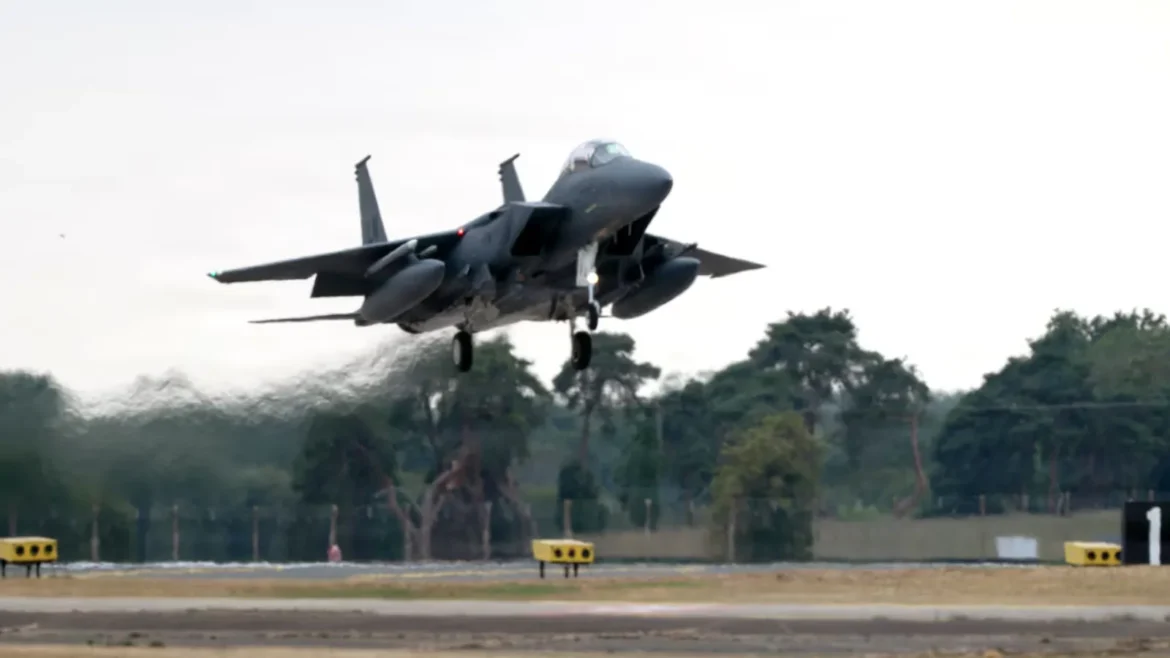
The U.S. Air Force has awarded Boeing a $131.23 billion ceiling indefinite-delivery/indefinite-quantity contract covering production, modernization, upgrades, retrofits and sustainment of the F-15 fighter family. The contract also establishes organic depot maintenance capabilities and supports both U.S. and foreign customers.
According to the U.S. Department of War contract announcement dated Aug. 24, 2026, the award was made to Boeing through a sole-source acquisition for the F-15 Eagle Crest program. The work will be performed in St. Louis, Missouri, and is expected to continue through August 2037.
The size of the contract ceiling is significant, but it should not be interpreted as $131.23 billion already committed to Boeing. The IDIQ structure provides the government with a framework under which future orders can be placed over time. Only $343,740 in fiscal 2026 research, development, test and evaluation funding was obligated when the contract was awarded.
What the Contract Covers
The F-15 Eagle Crest contract brings several categories of F-15 work under one acquisition framework.
The official notice lists:
- Aircraft production
- Systems integration
- Modernization
- Upgrades
- Retrofits
- Sustainment
- Establishment of organic depot maintenance capabilities
The work supports the Air Force, Air National Guard and other Department of War customers. The contract also incorporates Foreign Military Sales requirements for seven countries.
The ordering period is expected to run through Aug. 24, 2031, with an option allowing the period to be extended to Aug. 24, 2036. The overall contract is expected to be completed by August 2037.
Importantly, the Aug. 24 award did not include an order for a specific number of F-15 aircraft. Future production or modernization requirements can therefore be placed through subsequent orders under the contract.
Technical and Operational Context
The F-15 family remains an important part of U.S. tactical aviation, while the F-15EX Eagle II represents the current production version being acquired by the Air Force.
Air Force budget documents describe the F-15EX as a multirole fighter based on the two-seat F-15QA configuration and equipped with U.S.-specific capabilities. The aircraft incorporates systems including the Eagle Passive Active Warning Survivability System, or EPAWSS, and an open mission systems architecture.
The Air Force’s fiscal 2027 procurement documentation lists F-15EX missions including defensive and offensive counter-air operations, homeland defense and operations in highly contested environments. The documents also indicate that F-15EX procurement and modernization activities extend into the early 2030s.
The new Eagle Crest framework is broader than simply buying new F-15EX aircraft. Its inclusion of modernization, retrofit and sustainment work allows the government to address different requirements across the aircraft’s lifecycle.
Why the Award Matters
One important feature of the contract is its support for organic depot maintenance.
Under this approach, Air Force depots will gain the capability to conduct heavy maintenance and overhaul work on F-15 aircraft rather than depending exclusively on the original equipment manufacturer. Boeing will perform the contracted work in St. Louis, while the Air Force Life Cycle Management Center at Wright-Patterson Air Force Base, Ohio, serves as the contracting activity.
From an acquisition perspective, consolidating production, modernization, sustainment and depot-support activities into a long-term framework can give the service greater flexibility when requirements change. However, the contract ceiling itself does not establish how much of that potential value will ultimately be ordered.
The F-15EX program is also moving into a period of expanded procurement. Air Force fiscal 2027 budget documents show that the program’s overall procurement quantity can reach 268 aircraft when additional reconciliation-funded aircraft are included.
The aircraft is also being prepared for expanded operational use. In June 2026, F-15EX aircraft from the 85th Test and Evaluation Squadron deployed to Kadena Air Base, Japan, for integration and familiarization activities ahead of the aircraft’s longer-term role there.
Contract Breakdown
Contract Value
The maximum contract ceiling is $131.23 billion.
That figure represents the potential value of orders that can be placed under the IDIQ contract. It is not an immediate $131.23 billion expenditure or obligation.
Only $343,740 in fiscal 2026 RDT&E funding was obligated at the time of award.
Contractor
Boeing Co., St. Louis, Missouri, received the award through a sole-source acquisition.
Contract Type
The award is an indefinite-delivery/indefinite-quantity contract, commonly known as an IDIQ.
An IDIQ contract establishes the framework for future government orders without requiring the government to purchase the entire potential contract value when the framework is established.
Work Locations
The official contract notice identifies St. Louis, Missouri, as the work location.
Performance Period
The contract is expected to be completed by August 2037.
The ordering period is expected to end Aug. 24, 2031, with an option to extend the ordering period through Aug. 24, 2036.
Funding
The initial obligation consists of $343,740 in fiscal 2026 RDT&E funding.
The announcement did not identify a corresponding aircraft production order at the time of award.
Options or Follow-On Work
The contract allows orders to be placed through Aug. 24, 2031, with an option to extend the ordering period to Aug. 24, 2036.
Future aircraft production, upgrades, modernization, sustainment and other work would be ordered under the contract as requirements are established and funded.
Industry and Acquisition Implications
The award gives the Air Force a long-term contracting mechanism for maintaining and developing the F-15 fleet while supporting continued production of the F-15EX.
The foreign military sales component is also notable. The contract identifies Japan, Israel, Saudi Arabia, South Korea, Singapore, Indonesia and Poland as participating foreign customers.
Several of these countries already operate F-15 aircraft, while Indonesia and Poland are not current F-15 operators. The contract notice does not specify the individual quantities or configurations associated with each country’s FMS requirements.
Israel is already purchasing new F-15 aircraft from Boeing’s St. Louis production line. The fiscal 2027 F-15EX Selected Acquisition Report cited by Defense News identified a December 2025 agreement covering 25 F-15IA aircraft, with an option for another 25.
The broader production environment also remains relevant to the U.S. program. Air Force documentation reported that a 2025 strike at Boeing’s St. Louis facility interrupted F-15EX production, while subsequent Air Force reporting described efforts to resume deliveries and recover from the disruption.
What Happens Next
The next steps will come through individual orders placed against the Eagle Crest contract.
The Aug. 24 contract announcement does not specify the number of new aircraft to be purchased under the award, nor does it provide a detailed schedule for future production or modernization orders. Those details will become clearer as the Air Force places funded orders against the contract.
The long-term framework is expected to support F-15 production and sustainment through 2037, while the ordering authority can remain available until 2031 or, if exercised, 2036.
For the F-15EX program specifically, Air Force procurement documents show continued aircraft acquisition and modernization funding into the early 2030s, while operational units are preparing for the aircraft’s expanded role, including at Kadena in Japan.
Boeing Expands Japan F-15 EPAWSS Training Capability
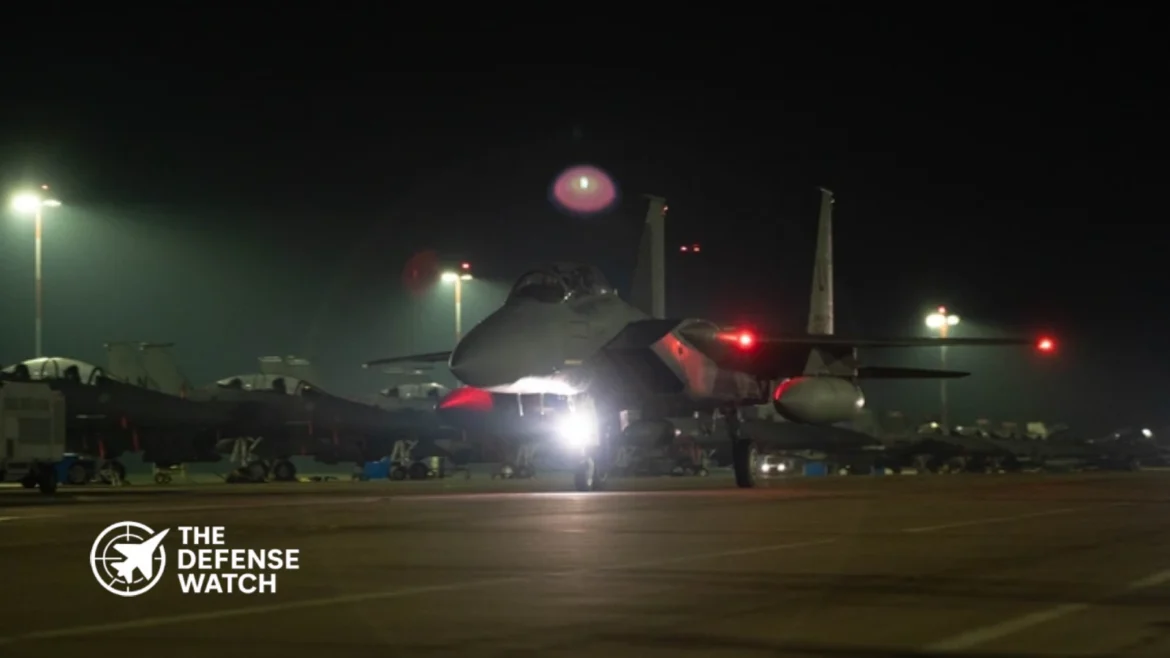
Boeing has received a $17.6 million F-15 Japan EPAWSS contract modification to integrate electronic warfare functionality into the existing weapons system trainer supporting Japan’s F-15 Super Interceptor program. The U.S. Air Force said the $17,609,471 modification will fund software development, testing, simulator software updates, and aircrew and aircraft maintenance courseware. The work is being performed by Boeing in St. Louis, Missouri, and is scheduled for completion on Feb. 28, 2031.
Takeaways
Boeing is expanding Japan’s F-15 Super Interceptor training architecture to include EPAWSS electronic warfare capabilities.
1. $17.6 Million Contract Modification
Boeing received a $17,609,471 modification to an existing U.S. Air Force contract supporting Japan’s F-15 Super Interceptor program.
2. EPAWSS Training Integration
The work will integrate Eagle Passive/Active Warning and Survivability System functionality into Japan’s existing weapons system training architecture.
3. Software And Courseware Development
The modification covers software development, testing, simulator software updates and new aircrew and aircraft maintenance courseware.
4. Work Runs Through February 2031
Boeing will perform the work in St. Louis, Missouri, with completion scheduled for Feb. 28, 2031.
5. Supports Japan’s F-15 Modernization
The training modification follows broader U.S.-Japan investment in modernizing the F-15J fleet, including electronic warfare, radar, mission computer and weapons system upgrades.
The award is part of contract FA8634-22-C-2705, which supports Japan’s F-15 modernization program through the U.S. Foreign Military Sales system. The Air Force Life Cycle Management Center at Wright-Patterson Air Force Base, Ohio, is the contracting activity.
The modification is significant because it extends EPAWSS modernization beyond aircraft hardware. It brings the aircraft’s updated electronic warfare functions into the training environment, allowing the weapons system trainer and associated courseware to reflect the capabilities being introduced to Japan’s F-15 fleet.
What The $17.6 Million Modification Covers
According to the contract announcement, the modification covers several related activities rather than a standalone hardware purchase.
| Area | Contract Scope |
|---|---|
| Contractor | Boeing |
| Location | St. Louis, Missouri |
| Contract | FA8634-22-C-2705 |
| Modification value | $17,609,471 |
| Customer | Japan |
| Acquisition | Foreign Military Sales |
| Acquisition method | Sole source |
| Main system | EPAWSS |
| Training element | F-15 weapons system trainer |
| Work included | Software, testing, simulator updates and courseware |
| Completion | Feb. 28, 2031 |
The contract uses both cost-plus-fixed-fee and firm-fixed-price elements. The full amount is being obligated with Foreign Military Sales funds at the time of award.
The work is therefore focused on integrating the electronic warfare capability into the broader training architecture rather than procuring another operational aircraft modification package.
EPAWSS Brings Digital Electronic Warfare To The F-15
EPAWSS is designed to replace older F-15 electronic warfare technology with an integrated digital system capable of detecting, identifying and locating threats while supporting defensive responses against modern threat systems.
The U.S. Air Force has described EPAWSS as an integrated digital electronic warfare system designed to improve F-15 survivability in contested environments. The system can detect, identify and locate threat emitters and support functions intended to deny, degrade and disrupt hostile systems.
That represents a major change from the architecture used on earlier F-15 aircraft. Air Force documentation has noted that the legacy F-15E electronic warfare system was based on technology developed for Cold War-era threats. EPAWSS provides a modern digital architecture better suited to environments containing more sophisticated radar, electronic attack and integrated air defense systems.
For Japan, incorporating those functions into the training system is important because electronic warfare is not simply an aircraft equipment upgrade. Pilots and maintainers need to understand how the system detects threats, how its warning information is presented, and how the aircraft’s defensive functions interact with other mission systems.
Why Training Integration Matters
A modern electronic warfare suite changes the information available to an aircrew during a mission.
A simulator that does not accurately reproduce those functions can leave a gap between aircraft capability and crew training. By updating the weapons system trainer and associated courseware, Boeing is being tasked with bringing the training environment into closer alignment with the upgraded aircraft.
The modification specifically includes simulator software updates and aircrew courseware. It also includes aircraft maintenance courseware, which is important because the introduction of a modern digital EW architecture creates new training requirements for personnel responsible for operating, troubleshooting and maintaining the system.
The approach also allows training to be developed alongside the broader modernization effort rather than treating training as a separate activity after the aircraft upgrade is complete.
Japan’s F-15 Modernization Is A Broader Program
The EPAWSS training work is one element of a much larger Japanese F-15 modernization effort.
The original F-15 Japan Super Interceptor program was established to modify Japan Air Self-Defense Force F-15MJ aircraft and included development, testing and delivery of weapons system trainers. A 2021 contract announcement valued the initial contract action at up to $471.3 million and identified four weapons system trainers as part of the program.
The program has subsequently received additional modifications for electronic warfare, radar, self-protection and mission computer capabilities.
In December 2024, the U.S. Department of Defense announced a $450.5 million contract action for the F-15 Japan Super Interceptor program covering production Lot One requirements, including radars, self-protection systems and mission computer units.
The broader modernization architecture means Japan is not simply maintaining the existing F-15J configuration. It is updating key mission systems while preserving the airframe as a major component of its air defense force.
Japan’s Ministry of Defense identifies the F-15J/DJ as a principal fighter aircraft of the Japan Air Self-Defense Force. Its published specifications list a two-engine configuration, a maximum speed of approximately Mach 2.5 and a fleet presence across multiple fighter squadrons.
EPAWSS Connects Aircraft Modernization With Pilot Training
The operational value of an electronic warfare upgrade depends partly on whether crews can use the capability effectively.
EPAWSS provides threat detection and electronic warfare functions that can affect how an F-15 crew interprets the electromagnetic environment. Training systems therefore need to represent those functions with sufficient fidelity for pilots to build familiarity with the system before operating the aircraft.
This is where the new Boeing modification has broader significance.
The contract does not announce a new aircraft or a new electronic warfare system. Instead, it addresses an important integration problem created by modernization: ensuring that the training ecosystem keeps pace with changes to the aircraft.
For Japan’s F-15 force, this can support a more consistent transition between classroom instruction, simulator training and aircraft operations.
Japan Already Has A Dedicated EPAWSS Procurement Framework
Japan’s involvement with EPAWSS predates the latest training modification.
The Defense Security Cooperation Agency established a special nonrecurring cost for Japan associated with the EPAWSS AN/ALQ-250 system in 2022. The DSCA documentation specifically identifies the system as the Eagle Passive Active Warning Survivability F-15 System and lists a Japan-specific special nonrecurring charge of $1,868,224.
That documentation confirms that EPAWSS has been incorporated into the formal Foreign Military Sales framework supporting Japan’s F-15 modernization.
The latest Boeing modification consequently fits into an established modernization pathway rather than representing an isolated training investment.
F-15 Electronic Warfare Modernization Is Advancing In The U.S.
The U.S. Air Force is also moving EPAWSS into wider operational use on its own F-15 fleet.
In January 2025, the Air Force announced delivery of the first EPAWSS-equipped F-15E Strike Eagles to RAF Lakenheath in the United Kingdom. The aircraft were described as the first operational F-15Es equipped with the system and were assigned to the 48th Fighter Wing.
In 2026, the Air Force also established a dedicated EPAWSS Speedline at Warner Robins Air Logistics Complex to accelerate installation of the system on F-15E aircraft. The new line operates independently from standard programmed depot maintenance, allowing aircraft to receive the upgrade without waiting for their normal maintenance cycle.
These developments show that EPAWSS is transitioning from a development and testing effort toward broader fleet integration.
For Japan, aligning its training architecture with EPAWSS becomes increasingly relevant as the upgraded capability moves closer to operational use.
What The Contract Means For U.S.-Japan Defense Cooperation
The award also illustrates the role of Foreign Military Sales in sustaining common technology and training standards between the United States and an important Indo-Pacific ally.
Japan operates a large F-15J fleet and has been investing in modernization to keep the aircraft relevant as its principal fighter force evolves. The U.S. government, Boeing and Japanese defense organizations therefore have to manage not only aircraft hardware but also mission software, simulators, maintenance training and operational courseware.
The training component can be particularly important for long-term sustainment. A weapons system trainer must remain synchronized with aircraft configuration changes, while maintenance personnel require updated technical instruction as avionics and electronic warfare equipment evolve.
The $17.6 million modification addresses that supporting infrastructure.
Long Completion Timeline Reflects Complex Integration Work
The contract is scheduled to run until Feb. 28, 2031, nearly five years from the current award.
That timeline does not mean the F-15s will remain without training capability until 2031. Rather, the length of the effort reflects the software development, integration, testing and courseware work required to modify an established weapons system training architecture.
Electronic warfare training also has to account for interactions between sensors, warning systems, countermeasures and the wider mission system.
The challenge is therefore broader than reproducing individual cockpit displays. The training environment must accurately represent how the modernized aircraft responds to an electromagnetic threat environment and how aircrew and maintenance personnel interact with the new system.
Bottom Line
Boeing’s $17.6 million F-15 Japan EPAWSS contract modification is a training and systems-integration award supporting Japan’s broader F-15 Super Interceptor modernization program.
The work will bring EPAWSS functionality into the existing weapons system trainer while funding simulator software updates, testing and aircrew and maintenance courseware.
The award follows earlier U.S.-Japan investments in EPAWSS, radars, self-protection systems and mission computers for Japan’s F-15 fleet. It also comes as the U.S. Air Force expands operational fielding of EPAWSS on its own F-15E force.
The immediate result is not a new aircraft capability announcement, but a modernization of the training infrastructure needed to operate and maintain that capability. For a fleet undergoing extensive avionics and electronic warfare upgrades, keeping simulators and courseware synchronized with aircraft configuration is a central part of turning new hardware and software into usable operational capability.
Boeing Wins $156.2M Navy Contract for P-8A and C-40A Engines Support
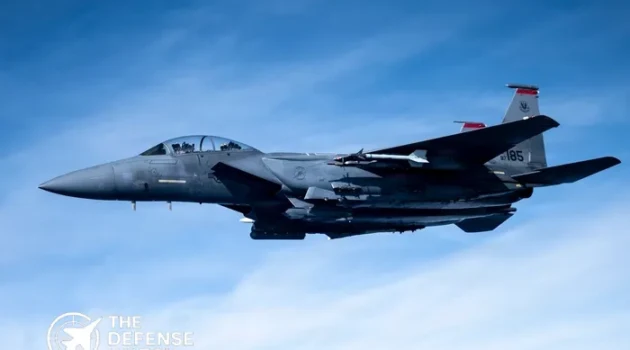
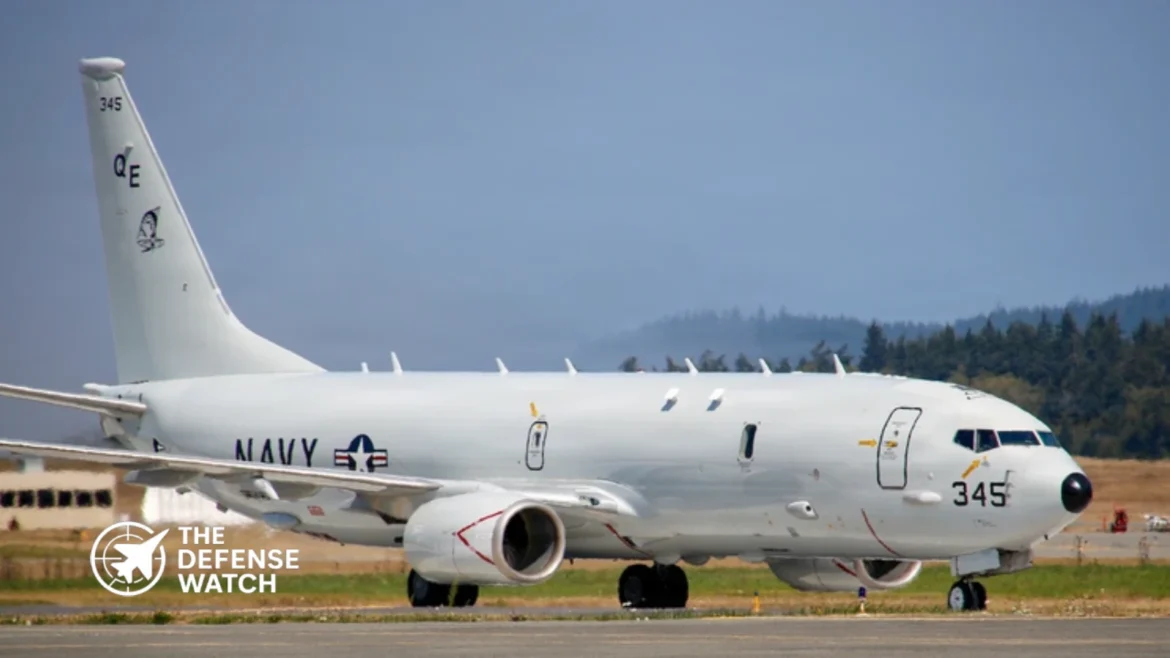
The Boeing Co. has received a $156.2 million U.S. Navy contract covering engine support equipment for the P-8A Poseidon maritime patrol aircraft and spare engine integration for the C-40A Clipper. The award provides for up to 31 P-8A Engine Build-Up kits and up to two Quick Engine Change kits.
Takeaways
Key facts from the Boeing engine support contract for Navy and foreign military customers
1. $156.2 Million IDIQ Award
The Navy awarded Boeing a firm-fixed-price economic-price-adjustment IDIQ contract with a potential value of $156.2 million.
2. Up to 31 P-8A Engine Kits
The contract provides for up to 31 Engine Build-Up kits, including 18 for the Navy and 13 for Foreign Military Sales customers.
3. C-40A Spare Engine Support
Boeing can also provide up to two Quick Engine Change kits for integration with CFM56-7B24E core engines to create complete C-40A Clipper spare engines.
4. Orders Will Fund the Work
No funds were obligated at award. Funding will be provided through individual orders issued under the IDIQ contract.
The contract was awarded by Naval Air Systems Command, or NAVAIR, in Patuxent River, Maryland, according to the U.S. Department of Defense contract announcement. Boeing’s work will be performed in Tukwila, Washington, with the contract scheduled to run through August 2031.
The award is structured as a firm-fixed-price economic-price-adjustment indefinite-delivery/indefinite-quantity contract. No funds were obligated when the contract was awarded. Instead, funding will be provided through individual orders issued under the contract.
What The Contract Covers
The primary portion of the award covers up to 31 P-8A Engine Build-Up kits. Of that potential quantity, 18 kits are designated for the U.S. Navy and 13 are intended for Foreign Military Sales customers.
The kits include associated components and hardware needed to mate and integrate with CFM56-7B27AE core engines.
The contract also provides for up to two Quick Engine Change kits. These kits include associated components, mating hardware, and attaching hardware for integration with CFM56-7B24E core engines.
The stated purpose of this portion of the contract is to create complete spare engines for the C-40A Clipper.
The announcement does not identify the specific Foreign Military Sales customers receiving the 13 P-8A Engine Build-Up kits.
Technical And Operational Context
The P-8A Poseidon is the U.S. Navy’s principal long-range maritime patrol and reconnaissance aircraft. Its mission set includes maritime surveillance, anti-submarine warfare, anti-surface warfare, intelligence, surveillance and reconnaissance, and other naval aviation tasks.
Engine support is therefore an important part of maintaining aircraft availability. The Boeing contract is focused on equipment and hardware required to assemble and integrate engine components rather than the purchase of complete new aircraft.
An Engine Build-Up kit can be understood in this context as a package of components and associated hardware used to prepare an engine core for integration into an aircraft engine configuration.
The contract separately addresses the C-40A Clipper, a Boeing 737-based military transport aircraft used by the Navy for personnel and logistics transportation. The award calls for Quick Engine Change kits associated with CFM56-7B24E core engines to create complete spare engines for the C-40A fleet.
The contract announcement does not provide additional technical specifications for the engines, such as performance characteristics, service life, or expected installation schedules.

Image : U. S. Navy Why The Award Matters
The contract is significant primarily because it establishes a long-term procurement framework for engine-related equipment supporting both U.S. Navy aircraft and Foreign Military Sales customers.
For the P-8A fleet, the potential purchase of 31 Engine Build-Up kits provides a mechanism for obtaining the components and hardware needed to support engine integration requirements over the contract period.
The inclusion of 13 kits for Foreign Military Sales customers also reflects the international operating base of the P-8A platform. However, the announcement does not identify which countries will receive the kits, so no specific customer relationship can be established from the award alone.
For the C-40A, the provision for two Quick Engine Change kits is tied directly to the creation of complete spare engines. That gives the Navy a separate engine-support pathway within the same contract framework.
Contract Breakdown
Contract Value
The contract has a potential value of $156,201,219.
Because it is an indefinite-delivery/indefinite-quantity contract, the announced value represents the contract framework rather than an immediate obligation of the full amount.
Contractor
Boeing Co., based in Tukwila, Washington, is the contractor.
The contract number is N0001926D1007.
Contract Type
The award is a firm-fixed-price economic-price-adjustment indefinite-delivery/indefinite-quantity contract.
The IDIQ structure allows the government to issue individual orders during the contract period for the covered requirements. The economic-price-adjustment provision provides a mechanism for adjusting applicable prices under defined contractual conditions.
Work Locations
Work will be performed in Tukwila, Washington.
The announcement does not identify additional work locations.
Performance Period
The contract is expected to be completed in August 2031.
Funding
No funds were obligated at the time of award.
The Navy will obligate funds through individual orders as they are issued under the contract.
Options Or Follow-On Work
The contract provides for potential quantities of up to 31 P-8A Engine Build-Up kits and up to two Quick Engine Change kits.
The announcement does not disclose a separate option-year structure or additional follow-on contract beyond the stated IDIQ framework.
Industry And Acquisition Implications
From an acquisition perspective, the IDIQ structure gives the Navy flexibility to order engine-related equipment as requirements arise rather than committing the entire potential contract value at the time of award.
The structure is also relevant to the P-8A’s international user base. Eighteen of the potential 31 P-8A kits are designated for the U.S. Navy, while 13 are allocated for Foreign Military Sales customers.
The contract therefore combines domestic fleet support with international customer requirements within a single procurement vehicle.
The award also illustrates the role of engine support hardware in aircraft sustainment. Maintaining an operational aircraft fleet involves more than purchasing airframes. Engine integration equipment, replacement components, and spare engines are part of the broader logistics system needed to keep aircraft available for assigned missions.
The contract was not competed, according to the announcement. The notice does not provide the rationale for the noncompetitive award, so no further conclusion should be drawn about the procurement decision from the announcement alone.
What Happens Next
The next funding actions will occur through individual orders issued under the IDIQ contract.
Those orders will determine the actual quantities purchased and the associated obligations against the contract.
The announcement does not provide a specific schedule for individual orders, kit deliveries, engine integration, or installation on Navy aircraft.
The contract is scheduled to remain in place through August 2031, giving the Navy a multi-year framework for procuring the covered P-8A and C-40A engine support equipment.
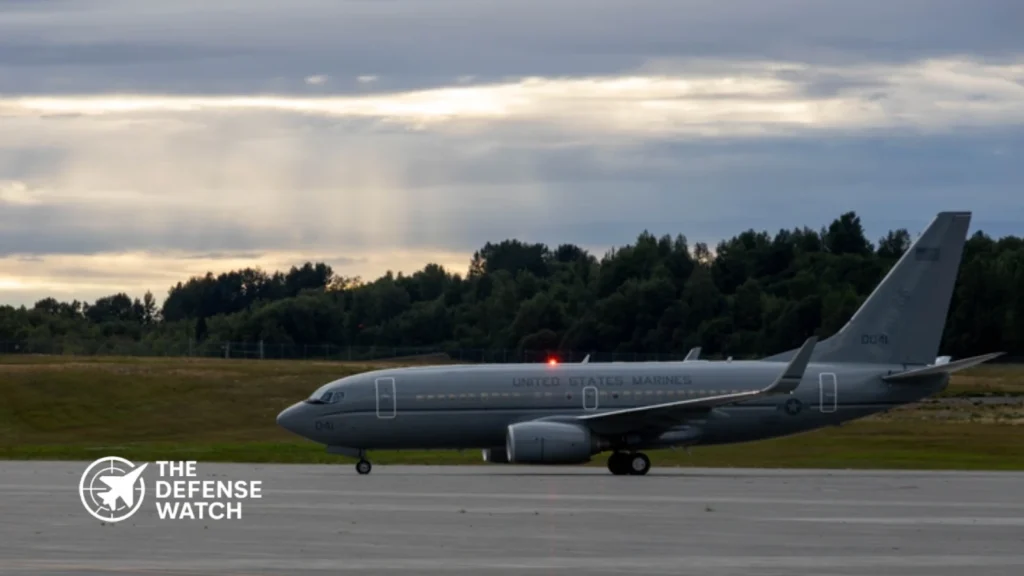
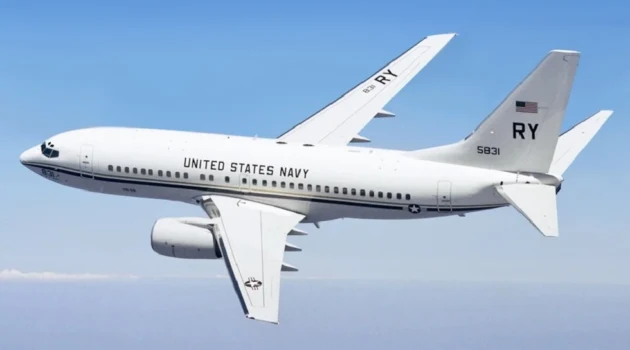
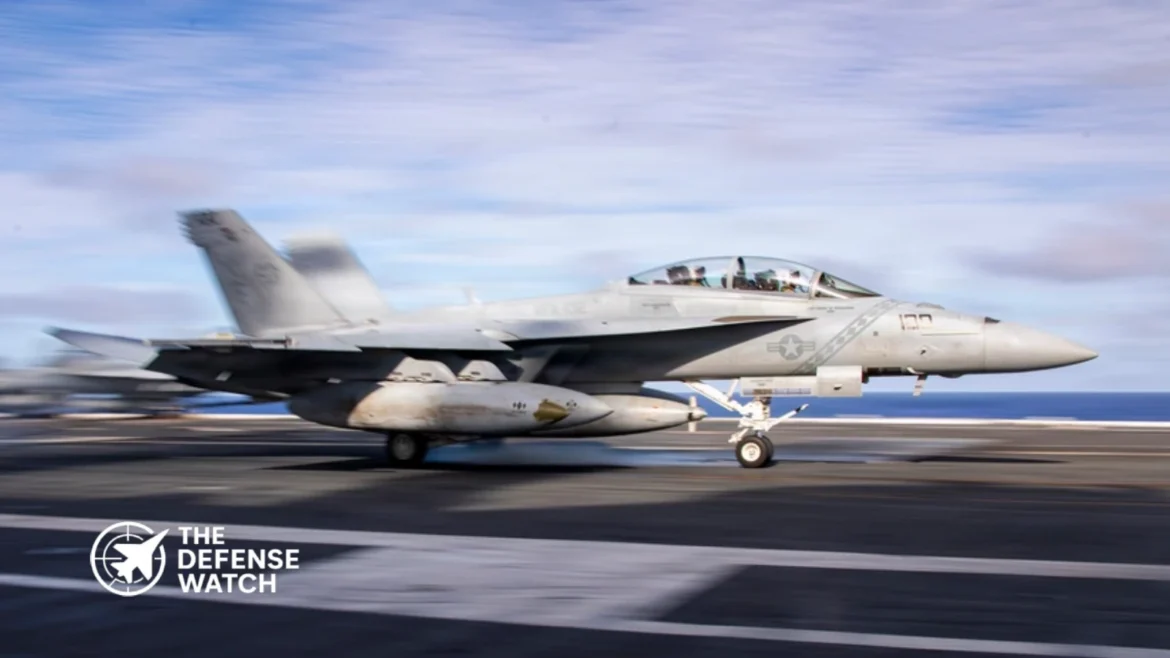
The U.S. Navy has awarded Boeing a ceiling-priced delivery order worth up to $109.03 million for 76 outer wing panels used on F/A-18 aircraft, extending a major structural sustainment effort through October 2031.
According to the contract announcement, Naval Supply Systems Command Weapon Systems Support, Philadelphia, is the contracting activity. Boeing will perform 90% of the work in St. Louis, Missouri, and 10% in Hazelwood, Missouri.
- Boeing received a ceiling-priced delivery order valued at up to $109.03 million for 76 F/A-18 outer wing panels.
- The work will be performed primarily in St. Louis, with additional engineering and production activity in Hazelwood, Missouri.
- The order supports the structural sustainment of the Navy’s F/A-18 fleet as Super Hornets remain central to carrier air wings.
- Boeing is expected to complete the work by October 2031, giving the Navy a long-term supply of replacement structural components.
- The procurement was conducted on a sole-source basis under 10 U.S.C. 3204(a)(1), with one offer received.
Deep Technical & Strategic Context Analysis
The outer wing panel is a structural component rather than a mission system, but its availability directly affects aircraft readiness. The F/A-18 family operates from demanding carrier environments where repeated arrested landings, catapult launches, high aerodynamic loads, folding-wing cycles and exposure to saltwater place substantial stress on the airframe. NAVAIR maintenance activities have previously highlighted the importance of repairing and replacing Hornet wing structures, including outer wing panels and associated spars.
The new procurement also fits into the Navy’s broader effort to keep Super Hornets operational while extending their service lives. Boeing describes the F/A-18 Super Hornet as the backbone of U.S. carrier air wings and says its Service Life Modification program is extending selected aircraft from 6,000 to 10,000 flight hours while adding Block III capabilities. NAVAIR reported in April 2026 that Fleet Readiness Center Southwest had completed its first fully organic Super Hornet Block III modification.
That makes structural sustainment particularly important. New avionics, networking and electronic warfare capabilities cannot provide additional combat availability if aircraft are restricted by airframe condition. Replacement wing panels therefore form part of the less visible industrial base required to keep upgraded fighters in service.
Boeing’s continued engineering and production support in Missouri is also significant. Boeing currently maintains F/A-18 structural analysis expertise in Hazelwood covering new-source activity, modifications, repairs and spare production for both legacy Hornets and Super Hornets.
What The Contract Means
The award is structured as a ceiling-priced delivery order under an existing basic ordering agreement. In practical terms, the Navy has placed an order against a previously established contracting framework, with a maximum value of $109.03 million. The ceiling is the maximum value stated for the order, not necessarily an indication that the entire amount is being obligated immediately.
The Navy is initially obligating $53.42 million, or approximately 49% of the ceiling, using fiscal 2026 Navy working capital funds. The remaining $55.60 million is committed to support the maximum value of the order.
This distinction matters when reading defense contract announcements. The maximum contract value and the amount obligated at award are not always the same figure. In this case, the Navy has committed funding against the delivery order in stages rather than treating the entire $109.03 million as a new fiscal-year obligation.
Contract Breakdown & Details
Boeing F/A-18 Outer Wing Panel Award
- Contractor: Boeing Co., St. Louis, Missouri
- Delivery Order: N00383-26-F-YY29
- Basic Ordering Agreement: N00383-22-G-YY01
- Maximum Value: $109,027,999
- Quantity: 76 outer wing panels
- Aircraft: F/A-18 family
- Options: None
- Expected Completion: October 2031
- Contracting Activity: Naval Supply Systems Command Weapon Systems Support, Philadelphia
Manufacturing And Engineering Locations
- St. Louis, Missouri: 90% of work
- Hazelwood, Missouri: 10% of work
The concentration of work in Missouri reflects Boeing’s established F/A-18 industrial and engineering presence in the region. Boeing’s Hazelwood operation supports F/A-18 structural engineering, including modifications, repairs and spare production support.
Funding Structure
- Fiscal 2026 Navy working capital funds: $53,423,719
- Initial obligation: 49%
- Remaining committed amount: $55,604,280
- Maximum delivery order value: $109,027,999
- Funds expiration: The obligated fiscal 2026 funds will not expire at the end of the current fiscal year.
Why The Navy Used A Sole-Source Award
The announcement states that one source was solicited and one offer was received under 10 U.S.C. 3204(a)(1).
That statutory authority permits the Department of Defense to use procedures other than full and open competition when the required property or services are available from only one responsible source, or from a limited number of responsible sources, and other alternatives would not meet the government’s requirements.
For an established aircraft structural component, this can reflect the importance of existing technical data, qualified manufacturing processes, tooling, engineering responsibility and configuration control. It does not by itself mean that the government simply chose Boeing without considering acquisition requirements. The cited authority provides the legal basis for limiting competition when the conditions specified by the statute are met.
Why The Wing Panels Matter To F/A-18 Readiness
The F/A-18 Super Hornet is being sustained alongside major modernization efforts rather than immediately replaced across the entire carrier aviation fleet. Boeing’s Block III configuration adds upgraded cockpit systems, networking and other improvements, while the Service Life Modification program is intended to extend aircraft utilization.
That creates a parallel requirement for structural parts. As aircraft accumulate flight hours, the Navy must manage fatigue, corrosion, repairs and component replacement alongside avionics modernization. Wing structures are particularly important because they experience repeated aerodynamic and carrier-operation loads.
The Navy’s previous work on F/A-18 wing structures illustrates the practical importance of maintaining this supply chain. NAVAIR has documented both organic repair activity for outer wing panels and efforts to produce replacement structural components for legacy Hornets.
The $109 million Boeing order therefore represents more than a parts purchase. It is an industrial sustainment measure supporting the Navy’s ability to keep F/A-18 aircraft available while the service transitions toward a future carrier air wing increasingly built around the F-35C and other next-generation capabilities.
With deliveries extending to 2031, the order also shows that the Navy expects the F/A-18 fleet to remain an important operational asset well into the next decade. Maintaining the physical airframe remains a prerequisite for exploiting the aircraft’s upgraded sensors, networking and weapons capabilities.

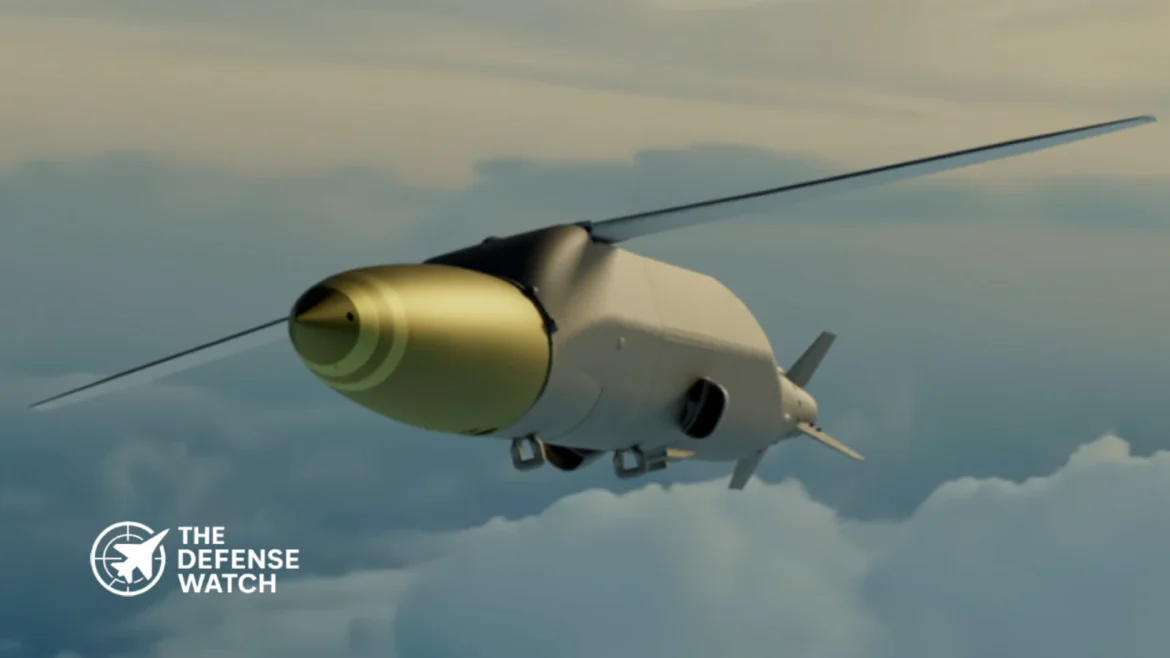
Executive Summary:
Boeing has received a new contract to continue development of the Joint Direct Attack Munition Long Range (JDAM LR), a powered precision weapon intended to provide U.S. forces with an affordable stand off strike capability. The program seeks to combine the proven JDAM guidance system with jet propulsion, enabling combat aircraft to engage targets hundreds of nautical miles away while reducing dependence on higher cost cruise missiles.
Boeing Moves JDAM LR Program Forward With New Development Contract
Boeing has secured a new contract to continue development of its Joint Direct Attack Munition Long Range (JDAM LR), marking another milestone in the U.S. military’s effort to field lower cost long range precision weapons.
The award, follows growing Pentagon interest in expanding inventories of affordable stand off munitions capable of operating in increasingly contested environments. Boeing has also highlighted JDAM LR as a key addition to its precision guided weapons portfolio.
The program builds on the widely fielded Joint Direct Attack Munition family, which converts conventional unguided bombs into GPS and inertial navigation guided precision weapons used extensively by the U.S. military and more than 40 allied nations.
JDAM LR Adds Cruise Missile Like Reach
Unlike conventional JDAMs, which rely on gravity after release, JDAM LR incorporates deployable wings and a compact air breathing propulsion system.
According to Boeing, the weapon can deliver a 500 pound class warhead to targets more than 300 nautical miles away. A decoy configuration replacing the warhead with an auxiliary fuel tank extends range beyond 700 nautical miles, offering additional options for deception and electronic warfare missions.
Key Published Capabilities
| Capability | JDAM LR |
|---|---|
| Warhead | Up to 500 lb |
| Maximum strike range | 300+ nautical miles |
| Decoy configuration | 700+ nautical miles |
| Guidance | GPS/INS |
| Compatible aircraft | Existing JDAM integrated aircraft |
| Optional upgrades | Data link, seekers, mission avionics |
Source: Boeing JDAM LR product information.
Designed To Expand Affordable Strike Capacity
The renewed investment reflects a broader Pentagon priority of increasing inventories of lower cost precision munitions.
Traditional stand off missiles such as the AGM 158 Joint Air to Surface Standoff Missile (JASSM) provide exceptional range and survivability but cost well over $1 million per missile. Standard JDAM guidance kits, by comparison, cost only a fraction of that amount. JDAM LR is intended to bridge that capability gap by delivering significantly greater range without approaching the procurement cost of advanced cruise missiles.
For planners, this approach offers the potential to generate larger strike packages while preserving inventories of premium long range weapons for the highest priority targets.
Program Builds On Successful Flight Testing
The latest contract follows successful U.S. Navy flight demonstrations conducted earlier in 2026.
During testing at the Point Mugu Sea Range, an F/A 18 Super Hornet safely released JDAM LR prototypes that completed powered flight while accurately navigating to designated targets approximately 200 nautical miles away. The demonstrations validated aircraft integration, propulsion, and guidance performance.
Boeing describes the weapon as maintaining compatibility with existing JDAM interfaces, allowing integration on legacy and next generation aircraft without major modifications.
Strategic Importance For Future Air Operations
The operational value of JDAM LR extends beyond simply increasing range.
Modern integrated air defense systems deployed by potential adversaries continue expanding engagement distances, forcing strike aircraft to launch weapons farther from defended targets. A powered JDAM enables fourth generation fighters and bombers to contribute to deep strike missions while remaining outside many anti access and area denial engagement zones.
The weapon also supports the Department of Defense’s emphasis on “affordable mass,” the concept of acquiring larger numbers of effective but less expensive weapons rather than relying solely on small inventories of premium missiles.
Industrial Benefits And Future Growth
JDAM LR also leverages the mature manufacturing base established for the standard JDAM program.
Because the weapon retains much of the existing JDAM architecture, production can potentially scale more rapidly than an entirely new missile program. Boeing has also established partnerships with Australian industry, including Ferra Engineering, for wing kit production supporting both JDAM Extended Range and JDAM LR programs.
Future enhancements outlined by Boeing include:
- Multi mode seekers
- Two way data links
- Open architecture mission systems
- Maritime strike variants
- Quickstrike long range naval mining capability
These modular upgrades could allow the weapon family to expand into multiple mission sets while retaining a common logistics and production base.
Why The Contract Matters
The new development contract demonstrates continued Pentagon interest in expanding the portfolio of affordable precision strike weapons.
As demand for long range munitions increases across multiple theaters, the ability to convert existing bomb inventories into powered stand off weapons offers a potentially cost effective method of increasing combat capacity. Rather than replacing high end cruise missiles, JDAM LR is positioned to complement them by providing commanders with additional strike options against a broader range of targets.
If development continues successfully, JDAM LR could become an important element of future U.S. and allied air operations, particularly in scenarios requiring sustained long range precision attacks while managing munitions costs and inventory levels.
- Boeing received an $18.8 million U.S. Navy delivery order to repair 27 Distributed Targeting Processor Network units used on F/A-18 aircraft.
- The contract was awarded by Naval Supply Systems Command Weapon Systems Support under a sole source procurement.
- Repairs will be completed in Missouri and Florida, with work scheduled through March 2028.
- The Distributed Targeting Processor Network is a critical mission computer that enables advanced sensor fusion and precision targeting.
- Sustaining these processors supports the combat readiness of U.S. Navy F/A-18 Super Hornet and Growler fleets.
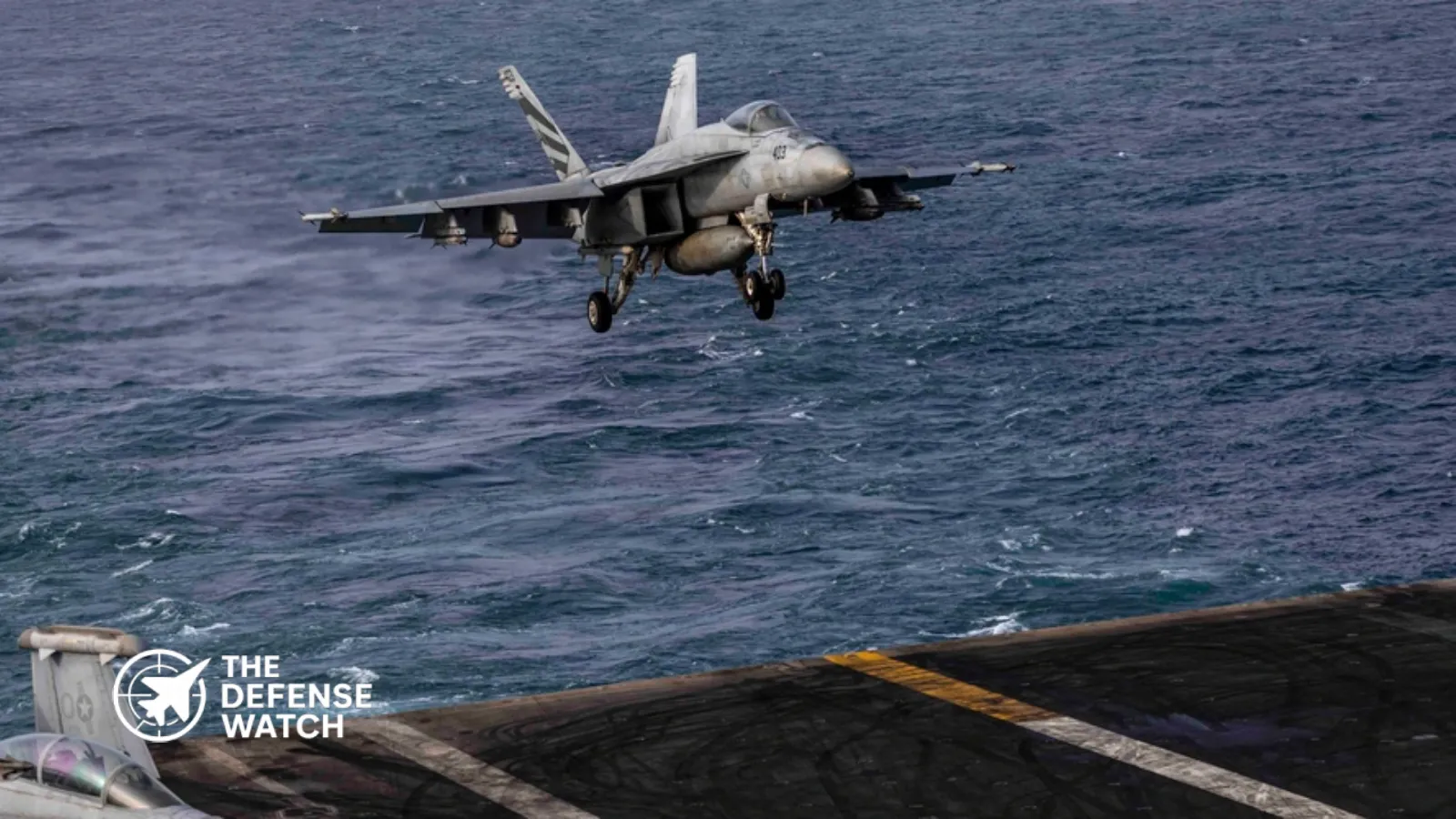
The U.S. Navy has awarded The Boeing Company an $18,798,154 firm fixed price delivery order to repair 27 Distributed Targeting Processor Network (DTP,N) systems supporting the F/A-18 aircraft fleet. The award was issued by Naval Supply Systems Command (NAVSUP) Weapon Systems Support in Philadelphia, Pennsylvania, under a sole source procurement, reinforcing continued investment in sustaining one of the Navy’s most important tactical aviation platforms.
According to the Department of Defense contract announcement, the repair effort will be conducted in St. Louis, Missouri, and Malabar, Florida, with all work expected to conclude by March 2028. Initial funding comes from Fiscal Year 2026 Navy Working Capital Funds, with additional task orders financed through future working capital appropriations.
Deep Technical & Strategic Context Analysis
The Distributed Targeting Processor Network serves as one of the F/A-18’s most advanced mission computing systems. Introduced as part of the Block II Super Hornet modernization program, the DTP,N significantly expanded onboard processing capacity compared with earlier mission computers. Its high performance architecture enables the aircraft to rapidly process data from the AN/APG,79 Active Electronically Scanned Array (AESA) radar, infrared search and track systems, electronic warfare sensors, targeting pods, and secure tactical datalinks.
Rather than simply increasing computing power, the DTP,N enables advanced sensor fusion, allowing pilots to receive a unified tactical picture while reducing workload during complex missions. This capability has become increasingly important as modern air operations require aircraft to detect, identify, track, and engage multiple threats simultaneously across contested electromagnetic environments.
From a strategic perspective, sustainment contracts like this are often more significant than their dollar value suggests. The F/A-18E/F Super Hornet and EA-18G Growler remain the backbone of U.S. Navy carrier air wings despite the continued introduction of the F-35C. Maintaining the health of mission critical avionics ensures higher aircraft availability, faster depot turnaround, and improved readiness for Indo Pacific deployments, where carrier strike groups continue to operate in increasingly sophisticated anti access and area denial environments.
The delivery order is structured as a firm fixed price contract, meaning Boeing assumes responsibility for completing the specified repairs at the agreed price. Unlike cost reimbursement contracts, this arrangement limits government cost exposure while providing predictable budgeting for depot level maintenance activities.
Contract Breakdown & Details
Contract Value
- Award Value: $18,798,154
- Contract Type: Firm Fixed Price Delivery Order
- Contract Number: N00383,26,F,YY1N
- Option Period: None
Scope of Work
- Repair of: 27 Distributed Targeting Processor Network units
- Supported Platform: F/A-18 aircraft
- Purpose: Restore mission critical avionics to operational condition for fleet service
Work Locations
- St. Louis, Missouri: 50 percent
- Malabar, Florida: 50 percent
Schedule
- Performance Completion: March 2028
Funding
- Initial Obligation: $9,211,095
- Funding Source: Fiscal Year 2026 Navy Working Capital Funds
- Future Task Orders: Additional Navy Working Capital Funds as required
Contracting Activity
- Awarding Agency: Naval Supply Systems Command Weapon Systems Support (NAVSUP WSS)
- Location: Philadelphia, Pennsylvania
Procurement Method
- Competition: Sole source
- Authority: 10 U.S. Code 3204(a)(1)
- Offers Received: One
Why This Contract Matters
Although valued at less than $20 million, the contract supports one of the most critical components of the Navy’s tactical aviation sustainment strategy. Modern fighter aircraft increasingly depend on powerful mission computers capable of integrating vast amounts of sensor information in real time. As the Super Hornet fleet continues to operate alongside fifth generation aircraft, maintaining advanced processing hardware such as the Distributed Targeting Processor Network remains essential for preserving operational effectiveness and mission readiness.
Depot repair programs also represent a cost effective approach to extending the service life of existing avionics, allowing the Navy to sustain high readiness rates while balancing procurement of next generation capabilities.
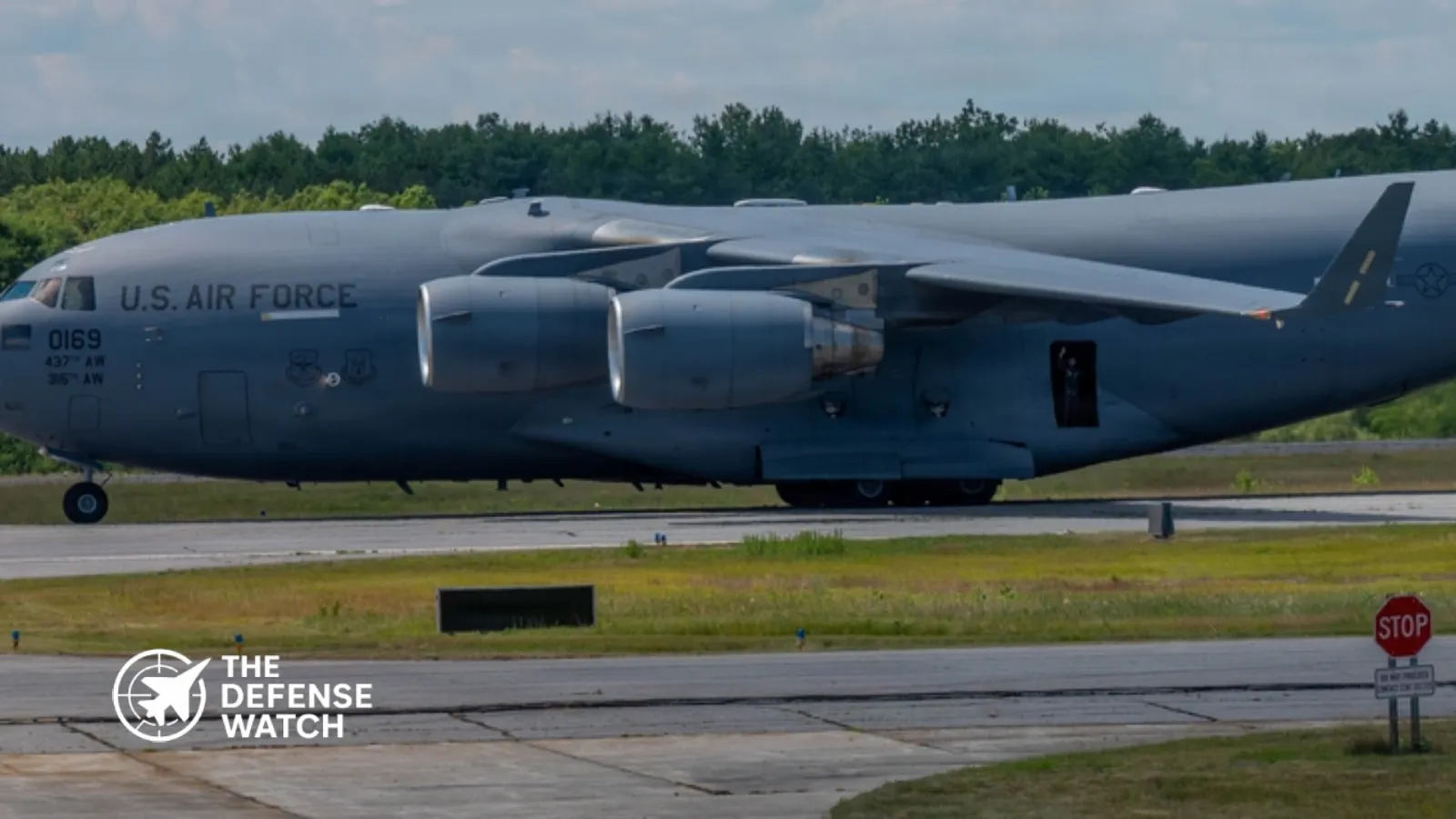
The U.S. Air Force has awarded Boeing a $42.93 million contract to upgrade the defensive infrared countermeasure systems installed on the United Arab Emirates’ fleet of C-17 Globemaster III strategic transport aircraft, extending the aircraft’s survivability against modern infrared-guided missile threats.
According to the Department of Defense contract announcement, the award was issued by the Air Force Life Cycle Management Center (AFLCMC), Warner Robins Air Logistics Complex, Georgia, under the Foreign Military Sales (FMS) program. The firm-fixed-price contract covers the integration of upgraded Large Aircraft Infrared Countermeasures (LAIRCM) configurations into UAE-operated C-17 aircraft. Boeing will perform the work primarily in San Antonio, Texas, with completion expected by **August 2030.
- Boeing received a $42.93 million Foreign Military Sales contract to upgrade infrared countermeasure systems on UAE C-17 aircraft.
- The work will modernize Large Aircraft Infrared Countermeasures designed to protect transport aircraft from infrared-guided missiles.
- Upgrades will be carried out in San Antonio, Texas, with completion scheduled for August 2030.
- The contract was awarded on a sole-source basis through the U.S. Air Force’s Foreign Military Sales program.
- Enhanced survivability will help UAE strategic airlift operations in increasingly contested regional environments.
Deep Technical & Strategic Context Analysis
The Large Aircraft Infrared Countermeasures (LAIRCM) system is one of the most sophisticated self-protection suites fielded on U.S. military transport aircraft. Rather than relying solely on expendable flares, the system detects incoming infrared-guided missiles using ultraviolet missile warning sensors before directing a laser-based jammer toward the missile seeker. The directed infrared energy disrupts the missile’s guidance system, causing it to lose track of the aircraft. This layered approach significantly improves survivability against modern shoulder-fired MANPADS and advanced infrared-guided surface-to-air missiles.
For the United Arab Emirates, upgrading the C-17 fleet has strategic importance beyond routine modernization. The UAE operates one of the Middle East’s most capable strategic airlift forces, using its C-17s for military deployments, humanitarian assistance, disaster relief, and logistics missions across the Middle East, Africa, Europe, and Asia. As portable air defense systems continue to proliferate among state and non-state actors, transport aircraft frequently operate within range of infrared-guided threats during takeoff, landing, and tactical airlift operations. Maintaining an up-to-date defensive suite helps preserve operational freedom in higher-risk environments.
The contract is structured as a firm-fixed-price agreement, meaning Boeing assumes responsibility for completing the required work at the agreed contract value. This contracting approach limits cost growth for the U.S. government and the Foreign Military Sales customer while placing greater performance and schedule risk on the contractor. The award was issued as a sole-source acquisition, reflecting Boeing’s role as the original manufacturer and primary systems integrator for the C-17 platform and its associated modification packages.
Contract Breakdown & Details
Contract Overview
- Contract Value: $42,932,563
- Contract Type: Firm-fixed-price
- Prime Contractor: The Boeing Company
- Contracting Activity: Air Force Life Cycle Management Center (AFLCMC), Warner Robins, Georgia
- Program: Foreign Military Sales (United Arab Emirates)
- Award Method: Sole-source acquisition
Scope of Work
- Upgrade existing Large Aircraft Infrared Countermeasure configurations.
- Integrate improved defensive systems into UAE-operated C-17 Globemaster III aircraft.
- Support long-term survivability against evolving infrared-guided missile threats.
- Complete installation and integration by August 2030.
Work Location
- San Antonio, Texas: Approximately 100% of contract performance.
Funding
- Funding Source: Foreign Military Sales (United Arab Emirates)
- Amount Obligated at Award: $42,932,563
Platform Overview
Aircraft: Boeing C-17 Globemaster III
Primary Missions
- Strategic airlift
- Tactical airlift
- Humanitarian assistance
- Medical evacuation
- Equipment deployment
- Special operations support
Key Characteristics
- Payload capacity exceeding 170,000 pounds
- Short and austere runway capability
- Intercontinental range with aerial refueling
- Rapid global deployment capability
- Compatible with advanced defensive aids including LAIRCM
Why This Contract Matters
Although relatively modest compared with aircraft procurement programs, survivability upgrades often deliver substantial operational value. Strategic transport aircraft routinely carry troops, armored vehicles, humanitarian supplies, and high-value cargo into regions where portable air defense systems remain widespread. Improving defensive avionics enables operators to extend aircraft service life while maintaining compatibility with evolving missile threats without replacing the underlying airframe.
The award also underscores the continued importance of the U.S. Foreign Military Sales program in sustaining allied air mobility capabilities. As regional security challenges evolve, defensive modernization programs such as this help partner nations maintain interoperability with U.S. and coalition forces while enhancing mission readiness.
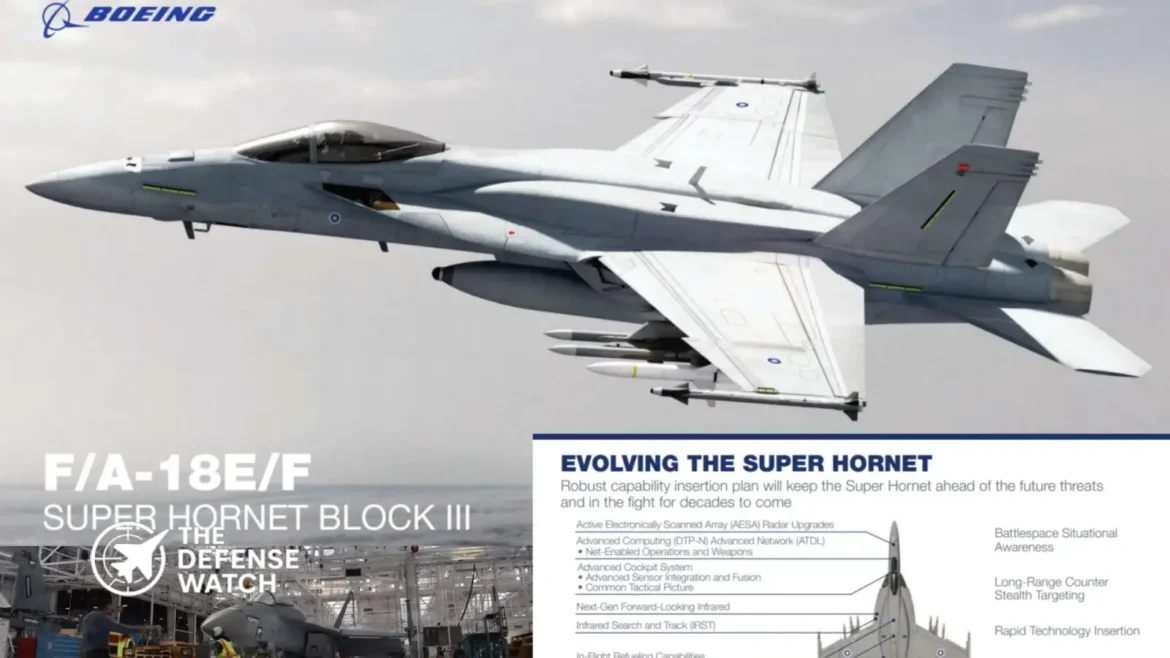
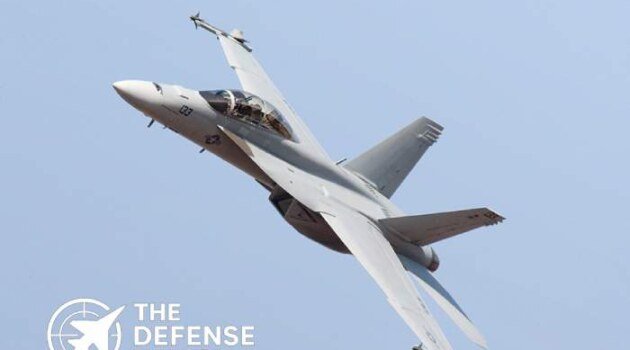
The U.S. Navy has awarded The Boeing Company a $25.06 million contract modification to expand development of advanced electronic warfare hardware for the Block III F/A-18E/F Super Hornet, further strengthening the aircraft’s survivability against increasingly sophisticated radar and missile threats.
According to the Naval Air Systems Command (NAVAIR), headquartered in Patuxent River, Maryland, the modification adds work covering engineering, final design, fabrication, and delivery of Advanced Electronic Warfare (AEW) A-kits that will support developmental testing and eventual fleet-wide integration. The award modifies a previously issued Basic Ordering Agreement and was issued on a cost-plus-fixed-fee basis without competition
- Boeing received a $25.06 million U.S. Navy contract modification to develop Advanced Electronic Warfare A-kits for the Block III F/A-18E/F Super Hornet.
- The hardware will support aircraft equipped with both standard and Wide Band Radar configurations.
- Four flight test A-kits will be delivered to support developmental testing before broader fleet integration.
- The modernization effort enhances the Super Hornet’s ability to operate in highly contested electromagnetic environments.
- Work will continue through December 2028 across four U.S. defense and aerospace facilities.
Deep Technical & Strategic Context Analysis
The Block III F/A-18E/F Super Hornet represents the latest evolution of the U.S. Navy’s primary carrier based multirole fighter. Beyond improvements such as conformal fuel tanks, enhanced networking, reduced radar signature refinements, and the Distributed Targeting Processor Networked (DTP-N), the Navy is increasingly investing in the aircraft’s electronic warfare architecture. As modern integrated air defense systems continue to evolve, aircraft survivability depends as much on their ability to sense, deceive, and disrupt enemy sensors as on traditional kinetic weapons.
The newly funded Advanced Electronic Warfare A-kits provide the structural wiring, mounting provisions, power interfaces, cooling, and other installation hardware needed to integrate future electronic warfare equipment into the aircraft. In defense acquisition terminology, an A-kit consists of permanent aircraft modifications that enable rapid installation of mission equipment, while the B-kit generally refers to the removable operational electronics themselves. By delivering standardized A-kits, the Navy can accelerate fleet upgrades while reducing installation complexity during depot maintenance.
The contract’s cost-plus-fixed-fee structure is commonly used for engineering and developmental efforts where technical uncertainty remains. Under this arrangement, the government reimburses allowable development costs while paying Boeing a fixed management fee. This approach reduces contractor risk during complex design activities while allowing NAVAIR to oversee evolving technical requirements before production hardware is fielded.
The modernization also supports the Navy’s broader strategy of maintaining the Block III Super Hornet as a highly capable strike fighter alongside the carrier based F-35C Lightning II. While the F-35 contributes low observable capabilities and advanced sensor fusion, upgraded Super Hornets equipped with improved electronic warfare systems significantly expand the carrier air wing’s ability to conduct suppression of enemy air defenses, maritime strike, fleet defense, and distributed operations in contested electromagnetic environments.
Contract Breakdown & Details
Scope of Work
The contract modification expands Boeing’s responsibilities to include:
- Non recurring engineering for Advanced Electronic Warfare integration.
- Final design and fabrication of Advanced Electronic Warfare A-kits.
- Delivery of A-kits supporting multiple Block III aircraft configurations.
- Installation verification and checkout activities.
- Preparation of modification instructions for fleet implementation.
- Delivery of four flight test A-kits supporting developmental testing before operational fielding.
Aircraft Configurations Supported
The hardware will support:
- Block III F/A-18E/F aircraft equipped with the Wide Band Radar system.
- Block III aircraft without the Wide Band Radar configuration.
This ensures compatibility across different production and modernization standards within the Navy’s growing Block III fleet.
Geographic Workshare
The work will be distributed across multiple U.S. defense locations:
- St. Louis, Missouri: 55%
- Patuxent River, Maryland: 20%
- China Lake, California: 15%
- El Segundo, California: 10%
Funding
- Contract Value: $25,058,195
- Contract Type: Cost Plus Fixed Fee modification
- Award Modification: P00005
- Basic Ordering Agreement: N0001921G0006
- Managing Agency: Naval Air Systems Command
- Funding Source: Fiscal Year 2026 Navy Research, Development, Test and Evaluation (RDT&E)
- Funds Obligated at Award: $10,066,704
- Expected Completion: December 2028
Why This Upgrade Matters
Electronic warfare has become one of the defining capabilities of modern combat aviation. Potential adversaries continue deploying longer range surface to air missile systems, digital radar networks, passive detection sensors, and electronic attack capabilities designed to challenge legacy aircraft.
By expanding the Block III Super Hornet’s electronic warfare infrastructure today, the U.S. Navy is creating a modular architecture capable of integrating future jamming, electronic support, and electronic protection technologies throughout the aircraft’s remaining service life. This incremental modernization strategy helps ensure the Super Hornet remains a relevant and survivable carrier based fighter well into the 2030s while complementing the Navy’s fifth generation aviation assets.