Executive Summary:
The U.S. Air Force is aiming to field cargo-launched cruise missiles by 2027 under its Rapid Dragon program. The initiative seeks to transform transport aircraft into stand-off missile carriers, expanding operational flexibility and long-range strike capacity in contested environments, particularly in the Indo-Pacific.
U.S. Air Force Accelerates Cargo-Launched Cruise Missile Program
The U.S. Air Force is moving aggressively to deploy cargo-launched cruise missiles by 2027 as part of its broader effort to strengthen long-range strike capabilities against increasingly sophisticated threats.
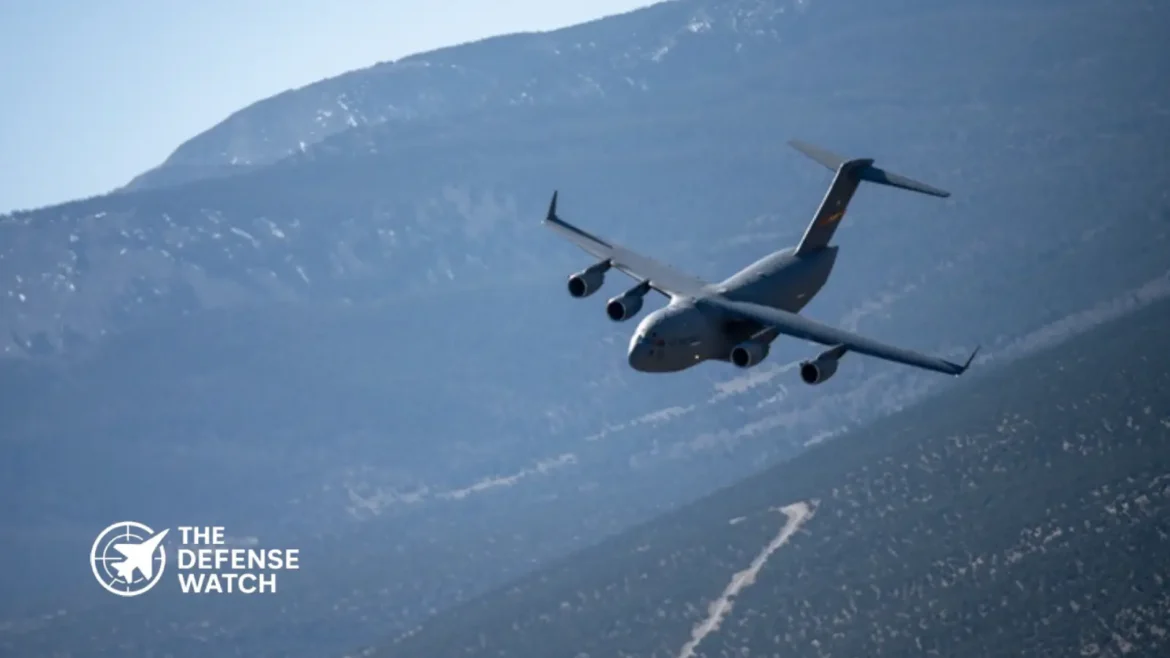
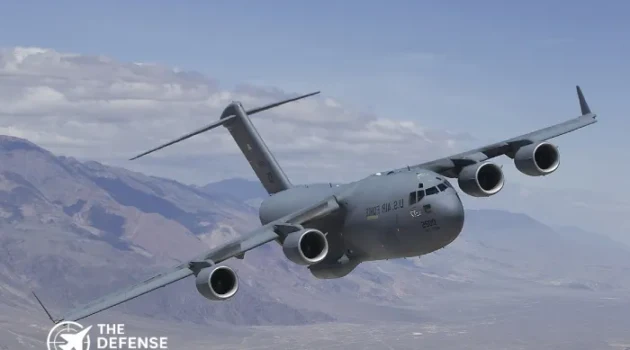
The initiative centers on the Rapid Dragon program, which enables transport aircraft such as the Lockheed Martin C-130J Super Hercules and Boeing C-17 Globemaster III to launch palletized cruise missiles from cargo bays without requiring permanent aircraft modifications.
The concept represents a significant shift in how the U.S. military could conduct stand-off strikes in future conflicts. Instead of relying solely on traditional bombers or fighter aircraft, the system allows mobility aircraft to serve as missile carriers capable of launching large salvos from outside heavily defended airspace.
The Air Force Research Laboratory, working alongside the Pentagon and industry partners, has already demonstrated successful live-fire tests involving palletized missile deployments.
Rapid Dragon Expands Operational Flexibility
The Rapid Dragon system was initially designed to provide a low-cost and rapidly scalable strike capability using existing cargo aircraft fleets.
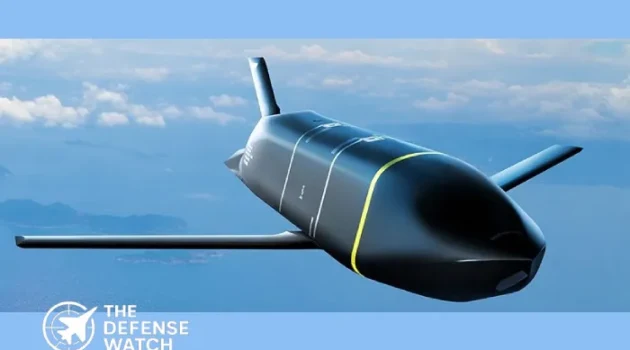
Under the concept, cruise missiles are loaded onto pallets and dropped from the rear cargo ramp of an aircraft. Once released, parachutes stabilize the pallet before individual missiles separate, ignite, and proceed toward assigned targets.
Previous demonstrations have included launches of the AGM-158B Joint Air-to-Surface Standoff Missile Extended Range, commonly known as JASSM-ER. The missile offers long-range precision strike capability against high-value targets while allowing launch aircraft to remain outside hostile air defense coverage.
The operational advantage is substantial. The U.S. Air Force maintains a far larger fleet of transport aircraft than dedicated bombers. Converting cargo aircraft into temporary missile launch platforms could dramatically increase available strike capacity during a major conflict.
Military planners increasingly view this flexibility as essential for operations across the Indo-Pacific, where long distances and growing anti-access and area-denial networks present major challenges for conventional air operations.
Indo-Pacific Strategy Driving Development
The cargo-launched cruise missile effort aligns closely with evolving U.S. defense strategy focused on the Indo-Pacific region.
Chinese investments in advanced integrated air defenses, anti-ship ballistic missiles, and long-range sensors have forced the Pentagon to rethink traditional airpower deployment concepts. Distributed operations and survivable strike platforms are now central to American military planning.
By dispersing launch capability across multiple cargo aircraft, the Rapid Dragon system complicates enemy targeting calculations. Transport aircraft can also operate from a wider network of airfields than large bomber fleets, increasing operational resilience.
This approach supports the Pentagon’s broader Agile Combat Employment strategy, which emphasizes mobility, dispersion, and unpredictability in contested theaters.
The system could also offer strategic benefits beyond the Pacific. In Europe or the Middle East, palletized cruise missile launch capability would provide commanders with additional options during high-intensity operations without requiring forward deployment of specialized strike aircraft.
Air Force Seeks Faster Fielding Timeline
The U.S. Air Force’s reported goal of achieving operational deployment by 2027 reflects growing urgency within the Pentagon to accelerate modernization programs.
Defense officials have repeatedly warned that future conflicts could involve massed missile exchanges and rapidly contested airspace. Expanding launch capacity using existing aircraft inventories offers a comparatively affordable way to increase combat power without waiting for entirely new aircraft programs.
Unlike traditional weapons integration efforts, the Rapid Dragon concept minimizes structural aircraft modifications, reducing certification timelines and logistical complexity.
The system may also strengthen allied interoperability. Several partner nations already operate C-130 aircraft, potentially allowing compatible missile deployment concepts across coalition forces in future joint operations.
While the program remains in development, its progress underscores how the Pentagon is prioritizing adaptable and scalable strike solutions as geopolitical competition intensifies.
Strategic Analysis
The cargo-launched cruise missile program reflects a broader transformation in modern air warfare, where survivability and distributed lethality increasingly outweigh traditional force structure models.
For decades, strategic strike missions depended heavily on expensive bomber fleets and forward-based tactical aircraft. Rapid Dragon challenges that framework by converting support aircraft into operational strike assets with minimal preparation.
The concept also addresses a growing concern within the U.S. defense community: missile inventory depth. In a prolonged conflict against a near-peer adversary, sustaining large-scale precision strike operations may require far more launch platforms than current bomber numbers can provide.
Another key advantage lies in operational ambiguity. Cargo aircraft conducting routine transport missions are less predictable than dedicated strike aircraft, potentially complicating adversary intelligence and targeting efforts.
However, vulnerabilities remain. Transport aircraft are slower and less survivable than stealth bombers in highly contested environments. Their effectiveness would still depend heavily on stand-off launch distances, escort support, electronic warfare protection, and access to secure operating locations.
Even so, the Rapid Dragon initiative demonstrates how the Pentagon is seeking practical methods to expand combat capacity rapidly while controlling procurement costs.

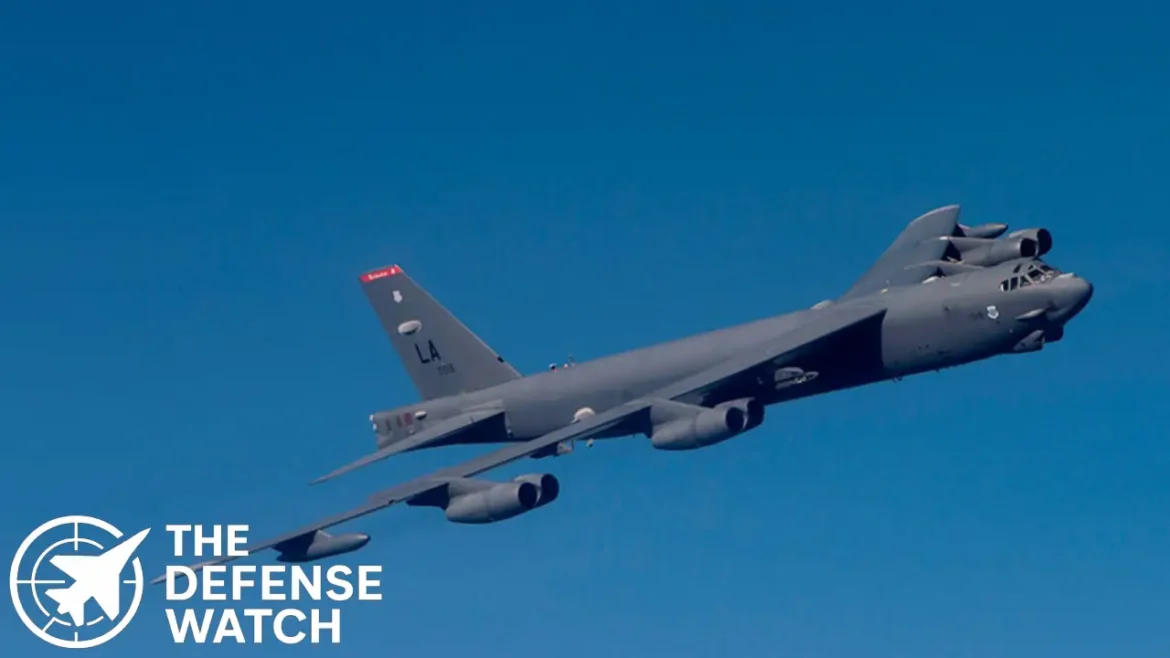
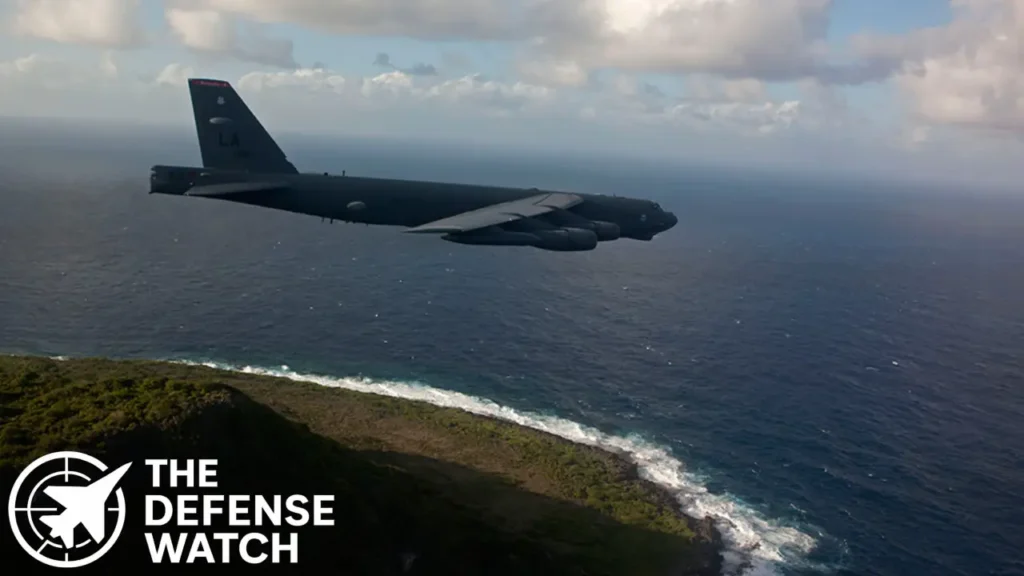
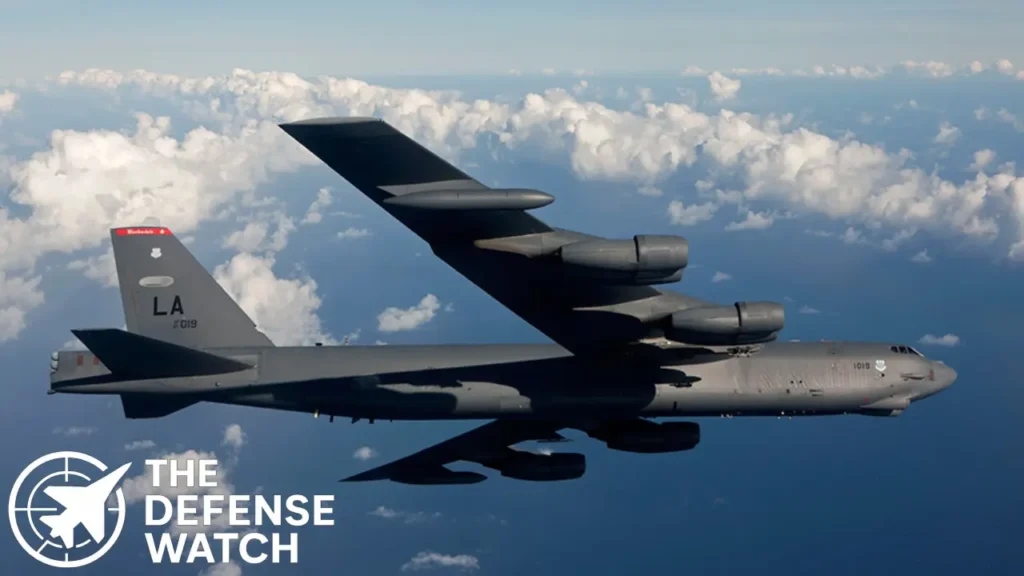
Executive Summary: The U.S. Air Force is preparing to formally study alternatives to the B-52 Stratofortress as a long-range strike platform, even as the first of 76 B-52Hs begins a major overhaul this year. Documents tied to the fiscal year 2027 budget request confirm plans for a “Heavy Bomber Analysis of Alternatives,” signaling that the service is already thinking well beyond the current modernization cycle. The move reflects growing urgency around long-range strike capacity as peer adversary threats intensify.
U.S. Air Force Eyes Post-B-52 Future With New Heavy Bomber Study
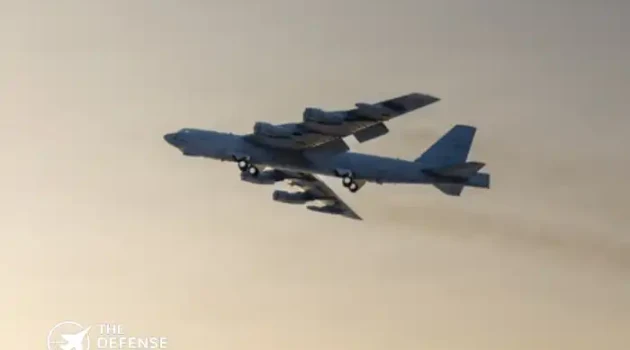
The U.S. Air Force is preparing to formally launch a Heavy Bomber Analysis of Alternatives, signaling that long-range strike planners are already looking past the B-52 Stratofortress — even as one of the most ambitious upgrades in the aircraft’s 70-year history is only just beginning.
Documents released alongside the fiscal year 2027 budget request outline plans for a “Heavy Bomber Analysis of Alternatives” to consider what long-range strike capabilities the Air Force might need in the future. Options on the table include new mission requirements for an upgraded B-52, an entirely new aircraft, or a combination of both.
The study represents a strategic pivot point. The Air Force is investing heavily to keep the B-52 relevant through the 2050s — while simultaneously acknowledging that a platform first designed during the Cold War may not meet the full spectrum of future threat requirements on its own.
B-52J Upgrade: Buying Time, Not a Permanent Solution
The first of 76 B-52Hs will begin the overhaul process this year, gaining new Rolls-Royce engines to improve reliability and efficiency, a new glass cockpit, new landing gear, improved radar, and other major modifications — work to be done by Boeing in San Antonio, Texas.
The upgraded aircraft, designated the B-52J, is expected to remain in service into the 2050s. The Air Force spent $3.9 million in 2025 to conduct a classified proof-of-concept demonstration on the B-52 and is seeking $1 million to begin the new analysis of alternatives in 2027.
That relatively modest budget request belies its strategic significance. A formal Analysis of Alternatives (AoA) is a foundational step in U.S. defense acquisition — the precursor to requirements development, industry solicitation, and eventually, program of record status.
Bomber Fleet Reshaping: B-1 and B-2 Out, B-21 In
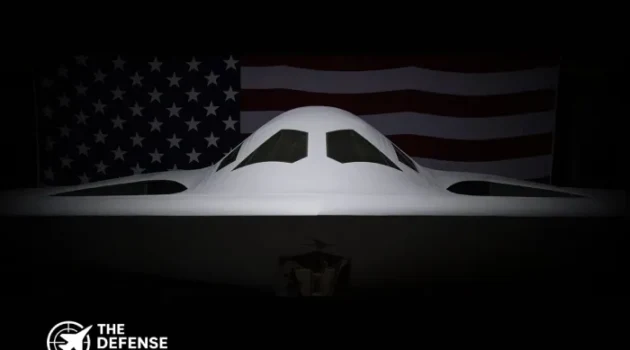
Air Force bomber plans call for adding at least 100 B-21 Raiders and retaining the B-52Js, while retiring the B-1B Lancer and B-2A Spirit bombers in the 2030s.
The looming B-1 retirement in particular is driving urgency around this analysis. The B-1 can carry up to 75,000 pounds of conventional weapons — more than any other bomber — and is the fastest in the fleet, capable of exceeding 900 miles per hour, or Mach 1.2. The B-52, by comparison, can carry up to 70,000 pounds but tops out at around 650 miles per hour.
Retiring the B-1 will eliminate a payload-heavy, high-speed conventional strike option that the B-21 Raider, optimized for stealth penetration, may not fully replicate. Filling that capability gap is at the heart of the new study.
What the Analysis Will Actually Examine
Mark Gunzinger, a retired Air Force colonel, former deputy undersecretary of defense, and B-52 pilot, offered detailed insight into what the study is likely to evaluate.
The alternatives to be considered will likely include a new stand-off bomber, additional modifications for the Stratofortress, a new aircraft designed to carry a large number of cruise missiles, and the option to build dozens more B-21 Raiders.
Gunzinger framed the effort as broader than a simple aircraft replacement program.
“I think it might be better characterized as saying, they’re taking a look at the stand-off strike mission area itself, and what’s the best solution for the distant future,” Gunzinger said.
Key performance attributes under consideration include stealth capability, speed, payload capacity, stand-off range, electronic warfare integration, and self-defense systems. The analysis will also weigh the continued utility of stand-off weapons — long-range missiles that allow aircraft to strike from outside contested airspace — as a substitute for platform survivability.
Penetrating Strike vs. Stand-Off: A Doctrine Question
The Air Force’s future bomber posture hinges on a doctrinal question that has no easy answer: Is it better to invest in aircraft that penetrate deep into enemy airspace, or platforms that strike from safe distances using long-range weapons?
Stand-off attack means aircraft remain outside enemy airspace, releasing weapons that penetrate contested zones; the B-21 is designed to evade radar and strike well-protected or hardened targets deep inside adversary territory.
Gunzinger argues that both approaches remain essential, and that an all-B-21 force could be strategically limiting. “Both are needed,” he said. “It really gets down to, what’s the ultimate mix you want?”
This is not merely theoretical. U.S. Indo-Pacific Command chief Adm. Samuel Paparo told lawmakers in April that he favors a B-21 fleet of 200 bombers — double the current planned buy of at least 100. Operations Midnight Hammer and Epic Fury, recent strikes against Iranian targets, demonstrated the real-world premium placed on penetrating, precision heavy bombers capable of global reach.
The B-52: Old Airframe, Viable Future
Despite its age, the B-52 airframe itself remains structurally sound, according to experts. “While the aircraft is old, the airframe is still relatively young in terms of flight hours and the stresses it’s absorbed over the years,” Gunzinger said. “So it’s a perfectly viable airframe.”
That assessment helps explain why the Air Force is pursuing the B-52J upgrade in parallel with a longer-term replacement study rather than moving straight to a clean-sheet design. The B-52J buys time — and operational capacity — while the service defines what the post-B-52 era actually looks like.
The B-21’s modular, open-systems architecture will enable the Air Force to upgrade the aircraft as future technology comes online, and a larger B-21 fleet remains firmly in the conversation. However, Gunzinger noted that visual evidence suggests the B-21 will have a smaller payload capacity than the B-52 — a significant operational trade-off when the mission demands high-volume conventional strike capability.
Analysis: Why This Study Matters Now
The timing of the Heavy Bomber Analysis of Alternatives is no coincidence. The United States faces a more complex threat environment than at any point since the Cold War. China’s rapidly expanding anti-access/area-denial (A2/AD) network, Russia’s continued nuclear posturing, and North Korea’s ballistic missile advances all demand that U.S. long-range strike remain credible, flexible, and survivable.
The B-21 Raider addresses the penetrating strike requirement. The B-52J addresses near-term stand-off capacity. But neither, on its own, may be sufficient across the full spectrum of future conflict scenarios. A purpose-built stand-off platform capable of carrying large numbers of cruise missiles — a concept sometimes described as a “missile truck” — could fill a critical niche, particularly in the Pacific theater where distances are vast and targets are dispersed.
What the Air Force is really doing with this study is stress-testing its own assumptions. In a fiscally constrained environment, deciding what to build — and what to forgo — will define American air power for decades to come.
Key Facts at a Glance
- Program: Heavy Bomber Analysis of Alternatives (AoA)
- Budget Year: FY2027 ($1 million requested to begin)
- Prior Investment: $3.9 million for classified B-52 proof-of-concept demonstration (FY2025)
- B-52J Upgrade: 76 aircraft; new Rolls-Royce engines, glass cockpit, landing gear, radar; Boeing, San Antonio
- Service Life Extended To: 2050s
- B-1B/B-2A: Planned retirement in the 2030s
- B-21 Raider: At least 100 planned; 200 recommended by INDOPACOM commander
- Primary Contractor (B-52J): Boeing / Rolls-Royce

Executive Summary:
Türkiye has unveiled a new kamikaze drone with a reported range exceeding 1,000 kilometers, marking a major step in its long-range strike capabilities. The system enhances Ankara’s ability to conduct deep precision attacks and reflects a broader shift toward autonomous, cost-effective warfare solutions.Türkiye Expands Long-Range Strike Capabilities with New UAV
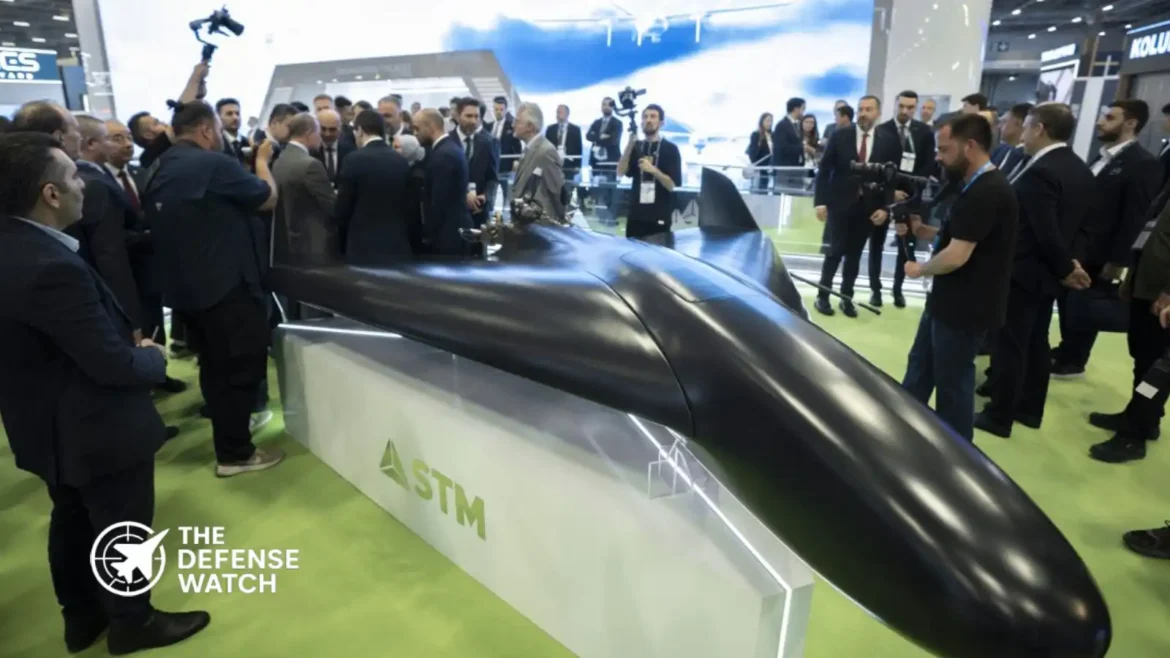
Türkiye has introduced a next-generation loitering munition capable of operating at ranges beyond 1,000 km, placing it among a growing class of long-endurance kamikaze drones designed for strategic strike missions.
The system, revealed in 2026, underscores Ankara’s continued investment in indigenous unmanned systems. Turkish defense firms have steadily expanded their portfolio from tactical UAVs to more advanced platforms capable of penetrating contested environments.
Unlike earlier short-range loitering munitions, this new platform is designed for extended missions, enabling operators to engage high-value targets deep behind enemy lines without relying on manned aircraft.
Key Features and Technical Advantages
Extended Operational Reach
- Range exceeding 1,000 km, significantly higher than most conventional loitering munitions
- Enables deep-strike missions without forward deployment
Precision Strike Capability
- Designed for high-accuracy terminal engagement
- Likely integrates advanced guidance and navigation systems
Cost-Effective Force Multiplier
- Lower cost compared to cruise missiles or manned sorties
- Suitable for attritable warfare concepts
Flexible Deployment
- Potential for ground-based launch systems
- Can be used in swarm or coordinated attack scenarios
Comparison with Existing Systems
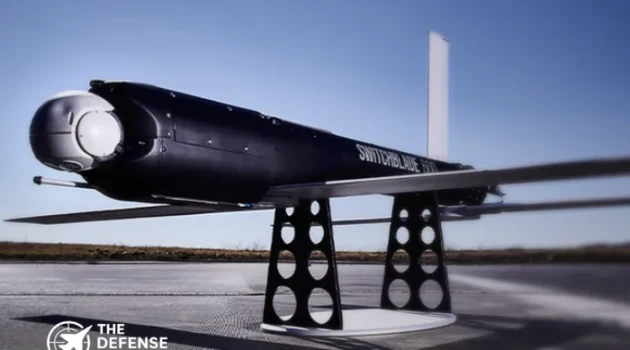
System Range Payload Status Key Technology New Turkish Kamikaze Drone 1,000+ km Classified Development/Unveiled Long-range loitering, precision strike IAI Harop (Israel) ~1,000 km ~23 kg Operational Anti-radiation seeker, loitering munition Switchblade 600 (US) ~40 km Light anti-armor Operational Portable loitering strike system Shahed-136 (Iran) ~2,000 km (est.) Explosive warhead Operational Low-cost, long-range strike drone Strategic Implications for Regional Security
Shift Toward Deep Precision Strike
The introduction of a 1,000+ km loitering munition reflects a shift from tactical UAV use toward strategic strike roles, traditionally dominated by cruise missiles.
Enhanced Deterrence Posture
Türkiye’s ability to conduct long-range unmanned strikes strengthens its deterrence across the Middle East, Eastern Mediterranean, and beyond.
Countering Air Defense Systems
Such drones are increasingly used to:
- Saturate air defenses
- Target radar and missile systems
- Conduct persistent surveillance before strike
Influence on Modern Warfare Trends
The system aligns with broader global trends, including:
- Increased reliance on autonomous and semi-autonomous weapons
- Growing use of loitering munitions in conflicts such as Ukraine
- Emphasis on cost-efficient precision strike platforms
Broader Context: Türkiye’s UAV Ecosystem
Türkiye has emerged as a leading exporter of UAV systems, with platforms already deployed in multiple theaters. The development of long-range kamikaze drones complements its existing fleet of armed UAVs and signals a move toward multi-layered unmanned warfare capabilities.
This latest unveiling suggests Ankara aims to compete directly with established loitering munition producers while addressing evolving battlefield demands, particularly in environments where air superiority is contested.
Outlook
As development progresses, key areas to monitor include:
- Integration with network-centric warfare systems
- Potential export interest from allied nations
- Operational deployment timelines
If successfully fielded, the system could redefine Türkiye’s role in long-range unmanned strike operations and further accelerate the global adoption of loitering munitions as strategic weapons.
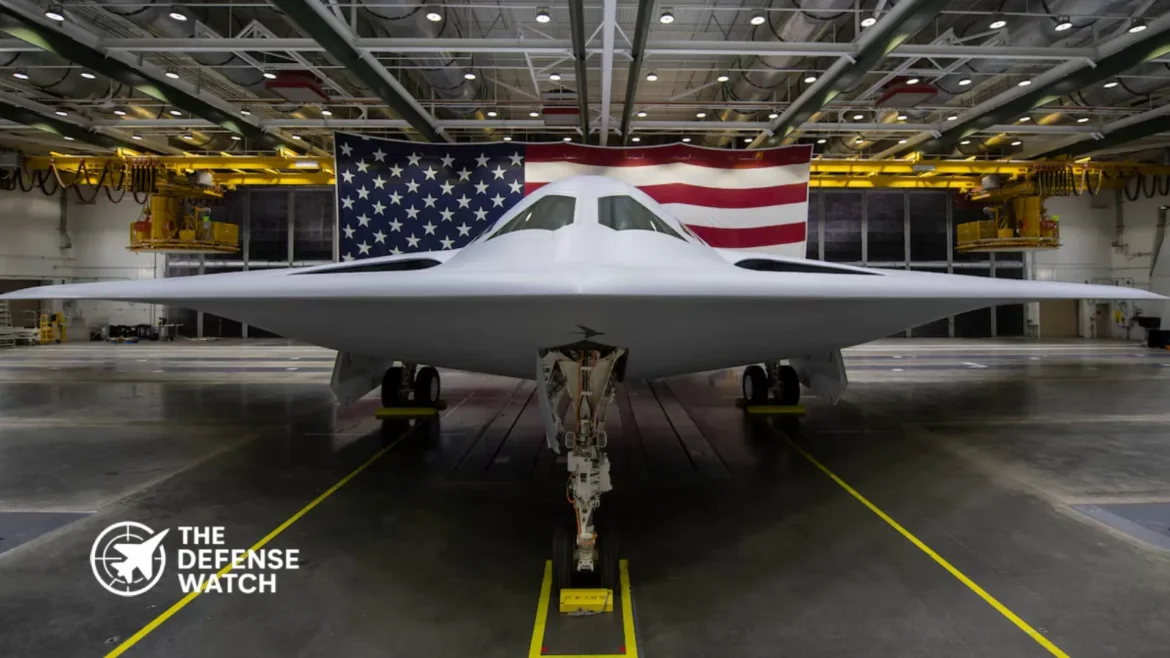
■ KEY FACTS AT A GLANCE- ► The U.S. Air Force and Northrop Grumman signed a deal on February 23, 2026 at the AFA Warfare Symposium to increase B-21 Raider annual production by 25%.
- ► The acceleration is backed by $4.5 billion in reconciliation funding approved by Congress as part of the “One Big Beautiful Bill” signed in 2025.
- ► Northrop Grumman has invested more than $5 billion in digital engineering and manufacturing infrastructure to support faster production cycles.
- ► The first operational B-21 Raider is scheduled to arrive at Ellsworth Air Force Base, South Dakota, in 2027.
- ► At least two B-21 aircraft are currently conducting flight testing at Edwards Air Force Base, California, with performance reported to exceed digital model predictions.
- ► Northrop’s Palmdale facility currently produces an estimated seven to eight aircraft annually; the exact accelerated rate remains classified.
- ► The B-21 program employs more than 8,000 personnel and over 400 suppliers across 40 U.S. states, making it one of the most broadly distributed defense industrial programs in the country.
B-21 Raider Production Acceleration Marks a Strategic Inflection Point for U.S. Airpower
The B-21 Raider production acceleration, formalized at the Air & Space Forces Association Warfare Symposium on February 23, 2026, is not simply a procurement contract milestone. It reflects a deliberate choice by Pentagon leadership to close what it perceives as a widening window of strategic vulnerability — one defined by an aging bomber fleet, accelerating Chinese and Russian air defense modernization, and the operational lessons drawn from 2025’s Operation Midnight Hammer.
(adsbygoogle = window.adsbygoogle || []).push({});The deal pairs $4.5 billion in already-appropriated reconciliation funding with a new production agreement raising Northrop Grumman’s annual B-21 output by 25 percent. The practical result: the Air Force’s nuclear-capable, penetrating long-range strike capacity reaches operational units faster. The strategic result is more complex — and worth examining carefully.
The Industrial Foundation Behind the Deal
Northrop Grumman’s willingness to commit to faster production is not corporate optimism. It rests on a documented infrastructure investment that, by the company’s own accounting, exceeds $5 billion in digital engineering and advanced manufacturing tools at its Plant 42 facility in Palmdale, California.
The company reports that its digital environment supports flight test planning and real-time performance analysis, enabling increased test cadence — with maintainers able to service aircraft for another test flight the following day. That kind of rapid turnaround in testing is significant because it translates directly to what the Air Force can expect from operational sorties. If the combined test force can regenerate a B-21 overnight under test conditions, the operational maintenance model should track closely with that performance baseline.
(adsbygoogle = window.adsbygoogle || []).push({});Northrop has also reduced software certification time by 50 percent, using advanced manufacturing tools including digital and augmented reality technologies to improve efficiency and scale production across facilities nationwide.
This is not small-batch artisan production. The program involves more than 400 suppliers across 40 states, a supply chain architecture deliberately designed to build political durability into the program budget line — and to reduce single-point-of-failure risk in the production base.
Why the Timing Matters
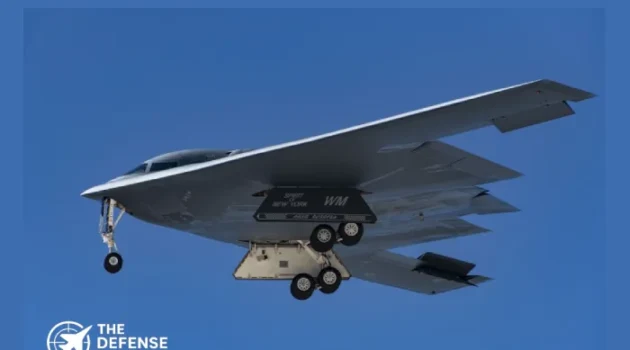
The Pentagon currently fields only 20 Northrop Grumman B-2 Spirit bombers — the Western world’s only low-observable, nuclear-capable heavy bomber — a fleet that played a central role in 2025’s Operation Midnight Hammer, the U.S. operation to destroy Iran’s underground nuclear enrichment sites.
That mission exposed both the B-2’s irreplaceable value and the acute danger of depending on a 20-aircraft fleet for the nation’s most demanding strike missions. The B-2 is aging, difficult to sustain, and expensive to fly. Its stealth coatings require intensive maintenance. Its radar cross-section management systems, while still effective, were designed against threat environments that have since evolved considerably.
(adsbygoogle = window.adsbygoogle || []).push({});The B-21 Raider program was built with those realities in mind. Its design incorporates modernized low-observable materials and manufacturing processes intended to reduce maintenance burden compared to the B-2. The open-systems architecture allows avionics and mission system upgrades without major airframe modifications — a lesson learned the hard way across the B-2’s operational life. The aircraft can carry both conventional and nuclear payloads, and is designed for manned or optionally unmanned operation, providing flexibility that no current U.S. bomber offers.
Air Force Secretary Troy Meink, speaking at the symposium, stated that “the B-21 is foundational to our long-range strike capability and to credible deterrence,” and that accelerating production ensures delivery to combatant commanders faster, strengthening the ability to “outpace, deter, and, if necessary, defeat emerging threats.”
That language is deliberate. Deterrence credibility in the nuclear domain depends not only on capability but on demonstrated capacity — adversaries need to believe the United States can field sufficient penetrating strike assets to hold their highest-value, hardened targets at risk. Twenty B-2s do not provide that assurance at scale. One hundred or more B-21s, delivered on a compressed timeline, begins to rebuild it.
The Financial Architecture of Acceleration
The $4.5 billion reconciliation injection is not discretionary — it was specifically designated by Congress for B-21 production capacity expansion. Northrop CEO Kathy Warden indicated that Northrop plans to invest between $2 to $3 billion over multiple years in facility upgrades to support the acceleration. That private industrial investment, layered on top of the government funding, suggests both parties have committed to a production rate increase that cannot easily be unwound by future budget volatility.
(adsbygoogle = window.adsbygoogle || []).push({});That said, the financial trajectory has not been smooth. As of early 2026, Northrop had absorbed roughly a $2 billion hit trying to accelerate the program and cover material costs — a reminder that fixed-price contracts in development-phase programs carry real risk for the prime contractor. The new deal should provide more favorable terms for the accelerated lots, though the Pentagon has not disclosed pricing details.
The per-unit cost of the B-21 currently sits near $700 million per aircraft at current production rates. Increased volume should drive per-unit costs down through learning-curve economics, though stealth manufacturing is labor-intensive enough that cost reduction will be gradual rather than dramatic.
Comparing the Industrial Baseline to Competitors
It is worth placing this production decision in comparative context. China’s H-20 stealth bomber has been in development for years but has not entered series production or been confirmed as operationally deployed. Russia’s PAK DA program remains mired in development, with no credible timeline for fielding. Neither adversary currently operates a penetrating stealth bomber comparable to the B-2, and neither is likely to field one on a timeline that matches the B-21’s accelerated delivery schedule.
This matters because the accelerated B-21 production is not a symmetric arms race response — it is an effort to lock in an asymmetric advantage before competitors can close the gap. Long-range strike penetration capability is among the hardest military attributes to replicate quickly. The industrial knowledge, materials science, and systems integration experience required cannot be acquired on short notice.
(adsbygoogle = window.adsbygoogle || []).push({});The United Kingdom and Australia, both close intelligence partners operating within AUKUS, have no equivalent penetrating bomber program. The B-21 effectively makes the United States the sole Western power with this capability for at least the next two decades, reinforcing Washington’s role as the alliance’s indispensable long-range strike backstop.
Program of Record and the 100-Aircraft Question
The current B-21 program of record calls for a minimum of 100 aircraft. Some officials have called for expanding the program of record beyond that number, though Air Force Secretary Meink did not address whether the overall buy would change.
The case for expanding the buy is straightforward: with a fleet of 100, accounting for depot maintenance cycles, training aircraft, testing attrition, and forward deployment requirements, actual mission-capable aircraft available at any given time could be well under 70. For a force designed to hold at-risk a large and geographically dispersed set of hardened targets across China or Russia, that may prove insufficient.
(adsbygoogle = window.adsbygoogle || []).push({});Conversely, at $700 million per aircraft and with the Air Force simultaneously funding the B-52J re-engine program, the Sentinel ICBM (itself under significant cost pressure), and LRSO cruise missile development, budget competition is fierce. The reconciliation funding provides short-term relief, but sustained production acceleration beyond 100 aircraft would require additional appropriations that are not yet committed.
■ KEY FACTS AT A GLANCE- ► Israel’s Ambassador to the U.S., Yechiel Leiter, confirmed the IAF’s F-35I Adir fleet carries stealth-compatible range-extending fuel tanks.
- ► The modification preserves the aircraft’s low-observable radar signature — a technically demanding engineering achievement.
- ► The Adir can now carry four externally mounted wing missiles in “beast mode” configuration for high-payload strike sorties.
- ► Conformal tank designs are reported to push the F-35I’s combat radius beyond 1,700 km — sufficient for round-trip strikes on Iran without aerial refueling.
- ► The IAF is the only F-35 operator to have conducted combat strikes using the external wing-carriage design.
- ► Israel’s fleet stood at 48 F-35I aircraft as of January 2026, with a total of 75 on order.
- ► The U.S. Air Force cited Israeli modifications when requesting FY2026 funds to explore similar F-35 external fuel tank integration.
Israel’s F-35I Adir Gets Stealth Fuel Tanks — What It Means
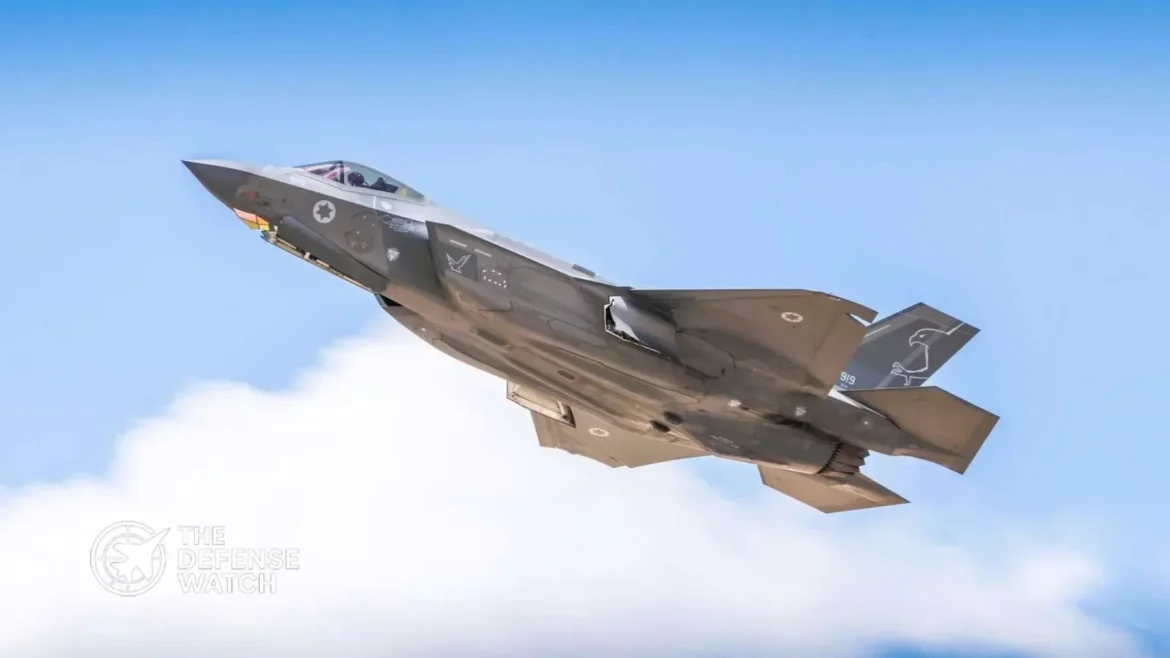
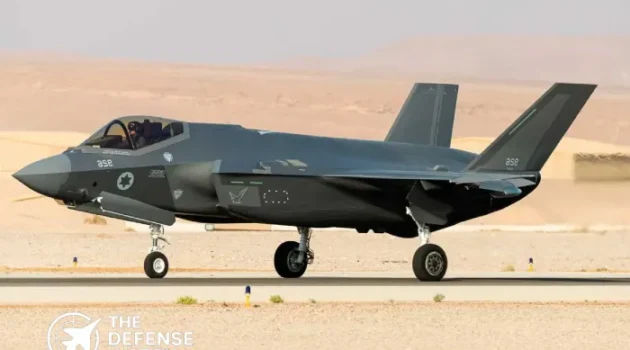
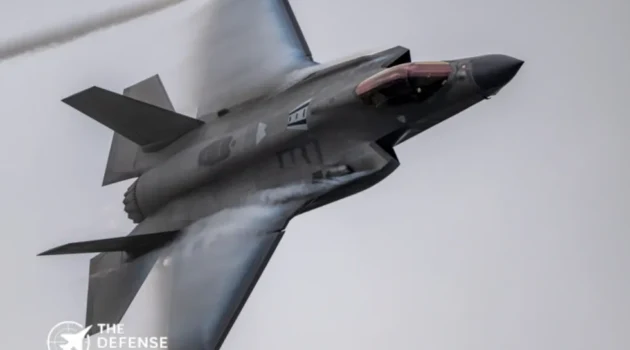
The Israeli Air Force’s F-35I Adir stealth fuel tank program has moved from long-rumored development into publicly confirmed operational reality. On February 16, 2026, Israel’s Ambassador to the United States, Yechiel Leiter, stated in an interview with the daily Israel Hayom — as reported by The Times of Israel — that the IAF’s Adir fleet has been fitted with range-extending fuel tanks “without compromising stealth.” Simultaneously, the ambassador disclosed that four external wing-mounted missiles have been added to the platform’s arsenal, formalizing the jet’s “beast mode” capability for high-payload strike missions.
(adsbygoogle = window.adsbygoogle || []).push({});The announcement carries substantial strategic weight. It is the first on-the-record confirmation by a senior Israeli official that the classified program — long speculated about in defense circles — has crossed the threshold from development into declared operational use. The timing, coming eight months after Israel’s June 2025 air campaign against Iran (Operation Rising Lion), signals that Israel intends adversaries, allies, and the broader strategic community to factor a more capable, longer-reaching F-35I into their strategic calculations.
“We developed fuel tanks that extend the aircraft’s range without compromising stealth, and we added four missiles on the wings.” — Yechiel Leiter, Israel’s Ambassador to the United States | Israel Hayom / Times of Israel, Feb. 16, 2026
The F-35I Adir: Not Your Standard F-35
To understand why Israel could achieve this modification while no other F-35 operator has, it is essential to understand what the F-35I Adir actually is. The Adir — Hebrew for “Mighty One” — is the only F-35 variant in global service that was contractually authorized for deep, indigenous systems integration by its operator before the first aircraft was delivered.
While every other nation that flies the F-35 operates a platform locked to Lockheed Martin’s standard hardware and software baseline, Israel negotiated a unique arrangement with the U.S. government and the F-35 Joint Program Office. This agreement permitted the Israeli defense industry to integrate national mission computers, electronic warfare suites developed by Elbit Systems, indigenous weapons, domestic data links, proprietary encryption systems, and custom command-and-control interfaces directly into the aircraft’s architecture.
This modular, open-architecture framework made the stealth tank program technically feasible. Because Israel and its defense contractors could work within the aircraft’s mission-system software and structural envelope — in cooperation with Lockheed Martin and the F-35 JPO — designing and certifying conformal fuel tanks that are aerodynamically and electromagnetically compatible with the airframe was a far less restrictive process than for any other operator.
The Stealth-Range Dilemma: How Israel Solved It
External fuel tanks on a stealth aircraft present a well-understood engineering paradox. The F-35’s low-observable profile derives from the careful geometric shaping of every external surface — every panel line, inlet, and contour is optimized to scatter radar energy away from threatening emitters. Attaching conventional pylon-mounted drop tanks immediately creates sharp edges, new radar-reflective volumes, and surface discontinuities that dramatically inflate the aircraft’s radar cross-section.
Israel’s solution, as described by open-source analysis and corroborated by Ambassador Leiter’s remarks, involved designing conformal tanks — installations that follow the curvature and contour of the fuselage rather than hanging below it on pylons. The tanks are reported to be “covered with absorbent materials” and attached using pylons engineered to preserve aerodynamic and electromagnetic signature characteristics, resulting in a cruise-flight range exceeding 2,200 kilometers — sufficient for a round-trip mission from Israeli airbases to targets deep inside Iranian territory without aerial refueling.
(adsbygoogle = window.adsbygoogle || []).push({});RANGE CONTEXT: The F-35A’s standard published combat radius on internal fuel alone is approximately 670 nautical miles (roughly 1,240 km). The Adir’s conformal tank integration is reported to extend unrefueled operational reach beyond 1,700 km — a critical threshold for striking Iran’s nuclear and missile infrastructure and returning safely.
The War Zone (TWZ), citing U.S. Air Force budget documents, confirmed in June 2025 that Israel’s extended-range capability was employed operationally during the Israel-Iran conflict. While precise technical parameters remain classified, the combination of conformal fuel tank geometry, radar-absorbent coatings, and jettison capability provides a credible, operationally viable answer to the stealth-range dilemma that has constrained fifth-generation aircraft globally.
Beast Mode: Four External Missiles and the Firepower Equation
Leiter’s second disclosure — that the F-35I now carries four externally mounted wing missiles — ties the range story to a separately confirmed IAF capability known colloquially as “beast mode.” The F-35 was originally optimized exclusively for internal weapons carriage. Its two internal bays hold precision-guided munitions while maintaining the aircraft’s full stealth profile. But internal volume is inherently limited.
In the year prior to Leiter’s interview, the IAF publicly announced that its Flight Test Center, working alongside Lockheed Martin and the Pentagon’s F-35 program, had developed an external wing-carriage capability. The IAF stated explicitly that the Adir is “the only F-35 to conduct strikes with this design.” Imagery released by the IDF during the June 2025 Iran air campaign confirmed that F-35Is flew combat missions with missiles visibly attached to their wings.
In “beast mode,” the F-35I trades its minimum radar signature for substantially increased firepower. The configuration is most tactically relevant in phases of a campaign where adversary air defenses have been degraded by prior SEAD (Suppression of Enemy Air Defenses) operations — reducing the survivability premium on stealth and making the firepower premium on heavy external ordnance loads more valuable per sortie.
Operational Impact: Tanker Independence and Mission Flexibility
One of the strategic drivers behind Israel’s long-range fuel tank program was a structural vulnerability in the IAF’s aerial refueling capacity. Prior to the June 2025 campaign, Israel operated only seven Boeing KC-707 Re’em tanker aircraft — a number defense analysts modeled as insufficient to sustain the scale of the observed operations. Extended-range F-35Is appear to have provided the additional endurance that made the campaign viable without confirmed external tanker support.
The equation is now shifting further. Israel has contracted the KC-46A Pegasus — the U.S. Air Force’s next-generation aerial refueling platform — to replace its aging Boeing 707-based tankers. But the conformal fuel tank program provides a complementary hedge: it reduces the dependency on tanker rendezvous points, which are themselves high-value targets and operationally complex to orchestrate in contested airspace.
Ambassador Leiter underscored Israel’s depth of experience in his interview, stating that Israeli pilots have logged more F-35 flight hours than all other foreign partner-nation pilots combined. He also relayed that Lockheed Martin’s chief executive described Israeli technical feedback and field-driven innovations as worth “many billions” to the company — an acknowledgment that Adir program modifications represent not just a national capability gain, but a data resource of global relevance to the entire F-35 enterprise.
U.S. Air Force Takes Note: FY2026 Budget Request Follows Israeli Lead
The Adir’s extended-range performance during Operation Rising Lion appears to have directly influenced U.S. Air Force procurement thinking. According to reporting by The War Zone citing U.S. Air Force budget documents, the USAF’s proposed Fiscal Year 2026 budget includes a request for funds to “evaluate feasibility and decompose requirements for integration of External Fuel Tanks to support long-range missions of the F-35.” This represents a reversal of an earlier programmatic decision that had eliminated the requirement for streamlined F-35 drop tanks.
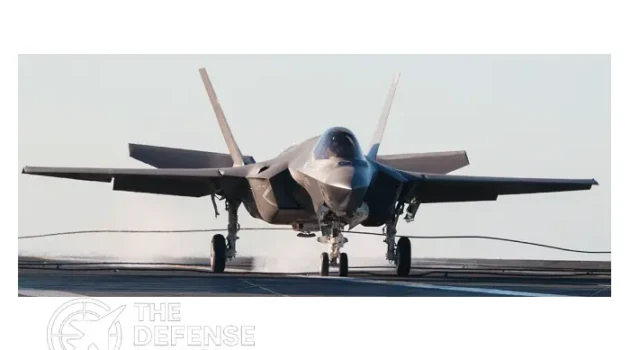
The FY2026 request is particularly notable for the Navy’s carrier-based F-35C, whose existing development of the F/A-XX sixth-generation replacement has been placed on hold — leaving the C-model as the carrier air wing’s primary penetrating strike asset. Extended-range fuel tanks would directly address the F-35C’s combat radius limitations in Indo-Pacific scenarios. The USAF has indicated it will study Israeli modifications to the F-35I Adir as a reference point in the feasibility evaluation.
BROADER IMPACT: The F-35’s external tank challenge is not unique to Israel. Other partner nations operating the F-35 without organic tanker capacity — including several European allies — are watching Israeli developments closely as a potential model for extending their own aircraft’s effective operational reach. Strategic Implications: Deterrence, Iran, and the Regional Air Balance
Read in the context of Israel’s declared military doctrine and its active conflict with Iran, Leiter’s confirmation is clearly intended to carry a deterrence message. The operational credibility of Israel’s strike option against Iran’s nuclear program has historically been questioned by analysts on the grounds of range and weapons load — arguments that a larger aircraft like the F-15I Ra’am was better suited to the deep-strike mission. Those arguments are substantially weakened by the confirmed extended-range and beast-mode capabilities.
(adsbygoogle = window.adsbygoogle || []).push({});A more capable F-35I Adir — one that can reach central Iran and back without tanker support, carry a meaningful weapons load in either low-observable or high-payload configuration, and exploit its advanced sensor-fusion and electronic warfare systems throughout the mission — reinforces Israel’s capacity for unilateral action. It also reshapes alliance planning with Washington: the more credibly self-sufficient Israel’s strike posture is, the greater its leverage in discussions about U.S. involvement in future escalation scenarios.
For Iran, the strategic calculus is less favorable. The June 2025 air campaign already demonstrated that F-35I Adirs could penetrate Iranian air defenses — including elements of the Russian-origin S-300PMU-2 network — and strike hardened infrastructure. The confirmation that those aircraft now carry significantly more fuel and more weapons, with fewer logistical constraints, means the same capability is not a one-time demonstration but a durable, repeatable operational posture.
Fleet Status and What Comes Next
As of January 18, 2026, the IAF received its 48th F-35I Adir at Nevatim Air Base — adding tail numbers 978, 979, and 983 to its inventory in a single delivery ceremony. Under existing agreements with the United States, Israel is contracted to receive a total of 75 F-35Is, meaning more than a third of the eventual fleet has yet to be delivered. As those aircraft arrive in an already upgraded baseline configuration, Israel’s aggregate strike capacity will grow incrementally.
Technical details of the conformal tank program remain classified. Neither the Israeli government nor Lockheed Martin has released specific data on fuel volume, weight penalty, signature penalty, or integration architecture. External analysts note that some residual signature increase is almost certainly present with any external or conformal installation, and that the tanks would likely be jettisoned before penetrating the densest threat rings. The operational value, however, lies in the transit phase and the flexibility to reach distant targets with reduced reliance on tanker support.
What Ambassador Leiter’s public disclosure does, above all, is remove the capability from the realm of speculation. The F-35I Adir with stealth fuel tanks and external wing missiles is not a development program or a future aspiration — it is, by Israel’s own account, fielded and operationally proven. The Middle East air balance has shifted accordingly, and every actor in the region — and every F-35 operator beyond it — will be recalibrating their assessments in the months ahead.
US Unveils Blackbeard GL Hypersonic Missile for HIMARS
The United States has unveiled the Blackbeard GL hypersonic missile for HIMARS, signaling a major step in long-range precision strike modernization. Designed for compatibility with the M142 HIMARS and M270 Multiple Launch Rocket System, the missile is intended to deliver affordable, mass-produced hypersonic capability to existing Army launchers.
(adsbygoogle = window.adsbygoogle || []).push({});The Blackbeard GL hypersonic missile is being developed by defense startup Castelion. According to program details released this week, the system is expected to reach operational maturity by 2027. The effort aligns with US Department of Defense priorities to field longer-range, survivable weapons that can be deployed quickly at scale.
Extending HIMARS Reach
Blackbeard GL is designed to reach targets at ranges of up to 1,000 kilometers, far beyond current HIMARS munitions. Unlike traditional ballistic rockets, the missile incorporates a guidance seeker, enabling it to engage moving targets. This feature reflects lessons learned from recent conflicts, where mobile and time-sensitive targets have proven difficult to strike.
Compatibility with both HIMARS and the tracked M270 launcher allows the US Army and allied forces to integrate the missile without new launch platforms. This approach reduces cost and accelerates fielding, while preserving the mobility that has made HIMARS a central element of US and partner force artillery doctrine.
Focus on Cost and Scale
Castelion has positioned Blackbeard GL as a lower-cost hypersonic weapon, emphasizing manufacturability and volume production. US defense planners have repeatedly highlighted the need to move beyond small numbers of expensive hypersonic systems toward weapons that can be fielded in meaningful quantities.
(adsbygoogle = window.adsbygoogle || []).push({});While detailed performance data remains limited, the Blackbeard GL hypersonic missile reflects a broader shift toward practical hypersonic strike options rather than niche capabilities. The program complements other US hypersonic efforts focused on strategic and theater-level missions.
Strategic Context
The introduction of a hypersonic missile for HIMARS would significantly expand US and allied deep-strike options, particularly in contested environments across the Indo-Pacific and Europe. By pairing long range with mobile launchers, Blackbeard GL supports distributed operations and complicates adversary air and missile defense planning.
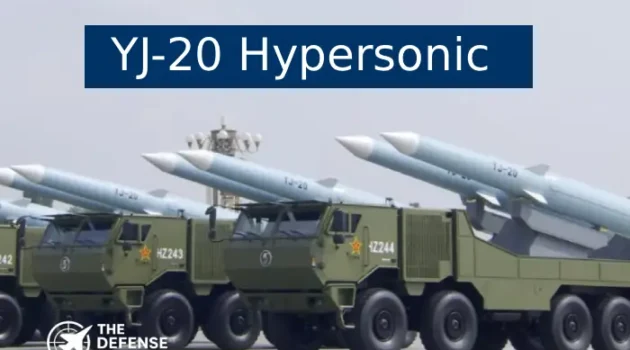
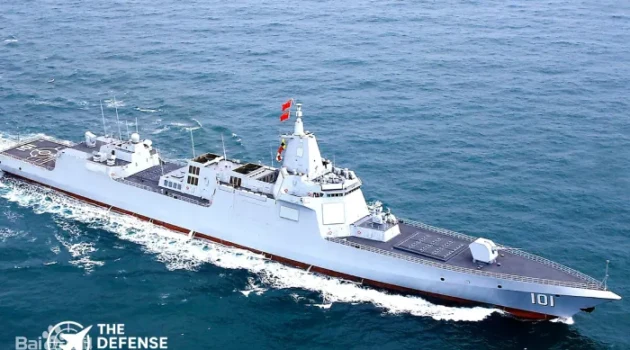
China’s recent test of the YJ-20 hypersonic anti-ship missile aboard a Type 055 destroyer matters because it shows how Beijing is pushing ahead with high-speed strike capability that could challenge Western naval power at range. This test, and the broader push into hypersonic weapons, adds a new layer to strategic competition between China, the United States, and allied navies in the Indo-Pacific and beyond. The main keyword here is China YJ-20 hypersonic missile.
What It Is
China YJ-20 Hypersonic Missile
The YJ-20 hypersonic missile is a Chinese anti-ship weapon designed to fly faster than five times the speed of sound and maneuver in flight. This gives it a harder-to-intercept path compared to traditional cruise missiles.
Type 055 Destroyer
The Type 055 is a large modern surface combatant in the PLA Navy. With advanced sensors and vertical launch systems, it serves as a key element of China’s effort to project naval power. The recent test shows the YJ-20 firing from one of these vertical launch cells aboard the destroyer.
How It Works
A hypersonic missile like the YJ-20 uses a rocket booster and a glide vehicle that travels at hypersonic speeds. Its maneuverability and speed reduce the time for an enemy to react and make interception difficult. In the footage released by Chinese sources, the missile was launched from a vertical cell and destroyed its test target.
Compared with older anti-ship missiles such as the Russian P-800 Oniks or the US Harpoon, the YJ-20’s hypersonic speed and terminal maneuvering aim to overcome layered naval defenses. This type of capability is similar in concept to Russia’s Kinzhal, though the platforms, guidance systems, and shipboard integration differ.
Information on precise range and guidance is limited publicly and should be treated as speculative, based on expert commentary in open sources and comparisons to similar systems.
Why It Matters in Strategic Competition
Regional Power Balance
A sea-launched China YJ-20 hypersonic missile expands China’s ability to strike moving naval targets at long range. That matters for Taiwan Strait, South China Sea, and broader Indo-Pacific security dynamics. U.S. and allied navies rely on layered air and sea defenses to protect carrier strike groups and amphibious forces. A credible hypersonic threat complicates these defenses.
Naval Strategy Evolution
Western navies have invested in integrated air-and-missile defense, electronic warfare, and layered surface-to-air missiles to counter advanced threats. Hypersonic weapons change this calculus because their speed compresses decision cycles. Analysts have noted that navies must rethink how they detect, track, and intercept these fast threats, much like the shift after anti-ship cruise missiles first appeared in the 1970s.
Broader Military Technology Race
China is pushing hypersonics across domains, including land and air launched variants. This fits into broader competition with the United States over future strike systems, missile defense, and control of key sea lanes. The U.S. has its own hypersonic programs, but operational deployment at sea remains limited. The PLA’s testing feeds Beijing’s goal to build deterrence and, if needed, anti-access capabilities.
Strategic Impact for Major Actors
China
This test underscores China’s focus on modernizing the PLA Navy with advanced strike tools. It strengthens deterrence and supports Beijing’s maritime strategy, which aims to secure territorial claims and expand influence in adjoining seas.United States
The test highlights a gap U.S. forces must address in layered defense. It could accelerate U.S. investment in hypersonic defenses and countermeasures, affecting force posture in the Pacific.Allied Navies
Japan, Australia, India, and European partners will watch closely. They may deepen cooperation on missile defense, ISR (intelligence, surveillance, reconnaissance), and joint operations to counter advanced strike weapons.
The Boeing B-52 Stratofortress, America’s enduring heavy bomber, recently celebrated 70 years of service with the U.S. Air Force. As the venerable aircraft continues to project strategic deterrence, its modernization programs—particularly radar and engine upgrades—are entering pivotal phases, albeit with notable delays.
This article examines the B-52’s continued relevance, the status of its upgrades, and the implications for its future service into the 2050s.A Legacy of Strategic Reach
Introduced in 1955, the B-52 has remained a cornerstone of the Air Force’s long-range strike and nuclear capabilities. As of 2025, roughly 72 aircraft remain active, supported by others in storage.
Known for its large payload, long endurance, and cost-effectiveness, the Stratofortress continues to embody “peace through strength”
Radar Modernization Nears Flight Testing
The Radar Modernization Program (RMP)—which will equip B-52s with the advanced AN/APQ-188 AESA radar, improves detection, resistance to jamming, and multifunction capability. After years of schedule slips and cost growth, this milestone is now expected to enter flight testing soon.

Originally targeting operational capability as early as 2027, the delays now push debut to 2028–2030.. Factors include integration challenges, environmental qualification setbacks, and Nunn-McCurdy cost breach reviews.Engine Upgrade—Re-Engining Setbacks Continue
The Commercial Engine Replacement Program (CERP) aims to replace aging TF33 engines with modern Rolls-Royce F130 units—transforming the fleet into “B-52J” variants. However, design issues with the engine inlets have delayed progress. After digital redesign efforts, wind-tunnel testing is ongoing, and the new configuration is expected to be validated by 202.
The critical design review and initial production decision have both slipped – now anticipated for March 2028, three years behind initial plans.Role and Relevance into the 2050s
Despite modernization challenges, the B-52 remains slated to serve through the 2050s, thanks to incremental upgrades to radar, engines, avionics, and structural systems..
Its adaptability—integrating modern standoff weapons including hypersonic missiles—and robust logistics footprint make it a cost-effective workhorse well beyond its original design life.Analysis and Context
- The B-52’s longevity underscores the U.S. Air Force’s strategy of extending proven platforms through modernization rather than costly replacements.
- The delays in critical upgrades highlight persistent challenges in modernizing legacy aircraft—especially in retrofitting advanced systems into Cold War-era designs. Yet, the commitment to keep the B-52 viable well into the 2050s reflects its unmatched payload, range, and flexibility in strategic deterrence.
FAQs
Why is the B-52 still in service after 70 years?Its large payload, long range, dual nuclear/conventional capability, and cost-effective upgrades enable continued strategic utility far beyond its original life expectancy.
What benefits will the new AN/APQ-188 radar bring?The AESA radar will enhance target acquisition, resolution, ground-moving-target indication, synthetic aperture radar modes, and electronic warfare resistance.
When will B-52s receive the new Rolls-Royce F130 engines?Initial testing continues. The critical engine inlet redesign testing is set to conclude by 2026, with initial production slated for around 2028.
How long will the B-52 remain operational?The bomber is planned to remain in service through the 2050s, supported by ongoing modernization across avionics, weapons payloads, engines, and radar systems.
What does the future hold for the B-52’s role?With upgrades enabling advanced standoff weapons and improved situational awareness, the B-52 will continue to serve in long-range strike, deterrence, and allied operations, complementing newer stealth bombers like the B-21.