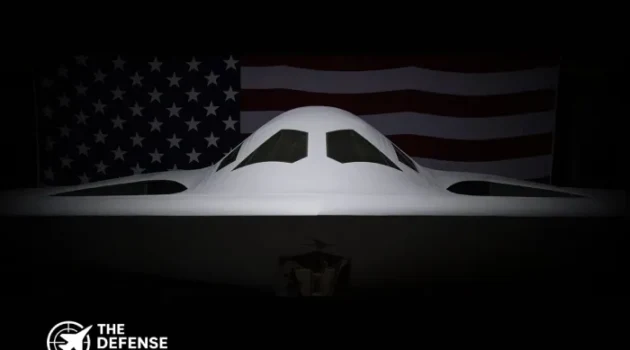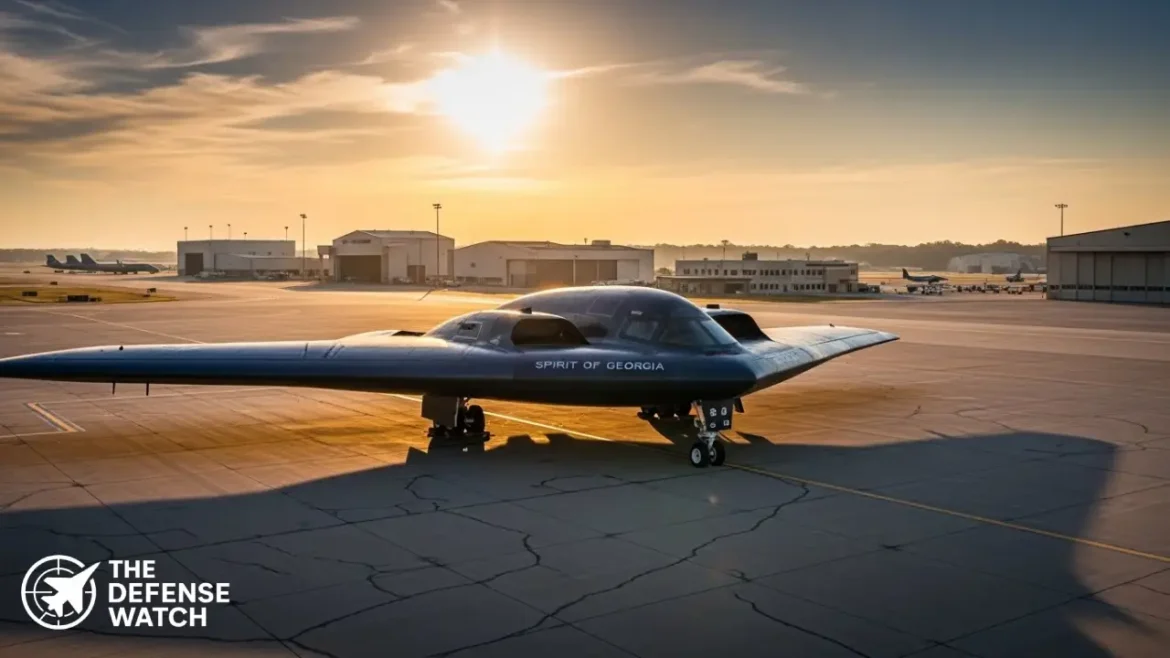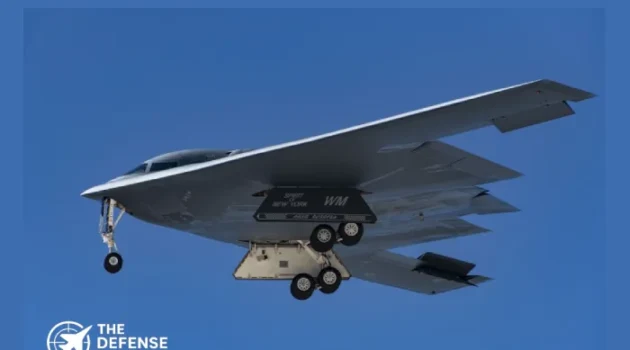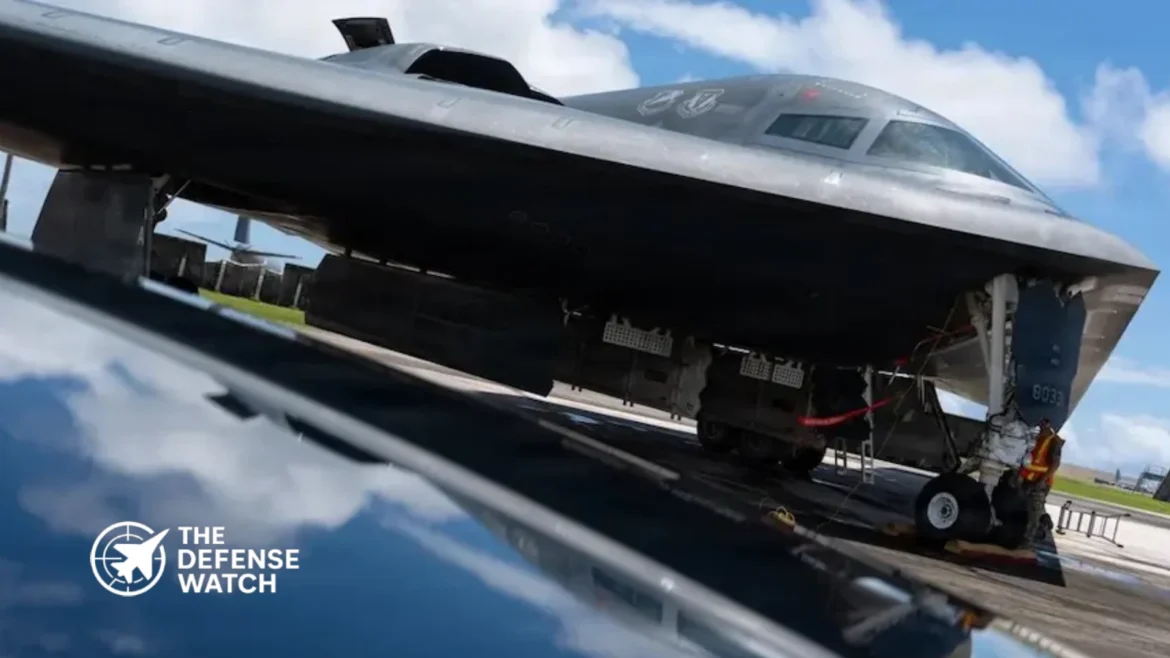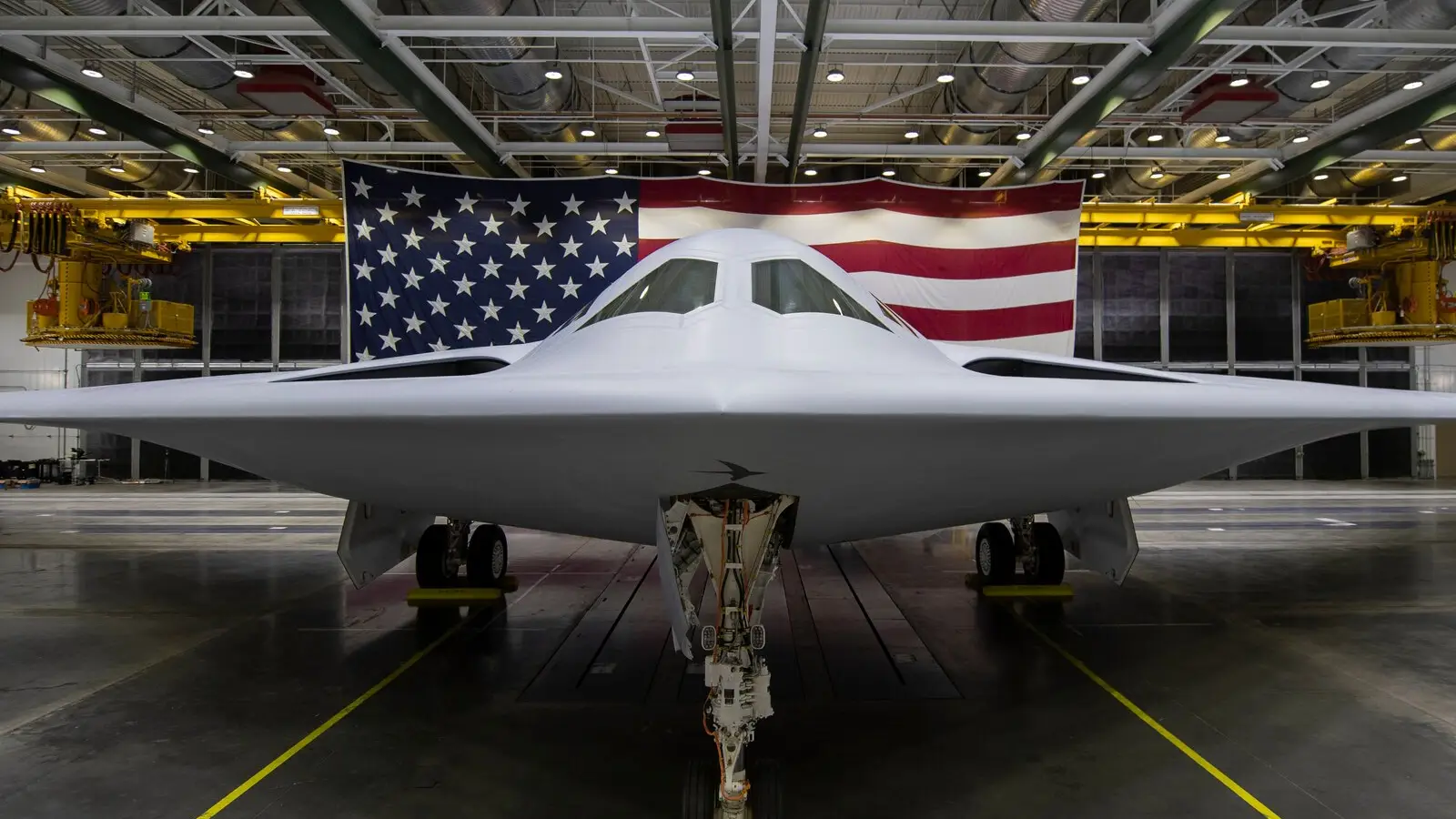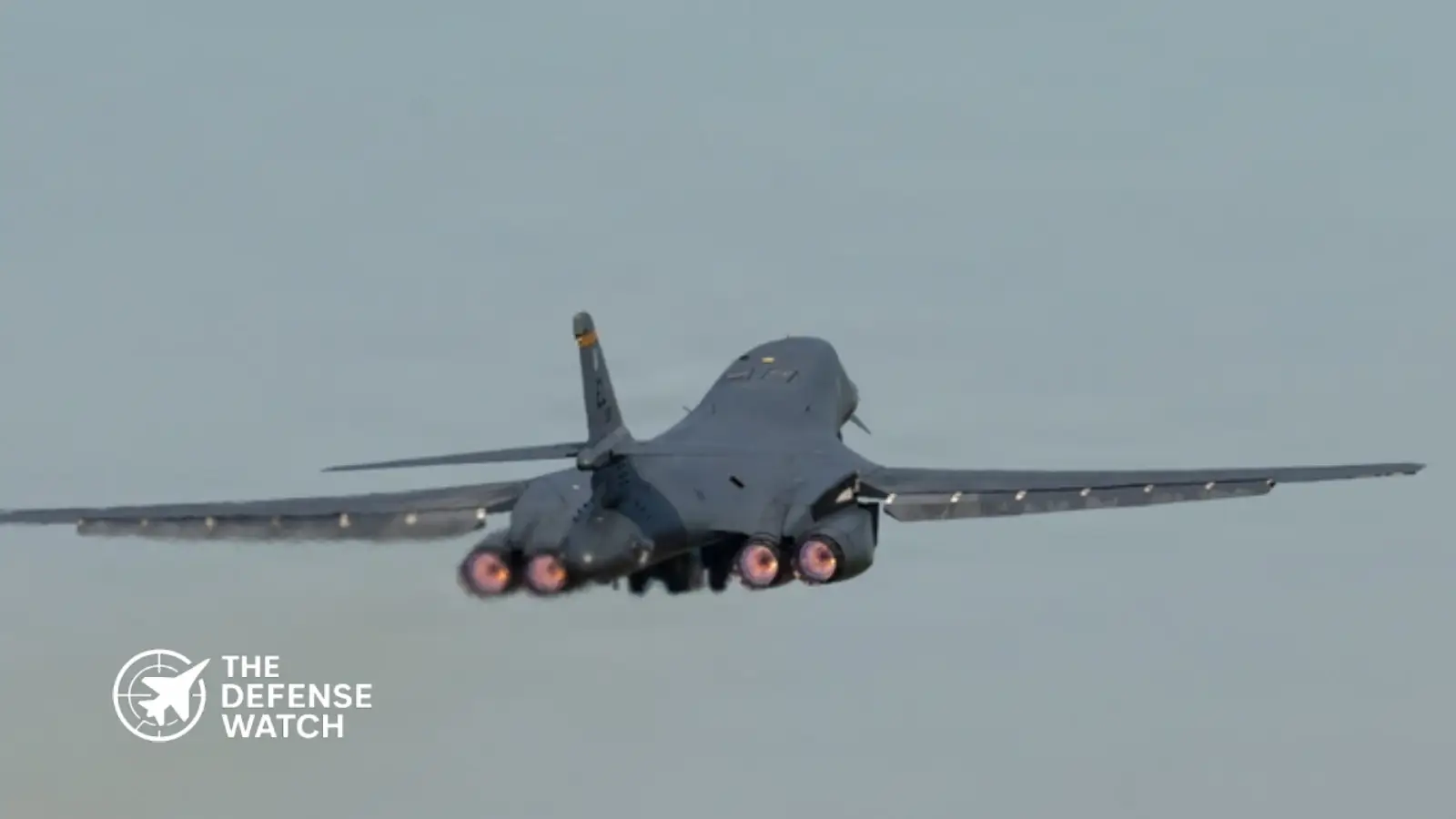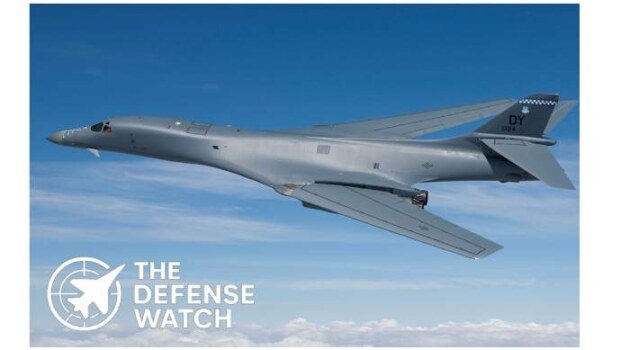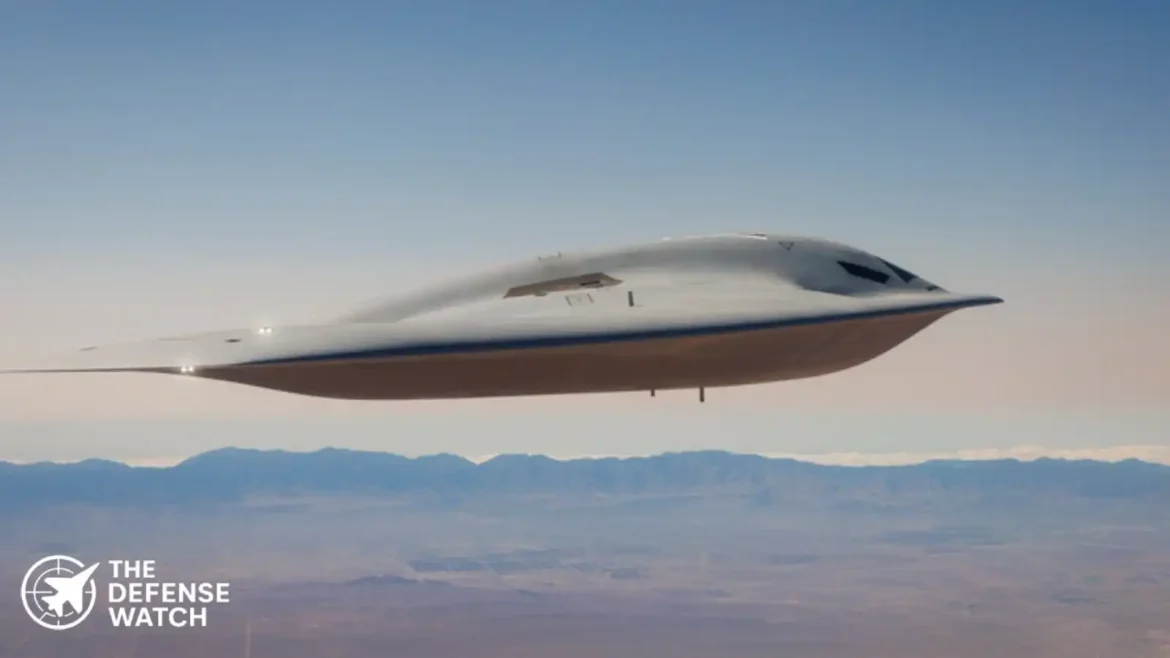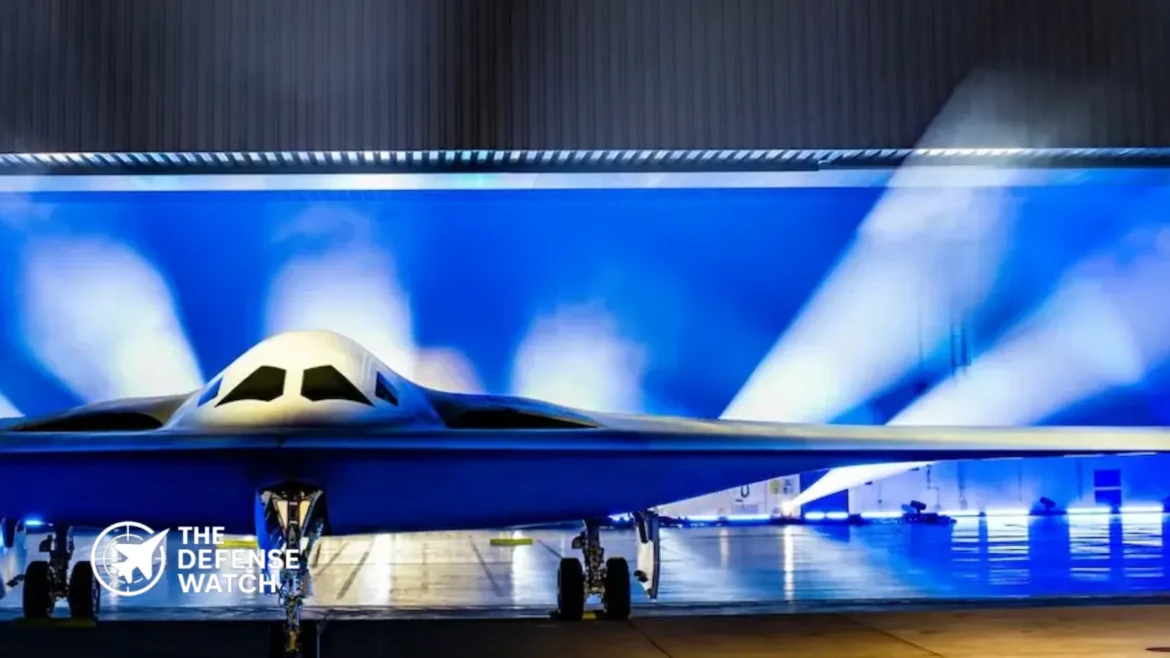
Executive Summary: Northrop Grumman is increasing investment in B-21 Raider production infrastructure as the U.S. Air Force moves ahead with a 25% increase in annual production capacity. The company says the Air Force is also evaluating whether to accelerate production further and expand the program beyond its existing minimum requirement of 100 aircraft.
B-21 Raider Production Moves Into a Higher-Output Phase
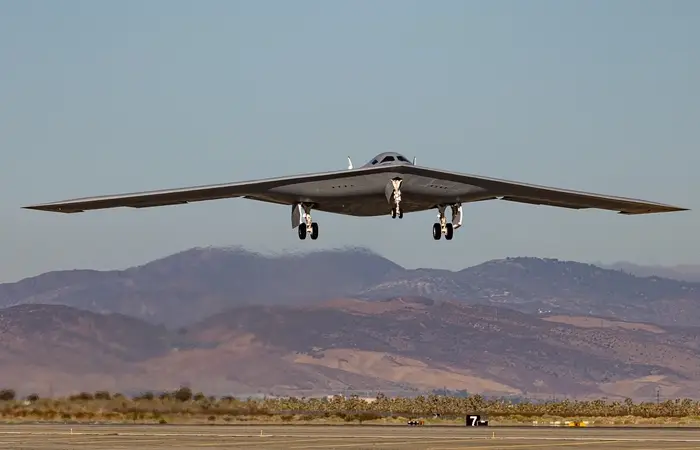
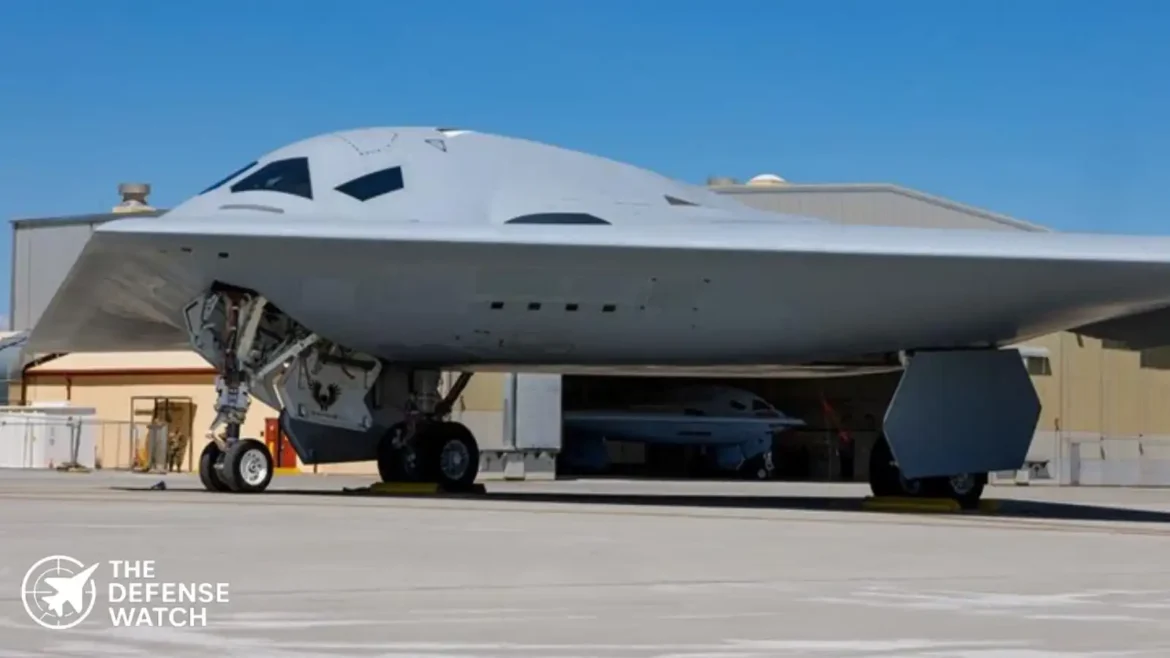
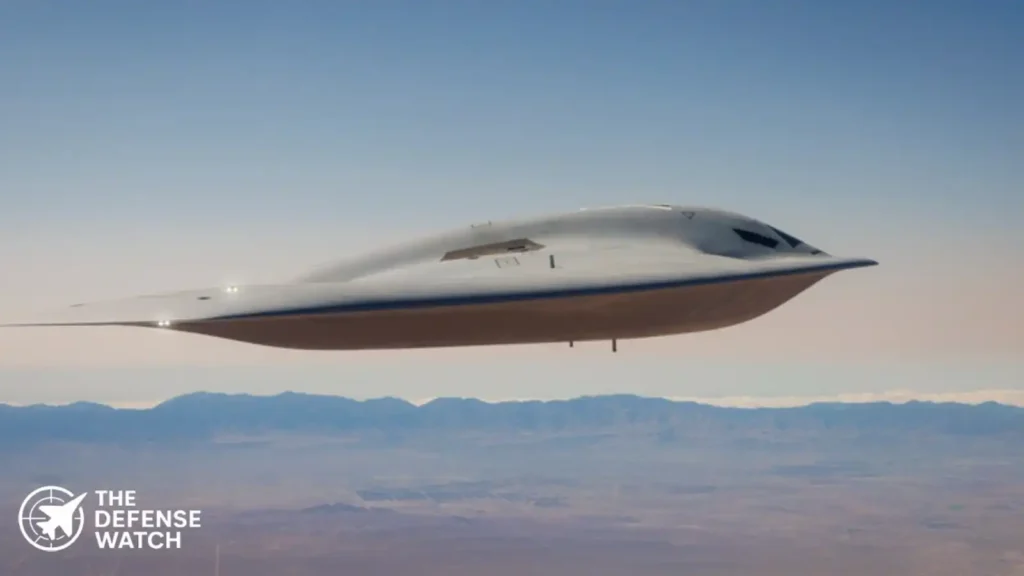
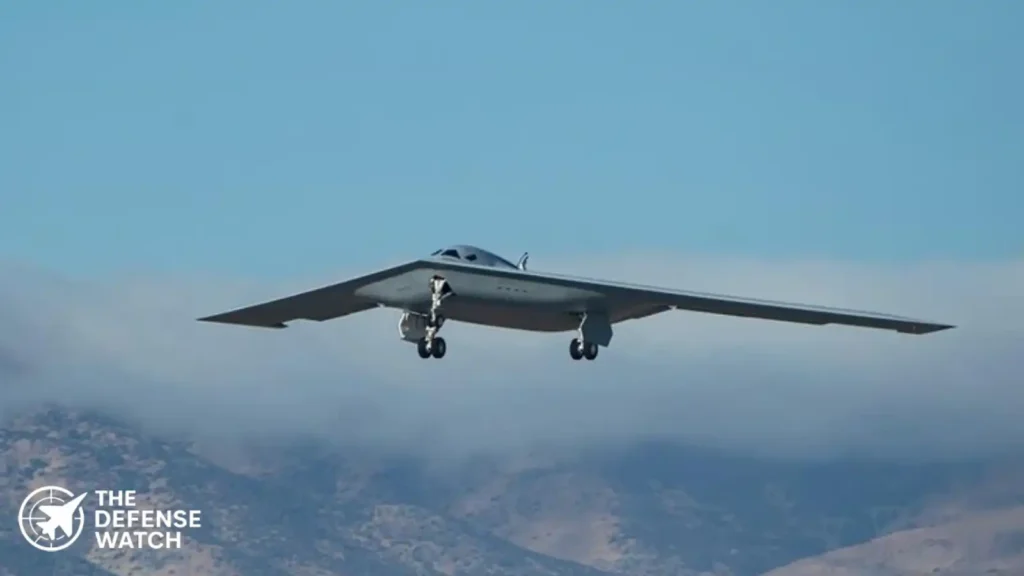
The B-21 Raider production program is entering a more aggressive manufacturing phase as Northrop Grumman expands industrial capacity and the U.S. Air Force considers whether the bomber fleet should grow beyond 100 aircraft.
The latest development follows a February 2026 agreement between the Department of the Air Force and Northrop Grumman that increased annual production capacity by 25%. The agreement uses $4.5 billion in funding authorized under fiscal year 2025 reconciliation legislation and is intended to compress delivery timelines while maintaining program cost and performance controls.
Northrop Grumman said in its second-quarter 2026 earnings discussion that its capital spending is expected to reach approximately $1.85 billion during 2026. Company executives linked continued investment in manufacturing infrastructure to the B-21 production ramp.
The company has not disclosed a new annual aircraft production figure. It has also not disclosed how many additional aircraft could ultimately be added if the Air Force expands the program.
Air Force Could Consider More Than 100 B-21s
The current B-21 acquisition plan calls for a minimum of 100 aircraft. The Air Force has described the Raider as a long-range, penetrating stealth bomber intended to replace the B-1B Lancer and B-2 Spirit over time.
Northrop Grumman CEO Kathy Warden said in July that the agreement with the Air Force allows the service to examine both faster production and a larger program of record.
The analysis is expected to continue through the end of 2026. Warden did not identify the production rate being considered or provide a potential size for an expanded fleet.
That distinction is important. The Air Force has increased manufacturing capacity, but an increase in capacity does not automatically mean the government has ordered an equivalent number of additional aircraft.
Current B-21 Production Picture
Area Current Status Program B-21 Raider Manufacturer Northrop Grumman Production increase 25% increase in annual capacity Additional funding $4.5 billion authorized funding Existing production goal Minimum of 100 aircraft First operational base Ellsworth Air Force Base, South Dakota First aircraft at Ellsworth Planned for 2027 Company B-21 infrastructure investment More than $5 billion 2026 Northrop Grumman capital spending outlook Approximately $1.85 billion The Air Force says B-21 aircraft remain on track to arrive at Ellsworth in 2027. The base is preparing facilities for the bomber’s arrival, including infrastructure for operations and training.
Why Northrop Grumman Is Investing Before a Larger Order
The industrial challenge facing the B-21 is not simply the construction of additional aircraft. A higher production rate requires Northrop Grumman and its supplier network to expand manufacturing capacity, tooling, skilled labor, testing capacity and quality-control processes without undermining the program’s low-observable requirements.
Northrop Grumman said it has already invested more than $5 billion in digital engineering and manufacturing infrastructure associated with the Raider. The company also operates a broad industrial network involving more than 400 suppliers across 40 states.
This investment provides an important foundation for scaling production.
The B-21 program was deliberately structured around production-representative test aircraft and digital engineering. The Air Force has said test aircraft are manufactured using the same production line, tooling and processes intended for later aircraft, reducing the separation between development and production.
That approach matters because stealth aircraft are particularly sensitive to manufacturing consistency. Changes in materials, surface treatments, assembly tolerances and production processes can affect the characteristics of a low-observable platform.
A faster production rate therefore has to be accompanied by stable manufacturing processes and sufficient inspection capacity.
Digital Manufacturing Is Central to the Production Strategy
The B-21 is also being developed around a digital engineering environment intended to make future upgrades easier to integrate.
Northrop Grumman says its digital ecosystem has reduced software certification time by 50% and supports real-time analysis of flight-test information. The company has also invested in augmented-reality manufacturing tools designed to connect production personnel with engineering teams.
For a long-life bomber, those capabilities are important beyond the initial production run.
The B-21 is designed around an open systems architecture, allowing the Air Force to insert mature technologies and new capabilities as threats change. That architecture is intended to reduce the need for major redesigns every time a new mission system or weapon capability is introduced.
In practical terms, the value of the digital production model is not only faster aircraft assembly. It also creates a pathway for sustaining and upgrading the aircraft over decades of service.
Flight Testing Continues Alongside Production
The production expansion is taking place while the B-21 remains in flight testing.
The program has progressed into increasingly complex test activity, including aerial refueling trials conducted with a KC-135 Stratotanker. The Air Force said the testing is part of the broader effort to mature the systems required for survivable long-range penetrating strike.
A second B-21 test aircraft arrived at Edwards Air Force Base in September 2025, expanding the test fleet and supporting additional mission-system and weapons integration work.
The combination of flight testing and low-rate initial production is a deliberate feature of the program. It allows production learning to continue while the aircraft undergoes operationally relevant testing.
That model can shorten the transition to operational service, but it also requires careful management of engineering changes. Significant design changes late in a production ramp can create additional cost, schedule and manufacturing disruption.
Strategic Importance for U.S. Long-Range Strike
The B-21 is a central element of the U.S. long-range strike modernization effort.
Unlike aircraft designed primarily for operations in permissive airspace, the Raider is intended to penetrate heavily defended environments and conduct both conventional and nuclear missions. The Air Force identifies the aircraft as a cornerstone of its nuclear modernization strategy.
A larger B-21 fleet would provide the Air Force with more aircraft available for training, maintenance rotation, deployments and contingency operations.
It would also provide greater depth in a force structure where the B-2 fleet is relatively small and the B-1B is being phased toward replacement.
The strategic value is therefore tied not only to the number of aircraft purchased, but to the number that can be generated for operations at any given time.
A Larger Fleet Would Improve Force Resilience
A larger inventory can improve resilience in several ways.
First, more aircraft can absorb scheduled maintenance without reducing the number available for operations. Second, additional aircraft allow more crews and maintenance personnel to train without drawing heavily on operational units. Third, a larger fleet can support geographically distributed operations, which becomes increasingly important when adversaries possess long-range strike capabilities against fixed bases.
The B-21 is also intended to operate as part of a wider network rather than as an isolated bomber platform. Its combination of stealth, networking and modern command-and-control architecture is intended to support operations across a contested battlespace.
This makes fleet size an important component of the overall capability.
Production Speed Must Be Balanced With Cost and Quality
The decision to increase production capacity also reflects a broader shift in U.S. defense acquisition toward faster delivery.
The Air Force has described the B-21 as an example of acquisition reform focused on delivering combat capability more quickly. In July, Gen. Dale White said the service had increased B-21 industrial capacity by 25% and reiterated that Raiders are expected to reach Ellsworth in 2027.
The central challenge now is sustaining that speed as production becomes more complex.
Northrop Grumman’s first-quarter 2026 filing showed that the company expected to invest approximately $2.5 billion over several years to expand B-21 production capacity. The company also recorded a $157 million unfavorable estimate-at-completion adjustment on the first four low-rate initial production lots, although the company said it made no significant change to the previously recognized loss on the program.
Those figures illustrate why production expansion requires more than additional government funding. The manufacturer must invest its own capital, expand facilities and manage production costs while maintaining performance standards.
What Comes Next for the B-21 Program
The immediate milestone remains the planned arrival of B-21 aircraft at Ellsworth Air Force Base in 2027.
The longer-term question is the size and pace of the production program after the Air Force completes its review. Northrop Grumman expects the analysis of a potentially faster production schedule and larger program of record to continue through the end of 2026.
For now, the confirmed change is the 25% increase in annual production capacity, supported by $4.5 billion in government funding and substantial industry investment.
Any decision to purchase more than the existing minimum of 100 aircraft would represent a separate force-structure decision. It would affect long-range strike capacity, nuclear modernization, industrial planning and future operating costs for decades.
The significance of the current investment is therefore broader than a simple production increase. The Air Force and Northrop Grumman are building the industrial capacity needed to make the B-21 a scalable fleet rather than treating the Raider as a small, fixed-size replacement for the B-2.
As the review continues, the key indicators will be the final production rate, any change to the program of record, delivery performance and the ability of the industrial base to sustain higher output without sacrificing cost control or aircraft quality.

Executive Summary: Northrop Grumman has reaffirmed the B-2 Spirit’s continuing role in the U.S. strategic deterrent, describing it as the nation’s only operational deep-strike nuclear stealth bomber. As of August 2026, the Air Force maintains 20 B-2 aircraft in its active inventory while preparing the B-21 Raider to progressively replace both the B-2 and B-1B.
B-2 Spirit Remains Central To U.S. Stealth Bomber Operations
The B-2 Spirit stealth bomber remains the United States’ operational platform for penetrating heavily defended targets with both conventional and nuclear weapons, according to Northrop Grumman and current U.S. Air Force information. Northrop Grumman highlighted the aircraft’s strategic deterrence role on Aug. 14, emphasizing its combination of low observability, long range and heavy weapons capacity.
The statement comes as the Air Force moves through a major transition in its bomber fleet. The B-21 Raider is being developed to replace the B-2 and B-1B and become the backbone of the future bomber force, but the B-2 remains operational while the new aircraft progresses through testing, production and fielding.
That transition is strategically significant because the B-2 is not simply another long-range strike aircraft. Its principal value comes from combining intercontinental reach, a large weapons payload and low observable characteristics in a single platform capable of operating against sophisticated air defenses.
B-2 Combines Stealth, Range And Heavy Payload
The B-2 was designed around the requirement to penetrate advanced air-defense networks rather than rely solely on stand-off weapons.
Its flying-wing configuration, composite construction and specialized coatings contribute to reduced radar, infrared, acoustic, electromagnetic and visual signatures. The Air Force notes that many details of the aircraft’s low-observable technology remain classified.
The aircraft’s publicly released specifications illustrate the scale of the capability:
B-2 Spirit Characteristic U.S. Air Force Data Active inventory 20 aircraft Crew 2 pilots Unrefueled range Approximately 6,000 nautical miles Maximum payload 60,000 pounds Maximum operating altitude 50,000 feet Engines 4 GE F118-GE-100 Engine thrust 17,300 pounds each Maximum takeoff weight 336,500 pounds Speed High subsonic Initial operational capability April 1997 The figures are current in the Air Force’s May 2026 B-2 fact sheet.
The combination is important operationally. A bomber with long range but limited payload would face different planning constraints than the B-2, while a heavily armed aircraft without low observability could have difficulty approaching highly defended targets.
The B-2 was designed to bring these attributes together in one aircraft.
Why The B-2 Still Matters During The B-21 Transition
The Air Force’s bomber modernization strategy is not based on an immediate replacement of every legacy aircraft. Instead, the service is sustaining existing B-1B and B-2 capabilities while gradually introducing the B-21.
Air Force Global Strike Command’s 2026 fact sheet states that the B-21 will replace the B-1B and B-2, with initial capability planned for 2028. Until the Raider is sufficiently fielded, the command intends to balance fleet modernization, sustainment and combat readiness across the existing bomber force.
This creates a period in which the B-2 remains operationally important even as it approaches the end of its planned service life.
The small size of the fleet also makes sustainment particularly important. The Air Force currently lists only 20 B-2 aircraft in the active inventory, including one test aircraft in that total.
For comparison, the B-21 program is intended to establish a substantially larger future stealth bomber fleet. Air Force planning has described the B-21 as a long-range, highly survivable aircraft capable of carrying both conventional and nuclear weapons.
Nuclear Deterrence Adds A Separate Requirement
The B-2’s importance extends beyond conventional long-range strike. It is part of the air component of the U.S. nuclear triad, alongside land-based intercontinental ballistic missiles and ballistic missile submarines.
The nuclear role places additional requirements on aircraft availability, weapon certification, communications, security and command-and-control systems.
The B61-12 modernization program is one example. The National Nuclear Security Administration completed the last production unit of the B61-12 Life Extension Program in December 2024, extending the service life of the B61 family while supporting the U.S. air-delivered nuclear deterrent.
The B61-12 was developed for certification on the B-2A as well as other compatible U.S. aircraft and future platforms. This illustrates why bomber modernization cannot be measured only by the number of new airframes produced. Weapons integration and certification must progress alongside aircraft development.
B-21 Raider Changes The Long-Term Equation
The B-21 is designed to provide the long-term replacement for the B-2 while also taking over the B-1B’s role in the conventional bomber force.
The Air Force has described the Raider as a highly survivable stealth bomber designed for both conventional and nuclear missions. Its planned role extends beyond simply replacing the B-2 on a one-for-one basis, with the aircraft intended to form the backbone of the future bomber fleet.
In February 2026, the Department of the Air Force announced an agreement with Northrop Grumman to expand B-21 production capacity. The initiative uses $4.5 billion in previously authorized funding to increase production capacity and accelerate delivery of the next-generation bomber.
The Air Force also announced in July 2026 that the B-21 will operate with a two-pilot crew. That decision aligns the basic crew requirement of the new bomber with the B-2’s two-person crew while reflecting differences in the Raider’s systems and mission architecture.
Whiteman Air Force Base Is Preparing For The Transition
Whiteman Air Force Base in Missouri remains central to the B-2 force and is also being prepared to support the B-21.
The Air Force’s fiscal 2027 military construction documentation identifies Whiteman as the home of the 509th Bomb Wing and states that it will become the second main operating base for the B-21. The planned infrastructure work includes facilities and training equipment needed to support the new bomber.
This creates a complex transition rather than a simple aircraft retirement process.
The Air Force must preserve B-2 readiness while establishing B-21 maintenance, weapons loading, training, infrastructure and operational procedures. The overlap allows the service to introduce the new platform without immediately removing the existing stealth bomber capability.
The Strategic Value Of The B-2 Is Its Mission Set
The B-2’s continuing value is best understood through its mission set rather than its age.
The aircraft entered initial operational capability in April 1997, making it a mature platform by modern military aviation standards. Yet its fundamental design remains relevant because low observable penetration combined with long-range strike is still a demanding requirement in an environment shaped by increasingly capable integrated air-defense systems.
The B-2 therefore serves as a bridge between generations of U.S. long-range strike technology.
Its operational importance also explains why sustaining the aircraft has remained a priority despite the small fleet. Air Force officials have previously identified the challenge of maintaining a 20-aircraft fleet operating under a demanding mission set, highlighting the importance of aircraft availability and sustainment resources.
The B-21 is intended to address many of these long-term challenges through a newer design and a larger planned fleet. Until sufficient numbers of Raiders are available, however, the B-2 remains a critical component of the U.S. bomber force.
What Changes After The B-21 Arrives
The transition to the B-21 will eventually shift the U.S. stealth bomber force from a small fleet centered on the B-2 to a larger force built around a newer aircraft.
That transition should provide greater capacity for sustained global operations while reducing dependence on a very small number of aging B-2 airframes. It will also allow the Air Force to incorporate newer systems and technologies into the bomber fleet from the outset.
The immediate challenge is maintaining credible combat and nuclear deterrence throughout the transition.
For that reason, the B-2’s continued operational status in 2026 is more than a legacy designation. It represents an active bridge between the current U.S. long-range strike architecture and the next generation represented by the B-21 Raider.
Northrop Grumman’s latest characterization of the aircraft therefore underscores an important point about the U.S. bomber modernization effort: the B-2 remains operationally relevant today, even as the Air Force builds the force intended to succeed it.
Executive Summary: Northrop Grumman is increasing B-21 Raider production activity while the U.S. Air Force examines whether to accelerate deliveries and potentially expand the program beyond its current minimum fleet of 100 aircraft. The review is expected to be completed by the end of 2026 and comes as the Air Force continues replacing older bombers with a new penetrating strike platform.
B-21 Raider Production Moves Into A New Phase
The B-21 Raider production program is entering a potentially larger phase as the U.S. Air Force evaluates faster manufacturing and a fleet exceeding 100 aircraft, according to comments by Northrop Grumman CEO Kathy Warden during the company’s second-quarter 2026 earnings call. The company said an agreement with the Air Force allows the service to examine both accelerated production and a larger program of record.
Northrop Grumman expects the Air Force analysis to be completed by the end of 2026. Warden did not disclose a potential new fleet size or the production rates under consideration, meaning the current minimum requirement of 100 aircraft remains the established program baseline.
The development follows a February 2026 agreement between the Department of the Air Force and Northrop Grumman to expand B-21 production capacity. That agreement uses $4.5 billion already authorized and appropriated under fiscal 2025 legislation and increases annual production capacity by 25 percent.
What The Air Force Is Actually Considering
The distinction between production capacity and the size of the fleet is important.
The February agreement increases Northrop Grumman’s ability to manufacture B-21 aircraft at a faster rate. The later review goes a step further by examining whether the Air Force should actually order aircraft at an accelerated pace and potentially increase the total number planned.
Area Current Position Aircraft B-21 Raider Manufacturer Northrop Grumman Program baseline Minimum 100 aircraft Production action Annual capacity increased by 25% Additional funding cited by Air Force $4.5 billion Fleet expansion review Under consideration Expected review completion End of 2026 Mission Penetrating conventional and nuclear strike The Air Force describes the B-21 as a dual-capable penetrating strike bomber designed to deliver both conventional and nuclear weapons. It is intended to become a central element of the future bomber force alongside the B-52.
Why The B-21 Could Become Larger Than 100 Aircraft
The B-21’s planned fleet size is directly connected to the Air Force’s broader bomber modernization effort.
The service currently operates the B-1B, B-2 and B-52 fleets, but the B-21 is intended to replace the B-1 and B-2 while becoming the backbone of the future bomber force. The Air Force’s official B-21 fact sheet identifies a minimum inventory of 100 aircraft.
A larger B-21 fleet would therefore not simply represent additional aircraft. It would increase the number of penetrating aircraft available for global strike missions while reducing dependence on the relatively small B-2 fleet.
The Air Force currently lists 20 active B-2 aircraft, including one test aircraft, as of May 2026. The B-2 remains a nuclear-capable and conventional bomber, but its age and specialized maintenance requirements make the transition toward the B-21 increasingly important.
A larger B-21 fleet could also give planners greater flexibility to distribute aircraft among operational units, training organizations, test requirements and maintenance cycles. That matters for a bomber force expected to conduct operations over long distances while maintaining aircraft availability for deterrence and combat missions.
Flying-Wing Technology Remains Central To The B-21
Northrop Grumman’s discussion of the B-21 also highlighted a much longer technological lineage.
Warden specifically connected the B-21 with the company’s experience developing the B-2 and other flying-wing aircraft. The flying-wing configuration is not simply a visual characteristic. On the B-2, the configuration forms part of a broader low-observable design intended to reduce the aircraft’s radar signature while maintaining aerodynamic efficiency.
The Air Force says the B-2’s low observability results from a combination of reduced infrared, acoustic, electromagnetic, visual and radar signatures. Its composite materials, coatings and flying-wing configuration all contribute to that design.
Northrop Grumman describes the B-21 as the continuation of its stealth development, with company experience extending from earlier flying-wing work through the B-2 and into the new bomber.
The B-21, however, is not simply a redesigned B-2. The Air Force has emphasized that the Raider was developed around a digital architecture and an open systems approach intended to support technology upgrades as threats change.
That distinction is significant because the future value of the aircraft depends not only on its initial stealth characteristics but also on how effectively its systems can be upgraded during decades of service.
Production Capacity Is Becoming A Strategic Issue
The most important development may be the industrial side of the program.
Northrop Grumman reported that its Aeronautics Systems sales increased 13 percent in the second quarter of 2026, with higher B-21 volumes contributing to the increase. The company also raised its 2026 Aeronautics Systems sales outlook to approximately $14 billion.
The company expects capital expenditures to remain around 4.5 percent of sales in 2027 and 2028 while it continues investing in infrastructure supporting the B-21 production ramp.
This illustrates a central challenge in any potential fleet expansion. Increasing the number of aircraft in the program requires more than additional funding for airframes.
It requires sustained production capacity across manufacturing facilities, specialized components, tooling, suppliers, skilled labor, testing and sustainment infrastructure. Expanding too quickly can create bottlenecks if the broader industrial base cannot grow at the same pace.
The Air Force’s February decision to increase annual production capacity by 25 percent indicates that industrial preparation is already being treated as a major part of B-21 modernization.
B-21 Testing And Operational Development Continue
The production discussion comes as the B-21 continues to progress through flight testing.
In April 2026, the Air Force reported that a B-21 had demonstrated aerial refueling with a KC-135 Stratotanker. The service described the testing as an important step in maturing the systems required for survivable, long-range penetrating strike.
Northrop Grumman separately highlighted the aerial refueling milestone as part of the aircraft’s expanding flight-test campaign.
The Air Force also announced in July 2026 that the B-21 will operate with a two-pilot crew. The service said its analysis determined that a two-pilot configuration best supports the aircraft’s mission profile, while a transition program will allow selected weapons system officers and combat systems officers to receive pilot training for future B-21 assignments.
These developments show that the program is advancing across several areas at the same time, including flight testing, crew structure, production and operational preparation.
What A Larger B-21 Fleet Would Mean For U.S. Strategy
A fleet larger than 100 aircraft would strengthen the Air Force’s ability to generate penetrating long-range strike capacity while transitioning away from aging bomber fleets.
The B-21 is intended to provide both nuclear and conventional capabilities. That dual role gives the aircraft relevance to both the U.S. nuclear triad and conventional long-range strike planning.
The strategic value also comes from survivability. The Air Force describes the Raider as a highly survivable penetrating bomber designed to operate in contested environments. Unlike non-stealth bombers that can rely heavily on stand-off weapons, penetrating aircraft are intended to operate closer to defended target areas when required.
That capability becomes increasingly important as potential operating environments include sophisticated integrated air defense networks, long-range sensors and increasingly distributed targeting systems.
However, fleet size alone does not determine combat effectiveness. Aircraft availability, weapons inventories, trained crews, tanker support, maintenance capacity, basing infrastructure and secure communications will all influence how many B-21s can actually be generated for operations.
For that reason, any decision to expand the fleet would need to be matched by investment across the wider bomber enterprise.
The B-2 Remains An Important Bridge
The B-2 continues to provide the operational capability that the B-21 is being developed to sustain and eventually replace.
In July 2026, a B-2 Spirit returned to operational service after programmed depot maintenance. The Air Force said the work was important for maintaining the aircraft’s low-observable characteristics, structural condition and operational readiness.
The Air Force’s current B-2 inventory is small, making every available aircraft strategically significant. The B-2 therefore remains an important bridge while the B-21 moves through testing, production and introduction into operational units.
The transition is expected to be gradual rather than immediate. The B-21 will enter a force that still depends on existing bombers, while the Air Force builds the infrastructure, personnel and sustainment system required for the new aircraft.
A Decision Expected By The End Of 2026
Northrop Grumman’s latest comments do not establish that the Air Force will buy more than 100 B-21s. They confirm that the service is evaluating the option and that the existing agreement permits consideration of faster production and a larger program of record.
The expected completion of the analysis by the end of 2026 should provide a clearer indication of whether the current 100-aircraft baseline remains sufficient or whether the Air Force intends to expand the fleet.
For Northrop Grumman, the decision could have significant implications for production planning and investment in the company’s Aeronautics Systems business.
For the Air Force, the issue is broader than industrial output. It is about determining the scale of a bomber force designed to provide long-range penetrating strike and nuclear deterrence well into the future.
The B-21’s progression from flight testing toward larger-scale production therefore represents one of the most consequential elements of U.S. bomber modernization. Whether the program ultimately stops at 100 aircraft or expands beyond that figure will depend on the Air Force’s assessment of future operational requirements, acquisition priorities and industrial capacity.
¦ Key Takeaways- Federal Contracting received a $54.8 million firm fixed price contract to construct B-21 Raider environmental protection shelters.
- Construction will take place at Ellsworth Air Force Base, South Dakota, the first operational home of the B-21 Raider.
- The project was awarded by the U.S. Army Corps of Engineers, Omaha District, using Fiscal Year 2026 defense wide military construction funding.
- New shelters will improve aircraft protection, mission readiness, and maintenance support for the U.S. Air Force’s future stealth bomber fleet.
- The construction is scheduled for completion by October 16, 2028.
The U.S. Army Corps of Engineers (USACE), Omaha District, has awarded Federal Contracting Inc. of Colorado Springs, Colorado, a $54,775,225 firm fixed price military construction contract to build environmental protection shelters for the B-21 Raider West Alert Apron at Ellsworth Air Force Base, South Dakota.
According to the Department of Defense contract announcement, the project was competed through an online solicitation process, attracting three bids. The contract is funded with Fiscal Year 2026 Defense Wide Military Construction appropriations, with all funds obligated at the time of award. Construction is expected to conclude by **October 16, 2028.
The contract represents another milestone in preparing Ellsworth AFB to become the first operational base for the U.S. Air Force’s next generation stealth bomber, supporting both aircraft operations and long term sustainment infrastructure.
Deep Technical & Strategic Context Analysis
Although attention surrounding the B-21 Raider often focuses on the aircraft itself, the supporting infrastructure is equally critical to achieving operational capability. Modern stealth aircraft require highly specialized facilities that protect sensitive radar absorbing materials, mission systems, and low observable coatings from weather exposure while enabling rapid maintenance and sortie generation.
Environmental protection shelters positioned along an alert apron provide covered staging areas where aircraft can undergo inspections, pre flight preparation, and routine servicing while remaining protected from snow, hail, ultraviolet radiation, wind, and other environmental factors that can degrade stealth coatings and increase maintenance demands.
The B-21 Raider, developed by Northrop Grumman, is the centerpiece of the U.S. Air Force’s future long range strike force. Designed as a sixth generation strategic bomber, it combines advanced low observable technology, open mission systems architecture, long range endurance, and the ability to carry both conventional and nuclear weapons. Once operational, the bomber will gradually replace portions of the aging B-1B Lancer and B-2 Spirit fleets while complementing the modernized B-52J Stratofortress.
The investment at Ellsworth reflects the Pentagon’s broader modernization strategy. Military construction projects supporting the B-21 enterprise extend well beyond runways and hangars, encompassing secure communications, nuclear command and control infrastructure, weapons storage, maintenance complexes, and hardened operational facilities necessary for sustained global operations.
From a procurement perspective, this award uses a firm fixed price contract, meaning the contractor assumes the majority of cost risk. Unlike cost reimbursement contracts, the government agrees to pay a predetermined amount regardless of actual construction costs, encouraging efficient project management and predictable budgeting while limiting financial exposure for the Department of Defense.
Contract Breakdown & Details
Contract Overview
- Contractor: Federal Contracting Inc.
- Contract Value: $54,775,225
- Contract Type: Firm Fixed Price
- Purpose: Design bid build construction of B-21 West Alert Apron environmental protection shelters
- Contract Number: W9128F-26-C-A043
Work Location
- Ellsworth Air Force Base
- South Dakota
Contracting Agency
- U.S. Army Corps of Engineers
- Omaha District
- Responsible for military construction supporting Department of Defense infrastructure programs.
Procurement Information
- Solicitation Method: Internet based competitive bidding
- Bids Received: Three
- Awarded Contractor: Federal Contracting Inc.
Funding
- Funding Source: Fiscal Year 2026 Defense Wide Military Construction (MILCON)
- Funds Obligated at Award: 100 percent ($54,775,225)
Estimated Completion
- October 16, 2028
Geographic Work Breakdown
Location Share of Work Ellsworth Air Force Base, South Dakota 100% Multi Agency Funding Breakdown
Funding Agency Share Department of Defense Defense Wide MILCON 100% Why This Contract Matters
Ellsworth Air Force Base is undergoing one of the largest military infrastructure transformations in decades as it prepares to host the first operational B-21 Raider aircraft. While bomber procurement receives significant attention, infrastructure projects such as alert aprons, maintenance facilities, weapons storage areas, and secure support buildings are essential for bringing the fleet into operational service.
Environmental protection shelters will help preserve the aircraft’s low observable characteristics, reduce maintenance downtime, and improve sortie generation rates during severe weather conditions common across the northern Great Plains. These investments also strengthen the long term resilience of the Air Force’s strategic bomber enterprise as the B-21 transitions from development into operational deployment later this decade.
Executive Summary:
The U.S. Air Force is continuing major sustainment and modernization efforts for the B-1B Lancer to ensure sufficient bomber capacity during the transition to the next-generation B-21 Raider. Upgrades, aircraft regeneration programs, and new weapons integration initiatives are intended to preserve long-range conventional strike capability while the B-21 gradually enters operational service.
U.S. Air Force Maintains B-1B Lancer Readiness During B-21 Transition
The B-1B Lancer remains a critical element of America’s long-range strike force as the U.S. Air Force manages the transition to the Northrop Grumman B-21 Raider. While the Raider represents the future of the U.S. bomber fleet, service leaders continue investing in the B-1B to prevent a capability gap during the coming decade.
Recent Air Force and industry efforts demonstrate a clear strategy: maintain operational bomber capacity while introducing a new generation of stealth aircraft. Rather than rapidly retiring legacy bombers, the service is extending the usefulness of the B-1B through structural restoration, sustainment programs, and expanded weapons integration.
The approach reflects broader concerns about maintaining sufficient bomber inventory amid increasing global security challenges and growing demands for long-range conventional strike options.
Why The B-1B Still Matters
Originally designed as a supersonic strategic bomber, the B-1B evolved into one of the Air Force’s primary conventional strike platforms after its nuclear mission ended.
Key B-1B characteristics include:
Capability B-1B Lancer Maximum Payload Approximately 75,000 pounds Maximum Speed Mach 1.2 Combat Role Long-range conventional strike Crew Four Range Intercontinental with aerial refueling Weapons Carriage Internal bays, expanding external carriage options The aircraft’s combination of speed, range, and payload capacity makes it particularly valuable for delivering large volumes of precision-guided weapons over long distances.
Although the B-21 will eventually assume many strategic strike missions, production and fielding timelines mean the Air Force must maintain existing bomber capacity for years to come.
Sustainment Efforts Extend Fleet Availability
One of the clearest examples of the Air Force’s commitment to the B-1B is the restoration of aircraft previously removed from operational service.
In May 2026, a B-1B known as “Rage,” later renamed “Apocalypse II,” returned to operational status after an extensive regeneration effort involving the Oklahoma City Air Logistics Complex. The aircraft had previously been retired and placed in long-term storage before undergoing a multi-year restoration program.
The restoration highlights the Air Force’s determination to preserve bomber numbers while awaiting the arrival of sufficient B-21 aircraft.
Such regeneration efforts are significant because bomber fleets are relatively small, making every operational aircraft important for maintaining global strike capacity.
Expanding The B-1B’s Future Weapons Capability
The Air Force is also working to enhance the B-1B’s combat relevance through new weapons integration initiatives.
A major development involves the Load Adaptable Modular (LAM) pylon program, which seeks to restore and modernize the aircraft’s external weapons carriage capability. Boeing completed a preliminary design review for the effort in 2026, advancing plans to enable the B-1B to carry larger standoff weapons externally.
The initiative could allow the bomber to employ:
- Future hypersonic weapons
- Long-range standoff missiles
- Large precision-guided strike systems
- Emerging conventional prompt-strike capabilities
The Air Force has also publicly displayed a B-1B carrying the AGM-183A Air-Launched Rapid Response Weapon (ARRW), highlighting the aircraft’s potential role in future hypersonic strike operations.
These efforts indicate that the B-1B is being positioned not merely as a legacy platform, but as a viable launch platform for advanced weapons during the transition period.
Strategic Importance Of The Bomber Transition
The decision to sustain the B-1B reflects a broader challenge facing U.S. military planners.
The Air Force is simultaneously:
- Modernizing the nuclear triad
- Introducing the B-21 Raider
- Upgrading the B-52 fleet
- Maintaining global bomber deployments
- Developing hypersonic strike capabilities
Retiring large numbers of B-1Bs before sufficient B-21 aircraft become operational could reduce available bomber capacity at a time when strategic competition is increasing across multiple theaters.
The B-21 is expected to provide significant advantages in survivability and penetration against advanced air defense systems. However, the aircraft remains in the testing and fielding phase, with operational expansion occurring gradually. Recent testing milestones show the Raider progressing into more advanced operational evaluation activities as the Air Force prepares for future deployment.
Until production reaches higher volumes, existing bomber fleets remain essential to maintaining credible deterrence and conventional strike options.
Analysis: Preserving Capacity While Modernizing Capability
The Air Force’s B-1B strategy demonstrates a practical approach to force modernization.
Historically, modernization programs often create temporary capability gaps when older systems retire before replacements are available in meaningful numbers. The bomber force appears determined to avoid that outcome.
Maintaining the B-1B provides several advantages:
First, it preserves operational mass. Long-range strike campaigns require sufficient aircraft numbers to generate sustained sortie rates.
Second, it allows the Air Force to distribute modernization risk. If B-21 production or integration timelines shift, the service retains an effective conventional strike platform.
Third, new weapons integration programs could significantly increase the B-1B’s value in future conflicts. External carriage upgrades and hypersonic weapon compatibility may allow the bomber to perform missions that complement stealth-focused B-21 operations.
This suggests the Air Force increasingly views bomber modernization as an overlapping transition rather than a simple replacement process.
Looking Ahead
The B-1B Lancer remains a cornerstone of U.S. conventional bomber capability despite its age. Through sustainment investments, aircraft regeneration efforts, and advanced weapons integration programs, the Air Force is ensuring the platform remains relevant during the transition to the B-21 Raider.
As the Raider gradually enters operational service, the B-1B is expected to continue providing critical long-range strike capacity, helping preserve the size and flexibility of America’s bomber force during one of the most significant modernization periods in its history.
Executive Summary:
The U.S. Air Force has begun a new phase of B-21 Raider testing by integrating operational test pilots into the flight test program at Edwards Air Force Base, California. The milestone moves the stealth bomber beyond pure developmental testing and toward evaluation of real-world combat effectiveness, weapons integration, and operational utility. The transition is a critical step as the Air Force prepares the B-21 for future deployment as the backbone of America’s long-range strike force.
U.S. Air Force Begins Combat-Focused B-21 Raider Testing
The U.S. Air Force has initiated combat-focused testing of the B-21 Raider after an operational test pilot completed a flight alongside a developmental test pilot at Edwards Air Force Base, California. The flight marks the first publicly acknowledged integration of operational testers into the Raider program, signaling a shift toward evaluating how the aircraft will perform in actual combat scenarios rather than solely assessing flight characteristics.
According to Air Force officials, the addition of operational testers enables the service to assess the bomber’s combat utility earlier in the development process. This combined developmental and operational testing approach is intended to accelerate capability validation while reducing risk before the aircraft enters operational service.
The milestone comes as the B-21 program continues to expand its flight test campaign with multiple aircraft and increasingly complex mission evaluations. The second B-21 test aircraft joined the program in 2025, enabling parallel testing activities focused on mission systems and weapons integration.
-
Why Operational Testing Matters
Developmental testing determines whether an aircraft can safely fly and whether its systems perform according to design specifications. Operational testing answers a different question: can the platform successfully accomplish combat missions under realistic conditions?
The inclusion of operational test pilots allows the Air Force to evaluate:
Testing Area Purpose Mission Systems Assess sensor, communications, and battle management performance Weapons Integration Validate employment of conventional and strategic weapons Crew Operations Examine workload, mission planning, and decision-making Combat Effectiveness Measure performance against realistic operational scenarios Sustainment Evaluate maintenance and deployment requirements This phase is particularly important because the B-21 is expected to operate inside heavily defended airspace where advanced integrated air defense systems, electronic warfare assets, and long-range missile networks pose significant challenges.
B-21 Raider’s Role in U.S. Strategic Deterrence
Developed by Northrop Grumman, the B-21 Raider is designed to become the centerpiece of the U.S. Air Force’s future bomber fleet.
The aircraft will gradually replace portions of the aging B-1B Lancer and B-2 Spirit fleets while complementing upgraded B-52 Stratofortress bombers. The Raider is also expected to serve as a key component of the U.S. nuclear triad, providing both conventional and nuclear strike capabilities.
Air Force plans currently call for a minimum procurement of 100 aircraft, although some defense analysts and military leaders have argued that a larger fleet may ultimately be required to meet global operational demands.
-
Program Momentum Continues to Build
The operational test flight follows a series of major milestones achieved during the past year.
- Arrival of the second flight test aircraft at Edwards Air Force Base.
- Expansion of testing into mission systems and weapons integration.
- Successful aerial refueling evaluations with KC-135 Stratotankers.
- Continued progress toward initial operational deployment later this decade.
The aerial refueling campaign is especially significant because it validates one of the bomber’s most important operational requirements: the ability to conduct long-duration global strike missions without relying on forward basing.
Analysis: A Shift Toward Warfighting Capability
The integration of operational testers reflects a broader trend across major U.S. defense acquisition programs. Rather than waiting until late-stage development, the Air Force is increasingly blending developmental and operational testing to identify deficiencies earlier and speed fielding timelines.
For the B-21, this approach carries strategic significance.
The aircraft is expected to operate in environments shaped by rapidly modernizing Chinese and Russian air defense networks. As a result, survivability, sensor fusion, electronic warfare performance, and weapons employment are as important as basic flight performance.
Moving operational testers into the cockpit at this stage allows the Air Force to evaluate these combat-relevant capabilities before production ramps further. It also helps ensure that future bomber crews receive an aircraft optimized not only for engineering requirements but also for operational realities.
The timing is notable as the Pentagon continues to emphasize long-range strike capabilities as a core element of deterrence in the Indo-Pacific. The B-21’s combination of stealth, range, payload capacity, and open-systems architecture is intended to provide adaptability against evolving threats for decades.
Unlike earlier stealth bombers, the Raider was designed from the outset with digital engineering methods and a modular architecture that allows future upgrades without extensive redesigns. This approach aims to shorten modernization cycles and maintain relevance against rapidly changing technologies.
Outlook
The first operational test pilot flight represents more than a symbolic milestone. It marks the beginning of the Air Force’s effort to determine whether the B-21 can deliver the combat capability expected of America’s first new strategic bomber in more than three decades.
As testing expands to include mission systems, weapons integration, aerial refueling, and operational employment scenarios, the Raider is moving steadily from a developmental aircraft toward an operational weapon system. If current progress continues, the B-21 is expected to become a central element of U.S. long-range strike and strategic deterrence capabilities throughout the coming decades.
-
Executive Summary: The U.S. Air Force is preparing to formally study alternatives to the B-52 Stratofortress as a long-range strike platform, even as the first of 76 B-52Hs begins a major overhaul this year. Documents tied to the fiscal year 2027 budget request confirm plans for a “Heavy Bomber Analysis of Alternatives,” signaling that the service is already thinking well beyond the current modernization cycle. The move reflects growing urgency around long-range strike capacity as peer adversary threats intensify.
U.S. Air Force Eyes Post-B-52 Future With New Heavy Bomber Study
The U.S. Air Force is preparing to formally launch a Heavy Bomber Analysis of Alternatives, signaling that long-range strike planners are already looking past the B-52 Stratofortress — even as one of the most ambitious upgrades in the aircraft’s 70-year history is only just beginning.
Documents released alongside the fiscal year 2027 budget request outline plans for a “Heavy Bomber Analysis of Alternatives” to consider what long-range strike capabilities the Air Force might need in the future. Options on the table include new mission requirements for an upgraded B-52, an entirely new aircraft, or a combination of both.
The study represents a strategic pivot point. The Air Force is investing heavily to keep the B-52 relevant through the 2050s — while simultaneously acknowledging that a platform first designed during the Cold War may not meet the full spectrum of future threat requirements on its own.
B-52J Upgrade: Buying Time, Not a Permanent Solution
The first of 76 B-52Hs will begin the overhaul process this year, gaining new Rolls-Royce engines to improve reliability and efficiency, a new glass cockpit, new landing gear, improved radar, and other major modifications — work to be done by Boeing in San Antonio, Texas.
The upgraded aircraft, designated the B-52J, is expected to remain in service into the 2050s. The Air Force spent $3.9 million in 2025 to conduct a classified proof-of-concept demonstration on the B-52 and is seeking $1 million to begin the new analysis of alternatives in 2027.
That relatively modest budget request belies its strategic significance. A formal Analysis of Alternatives (AoA) is a foundational step in U.S. defense acquisition — the precursor to requirements development, industry solicitation, and eventually, program of record status.
Bomber Fleet Reshaping: B-1 and B-2 Out, B-21 In
Air Force bomber plans call for adding at least 100 B-21 Raiders and retaining the B-52Js, while retiring the B-1B Lancer and B-2A Spirit bombers in the 2030s.
The looming B-1 retirement in particular is driving urgency around this analysis. The B-1 can carry up to 75,000 pounds of conventional weapons — more than any other bomber — and is the fastest in the fleet, capable of exceeding 900 miles per hour, or Mach 1.2. The B-52, by comparison, can carry up to 70,000 pounds but tops out at around 650 miles per hour.
Retiring the B-1 will eliminate a payload-heavy, high-speed conventional strike option that the B-21 Raider, optimized for stealth penetration, may not fully replicate. Filling that capability gap is at the heart of the new study.
What the Analysis Will Actually Examine
Mark Gunzinger, a retired Air Force colonel, former deputy undersecretary of defense, and B-52 pilot, offered detailed insight into what the study is likely to evaluate.
The alternatives to be considered will likely include a new stand-off bomber, additional modifications for the Stratofortress, a new aircraft designed to carry a large number of cruise missiles, and the option to build dozens more B-21 Raiders.
Gunzinger framed the effort as broader than a simple aircraft replacement program.
“I think it might be better characterized as saying, they’re taking a look at the stand-off strike mission area itself, and what’s the best solution for the distant future,” Gunzinger said.
Key performance attributes under consideration include stealth capability, speed, payload capacity, stand-off range, electronic warfare integration, and self-defense systems. The analysis will also weigh the continued utility of stand-off weapons — long-range missiles that allow aircraft to strike from outside contested airspace — as a substitute for platform survivability.
Penetrating Strike vs. Stand-Off: A Doctrine Question
The Air Force’s future bomber posture hinges on a doctrinal question that has no easy answer: Is it better to invest in aircraft that penetrate deep into enemy airspace, or platforms that strike from safe distances using long-range weapons?
Stand-off attack means aircraft remain outside enemy airspace, releasing weapons that penetrate contested zones; the B-21 is designed to evade radar and strike well-protected or hardened targets deep inside adversary territory.
Gunzinger argues that both approaches remain essential, and that an all-B-21 force could be strategically limiting. “Both are needed,” he said. “It really gets down to, what’s the ultimate mix you want?”
This is not merely theoretical. U.S. Indo-Pacific Command chief Adm. Samuel Paparo told lawmakers in April that he favors a B-21 fleet of 200 bombers — double the current planned buy of at least 100. Operations Midnight Hammer and Epic Fury, recent strikes against Iranian targets, demonstrated the real-world premium placed on penetrating, precision heavy bombers capable of global reach.
The B-52: Old Airframe, Viable Future
Despite its age, the B-52 airframe itself remains structurally sound, according to experts. “While the aircraft is old, the airframe is still relatively young in terms of flight hours and the stresses it’s absorbed over the years,” Gunzinger said. “So it’s a perfectly viable airframe.”
That assessment helps explain why the Air Force is pursuing the B-52J upgrade in parallel with a longer-term replacement study rather than moving straight to a clean-sheet design. The B-52J buys time — and operational capacity — while the service defines what the post-B-52 era actually looks like.
The B-21’s modular, open-systems architecture will enable the Air Force to upgrade the aircraft as future technology comes online, and a larger B-21 fleet remains firmly in the conversation. However, Gunzinger noted that visual evidence suggests the B-21 will have a smaller payload capacity than the B-52 — a significant operational trade-off when the mission demands high-volume conventional strike capability.
Analysis: Why This Study Matters Now
The timing of the Heavy Bomber Analysis of Alternatives is no coincidence. The United States faces a more complex threat environment than at any point since the Cold War. China’s rapidly expanding anti-access/area-denial (A2/AD) network, Russia’s continued nuclear posturing, and North Korea’s ballistic missile advances all demand that U.S. long-range strike remain credible, flexible, and survivable.
The B-21 Raider addresses the penetrating strike requirement. The B-52J addresses near-term stand-off capacity. But neither, on its own, may be sufficient across the full spectrum of future conflict scenarios. A purpose-built stand-off platform capable of carrying large numbers of cruise missiles — a concept sometimes described as a “missile truck” — could fill a critical niche, particularly in the Pacific theater where distances are vast and targets are dispersed.
What the Air Force is really doing with this study is stress-testing its own assumptions. In a fiscally constrained environment, deciding what to build — and what to forgo — will define American air power for decades to come.
Key Facts at a Glance
- Program: Heavy Bomber Analysis of Alternatives (AoA)
- Budget Year: FY2027 ($1 million requested to begin)
- Prior Investment: $3.9 million for classified B-52 proof-of-concept demonstration (FY2025)
- B-52J Upgrade: 76 aircraft; new Rolls-Royce engines, glass cockpit, landing gear, radar; Boeing, San Antonio
- Service Life Extended To: 2050s
- B-1B/B-2A: Planned retirement in the 2030s
- B-21 Raider: At least 100 planned; 200 recommended by INDOPACOM commander
- Primary Contractor (B-52J): Boeing / Rolls-Royce

Executive Summary:
The U.S. Air Force and Northrop Grumman completed a critical B-21 Raider flight test campaign in 73 days instead of the planned 180. The accelerated pace highlights progress in America’s next-generation stealth bomber program and could support faster operational deployment.B-21 Raider Flight Test Campaign Advances Faster Than Expected
The U.S. B-21 Raider stealth bomber has completed a major developmental flight test campaign significantly faster than initially planned, marking an important milestone for the U.S. Air Force’s next-generation long-range strike program.
Northrop Grumman revealed on May 7, 2026, that the B-21 Raider Combined Test Force reduced a planned 180-day testing schedule to just 73 days.
The accelerated timeline is notable because large-scale military aircraft development programs frequently encounter delays during early flight testing, especially with stealth aircraft integrating advanced sensors, mission systems, and low observable technologies.
The B-21 Raider program appears to be avoiding many of those early setbacks.
Why The Accelerated Testing Timeline Matters
The B-21 Raider is intended to replace portions of the aging U.S. bomber fleet, including the B-1B Lancer and B-2 Spirit, while complementing the B-52 Stratofortress in long-range strike missions.
The faster-than-expected test progress suggests that the aircraft entered flight trials with mature software integration and a relatively stable design baseline. That is a significant achievement for a stealth platform expected to operate in highly contested environments against advanced air defense systems.
Northrop Grumman stated that the Combined Test Force achieved the milestone while completing roughly half of the planned mission objectives connected to an $11.8 billion effort.
Industry analysts view this as evidence that digital engineering and advanced modeling techniques used during development may be reducing traditional flight-test risks. The B-21 program has heavily emphasized digital design and production methods since its earliest phases. Earlier Air Force and Northrop Grumman statements also indicated that flight performance during testing closely matched digital simulations.
That alignment between simulated and real-world performance can shorten troubleshooting cycles and reduce costly redesign work.
Expanding U.S. Long-Range Strike Capability
The B-21 Raider is central to the U.S. Air Force’s future global strike strategy. Designed as a penetrating stealth bomber capable of delivering both conventional and nuclear payloads, the aircraft is expected to operate deep inside heavily defended airspace.
The bomber will eventually support missions across the Indo-Pacific, Europe, and other contested theaters where survivability against modern integrated air defense systems is increasingly important.
Recent testing milestones have included aerial refueling operations with a KC-135 Stratotanker, expanding the bomber’s operational reach and endurance.
The U.S. Air Force has also continued expanding the flight test fleet. A second B-21 Raider test aircraft joined the program in 2025, enabling parallel testing of mission systems, weapons integration, and sustainment procedures.
Officials believe multiple aircraft operating simultaneously will accelerate the path toward operational capability.
Strategic Implications For The United States
The rapid progress of the B-21 Raider program comes amid increasing strategic competition with China and Russia. Both nations continue investing heavily in advanced air defenses, long-range missiles, and next-generation combat aircraft.
For the Pentagon, the B-21 Raider represents more than a new bomber. It is a key part of maintaining credible long-range deterrence and strike flexibility in future conflicts.
The Air Force plans to acquire at least 100 B-21 aircraft, though some defense analysts argue that number may eventually increase depending on operational demands and geopolitical developments.
Unlike previous stealth bomber programs that faced major production and affordability challenges, the B-21 effort has focused heavily on scalable manufacturing and lower sustainment costs from the outset.
That production-focused approach may help the Air Force field the aircraft more rapidly than earlier strategic bombers.
Program Momentum Continues
The B-21 Raider first flew in November 2023 and has steadily expanded its test envelope since then. The aircraft already entered low-rate initial production, another sign of Pentagon confidence in the program’s maturity.
While many technical details remain classified, recent milestones indicate the stealth bomber program is progressing with fewer disruptions than typically seen in next-generation combat aircraft development.
If the current pace continues, the B-21 Raider could enter operational service on schedule and become the backbone of the U.S. Air Force’s future bomber fleet during a period of intensifying global strategic competition.
America’s Nuclear Triad Modernization Enters Its Most Critical Phase Yet
The United States is preparing to execute the most sweeping overhaul of its nuclear deterrent since the Cold War arms race. The Trump administration’s fiscal year 2027 budget proposal dedicates $71.4 billion to modernizing all three legs of the U.S. nuclear triad — land-based missiles, submarine-launched ballistic missiles, and strategic bombers — along with the nuclear command, control, and communications architecture that ties them together. Secretary of War Pete Hegseth, testifying before the Senate Armed Services Committee on April 30, 2026, framed the stakes bluntly: get nuclear deterrence wrong, and everything else in the defense portfolio collapses with it.
¦ KEY FACTS AT A GLANCE- The FY2027 U.S. defense budget totals $1.5 trillion — the largest in American history — announced at the Pentagon on April 22, 2026.
- $71.4 billion is earmarked specifically for nuclear triad modernization and nuclear command, control, and communications (NC3) systems.
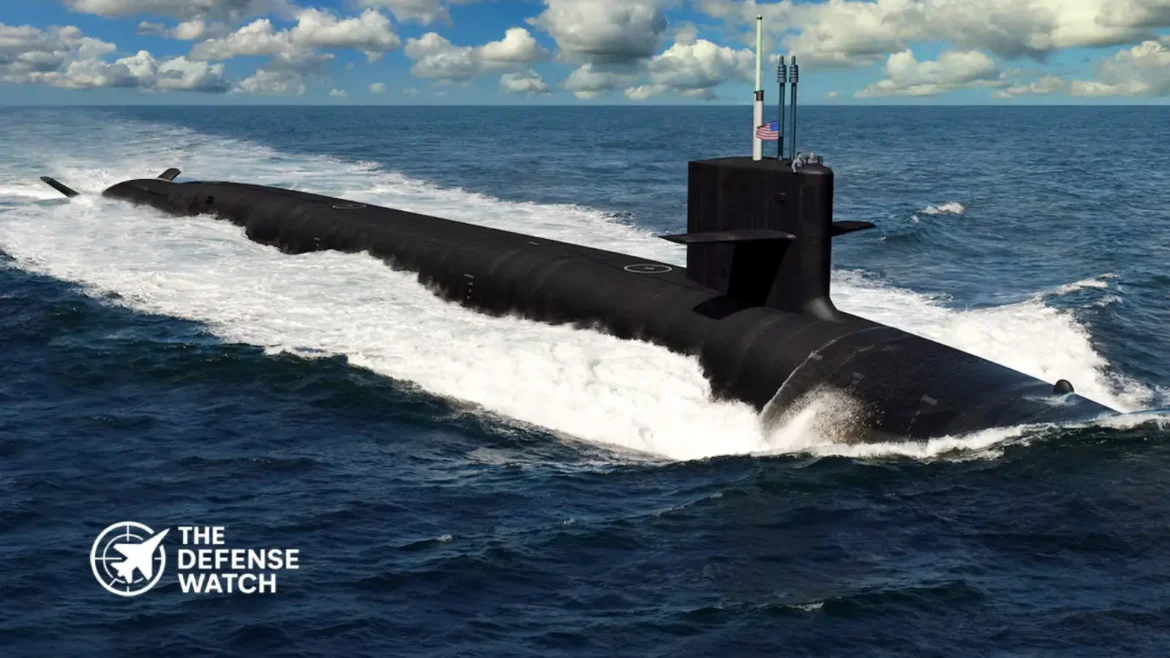
- The sea leg receives the largest share: $16.2 billion for the Columbia-class ballistic missile submarine program, including procurement of the fourth boat in class.
- The air leg receives $6.1 billion for the B-21 Raider stealth bomber and $1.5 billion for the Long-Range Standoff cruise missile (LRSO).
- The land leg receives $4.6 billion for the LGM-35 Sentinel ICBM program, which will field 400 deployed missiles across 450 hardened silos in five states.
The broader $1.5 trillion FY2027 budget request — described by the Pentagon as the largest defense spending proposal in U.S. history — was unveiled at a Pentagon briefing on April 22, 2026, and is intended to support service members and their families, secure the American homeland, modernize aging equipment, and rebuild the defense industrial base. Within that historic number, the nuclear modernization allocation stands apart for both its scale and its urgency.
Why $71 Billion — and Why Now?
The timing of this investment is not coincidental. Hegseth pointed specifically to Iran’s pursuit of nuclear weapons as a live demonstration of why the United States maintains a credible nuclear deterrent, and why that deterrent must remain modern and reliable. That argument carries fresh weight in May 2026, following a period of acute regional instability in the Middle East.
But Iran is only part of the calculus. The proposal is being framed as a response to near-peer competitors — specifically China and Russia — with the administration arguing that decades of underinvestment have left the United States’ strategic posture in need of urgent repair. Pentagon planners are not merely patching aging Cold War infrastructure; they are pursuing a near-simultaneous replacement of all three delivery systems that constitute the triad — a generational shift that no previous administration has attempted at this scale or speed.
Space Force Lt. Gen. Steven P. Whitney, the Pentagon’s joint staff director of force structure, described the request as a continuation of a “generational modernization effort” and highlighted $20.2 billion within the nuclear envelope specifically for NC3 architecture — ensuring missile warning capabilities and strengthening presidential decision-making authority over the country’s strategic forces.
The Air Leg: B-21 Raider and the Long-Range Standoff Weapon
The air component of the triad receives $6.1 billion for the B-21 Raider program. The next-generation stealth bomber, developed by Northrop Grumman, is designed as a dual-capable platform able to deliver both conventional and nuclear payloads, and the U.S. Air Force plans to procure a minimum of 100 aircraft. FY2027 funding supports continued development, testing, production readiness, and low-rate initial production.
Alongside the Raider, $1.5 billion is allocated for the Long-Range Standoff (LRSO) cruise missile, the intended replacement for the aging AGM-86B air-launched cruise missile that currently arms the B-52H bomber fleet. Lifetime procurement costs for the LRSO have climbed to $11.8 billion — up from $9.8 billion projected just two years ago — with the FY2027 request nearly doubling the previous year’s enacted funding for the program.
The B-21 and LRSO together represent a penetrating strike-plus-standoff combination designed to defeat even the most advanced integrated air defense systems that adversaries like China and Russia are fielding. The combination gives U.S. Strategic Command far more flexibility than the bomber leg has historically offered.
The Land Leg: Sentinel ICBM Faces Cost Pressure but Moves Forward
The FY2027 budget includes $4.6 billion for the LGM-35 Sentinel program, the long-overdue replacement for the Minuteman III intercontinental ballistic missile. When fully fielded, the Sentinel will deploy 400 operational warheads across 450 hardened silos in five states, requiring major infrastructure projects at each location.
The Air Force anticipates achieving Milestone B approval for the Sentinel by the end of 2026, following significant cost overruns and a program restructuring. Northrop Grumman broke ground in February 2026 on a test silo intended to validate a new modular silo launcher design. FY2027 silo construction funding of just over $1 billion is distributed across F.E. Warren Air Force Base in Wyoming ($632 million), Minot Air Force Base in North Dakota ($232 million), and Malmstrom Air Force Base in Montana ($138.5 million).
The Sentinel program has absorbed criticism for budget overruns and schedule delays, but its strategic logic remains intact. Minuteman III missiles have been in service since the early 1970s, and their guidance, propulsion, and communication systems are stretching the limits of maintainability. Delaying Sentinel further would eventually force a choice between operating an increasingly unreliable land leg or standing it down — neither of which is acceptable under current threat conditions.
The Sea Leg: Columbia-Class Submarine Leads the Pack
The nuclear sea leg receives the largest single allocation within the triad package: $16.2 billion for the Columbia-class ballistic missile submarine program. The FY2027 request funds procurement of the fourth Columbia-class boat as well as continued development work on the third submarine in the class, USS Groton, along with research, development, testing, evaluation, and investment in the submarine industrial base.
The Navy still expects to receive the first Columbia-class boat by the end of 2028, according to Vice Adm. Robert Gaucher, the service’s direct reporting portfolio manager for submarines. The Trident II ballistic missile — the sea leg’s primary weapon — is also moving from an R&D phase into full procurement in FY2027, with associated costs rising from $2.6 billion to $3.9 billion.
The Columbia program is arguably the most critical single investment in the entire nuclear enterprise. Submarines on patrol are essentially invulnerable to first-strike targeting, making the sea-based leg the ultimate guarantor of a retaliatory second strike. Any gap in Columbia deliveries as Ohio-class boats age out would create a structural vulnerability in the deterrent posture that adversaries could exploit in a crisis.
Industrial Base: The Hidden Variable in the Entire Budget
Secretary Hegseth told lawmakers that rebuilding the industrial base underpins everything else in the budget, arguing that the capacity of America’s private sector to deliver advanced weapons at speed and scale is itself a form of deterrence — and that for years, that capacity had been deliberately neglected.
The central physical constraint confronting the entire modernization effort is the eroded state of the U.S. defense industrial base. The country has only two shipyards capable of building nuclear submarines, and expanding that capacity requires new dry docks, cranes, and skilled workers — a process that takes five to seven years before the first additional hull is laid.
This is the quiet risk buried inside an otherwise impressive budget document. Money is necessary but not sufficient. The Sentinel silo construction program requires specialized contractors; the Columbia program requires a submarine workforce that has been contracting for decades. Throwing capital at a depleted industrial ecosystem does not instantly restore it, and the Pentagon’s own planners acknowledge that the timeline for full capacity restoration extends well beyond a single budget cycle.
What the Numbers Mean Strategically
The $71.4 billion nuclear allocation should be read in the context of a broader strategic signaling exercise as much as a procurement plan. The FY2027 request represents a 44 percent increase over prior defense spending levels and is structured as $1.15 trillion in base discretionary funding plus $350 billion in supplemental funding for what the administration terms “critical presidential priorities.
Peer competitors are watching. China is expanding its own land-based ICBM force at a pace that U.S. intelligence has described as alarming, while Russia continues to invest in hypersonic nuclear delivery vehicles designed to penetrate missile defense systems. The United States is not modernizing the triad in a vacuum — it is doing so in an environment where nuclear competition is actively accelerating on multiple fronts simultaneously.
The key analytical question for 2026 and beyond is not whether the budget request is bold enough — it clearly is — but whether the industrial, congressional, and fiscal conditions exist to execute it on the timelines the administration has set. History suggests that nuclear modernization programs routinely slip, cost more than projected, and encounter technical obstacles that no budget document anticipates. The Sentinel program has already demonstrated that lesson once. Whether the political will exists to sustain $71 billion in annual nuclear investment through successive budget cycles remains an open question that Capitol Hill will ultimately answer.
FAQs
What is the total nuclear triad funding in the FY2027 defense budget?The FY2027 budget allocates $71.4 billion specifically to the nuclear triad and nuclear command, control, and communications systems — the largest such investment in the current modernization cycle.
What is the B-21 Raider’s role in the nuclear triad?The B-21 Raider is the air leg of the triad. It is a dual-capable stealth bomber that can deliver both conventional and nuclear weapons, including the Long-Range Standoff cruise missile. The Air Force plans to procure a minimum of 100 aircraft.
What is the LGM-35 Sentinel and why is it significant?The Sentinel is the replacement for the Minuteman III ICBM, which has been in service since the early 1970s. The FY2027 budget includes $4.6 billion to continue its development, and the program will eventually deploy 400 operational missiles across 450 hardened silos in five states.
How does the Columbia-class submarine fit into the nuclear triad?The Columbia-class submarine is the sea leg of the triad. Submarines on patrol are considered the most survivable component of the deterrent because they are extremely difficult to detect and target. The FY2027 budget allocates $16.2 billion to the program, including procurement of the fourth boat.
Will the $1.5 trillion defense budget actually pass Congress?The proposal is a request, not an enacted appropriation. The request faces significant debate over its scale, with analysts noting industrial base constraints, competing fiscal priorities, and bipartisan concerns about the national debt. Congressional passage at the full requested level is considered unlikely, though substantial portions are expected to be approved.
Executive Summary: The Commander of US Indo-Pacific Command (INDOPACOM) has formally supported increasing the US Air Force’s acquisition objective for the B-21 Raider from 100 to 200 aircraft. This recommendation is driven by the need for high-volume, long-range conventional and nuclear precision strikes to deter peer-state aggression in the Pacific theater.
Strategic Requirement for Expanded Stealth Capacity
The push for a 200-aircraft fleet represents a significant shift from the current Department of Defense (DoD) “Program of Record.” Military leadership argues that the initial requirement of 100 units was formulated under different geopolitical conditions. As regional anti-access/area-denial (A2/AD) bubbles expand, the B-21 is increasingly viewed as the primary tool for penetrating sophisticated Integrated Air Defense Systems (IADS).

The B-21 Raider, developed by Northrop Grumman, utilizes sixth-generation stealth technology designed to remain survivable against modern S-400 and nascent S-500 surface-to-air missile systems. By doubling the fleet, INDOPACOM aims to ensure high-sortie availability despite the vast geographical distances of the Pacific.
Comparative Analysis: B-21 Raider vs. B-2 Spirit
The B-21 is intended to replace the aging B-2 Spirit and B-1B Lancer fleets, providing a more maintainable and digitally integrated platform.
Feature B-21 Raider B-2 Spirit (Legacy) Range Estimated 6,000+ nm (Unrefueled) Approx. 6,000 nm Payload Classified (Mixed Munitions) 40,000 lbs Status In Production / Flight Testing Operational (Low Fleet Count) Key Technology Open Systems Architecture (OSA) Analog/Proprietary Digital Mix Export to Sheets
Technical Advantages and Mission Profile
The B-21’s value proposition extends beyond its radar cross-section (RCS) reduction. Its “Open Systems Architecture” allows for rapid software insertion, ensuring the platform can adapt to electronic warfare (EW) threats in real-time.
- Digital Engineering: The platform was developed using digital twin technology, reducing the sustainment tail and increasing the “Mission Capable” rate compared to the maintenance-intensive B-2.
- Multi-Role Capability: While primarily a bomber, the B-21 serves as a high-altitude sensor node, capable of gathering and distributing intelligence, surveillance, and reconnaissance (ISR) data across the Joint All-Domain Command and Control (JADC2) network.
- Dual-Capable Strike: The aircraft is designed to carry both the B61-12 guided nuclear bomb and the Long Range Stand-Off (LRSO) cruise missile, alongside a vast array of conventional precision-guided munitions (PGMs).
Geopolitical Implications and Deterrence
The INDOPACOM recommendation arrives amid increasing concerns regarding the People’s Liberation Army (PLA) modernization. The vastness of the Pacific theater requires a platform that can operate without reliance on vulnerable forward-operating bases.
“The B-21 is the most significant deterrent in our inventory,” noted officials during the 2026 posture hearings. The ability to hold targets at risk from the continental United States (CONUS) or second-island-chain bases like Guam provides a strategic depth that tactical fighters cannot match.
However, expanding the order to 200 aircraft will face budgetary scrutiny. With an estimated unit cost of $750 million (in 2026 dollars), a 100-unit increase would require an additional $75 billion in procurement funding, not including long-term operations and sustainment (O&S) costs. Proponents argue that the cost of conflict far outweighs the investment in a dominant stealth deterrent.
Newer Posts