Executive Summary:
The U.S. Air Force is seeking to expand its EA-37B Compass Call fleet from 10 to 19 aircraft as electronic warfare becomes increasingly critical in modern conflict. The move reflects growing concerns over contested electromagnetic environments and the need to maintain operational advantages against peer adversaries.
U.S. Air Force Seeks Major EA-37 Electronic Warfare Expansion
The U.S. Air Force’s planned expansion of the EA-37 electronic attack fleet signals a broader shift toward electromagnetic warfare as a core operational requirement for future conflicts.
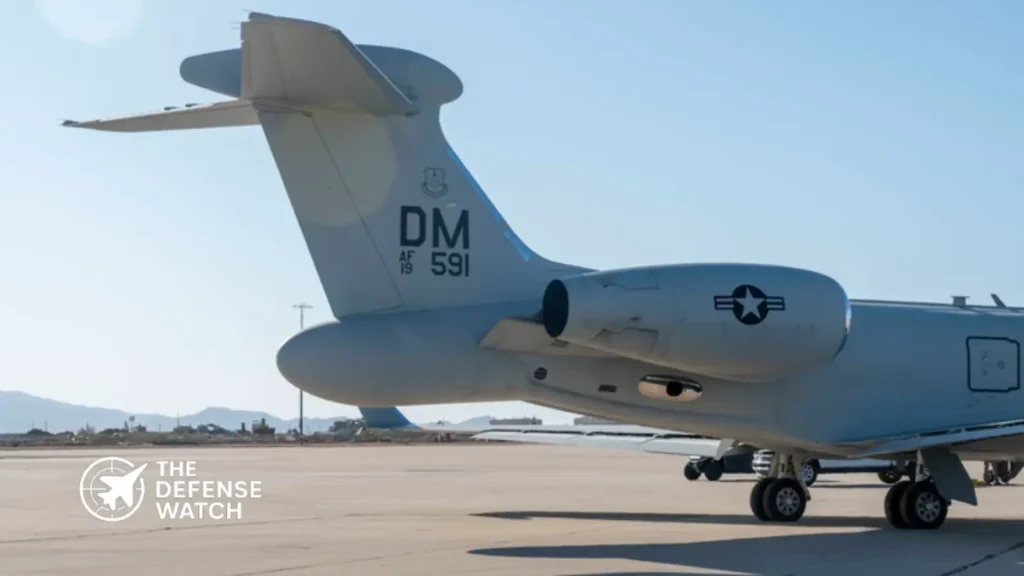
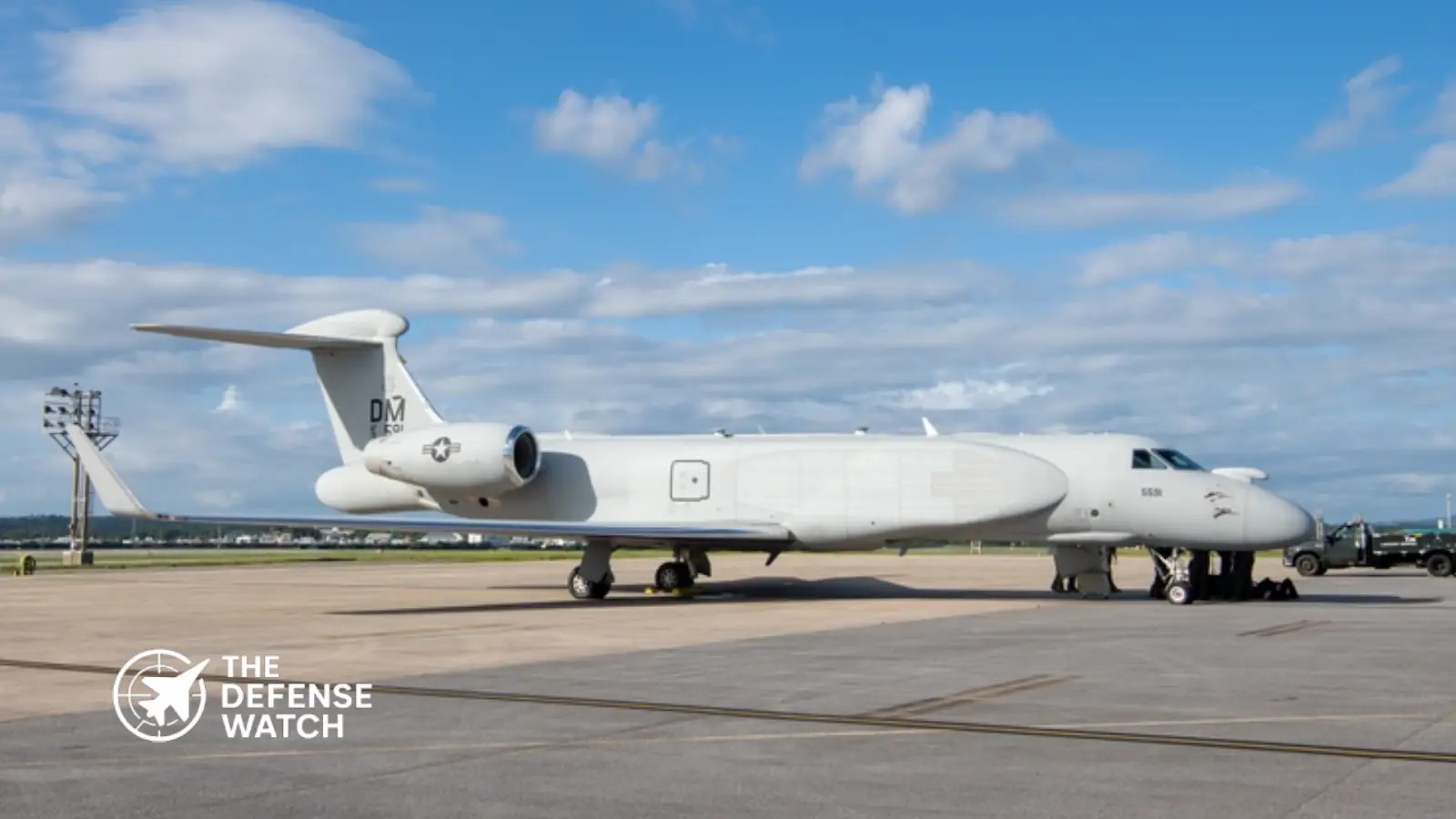
Air Force officials now want to increase the planned EA-37B Compass Call fleet from 10 aircraft to 19. The platform is designed to replace the aging EC-130H Compass Call fleet, which has served for decades in airborne electronic attack missions.
The EA-37B is based on the Gulfstream G550 business jet platform and integrates advanced jamming and electronic attack systems intended to disrupt enemy communications, radar, and command networks.
The proposed fleet expansion comes as the Pentagon places increasing emphasis on electronic warfare capabilities across potential high-end conflict scenarios, particularly in the Indo-Pacific and Europe.
Why The EA-37 Matters
The EA-37B Compass Call is expected to provide improved survivability, longer range, and reduced operating costs compared to the older EC-130H aircraft.
Unlike the turboprop-powered EC-130H, the jet-powered EA-37B offers faster transit speeds and greater operational flexibility. The aircraft is being developed by BAE Systems and L3Harris Technologies under the Compass Call modernization effort.

Image : U.S. Air Force Electronic attack aircraft play a critical role in suppressing enemy air defenses, degrading battlefield communications, and supporting strike packages during contested operations. Modern military operations increasingly depend on uninterrupted access to the electromagnetic spectrum, making airborne jamming assets more strategically valuable.
The Air Force’s decision to reconsider the fleet size also reflects lessons observed from ongoing conflicts where electronic warfare, drones, and network disruption have become central battlefield factors.
Growing Demand For Electromagnetic Warfare
Senior Air Force leaders have repeatedly warned that the electromagnetic spectrum is now a heavily contested domain.
Potential adversaries including China and Russia continue investing in advanced radar systems, integrated air defenses, cyber-electromagnetic operations, and long-range sensing networks. In such environments, aircraft capable of disrupting enemy command and control systems become increasingly important.
The EA-37B is expected to support joint force operations by enabling strike aircraft, bombers, and intelligence platforms to operate more effectively in hostile airspace.
The Air Force originally planned for a smaller fleet partly because of budget pressures and assumptions about future operational requirements. However, growing concerns about pacing threats and operational tempo appear to be driving reassessments inside the service.
Transition From The EC-130H Fleet
The retirement of the EC-130H Compass Call fleet has been ongoing for several years as the Air Force transitions toward the newer platform.
The legacy aircraft proved valuable during operations in Iraq, Afghanistan, and other counterinsurgency campaigns where electronic attack missions were used to disrupt insurgent communications and remote detonation systems.
However, future conflicts against technologically advanced adversaries require faster and more survivable platforms capable of operating in highly contested environments.
The EA-37B addresses several of those concerns through improved altitude performance, reduced maintenance demands, and updated mission systems.
Air Force officials have also emphasized that modern electronic warfare is no longer a niche support capability. Instead, it is becoming an integrated component of air dominance and joint operations planning.
Strategic Implications
The move to nearly double the EA-37 fleet reflects a wider Pentagon effort to rebuild electronic warfare capacity after years of focus on counterterrorism operations.
The U.S. military is increasingly prioritizing capabilities that can survive in denied environments, disrupt enemy sensor networks, and support distributed operations across large theaters.
For the Air Force, the EA-37B represents part of a larger modernization effort that includes next-generation fighters, collaborative combat aircraft, long-range weapons, and advanced networking systems.
Electronic attack platforms may also become increasingly important for coalition operations, particularly as NATO and Indo-Pacific allies seek stronger interoperability in contested spectrum environments.
While budget approval and procurement timelines remain subject to congressional review, the Air Force’s revised requirement signals that electronic warfare aircraft are regaining prominence in U.S. defense planning.