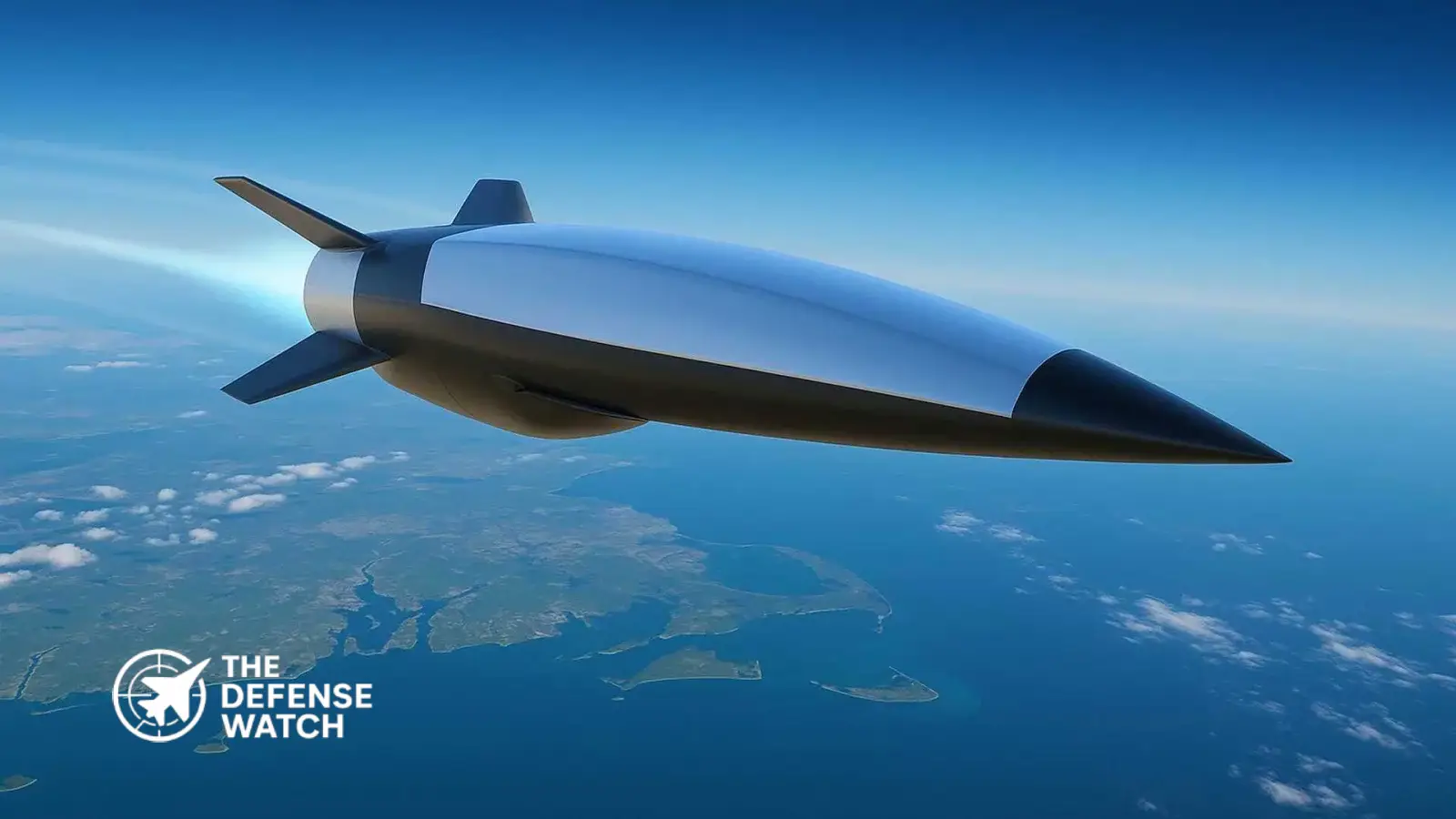
HACM Hypersonic Missile Moves Into Production Phase
The HACM hypersonic missile has entered a critical stage as the U.S. Air Force requests $404 million in its FY2027 budget to fund production of the first operational missiles. The funding request, reported by Army Recognition and based on Pentagon budget documents, signals that the program is shifting from development into procurement.
That transition matters. Many hypersonic programs remain trapped in testing cycles, cost growth, or schedule delays. Moving HACM toward production indicates growing confidence in the missile’s maturity and its relevance to future combat planning.
- The U.S. Air Force is requesting $404 million in FY2027 to begin HACM missile production.
- HACM stands for Hypersonic Attack Cruise Missile, an air-launched high-speed strike weapon.
- The missile is designed for speeds above Mach 5 with high maneuverability.
- Raytheon is the prime contractor, with Australian participation in propulsion work.
- The request reflects growing Pentagon urgency to field operational hypersonic weapons.
The Hypersonic Attack Cruise Missile is intended to provide U.S. forces with a fast, survivable weapon capable of penetrating advanced air defenses and striking time-sensitive targets at long range.
What Makes HACM Different
Unlike boost-glide hypersonic weapons, the HACM hypersonic missile uses an air-breathing scramjet propulsion system. That design can allow sustained hypersonic flight while maneuvering through the atmosphere.
This gives several operational advantages:
- Faster response times against mobile targets
- Reduced warning time for defenders
- Greater ability to evade interception
- Launch flexibility from combat aircraft
- Lower logistical burden than larger boost-glide systems
Because it is air-launched, HACM could potentially be integrated with tactical aircraft such as bombers or fighters, expanding the number of platforms able to deliver hypersonic strike effects.
Why The FY2027 Request Matters Now
The $404 million request is more than a procurement line. It reflects a broader U.S. defense priority to close capability gaps with rival powers.
China has heavily invested in operational hypersonic systems, including regional anti-ship and land-attack weapons. Russia has also fielded several hypersonic designs, though wartime performance claims remain mixed.
For Washington, the lesson is clear: hypersonics are no longer experimental prestige programs. They are becoming deployable military tools.
By funding first production missiles, the Air Force appears to be prioritizing weapons that can be fielded sooner and carried by existing aircraft.
Program Background And Industry Team
Raytheon was selected in 2022 to develop HACM under an accelerated acquisition pathway. The program also includes Australian cooperation under the SCIFiRE initiative, which focused on hypersonic air-breathing propulsion research.
That partnership is strategically useful for two reasons:
First, it spreads development risk across allied industrial bases.
Second, it strengthens U.S.-Australia defense technology ties at a time when Indo-Pacific deterrence has become central to American planning.
Challenges Still Ahead
Even with a production request, several hurdles remain before large-scale deployment:
- Successful flight testing at representative speeds
- Platform integration with Air Force aircraft
- Manufacturing of advanced heat-resistant materials
- Reliable scramjet engine production at scale
- Unit cost control for sustained procurement
Hypersonic weapons often face demanding engineering requirements, especially thermal stress, guidance precision, and supply chain constraints.
Strategic Impact
If fielded on schedule, the HACM hypersonic missile could give the Air Force a new option between subsonic cruise missiles and expensive ballistic systems.
That fills an important niche. Commanders increasingly need weapons able to strike defended targets quickly without relying solely on stealth aircraft entering contested airspace.
In practical terms, HACM could become part of a layered strike network that includes bombers, stand-off missiles, electronic warfare, and space-enabled targeting.
Bottom Line
The Air Force’s $404 million FY2027 request suggests HACM is becoming one of the Pentagon’s most serious near-term hypersonic efforts. While testing and integration risks remain, moving into production planning marks a significant milestone.
For U.S. military planners, speed now matters as much as range. HACM is designed to deliver both.
Get real time update about this post category directly on your device, subscribe now.