

Executive Summary:
Iran has issued a warning directed at a British warship amid growing tensions in the Persian Gulf and the Strait of Hormuz. The development comes as the United Kingdom increases its maritime presence in the region following concerns over regional escalation and shipping security.
Iran British Warship Threat Raises Gulf Security Concerns
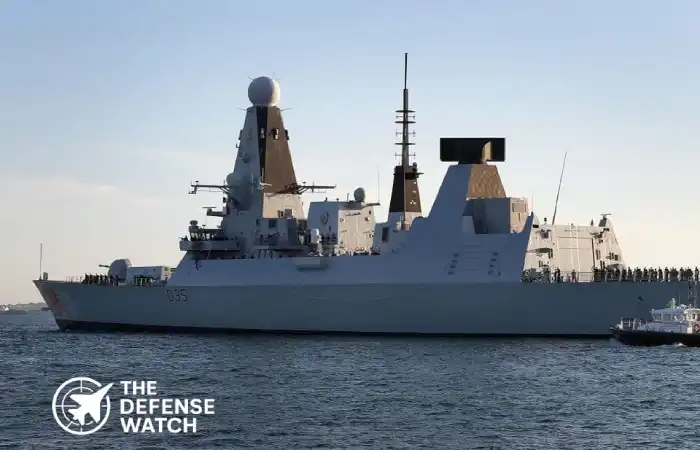
The Iran British warship threat has intensified concerns over maritime security in the Persian Gulf, particularly around the strategically vital Strait of Hormuz. Iranian officials warned that British naval forces could face consequences if they support hostile military operations in the region.
The remarks reportedly followed the deployment of British military assets to the Middle East as tensions continue to rise between Iran and Western powers. While the United Kingdom has not announced any offensive operations, London has reinforced regional naval patrols and surveillance activities to protect commercial shipping lanes and allied interests.
The warning underscores how quickly maritime security conditions in the Gulf can deteriorate, especially as military posturing increases among regional and international actors.
Strategic Importance Of The Strait Of Hormuz
The Strait of Hormuz remains one of the world’s most critical maritime chokepoints. Roughly one-fifth of global oil supplies transit through the narrow waterway, making any threat to naval or commercial shipping a matter of international concern.
British and American naval forces have maintained a long-standing presence in the region to ensure freedom of navigation and deter attacks on commercial vessels. Iran, meanwhile, has repeatedly stated that foreign military deployments near its coastline are viewed as security threats.
The latest Iran British warship threat reflects a broader pattern of signaling between Tehran and Western governments during periods of geopolitical instability. Analysts note that such warnings are often intended to demonstrate deterrence capability while avoiding direct military confrontation.
UK Naval Presence Signals Broader Regional Strategy
The Royal Navy has increased operational readiness in the Middle East over recent years, particularly following attacks on commercial tankers and regional infrastructure. British warships regularly operate alongside U.S. and allied forces under multinational maritime security frameworks.
Although the current British deployment is officially defensive in nature, Tehran appears concerned that Western naval forces could become involved in future operations linked to regional escalation.
The United Kingdom has also expanded intelligence-sharing and surveillance coordination with NATO partners and Gulf allies. This reflects a wider Western strategy focused on maintaining open sea lanes and deterring attacks against civilian shipping.
From a defense perspective, the situation highlights how naval deployments are increasingly tied not only to combat operations, but also to economic security and energy stability. Any disruption in the Strait of Hormuz could rapidly affect global energy markets and international trade routes.
Iran Continues Maritime Pressure Campaign
Iran’s naval doctrine has increasingly emphasized asymmetric maritime tactics, including fast attack craft, coastal missile systems, drones, and naval mines. The Islamic Revolutionary Guard Corps Navy (IRGCN) has repeatedly demonstrated its ability to harass or intercept vessels operating near contested waters.
Military analysts believe Tehran uses maritime pressure as both a deterrence tool and a geopolitical messaging platform. By issuing warnings against foreign warships, Iran reinforces its position that regional security should remain under local control rather than foreign military oversight.
The Iran British warship threat also comes amid broader instability across the Middle East, including concerns over regional proxy conflicts, missile activity, and attacks involving unmanned systems.
Western Navies Face Increasing Operational Pressure
For the Royal Navy and allied maritime forces, the Gulf remains one of the most operationally demanding theaters in the world. Naval commanders must balance deterrence, de-escalation, intelligence gathering, and commercial escort missions simultaneously.
The presence of advanced drones, anti-ship missiles, and electronic warfare systems has transformed the threat environment in the region. Modern naval operations now require constant surveillance, rapid-response capabilities, and close coordination between allied fleets.
Defense observers note that even limited incidents at sea can rapidly escalate politically, especially when multiple military forces operate in confined waterways.
While no direct confrontation has occurred following the latest Iranian warning, the rhetoric highlights the fragile security environment surrounding one of the world’s most important maritime corridors.
Why The Development Matters
The Iran British warship threat is significant because it illustrates how naval deployments increasingly intersect with energy security, alliance politics, and regional deterrence strategies.
For the United Kingdom, maintaining a visible maritime presence supports both allied commitments and international shipping security. For Iran, signaling resistance to foreign naval activity remains central to its regional defense posture.
As tensions continue across the Middle East, maritime security operations in and around the Strait of Hormuz are likely to remain a critical focus for Western and regional military planners.
