

Executive Summary:
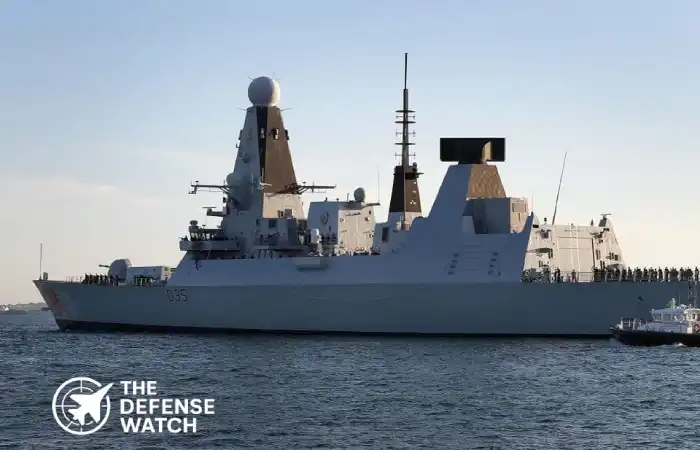
The United Kingdom has deployed a Royal Navy warship toward the Middle East as regional maritime tensions continue to rise around the Strait of Hormuz. The move signals London’s intent to maintain freedom of navigation and reinforce allied naval presence in one of the world’s most strategically vital waterways.
UK Warship Deployment Signals Renewed Focus On Hormuz Security
The UK warship deployment to the Middle East highlights growing Western concern over maritime security in and around the Strait of Hormuz, a chokepoint critical to global energy flows and international shipping.
Britain is sending a Royal Navy vessel to the region with the possibility of joining future operations linked to Hormuz security missions. The deployment comes as regional instability, shipping risks, and broader geopolitical tensions continue to shape naval planning among NATO-aligned states.
The British government has not formally confirmed whether the vessel will directly participate in multinational escort or deterrence operations inside the Strait of Hormuz. However, the move reflects London’s broader strategy of sustaining a persistent maritime presence east of Suez.
The Strait of Hormuz remains one of the world’s most strategically important waterways. Roughly a fifth of globally traded oil passes through the narrow maritime corridor connecting the Persian Gulf to the Arabian Sea. Any disruption in the area can immediately affect energy markets, insurance costs, and commercial shipping routes.
Royal Navy Expands Regional Maritime Presence
The latest UK warship deployment adds to an already active Royal Navy footprint in the Middle East. Britain maintains naval facilities in Bahrain through the UK Naval Support Facility, which supports mine countermeasure vessels, patrol ships, and coalition maritime operations.
British naval forces have regularly participated in regional maritime security frameworks designed to deter smuggling, piracy, and attacks on commercial shipping. These operations are often conducted alongside the United States Navy and regional partners.
Defense analysts note that the deployment demonstrates how European allies continue to prioritize maritime access and freedom of navigation amid increasingly contested sea lanes.
The Royal Navy has also invested heavily in modernizing its forward-deployed fleet capabilities. New surveillance systems, integrated command networks, and upgraded air defense technologies have expanded the operational flexibility of British naval forces operating far from home waters.
While the current deployment appears precautionary, it also reflects a wider shift in Western naval posture. Maritime security missions in the Gulf are increasingly linked not only to regional tensions but also to broader strategic competition involving Iran, global trade resilience, and energy security.
Hormuz Remains A Strategic Flashpoint
The Strait of Hormuz has repeatedly emerged as a geopolitical flashpoint over the past decade. Incidents involving commercial tankers, naval interceptions, and drone surveillance operations have periodically raised fears of escalation.
For Britain, protecting maritime traffic in the region carries both economic and strategic significance. The UK remains closely aligned with U.S.-led efforts aimed at safeguarding international shipping lanes and preventing disruptions to global trade flows.
The latest UK warship deployment also comes during a period of sustained naval activity across the Gulf region. Several allied navies have increased patrols, intelligence sharing, and rapid response readiness in response to evolving regional threats.
Military observers say the Royal Navy’s ability to deploy quickly to contested maritime zones demonstrates the continuing relevance of expeditionary naval power in modern defense strategy. Even relatively limited deployments can serve as visible deterrence measures and reassure commercial shipping operators.
At the same time, defense planners are balancing operational commitments across Europe, the Indo-Pacific, and the Middle East. Maintaining naval readiness across multiple theaters remains a challenge for many Western militaries facing growing demands on fleet availability and logistics.
Strategic Implications For Allied Naval Operations
The UK warship deployment may also reinforce allied interoperability efforts in the Gulf. Joint maritime patrols and coordinated naval missions have become increasingly important as regional threats evolve beyond conventional naval confrontation.
Modern maritime security operations now include counter-drone defense, cyber resilience, intelligence fusion, and protection of undersea infrastructure. Naval deployments to the Middle East therefore increasingly serve both operational and political objectives.
For London, maintaining a visible maritime presence supports its long-term defense relationships with Gulf partners while reinforcing Britain’s role within coalition security operations.
The deployment further underscores how the Middle East remains central to global naval strategy despite increasing international attention on the Indo-Pacific and Eastern Europe.
Outlook
Although British officials have not announced a permanent expansion of forces in the Gulf, the latest deployment indicates that the Royal Navy is prepared to respond rapidly if maritime tensions intensify around the Strait of Hormuz.
The situation will likely continue to be monitored closely by allied navies, commercial shipping operators, and global energy markets alike.
