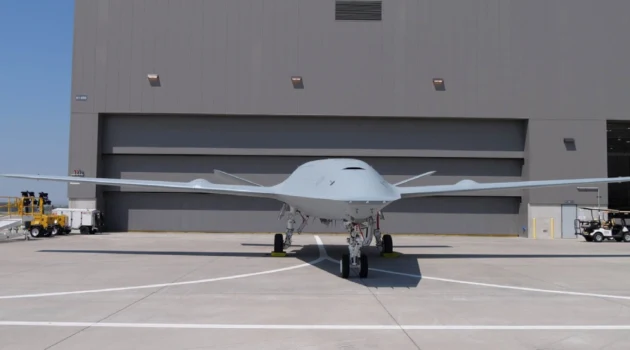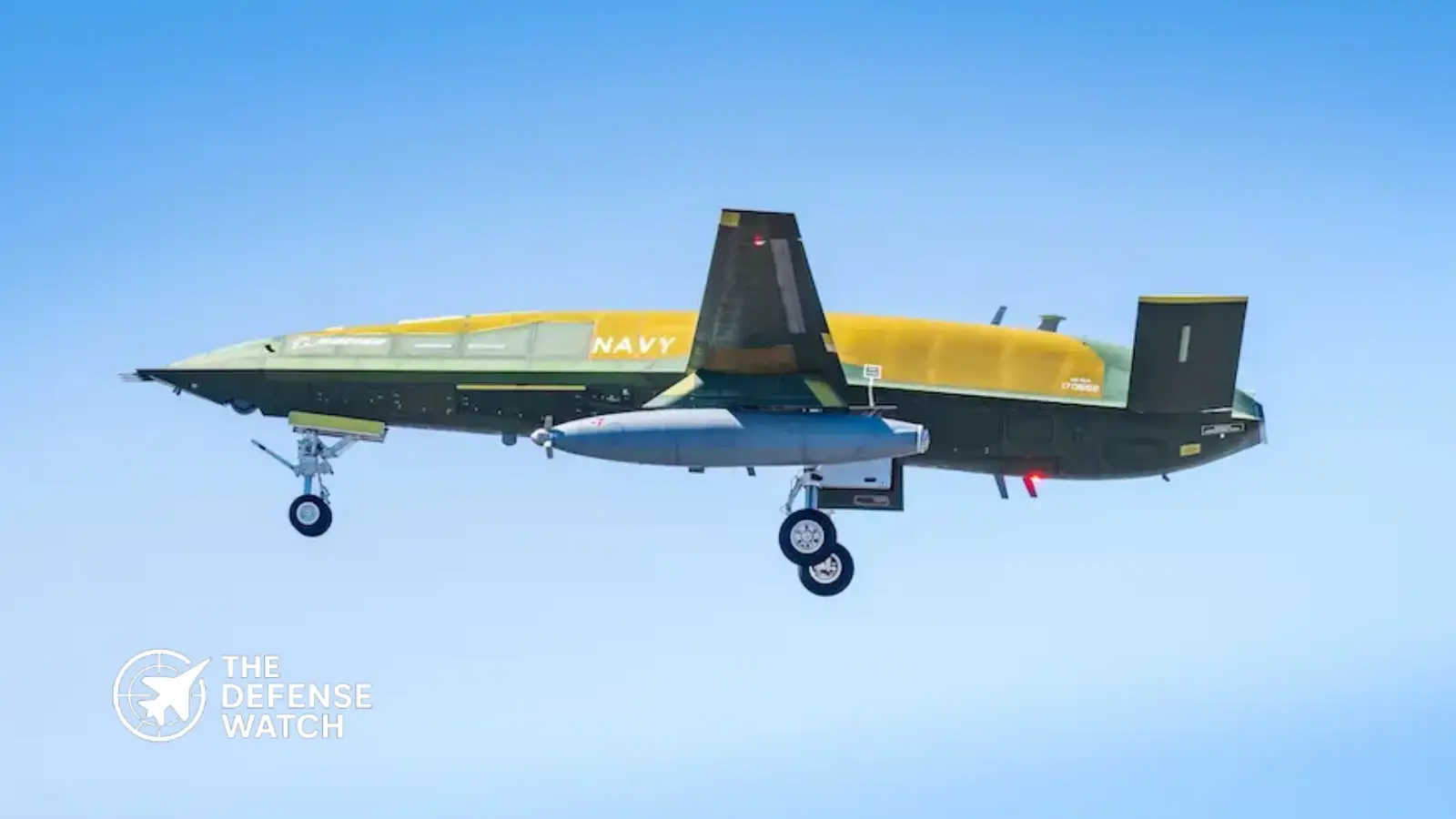
Executive Summary: The U.S. Navy has approved Boeing’s MQ-25A Stingray for low-rate initial production (LRIP) following Milestone C and the aircraft’s successful first flight in April 2026. Acting Secretary of the Navy Hung Cao announced the decision, which paves the way for an LRIP Lot 1 contract for three aircraft this summer. The program aims to deliver organic aerial refueling to carrier air wings, extending reach and preserving the service life of manned fighters.
MQ-25A Stingray Advances Toward Carrier Integration
The U.S. Navy has cleared the Boeing MQ-25A Stingray unmanned refueling aircraft for low-rate initial production, marking a significant milestone in the development of carrier-based unmanned aviation.
Acting Secretary of the Navy Hung Cao made the announcement after the aircraft completed its first flight on April 25, 2026, at Boeing’s facility at MidAmerica Airport in Mascoutah, Illinois. The two-hour flight demonstrated autonomous taxi, takeoff, flight, and landing capabilities under the Unmanned Carrier Aviation Mission Control System.
An LRIP Lot 1 contract for three aircraft is expected to be awarded this summer, with priced options for Lot 2 (three aircraft) and Lot 3 (five aircraft). This initial batch will support further testing and eventual integration into carrier air wings.
Program Background and Strategic Importance
The MQ-25A Stingray is the Navy’s first operational carrier-based unmanned aerial vehicle (UAV). Designed primarily as an aerial refueler, it will allow F/A-18E/F Super Hornets and other strike aircraft to focus on combat missions rather than tanking duties. This shift is expected to extend the operational reach of carrier strike groups and help manage the fatigue life of the manned fleet.
Vice Adm. John E. Dougherty IV, Portfolio Acquisition Executive for Aviation, highlighted the aircraft’s role: “MQ-25A will provide persistent aerial refueling and unlock greater capacity across the air wing, ensuring our carrier strike groups remain lethal, flexible, and forward ready.”
Capt. Daniel Fucito, Unmanned Carrier Aviation program manager, added that the aircraft, production line, and program are now ready to advance this capability.
Original Analysis: In an era of great power competition, particularly with peer adversaries possessing advanced anti-access/area denial (A2/AD) capabilities, the MQ-25 addresses a critical shortfall in carrier air wing endurance. By offloading refueling to an unmanned platform, the Navy can generate more combat sorties from a fixed number of deck spots while reducing risk to aircrew during routine but high-tempo tanking missions. This represents a foundational step toward manned-unmanned teaming (MUM-T) on carrier decks, a concept that could evolve with future attritable or loyal wingman systems.
Development Timeline and Challenges
The program has faced delays common to complex unmanned systems. Earlier test assets flew in 2019, but the first operational engineering development model (EDM) aircraft required extensive ground testing, structural validation, and software certification before its 2026 maiden flight. Production has been established at Boeing’s new 300,000-square-foot facility in Mascoutah.
The Navy plans additional test flights with the initial EDM aircraft to validate controls and prepare for carrier qualifications. Initial operational capability timelines have shifted in prior years, with current projections supporting broader fleet introduction in the late 2020s.
Technical Capabilities and Future Potential
While primarily an aerial refueler, the MQ-25 platform offers growth potential for intelligence, surveillance, and reconnaissance (ISR) missions. Its carrier-optimized design includes folding wings, robust deck handling characteristics, and integration with existing carrier systems. Low-observable features and autonomous flight controls position it as a stepping stone for more advanced unmanned carrier aircraft.
By enabling manned aircraft to remain focused on high-threat strike profiles, the Stingray directly enhances the lethality and flexibility of U.S. carrier strike groups operating in contested environments.