Executive Summary:
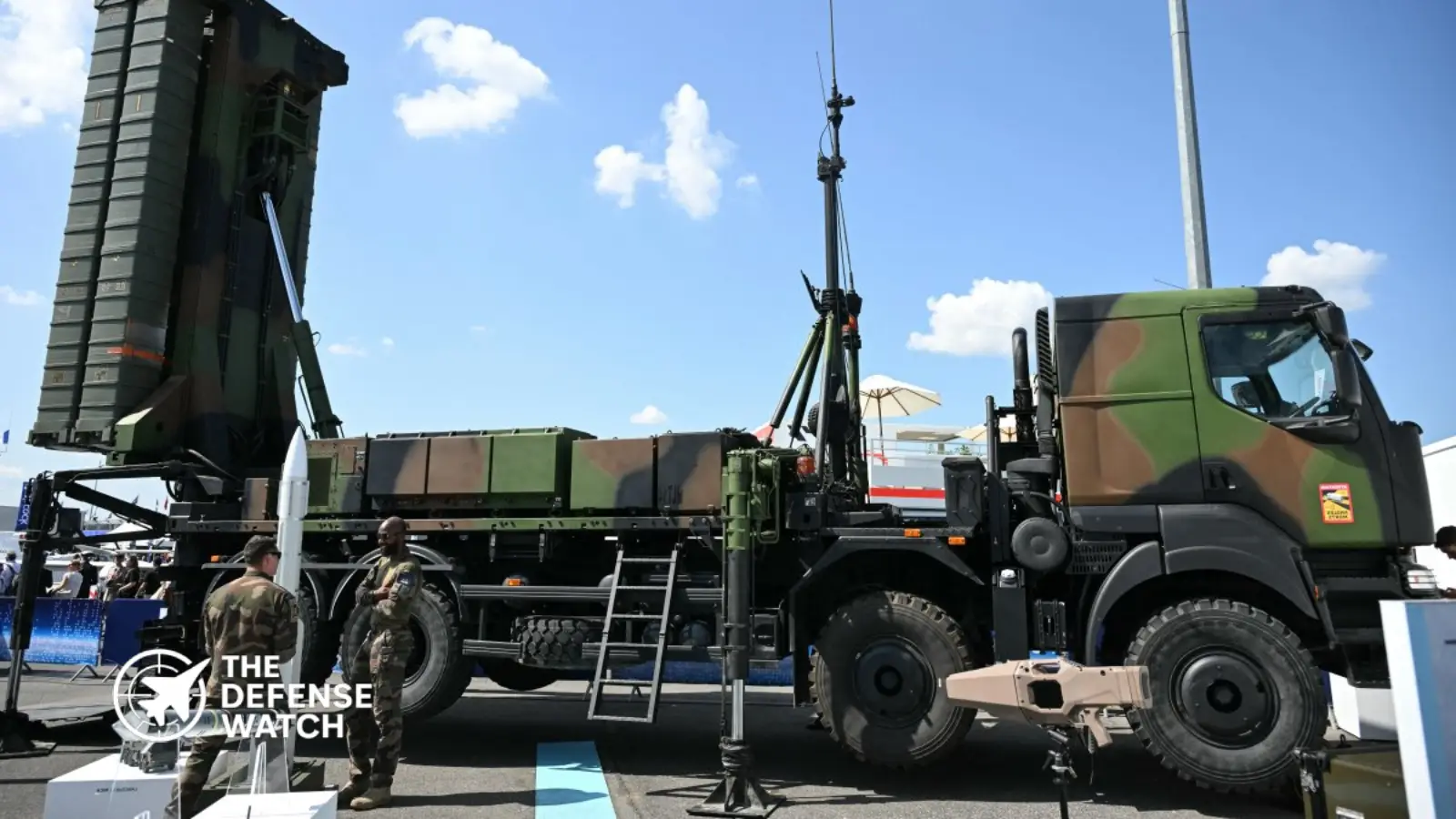
Italy will deploy a SAMP/T air and missile defense system to Türkiye’s Konya province under NATO’s standing defense plans, according to the Turkish Ministry of National Defense. The deployment is designed to strengthen alliance air defense coverage, improve collective deterrence, and reinforce NATO’s integrated air and missile defense posture on its southern flank.
Italy Deploys SAMP/T Air Defense System To Türkiye Under NATO Defense Plan
Italy is preparing to deploy a SAMP/T air defense system to Türkiye as part of NATO’s standing defense plans, marking another example of alliance members contributing strategic air defense assets to strengthen collective security.
According to Türkiye’s Ministry of National Defense, the Italian-operated system will be stationed at the 3rd Main Jet Base Command in Konya. Turkish officials stated that the deployment is intended to reinforce NATO’s air defense architecture and improve allied defensive capabilities in the region.
The announcement comes as NATO continues to emphasize integrated air and missile defense as a core pillar of alliance deterrence amid evolving missile, drone, and airpower threats across Europe, the Black Sea region, and the Middle East.
Why NATO Is Deploying SAMP/T To Konya
Konya hosts one of Türkiye’s most important military aviation facilities and routinely supports NATO exercises, multinational operations, and alliance training activities.
Under the deployment plan, Italy’s SAMP/T battery will provide an additional layer of protection for NATO assets and critical infrastructure while contributing to the alliance’s broader Integrated Air and Missile Defense (IAMD) framework.
The move also reflects NATO’s growing focus on strengthening defensive capabilities across its southern flank, where regional instability, missile proliferation, and the expanding use of armed drones have increased demand for layered air defense systems.
What Is The SAMP/T Air Defense System?
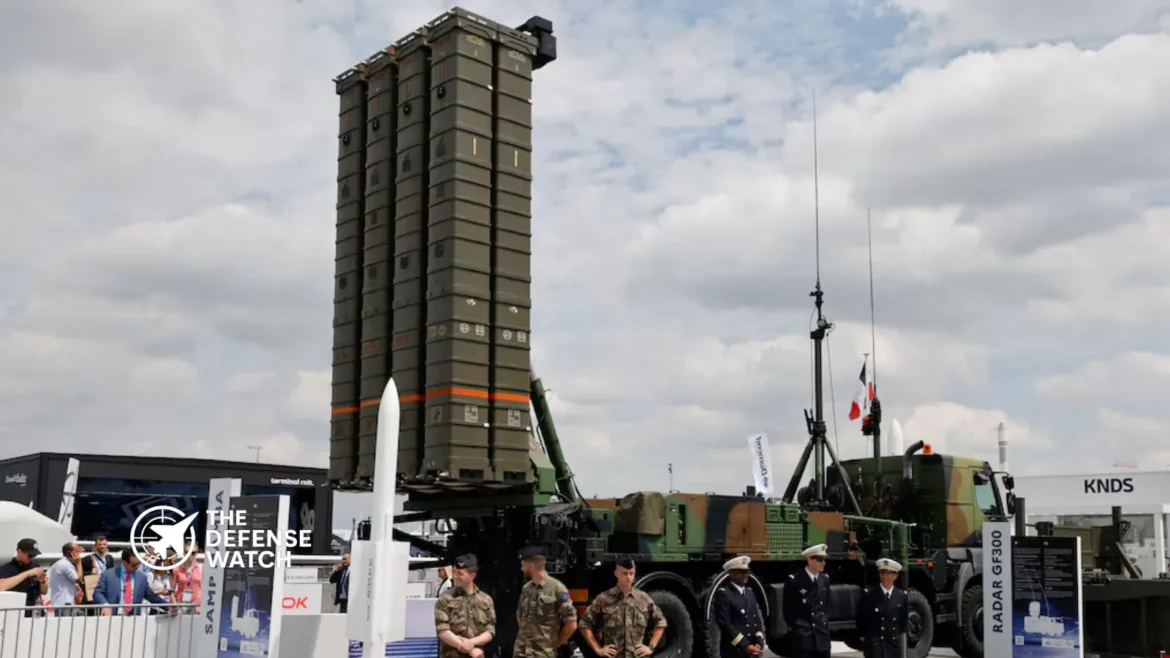
The SAMP/T (Sol-Air Moyenne Portée/Terrestre) is a Franco-Italian ground-based air and missile defense system developed by the Eurosam consortium, which includes MBDA and Thales.
Designed to defend against a broad range of aerial threats, the system can engage:
- Combat aircraft
- Helicopters
- Cruise missiles
- Unmanned aerial vehicles (UAVs)
- Tactical ballistic missiles
The system employs the Aster family of interceptor missiles and provides 360-degree coverage through advanced radar and fire-control systems. According to publicly available information, SAMP/T is among Europe’s most capable medium- to long-range air defense platforms.
Key SAMP/T Capabilities
Capability Description Interceptors Aster 15 and Aster 30 missiles Coverage 360-degree air defense Mobility Truck-mounted, rapidly deployable Target Types Aircraft, UAVs, cruise missiles, ballistic missiles Network Integration NATO-compatible command and control architecture Radar Systems Arabel and newer Kronos radar variants Source: Turkish Ministry of National Defense statements and publicly available system information.
Strategic Significance For NATO
The deployment carries significance beyond a single air defense battery.
NATO has increasingly emphasized multinational air and missile defense cooperation as allies seek to improve readiness against both conventional and emerging threats. In February 2026, alliance members launched additional cooperative initiatives focused on ballistic missile defense, sensor integration, interceptor development, and command-and-control modernization.
Deploying a SAMP/T battery to Türkiye demonstrates NATO’s continued reliance on shared capabilities, allowing member states to provide high-value assets where they can contribute most effectively to collective defense.
For Italy, the mission underscores Rome’s expanding role in alliance security operations and regional air defense efforts. Italy has previously deployed SAMP/T systems abroad in support of NATO and coalition missions, demonstrating the platform’s mobility and expeditionary utility.
Implications For Türkiye’s Air Defense Architecture
The deployment also arrives as Ankara continues efforts to strengthen its national air and missile defense network.
Türkiye has pursued a multi-layered air defense architecture combining indigenous systems with allied capabilities. Recent reports indicate ongoing discussions involving potential acquisition and co-production opportunities related to the SAMP/T system as part of Türkiye’s broader “Steel Dome” air defense initiative.
Although the newly announced deployment is a NATO mission rather than a Turkish acquisition, it offers additional operational experience with advanced European missile defense technologies and further enhances interoperability between Turkish and allied forces.
From a military planning perspective, integrating temporary allied air defense assets into NATO’s command structure helps validate operational procedures, communications networks, and joint engagement concepts that would be critical during a regional crisis.
Growing International Interest In SAMP/T
The SAMP/T has attracted increasing attention across Europe as governments seek modern air and missile defense systems capable of countering increasingly sophisticated threats.
Recent developments include Denmark’s selection of the next-generation SAMP/T NG system and broader discussions among European nations regarding expanded air defense cooperation. The system’s ability to engage ballistic missile threats while remaining fully interoperable with NATO command networks has strengthened its position within Europe’s evolving missile defense architecture.
The deployment to Türkiye further highlights the system’s growing operational footprint across NATO and demonstrates how alliance members are using rotational deployments to strengthen collective air defense coverage.
Outlook
Italy’s deployment of a SAMP/T battery to Konya represents a practical enhancement of NATO’s integrated air and missile defense posture at a time when air and missile threats continue to evolve.
While the deployment does not fundamentally alter the regional military balance, it reinforces alliance readiness, improves interoperability among NATO members, and provides additional defensive coverage for a strategically important region.
As NATO leaders prepare for upcoming alliance discussions focused on deterrence, burden-sharing, and defense modernization, deployments such as this illustrate how multinational capabilities are increasingly being used to strengthen collective security across the alliance.
RAF Scrambles Typhoon Jets After Russian Bomber Detected Near UK Airspace
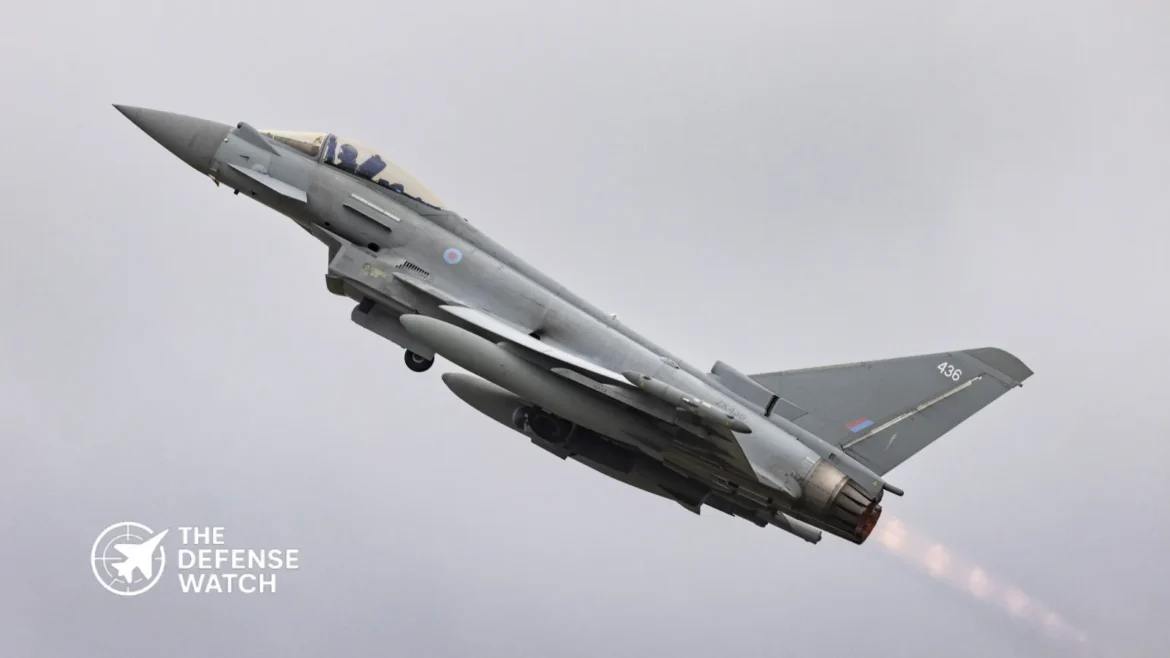
The Royal Air Force executed a Quick Reaction Alert (QRA) intercept mission on April 14, 2026, launching two Eurofighter Typhoon FGR4 fighters from RAF Lossiemouth in northern Scotland after ground-based radar detected a contact assessed as a possible Russian long-range strategic bomber approaching the northern UK area of interest near the Shetland Islands.
The scramble, first reported by The Telegraph, marks the latest episode in an ongoing pattern of Russian long-range aviation activity near NATO’s northern flank — and underscores the persistent readiness demands placed on British and allied air defense forces.
- On April 14, 2026, the RAF launched a Quick Reaction Alert (QRA) sortie after detecting an unidentified radar track assessed as a possible Russian long-range strategic bomber approaching the Shetland sector.
- Two Eurofighter Typhoon FGR4 fighters were scrambled from RAF Lossiemouth — the designated QRA North base — alongside a Voyager KC2/KC3 tanker from RAF Brize Norton.
- The Russian aircraft remained outside the UK’s 12 nautical mile sovereign airspace boundary; no visual identification or ICAO intercept procedures were executed.
- NATO integrated radar networks supported tracking throughout; allied command centers shared real-time trajectory data on the contact.
- The incident fits a pattern of Russian multi-domain probing operations near UK and NATO northern approaches, including recent naval and submarine activity in the North Sea.
What Happened: The April 14 QRA Sortie
The sequence of events on April 14 followed well-established NATO protocols. Once a radar contact lacking a matched flight plan, transponder code, or recognized identification profile was detected along the northern approaches, the RAF’s Air Surveillance and Control System — including long-range radar assets such as Saxa Vord on Shetland — initiated continuous tracking.
The contact’s trajectory toward the Shetland sector triggered a scramble order at RAF Lossiemouth, the QRA North station responsible for covering Scotland and the North Sea. Two Typhoon FGR4 jets were launched, with a Voyager KC2/KC3 air-to-air refueling tanker departing simultaneously from RAF Brize Norton to provide aerial refueling support if the mission extended into a prolonged surveillance profile.
The Russian bomber remained outside the UK’s 12 nautical mile sovereign airspace boundary throughout the event. No visual identification phase was initiated, and no ICAO intercept procedures — such as wing rocking or radio calls on emergency frequencies — were executed. The operation remained in a radar surveillance and readiness posture, concluding once the track was assessed as no longer requiring active monitoring.
Force Package and Operational Significance
The deployment of both fighters and a tanker reflects deliberate mission planning rather than a minimal alert response.
The Typhoon FGR4 has a combat radius of under 1,400 kilometers without aerial refueling — a constraint that becomes operationally significant over the vast open stretches of the North Atlantic and North Sea. The inclusion of the Voyager tanker extended the mission’s potential duration, allowing the Typhoon crews to loiter on patrol without returning to base, and enabling rapid repositioning should the track have altered course.
That the Voyager was included at all signals that UK planners assessed a non-trivial possibility that the situation could evolve. It reflects an operational planning philosophy that prioritizes endurance and flexibility in QRA responses, particularly in northern sectors where on-station distances from base are measured in hundreds of nautical miles.
RAF Lossiemouth maintains aircraft on Operational Readiness Platforms (ORPs) 24 hours a day, with takeoff required within a timeframe generally below 15 minutes from scramble order — a standard that the April 14 sortie appears to have met.
Russia’s Long-Range Bomber Operations: A Persistent Pattern
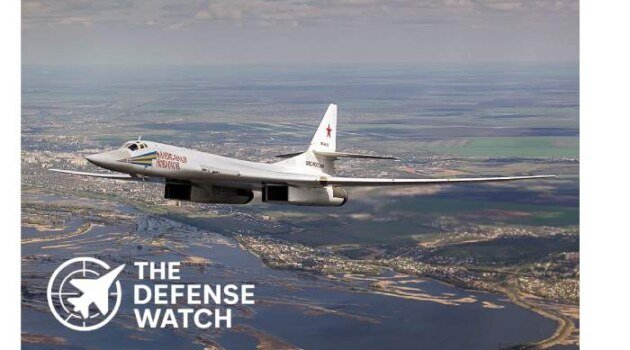
The April 14 sortie is not an isolated event. Russia has conducted long-range aviation patrols near NATO airspace consistently since at least 2007, using aircraft such as the Tu-95MS “Bear”, the Tu-160 “Blackjack”, and maritime patrol variants like the Tu-142 to probe allied air defense reaction times, assess radar coverage, and signal strategic reach.
These missions typically operate without active transponders or civilian air traffic coordination, creating the deliberate ambiguity that necessitates a QRA response. By remaining outside the 12 nautical mile threshold, Russian aircraft avoid triggering legal thresholds under international aviation law that would permit coercive intercept measures — while still generating significant monitoring demands on allied forces.
In a 2020 QRA event, the RAF scrambled six Typhoon fighters and progressed to visual identification and escort phases, indicating the Russian aircraft had closed to within visual confirmation range. The April 2026 event remained well short of that threshold — a single two-ship flight supported by a tanker, with no identification maneuvers executed. The difference in scale reflects a difference in assessed risk, not a reduction in Russian intent.
Multi-Domain Context: Not Just An Air Threat
The April 14 air intercept does not exist in isolation. It tracks alongside a broader pattern of Russian multi-domain operations near the United Kingdom that has intensified over recent years.
Russian naval vessels have conducted repeated transits through the English Channel under monitoring by the Royal Navy. More significantly, Russian submarine activity in the North Sea — including reported tracking of what was assessed as an Akula-class boat and associated deep-sea assets near subsea infrastructure — has generated sustained surveillance taskings for both British and allied forces.
The overlap of these air, surface, and subsurface activities increases the operational burden on UK and NATO command-and-control nodes. Managing simultaneous monitoring requirements across multiple domains stresses intelligence fusion, coordination capacity, and aircraft availability. Analysts assess this multi-domain overlap as deliberate — designed to test detection and response mechanisms under conditions that approximate, without crossing, thresholds that would trigger formal escalatory responses.
Analysis: What This Event Tells Us About NATO’s Northern Flank
From a strategic standpoint, the April 14 QRA reflects the enduring tension on NATO’s northern flank between Russian probing activity and allied deterrence signaling.
Russia’s use of long-range aviation as an instrument of strategic messaging is well-documented. These flights serve multiple purposes simultaneously: they generate intelligence on allied sensor coverage and reaction timelines; they demonstrate Russia’s ability to approach NATO territory without direct confrontation; and they sustain operational proficiency for aircrews conducting long-range missions under realistic conditions.
For the UK, the response was calibrated and measured. Deploying a two-ship Typhoon formation with tanker support demonstrates readiness without escalation — a proportional reply to what remained a surveillance-phase event. The decision not to execute visual identification procedures confirms that British and NATO controllers assessed the track did not require escalation to enforcement geometry.
What the April 2026 event does demonstrate is the continuing operational relevance of RAF Lossiemouth as NATO’s northern QRA anchor — and the Typhoon force’s capacity to sustain rapid response across northern approaches in coordination with allied radar and intelligence networks.
As Russian activity across maritime, subsurface, and aerial domains continues near UK and NATO peripheries, the demand on Quick Reaction Alert forces will remain high. Sustaining QRA readiness — in personnel, aircraft serviceability, and integrated sensor networks — remains one of the RAF’s most operationally consequential ongoing commitments.
- Airbus’ Bird of Prey drone interceptor completed its first successful demonstration flight on March 30, 2026, at a military training area in northern Germany.
- The system autonomously searched, detected, classified, and engaged a medium-sized kamikaze drone — entirely without a human in the kill chain.
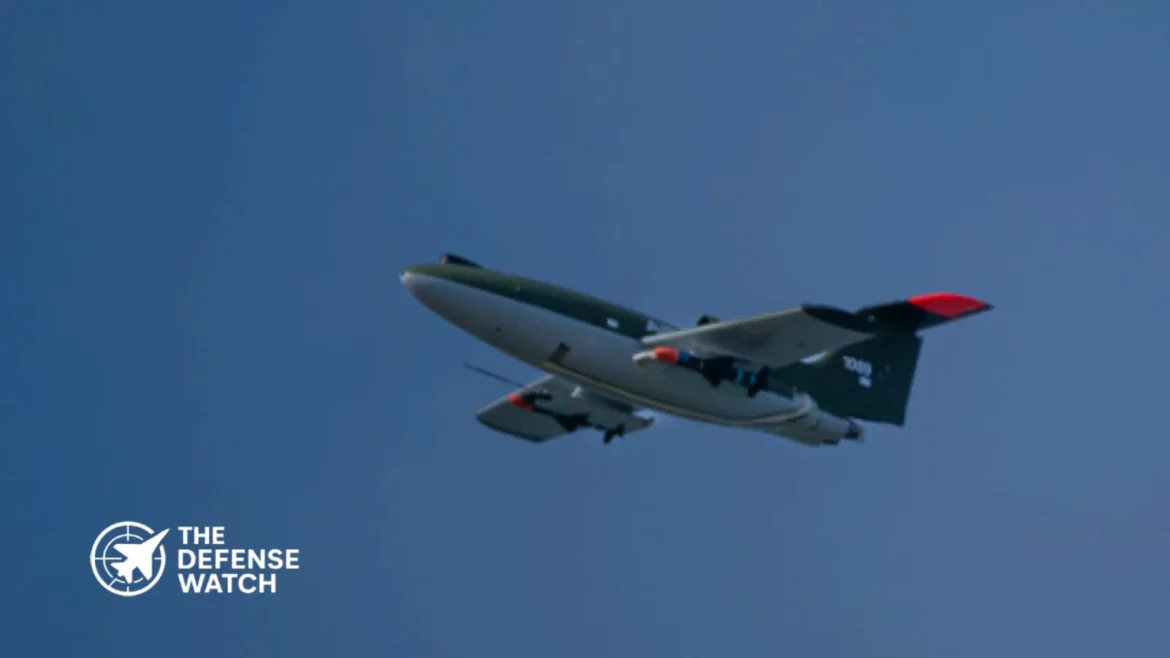
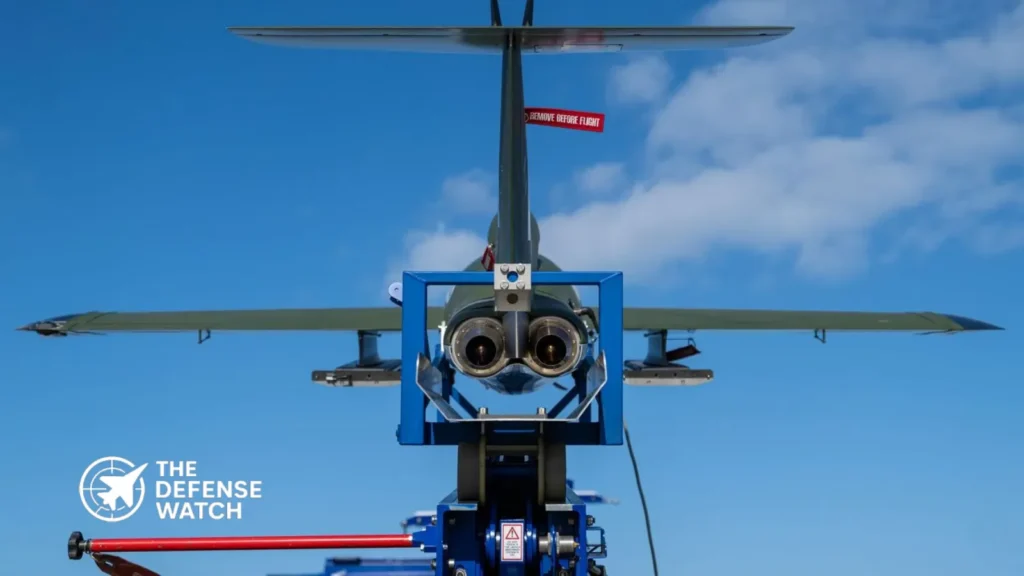
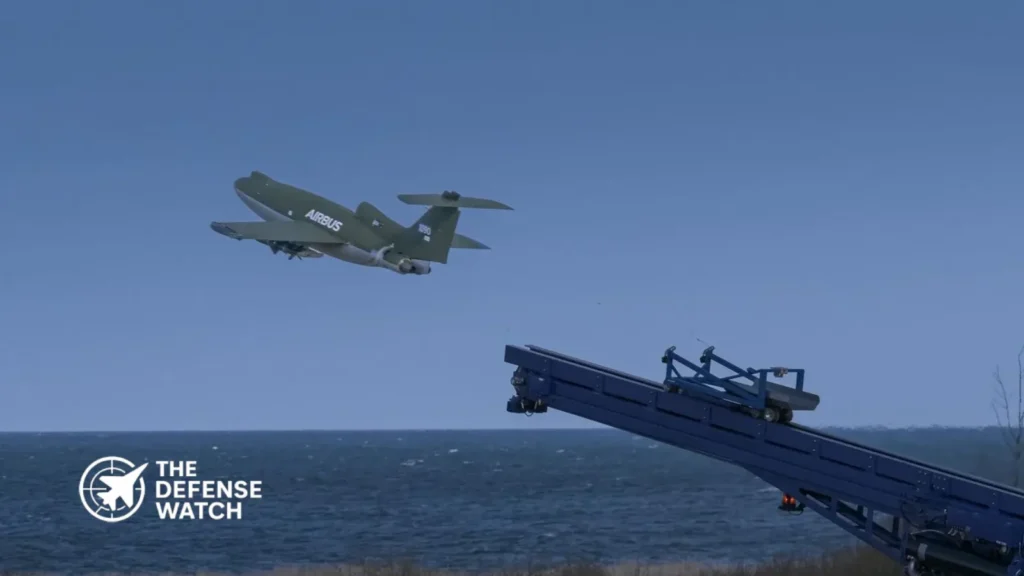
- The Bird of Prey prototype is based on a modified Airbus Do-DT25 drone, measuring 3.1 meters in length with a 2.5-meter wingspan and a max takeoff weight of 160 kg.
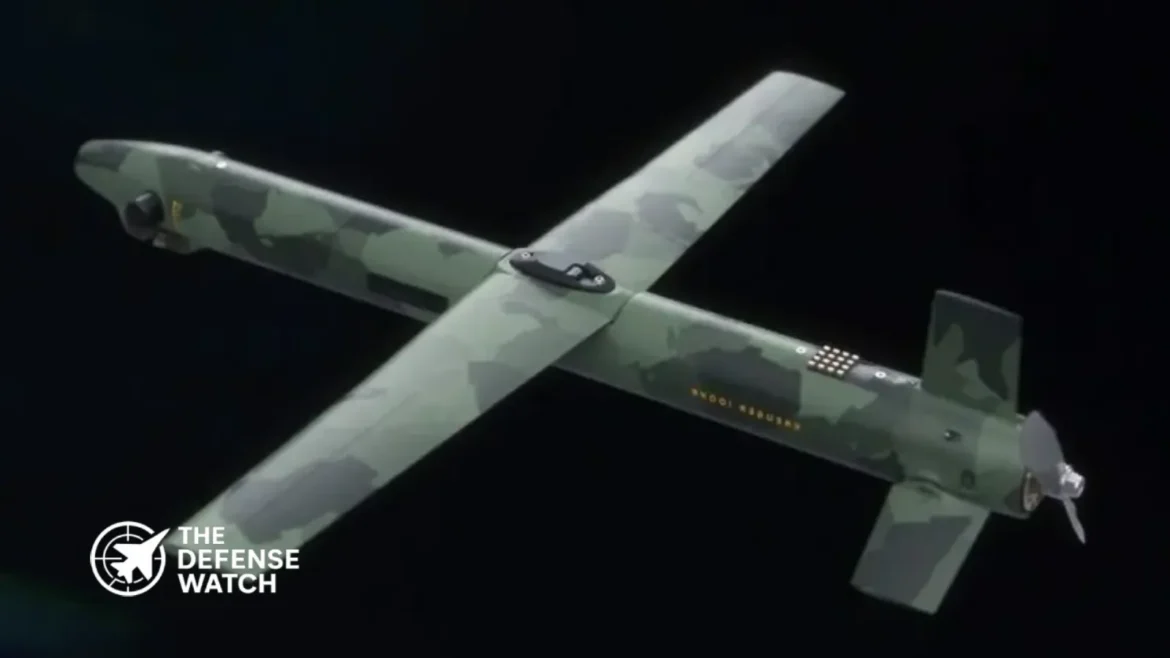
- The Frankenburg Mark I missile weighs under 2 kg, measures 65 cm, and carries a fragmentation warhead with an engagement range of up to 1.5 kilometers — making it the lightest guided interceptor developed to date.
- The operational Bird of Prey platform will carry up to eight Mark I missiles and integrates into NATO’s air defense architecture via Airbus’ Integrated Battle Management System (IBMS).
Airbus Bird of Prey Drone Interceptor Makes History With Successful First Flight
MUNICH, GERMANY — March 30, 2026 — In a significant milestone for European air defense technology, Airbus Defence and Space confirmed that its Bird of Prey uncrewed interceptor drone has successfully completed its maiden demonstration flight at a military training area in northern Germany. The autonomous system detected, classified, and neutralized a medium-sized one-way attack drone — commonly known as a kamikaze drone — using a newly developed air-to-air missile built by Estonian defense technology startup Frankenburg Technologies. The test, which took place just nine months after the project officially launched, marks one of the most consequential advances in counter-UAS (Uncrewed Aerial System) defense seen in Europe in recent years.
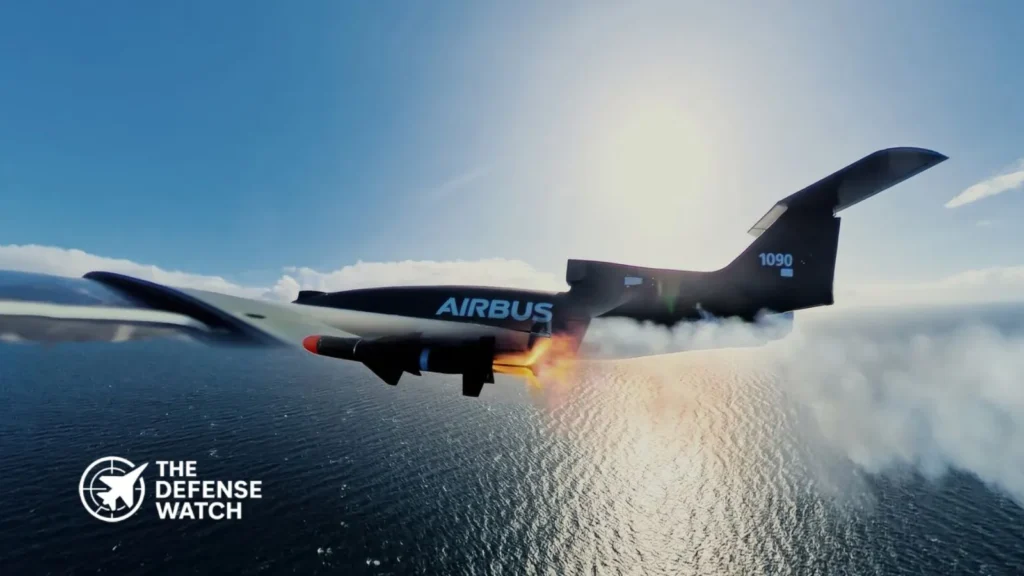
According to Airbus, the Bird of Prey interceptor autonomously searched for, detected, and classified the target before engaging it with a Mark I air-to-air missile developed by Frankenburg Technologies. The entire engagement sequence operated without direct human intervention in the targeting loop — a critical distinction that sets this system apart from most existing counter-drone platforms currently deployed by NATO forces.
Why This Milestone Matters Now
The timing of this demonstration is no accident. Across the battlefields of Ukraine, the Middle East, and beyond, low-cost one-way attack drones have become one of the defining tactical threats of modern warfare. Iranian-made Shahed-series drones, Russian Lancet loitering munitions, and a growing array of commercial drones modified for military use have exposed a stark capability gap in the air defense architectures of Western nations: most existing systems were designed to defeat expensive ballistic missiles and manned aircraft — not swarms of $500 drones flying at low altitude.

Existing countermeasures, including radar-directed guns, shoulder-fired MANPADS, electronic jamming, and high-energy lasers, each carry significant drawbacks. They are either prohibitively expensive per kill, tactically limited in range, dependent on electromagnetic spectrum conditions, or too slow to respond to mass saturation attacks. Airbus CEO Mike Schoellhorn described the threat environment clearly, noting that defending against kamikaze drones has become “a tactical priority that urgently needs to be tackled” given current geopolitical and military realities.
The Bird of Prey program is a direct industrial response to that operational gap.
Inside the Bird of Prey: Technical Architecture
The Bird of Prey prototype used in the demonstration is built on a modified Airbus Do-DT25 drone platform, featuring a wingspan of 2.5 meters, a length of 3.1 meters, and a maximum takeoff weight of 160 kilograms. Those dimensions position it squarely in the medium tactical drone category — large enough to carry meaningful payloads and carry out extended area patrols, yet agile and relatively affordable compared to larger crewed or high-end uncrewed platforms.
During the demonstration, the prototype carried four Mark I air-to-air missiles. The operational version, however, is designed to carry up to eight of them. That payload increase dramatically improves the system’s per-sortie kill potential, making it capable of neutralizing multiple threats in a single mission — a critical requirement when facing coordinated drone swarm attacks.

The Frankenburg Mark I missile itself is a notable engineering achievement in its own right. The high-subsonic, fire-and-forget weapon measures just 65 centimeters in length, weighs under 2 kilograms, and offers an engagement range of up to 1.5 kilometers — characteristics that make it the lightest guided interceptor missile developed to date. airbus It is equipped with a fragmentation warhead engineered to neutralize airborne targets through proximity detonation, reducing the need for a direct hit and increasing overall kill probability against small, fast-moving targets.
Frankenburg CEO Kusti Salm described the Mark I as representing “a new cost curve for air defense,” arguing that pairing low-cost, mass-manufacturable interceptor missiles with an autonomous drone platform enables defense against mass aerial threats at a scale previously unachievable.
NATO Integration and the IBMS Connection
Perhaps one of the most operationally relevant aspects of the Bird of Prey program is how it is designed to slot into existing military command and control infrastructure rather than require a parallel system. The Bird of Prey is built to operate seamlessly within NATO’s integrated air defense architecture through established command and control systems, specifically Airbus’ own Integrated Battle Management System, known as IBMS.
This integration strategy is smart for several reasons. It means Bird of Prey does not demand that operators learn an entirely new ecosystem or invest in a dedicated ground infrastructure. Instead, it acts as a plug-in enhancement to already-deployed battlefield management networks. Airbus describes this configuration as a “force multiplier” — a term that, in this context, accurately captures how a relatively inexpensive autonomous interceptor swarm, when layered within an existing IBMS-managed air defense grid, can exponentially increase the number of aerial threats an integrated force can handle simultaneously.

This positions Bird of Prey not as a standalone product, but as a modular building block within Europe’s broader layered air and missile defense ambition — a concept that NATO has been pushing member states to accelerate since Russia’s full-scale invasion of Ukraine in 2022.
Analysis: A New Cost Equation for Air Defense
The deeper strategic implication of the Bird of Prey demonstration lies in what it represents economically as much as militarily. For decades, Western air defense doctrine has operated on a fundamentally unfavorable cost exchange: a nation defending against a $500 attack drone was spending tens of thousands — sometimes hundreds of thousands — of dollars per intercept when using conventional systems. Adversaries recognized this asymmetry and exploited it deliberately, using mass drone production to exhaust expensive interceptor stockpiles.
The Bird of Prey / Frankenburg Mark I combination attempts to flip that equation. If the Mark I missile can be manufactured in large numbers at a cost that dramatically undercuts conventional interceptors, and if the Bird of Prey drone can autonomously manage engagements without sustained human operator attention, the cost-per-kill ratio for defending forces could approach parity — or even advantage — for the first time against drone swarm threats.
That is a foundational shift in air defense economics, and it explains why Airbus has moved with unusual speed on this program. The nine-month sprint from project launch to live demonstration is extraordinarily fast by European defense acquisition standards, suggesting both internal urgency and likely early-stage interest from potential government customers within the NATO alliance.
Airbus and Frankenburg confirmed they plan to conduct additional flights using a live warhead throughout 2026, with the goal of further operationalizing the system and presenting full capability demonstrations to interested customers.
What Comes Next
The road from successful first demonstration to fielded operational capability is rarely short in the defense sector. Live warhead testing, reliability trials, environmental qualification, and regulatory clearances for autonomous engagement authority will all need to be addressed before any NATO member could realistically deploy Bird of Prey in a conflict scenario.
The question of autonomous engagement authority — specifically, under what conditions an uncrewed system is legally and ethically permitted to make a kill decision without a human explicitly approving each individual engagement — remains one of the most contested policy debates within the defense community. NATO’s current policy framework generally requires a “human in the loop” for lethal force decisions. Bird of Prey’s demonstrated autonomous engagement capability will inevitably prompt renewed discussions about where that loop should sit in fast-moving, high-volume drone intercept scenarios, where milliseconds matter and human reaction speed is simply insufficient.
Despite these open questions, the Bird of Prey’s debut represents a concrete and credible answer to one of the most pressing tactical challenges currently facing Western militaries. As one-way attack drones continue to proliferate globally — and as adversaries refine their tactics for deploying them at scale — autonomous counter-drone platforms like Bird of Prey are rapidly shifting from a future concept to an operational necessity.
FAQs
The Bird of Prey is an autonomous uncrewed aerial system developed by Airbus Defence and Space, designed specifically to detect and neutralize one-way attack (kamikaze) drones. It is built on a modified Airbus Do-DT25 drone platform and carries Frankenburg Technologies’ Mark I air-to-air missiles.
The Mark I is a high-subsonic, fire-and-forget air-to-air missile developed by Estonian defense tech startup Frankenburg Technologies. It weighs under 2 kilograms, measures 65 centimeters in length, and has an engagement range of up to 1.5 kilometers. It is described as the lightest guided interceptor missile developed to date.
The Bird of Prey demonstrated fully autonomous engagement during its March 2026 demonstration flight — independently searching, detecting, classifying, and engaging a target drone without direct human intervention in the targeting sequence. Integration into Airbus’ IBMS platform provides command and control connectivity.
The system is designed to operate within NATO’s integrated air defense architecture via Airbus’ Integrated Battle Management System (IBMS), enabling it to function as a complementary and highly mobile building block within layered air and missile defense frameworks.
The system is not yet in operational service. Airbus and Frankenburg plan additional live warhead flight tests throughout 2026 to mature the system and demonstrate its capabilities to potential customers. A fielding timeline has not yet been publicly announced.
- Nordic Air Defence has entered the Polish market through cooperation agreements with WB Group and Tantalit.
- The partnership focuses on counter drone technologies including sensors, command networks, and layered air defense solutions.
- Poland’s eastern flank position makes it a key NATO hub for counter UAV development and deployment.
- Cooperation supports broader European efforts to counter the rapid spread of low cost drone threats.
- The move strengthens defense industrial cooperation between Nordic and Central European companies.
Nordic Air Defence Expands Into Poland
Nordic Air Defence expansion into Poland marks a new step in European counter drone cooperation as the company signed partnership agreements with Poland’s WB Group and Tantalit to develop and integrate counter unmanned aerial systems.
The move positions the Nordic firm within one of NATO’s most active defense innovation ecosystems. Poland has rapidly expanded investment in air defense and counter UAV capabilities in response to security pressures along the alliance’s eastern border.
The cooperation focuses on developing integrated solutions capable of detecting, tracking, and neutralizing unmanned aerial systems that increasingly shape modern battlefields.
The Big Picture
Drone warfare has transformed modern conflicts. Ukraine’s battlefield experience demonstrated how inexpensive unmanned systems can overwhelm traditional air defenses, conduct reconnaissance, and strike high value targets.
NATO members have accelerated efforts to field layered counter UAV systems to protect military bases, logistics hubs, and critical infrastructure.
Poland has become a central hub in that effort. Its proximity to Russia and Belarus and its role as a logistical gateway supporting Ukraine make the country one of NATO’s most strategically important defense locations.
European governments now view counter drone capability as a core element of air defense architecture rather than a niche technology.
What’s Happening
Nordic Air Defence announced plans to expand operations into Poland and formalize industrial cooperation with Polish defense companies WB Group and Tantalit.
The agreements aim to combine Nordic air defense technologies with Polish expertise in drones, electronics, and battlefield systems integration.
WB Group is one of Poland’s leading defense technology firms and develops a wide range of unmanned systems, loitering munitions, and digital command networks. The company has demonstrated integrated drone enabled combat systems linking reconnaissance UAVs with strike platforms and networked sensors.
Tantalit contributes advanced electronic components and specialized systems used in military equipment.
The partnership will focus on counter drone architectures capable of detecting, tracking, and neutralizing hostile UAVs through integrated sensors, electronic warfare tools, and command networks.
Such systems typically combine radar detection, electronic jamming, and kinetic interceptors to defeat drone threats.
Why It Matters
Counter UAV systems have become one of the fastest growing segments of the global defense market.
Modern conflicts show that large numbers of inexpensive drones can bypass traditional missile defenses designed to defeat aircraft and ballistic threats.
Military planners now require cost effective systems capable of intercepting small drones before they reach sensitive targets.
European industry has responded by accelerating development of modular counter drone architectures combining sensors, electronic warfare, and directed or kinetic effectors.
The Nordic Air Defence expansion into Poland aligns with this broader trend. The partnership allows Nordic technology providers to access Poland’s rapidly expanding defense ecosystem while strengthening European industrial cooperation.
Strategic Implications
Poland’s location on NATO’s eastern frontier makes it a central node for integrated air defense.
The country already operates layered systems designed to protect its airspace, ranging from medium range missile defenses to short range systems and point defense platforms.
Counter drone capabilities are increasingly viewed as an additional layer in this architecture.
Large scale programs already underway in Poland aim to deploy integrated counter UAV networks capable of defending military bases, infrastructure, and border areas. These systems combine sensors, command networks, and multiple effectors to defeat aerial threats.
Industrial partnerships such as the Nordic Air Defence cooperation strengthen the technology base supporting these initiatives.
For NATO, the effort improves the alliance’s ability to defend forward deployed forces against emerging drone threats.
Competitor View
Russia closely monitors NATO air defense developments along its western borders.
Moscow has increasingly relied on drone warfare in Ukraine, using both reconnaissance UAVs and long range loitering munitions.
Improved counter drone capabilities across Eastern Europe could reduce the effectiveness of these tactics by limiting the operational freedom of hostile unmanned systems.
Other regional actors are also investing heavily in similar technologies, reflecting a broader global shift toward drone centric warfare.
What To Watch Next
The next phase of the Nordic Air Defence expansion will likely involve technology integration and demonstration programs with Polish partners.
Key milestones may include:
Testing of integrated counter UAV architectures
Demonstrations with Polish armed forces
Potential procurement opportunities within NATO modernization programs
Industrial cooperation in Poland often serves as a gateway to wider European defense markets.
Capability Gap
Modern air defense systems were originally designed to intercept aircraft and missiles.
They struggle against swarms of small drones that fly low, maneuver unpredictably, and cost only a fraction of traditional interceptors.
Counter UAV systems aim to close this gap by providing:
Early detection through specialized radars and sensors
Electronic warfare tools to disrupt drone communications
Low cost interception methods such as guns or interceptor drones
However, these systems face limitations. Drone swarms and autonomous systems remain difficult to defeat, and layered defenses are required to provide reliable protection.
The Bottom Line
Nordic Air Defence’s expansion into Poland highlights the growing importance of counter drone cooperation as NATO strengthens air defense capabilities along its eastern frontier.
- Belgium is testing laser-guided rockets on F-16 fighter jets to intercept small drones.
- Trials involve precision-guided rocket systems designed to engage low-cost aerial threats.
- The effort reflects NATO’s growing focus on countering unmanned aerial systems.
- Testing supports operational evaluation of cost-effective air defense options.
- Results may influence future European counter-drone defense strategies.
Belgium Trials F-16 Laser-Guided Rockets For Counter-UAS Missions
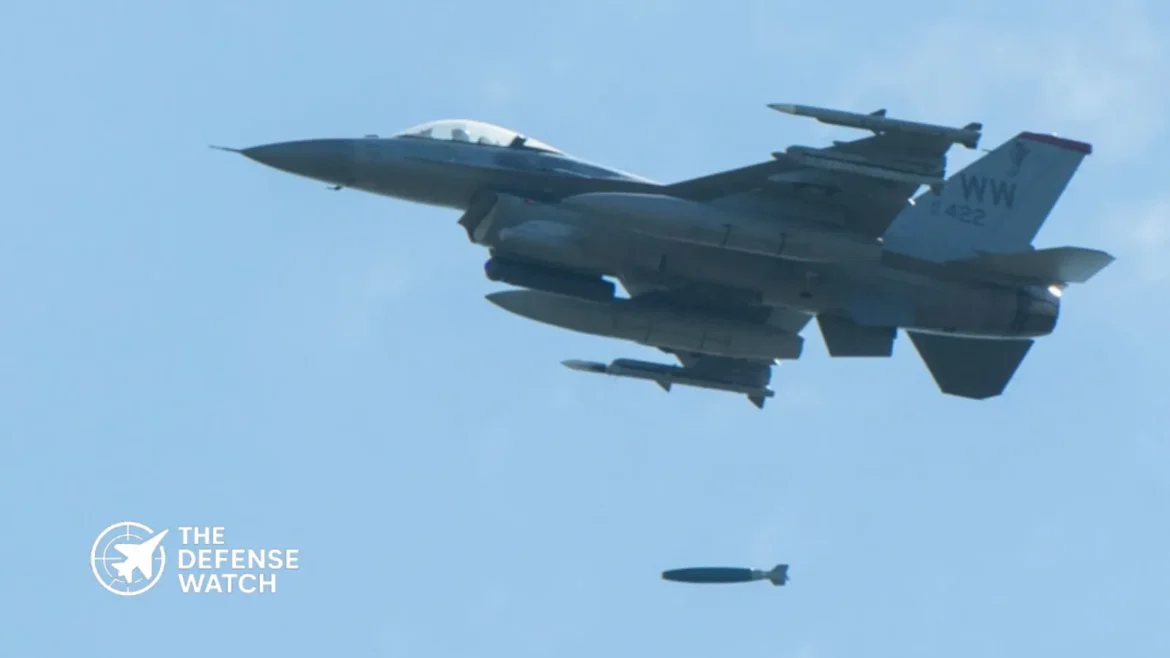
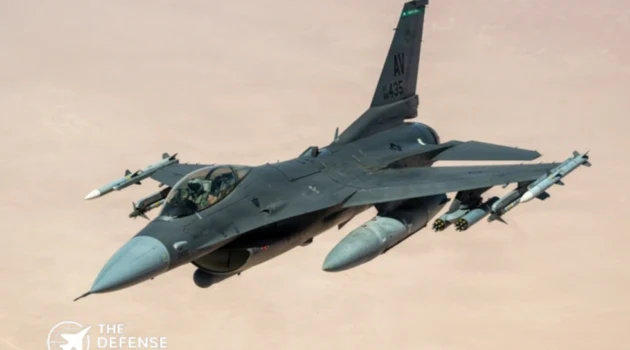
Belgium F-16 laser-guided rockets are being tested as part of a counter-UAS capability effort aimed at addressing the growing threat posed by small unmanned aerial systems. The Belgian Air Force is evaluating the use of precision-guided rockets launched from its F-16 fighter aircraft to intercept hostile drones at a lower cost than traditional air-to-air missiles.
The initiative reflects a broader shift across NATO militaries toward scalable counter-drone solutions as unmanned systems proliferate on modern battlefields.
The Big Picture
Small drones have become a defining feature of modern warfare. Conflicts in Ukraine and the Middle East have demonstrated how low-cost unmanned systems can disrupt conventional military operations.
NATO air forces traditionally rely on advanced air-to-air missiles to engage aerial targets. These weapons are highly effective against aircraft but can prove inefficient against small drones due to cost and target size.

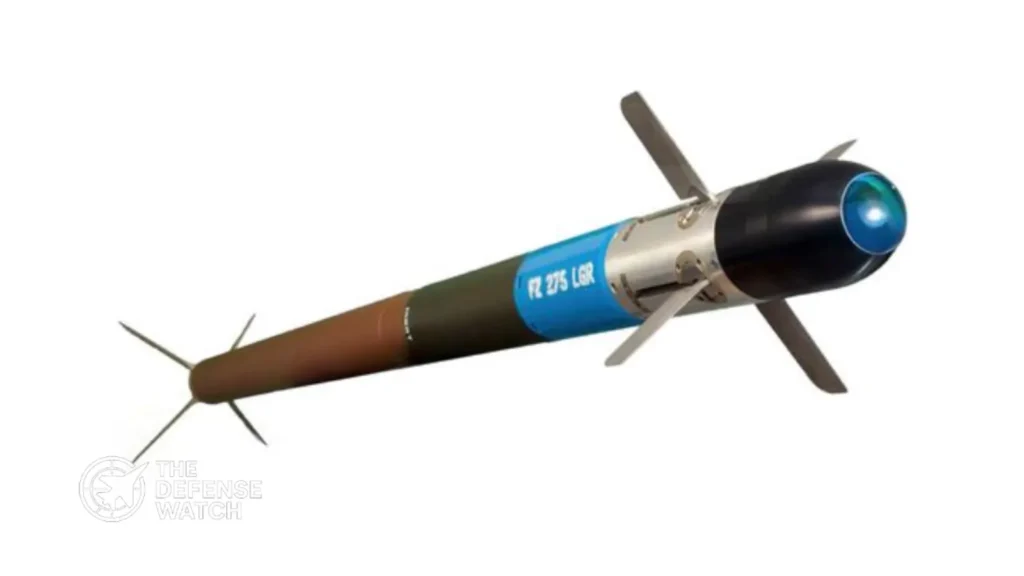
Belgium is trialling the use of the Forges de Zeebrugge (FZ)/Thales FZ275 70 mm laser-guided rocket (LGR) for the C-UAS role, evaluating the weapon aboard its F-16 combat aircraft. (Forges de Zeebrugge (FZ)/Thales)
A single missile can cost hundreds of thousands of dollars. Many small drones cost only a few thousand dollars or less.
This mismatch has driven NATO militaries to explore alternative interception methods, including laser-guided rockets, electronic warfare systems, and directed-energy weapons.
Belgium’s F-16 counter UAS capability trials fall directly within this broader effort to develop cost-effective drone defense tools.
What’s Happening
The Belgian Air Force recently conducted trials using laser-guided rockets mounted on F-16 fighter aircraft to engage unmanned aerial targets.
The testing evaluates whether these precision-guided rockets can reliably intercept small drones during flight operations.
The rocket systems are based on a concept that converts unguided 70 mm rockets into precision-guided weapons using laser guidance kits. Pilots can designate a target with a laser system, allowing the rocket to home in with improved accuracy.
According to defense reporting, the Belgian Air Force aims to determine whether this approach provides a viable counter-UAS capability for operational use.
Testing involves simulated engagements against aerial targets representing small unmanned systems.
The trials support ongoing NATO experimentation with layered counter-drone defenses.
Why It Matters
Laser-guided rockets offer a significantly cheaper interception method than traditional air-to-air missiles.
An air-to-air missile like the AIM-120 AMRAAM can cost more than one million dollars depending on the variant. In contrast, guided rocket systems are far less expensive.
This cost difference becomes critical when confronting large numbers of low-cost drones.
Military planners increasingly expect future conflicts to involve drone swarms, loitering munitions, and reconnaissance UAVs operating simultaneously.
Using fighter aircraft armed with laser-guided rockets could provide a flexible airborne defense layer capable of neutralizing these threats before they reach critical infrastructure or frontline forces.
For NATO air forces operating legacy fighter platforms such as the F-16, the approach also extends the utility of existing aircraft fleets.
Strategic Implications
Belgium’s experiment highlights an emerging trend in NATO airpower doctrine.
Air forces are adapting traditional fighter aircraft roles to address new threat environments dominated by unmanned systems.
Airborne counter-UAS missions could complement ground-based defenses such as short-range air defense systems and electronic warfare units.
Fighter aircraft equipped with laser-guided rockets could patrol high-risk areas and intercept drones before they approach sensitive locations such as military bases, ports, or critical infrastructure.
The concept also supports NATO’s layered air defense strategy, which integrates multiple sensors and interceptors across different ranges and altitudes.
If proven effective, the Belgium F-16 laser-guided rockets approach could influence similar programs across other NATO members that still operate F-16 fleets.
Competitor View
Russia and China have both invested heavily in unmanned systems and counter-drone technologies.
Military analysts note that adversaries are closely observing NATO efforts to address drone threats.
Russia’s extensive use of drones in Ukraine has highlighted both the tactical value of unmanned systems and the difficulty of defending against them.
China has also expanded production of small UAVs and loitering munitions while researching integrated air defense solutions against drone swarms.
NATO’s exploration of cost-efficient counter-UAS tools may therefore influence future competition in drone warfare technologies.
Affordable interception methods could become a critical factor in maintaining operational advantage against large-scale drone deployments.
What To Watch Next
The Belgian Air Force will likely continue operational evaluations to determine whether the rocket-based counter-UAS system meets reliability and accuracy requirements.
Future testing phases may focus on several factors:
• engagement success rates against different drone types
• integration with targeting sensors
• pilot workload and operational procedures
• compatibility with NATO air defense networksResults from these trials could inform procurement decisions or operational doctrine within NATO air forces.
Belgium is also transitioning its combat aviation fleet toward the F-35 fighter aircraft in the coming years, which may open additional options for integrating advanced counter-drone technologies.
Capability Gap
The Belgium F-16 laser-guided rockets initiative addresses a clear capability gap.
Traditional air defense systems are optimized for larger aircraft and cruise missiles. Small drones present a different challenge due to their size, maneuverability, and low radar signatures.
Using high-end missiles to intercept inexpensive drones is operationally unsustainable during prolonged conflicts.
Laser-guided rockets offer a potential solution by combining precision with lower cost.
However, limitations remain.
Rocket engagement ranges are shorter than those of air-to-air missiles. Weather conditions and laser designation requirements may also affect effectiveness in certain environments.
Operational testing will determine whether the system can reliably perform under realistic combat conditions.
The Bottom Line
Belgium’s F-16 laser-guided rocket trials highlight NATO’s growing focus on affordable, scalable counter-drone defenses as unmanned threats reshape modern air warfare.
Germany Deploys Eurofighter Typhoons To Iceland For NATO Arctic Sentry Air Policing
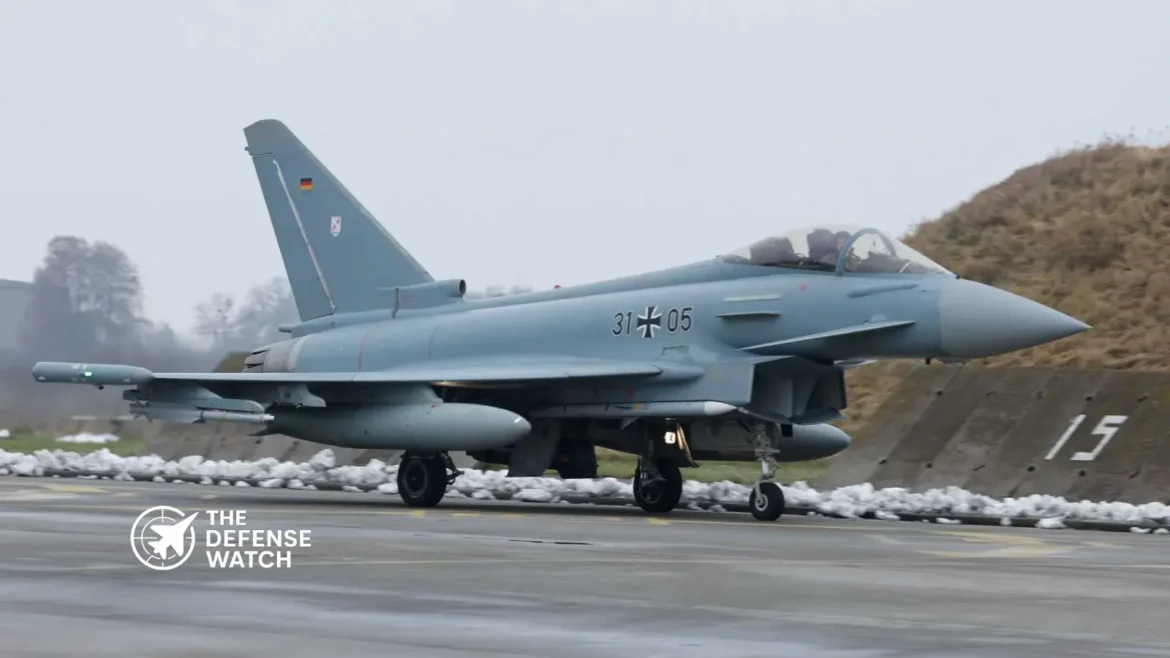
Germany has deployed its first Eurofighter Typhoon fighters to Iceland as part of NATO’s newly launched Arctic Sentry air policing mission. The German contribution places four Typhoons at Keflavík Air Base in the North Atlantic, where they are standing quick reaction alert to monitor and intercept aircraft in the alliance’s northern airspace.
Strategic Context For Arctic Sentry
Launched in February 2026, Arctic Sentry is a NATO initiative to unify and expand allied military activities in the Arctic and High North under a coordinated operational framework. The mission aims to enhance collective situational awareness and deterrence across the region, where changing climate conditions and great power competition have raised security concerns.
NATO’s Arctic Sentry effort builds on long-established air policing operations over Iceland, where allied fighter detachments have rotated since 2008 to safeguard sovereign airspace for a member state that has no national air force.
Details Of The German Deployment
Germany’s contribution consists of four Eurofighter Typhoons configured into two quick reaction alert pairs. The fighters are tasked with identifying and, if required, intercepting aircraft operating without flight plans or without proper identification in and around NATO airspace. According to German defense sources, this marks the first time Berlin has sent Typhoon fighters to support Arctic Sentry.
German Defense Minister Boris Pistorius confirmed the deployment ahead of a meeting of NATO defense ministers in Brussels, noting that the Typhoons may operate from Iceland and then reposition further north as mission needs evolve.
The Typhoon is a twin-engine, supersonic multirole fighter jointly developed by Airbus, BAE Systems, and Leonardo. It carries modern air-to-air missiles and advanced sensors suitable for air superiority, interception, and identification duties.
NATO’s Air Policing And High North Focus
Air policing operations over Iceland form part of NATO’s broader deterrence and defense posture. Under this arrangement, alliance members rotate fighter units through Keflavík Air Base to ensure continuous quick reaction alert coverage.
Arctic Sentry reflects NATO’s intent to strengthen collective defense in the High North, coordinating air, maritime, land, and enabling capabilities across the region. The mission is led by Joint Force Command Norfolk with oversight from Allied Command Operations.
The High North’s strategic value stems from its role as a gateway between the Arctic and the North Atlantic. Sea lanes, undersea communication cables, and reinforcement routes between North America and Europe pass through or near this area, making persistent allied presence a priority for transatlantic security planners.
Allied Contributions In The Arctic
Germany’s Eurofighter deployment comes amid similar commitments by other NATO members under Arctic Sentry. Denmark has announced plans to send F-35 fighter jets for the mission, underscoring broader alliance engagement in the region.
Sweden is also deepening its role in NATO air policing over Iceland with its own fighter deployment, highlighting contributions from across Europe to allied air defense in the North Atlantic and Arctic areas.
What Comes Next
As Arctic Sentry operations expand, NATO member states are preparing for a series of coordinated exercises and patrols across the High North. These will include air surveillance, maritime activity, and interoperability drills designed to improve readiness in extreme weather environments.
Germany’s initial Typhoon detachment is expected to integrate with existing air policing structures at Keflavík and contribute to a continuous allied presence across the GIUK gap, a key corridor between Greenland, Iceland, and the United Kingdom.
Poland orders Kongsberg counter drone batteries
Poland counter drone systems took a major step forward as Warsaw confirmed an order for 18 counter drone batteries from Norwegian defense firm Kongsberg in a deal valued at around 1.5 billion dollars. The agreement marks one of Poland’s largest investments to date in dedicated counter unmanned aerial systems and reflects growing concern across NATO over the battlefield impact of drones.
The contract was reported by Army Recognition and aligns with Poland’s broader air and missile defense modernization effort, which has accelerated since Russia’s invasion of Ukraine. Polish officials have repeatedly cited lessons from the war, where low cost drones have proven effective against armored vehicles, artillery, and logistics hubs.
According to available details, the new systems will be used to protect critical military units and infrastructure against a wide range of unmanned threats, including small reconnaissance drones and loitering munitions.
What Poland is buying
The deal covers 18 complete counter drone batteries built around Kongsberg technology. While full technical specifications have not been publicly released, Kongsberg is best known for its integrated air defense and sensor fusion capabilities.
The batteries are expected to combine radar, electro optical sensors, command and control elements, and effectors designed to detect, track, identify, and neutralize hostile drones. Such layered architectures are now considered essential as adversaries increasingly deploy swarms and low observable unmanned systems.
Kongsberg has extensive experience in air defense through programs such as NASAMS, which is already in service with Poland. Analysts note that interoperability with existing Polish and NATO systems was likely a key factor in the selection.
Strengthening Poland air defense modernization
Poland air defense modernization has become a top national priority. In recent years, Warsaw has committed tens of billions of dollars to new tanks, artillery, combat aircraft, missile defenses, and air surveillance assets.
Counter drone systems fill a critical gap between traditional short range air defense and electronic warfare. Conventional missiles are often too expensive to use against small drones, while electronic jamming alone may not be effective against autonomous or hardened systems.
By investing in dedicated counter UAS batteries, Poland aims to improve force protection for maneuver units and fixed sites, particularly along NATO’s eastern flank.
NATO context and regional impact
The acquisition also has clear NATO implications. Poland sits at the center of alliance efforts to reinforce deterrence in Central and Eastern Europe. Counter drone defenses are increasingly viewed as a shared requirement, especially after extensive drone use observed in Ukraine, the Middle East, and the Red Sea region.
Norway, Poland, and several other NATO members already cooperate closely on air defense and command and control standards. The use of Kongsberg systems supports common architectures and simplifies joint operations and training.
Defense officials in multiple allied countries have warned that drones are no longer a niche threat but a core feature of modern conflict, capable of overwhelming legacy defenses if left unaddressed.
Industrial and strategic considerations
Beyond capability, the deal underscores Poland’s willingness to source key systems from trusted European partners. While Warsaw has also turned to the United States and South Korea for major procurements, cooperation with Norwegian industry strengthens Europe’s defense industrial base.
Kongsberg has steadily expanded its footprint across Europe and North America, positioning itself as a leading supplier of networked air defense and counter drone solutions. The Polish contract further reinforces that role.
The agreement may also include training, logistics support, and long term maintenance, ensuring sustained readiness over the coming years.
Why counter drone systems matter now
The rapid spread of unmanned systems has reshaped military planning. Commercial components, rapid innovation cycles, and low unit costs allow even non state actors to field effective drone capabilities.
In Ukraine, drones have been used for targeting, strike missions, and psychological pressure. Similar trends have been observed in conflicts involving Israel, Iran backed groups, and Russian forces.
As a result, counter drone systems are now seen as essential as armored vehicles or artillery, particularly for protecting headquarters, air bases, ammunition depots, and frontline units.
What comes next
Deliveries and integration timelines have not yet been publicly disclosed. However, Polish defense officials have signaled urgency in fielding new counter UAS capabilities as quickly as possible.
The Kongsberg systems are expected to be integrated into Poland’s broader air defense command network, enabling shared situational awareness and coordinated responses to aerial threats.
As NATO continues to adapt to drone driven warfare, Poland’s investment is likely to be closely watched by other allied nations considering similar acquisitions.
Estonia Advances Critical Missile Defense Procurement Amid Regional Security Concerns
Estonia is approaching a final decision on acquiring a missile defense system, marking a significant step in the Baltic nation’s military modernization efforts as regional security concerns intensify. The Estonian Defense Forces are evaluating multiple platforms from Israeli, American, and European manufacturers to establish a comprehensive air defense capability.
According to reports from Defense News, the procurement decision comes as Estonia and fellow Baltic states Lithuania and Latvia accelerate defense investments in response to Russia’s continued military activities near NATO’s eastern border. The missile defense system acquisition represents one of Estonia’s most substantial defense procurements in recent years, reflecting the nation’s commitment to territorial defense and NATO interoperability.
Competing Systems Under Evaluation
Estonia’s Ministry of Defense has narrowed its selection to several leading air and missile defense platforms currently deployed by NATO allies and partner nations. While specific system designations remain under evaluation, defense industry sources indicate the competition includes:
Israeli Systems: Rafael Advanced Defense Systems’ Iron Dome and potentially the David’s Sling medium-to-long-range system have emerged as strong contenders. Iron Dome’s proven combat record intercepting rockets, artillery, and short-range threats makes it attractive for Estonia’s operational requirements. The system has demonstrated over 90% interception success rates in Israeli Defense Forces operations.
American Options: U.S. defense contractors have presented variants of the Patriot Advanced Capability (PAC-3) system and potentially the National Advanced Surface-to-Air Missile System (NASAMS), currently protecting Washington, D.C. Both platforms offer deep integration with NATO command and control infrastructure.
European Alternatives: European defense manufacturers are competing with systems including the Franco-Italian SAMP/T (Surface-to-Air Missile Platform/Terrain) and potentially German-Norwegian developments. These options emphasize European defense industrial base cooperation and reduced dependency on non-EU suppliers.
Strategic Context Driving Procurement
The timing of Estonia’s missile defense decision reflects broader Baltic security dynamics following Russia’s full-scale invasion of Ukraine in February 2022. Estonia, with a population of approximately 1.3 million and sharing a 183-mile border with Russia, has consistently maintained one of NATO’s highest defense spending ratios relative to GDP.
Estonian defense officials have emphasized the need for layered air defense capabilities to protect critical infrastructure, military installations, and population centers from potential missile and drone threats. The system must integrate with NATO’s Integrated Air and Missile Defense (IAMD) architecture while providing autonomous defensive capabilities.
Lithuania and Latvia are pursuing parallel air defense modernization programs, creating potential opportunities for coordinated procurement and joint training initiatives among the Baltic states. Such cooperation could enhance regional defense effectiveness while achieving economies of scale in acquisition and sustainment costs.
Technical Requirements and Operational Capabilities
Estonia’s technical specifications reportedly prioritize several key capabilities:
Rapid Deployment: Mobile systems capable of repositioning across Estonia’s compact territory to protect high-value assets and respond to evolving threat scenarios.
Multi-Domain Integration: Seamless connectivity with NATO early warning systems, including airborne surveillance platforms and ground-based radars positioned throughout the Baltic region.
Counter-Precision Strike: Ability to intercept cruise missiles, ballistic missiles, and unmanned aerial systems that could target Estonian defense infrastructure or NATO forces stationed in the country.
Sustainability: Long-term supportability with reliable supply chains for interceptor missiles, maintenance, and system upgrades throughout the platform’s operational lifecycle.
Defense analysts note that Estonia’s choice will likely influence neighboring Baltic procurement decisions, potentially establishing a regional standard for air defense architecture. Interoperability between Estonian, Latvian, and Lithuanian systems would strengthen collective defense capabilities across NATO’s northeastern frontier.
Budget Allocation and Timeline
While Estonian defense officials have not publicly disclosed the specific budget allocation for the missile defense acquisition, the procurement represents a multi-hundred-million-euro investment spread across several fiscal years. Estonia’s defense budget for 2026 exceeds €1.3 billion, with significant portions dedicated to capability development and modernization.
The procurement timeline suggests a contract decision could be announced within the first half of 2026, with initial system deliveries potentially beginning in 2027-2028. Training Estonian personnel on complex air defense operations typically requires 12-18 months, indicating full operational capability may be achieved by 2029.
NATO Support and Allied Cooperation
Estonia’s missile defense procurement aligns with NATO’s broader efforts to strengthen the alliance’s eastern flank following the 2022 NATO Summit in Madrid, where allies committed to enhanced forward defense posture. The United States and other NATO members have increased rotational force deployments to the Baltic states, including air defense assets.
NATO’s Air Policing mission over the Baltic states, conducted continuously since 2004, provides airspace surveillance and quick reaction alert capabilities. However, Estonian officials have emphasized the need for sovereign air defense capabilities that complement rather than replace allied contributions.
The alliance’s Defense Investment Pledge, requiring members to spend at least 2% of GDP on defense with 20% allocated to major equipment procurement, provides the framework supporting Estonia’s acquisition. Estonia has consistently exceeded both thresholds, demonstrating sustained commitment to alliance burden-sharing principles.
Regional Security Implications
Estonia’s missile defense decision carries significant implications for Baltic security architecture and NATO deterrence posture. The deployment of advanced air defense systems in Estonia would complicate potential Russian military planning while demonstrating allied resolve to defend every inch of NATO territory.
Defense experts observe that credible air and missile defense capabilities reduce vulnerabilities that adversaries might exploit during crisis situations. For Estonia, positioned on NATO’s frontier, such capabilities contribute to both deterrence and defense across the spectrum of potential contingencies.
The procurement also reflects broader European defense trends toward increased self-reliance and enhanced territorial defense capabilities. As European nations navigate evolving security environments, investments in air and missile defense represent foundational elements of credible national defense strategies.
Industry Competition and Economic Considerations
The competition among Israeli, American, and European defense contractors involves not only technical performance but also industrial cooperation commitments, technology transfer opportunities, and long-term partnership arrangements. Estonia has emphasized the importance of offset agreements that contribute to domestic defense industrial development.
Successful bidders may commit to establishing maintenance facilities, training centers, or research partnerships within Estonia, creating economic opportunities while building national defense capabilities. Such arrangements align with broader NATO Smart Defence initiatives promoting multinational cooperation and efficient resource allocation.
The final selection will likely balance operational effectiveness, lifecycle costs, alliance interoperability, and strategic partnership considerations. Estonia’s decision-making process reflects the complex calculus facing smaller NATO members seeking to maximize defense capabilities within fiscal constraints.
Conclusion
Estonia’s approaching decision on missile defense system acquisition represents a pivotal moment in Baltic security development. As the nation evaluates Israeli, American, and European platforms, the procurement will establish critical air defense capabilities while reinforcing NATO’s eastern flank defensive posture.
The chosen system will serve Estonian defense requirements for decades while contributing to regional deterrence and alliance collective defense. With a decision expected in coming months, defense industry observers and allied defense planners closely monitor Estonia’s selection process as a bellwether for Baltic air defense modernization.
Russian Drone Production Reaches Industrial Scale
Russia has dramatically expanded its unmanned aerial vehicle manufacturing capacity, with intelligence assessments indicating production of approximately 170 Shahed-type drones daily as of mid-2025. According to Ukrainian military intelligence, Russian facilities are capable of producing up to 2,700 Shahed-variant drones monthly, with projections suggesting total output could reach 79,000 units by year-end. The Alabuga Special Economic Zone in Tatarstan has emerged as the primary production hub for the Geran-2, Russia’s licensed version of the Iranian Shahed-136 design.
Recent revelations show Russia’s defense industry operating ahead of schedule on its contracted deliverables. The Institute for Science and International Security reported that JSC Alabuga fulfilled its initial contract with Iran for 6,000 drones approximately one year ahead of the September 2025 deadline. The facility has since continued production with plans to increase daily output to 190 drones by year-end, supported by substantial government investment estimated between $8.2 billion and $12.4 billion through 2030.
The upgraded drone models feature significant technical improvements over earlier variants. Ukrainian Defense Intelligence notes that explosive payloads have increased from 50 kilograms to 90 kilograms, while new versions incorporate combined shaped-charge high-explosive fragmentation warheads selected based on target profiles. Perhaps most concerning, Russian forces have begun equipping drones with controlled reception pattern antenna systems that resist electronic warfare countermeasures, and some units reportedly carry Starlink terminals enabling real-time remote control.
European Airspace Violations Trigger Alliance Response
The scale of Russia’s drone threat became undeniable during September 2025, when multiple incursions into NATO airspace prompted emergency responses across the alliance. On September 10, approximately 20 Russian drones violated Polish airspace, forcing Warsaw to scramble multimillion-dollar F-35 and F-16 fighter jets. NATO jets successfully intercepted seven drones during a seven-hour aerial engagement, marking the first time alliance forces opened fire on Russian aircraft since the conflict in Ukraine began.
Polish Foreign Minister Radek Sikorski acknowledged the operation exposed a fundamental asymmetry in defense economics. Recovery operations revealed the downed drones were unarmed decoys constructed from polystyrene and plywood, with estimated production costs around $10,000 each. Meanwhile, the NATO response involved $80 million F-35s launching interceptor missiles costing hundreds of thousands of dollars per unit.
Romania and Estonia reported similar violations throughout September. Romanian authorities scrambled combat aircraft after a Russian drone penetrated approximately 10 kilometers into their territory, remaining in NATO airspace for roughly 50 minutes. Estonia’s Foreign Ministry reported three Russian fighter aircraft entered its airspace on September 19, with Foreign Minister Margus Tsahkna describing the incursion as “unprecedentedly brazen.
Denmark experienced particularly disruptive incidents, with unidentified drone activity forcing the closure of Aalborg Airport and causing near-total shutdown of Copenhagen Airport operations for approximately four hours. The incidents prompted Denmark to temporarily ban civilian drone flights across its airspace ahead of critical European Council meetings.
NATO Launches Eastern Sentry Operation
In response to the escalating threat, NATO Secretary-General Mark Rutte announced Operation Eastern Sentry, a coordinated air defense initiative focused on deterring further Russian incursions along the alliance’s eastern flank. The operation integrates multiple NATO capabilities, including Dutch F-35s, Italian AWACS aircraft, NATO’s Multi Role Tanker Transport Capability, and German Patriot defense systems.
General Ingo Gerhartz, commander of NATO Allied Joint Force Command Brunssum, emphasized the urgent need for accelerated counter-drone technology deployment. Speaking at the Warsaw Security Forum, Gerhartz stated that counter-drone systems must be fielded within months rather than years. He stressed that shooting down drones costing $2,000 to $3,000 with million-dollar missiles represents neither an effective nor sustainable defensive posture.
Britain and Denmark have pledged significant support for Eastern Sentry, with Germany doubling its combat aircraft allocation for Polish air defense from two to four units. France has deployed Rafale fighter jets to the region. However, defense experts question whether conventional air defense architecture can sustainably counter mass drone attacks without prohibitive economic costs.
European Drone Wall Concept Takes Shape
European leaders have endorsed development of a continental “drone wall” designed to detect, track, and neutralize unmanned aerial vehicles along NATO’s eastern borders. European Commission President Ursula von der Leyen publicly backed the initiative during her 2025 State of the Union address, positioning it as a flagship defense project requiring expedited implementation.
EU Defense and Space Commissioner Andrius Kubilius outlined the concept as a layered network combining mobile radars, sensors, and rapid-fire air defense batteries. Speaking in Vilnius, Kubilius acknowledged European nations remain unprepared to effectively counter Russian drone attacks using cost-effective methods. He emphasized the critical importance of integrating Ukraine’s battle-tested counter-drone capabilities into European defense architecture.

The European Drone Defense Initiative targets initial operational capability by late 2026, with full functionality expected by end-2027. Implementation will involve procurement coordination through EU programs including SAFE and the European Defense Industry Programme. However, officials acknowledge significant challenges remain regarding political coordination, industrial capacity, and cost-effectiveness.
EU officials stress the initiative will complement NATO frameworks rather than duplicate them. Member states retain sovereignty over national defense systems while the EU facilitates common standards, shared funding, and operational oversight. The informal European Council meeting in Copenhagen produced broad endorsement of the concept, though frontline states including Poland, the Baltic nations, and Finland view the project with greater urgency than countries further from Russia’s borders.
Cost Asymmetry Challenges Traditional Defense Models
The economic implications of drone warfare have fundamentally altered air defense calculations. Defense analysts emphasize that traditional surface-to-air missile systems face unsustainable cost disadvantages when engaging low-cost unmanned threats. A single Patriot interceptor missile costs approximately $5 million, while Russian Shahed-type drones cost between $30,000 and $50,000 to manufacture.
Chris Kremidas-Courtney of the European Policy Centre characterized current NATO responses as “using a sledgehammer on a thumbtack.” He warned that European nations risk depleting expensive missile inventories against mass drone attacks unless they rapidly adopt more economical countermeasures. Admiral Pierre Vandier, NATO’s Supreme Allied Commander Transformation, stated bluntly that defenders will eventually lose if they continue firing million-dollar missiles at ten-thousand-dollar targets.
Ukraine has pioneered cost-effective counter-drone solutions that NATO is rapidly studying. Ukrainian forces deploy interceptor drones costing between $2,500 and $6,000 to engage Russian Shaheds, preserving expensive missiles for faster cruise and ballistic threats. The economics favor defenders for the first time in modern air defense, with Ukrainian manufacturers targeting production of 1,000 interceptor drones daily.
NATO conducted demonstrations of Ukrainian-developed interceptor technology in Denmark and Estonia, with systems like Wild Hornets’ Sting successfully downing training targets. Latvia-based Origin is developing reusable interceptor drones with titanium frames designed to slice through attacking UAVs at speed. Company officials expressed confidence they can produce interceptors economically viable for countering large volumes of Russian drones.
AI-Enabled Defense Systems Deploy to Eastern Flank
NATO has begun deploying advanced counter-drone systems to Poland and Romania, including the US-developed Merops platform. The artificial intelligence-driven system, compact enough to transport in pickup trucks, can identify and engage drones while maintaining functionality when satellite and electronic communications are jammed. Former Google CEO Eric Schmidt has provided private investment for the technology’s development.
Colonel Mark McLellan, assistant chief of staff for operations at NATO Allied Land Command, emphasized that Merops delivers accurate detection and cost-effective interception compared to fighter jet responses. Brigadier General Thomas Lowin noted the system provides commanders critical time to assess threats before deciding whether to engage.
However, experts caution that current counter-drone technology faces emerging challenges. Russia has reportedly begun deploying Geran-3 variants powered by Chinese turbojet engines, capable of speeds between 230 and 310 miles per hour. These jet-propelled drones incorporate 12-element adaptive antenna arrays for jamming-resistant satellite navigation, rendering them immune to electronic warfare tactics effective against slower Shaheds.
Additionally, Russian forces increasingly employ fiber-optic cable-tethered first-person-view drones that cannot be electronically jammed. NATO and Ukrainian officials conducted trials in Tallinn during June 2025 to evaluate countermeasures against these systems, requiring detection ranges exceeding 500 meters and costs under $100,000 per unit.
Intelligence Warnings and Strategic Implications
European intelligence agencies have issued warnings that Russian President Vladimir Putin may be considering potential attacks on NATO countries in coming years. The drone incursions represent what officials characterize as deliberate testing of alliance defenses and political resolve. Behind closed doors, Russian officials reportedly told British, French, and German diplomats that the incursions constituted retaliation for Ukrainian strikes on Crimea enabled by NATO support.
Danish Prime Minister Mette Frederiksen characterized the situation as Europe facing its “most difficult and dangerous situation since the end of the Second World War.” She stated unequivocally that only one country threatens European security: Russia. The assessment reflects growing consensus among European leaders that Moscow is conducting hybrid warfare operations designed to probe NATO’s vulnerabilities and test alliance cohesion.
Some analysts question whether all drone incursions result from deliberate Russian strategy. Marina Miron of King’s College London suggested that drones operating on autopilot can lose GPS signals and become disoriented. However, German Defense Minister Boris Pistorius dismissed technical malfunction theories, noting that Russian drones would not need to traverse NATO airspace to reach Ukrainian targets.
The Institute for the Study of War projects that Russia could deploy up to 2,000 unmanned aerial vehicles in a single night by November 2025 if current production trends continue. Such capability would enable sustained saturation attacks designed to overwhelm even the most advanced air defense systems through sheer volume rather than technological sophistication.
Deterrence Debate and Offensive Capabilities
Defense strategists increasingly argue that purely defensive measures prove insufficient to deter Russian aggression. The RAND Corporation published analysis contending that Europe’s true problem involves erosion of conventional deterrence rather than drone technology gaps. Analysts emphasize that cost-effective “drone wall” technology does not currently exist anywhere globally, particularly when defending countries operating under peacetime rules of engagement against adversaries actively at war.
Experts advocate that NATO should demonstrate willingness to strike back rather than solely investing in defensive systems. This rationale supports Ukraine’s requests for long-range strike capabilities, including Tomahawk cruise missiles, to damage Russian drone production and launch facilities rather than attempting to intercept every projectile. Several NATO members, including Lithuania, have authorized peacetime shoot-downs of unauthorized drones over their territory.
The debate reflects fundamental questions about NATO’s political will and strategic posture. Russia appears emboldened to test alliance responses precisely because Moscow questions whether NATO members will use their defensive capabilities decisively. Brigadier General Zacarias Hernandez, NATO’s deputy chief of staff for plans, acknowledged the alliance must prepare for threats demonstrated daily in Ukraine’s skies.
Ukrainian Integration and Lessons Learned
Commissioner Kubilius strongly advocated for incorporating Ukrainian military expertise into European defense planning. He warned that failure to integrate Ukraine’s battle-tested capabilities would constitute a “historical mistake” leaving both Europe and Ukraine weaker. Ukrainian forces have achieved relatively high success rates against Russian drones through tactical innovation and cost-effective countermeasures developed under combat conditions.
The Center for Strategic and International Studies documented Ukraine’s urgent requirement for layered, economically sustainable air defenses. Russia’s persistent nightly drone attacks have subjected Ukrainian civilians to conditions exceeding the duration of World War II’s Blitz bombing campaign against London. The punishment strategy aims to force negotiations that would compromise Ukrainian sovereignty for generations.
Western governments face pressure to disrupt China’s supply of critical electronics and components flowing to Russian drone manufacturers. Despite sanctions, Russian industry continues accessing Western semiconductors and Chinese engines essential for Shahed production. Targeted long-range strikes against production facilities and launch sites represent necessary complements to defensive systems, according to multiple strategic assessments.
Implementation Challenges and Timeline Concerns
Despite broad political support for enhanced drone defense, significant obstacles impede rapid implementation. Many EU members maintain independent procurement policies that slow collaborative projects. Technical feasibility questions persist regarding sensor integration, interoperability standards, and operational coordination across multiple national systems.
Michael Bociurkiw of the Atlantic Council characterized the drone wall as currently remaining a “fantasy” requiring months or years to accomplish. He emphasized that implementation will consume enormous percentages of military budgets, necessitating sustained public support for defense spending increases. NATO officials must convince populations of the importance and urgency of such investments.
The procurement challenge extends beyond funding. Defense industry experts note that NATO acquisition processes remain rooted in 1980s-era specifications-based contracting. Companies with operational counter-drone technology struggle to navigate bureaucratic evaluation procedures while threats evolve daily. Ukraine’s streamlined procurement pathway has enabled rapid technology deployment absent in traditional NATO channels.
Andreas Graae of the Royal Danish Defense College confirmed a “huge drive” exists to rapidly deploy counter-drone systems across Europe amid Russian aggression. However, coordination between military requirements, industrial capacity, and political decision-making remains imperfect. The gap between available technology and fielded capabilities continues widening as Russia accelerates production and tactical innovation.
Looking Ahead
The escalating Russian drone threat has forced NATO to confront uncomfortable realities about modern warfare’s economics and the limitations of conventional air defense architectures. Alliance responses will require sustained investment in cost-effective counter-drone technologies, deeper integration of Ukrainian combat lessons, and potentially more aggressive postures toward disrupting Russian production capabilities.
The coming months will prove critical as Europe attempts to translate political commitments into operational capabilities. Initial deployments of systems like Merops represent important first steps, but comprehensive drone defense networks will require years to fully implement. Meanwhile, Russia continues expanding production capacity and refining tactics based on daily combat experience in Ukraine.
Success will depend on NATO’s ability to innovate faster than adversaries while maintaining alliance cohesion under pressure. The fundamental question remains whether European nations possess sufficient political will to make necessary investments and accept risks inherent in more assertive defensive postures. Russia’s drone campaign has delivered an unmistakable message: the time for Europe’s defenses to awaken has arrived.
Denmark Makes Historic Air Defense Investment
Denmark has selected the French-Italian SAMP/T surface-to-air missile system to provide the long-range backbone of its new ground-based air defense network, bypassing the U.S.-made Patriot system. The decision, announced Friday, represents the largest defense investment in Danish history—58 billion kroner ($9.1 billion)—and marks a milestone in Europe’s push for greater defense independence.
The acquisition covers eight medium- and long-range systems, two of which will be SAMP/T units. According to broadcaster TV 2, this makes Denmark the first European Union export customer for the system, which until now was fielded only by France and Italy within the EU. By contrast, at least seven European countries currently operate the U.S. Patriot system.
“The war in Ukraine clearly demonstrates the need for a modern ground-based air defense system consisting of multiple integrated systems that provide multiple layers of airspace protection,” Danish Chief of Defence Gen. Michael Hyldgaard said.
Europe’s Answer to Patriot
SAMP/T—developed by Eurosam, a joint venture of Thales and MBDA—was designed to counter a broad spectrum of aerial threats, from fighter aircraft to cruise and tactical ballistic missiles. The system employs the Aster 30 B1 and B1NT interceptors, which can reach speeds up to Mach 4.5 and engage targets out to 150 kilometers.
Each SAMP/T battery typically consists of a 360-degree AESA radar, a fire-control center, and multiple launchers that can discharge eight Aster missiles in under ten seconds. France fields its version with Thales GF300 radars, while Italy uses Leonardo’s Kronos GMHP radar and CAMM-ER short-range interceptors.
Ukraine has also received at least two donated SAMP/T systems, with one deployed to protect Kyiv. Operational reports suggest the system has successfully intercepted Russian ballistic missile threats.
Building a Layered Defense
Denmark’s new investment more than doubles its earlier budget estimate of 19–25 billion kroner. The Ministry of Defence confirmed that the eight systems will include both long-range (SAMP/T) and medium-range elements. For the latter, Denmark is evaluating options from Kongsberg (NASAMS), MBDA (VL MICA), and Diehl Defence (IRIS-T SLM).
“The decision to go with more than one or two suppliers enables shorter delivery times,” said Lt. Gen. Per Pugholm Olsen, head of the Defence Acquisition and Logistics Organisation. “This means that we can achieve our goal of a comprehensive ground-based air defense capacity as quickly as possible.”
The first medium-range systems are expected to be operational by late 2025.
Strategic and Industrial Considerations
Beyond operational capability, Copenhagen’s decision reflects growing concerns over dependence on U.S. suppliers. The European Commission has repeatedly urged member states to strengthen local defense industries. In parallel, U.S. disengagement from European security—amplified by former President Donald Trump’s threats to NATO allies Denmark and Canada—has raised doubts about relying solely on American systems.
As part of the SAMP/T purchase, Denmark is demanding offset agreements worth over 10 billion kroner ($1.6 billion) for its domestic defense industry. These offsets may involve direct procurement from Danish companies or joint development partnerships.
“This is the biggest investment ever made in ground-based air defense to be deployed across Denmark,” Danish Defence Minister Troels Lund Poulsen said. “There’s a use for big and bold decisions if we are to strengthen the armed forces’ combat capability and increase security for the Danish people.”
Analysis: Implications for U.S. Defense and NATO
Denmark’s choice of SAMP/T over Patriot underscores a growing European trend toward defense autonomy and industrial sovereignty. While the Patriot system remains the NATO benchmark, the SAMP/T’s success in Ukraine and its European origin make it politically attractive.
For the United States, the decision raises questions about future European procurement. Washington recently offered Denmark two Patriot systems configured with the Integrated Air and Missile Defense Battle Command System (IBCS) for $8.5 billion. Denmark’s rejection suggests that even close U.S. allies may increasingly prioritize European alternatives—particularly when political reliability and industrial returns are factored in.
This procurement also intersects with the Germany-led European Sky Shield Initiative (ESSI), which Berlin launched around the Patriot system. France and Italy had previously snubbed the project, but Denmark’s move could reignite debates on aligning SAMP/T with ESSI to avoid duplication and ensure NATO-wide interoperability.
Conclusion: A Signal for Europe’s Defense Future
Denmark’s decision to adopt SAMP/T over Patriot marks a pivotal moment in European defense integration. It sends a signal that EU members are willing to pay more for European solutions if it means greater sovereignty, faster delivery, and industrial participation.
For NATO, the key challenge will be ensuring that European and U.S. systems remain interoperable in joint operations. As Russia’s war in Ukraine continues to drive demand for advanced air defense, Denmark’s landmark deal could accelerate Europe’s long-term shift toward self-reliance in defense procurement.