(adsbygoogle = window.adsbygoogle || []).push({});Executive Summary:
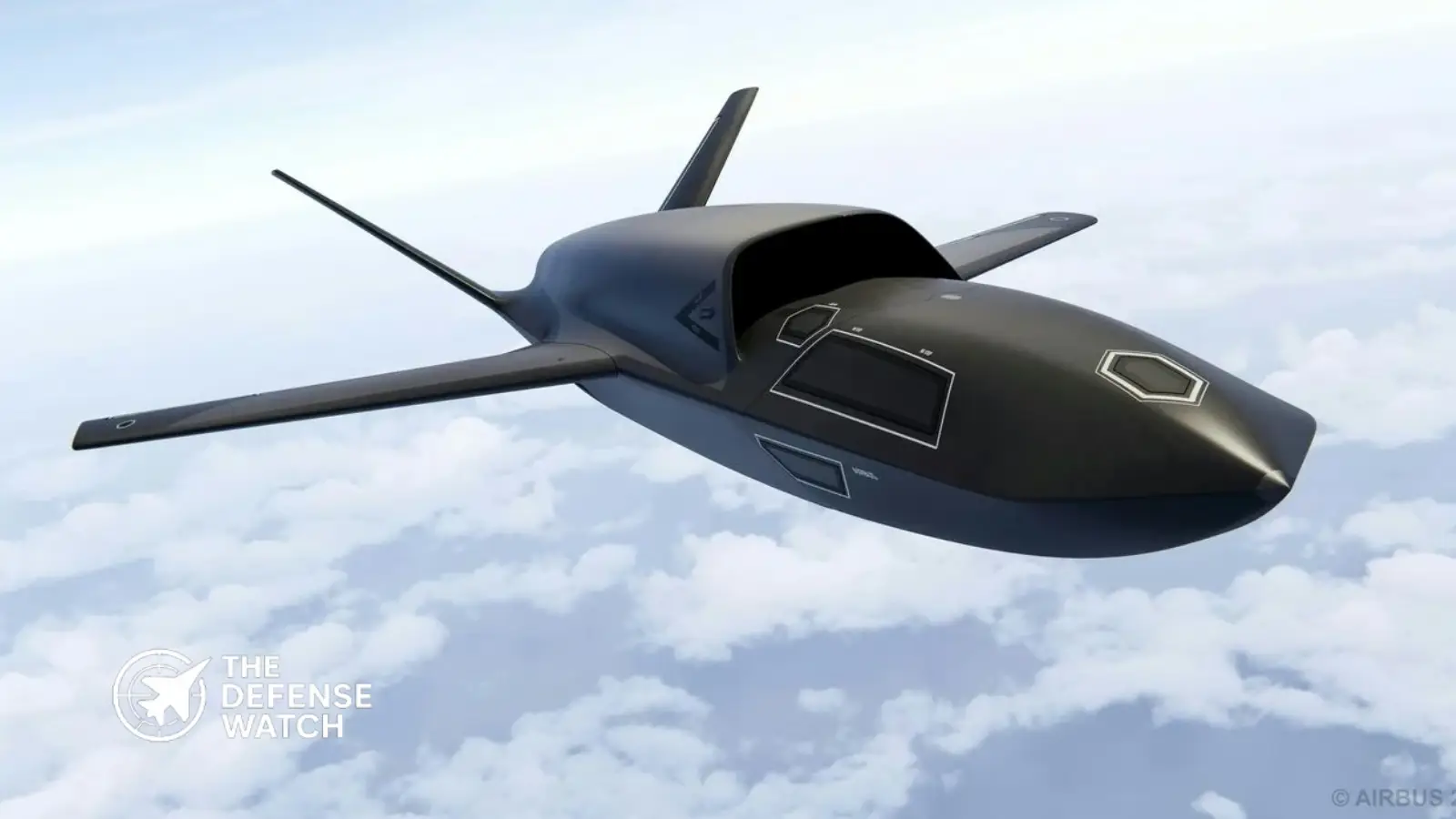
Airbus has unveiled its most comprehensive military drone portfolio to date at ILA Berlin 2026, led by the new U760 Ravenstorm combat drone and autonomous U145 helicopter.
The announcement highlights Europe’s growing focus on sovereign unmanned systems, collaborative combat aircraft, and AI-enabled defense technologies amid rising security demands.
Airbus Drone Portfolio Takes Center Stage At ILA Berlin 2026
Airbus drone portfolio capabilities were on full display at ILA Berlin 2026 as the European aerospace giant showcased a broad range of unmanned systems designed for surveillance, reconnaissance, intelligence gathering, and future multi-domain operations.
The exhibition comes as European governments continue investing in defense modernization programs following years of increased security concerns across the continent. Airbus positioned its unmanned systems lineup as a key component of Europe’s effort to strengthen technological sovereignty while expanding operational flexibility for military forces.
The company presented platforms covering multiple mission categories, ranging from small tactical drones to long-endurance strategic systems capable of supporting joint military operations.
(adsbygoogle = window.adsbygoogle || []).push({});Broad UAV Portfolio Targets Multiple Mission Sets
At the center of Airbus’ display was the company’s growing family of unmanned aerial systems designed to support land, air, and maritime operations.
The portfolio includes tactical reconnaissance drones, larger intelligence and surveillance platforms, and collaborative systems intended to operate alongside manned aircraft. Airbus emphasized interoperability and mission adaptability, reflecting the evolving requirements of modern armed forces.
Military planners increasingly seek UAVs capable of conducting intelligence, surveillance, target acquisition, reconnaissance, communications relay, and battle damage assessment missions within a single operational framework. Airbus’ presentation highlighted how its systems can contribute to these requirements across varying operational environments.
The company’s unmanned systems strategy aligns with broader NATO and European defense priorities focused on improving situational awareness and accelerating decision-making during military operations.
(adsbygoogle = window.adsbygoogle || []).push({});Eurodrone Remains A Key Strategic Program
A major element of the Airbus drone portfolio is the Eurodrone program, one of Europe’s most significant collaborative defense aviation projects.
Developed jointly by Germany, France, Italy, and Spain, Eurodrone is intended to provide a sovereign medium-altitude, long-endurance (MALE) capability for European armed forces. Airbus serves as the program’s industrial lead alongside major European defense partners.
The aircraft is designed to perform long-duration intelligence, surveillance, reconnaissance, and target acquisition missions while operating in controlled airspace. The program aims to provide European nations with an alternative to reliance on imported strategic UAV systems.
Eurodrone continues to be viewed as a cornerstone of Europe’s future airborne intelligence architecture and remains one of the continent’s most closely watched defense aviation programs.
(adsbygoogle = window.adsbygoogle || []).push({});Growing Demand For Autonomous And Unmanned Systems
The Airbus drone portfolio arrives at a time when military organizations worldwide are accelerating investments in autonomous and remotely operated systems.
Recent conflicts have demonstrated the growing importance of drones across tactical and strategic levels of warfare. UAVs are increasingly used for reconnaissance, electronic warfare support, targeting assistance, and operational intelligence.
European governments have responded by increasing procurement budgets and supporting domestic industrial capabilities. Airbus’ emphasis on a fully European drone ecosystem reflects these trends and addresses concerns about supply chain security, operational independence, and long-term sustainment.
From a strategic perspective, the company’s approach extends beyond individual platforms. Airbus is positioning itself as a provider of integrated unmanned solutions capable of supporting networked military operations and future multi-domain battle management systems.
(adsbygoogle = window.adsbygoogle || []).push({});Analysis: Why The Airbus Drone Portfolio Matters
The significance of Airbus’ showcase extends beyond product marketing.
Europe’s defense sector is entering a period of rapid transformation driven by higher military spending, changing security requirements, and increasing demand for indigenous defense technologies. In this environment, unmanned systems have become a central pillar of modernization efforts.
Airbus’ decision to present its entire UAV ecosystem at ILA Berlin demonstrates how drone technology is moving from a niche capability to a core military requirement.
The company’s strategy also reflects a broader industrial competition underway between European manufacturers and established global drone producers. While many nations continue to procure proven foreign systems, European governments increasingly seek locally developed alternatives that provide greater control over technology, maintenance, and operational data.
Another notable aspect is the emphasis on scalability. Modern militaries require drone fleets spanning multiple operational levels, from small tactical units to strategic intelligence platforms. Airbus appears focused on addressing this full spectrum rather than relying on a single flagship program.
As European defense budgets continue to rise, companies capable of offering integrated and sovereign unmanned solutions may gain a significant advantage in upcoming procurement competitions.
(adsbygoogle = window.adsbygoogle || []).push({});Outlook For European UAV Development
The Airbus drone portfolio showcased at ILA Berlin 2026 highlights the company’s ambition to play a leading role in Europe’s expanding unmanned aviation sector.
With programs such as Eurodrone advancing and demand for military UAVs continuing to grow, Airbus is positioning itself to support future European requirements across surveillance, reconnaissance, intelligence gathering, and multi-domain operations.
The exhibition also reinforces a broader trend within European defense policy: strengthening indigenous industrial capabilities while reducing dependence on external suppliers for critical military technologies.
As governments across Europe continue modernizing their armed forces, unmanned systems are expected to remain a major investment priority, creating opportunities for both established aerospace firms and emerging defense technology providers.