(adsbygoogle = window.adsbygoogle || []).push({});Executive Summary:
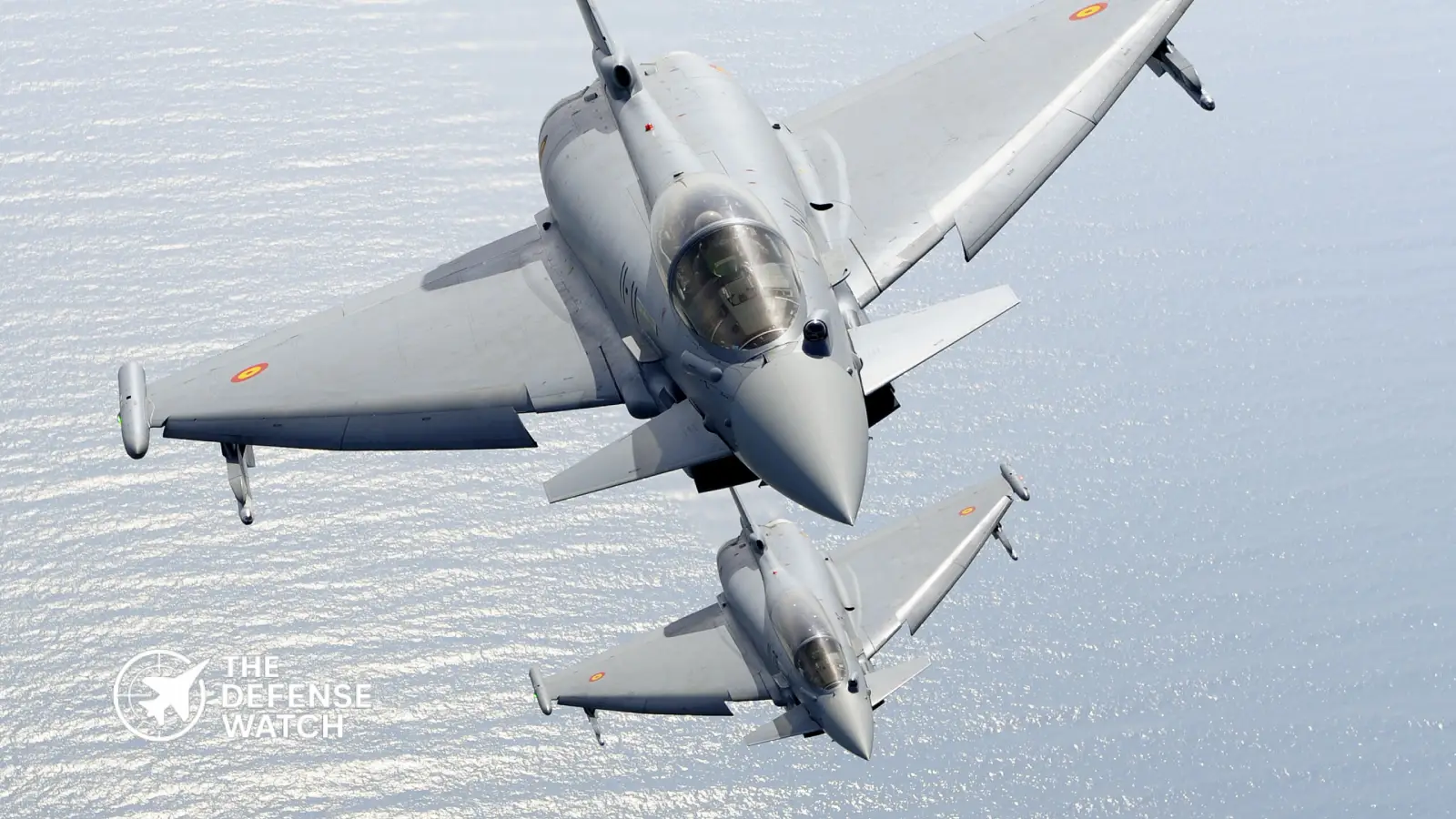
Indra and HENSOLDT have begun live operational testing of the ECRS Mk1 radar, the next generation active electronically scanned array (AESA) sensor destined for German and Spanish Eurofighter fleets. The testing phase follows completion of the first production radars and represents a critical step toward fielding enhanced air combat, strike, and electronic warfare capabilities on Europe’s frontline fighter aircraft.
ECRS Mk1 Radar Advances Into Operational Testing
The ECRS Mk1 radar program has entered a new phase as Spanish defense technology company Indra and German sensor specialist HENSOLDT begin live operational testing of the advanced AESA radar developed for German and Spanish Eurofighter Typhoon aircraft.
The milestone follows the completion of the first production-standard radar sets equipped with upgraded processor hardware and an enhanced Antenna Power Supply and Control (APSC) subsystem. The systems are now undergoing qualification activities and flight testing designed to validate performance before operational deployment.
The ECRS Mk1, formally known as the Eurofighter Common Radar System Mark 1, is being developed specifically for Germany’s Luftwaffe and Spain’s Air and Space Force as part of broader Eurofighter modernization efforts. The radar will equip Germany’s Quadriga aircraft and Spain’s Halcón fighter programs.
What Makes The ECRS Mk1 Different?
Unlike earlier mechanically scanned radars, the ECRS Mk1 employs advanced AESA technology coupled with a high performance multi-channel processor.
-
(adsbygoogle = window.adsbygoogle || []).push({});
According to program information released by the industrial consortium, the new architecture enables rapid switching between operational modes while adapting in real time to mission requirements. The radar is designed to support air-to-air engagements, high resolution air-to-ground targeting, and advanced electronic warfare operations from a single integrated sensor.
Key Capabilities
Capability Area ECRS Mk1 Enhancement Air-to-Air Combat Improved target detection and tracking Air-to-Ground Operations High-resolution mapping and targeting Electronic Warfare Active and passive electronic attack capabilities Sensor Flexibility Ultra-fast mode switching Mission Adaptation Real-time response to operational requirements The radar’s upgraded processor and antenna control architecture are intended to handle significantly larger volumes of sensor data while improving responsiveness during complex combat scenarios.
Importance For Germany’s Quadriga Fleet
Germany’s Eurofighter modernization strategy centers on replacing older aircraft while expanding mission capabilities.
The Luftwaffe’s Quadriga program includes 38 new Tranche 4 Eurofighters, with additional Tranche 5 aircraft planned for the coming decade. These aircraft are expected to remain operational into the 2060s, making sensor modernization a critical requirement.
(adsbygoogle = window.adsbygoogle || []).push({});For Germany, the ECRS Mk1 is particularly important because it supports the transition toward a more networked and electronically contested battlespace. Future European air operations are expected to involve sophisticated electronic attack, long-range sensor fusion, and integration with NATO command networks.
The radar therefore serves not only as a detection system but also as a key element in broader air superiority and electronic warfare architectures.
Strategic Value For Spain’s Halcón Program
Spain is also introducing the ECRS Mk1 as part of its Halcón acquisition effort.
The first Halcón Eurofighter recently rolled out ahead of flight testing, with deliveries scheduled to begin during 2026. These aircraft represent the most advanced Eurofighters ever acquired by Spain and are intended to replace aging F/A-18 Hornet fighters in key operational units.
Integrating the ECRS Mk1 from the outset allows Spain to avoid expensive retrofit programs while providing pilots access to modern sensor management capabilities from the start of service.
- (adsbygoogle = window.adsbygoogle || []).push({});
The radar’s ability to simultaneously manage air combat, strike missions, and electronic warfare tasks is especially valuable for a nation responsible for securing both European and Mediterranean airspace.
Why This Matters Beyond Europe
The ECRS Mk1 program illustrates a broader trend occurring across NATO air forces.
Modern fighter aircraft increasingly depend on software-defined sensors capable of performing multiple functions simultaneously. Rather than operating separate radar, targeting, and electronic warfare systems, next generation combat aircraft are moving toward integrated sensor architectures.
For U.S. defense observers, the Eurofighter upgrade mirrors similar developments seen in advanced American platforms such as the F-35 Lightning II and the F-15EX Eagle II, where sensor fusion and electronic warfare capabilities are becoming as important as traditional kinematic performance.
The ECRS Mk1 also strengthens Europe’s indigenous defense industrial base at a time when NATO members are investing heavily in military modernization programs following years of heightened security concerns across the continent.
(adsbygoogle = window.adsbygoogle || []).push({});Technical And Program Outlook
The current operational testing phase will evaluate radar performance under realistic flight conditions and verify the functionality of the new processor and APSC hardware.
Successful completion of testing is expected to pave the way for series production and fleet integration. Industry statements indicate that qualification efforts are already well advanced, suggesting the program remains on track for planned Eurofighter deliveries.
As Germany and Spain field new Tranche 4 and future Tranche 5 aircraft, the ECRS Mk1 will become one of the most capable operational radar systems in the Eurofighter inventory, significantly expanding the aircraft’s relevance in future high intensity air operations.
- (adsbygoogle = window.adsbygoogle || []).push({});