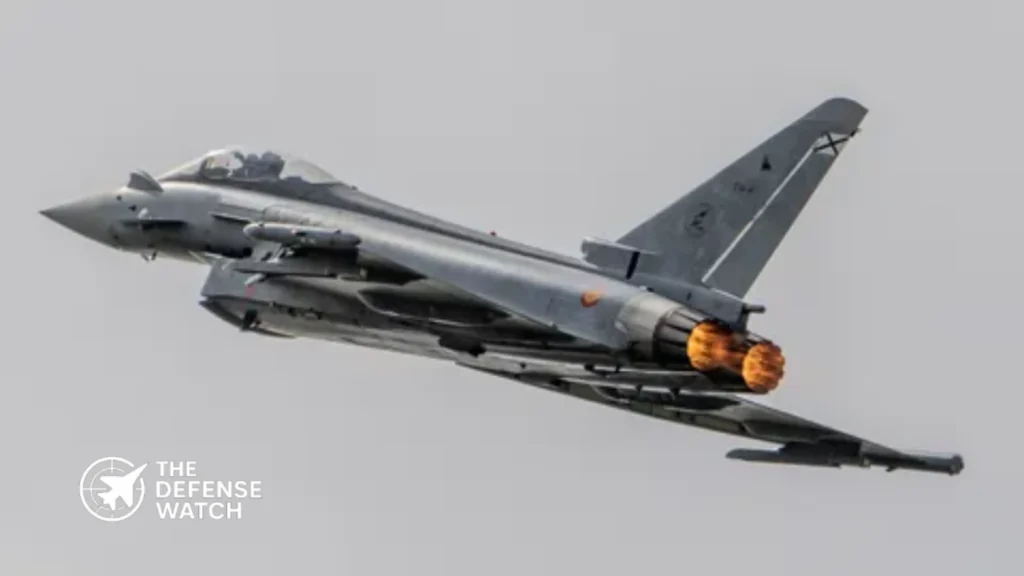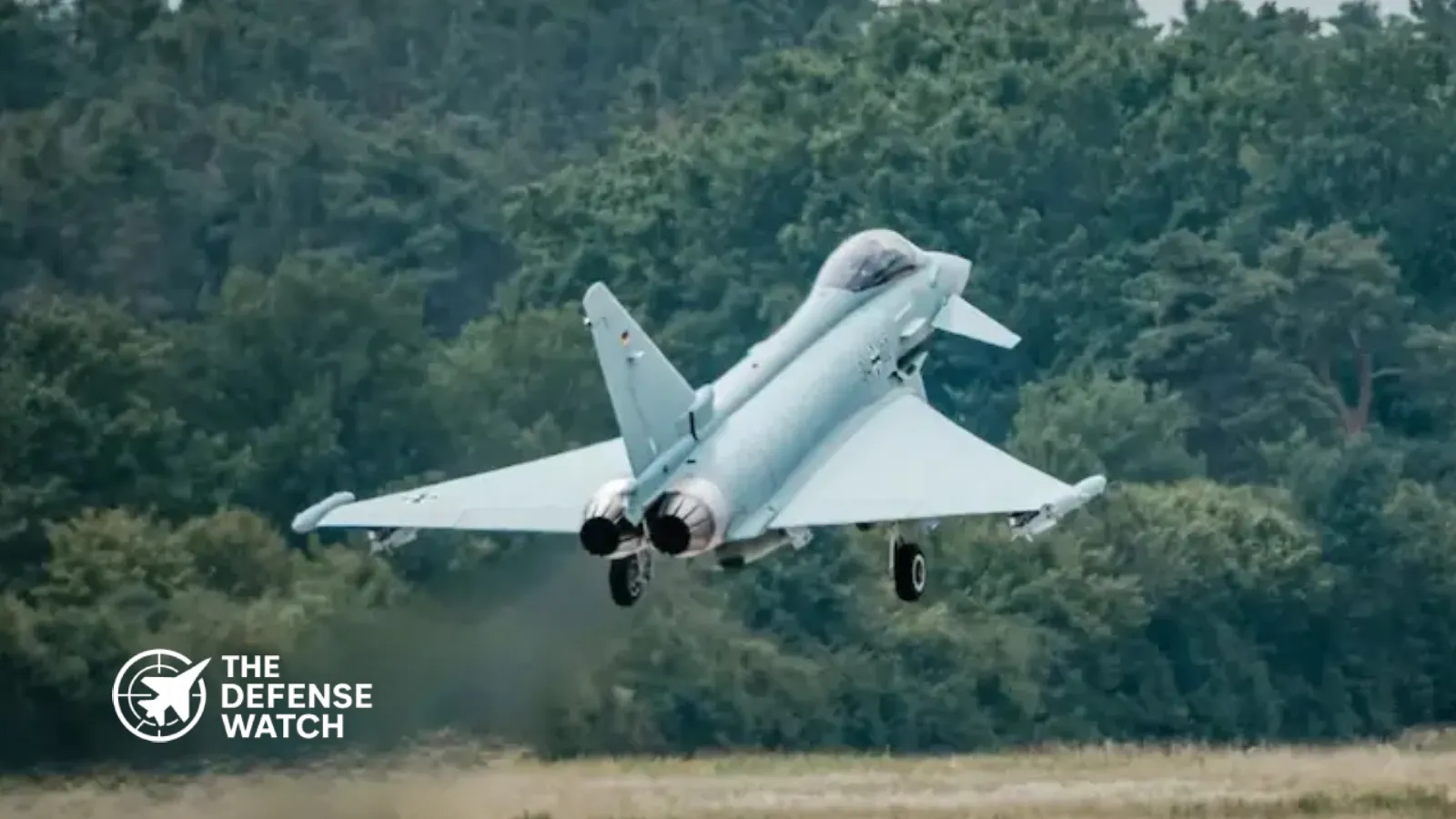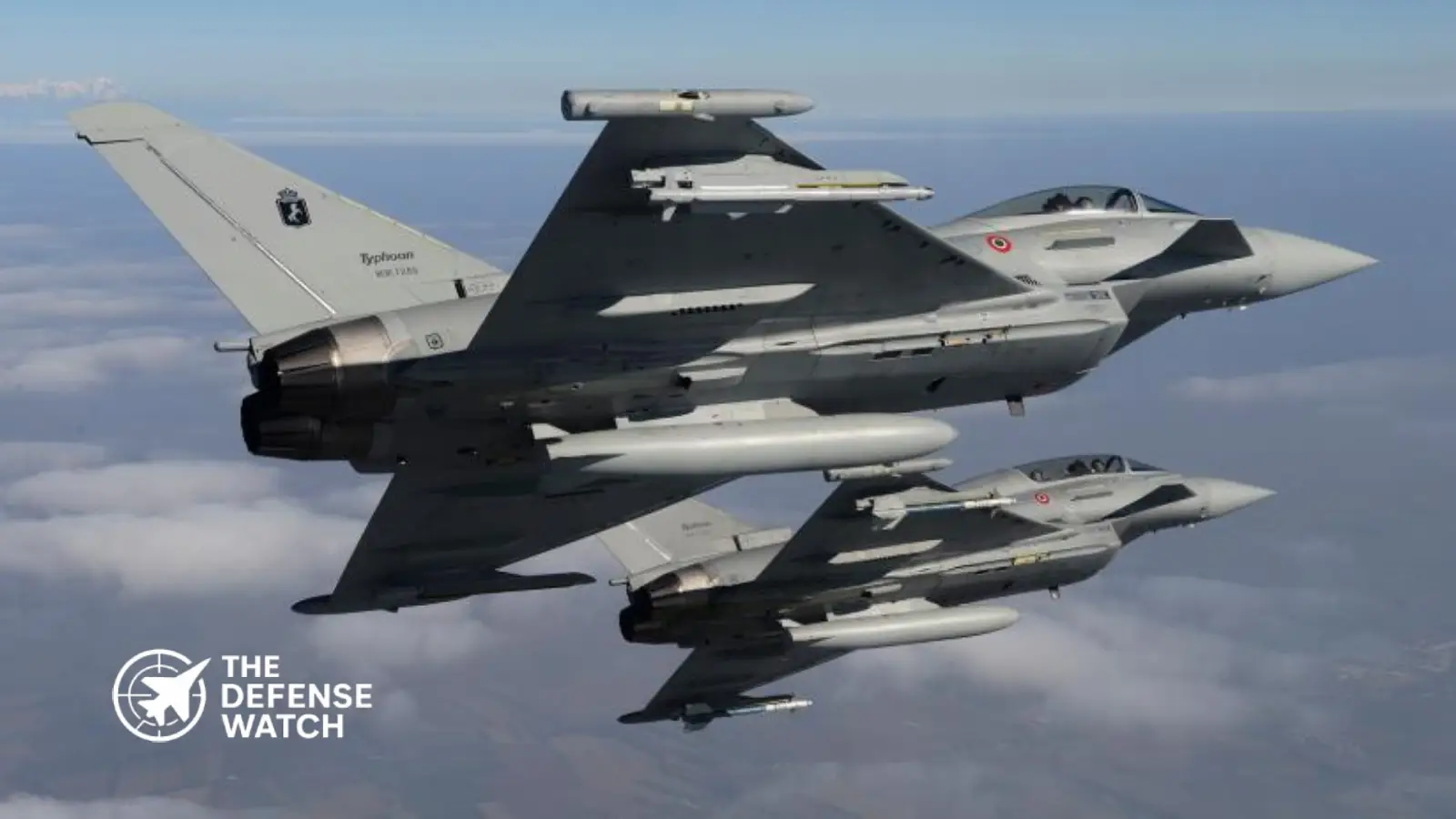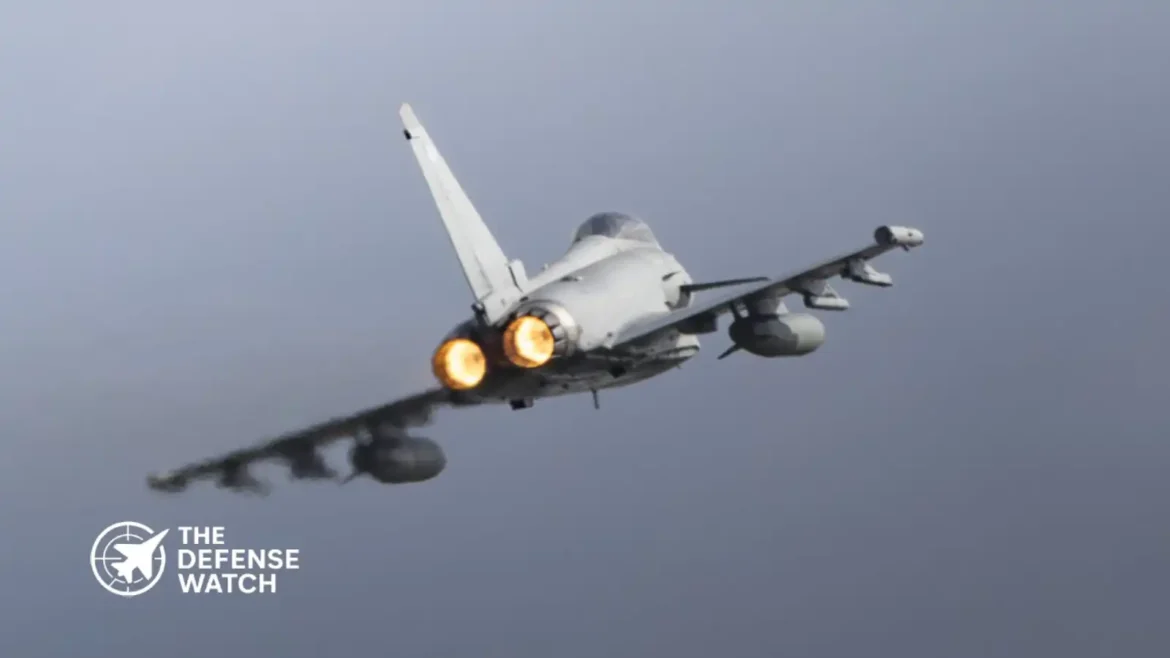
Europe’s combat air sector is in the middle of its most consequential upgrade cycle since the Cold War. Legacy platforms are receiving fifth-generation-grade sensors, next-generation fighters are moving from concept to metal, and export order books are the fullest they have been in decades. This list ranks the European military aircraft setting the pace in 2026 — spanning frontline fighters, tankers, transports, and the sixth-generation programs now taking shape on the factory floor.
KEY FACTS AT A GLANCE
| Aircraft | Manufacturer | Generation | Max Speed | Combat Radius | Key Sensor | Primary Armament |
|---|---|---|---|---|---|---|
| Dassault Rafale F5 | Dassault Aviation (FR) | 4.5+ Gen | Mach 1.8 | ~1,850 km | RBE2-AESA / SPECTRA EW | Meteor, MICA NG, SCALP |
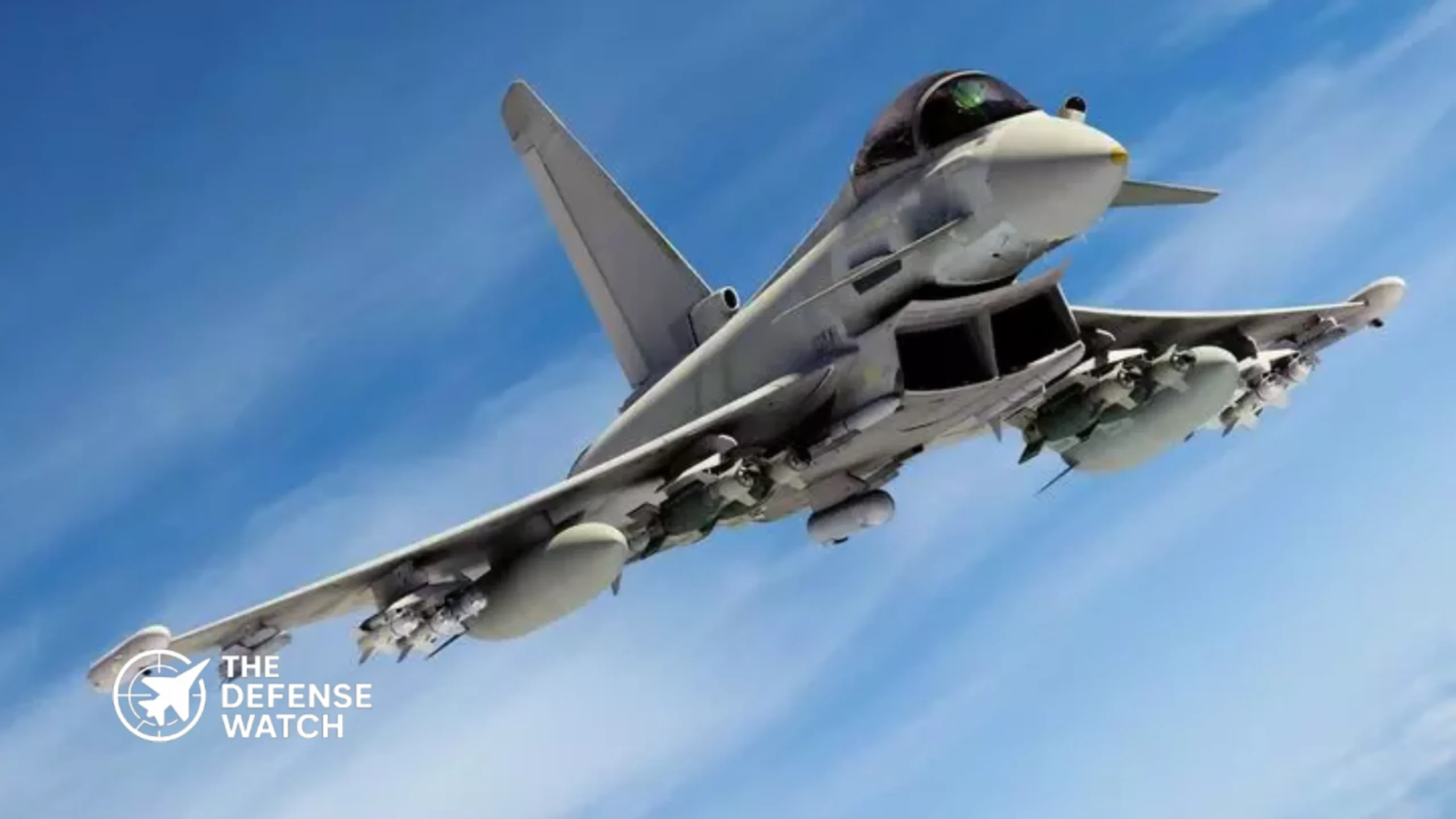
| Eurofighter Typhoon (ECRS Mk2) | BAE Systems / Leonardo / Airbus | 4.5 Gen | Mach 2.0 | ~1,390 km | ECRS Mk2 AESA (GaN) | Meteor, IRIS-T, Storm Shadow |
| Saab Gripen E/F | Saab AB (SE) | 4.5+ Gen | Mach 2.0 | ~1,500 km | Raven ES-05 AESA | Meteor, IRIS-T, RBS15 |
| GCAP/Tempest Demonstrator | Edgewing (BAE/Leonardo/JAIEC) | 6th Gen (dev.) | Classified | Classified | Distributed sensor fusion suite | Next-gen BVR + CCA control |
| Leonardo M-346FA | Leonardo (IT) | Light Combat | Mach 0.95 | ~556 km | Grifo-M AESA (opt.) | AIM-9, laser-guided bombs |
| Airbus A400M Atlas | Airbus Defence & Space | Strategic Airlift | Mach 0.72 | ~3,300 km (with load) | Defensive Aids Sub-System | N/A (airlift/tanker role) |
| Airbus A330 MRTT | Airbus Defence & Space | Tanker/Transport | Mach 0.86 | ~7,400 km ferry | ARBS boom + hose-drogue | N/A (refueling platform) |
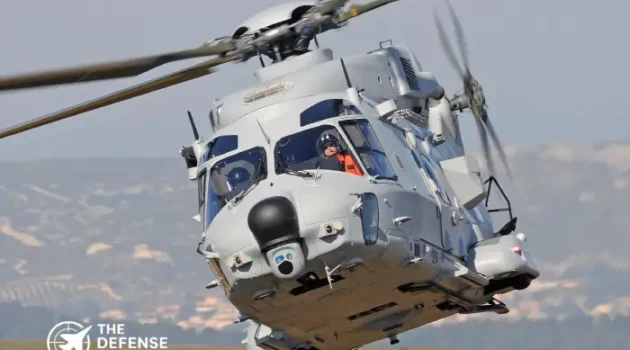
| NHIndustries NH90 | Airbus/Leonardo/Fokker | Multirole Helicopter | 300 km/h | ~450 km | FLIR/EO turret, dipping sonar (NFH) | Torpedoes, ATGMs (variant-dependent) |
| Eurodrone (Airbus/Dassault/Leonardo) | Airbus DS-led consortium | MALE RPAS | 165+ km/h | 24-hr endurance | Multi-sensor EO/IR + SAR | Precision-guided munitions |
| TAI KAAN (Turkey/NATO partner) | Turkish Aerospace | 5th Gen (dev.) | Mach 2.0 (proj.) | Classified | AESA radar (dev.) | Meteor-class BVR (planned) |
Executive Summary
2026 has been a milestone year for European military aircraft. Dassault formally launched the Rafale F5 standard, pairing a new AESA radar and uprated Safran M88 engines with a stealthy unmanned combat air vehicle derived from the nEUROn demonstrator. The Eurofighter consortium secured a £453.5 million production contract for 40 ECRS Mk2 AESA radars, closing Typhoon’s longest-standing capability gap. Saab’s Gripen E/F line is scaling toward 30+ aircraft annually as Brazil, Thailand, Colombia, and Ukraine join the customer list. Most notably, the UK-Italy-Japan GCAP/Tempest program awarded a £4.6 billion detailed-design contract to Edgewing in July 2026, with a crewed demonstrator now in final assembly — cementing Europe’s arrival in sixth-generation development.
The Top 10 Ranked
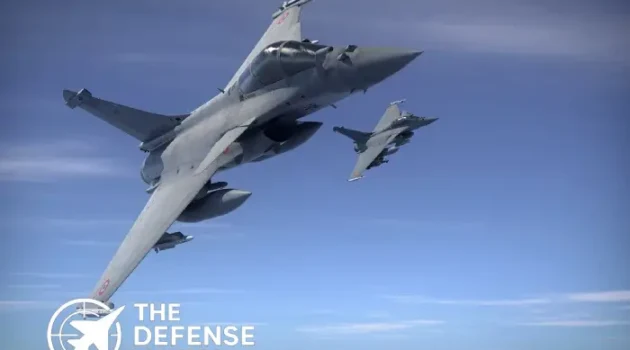
1. Dassault Rafale F5 (France) — The Rafale has evolved from an “omnirole” 4.5-gen fighter into what Dassault now markets as a 2026-era digital combat hub. The F5 standard, formally launched in October 2025, adds a next-generation radar, 20%-more-thrust M88 engines, hardened data architecture for nuclear-mission assurance, and control of a stealthy Unmanned Combat Air System derived from the nEUROn program. With France’s FCAS partnership with Germany and Spain stalled, Dassault is now charting an independent roadmap toward a “Super-Rafale” and beyond, targeting F5 entry into service between 2033 and 2035.
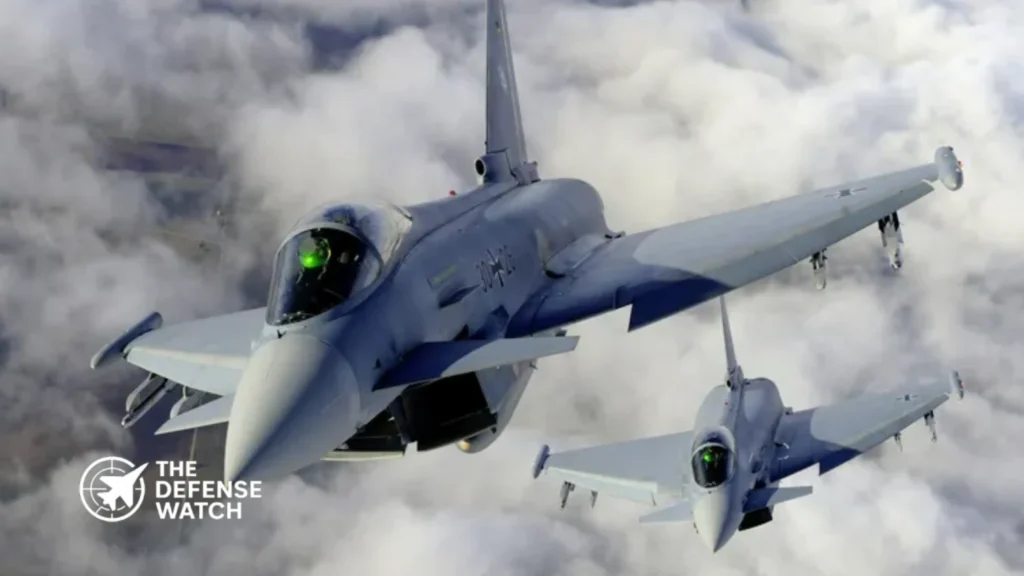
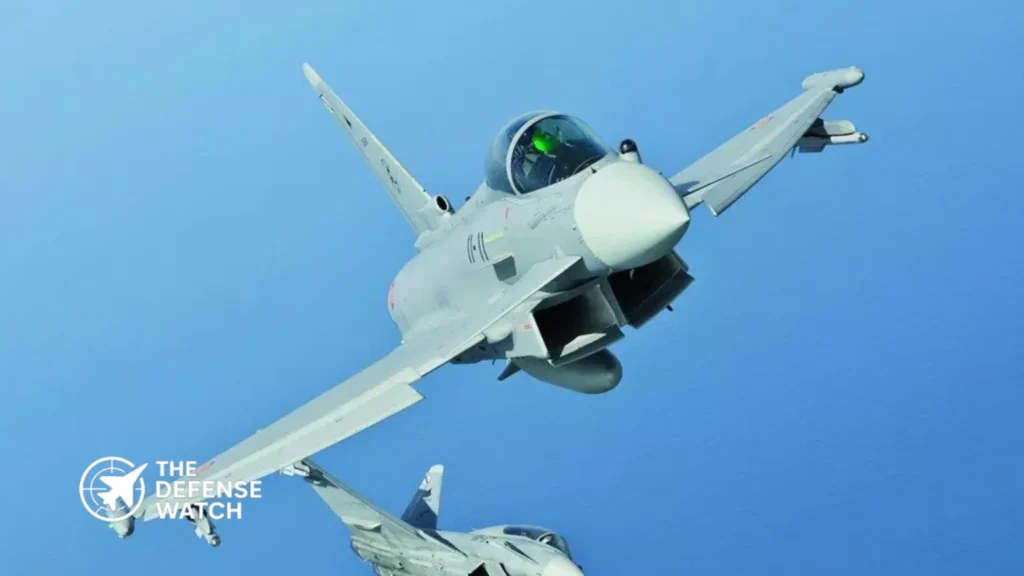
2. Eurofighter Typhoon — ECRS Mk2 (UK/Germany/Italy/Spain) — Nine air forces now fly the Typhoon, and its biggest weakness — the aging mechanically scanned Captor-M radar — is finally being retired. The ECRS Mk2, built by Leonardo UK and integrated by BAE Systems, uses gallium-nitride AESA modules across roughly 200 degrees of field of regard, fusing air-to-air search, ground targeting, and offensive electronic-attack jamming into a single aperture. Full-rate production of 40 units for RAF Tranche 3 jets began following a January 2026 contract award, with first flight already completed.
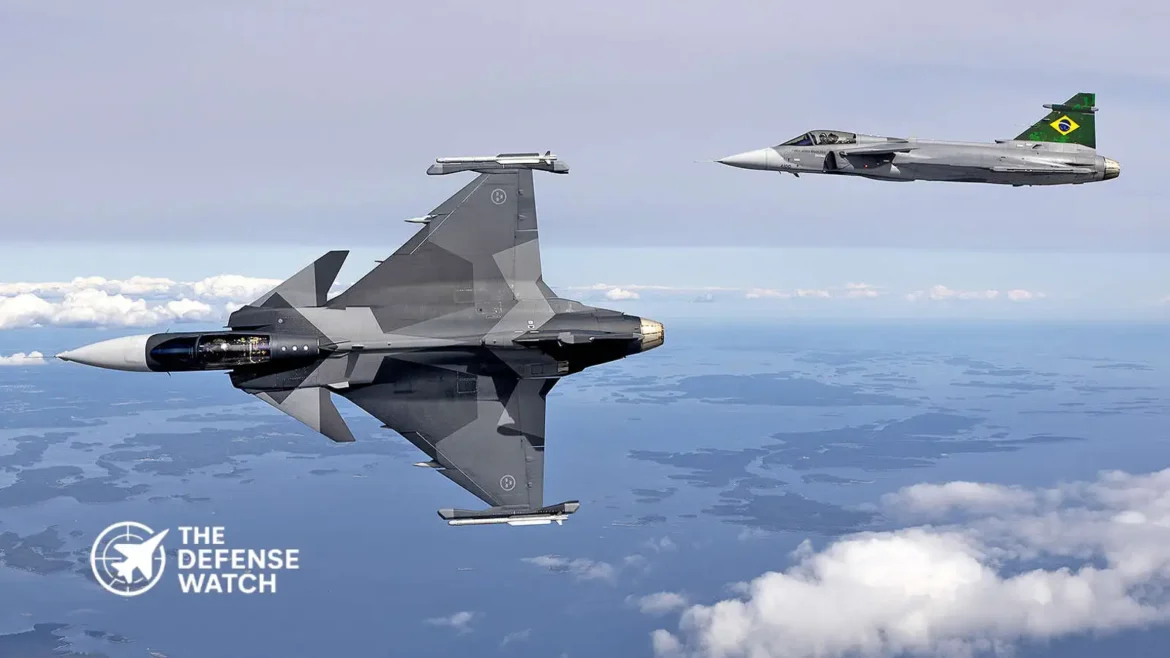
3. Saab Gripen E/F (Sweden/Brazil) — The Gripen E/F backlog has grown to 117+ firm orders across Sweden, Brazil, Colombia, and Thailand, with a Ukraine order for 16 aircraft also on the books. Brazil’s Embraer-built assembly line delivered its first locally produced Gripen E in March 2026 and rolled out the first two-seat Gripen F in June, which completed its maiden flight in August. Saab is doubling production capacity to 25–30 jets a year, powered throughout by the GE F414G engine.
4. GCAP/Tempest Demonstrator (UK, Italy, Japan) — The Global Combat Air Programme is the West’s most advanced sixth-generation effort outside the U.S. F-47. The July 2026 £4.6 billion Edgewing contract funds an 18-month detailed-design phase, and the crewed Tempest demonstrator is now in final assembly, with a flight-test aircraft targeted for 2026 and a Combat Air Demonstrator for 2027. Canada joined as the program’s first observer nation in July 2026, and entry into service remains targeted for 2035, though UK funding timelines have slipped toward the late 2030s.
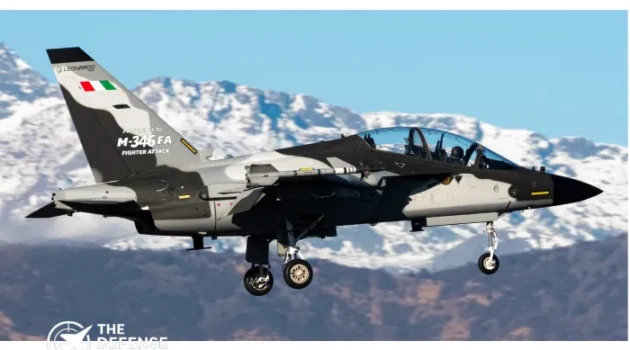
5. Leonardo M-346FA (Italy) — A light combat variant of the widely exported M-346 trainer, the FA model adds an optional Grifo-M AESA radar, an integrated self-defense suite, and combat wiring for AIM-9 missiles and precision-guided munitions — making it a cost-effective bridge for air forces needing 4th-gen-adjacent capability without a full fighter budget.
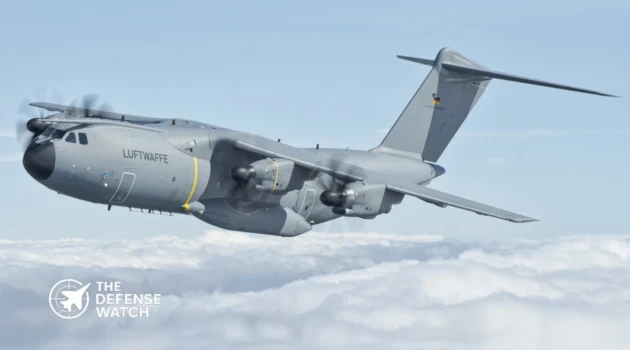
6. Airbus A400M Atlas (Multinational) — Europe’s flagship strategic/tactical airlifter combines a 37-tonne payload with rough-field and low-level tactical capability, plus an air-to-air refueling role that few competitors match.
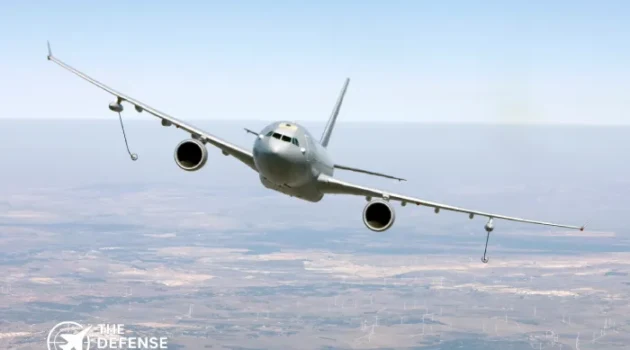
7. Airbus A330 MRTT (Multinational) — The backbone of NATO’s Multinational MRTT Fleet, offering both boom and hose-drogue refueling alongside strategic transport and medevac configurations.
8. NHIndustries NH90 (France/Germany/Italy/Netherlands) — A fly-by-wire, composite-airframe multirole helicopter fielded in naval (NFH) and tactical transport (TTH) variants across more than a dozen European air arms and navies.
9. Eurodrone (Airbus/Dassault/Leonardo) — Europe’s sovereign MALE RPAS answer to the Reaper and Bayraktar TB2, combining twin-turboprop endurance with a certifiable design for flight in unsegregated European airspace.
10. TAI KAAN (Turkey, NATO-integrated program) — Turkey’s twin-engine fifth-generation fighter, developed with European industrial input, rounds out the list as the platform to watch as it moves toward low-rate production and its first export discussions.
Technical Deep-Dive
Airframe & Stealth
Among frontline European fighters, true low-observable shaping remains limited to the developmental GCAP/Tempest and KAAN airframes, which use faceted, blended-wing designs, internal weapons bays, and advanced RAM (radar-absorbent material) coatings to minimize frontal RCS. The Rafale and Typhoon instead rely on a “reduced-signature, not stealth” philosophy — semi-recessed weapon carriage, radar-absorbent edge treatments, and composite structures — while leaning on electronic warfare to offset a higher baseline RCS. The Gripen E takes the smallest-signature approach among legacy-generation jets, prioritizing a compact frontal cross-section and canted vertical stabilizers.
Avionics & Sensor Fusion
This is where 2026’s upgrades matter most. The Typhoon’s ECRS Mk2 and Rafale’s F5-standard radar both move to gallium-nitride AESA modules for greater power efficiency and jamming resistance, paired with wide-band IRST search-and-track and comprehensive EW suites (SPECTRA on Rafale, Praetorian DASS on Typhoon). Gripen E’s Raven ES-05 AESA and its data-link-centric “smart” avionics architecture emphasize networked situational awareness over raw radar power. GCAP’s demonstrator introduces a distributed, AI-assisted sensor-fusion backbone designed from inception to command Collaborative Combat Aircraft (CCA) drone wingmen.
Propulsion
The Rafale’s Safran M88 is being uprated for roughly 20% more thrust under F5 without airframe modification. Typhoon retains its twin EJ200 engines, while Gripen E/F relies on a single GE F414G producing around 98 kN of thrust — the same engine family powering South Korea’s KF-21. GCAP’s next-generation engine core, under development by a UK-Italy-Japan consortium, is progressing toward ground testing as part of the program’s detailed-design phase.
Strategic & Export Outlook
Export momentum favors platforms offering sovereignty without US ITAR entanglement. Rafale’s order backlog exceeds 220 aircraft, including a landmark 80-jet UAE deal, ongoing Indonesian deliveries, and advancing negotiations with India for 114 more. Gripen E/F has become the preferred choice for buyers wary of both cost and political strings, with Brazil, Colombia, Thailand, and Ukraine all committed. Typhoon’s future exports likely hinge on Turkey, the Philippines, and Gulf state fleet expansions. GCAP, meanwhile, has already attracted India and Canada as dialogue/observer partners — a sign that Europe’s next-generation fighter ecosystem is positioning itself as a genuine alternative to US programs like the F-47.
Conclusion
No single European military aircraft dominates every category in 2026 — but collectively, the continent’s combat air industry has never been more competitive. The Rafale F5 and Typhoon’s ECRS Mk2 keep 4.5-generation platforms relevant against emerging threats, Gripen E/F proves that affordability and capability aren’t mutually exclusive, and GCAP/Tempest’s rapid progress from bridging contract to demonstrator assembly shows Europe is serious about sixth-generation air dominance. The regional air balance — and NATO’s collective posture toward Russia and beyond — will be shaped as much by these programs as by any single airframe.
FAQ
Which is the most advanced modern European military aircraft in 2026?In terms of pure development stage, the GCAP/Tempest demonstrator represents Europe’s most advanced sixth-generation effort. Among fielded fighters, the Eurofighter Typhoon with ECRS Mk2 and the Rafale F5 standard are the most capable in service or entering service.
Is the Rafale F5 a fifth-generation fighter?No — the F5 is officially a 4.5+ generation upgrade, though Dassault markets its sensor fusion, AI tools, and UCAV-teaming as approaching fifth-generation functionality.
When will the GCAP Tempest enter service?The stated target is 2035, though UK funding timelines disclosed in 2026 suggest a possible slip toward the late 2030s or early 2040s.
Which European fighter has the largest export backlog in 2026?The Dassault Rafale, with a firm order backlog exceeding 220 aircraft as of mid-2026.
Key Takeaways
What defense professionals need to remember about Europe’s 2026 combat air fleet
Radar Is the Real Upgrade
ECRS Mk2 and Rafale’s next-gen AESA are the single biggest capability jumps of 2026 — not new airframes.
Gripen E Wins on Value
A 117+ aircraft backlog across four export customers proves affordability still sells in 2026.
FCAS Is Effectively Dead
France is now pursuing a national Rafale F5-to-Super-Rafale path instead of the Franco-German-Spanish FCAS.
GCAP Is Moving Fast
From a bridging contract to a £4.6B detailed-design award and demonstrator assembly in a single year.
Sovereignty Sells
Buyers wary of US ITAR restrictions are driving Rafale, Gripen, and GCAP interest from India, Canada, and the Gulf.
From the Cockpit to the Console: For strategy-gaming and esports fans, this leaderboard shift will feel familiar — it’s the defense-industry equivalent of a mid-season balance patch. The Rafale and Typhoon are the “buffed legacy units” getting stat boosts (new radar, better EW) rather than being replaced outright, while GCAP/Tempest is the new S-tier unit still in the testing server, not yet live but already reshaping how everyone else plans their loadout. Just as competitive players track patch notes to stay ahead of the meta, defense planners are now tracking radar contracts and demonstrator milestones to judge who holds the regional air-power advantage.

Eurofighter IPA6 Reaches 1,000 Flight Hours
Eurofighter’s IPA6 instrumented test aircraft has passed 1,000 flight hours, marking an important milestone in the continuing development of the Eurofighter Typhoon and its weapons, avionics and mission systems. The milestone was highlighted by Eurofighter as part of its wider flight-test and capability development activity.
Takeaways
IPA6 has become a key flight-test asset for the continued development of the Eurofighter Typhoon.
1. 1,000 Flight-Hour Milestone
Eurofighter’s IPA6 instrumented production aircraft has surpassed 1,000 flying hours during development and qualification work for Typhoon capabilities.
2. Airborne Test Laboratory
IPA6 carries specialized flight-test instrumentation that records aircraft responses, pilot inputs and system behavior during development sorties.
3. Brimstone 2 Integration
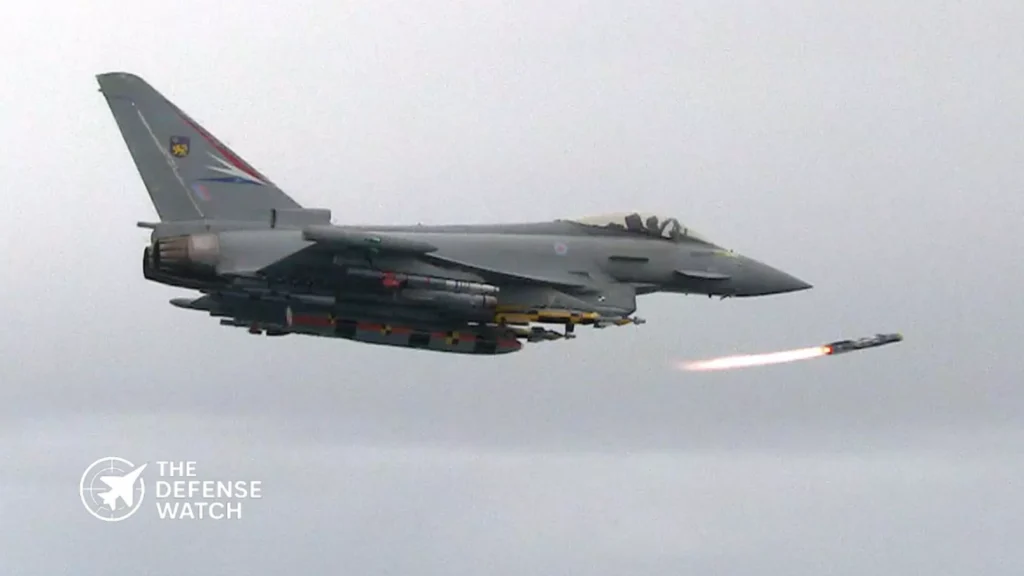
IPA6 became the first Typhoon to jettison and subsequently fire the Brimstone 2 missile during the weapon’s integration campaign.
4. Supports Multiple Upgrades
The aircraft has contributed to Typhoon avionics upgrades, helmet-mounted system trials and air-to-air refueling testing, among other development activities.
5. Data Drives Future Fleet Capability
The flight-test data collected by IPA6 helps engineers validate new configurations and establish the evidence needed before capabilities are introduced to operational aircraft.
IPA6 is one of the program’s Instrumented Production Aircraft. These aircraft are based on production-standard Typhoons but are equipped with additional instrumentation that allows engineers to collect detailed flight and systems data during development testing.
The significance of the 1,000 hours is therefore different from a conventional operational flying milestone. IPA6 spends substantial time being configured for individual test campaigns, making each flight part of a controlled engineering process rather than routine training or operational flying.
What Makes IPA6 Different From a Standard Typhoon?
Instrumented Production Aircraft are effectively airborne test laboratories. Their instrumentation records aircraft behavior and system performance throughout a sortie, while telemetry allows engineers on the ground to monitor selected parameters in real time.
This data becomes particularly important when engineers are testing systems close to their operational limits. A flight-control change, weapons separation event or aerial refueling activity can involve interactions between multiple aircraft systems that cannot be fully reproduced through computer modeling alone.
Eurofighter says the test process combines modeling, ground work and flight testing. When a capability reaches the flight stage, instrumentation provides measured evidence of what actually happens in the aircraft rather than relying solely on predicted performance.
IPA6 at a Glance
Item Detail Aircraft Eurofighter Typhoon IPA6 Role Instrumented Production Aircraft Milestone More than 1,000 flight hours Primary function Development and qualification testing Major activities Weapons, avionics, flight controls and refueling Notable weapon work Brimstone 2 integration and firing Test data Aircraft instrumentation, telemetry and video First flight November 1, 2007 Configuration Originally Tranche 1 Block 5, modified before first flight Eurofighter’s own historical data records IPA6’s first flight on November 1, 2007. The aircraft was originally built as a single-seat Tranche 1 Block 5 airframe and was modified to a Block 8 standard before its first flight, with Tranche 2 avionics equipment incorporated for development work.
IPA6 Played a Major Role in Brimstone 2 Integration
One of the most significant weapons programs associated with IPA6 was the integration of MBDA’s Brimstone 2 missile onto the Typhoon.
IPA6 became the first Typhoon to jettison and later fire Brimstone 2 during the development campaign. Engineers collected information from the aircraft, missile telemetry and airborne video to compare actual missile behavior with predicted performance.
The testing was not limited to determining whether the missile could safely leave the aircraft. Engineers also needed to evaluate aircraft and weapon interactions, mission-system behavior, flight-control responses and the conditions under which the weapon could be safely employed.
That distinction is important for modern combat aircraft. Integrating a weapon involves more than attaching it to a pylon. The aircraft must accommodate the weapon aerodynamically, communicate with its systems, manage release conditions and provide the pilot with the required controls and information.
The UK Ministry of Defence previously identified Brimstone 2 integration as part of the Typhoon’s Phase 3 Capability Enhancements. The program also covered improvements involving other weapons and aircraft systems.
The RAF subsequently conducted the first operational firing of Brimstone 2 from a Typhoon FGR4 in February 2019 during operations in Syria.
Avionics Testing Is Central to Typhoon’s Evolution
IPA6 has also supported a broad range of avionics development. According to Eurofighter and BAE Systems, the aircraft has been involved in much of the Typhoon’s avionics upgrade work, along with trials of the Striker II helmet-mounted system and air-to-air refueling testing.
For a fighter aircraft with a long service life, avionics development is particularly important because software, sensors, communications systems and mission computers can evolve substantially without replacing the entire airframe.
Eurofighter’s current development path includes improvements to radar, electronic warfare, communications, mission systems and weapons integration. The program’s P3Ec work, for example, is intended to improve interoperability, connectivity, sensor performance, survivability and situational awareness.
The broader modernization effort also includes the Captor-E active electronically scanned array radar family and further development of the aircraft’s electronic warfare capabilities.
Flight Testing Establishes the Evidence for Operational Use
The 1,000-hour milestone matters because flight testing is the bridge between engineering design and operational capability.
A new weapon or avionics function can perform correctly in simulations and laboratory tests but still require extensive airborne validation. Aircraft vibration, aerodynamic loads, electromagnetic interactions, temperature, fuel-state changes and flight-control responses can affect how a system behaves in actual flight.
IPA6 allows engineers to measure these interactions directly.
For weapons integration, testing can involve dummy stores before live firings. Engineers gradually expand the tested flight envelope as confidence increases, assessing factors such as speed, altitude and aircraft loading before moving toward more demanding conditions.
This approach reduces technical uncertainty before a capability is cleared for operational aircraft. It also creates a documented evidence base for safety and qualification decisions.
The Milestone Comes During a Broader Typhoon Modernization Cycle
The importance of IPA6 is greater when viewed against the current direction of the Eurofighter program.
The Typhoon is no longer being developed simply as an air-superiority fighter. Its evolution has increasingly focused on a broad swing-role mission set combining air-to-air combat, precision strike, electronic warfare, networking and advanced sensing.
Eurofighter’s published program roadmap includes further enhancements to the aircraft’s sensors, connectivity, mission systems and weapons. The planned Aerodynamic Modification Kit is intended to support more flexible weapon configurations and accelerate integration of additional external stores.
The program also envisions a longer-term evolution of the aircraft’s avionics architecture, cockpit, networking and ability to operate alongside future combat systems and uncrewed platforms.
That means flight-test infrastructure such as IPA6 remains important even as newer Typhoon production standards enter service.
Why the IPA6 Milestone Matters to the U.S. and NATO
For the United States and its NATO allies, the significance of the milestone extends beyond the Eurofighter program itself.
European air forces are increasingly expected to maintain capable fourth-generation and fourth-generation-plus aircraft alongside newer fifth-generation platforms. The ability to continue upgrading existing fighters can help sustain combat capacity while newer systems enter service.
The Eurofighter program has also become increasingly important to NATO airpower. Airbus reported that Eurofighter fleets from the UK, Germany, Spain and Italy supported NATO air-policing activity over Romania, Bulgaria and the Baltic region during 2025.
The program has now surpassed one million cumulative Typhoon flight hours, according to Eurofighter, demonstrating the scale of the operational and development ecosystem supporting the aircraft.
The continued use of dedicated test aircraft helps ensure that new weapons and systems can be evaluated without relying solely on frontline aircraft for developmental work.
For NATO, that has a practical value. Faster and better-supported integration of weapons, sensors and communications can help allied aircraft remain interoperable as the threat environment and operational requirements change.
IPA6 Provides a Development Path for the Next Typhoon Upgrades
IPA6’s 1,000 flight hours should therefore be viewed less as a standalone record and more as evidence of the infrastructure required to keep Typhoon evolving.
The aircraft has supported weapons releases, live missile firings, avionics development, helmet-mounted systems, refueling trials and flight-control work. Each campaign contributes technical data that can be used to refine designs and establish safe operating limits.
That process becomes increasingly important as Typhoon receives more advanced sensors, weapons and networking functions.
The Eurofighter program is also pursuing upgrades intended to keep the aircraft relevant into the coming decades. The program describes future developments involving new avionics architecture, a digital cockpit, improved helmet-mounted displays and high-speed data networking as part of its longer-term evolution.
The role of IPA6 is consequently straightforward but important: collect the flight data needed to turn those engineering developments into capabilities that can eventually be fielded on operational aircraft.
What Comes Next for the Eurofighter Typhoon?
Eurofighter’s development roadmap points toward continued integration of weapons, sensors and electronic warfare capabilities rather than a fixed configuration.
The program is also progressing work on the Aerodynamic Modification Kit, which is intended to support new weapon configurations and future weapon integration while improving aspects of the aircraft’s aerodynamic performance.
For operators, the value of this approach is the ability to update a mature combat aircraft without treating each new capability as a completely separate platform development effort.
IPA6’s milestone illustrates the engineering work behind that process. Its 1,000 flight hours represent a large body of test data supporting the continued evolution of a fighter aircraft that remains in production, modernization and operational service across multiple European and international air forces.
Britain’s combat air fleet spent much of 2025 defined by delay and uncertainty — a slipping F-35B delivery schedule, an unresolved Typhoon retirement debate, and open questions about how much of the original 138-aircraft F-35 ambition would survive contact with budget reality. Several of those threads have now resolved, at least for the moment. Here’s where things actually stand as of August 2026.
The Typhoon Fleet: A Bigger Upgrade Than Planned
The headline shift this year is on the Typhoon side. The UK’s latest Defence Investment Plan commits to upgrading all 107 of the RAF’s Tranche 2 and Tranche 3 Eurofighter Typhoons — a significant expansion from the 40 aircraft originally announced as recently as January 2026. The upgrade package, worth £5.4 billion, covers radar, communications, and software improvements, a new defensive aids system, and enhancements to weapons integration, funded across FY 2026/27 through FY 2029/30. A further £1.1 billion is earmarked to sustain the fleet into the 2040s through the Long Term Evolution programme.

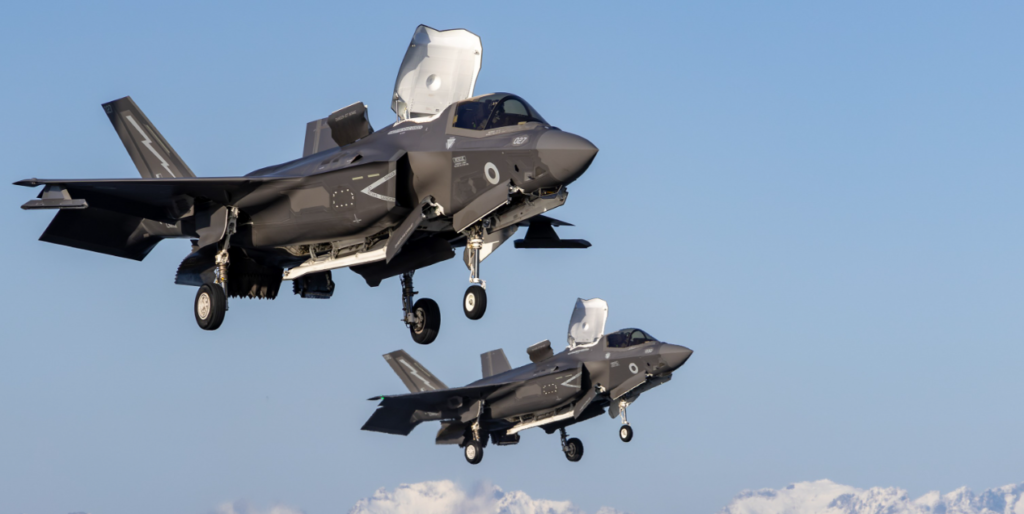
Image : UK Royal Navy That investment confirms what UK defense officials have signaled for some time: the Typhoon isn’t a bridge aircraft waiting to be replaced, but the core of RAF combat air capability for roughly another 15 years, alongside the F-35B and, eventually, the GCAP/Tempest sixth-generation fighter.
The RAF’s oldest Typhoons haven’t been as fortunate. Of the original 30 Tranche 1 airframes, 26 have been scrapped, stripped for spares, or placed in storage pending disposal. Four remain in active service — but only in the Falkland Islands, flying Quick Reaction Alert duty out of Mount Pleasant Complex, where they’re scheduled to serve until 2027 before final retirement. Unlike the Tranche 2/3 fleet, the Tranche 1 jets lacked the avionics and structural provisions needed for the newer upgrade package, making retention uneconomical despite some earlier industry suggestions that BAE Systems could modernize them.
The F-35B: First Tranche Complete, Long Road Still Ahead
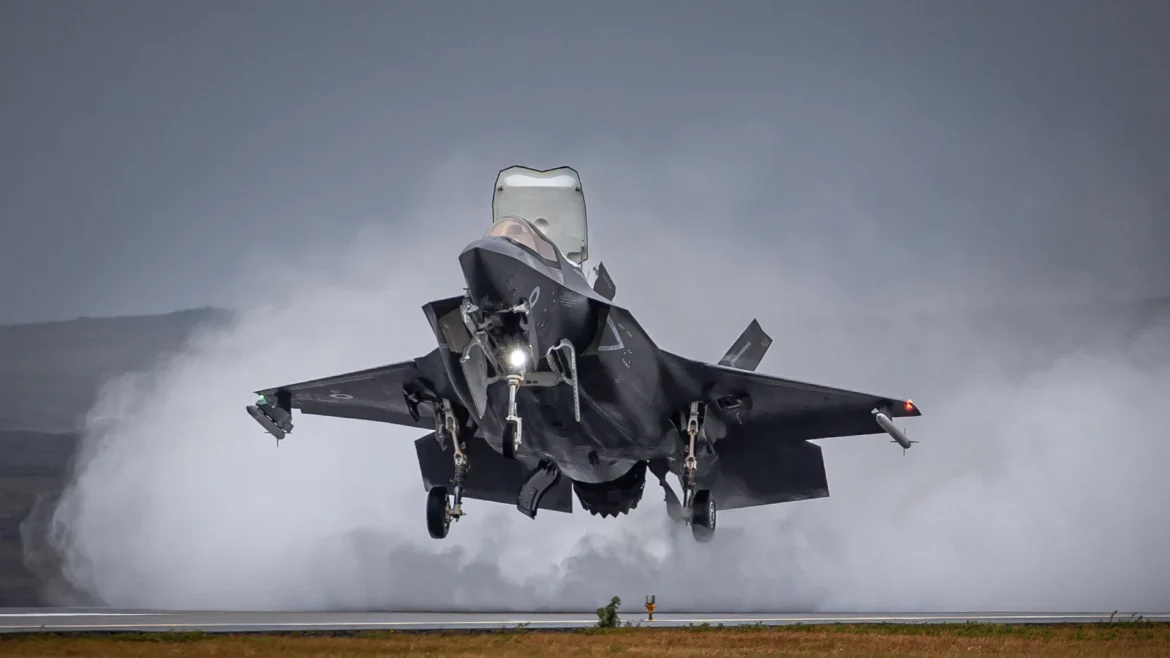
On the Lightning Force side, the UK Ministry of Defence confirmed in late March 2026 that it had received the last of its first 48 contracted F-35B Lightning IIs — a milestone reached roughly 14 years after the first STOVL F-35B was delivered to the MoD in 2012, and eight years after the type’s arrival at RAF Marham in 2018.
That completion came later than planned. Lot 17 aircraft that were originally due by the end of 2025 slipped into early 2026, with the final deliveries landing by April 2026 — a three-to-four month delay attributable to the Joint Program Office’s shared production-lot structure, under which the UK, as sole Tier One international partner, has no contractual mechanism to impose delay penalties on Lockheed Martin.
As of the completed first tranche, the RAF and Royal Navy’s joint Lightning Force — comprising 617 Squadron and 809 Naval Air Squadron, both based at RAF Marham — operates 47 F-35Bs, following the loss of one airframe. The government has confirmed a long-term delivery plan extending well beyond that first batch: a written parliamentary answer in January 2026 set expectations for the UK’s 75th F-35 to arrive by the end of 2033, with deliveries continuing steadily through the 2030s.
That trajectory still falls well short of the UK’s original ambition of 138 F-35Bs, first set out in the 2015 Strategic Defence and Security Review. Analysts and reporting have increasingly described that full order as unaffordable, with some commentary suggesting future purchases may lean toward the cheaper F-35A variant at the B model’s expense — though the UK’s carrier-based, STOVL-dependent force structure makes a wholesale pivot away from the B model operationally complicated.
What the F-35B Still Can’t Do
Delivery numbers are only part of the readiness picture. The RAF’s F-35Bs remain constrained by weapons integration timelines tied to the aircraft’s Block 4 software upgrade. Until Block 4 arrives, UK F-35Bs will continue operating with a more limited weapons set than originally envisioned: SPEAR 3 integration is now targeted for financial year 2028-29, and Meteor beyond-visual-range missile integration isn’t expected until the early 2030s. In the meantime, the aircraft’s stealth, sensor fusion, and electronic-attack capability are doing most of the operational work — its RAF nickname, “the assassin,” reflects that role, working alongside the Typhoon (“the thug”) in a high-low mix where the F-35B clears the way and the Typhoon brings the heavier ordnance load.
Comparing the Two Fleets
Eurofighter Typhoon F-35B Lightning II Current fleet size 111 total (107 Tranche 2/3 active + 4 Tranche 1 in Falklands) 47 operational 2026 development £5.4B upgrade covering all 107 Tranche 2/3 jets First 48-aircraft tranche completed (delayed to April 2026) Out-of-service date Tranche 1: 2027; Tranche 2/3: 2040 Deliveries continuing through the 2030s; 75th aircraft expected by end of 2033 Key limitation Tranche 1 lacked upgrade-compatible avionics Full weapons set (SPEAR 3, Meteor) awaiting Block 4, not expected until 2028-early 2030s Role Heavy ordnance, air defense, core fast-jet mass Stealth, sensor fusion, carrier operations, first-in strike FAQ
How many F-35Bs does the UK have as of 2026?The RAF and Royal Navy’s Lightning Force operates 47 F-35Bs following completion of the first 48-aircraft contracted tranche in March/April 2026, with one airframe lost. The government expects to reach 75 total F-35s by the end of 2033.
Why was the UK’s F-35B delivery delayed?Lot 17 aircraft due by the end of 2025 slipped into early 2026 due to production issues within the Joint Program Office’s shared-lot structure. Because the UK buys through annual international production lots rather than a bespoke bilateral contract, it has no financial remedy or delay penalty available against Lockheed Martin.
Is the RAF still planning to buy 138 F-35Bs?The original 2015 target of 138 F-35Bs is now widely viewed as unaffordable. Current confirmed government planning extends only to a 75th aircraft by 2033, with the long-term fleet size beyond that still unresolved.
What happened to the RAF’s Tranche 1 Typhoons?Of the original 30 Tranche 1 Typhoons, 26 have been scrapped, stripped for parts, or placed in storage. Four remain in service on Quick Reaction Alert duty in the Falkland Islands until 2027, after which the type will be fully retired from RAF service.
When will RAF F-35Bs get their full weapons package?SPEAR 3 integration is targeted for financial year 2028-29, and Meteor missile integration isn’t expected until the early 2030s, both tied to the aircraft’s Block 4 software upgrade.
How much is the UK spending to upgrade the Typhoon fleet?£5.4 billion to upgrade and sustain all 107 Tranche 2 and 3 Typhoons, spread across FY 2026/27 to FY 2029/30, plus a further £1.1 billion for long-term sustainment into the 2040s.
The Loadout Problem, In Gaming Terms
Any player who’s grinded through a live-service shooter’s weapon-unlock tree will recognize the RAF’s current F-35B situation instantly: you’ve got the platform, you’ve got the base kit, but half your loadout is still locked behind a content update that keeps slipping right. SPEAR 3 and Meteor are effectively the F-35B’s endgame weapon unlocks — available on the roadmap, promised for a future patch, but not yet in the loadout menu. Until Block 4 ships, RAF pilots are running a stealth platform that’s already lethal in its current build, but still waiting on the DLC that unlocks its full kit.
Executive Summary:
The Eurofighter Typhoon’s unit cost isn’t one number — it’s a moving target that ranges from a £73.1 million bare flyaway figure to a €187 million all-in Tranche 5 package, depending on what’s bundled into the deal. This breakdown separates the accounting tricks from the real program economics, and explains why the RAF still trusts a jet first sketched on paper as “EF 2000” back in the 1980s.
Ask three different governments what a Eurofighter Typhoon costs and you’ll get three different answers, all technically true. The UK’s own 2011 House of Commons defence committee pegged the bare airframe at £73.1 million. Germany’s October 2025 order for 20 Tranche 5 jets worked out to roughly €187 million each once simulators and support kit were folded in. Neither number is wrong — they’re just measuring completely different things.

That pricing chaos is the whole story. The Typhoon was born as a four-nation consortium jet, the “EF 2000,” designed to spread cost and workshare across Britain, Germany, Italy, and Spain. Three decades later, that same structure is exactly why nobody can agree on what one aircraft is worth.
The Technical Analysis: Why The Typhoon’s Price Tag Keeps Moving
Start with the airframe everyone actually flies. The RAF’s Tranche 3 Typhoon FGR4 carries the Captor-M mechanically scanned radar in most of the fleet, with the newer AESA-based Captor-E rolling into later tranches and retrofits.
Two Eurojet EJ200 turbofans push the jet to Mach 2.35, with supercruise capability that lets it sustain supersonic speeds without afterburner. That matters tactically — it shrinks the infrared signature during a intercept run and extends time-on-station compared to jets that need burner to go supersonic.
The pricing split comes down to what accountants call “recurring flyaway cost” versus “total program cost.” Flyaway cost covers just the airframe, engines, and standard avionics rolling off the line. Total program cost folds in decades of sunk R&D, weapons integration, simulators, and infrastructure — which is why the same jet can be quoted at $117 million or $300 million depending on which invoice you’re reading.
Export contracts make the picture messier still. Qatar’s 2017 order for 24 Typhoons came in at roughly $6.7 billion, or about $280 million per jet — but that figure bundled weapons packages, pilot training, and a support infrastructure buildout from zero. Turkey’s more recent deal covered 20 Typhoons in an agreement valued at up to £8 billion, framed by UK officials as securing thousands of British jobs.
Data Block: Eurofighter Typhoon Cost & Spec Comparison
Metric RAF Tranche 3 (UK) Tranche 5 (Germany, 2025) Export Configuration (Qatar/Turkey) Reported unit cost ~£73.1M–£126M ($117M–$202M) ~€140M–€187M all-in $200M–$300M (with weapons/support) Radar Captor-M (mechanical) Captor-E AESA (GaN) Mix, contract-dependent Max speed Mach 2.35 Mach 2.35 Mach 2.35 Engines 2x Eurojet EJ200 2x Eurojet EJ200 2x Eurojet EJ200 Est. flight-hour cost $60,000–$65,000 Comparable, program-dependent Higher (fleet-scale, no economies) Program origin EF 2000 consortium, 1980s Same consortium architecture License/offset-driven Figures reflect publicly reported program data through late 2025 and early 2026; export pricing varies by offset and support package.
The Insight: What Esports Drafting Strategy Teaches Us About Consortium Fighters
Competitive Call of Duty and Counter-Strike teams live or die by role specialization — an entry fragger, a support player, an anchor holding a chokepoint. No single player is optimized to do everything; the roster wins by combining specialists into one coordinated unit.
The Eurofighter consortium was built on the same logic, just with nations instead of players. The UK leans on Typhoon for air-to-air and rapid intercept, Germany pushes electronic warfare integration, Italy and Spain contribute manufacturing depth and Mediterranean basing flexibility. No partner nation “solos” the program.
The trade-off mirrors a drafted roster with four captains instead of one. Juste retour — dividing manufacturing work by financial contribution rather than by who’s actually best at building a given part — is the aerospace equivalent of picking a lineup by seniority instead of skill. It produces a capable jet, but never the cheapest one.
The Typhoon’s order books are fuller now than they were five years ago — but every one of those orders comes wrapped in an industrial partnership, not just a price tag.” This is the trade nations keep making: paying a premium for technology transfer and sovereign workshare, not just for an airframe.
Conclusion: The Price You Pay Depends On What You’re Actually Buying
The Eurofighter Typhoon isn’t overpriced or underpriced — it’s mispriced by anyone comparing headline numbers without asking what’s actually in the box. A bare RAF flyaway figure and a fully-loaded export contract describe the same airframe but two entirely different transactions.
That distinction matters more now than ever, as the Typhoon’s Captor-E radar upgrade and continued export wins in the Gulf and Southeast Asia keep the EF 2000 lineage flying well into the 2030s. The jet that started as a four-nation compromise is still winning contracts precisely because it never stopped being one.
FAQ
What is the unit cost of a Eurofighter Typhoon?Reported figures range from roughly $117 million (UK flyaway cost, 2011 report) to $300 million for fully-equipped export configurations bundling weapons, training, and support infrastructure.
Why is it called “EF 2000”?EF 2000 was the Eurofighter’s original consortium designation during development in the 1980s and 1990s, before “Typhoon” became the aircraft’s operational name.
Does the RAF still fly the Typhoon?Yes. The Typhoon FGR4 remains a frontline RAF fast-jet, working alongside the F-35B and expected to remain in service into the 2030s pending Tranche upgrades.
Executive Summary:
Airbus has successfully completed the maiden flight of Germany’s first Eurofighter Tranche 4 fighter under the Quadriga modernization program. The milestone clears an important step toward delivering 38 advanced fighters to the Luftwaffe, replacing older Tranche 1 aircraft while introducing new radar, avionics, and electronic warfare growth potential.
Airbus Advances German Eurofighter Tranche 4 Program With First Flight
Airbus has completed the first flight of the German Eurofighter Tranche 4, marking a significant milestone in Germany’s Quadriga fighter modernization program. The maiden flight took place on July 14 from Airbus’ Military Aircraft Center in Manching, Germany, and precedes the aircraft’s planned delivery to the German Air Force later in 2026, subject to certification.
The aircraft, carrying German military registration 34+02, remained airborne for approximately one hour during a Production Flight Acceptance Test (PFAT). Airbus test pilot Stefan Auer evaluated flight handling, engine performance, hydraulics, electrical systems, flight controls, and onboard avionics before the aircraft proceeds toward certification.
The achievement represents the first flying example of Germany’s latest Eurofighter configuration and demonstrates steady progress in one of Europe’s largest tactical fighter modernization efforts.
Quadriga Will Replace Germany’s Oldest Eurofighters
Project Quadriga was launched after Germany ordered 38 Eurofighter Tranche 4 aircraft in 2020.
The program includes:
Program Element Details Total aircraft 38 Single-seat fighters 30 Twin-seat fighters 8 Primary mission Replace Tranche 1 Eurofighters Planned deliveries Through 2030 These aircraft are intended to replace the Luftwaffe’s earliest Tranche 1 fighters while maintaining Germany’s combat aviation capabilities well into the coming decades. Airbus states the fleet will support German air power until the eventual transition toward the Future Combat Air System (FCAS).
Germany further expanded its commitment by ordering 20 additional Tranche 5 Eurofighters in 2025, extending production into the next decade.
New Radar And Growth Potential Define Tranche 4
Unlike the earliest Eurofighters, the Tranche 4 configuration introduces substantial improvements designed to keep the aircraft operationally relevant against increasingly sophisticated air threats.
Among the most important upgrades are:
- European Common Radar System (ECRS) Mk1 Step 0 AESA radar
- Improved mission computers
- Enhanced processing capacity
- Future software growth architecture
- Compatibility with future electronic warfare upgrades
According to defense reporting, the aircraft will later transition to ECRS Mk1 Step 1, adding additional capabilities through updated hardware and software. Germany also plans to equip part of the Quadriga fleet with Saab Arexis wingtip electronic warfare pods under the Eurofighter EK program.
These upgrades significantly improve target tracking, resistance to electronic attack, and long term modernization potential compared with earlier production aircraft.
Why The First Flight Matters
Although a maiden flight is primarily a production milestone, it represents much more than a routine factory test.
The successful PFAT confirms that the aircraft’s major flight systems function as designed before entering certification and military acceptance testing. Completing this stage reduces program risk and allows Airbus to move toward serial deliveries.
For Germany, the timing is strategically important.
The Luftwaffe is simultaneously modernizing multiple combat aviation capabilities, including F 35A acquisition for NATO nuclear sharing missions, Eurofighter electronic warfare variants, and future participation in the multinational FCAS program.
The Quadriga aircraft therefore bridge today’s operational requirements while providing an upgrade path that extends into the 2060s.
Strategic Importance For European Air Power
The Tranche 4 milestone reflects a broader resurgence of the Eurofighter program across Europe.
Germany, Italy, and Spain have all committed to new Tranche 4 production, while export interest has also grown. Rather than replacing existing Eurofighters immediately with sixth generation platforms, European operators are investing in advanced variants that can remain credible against modern threats while next generation systems mature.
From a NATO perspective, these aircraft strengthen European combat aviation capacity without relying exclusively on fifth generation fleets. Modern AESA radar, digital avionics, and future electronic warfare capabilities enable the Eurofighter to contribute to air superiority, homeland defense, NATO air policing, and joint coalition operations.
For the United States and allied planners, Germany’s modernization provides another example of NATO members increasing investments in advanced combat aviation while improving interoperability across the alliance.
Looking Ahead
Airbus expects to deliver the first German Tranche 4 aircraft later in 2026 following completion of certification activities. Deliveries of all 38 Quadriga fighters are scheduled to continue through 2030, while production of Germany’s additional Tranche 5 aircraft will extend into the early 2030s.
As older Tranche 1 aircraft retire, the new fighters will become a central element of the Luftwaffe’s future force structure, combining improved survivability, sensor capability, and long term upgrade potential with continued interoperability across NATO air forces.
Executive Summary:
The Eurofighter Typhoon is Europe’s most operationally active multirole fighter, flown by nine air forces and now accumulating more than one million flying hours across combat, air policing, and NATO interoperability missions. With the Tranche 5 standard and ECRS Mk2 AESA radar in development, the platform is no longer a legacy 4th-gen holdout — it is being transformed into a 4.5+ generation electromagnetic warfare node with a service horizon extending past 2040. New orders placed in 2025 alone totalled over €15 billion across Germany, Italy, Spain, Turkey, and Bangladesh.
Forty-four Typhoons for Turkey. Twenty Tranche 5 jets for Germany approved at €3.75 billion. A Bangladesh letter of intent signed December 2025. An Italian order worth €7.5 billion finalized the same month. In a year when Europe’s defense procurement machine accelerated to a pace not seen since the Cold War, the Eurofighter Typhoon was the aircraft everyone wanted most.
That’s not a coincidence. The Typhoon has spent two decades quietly accumulating one of the most operationally diverse combat records of any Western fighter — and its upgrade roadmap is now threatening to make it more capable than several fifth-generation platforms in contested electromagnetic environments.
The Hard Numbers: What Makes the Typhoon Different
The Typhoon is a twin-engine, canard-delta multirole fighter designed from the start to be aerodynamically unstable — a deliberate engineering choice that gives it exceptional agility at the cost of requiring fly-by-wire computers to keep it airborne every millisecond. That instability is a feature.
At maximum performance, the aircraft hits Mach 2.35 at altitude — faster than the F-35A (Mach 1.6) and the Dassault Rafale (Mach 1.8). Its EJ200 engines enable supercruise: sustained supersonic flight without afterburner, extending both range and survivability by reducing the aircraft’s infrared signature during cruise. Engine health monitoring is rated at 1,200 flying hours between unscheduled maintenance events.
The airframe uses composite materials for roughly 85% of its surface area, reducing radar cross-section compared to conventional metal construction while cutting structural weight by approximately 30%. Only 15% of the aircraft’s outer mold line is traditional metal. That’s a stealth-adjacent design philosophy built into the bones of a platform that predates the modern stealth era.
Weapons carriage is genuinely multi-role. The Typhoon fields up to 13 external hardpoints, capable of simultaneously carrying Meteor BVR missiles (the longest-ranged Western air-to-air missile in service), Brimstone 2 precision strike munitions, Storm Shadow/SCALP cruise missiles, and Paveway IV GPS/laser-guided bombs — all in a single sortie when configured for swing-role operations.
Technical Data: Eurofighter Typhoon vs. Primary Competitors
Metric Eurofighter Typhoon (T4/T5) Dassault Rafale F4 F-35A Lightning II Max Speed Mach 2.35 Mach 1.8 Mach 1.6 Unit Cost (approx.) ~€140M (T5) ~€120M (F4, French AF) ~$82M (FY2024 LRIP) Engine 2× EJ200 (20,000 lbf each) 2× M88-4E (16,900 lbf each) 1× F135 (43,000 lbf with AB) Radar (current/future) Captor-M → ECRS Mk0/Mk1/Mk2 RBE2-AA AESA APG-81 AESA Supercruise Yes (Mach ~1.2–1.3) Limited No SEAD/EW Role Yes (EK/ECRS Mk2) Limited No dedicated variant Operators (2026) 9 nations, 700+ aircraft 9 nations, ~220 on order 20+ nations, ~1,000+ delivered Service Horizon 2040s+ (with upgrades) 2040s (Rafale F5 planned) 2070s (platform lifecycle) Combat Debut 2011 Libya 2015 Syria 2019 USAF Cost data: Germany Tranche 5 contract (Breaking Defense, Oct 2025); Rafale French AF estimate (2025 French parliamentary review); F-35 FY2024 Selected Acquisition Report.
The ECRS Mk2: Why This Radar Changes the Calculus
Radar defines the modern air combat kill chain. The Typhoon’s long-standing weakness — its legacy mechanical Captor-M radar — is being corrected in the most aggressive terms possible.
The ECRS Mk2 (European Common Radar System Mark 2), developed by Leonardo UK and integrated by BAE Systems, is not simply a better radar. It is a multi-function active electronically scanned array that combines air-to-air search, ground targeting, and offensive electronic jamming into a single aperture. Its field of regard extends to approximately 200 degrees — about 50% wider than a conventional fixed-plate AESA — enabled by a mechanical steering pivot behind the array.
The radar uses gallium nitride (GaN) transmitter/receiver modules rather than the older gallium arsenide (GaAs) technology. GaN delivers higher power density, wider bandwidth, and better thermal efficiency. In practical terms, this allows the Mk2 to simultaneously track multiple targets, jam enemy radar emitters, and conduct SEAD (Suppression of Enemy Air Defenses) missions — all in one weapon system integration.
The ECRS Mk2 completed its first flight on a UK test and evaluation Typhoon at BAE Systems’ Warton facility in late 2024. The RAF’s Tranche 5 aircraft will receive Mk2 as standard. For Germany and Spain, the ECRS Mk1 from Hensoldt/Indra fills the same generation slot with GaN modules and enhanced signal processing.
When fully fielded, a Mk2-equipped Typhoon will be able to enter contested airspace, blind enemy integrated air defense systems, designate targets for follow-on forces, and egress — without a dedicated electronic attack aircraft in the flight package. That is a capability currently unique to the EA-18G Growler in the Western inventory.
Combat Record: What the Typhoon Has Actually Done
The Typhoon’s combat history is longer than most people realize, and more varied.
In 2011, RAF Typhoons conducted their combat debut over Libya, dropping Paveway IV bombs on armored targets — a mission that required rapid capability integration to even happen. In January 2024, four RAF Typhoons struck Houthi military facilities in Yemen with Paveway IVs during Operation Shader’s Red Sea operations. In April 2024, RAF Typhoons based in Cyprus and Romania intercepted Iranian UAVs during the 2024 Iranian drone strikes on Israel, engaging targets in Iraqi and Syrian airspace — a live ADIZ defense mission over a third-party state.
Most recently, in March 2026, an RAF Typhoon from 12 Squadron operating out of Qatar shot down an Iranian UAV approaching Qatari airspace. That engagement is not a footnote. It is proof that the Typhoon is the primary Western fighter conducting live air defense intercepts in the Persian Gulf theater right now.
During NATO Steadfast Dart 26 in February 2026, German Typhoons conducted manned-unmanned teaming (MUM-T) exercises with Turkish Bayraktar TB3 drones — the UAV provided ISTAR data to Typhoon pilots who then prosecuted precision strikes. It was the first public validation of the Typhoon’s MUM-T architecture in a NATO exercise context.
The Strategic Insight: Adaptability as the Core Doctrine
Here’s the angle that separates Typhoon operators from operators of most other fourth-generation platforms: the aircraft was designed to be upgraded in layers, not replaced in blocks.
In competitive gaming, the teams that win championships over consecutive seasons rarely do so on mechanical skill alone. They win on meta-adaptation — reading the evolving threat environment faster than opponents and restructuring their composition before the enemy can counter. Organizations like Team Liquid or FaZe Clan maintain longevity not by sticking to a single playstyle, but by systematically expanding their toolkit while preserving core strengths.
The Typhoon operates on exactly this doctrine. Its Tranche upgrade system — from Tranche 1’s basic air defense configuration through Tranche 3’s full swing-role capability to Tranche 5’s open software architecture and MUM-T integration — has kept a single airframe relevant across three decades of threat evolution. The avionics computing power in the Tranche 5/ECRS Mk2 configuration is reported to represent a 200-fold increase over Tranche 1 standard. Same aircraft. Completely different brain.
Germany’s decision in October 2025 to approve 20 Tranche 5 Typhoons at €3.75 billion — with deliveries running 2031 to 2034 — and simultaneously fund a €1.13 billion electronic warfare upgrade for 15 existing Typhoon EK aircraft illustrates this doctrine in budget form. The platform is not being retired. It is being restructured as an electromagnetic warfare node while the sixth-generation GCAP/Tempest program matures.
“The Eurofighter Typhoon is predestined to become a bridge for the next generation combat air system.” — Eurofighter GmbH Programme Directorate
That statement is no longer aspirational. With GCAP (the UK-Italy-Japan sixth-generation program) unlikely to reach initial operational capability before the mid-2030s, the Typhoon will carry NATO’s European air superiority burden for at least another 15 years. Every upgrade invested now — ECRS Mk2, Meteor integration, Striker II helmet, AREXIS EW suite — extends that bridge.
The Export Story: Why Nine Nations Have Said Yes
The Typhoon’s export trajectory tells a story that pure capability numbers cannot. Austria, Saudi Arabia, Oman, Qatar, and Kuwait all operate the platform. Turkey signed a £5.4 billion deal with the UK in October 2025 for 20 aircraft — Britain’s largest fighter export deal in nearly two decades, and Turkey’s first combat aircraft purchase from a non-American supplier.
Bangladesh signed a letter of intent with Leonardo in December 2025. The Philippines is evaluating a 32-aircraft Tranche 5 package. Egypt and Italy are negotiating 24 aircraft for approximately $3 billion.
The common thread across these customers is not price — at roughly €140 million per Tranche 5 unit, the Typhoon is not cheap. The common thread is industrial partnership. Every Typhoon sale comes with technology transfer agreements, local maintenance training, national workshare arrangements, and access to a supply chain that supports over 100,000 skilled jobs across Europe. For nations building sovereign defense industries, that package is worth the premium.
Conclusion: The Typhoon in 2026
The Eurofighter Typhoon arrived at its 2026 position through a combination of genuine capability and relentless adaptation. Its combat record spans Libya, Syria, Iraq, Yemen, and the Persian Gulf. Its order books are fuller now than they were five years ago. Its radar is being rebuilt from first principles with GaN AESA technology that puts it ahead of most competitors in the electromagnetic domain.
The narrative that the Typhoon is a transitional platform waiting to be replaced by GCAP or F-35 misses the operational reality. NATO’s European air forces cannot wait for sixth-generation fighters. The Typhoon is what they have, and the Tranche 5 program is ensuring it remains worth having.
One million flying hours logged. Hundreds of live intercepts completed. More than €15 billion in new orders signed in a single calendar year.
The storm isn’t passing. It’s intensifying.
Frequently Asked Questions
How much does a Eurofighter Typhoon cost in 2026?A Tranche 5 Eurofighter Typhoon costs approximately €140 million per unit, based on reported figures from late 2025 program reviews. Germany’s October 2025 contract for 20 Tranche 5 jets was valued at €3.75 billion (~€187 million per aircraft when including associated simulators and support equipment). Export unit pricing varies significantly by contract structure and offset agreements.
How fast is the Eurofighter Typhoon?The Typhoon reaches a maximum speed of Mach 2.35 at altitude. It also has supercruise capability — sustained supersonic flight without afterburner — which reduces the aircraft’s infrared signature during transit and extends operational range compared to non-supercruising platforms.
Has the Eurofighter Typhoon been used in combat?Yes. The Typhoon has a confirmed combat record spanning Libya (2011), Syria and Iraq (2015–present), Yemen (2024), and the Persian Gulf (2024–2026). RAF Typhoons conducted live intercepts of Iranian drones during the April 2024 Israeli strikes and shot down an Iranian UAV over Qatar in March 2026.
What is the ECRS Mk2 radar on the Typhoon?The ECRS Mk2 (European Common Radar System Mark 2) is a next-generation AESA radar developed by Leonardo UK and integrated by BAE Systems. It combines air-to-air targeting, air-to-surface modes, and offensive electronic jamming in a single system. The radar uses gallium nitride modules and has a 200-degree field of regard, making it one of the most capable radar/EW systems fitted to any 4th or 4.5th generation fighter.
How many countries operate the Eurofighter Typhoon?As of 2026, nine countries operate the Typhoon: the United Kingdom, Germany, Italy, Spain, Saudi Arabia, Oman, Qatar, Kuwait, and Austria. Turkey, Bangladesh, and the Philippines are in various stages of procurement discussions or signed agreements.
Will the Eurofighter Typhoon be replaced by GCAP?The UK and Italy plan to replace their Typhoons with the sixth-generation GCAP (Global Combat Air Programme), developed jointly with Japan. However, GCAP is not expected to reach operational service before the mid-2030s at the earliest. Tranche 5 Typhoons being ordered now will bridge that gap, with a projected service life extending into the 2040s.
(adsbygoogle = window.adsbygoogle || []).push({});Executive Summary:
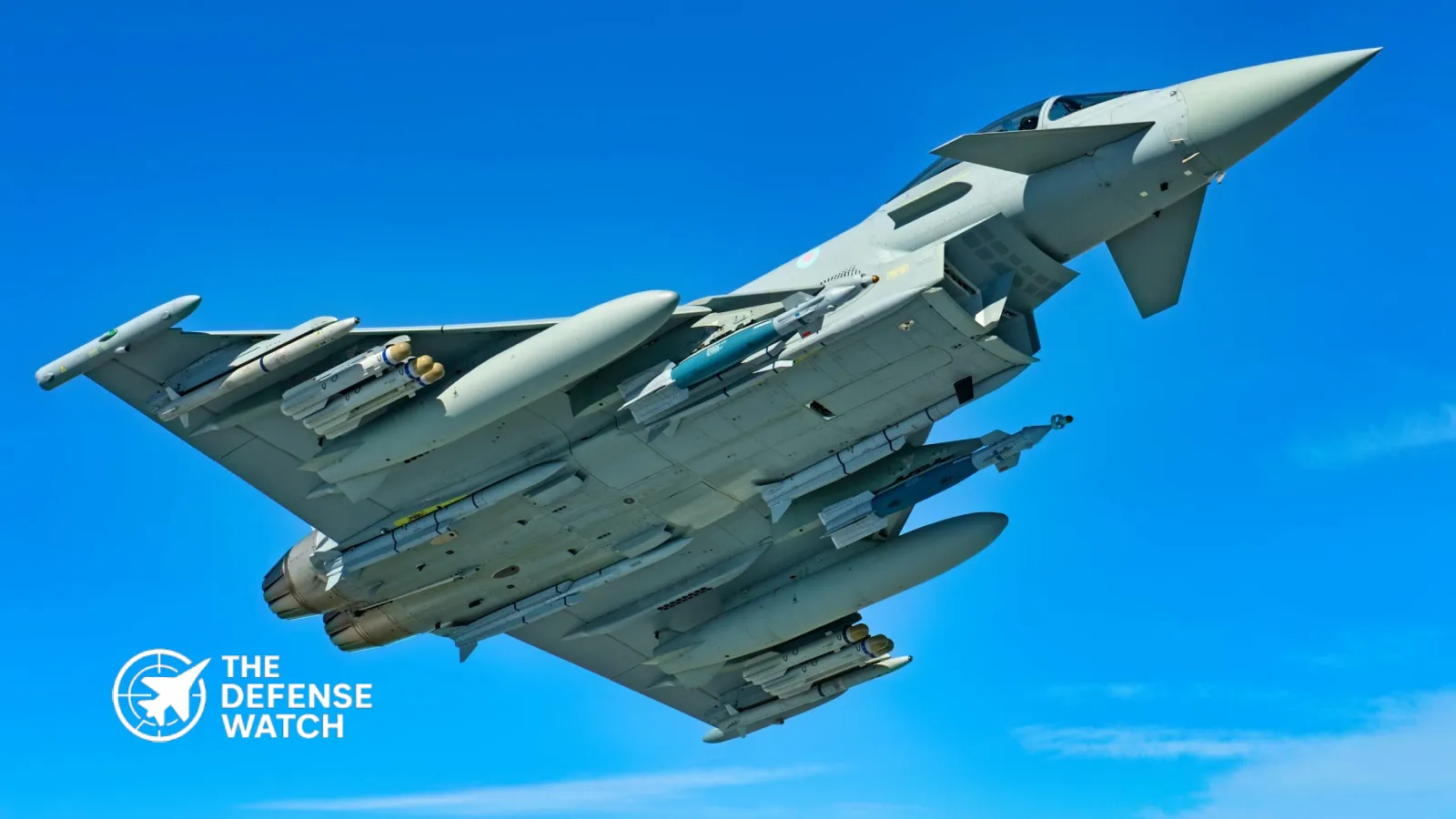
The Royal Air Force has highlighted the operational benefits of the Advanced Precision Kill Weapon System (APKWS), a low cost precision guided weapon now integrated onto Typhoon fighter aircraft. The capability is designed to provide a more affordable and sustainable method of defeating drones and other emerging threats while preserving inventories of higher end air to air missiles.
The system entered operational service in 2026 following an accelerated testing and deployment effort involving the RAF, UK Ministry of Defence, BAE Systems, and QinetiQ.
RAF Highlights APKWS as Key Counter Drone Capability
The Royal Air Force has formally showcased the Advanced Precision Kill Weapon System (APKWS) as a new capability for Eurofighter Typhoon pilots, emphasizing its value against uncrewed aerial systems and other modern battlefield threats.
According to the RAF, APKWS provides a highly accurate and flexible engagement option while significantly reducing the cost of intercepting low value aerial targets. The service described the weapon as part of a broader effort to ensure Typhoon remains effective against rapidly evolving threats, particularly the growing use of inexpensive drones in contested environments.
APKWS converts existing 70 mm Hydra rockets into precision guided munitions through the addition of a laser guidance kit. This approach allows air forces to leverage existing rocket inventories while gaining precision strike capability without the expense associated with traditional missile systems.
(adsbygoogle = window.adsbygoogle || []).push({});Rapid Development Moved Capability From Trials to Operations
One of the most notable aspects of the program was the speed of deployment.
The UK Ministry of Defence, working alongside BAE Systems and QinetiQ, moved the system from testing to operational service in less than two months. Initial ground target trials were completed in March 2026, followed by successful air to air engagements against aerial targets during RAF testing in April. By May, Typhoon aircraft assigned to operational missions in the Middle East were carrying APKWS.
The accelerated fielding effort reflects a growing trend among Western militaries to rapidly integrate proven technologies in response to urgent operational requirements rather than relying exclusively on lengthy procurement cycles.
How APKWS Works
APKWS is manufactured by BAE Systems and is already used across multiple military platforms worldwide.
The weapon uses a laser guidance package installed between the rocket motor and warhead. Once launched, guidance fins deploy and steer the rocket toward a laser designated target.
(adsbygoogle = window.adsbygoogle || []).push({});Key Characteristics
Feature Description Base Weapon Hydra 70 rocket Guidance Semi active laser guidance Primary Role Precision strike and counter drone missions Launch Platforms Fighters, helicopters, drones, and other aircraft Integration on Typhoon Uses existing rocket pods and targeting systems Operational Benefit Lower cost alternative to air to air missiles The RAF notes that Typhoon can employ APKWS using existing Litening targeting pods and standard rocket launchers, minimizing aircraft modifications while rapidly expanding combat options.
Why APKWS Matters for Modern Air Warfare
The growing prevalence of inexpensive drones has created a significant challenge for advanced air forces.
In many recent conflicts, militaries have been forced to use costly air to air missiles against relatively cheap unmanned systems. This creates an unfavorable cost exchange ratio and can quickly deplete missile inventories during prolonged operations.
APKWS addresses that problem by providing a precision engagement option that costs substantially less than traditional interceptor missiles. The RAF specifically highlighted the system’s ability to engage drones at a fraction of the cost of existing air defense methods.
This challenge is not unique to the United Kingdom.
The U.S. Air Force is pursuing its own dual mode APKWS developments aimed at countering large numbers of Group 3 drones and other low cost aerial threats. American officials have identified mass drone attacks as an increasingly urgent operational concern across multiple theaters.
(adsbygoogle = window.adsbygoogle || []).push({});Strategic Implications for NATO and Allied Air Forces
The RAF’s APKWS integration highlights a broader shift occurring across NATO air forces.
For decades, Western fighter aircraft were optimized primarily for high end air combat and strike missions. However, recent conflicts in the Middle East and Eastern Europe have demonstrated that large numbers of low cost drones can impose significant operational and financial burdens on defenders.
The introduction of APKWS offers several advantages:
- Preserves inventories of premium air to air missiles such as Meteor and ASRAAM.
- Improves affordability during sustained counter drone campaigns.
- Expands the number of available engagement opportunities per sortie.
- Reduces the risk of overmatching inexpensive threats with costly weapons.
- Enhances operational flexibility for deployed fighter units.
The capability is particularly relevant for RAF Typhoons operating from RAF Akrotiri and other forward locations where drone threats have become increasingly common.
Technical Challenges and Future Growth
While APKWS offers significant advantages, it is not intended to replace advanced air to air missiles.
Laser guided rockets generally have shorter engagement ranges than dedicated air combat weapons and require target designation throughout the engagement process. As a result, APKWS is best suited for slower aerial targets such as drones, loitering munitions, and lightly protected ground targets rather than high performance fighter aircraft.
The RAF has indicated that further development efforts are already underway. New APKWS variants incorporating additional sensing technologies are being evaluated to improve effectiveness against fast moving and multiple targets while maintaining affordability.
This mirrors ongoing U.S. efforts to develop dual mode APKWS configurations that combine laser guidance with additional seekers to enhance counter UAS performance.
(adsbygoogle = window.adsbygoogle || []).push({});Outlook
The Royal Air Force’s adoption of APKWS represents more than a new weapon integration. It reflects a wider shift in military thinking about how advanced air forces confront mass drone threats while managing costs and preserving high end munitions.
As drones continue to proliferate across global battlefields, affordable precision weapons are becoming an increasingly important component of air power. For the RAF, APKWS provides a practical answer to that challenge, giving Typhoon pilots a scalable and operationally relevant tool for modern combat environments.
(adsbygoogle = window.adsbygoogle || []).push({});Executive Summary:
Indra and HENSOLDT have begun live operational testing of the ECRS Mk1 radar, the next generation active electronically scanned array (AESA) sensor destined for German and Spanish Eurofighter fleets. The testing phase follows completion of the first production radars and represents a critical step toward fielding enhanced air combat, strike, and electronic warfare capabilities on Europe’s frontline fighter aircraft.
ECRS Mk1 Radar Advances Into Operational Testing
The ECRS Mk1 radar program has entered a new phase as Spanish defense technology company Indra and German sensor specialist HENSOLDT begin live operational testing of the advanced AESA radar developed for German and Spanish Eurofighter Typhoon aircraft.
The milestone follows the completion of the first production-standard radar sets equipped with upgraded processor hardware and an enhanced Antenna Power Supply and Control (APSC) subsystem. The systems are now undergoing qualification activities and flight testing designed to validate performance before operational deployment.
The ECRS Mk1, formally known as the Eurofighter Common Radar System Mark 1, is being developed specifically for Germany’s Luftwaffe and Spain’s Air and Space Force as part of broader Eurofighter modernization efforts. The radar will equip Germany’s Quadriga aircraft and Spain’s Halcón fighter programs.
What Makes The ECRS Mk1 Different?
Unlike earlier mechanically scanned radars, the ECRS Mk1 employs advanced AESA technology coupled with a high performance multi-channel processor.
- (adsbygoogle = window.adsbygoogle || []).push({});
According to program information released by the industrial consortium, the new architecture enables rapid switching between operational modes while adapting in real time to mission requirements. The radar is designed to support air-to-air engagements, high resolution air-to-ground targeting, and advanced electronic warfare operations from a single integrated sensor.
Key Capabilities
Capability Area ECRS Mk1 Enhancement Air-to-Air Combat Improved target detection and tracking Air-to-Ground Operations High-resolution mapping and targeting Electronic Warfare Active and passive electronic attack capabilities Sensor Flexibility Ultra-fast mode switching Mission Adaptation Real-time response to operational requirements The radar’s upgraded processor and antenna control architecture are intended to handle significantly larger volumes of sensor data while improving responsiveness during complex combat scenarios.
Importance For Germany’s Quadriga Fleet
Germany’s Eurofighter modernization strategy centers on replacing older aircraft while expanding mission capabilities.
The Luftwaffe’s Quadriga program includes 38 new Tranche 4 Eurofighters, with additional Tranche 5 aircraft planned for the coming decade. These aircraft are expected to remain operational into the 2060s, making sensor modernization a critical requirement.
(adsbygoogle = window.adsbygoogle || []).push({});For Germany, the ECRS Mk1 is particularly important because it supports the transition toward a more networked and electronically contested battlespace. Future European air operations are expected to involve sophisticated electronic attack, long-range sensor fusion, and integration with NATO command networks.
The radar therefore serves not only as a detection system but also as a key element in broader air superiority and electronic warfare architectures.
Strategic Value For Spain’s Halcón Program
Spain is also introducing the ECRS Mk1 as part of its Halcón acquisition effort.
The first Halcón Eurofighter recently rolled out ahead of flight testing, with deliveries scheduled to begin during 2026. These aircraft represent the most advanced Eurofighters ever acquired by Spain and are intended to replace aging F/A-18 Hornet fighters in key operational units.
Integrating the ECRS Mk1 from the outset allows Spain to avoid expensive retrofit programs while providing pilots access to modern sensor management capabilities from the start of service.
- (adsbygoogle = window.adsbygoogle || []).push({});
The radar’s ability to simultaneously manage air combat, strike missions, and electronic warfare tasks is especially valuable for a nation responsible for securing both European and Mediterranean airspace.
Why This Matters Beyond Europe
The ECRS Mk1 program illustrates a broader trend occurring across NATO air forces.
Modern fighter aircraft increasingly depend on software-defined sensors capable of performing multiple functions simultaneously. Rather than operating separate radar, targeting, and electronic warfare systems, next generation combat aircraft are moving toward integrated sensor architectures.
For U.S. defense observers, the Eurofighter upgrade mirrors similar developments seen in advanced American platforms such as the F-35 Lightning II and the F-15EX Eagle II, where sensor fusion and electronic warfare capabilities are becoming as important as traditional kinematic performance.
The ECRS Mk1 also strengthens Europe’s indigenous defense industrial base at a time when NATO members are investing heavily in military modernization programs following years of heightened security concerns across the continent.
(adsbygoogle = window.adsbygoogle || []).push({});Technical And Program Outlook
The current operational testing phase will evaluate radar performance under realistic flight conditions and verify the functionality of the new processor and APSC hardware.
Successful completion of testing is expected to pave the way for series production and fleet integration. Industry statements indicate that qualification efforts are already well advanced, suggesting the program remains on track for planned Eurofighter deliveries.
As Germany and Spain field new Tranche 4 and future Tranche 5 aircraft, the ECRS Mk1 will become one of the most capable operational radar systems in the Eurofighter inventory, significantly expanding the aircraft’s relevance in future high intensity air operations.
- (adsbygoogle = window.adsbygoogle || []).push({});
Executive Summary:
The Royal Air Force has deployed Eurofighter Typhoon jets to patrol NATO’s eastern flank, reinforcing alliance air defense. The missions aim to deter potential airspace violations and reassure member states amid ongoing regional tensions. The deployment reflects NATO’s continued emphasis on rapid response and collective security.RAF Typhoons Strengthen NATO Air Policing Mission
The Royal Air Force has intensified its contribution to NATO air policing operations by deploying Eurofighter Typhoon fighters to the alliance’s eastern flank. These missions are part of NATO’s standing effort to secure allied airspace and deter unauthorized or hostile aircraft activity near its borders.
Operating from forward bases in Eastern Europe, RAF Typhoons conduct quick reaction alert sorties, intercept missions, and joint training exercises with allied air forces. The deployment comes amid sustained geopolitical tensions, particularly involving Russian military aviation activity near NATO airspace.
Operational Role and Mission Profile
The Typhoon is a cornerstone of NATO’s air defense architecture due to its speed, agility, and advanced sensor suite. RAF crews are tasked with:
- Intercepting unidentified aircraft approaching NATO-controlled airspace
- Conducting air-to-air patrols to maintain persistent presence
- Participating in joint exercises to enhance interoperability
- Supporting quick reaction alert (QRA) readiness at all times
These missions are coordinated through NATO’s integrated air and missile defense system, ensuring seamless communication and rapid response across multiple member states.
Eurofighter Typhoon vs Legacy Air Policing Platforms
Platform Range Payload Status Key Technology Eurofighter Typhoon ~2,900 km ~7,500 kg Active AESA radar, supercruise, advanced EW suite Panavia Tornado F3 ~1,850 km ~6,000 kg Retired Pulse-Doppler radar, legacy avionics F-16 Fighting Falcon ~2,200 km ~7,700 kg Active (NATO) Multirole radar, proven combat record Technical Advantages of the Typhoon Platform
- Supercruise capability, allowing sustained supersonic flight without afterburners
- Advanced Captor radar systems, improving detection and tracking range
- Integrated electronic warfare suite for survivability in contested environments
- High thrust-to-weight ratio, enhancing maneuverability in interception scenarios
- Compatibility with NATO data links, enabling real-time information sharing
Strategic Context: NATO’s Eastern Flank and Deterrence Posture
NATO’s eastern flank has become a focal point of alliance defense planning since the Annexation of Crimea and subsequent tensions between Russia and Western nations. Increased Russian air activity near Baltic and Black Sea regions has prompted NATO to expand its air policing rotations.
The RAF deployment serves several strategic purposes:
- Deterrence: Demonstrates NATO’s readiness to defend its airspace
- Reassurance: Signals commitment to Eastern European allies
- Interoperability: Strengthens coordination among multinational forces
The presence of advanced fighters like the Typhoon complicates any potential adversary’s operational planning, raising the cost of airspace incursions.
Broader Implications for European Air Security
The continued use of Typhoon jets in NATO missions underscores a shift toward high-readiness, technologically advanced air forces capable of rapid deployment. As NATO adapts to evolving threats, including hybrid warfare and advanced aerial platforms, air policing missions are becoming more complex and strategically significant.
The RAF’s role highlights the UK’s ongoing commitment to collective defense, even as broader geopolitical dynamics continue to evolve across Europe.
¦ KEY FACTS AT A GLANCE- Iran and Russia reportedly signed a secret €500 million missile deal in December 2025, according to the Financial Times.
- The pact covers delivery of 500 Verba man portable air defense launch units and 2,500 9M336 missiles through 2027 to 2029.
- The Verba systems are infrared guided MANPADS designed to target low altitude threats including drones and cruise missiles.
- The deal follows damage to Iran’s air defense network during the 2025 conflict with Israel.
- The agreement reflects deepening military cooperation between Tehran and Moscow.
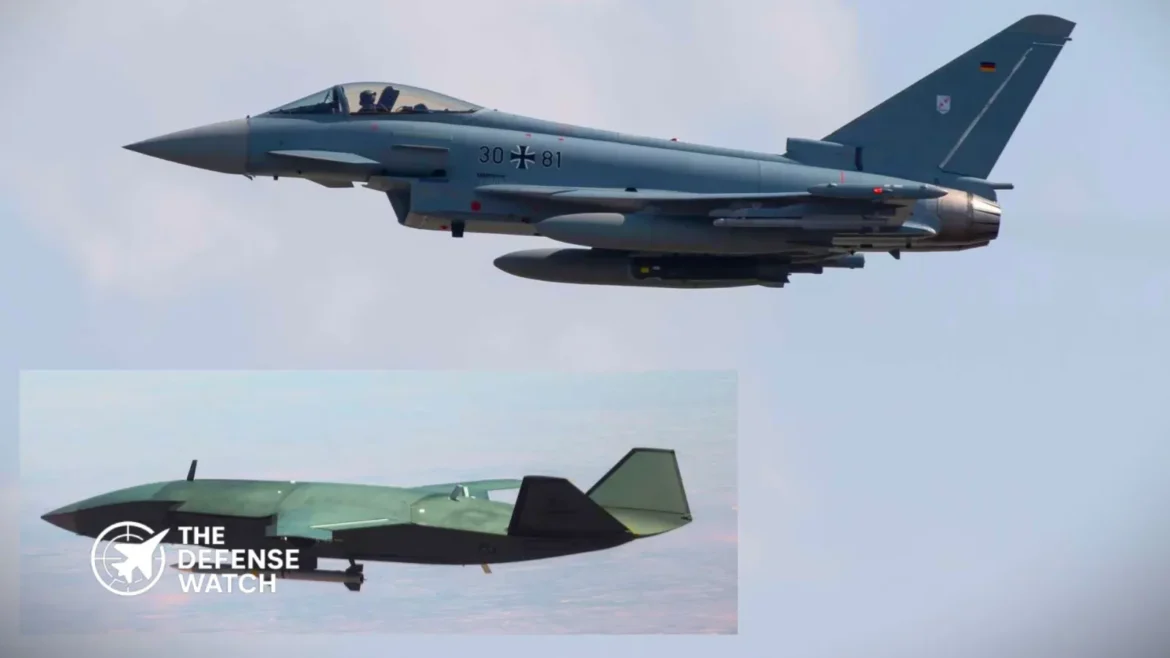
The MQ-28 Ghost Bat Germany evaluation marks a notable step in Europe’s exploration of collaborative combat aircraft to support manned fighter operations. Germany, as part of its broader modernization efforts within the Luftwaffe of Germany, is assessing unmanned systems designed to operate alongside platforms such as the Eurofighter Typhoon to extend sensing, strike, and survivability capabilities.
This move reflects a wider shift among NATO members toward integrating loyal wingman drones into frontline air operations, aiming to improve mission flexibility while reducing risk to pilots.
Germany Advances Loyal Wingman Concept
Germany’s evaluation of the MQ-28 Ghost Bat aligns with ongoing efforts to incorporate autonomous and semi-autonomous systems into European air combat doctrine. Originally developed under Australia’s Collaborative Combat Aircraft program, the MQ-28 is designed to accompany crewed fighters and perform tasks such as reconnaissance, electronic warfare support, and threat engagement.
For Germany, the interest in such a platform highlights the operational need to enhance the capabilities of its Eurofighter fleet without immediately replacing existing aircraft. By pairing manned fighters with unmanned wingmen, the Luftwaffe can potentially expand sensor reach and distribute combat workloads across multiple platforms.
Integration With Eurofighter Typhoon Operations
The Eurofighter Typhoon remains a core component of Germany’s air defense and strike capability. Integrating a loyal wingman like the MQ-28 Ghost Bat could allow Eurofighter pilots to command or coordinate multiple unmanned assets in contested environments.
This concept supports several operational advantages. First, it can extend the radar and sensor footprint of the formation. Second, it may allow unmanned units to take on higher-risk roles such as forward reconnaissance or electronic attack. Third, it can help preserve manned aircraft by shifting certain mission elements to autonomous platforms.
Defense analysts note that pairing advanced fighters with unmanned systems is becoming a standard approach among modern air forces seeking distributed lethality and greater mission resilience.
Strategic Context Within NATO Modernization
Germany’s evaluation is consistent with broader NATO efforts to modernize air combat capabilities in response to evolving threats. Several allied nations are exploring similar collaborative combat aircraft programs, often referred to as loyal wingman systems.
These initiatives aim to address challenges posed by advanced integrated air defense systems, electronic warfare environments, and the increasing use of unmanned platforms in contested airspace. By deploying a mix of crewed and uncrewed assets, air forces can complicate adversary targeting while maintaining operational flexibility.
Within this framework, the MQ-28 Ghost Bat Germany assessment represents an exploratory step rather than a formal procurement decision. It allows German defense planners to examine interoperability, mission roles, and integration requirements with existing NATO systems.
Industrial and Operational Implications
If Germany proceeds beyond evaluation, integration of loyal wingman platforms could influence both operational doctrine and defense industry collaboration. European defense contractors may seek partnerships or adaptations to align similar unmanned systems with existing fighter fleets.
For the Luftwaffe, adopting such systems would require development in areas including command and control, secure data links, and human-machine teaming. Training programs would also need to evolve to enable pilots to effectively manage multiple unmanned assets during missions.
While no final acquisition decision has been announced, the MQ-28 Ghost Bat Germany evaluation underscores growing interest in modular, networked air combat architectures across Europe.
Newer Posts