

(adsbygoogle = window.adsbygoogle || []).push({});Executive Summary:
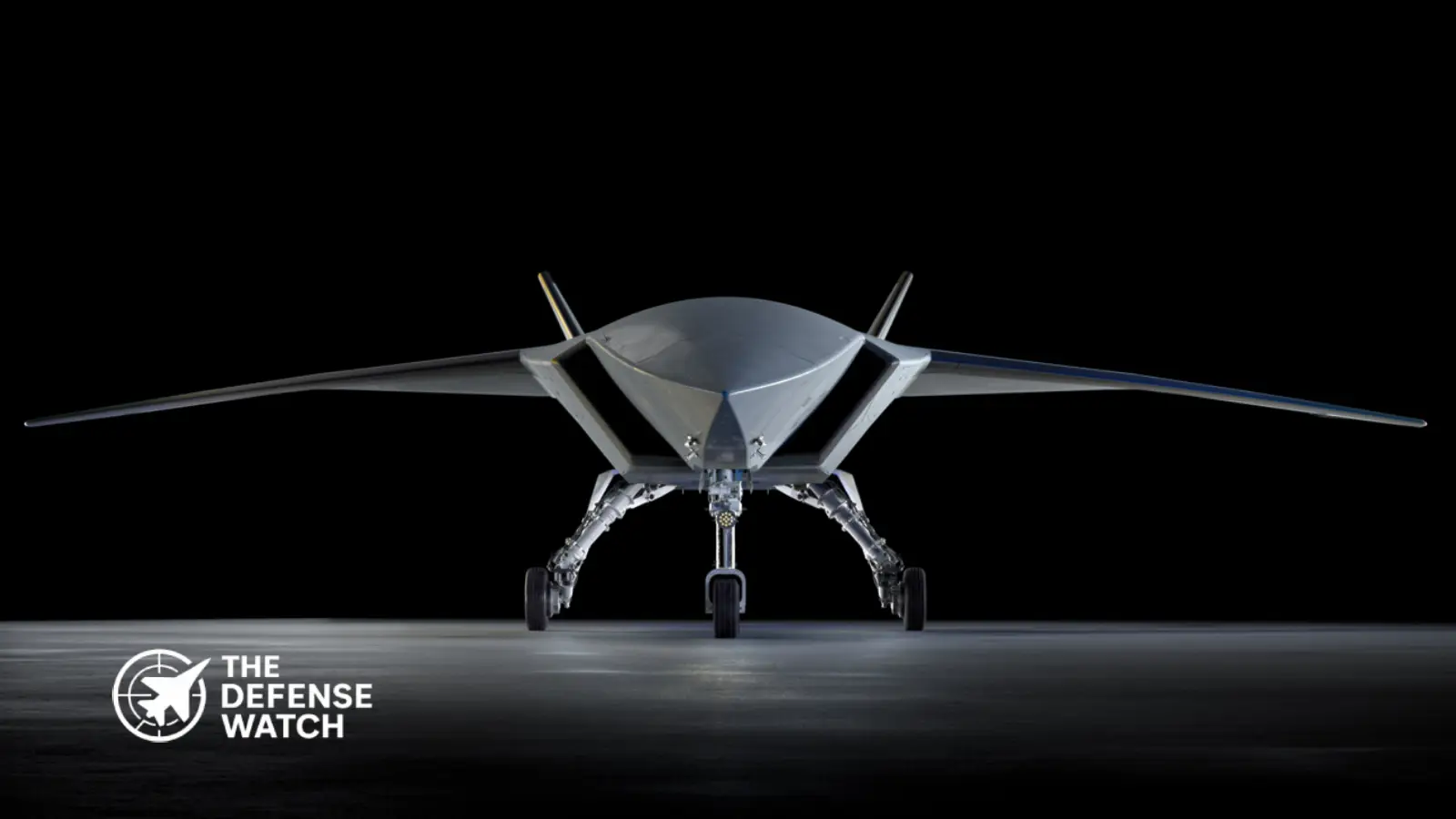
Boeing has unveiled a significantly upgraded MQ-28 Ghost Bat collaborative combat aircraft, adding larger wings, internal weapons stations, and extended operational range.
The enhancements strengthen the platform’s ability to support crewed aircraft, carry additional payloads, and meet growing demand for autonomous combat aircraft among allied air forces.
Boeing MQ-28 Ghost Bat Upgrade Expands Combat Reach
Boeing’s MQ-28 Ghost Bat collaborative combat aircraft has received a major capability upgrade aimed at increasing range, payload capacity, and mission flexibility as global militaries accelerate investment in autonomous air combat systems.
The company unveiled the latest enhancements during the ILA Berlin Air Show 2026, presenting a roadmap that significantly expands the aircraft’s operational capabilities while preserving its role as a force multiplier for crewed fighter aircraft.
Developed in partnership with the Royal Australian Air Force (RAAF), the MQ-28 Ghost Bat is designed to operate alongside manned aircraft, conducting missions that include intelligence gathering, electronic warfare, air combat support, and strike operations.
According to Boeing, the upgraded configuration introduces a wing that is more than 25 percent larger than previous variants, allowing the aircraft to carry an additional 2,000 pounds of fuel, mission payloads, or stores. The increase provides operators greater flexibility to balance endurance and combat loadouts based on mission requirements.
(adsbygoogle = window.adsbygoogle || []).push({});Internal Weapons Bays Add New Combat Capability
One of the most significant additions is the introduction of internal weapons stations.
The upgraded MQ-28 can now be configured to carry up to two AIM-120 AMRAAM air-to-air missiles or four Small Diameter Bombs internally. By carrying weapons inside the airframe rather than on external hardpoints, the aircraft can retain lower observable characteristics while expanding its combat role.
The move reflects a broader trend across next generation unmanned combat aircraft programs, where survivability and weapons integration are becoming increasingly important requirements.
Boeing officials stated that the new capabilities are part of a spiral development approach, enabling future upgrades to be integrated incrementally as operational requirements evolve.
(adsbygoogle = window.adsbygoogle || []).push({});Beyond-Line-of-Sight Operations Expand Mission Flexibility
Another notable enhancement is the addition of beyond-line-of-sight communications capability.
This allows operators to control and coordinate MQ-28 missions over significantly greater distances than earlier configurations, expanding operational flexibility in large theaters such as the Indo-Pacific.
The capability is particularly important for collaborative combat aircraft, which are expected to operate alongside advanced fighters, airborne early warning aircraft, and other networked platforms across dispersed battlespaces.
As air forces increasingly emphasize distributed operations, secure long-range connectivity has become a key requirement for future autonomous systems.
(adsbygoogle = window.adsbygoogle || []).push({});Growing Importance Of Collaborative Combat Aircraft
The latest MQ-28 improvements come as collaborative combat aircraft programs gain momentum across the United States, Australia, Europe, and Asia.
Military planners view autonomous wingmen as a cost-effective way to increase combat mass without procuring large numbers of expensive crewed aircraft. These systems can perform reconnaissance, electronic attack, decoy missions, and strike operations while reducing risk to pilots.
The MQ-28 has emerged as one of the most mature programs in this rapidly evolving sector. Boeing and the RAAF have already completed extensive flight testing, including autonomous teaming demonstrations, operational deployments, and missile firing trials.
The platform has also undergone radar cross-section validation testing to verify its survivability characteristics in contested environments.
(adsbygoogle = window.adsbygoogle || []).push({});From a strategic perspective, the latest upgrades indicate Boeing is positioning the Ghost Bat not only for Australian requirements but also for a growing international market. Germany has shown interest in collaborative combat aircraft concepts, and Boeing recently expanded its industrial partnerships in Europe to support future opportunities.
Why The Upgrade Matters
The significance of the MQ-28 upgrade extends beyond individual performance improvements.
Modern air warfare increasingly depends on a combination of crewed and uncrewed systems operating as an integrated force. Larger payload capacity, longer endurance, internal weapons carriage, and improved connectivity directly enhance the aircraft’s ability to perform that role.
Rather than serving solely as a reconnaissance platform, the upgraded Ghost Bat moves closer to becoming a true combat asset capable of contributing meaningful firepower while supporting manned aircraft in high-threat environments.
As air forces prepare for future conflicts involving advanced air defenses and long-range engagements, collaborative combat aircraft such as the MQ-28 are expected to play an increasingly central role in force structure planning.


