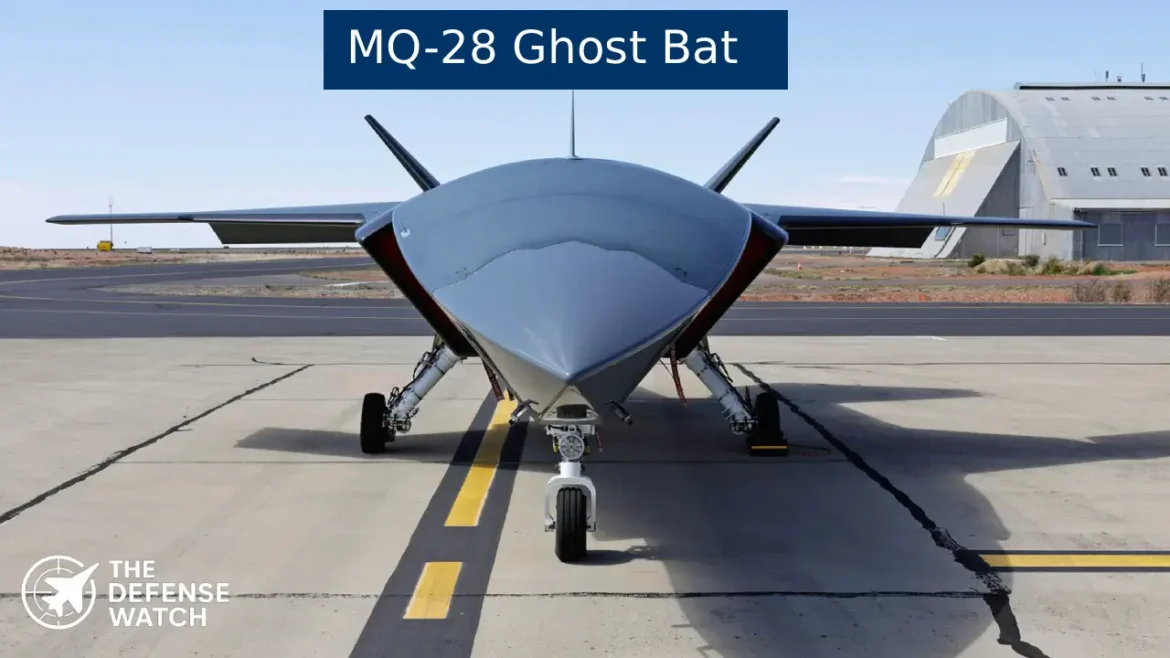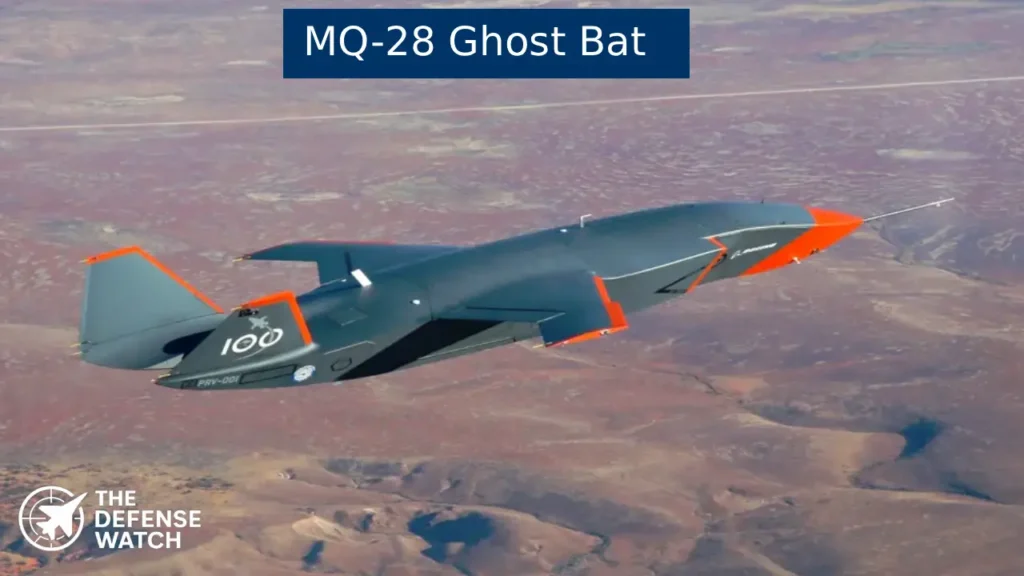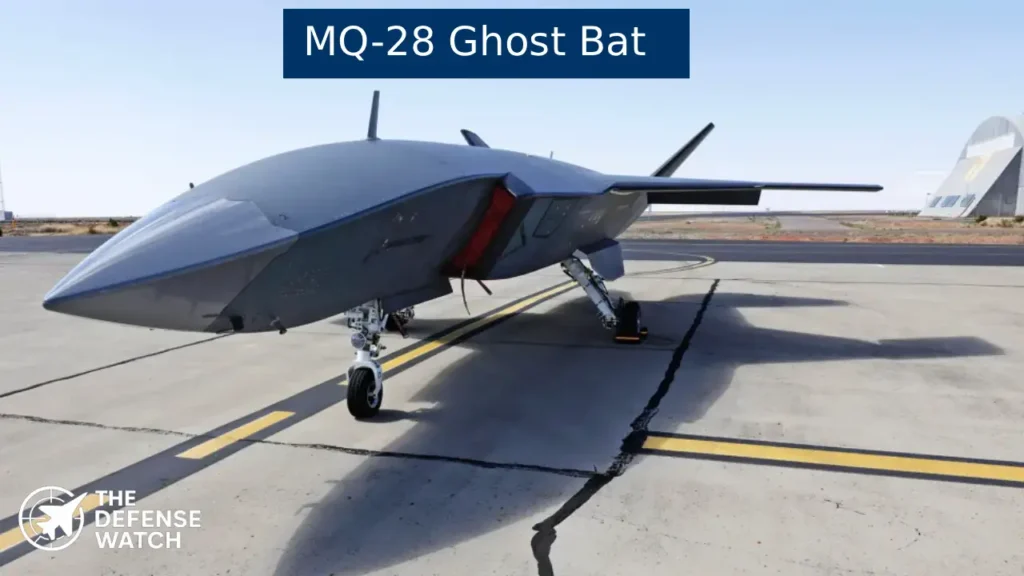
Executive Summary: Boeing and Rheinmetall are positioning the MQ-28 Ghost Bat as a mature option for Germany’s planned Collaborative Combat Aircraft capability targeted for 2029. The German industry team has expanded to include Diehl Defence and Rohde & Schwarz, creating a framework for integrating German weapons, communications and mission systems into the Australian-developed aircraft.
MQ-28 Ghost Bat Emerges As A German CCA Contender
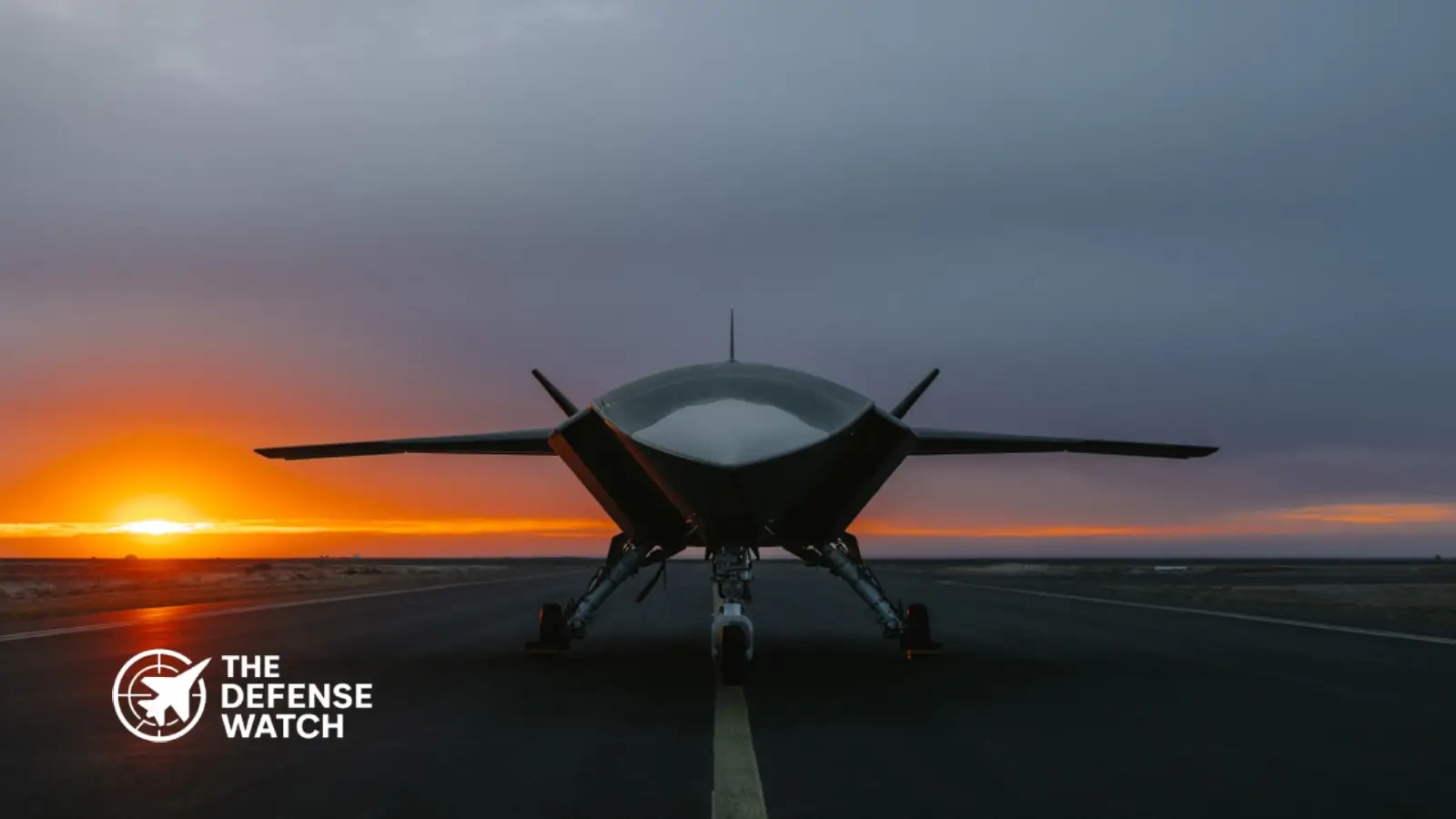
The MQ-28 Ghost Bat Germany proposal is gaining industrial depth as Boeing and Rheinmetall seek to provide the German Air Force with a Collaborative Combat Aircraft capability by 2029. The companies presented the Australian-developed uncrewed aircraft at ILA Berlin 2026 and are offering to adapt it to German operational and sovereignty requirements.
The partnership is important because Germany is seeking a CCA capability on a relatively compressed timeline. Rather than waiting for a completely new aircraft to mature, Boeing and Rheinmetall are emphasizing a platform that has already accumulated more than 150 test flights and has undergone development with the Royal Australian Air Force.
Rheinmetall would serve as the national system manager if the proposal is selected. Its responsibilities would include German-specific modifications, integration with Bundeswehr systems, and operational, maintenance and logistics support inside Germany.
German Industry Team Expands Around Ghost Bat
The proposal became more substantial in June when Boeing announced that Diehl Defence and Rohde & Schwarz had joined Rheinmetall on its German MQ-28 industry team.
Diehl Defence is focused on weapons integration. The company has identified the IRIS-T air-to-air missile as one possible German weapon for integration, although any operational weapon selection remains a matter for the German customer.
Rohde & Schwarz is expected to contribute communications and mission-system integration expertise. Its role is intended to help connect the aircraft with German command, control and weapons networks while meeting national requirements.
This approach changes the proposition from simply purchasing an Australian aircraft into a broader German systems-integration program.
That distinction matters for Berlin because control over software, communications, weapons integration, maintenance and future upgrades can be as important as ownership of the airframe itself.
What The MQ-28 Brings To The Competition
The MQ-28 was developed by Boeing Defence Australia for manned-unmanned teaming. Its intended role is to operate alongside crewed combat aircraft, extending sensing, electronic warfare, weapons or other mission capabilities without placing another pilot at risk.
Rheinmetall describes the aircraft’s architecture as modular, allowing it to be adapted for missions including reconnaissance, electronic warfare and use as an effector or weapons carrier.
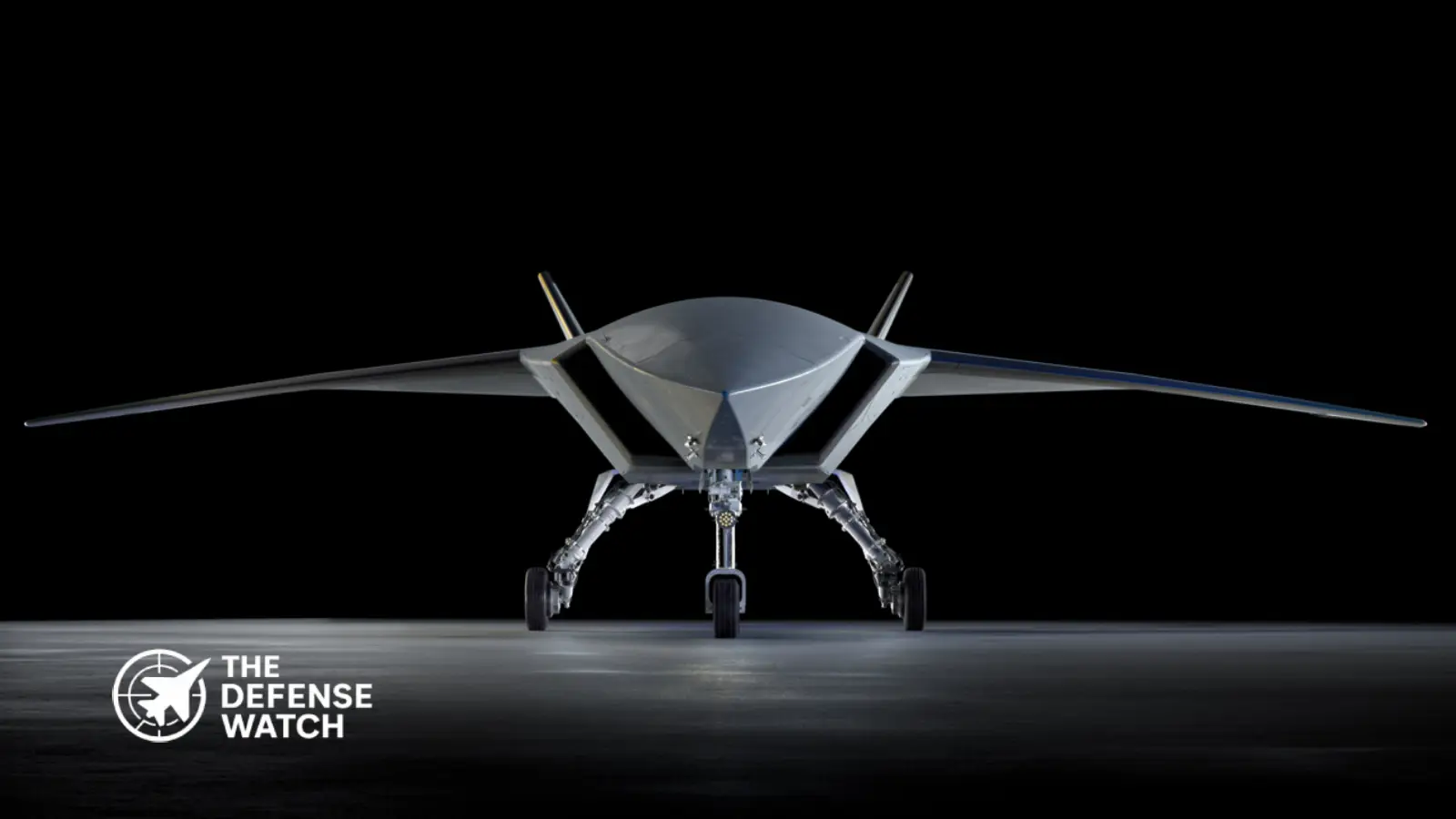
At ILA Berlin, Boeing also presented the Block 3 configuration that is being offered to Germany. According to Janes, the version includes a larger wing, increased thrust, beyond-line-of-sight communications and internal weapons bays. The configuration has been described as capable of carrying two AIM-120 AMRAAMs or combinations of small precision weapons in its internal bays.
MQ-28 Ghost Bat At A Glance
Feature Reported Capability Platform Uncrewed Collaborative Combat Aircraft Developer Boeing Defence Australia Development customer Royal Australian Air Force German target CCA capability by 2029 Flight testing More than 150 test flights Block 3 wing About 25% larger Thrust Up to 12,000 pounds Communications Beyond-line-of-sight capability Weapons Internal bays for air-to-air and precision weapons German system manager proposal Rheinmetall German weapons integration Diehl Defence Communications integration Rohde & Schwarz The specifications above refer to the configuration presented for the German market and should not be interpreted as confirmation of a final German production standard.
Why Sovereign Integration Is Central To Germany’s Proposal
The strongest part of the Boeing-Rheinmetall offer is not simply the aircraft. It is the proposed division of responsibility around the aircraft.
Germany wants greater control over the systems that determine how autonomous aircraft communicate, receive mission instructions, share sensor information and interact with crewed platforms. Local integration could also reduce dependence on an external supplier for every software or configuration change.
Rheinmetall says engineers in Germany and Australia can use a digital engineering environment to develop and test software and hardware changes. This could provide a framework for adapting the aircraft to German requirements without creating an entirely separate aircraft design.
That model also addresses one of the major challenges of CCA procurement: the aircraft must function as part of a larger combat network rather than as an isolated drone.
A CCA connected to a Eurofighter, ground command center or other aircraft must exchange information reliably in a contested electromagnetic environment. Communications resilience, cybersecurity, autonomy behavior and rules for human control therefore become central engineering requirements.
Germany’s CCA Competition Is Not Settled
The MQ-28 is not the only option being developed for Germany.
Airbus is preparing two Kratos XQ-58A Valkyries in Germany and plans to equip them with its European MARS mission system. Airbus says the objective is to offer the German Air Force an operational uncrewed collaborative combat aircraft system by 2029.
Other concepts are also entering the broader European competition, including systems being developed by German and international companies.
This creates a key procurement tradeoff for Berlin.
A mature aircraft such as the Ghost Bat offers the advantage of an established flight-test program and an existing operational pathway in Australia. A newer European design could offer greater control over the aircraft’s technology and industrial base but would carry more development risk.
Germany therefore has to balance speed, technical maturity, industrial sovereignty and long-term upgrade control.
The Operational Question Goes Beyond The Airframe
The significance of the MQ-28 proposal extends beyond Germany’s drone inventory.
CCA programs are changing the traditional fighter force model by allowing one crewed aircraft to operate with additional uncrewed platforms. The concept can potentially increase the number of sensors, weapons and electronic warfare systems available to a formation without requiring an equivalent increase in pilots.
For Germany, this could become particularly relevant as the Luftwaffe modernizes its combat fleet around Eurofighter and F-35A aircraft while Europe works toward future sixth-generation combat-air capabilities.
The MQ-28’s value would therefore depend heavily on how effectively it can operate inside those existing and future networks.
The difficult part is not simply autonomous flight. It is making autonomy, communications, sensor fusion, electronic warfare and weapons employment work together under realistic operational conditions.
2029 Target Creates A Tight Development Window
Boeing and Rheinmetall are targeting 2029, but the proposal remains a bid rather than a confirmed German procurement contract.
That distinction is important.
The aircraft has demonstrated substantial development progress, but adapting an existing CCA for another nation’s weapons, communications architecture, cybersecurity standards and command-and-control systems still requires engineering, testing and qualification.
The addition of Diehl Defence and Rohde & Schwarz is intended to address exactly those areas. Their involvement gives the proposal a stronger German industrial component and potentially reduces the amount of national integration work that would otherwise have to be developed later.
For Germany, the central question will be whether the 2029 requirement is best served by a mature foreign-developed platform with extensive German integration or by a European system that offers greater technological sovereignty but requires more development.
Why The MQ-28 Matters To U.S. And Allied Airpower
The German competition also has implications beyond Europe.
The United States and its allies are increasingly examining CCA concepts as a way to expand combat-air capacity while managing the cost and risk associated with crewed aircraft. Australia’s MQ-28 program provides an allied example of how a CCA can progress from technology development toward operational service.
For the United States, Germany’s decision will also provide another indicator of how allied air forces approach autonomy, weapons integration and control of mission software.
A German MQ-28 fleet would not automatically create a common NATO CCA standard, but shared communications and weapons integration could improve interoperability if designed around alliance requirements.
The broader trend is clear: future air forces are increasingly treating uncrewed aircraft as part of the combat-air architecture rather than as separate drone fleets.
What Happens Next
Boeing and Rheinmetall have established a credible industrial proposal, but the final German decision remains the key milestone.
The next stages will likely focus on technical evaluation, German requirements, weapons and communications integration, industrial participation and the ability to meet the 2029 timeline.
For the MQ-28, the central advantage is maturity. For Germany, the central issue is whether that maturity can be combined with enough national control over the systems that make a CCA operationally useful.
The outcome will help determine not only which aircraft Germany operates, but also how Europe’s largest defense economies approach autonomous combat aircraft as a component of future airpower.

Executive Summary:
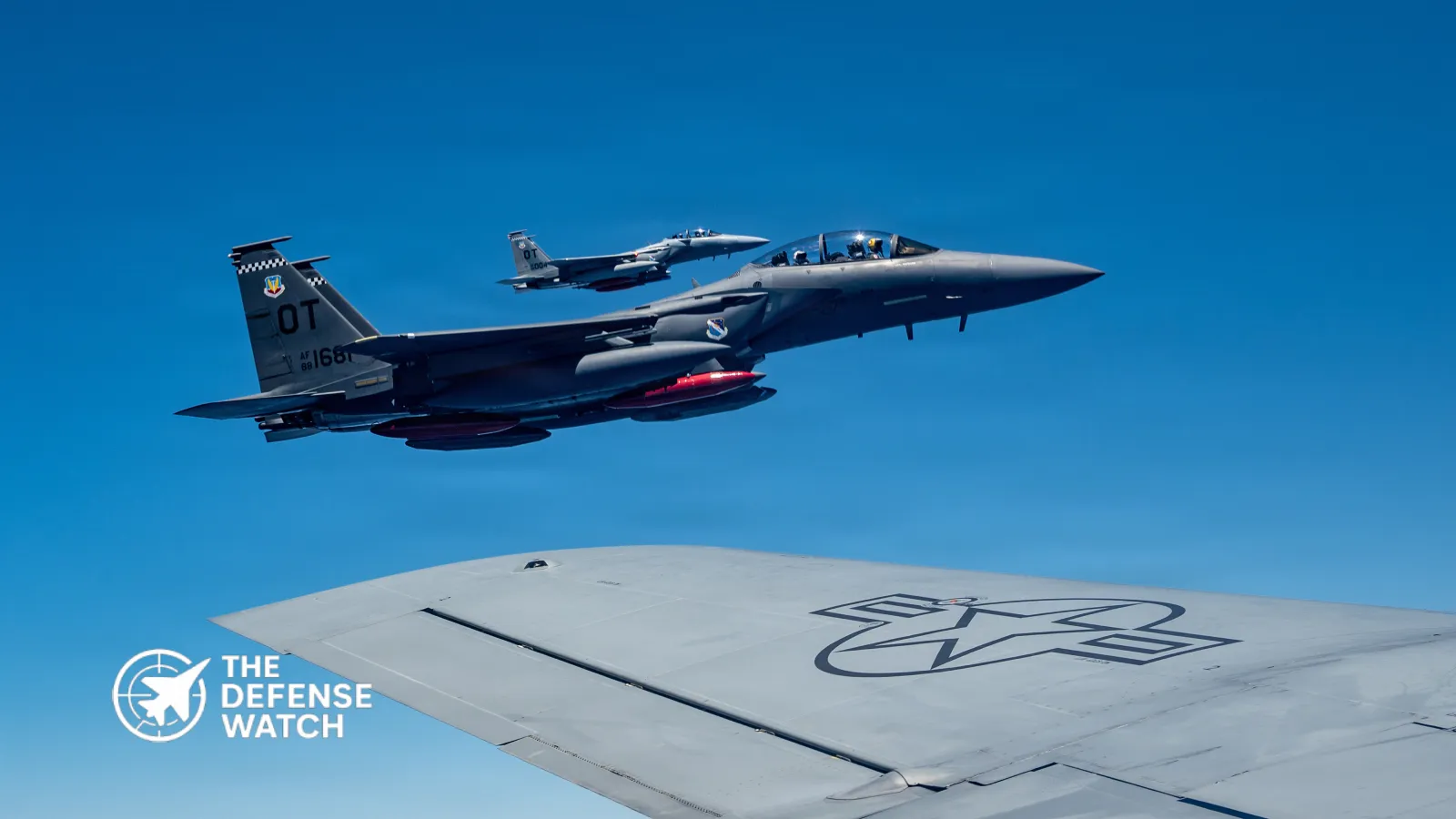
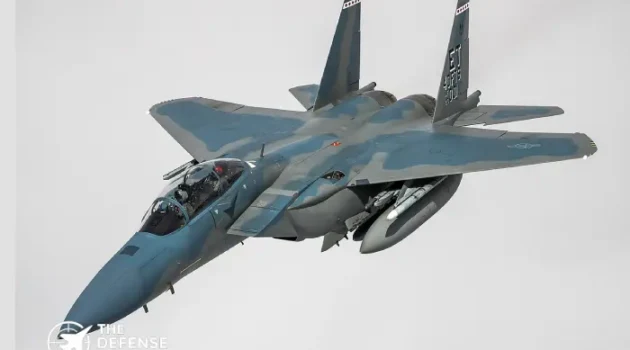
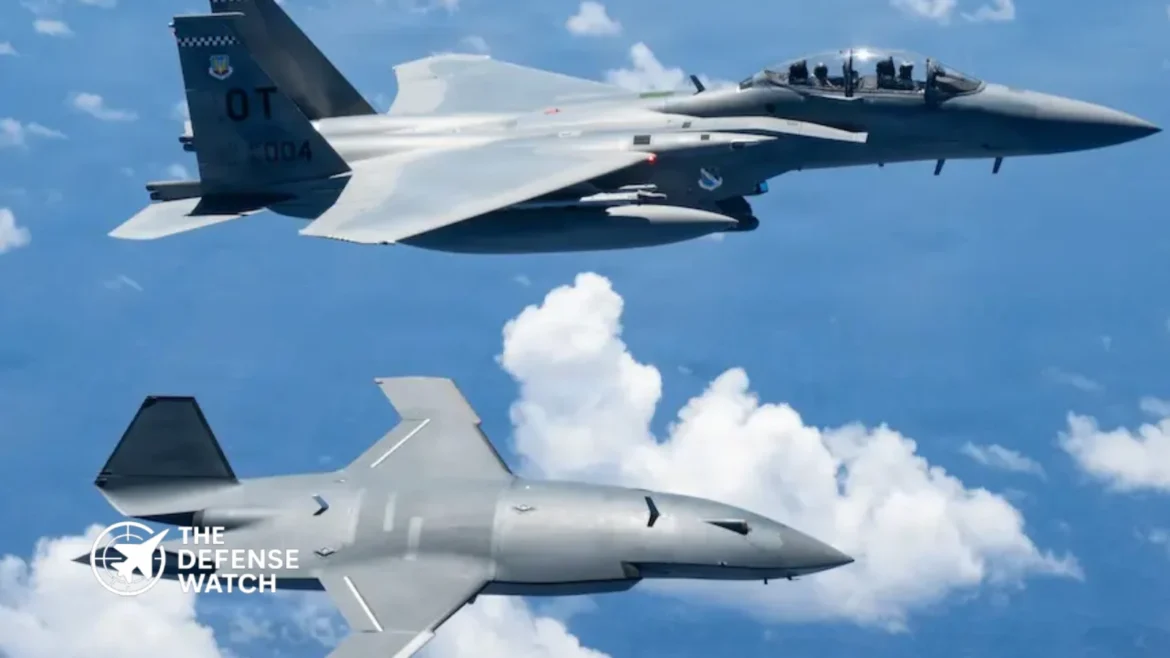
The U.S. Air Force has deployed the F-15EX Eagle II back to Kadena Air Base, Japan, as the service prepares the installation for its future permanent fighter force. The deployment also included operational training with the MQ-28 Ghost Bat during Exercise Valiant Shield, highlighting the Air Force’s growing emphasis on manned and unmanned teaming across the Indo-Pacific.F-15EX Eagle II Returns To Strengthen Kadena’s Future Mission
The F-15EX Eagle II has returned to Kadena Air Base in Japan, marking another major step in the U.S. Air Force’s long term modernization of its premier fighter base in the Indo-Pacific. According to the U.S. Air Force, aircraft from the 85th Test and Evaluation Squadron arrived on June 29 alongside two F-15E Strike Eagles to support integration and familiarization activities before the Eagle II enters permanent service at the base.
The deployment builds on the F-15EX’s first visit to Kadena in 2025 and allows pilots, maintainers, and support personnel to gain practical experience with the aircraft’s systems, maintenance requirements, and operational procedures before it officially replaces the aging F-15C/D Eagle fleet.
Lt. Col. Casey Watts, commander of the 85th Test and Evaluation Squadron, said early familiarity with the aircraft will help ensure a smooth transition while improving combat readiness across the Indo-Pacific.
Kadena’s Fighter Transition Continues
The F-15EX forms a central element of the Department of the Air Force’s modernization strategy for Kadena Air Base, one of America’s most strategically important forward operating locations in the Western Pacific.
The 67th Fighter Squadron, which will become Kadena’s first operational F-15EX unit, is using the deployment to build operational knowledge before receiving its own aircraft. Maintenance teams are also validating logistics procedures, combat generation capabilities, and sustainment requirements necessary for long term operations.
Brig. Gen. John Gallemore, commander of the 18th Wing, described the Eagle II as the next chapter of airpower at Kadena, emphasizing its role in supporting combat operations throughout the Indo-Pacific.
MQ-28 Ghost Bat Demonstrates Future Human Machine Teaming
One of the deployment’s most significant developments occurred during Exercise Valiant Shield, where an F-15EX aircrew operated alongside an MQ-28 Ghost Bat uncrewed aircraft over the Philippine Sea.
The mission represented another milestone in the development of Collaborative Combat Aircraft (CCA), an emerging operational concept that pairs crewed fighters with semi autonomous aircraft capable of conducting reconnaissance, electronic warfare, and strike support missions under human supervision.
Maj. Daniel Pesich, Experimental Operations Unit CCA detachment officer in charge, said future airpower will increasingly rely on partnerships between highly trained aircrews and autonomous technologies to improve survivability and combat effectiveness.
Why The F-15EX Remains Important
Although the F-15EX is not a stealth fighter, it has been designed to complement fifth generation platforms rather than replace them.
Key capabilities include:
Capability F-15EX Eagle II Maximum payload Nearly 30,000 pounds of weapons Crew One or two pilots Radar AN/APG-82 AESA radar Electronic warfare EPAWSS digital electronic warfare suite Network capability Advanced data links for joint operations Mission Air superiority, long range strike, homeland defense, missile carrier Its large payload capacity allows the aircraft to carry significantly more air to air missiles and stand off weapons than stealth fighters, making it particularly valuable in high intensity operations where magazine depth becomes critical.
Strategic Analysis: What This Means For Indo-Pacific Deterrence
The latest deployment reflects more than a routine training event.
Kadena Air Base sits at the center of the First Island Chain, placing U.S. fighters within operational reach of the East China Sea, Taiwan Strait, and much of the Western Pacific. As regional military competition continues to intensify, the Air Force is investing in aircraft capable of sustaining high sortie rates while integrating with advanced command and control networks.
The combination of the F-15EX and Collaborative Combat Aircraft points toward a future force structure that emphasizes distributed operations rather than relying solely on stealth. Instead of every aircraft penetrating contested airspace independently, future missions are expected to distribute sensing, electronic warfare, and weapons delivery across both crewed and autonomous platforms.
The MQ-28 Ghost Bat demonstration illustrates this concept in practice. Loyal wingman aircraft can extend sensor coverage, increase available weapons capacity, conduct high risk reconnaissance, or absorb threats that would otherwise endanger crewed fighters. When combined with the F-15EX’s substantial payload and advanced networking systems, the result is a more resilient and scalable combat force capable of operating across vast Indo-Pacific distances.
The deployment also demonstrates that modernization extends beyond acquiring new aircraft. Building maintenance expertise, validating logistics networks, and integrating operations personnel before permanent fielding reduces operational risk and accelerates readiness once the F-15EX enters frontline service at Kadena.
(adsbygoogle = window.adsbygoogle || []).push({});Executive Summary:
Boeing has unveiled a significantly upgraded MQ-28 Ghost Bat collaborative combat aircraft, adding larger wings, internal weapons stations, and extended operational range.
The enhancements strengthen the platform’s ability to support crewed aircraft, carry additional payloads, and meet growing demand for autonomous combat aircraft among allied air forces.
Boeing MQ-28 Ghost Bat Upgrade Expands Combat Reach
Boeing’s MQ-28 Ghost Bat collaborative combat aircraft has received a major capability upgrade aimed at increasing range, payload capacity, and mission flexibility as global militaries accelerate investment in autonomous air combat systems.
The company unveiled the latest enhancements during the ILA Berlin Air Show 2026, presenting a roadmap that significantly expands the aircraft’s operational capabilities while preserving its role as a force multiplier for crewed fighter aircraft.
Developed in partnership with the Royal Australian Air Force (RAAF), the MQ-28 Ghost Bat is designed to operate alongside manned aircraft, conducting missions that include intelligence gathering, electronic warfare, air combat support, and strike operations.
According to Boeing, the upgraded configuration introduces a wing that is more than 25 percent larger than previous variants, allowing the aircraft to carry an additional 2,000 pounds of fuel, mission payloads, or stores. The increase provides operators greater flexibility to balance endurance and combat loadouts based on mission requirements.
(adsbygoogle = window.adsbygoogle || []).push({});Internal Weapons Bays Add New Combat Capability
One of the most significant additions is the introduction of internal weapons stations.
The upgraded MQ-28 can now be configured to carry up to two AIM-120 AMRAAM air-to-air missiles or four Small Diameter Bombs internally. By carrying weapons inside the airframe rather than on external hardpoints, the aircraft can retain lower observable characteristics while expanding its combat role.
The move reflects a broader trend across next generation unmanned combat aircraft programs, where survivability and weapons integration are becoming increasingly important requirements.
Boeing officials stated that the new capabilities are part of a spiral development approach, enabling future upgrades to be integrated incrementally as operational requirements evolve.
(adsbygoogle = window.adsbygoogle || []).push({});Beyond-Line-of-Sight Operations Expand Mission Flexibility
Another notable enhancement is the addition of beyond-line-of-sight communications capability.
This allows operators to control and coordinate MQ-28 missions over significantly greater distances than earlier configurations, expanding operational flexibility in large theaters such as the Indo-Pacific.
The capability is particularly important for collaborative combat aircraft, which are expected to operate alongside advanced fighters, airborne early warning aircraft, and other networked platforms across dispersed battlespaces.
As air forces increasingly emphasize distributed operations, secure long-range connectivity has become a key requirement for future autonomous systems.
(adsbygoogle = window.adsbygoogle || []).push({});Growing Importance Of Collaborative Combat Aircraft
The latest MQ-28 improvements come as collaborative combat aircraft programs gain momentum across the United States, Australia, Europe, and Asia.
Military planners view autonomous wingmen as a cost-effective way to increase combat mass without procuring large numbers of expensive crewed aircraft. These systems can perform reconnaissance, electronic attack, decoy missions, and strike operations while reducing risk to pilots.
The MQ-28 has emerged as one of the most mature programs in this rapidly evolving sector. Boeing and the RAAF have already completed extensive flight testing, including autonomous teaming demonstrations, operational deployments, and missile firing trials.
The platform has also undergone radar cross-section validation testing to verify its survivability characteristics in contested environments.
(adsbygoogle = window.adsbygoogle || []).push({});From a strategic perspective, the latest upgrades indicate Boeing is positioning the Ghost Bat not only for Australian requirements but also for a growing international market. Germany has shown interest in collaborative combat aircraft concepts, and Boeing recently expanded its industrial partnerships in Europe to support future opportunities.
Why The Upgrade Matters
The significance of the MQ-28 upgrade extends beyond individual performance improvements.
Modern air warfare increasingly depends on a combination of crewed and uncrewed systems operating as an integrated force. Larger payload capacity, longer endurance, internal weapons carriage, and improved connectivity directly enhance the aircraft’s ability to perform that role.
Rather than serving solely as a reconnaissance platform, the upgraded Ghost Bat moves closer to becoming a true combat asset capable of contributing meaningful firepower while supporting manned aircraft in high-threat environments.
As air forces prepare for future conflicts involving advanced air defenses and long-range engagements, collaborative combat aircraft such as the MQ-28 are expected to play an increasingly central role in force structure planning.
(adsbygoogle = window.adsbygoogle || []).push({});Executive Summary:
Boeing has successfully validated the radar cross-section performance of its MQ-28 Ghost Bat collaborative combat aircraft through a series of radar signature tests announced on June 1, 2026. The milestone provides objective data on the aircraft’s survivability and detection risk, supporting its role as a stealthy autonomous wingman designed to operate alongside advanced crewed fighters in contested environments.
Boeing MQ-28 Ghost Bat Completes Key Stealth Validation Testing
Boeing’s MQ-28 Ghost Bat collaborative combat aircraft has successfully completed a major radar cross-section (RCS) testing campaign, marking an important milestone in the maturation of one of the most advanced autonomous combat aircraft currently under development.
The company announced that the testing validated the aircraft’s low-observable characteristics and generated objective, repeatable data regarding survivability and radar detection risk. The results represent another step toward operational deployment of the MQ-28 as a collaborative combat aircraft capable of supporting crewed fighters during high-threat missions.
The testing comes as air forces across the United States, Australia, and Europe accelerate efforts to field autonomous aircraft that can operate alongside manned platforms as force multipliers.
Why Radar Cross-Section Testing Matters
Radar cross-section testing is one of the most important assessments performed on a stealth aircraft. It measures how much radar energy is reflected back toward an enemy sensor when the aircraft is illuminated by radar signals.
(adsbygoogle = window.adsbygoogle || []).push({});A lower radar signature generally reduces the distance at which an aircraft can be detected, tracked, and engaged by hostile air defense systems.
According to Boeing, the MQ-28 testing was conducted to provide customers with measurable data on survivability and detection risks rather than relying solely on computer modeling or design predictions.
Key Benefits of Low Radar Signature
Capability Operational Benefit Reduced detection range Increases survivability in contested airspace Lower tracking probability Complicates enemy targeting processes Enhanced penetration capability Supports operations near advanced air defenses Improved force protection Reduces risk to crewed aircraft operating nearby While Boeing has not disclosed specific RCS measurements, the company stated that the testing validated the effectiveness of the aircraft’s design, manufacturing approach, and material selection in reducing radar visibility.
Designed for Fighter Teaming Operations
The MQ-28 Ghost Bat was originally developed by Boeing Defence Australia under the Loyal Wingman program in partnership with the Royal Australian Air Force.
(adsbygoogle = window.adsbygoogle || []).push({});Unlike traditional remotely piloted drones, the aircraft is designed to operate as an autonomous teammate for crewed aircraft.
The platform can perform a range of missions, including:
- Intelligence, surveillance, and reconnaissance (ISR)
- Electronic warfare
- Airborne sensing
- Decoy operations
- Strike support
- Force protection missions
The aircraft’s open-architecture design and modular nose section allow operators to rapidly swap mission payloads depending on operational requirements.
Boeing states that the MQ-28 can fly more than 2,000 nautical miles and is designed to complement both current and future combat aircraft.
Recent Program Momentum Accelerates
The radar validation milestone follows several significant achievements for the Ghost Bat program over the past year.
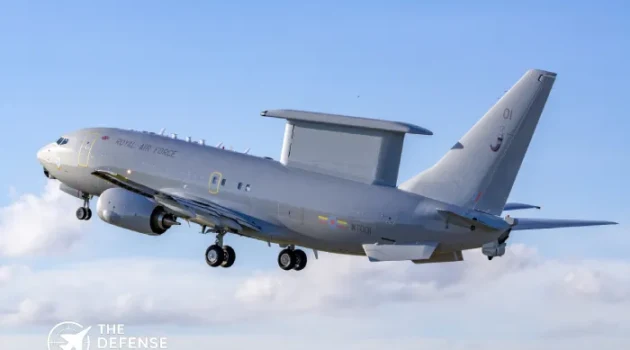
In December 2025, Boeing and the Royal Australian Air Force successfully conducted an autonomous air-to-air missile engagement involving an MQ-28, an E-7A Wedgetail airborne early warning aircraft, and an F/A-18F Super Hornet. The exercise demonstrated the aircraft’s ability to participate in complex cooperative combat operations.
More recently, the MQ-28 completed its first operational flights outside Australia during testing at Point Mugu, California. The deployment demonstrated the aircraft’s ability to operate from allied bases and validated autonomous mission functions in an international environment.
These achievements indicate that the program is moving beyond basic flight testing and into increasingly operationally relevant demonstrations.
Strategic Significance for Collaborative Combat Aircraft
The successful RCS validation carries implications beyond the MQ-28 program itself.
(adsbygoogle = window.adsbygoogle || []).push({});Collaborative Combat Aircraft (CCA) are expected to become a central component of future air warfare concepts. The U.S. Air Force, Australian Defence Force, and several NATO allies are investing heavily in autonomous wingman programs intended to increase combat mass without proportionally increasing personnel requirements.
For these aircraft to operate effectively in high-threat environments, survivability is essential.
A stealthy collaborative combat aircraft can move closer to enemy defenses, collect intelligence, perform electronic warfare missions, or act as a forward sensor while reducing risks to more expensive crewed platforms.
Why This Matters for Future Air Combat
Several trends are driving demand for stealth-capable autonomous aircraft:
- Expansion of integrated air defense systems
- Growth of long-range surface-to-air missile networks
- Increasing aircraft procurement costs
- Demand for greater combat mass
- Requirements for distributed operations across the Indo-Pacific
The MQ-28 addresses many of these challenges by combining autonomy, modularity, and low-observable design into a platform intended to support fourth, fifth, and future sixth-generation aircraft.
Export Potential Continues to Grow
The timing of the radar validation is also significant as Boeing seeks to position the MQ-28 for broader international adoption.
The aircraft has already attracted attention from allied nations evaluating collaborative combat aircraft solutions. Successful RCS validation provides an important data point for prospective operators assessing survivability requirements.
Combined with recent operational demonstrations in the United States and ongoing integration activities with allied air forces, the milestone strengthens the MQ-28’s standing within the rapidly expanding global market for autonomous combat aircraft.
Looking Ahead
The MQ-28 Ghost Bat program has progressed from an experimental loyal wingman concept into one of the most mature collaborative combat aircraft initiatives currently flying.
(adsbygoogle = window.adsbygoogle || []).push({});The successful radar cross-section testing confirms that the platform’s stealth design performs as intended and provides additional evidence of the aircraft’s readiness for increasingly demanding operational evaluations.
As militaries continue pursuing manned-unmanned teaming concepts, low-observable autonomous aircraft such as the MQ-28 are expected to play an increasingly important role in future air combat operations.
¦ KEY FACTS AT A GLANCE- Iran and Russia reportedly signed a secret €500 million missile deal in December 2025, according to the Financial Times.
- The pact covers delivery of 500 Verba man portable air defense launch units and 2,500 9M336 missiles through 2027 to 2029.
- The Verba systems are infrared guided MANPADS designed to target low altitude threats including drones and cruise missiles.
- The deal follows damage to Iran’s air defense network during the 2025 conflict with Israel.
- The agreement reflects deepening military cooperation between Tehran and Moscow.
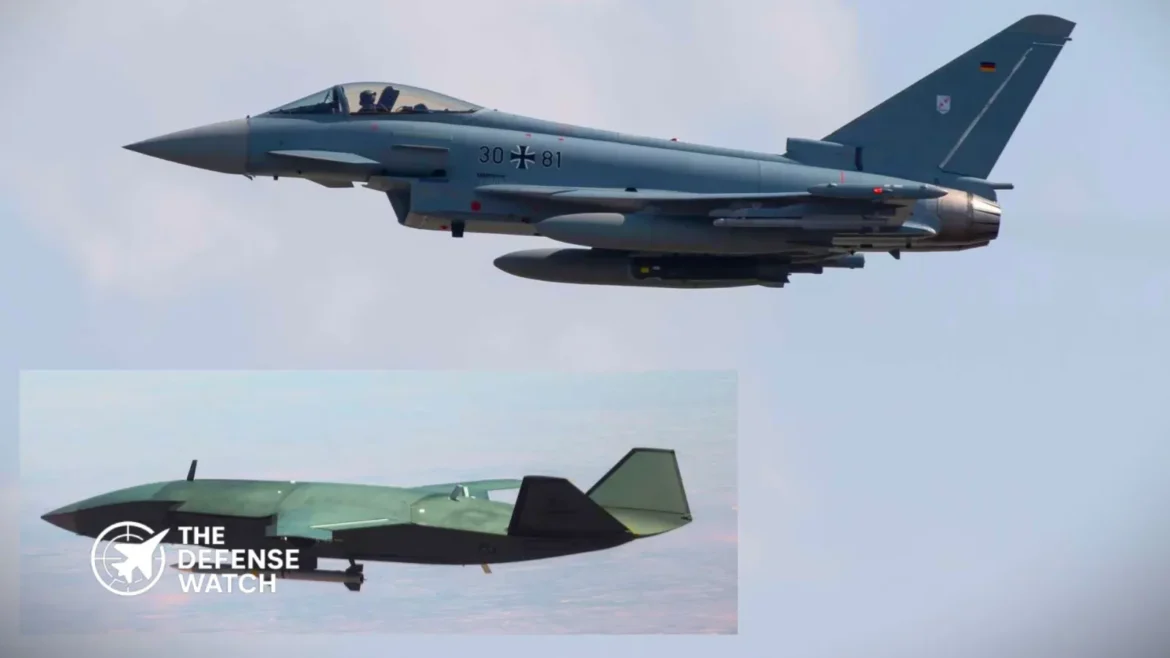
The MQ-28 Ghost Bat Germany evaluation marks a notable step in Europe’s exploration of collaborative combat aircraft to support manned fighter operations. Germany, as part of its broader modernization efforts within the Luftwaffe of Germany, is assessing unmanned systems designed to operate alongside platforms such as the Eurofighter Typhoon to extend sensing, strike, and survivability capabilities.
This move reflects a wider shift among NATO members toward integrating loyal wingman drones into frontline air operations, aiming to improve mission flexibility while reducing risk to pilots.
Germany Advances Loyal Wingman Concept
Germany’s evaluation of the MQ-28 Ghost Bat aligns with ongoing efforts to incorporate autonomous and semi-autonomous systems into European air combat doctrine. Originally developed under Australia’s Collaborative Combat Aircraft program, the MQ-28 is designed to accompany crewed fighters and perform tasks such as reconnaissance, electronic warfare support, and threat engagement.
For Germany, the interest in such a platform highlights the operational need to enhance the capabilities of its Eurofighter fleet without immediately replacing existing aircraft. By pairing manned fighters with unmanned wingmen, the Luftwaffe can potentially expand sensor reach and distribute combat workloads across multiple platforms.
Integration With Eurofighter Typhoon Operations
The Eurofighter Typhoon remains a core component of Germany’s air defense and strike capability. Integrating a loyal wingman like the MQ-28 Ghost Bat could allow Eurofighter pilots to command or coordinate multiple unmanned assets in contested environments.
This concept supports several operational advantages. First, it can extend the radar and sensor footprint of the formation. Second, it may allow unmanned units to take on higher-risk roles such as forward reconnaissance or electronic attack. Third, it can help preserve manned aircraft by shifting certain mission elements to autonomous platforms.
Defense analysts note that pairing advanced fighters with unmanned systems is becoming a standard approach among modern air forces seeking distributed lethality and greater mission resilience.
Strategic Context Within NATO Modernization
Germany’s evaluation is consistent with broader NATO efforts to modernize air combat capabilities in response to evolving threats. Several allied nations are exploring similar collaborative combat aircraft programs, often referred to as loyal wingman systems.
These initiatives aim to address challenges posed by advanced integrated air defense systems, electronic warfare environments, and the increasing use of unmanned platforms in contested airspace. By deploying a mix of crewed and uncrewed assets, air forces can complicate adversary targeting while maintaining operational flexibility.
Within this framework, the MQ-28 Ghost Bat Germany assessment represents an exploratory step rather than a formal procurement decision. It allows German defense planners to examine interoperability, mission roles, and integration requirements with existing NATO systems.
Industrial and Operational Implications
If Germany proceeds beyond evaluation, integration of loyal wingman platforms could influence both operational doctrine and defense industry collaboration. European defense contractors may seek partnerships or adaptations to align similar unmanned systems with existing fighter fleets.
For the Luftwaffe, adopting such systems would require development in areas including command and control, secure data links, and human-machine teaming. Training programs would also need to evolve to enable pilots to effectively manage multiple unmanned assets during missions.
While no final acquisition decision has been announced, the MQ-28 Ghost Bat Germany evaluation underscores growing interest in modular, networked air combat architectures across Europe.
KEY FACTS AT A GLANCE■ KEY FACTS AT A GLANCE- ► Australia is preparing a new production batch of MQ-28 Ghost Bat aircraft.
- ► The Ghost Bat is designed to operate as a loyal wingman alongside crewed fighters.
- ► Developed by Boeing Australia in partnership with the Royal Australian Air Force.
- ► Aircraft supports intelligence, surveillance, electronic warfare, and strike missions.
- ► Program positions Australia among leading operators of autonomous combat air systems.
Australia Prepares Next Batch Of Ghost Bat Buddy Drones
Australia is preparing to produce the next batch of Ghost Bat buddy drones as it expands the Royal Australian Air Force autonomous combat air teaming capability, according to a report by Defense News.
(adsbygoogle = window.adsbygoogle || []).push({});The move signals Canberra’s continued commitment to integrating the MQ-28 Ghost Bat into frontline air operations alongside crewed fighter aircraft.
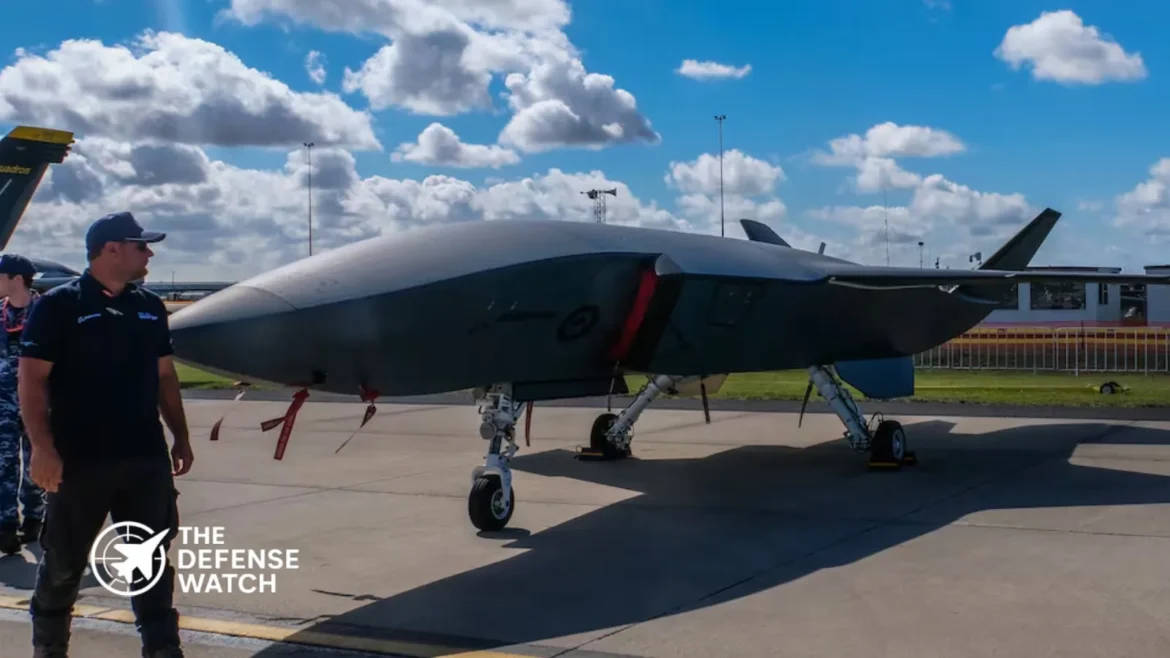
Developed by Boeing in partnership with the Royal Australian Air Force, the aircraft is designed to operate as a loyal wingman, flying ahead of or alongside crewed platforms to conduct surveillance, electronic warfare, and strike support missions.
Expanding The Loyal Wingman Concept
The Ghost Bat buddy drones program represents one of Australia’s most significant indigenous aerospace developments in decades.
Originally launched as the Airpower Teaming System, the MQ-28 was later named Ghost Bat. It is the first combat aircraft designed and built in Australia in more than 50 years.
According to reporting by Defense News, Australian officials are preparing for a follow-on production run as flight testing and capability demonstrations mature. The next batch is expected to build on lessons learned from earlier prototypes.
The aircraft features a modular nose section that allows operators to swap mission payloads. That flexibility supports roles such as intelligence gathering, electronic attack, and acting as a sensor node within a broader networked force.
Integration With Crewed Fighters
The central concept behind the Ghost Bat buddy drones is manned-unmanned teaming.
In this model, the drone flies in coordination with aircraft such as the F-35A Lightning II and the F/A-18F Super Hornet operated by the Royal Australian Air Force.
The unmanned platform can push forward into contested airspace, gather data, jam adversary radars, or carry weapons, reducing risk to pilots. Command and control systems allow the crewed aircraft to task the drone while maintaining operational flexibility.
(adsbygoogle = window.adsbygoogle || []).push({});Australian defense officials have emphasized that autonomy is central to the design. The aircraft is built to make certain mission decisions independently, while remaining under human supervision.
Industrial And Strategic Implications
The production expansion of Ghost Bat buddy drones also has industrial significance.
Boeing Australia has led development efforts, drawing on local suppliers and engineering teams. The program supports Australia’s broader defense industrial strategy, which aims to build sovereign capabilities in advanced manufacturing and aerospace systems.
Strategically, the platform aligns with Australia’s focus on high-end deterrence in the Indo-Pacific. Autonomous systems offer the ability to scale combat mass without a proportional increase in personnel or cost.
The aircraft’s relatively long range and low-observable design are intended to support operations in contested environments. While specific performance details remain limited, officials have described the system as capable of operating at tactically relevant distances in support of joint missions.
Positioning Australia In The Autonomous Air Domain
Globally, several air forces are investing in collaborative combat aircraft and loyal wingman concepts. The United States Air Force, for example, is advancing its Collaborative Combat Aircraft initiative.
(adsbygoogle = window.adsbygoogle || []).push({});Australia’s early adoption of the MQ-28 Ghost Bat places it among a small group of nations fielding operational prototypes of autonomous combat aircraft.
As Canberra prepares the next production batch, the focus will likely shift toward refining operational concepts, expanding testing, and integrating the system more deeply into the Royal Australian Air Force force structure.
For now, the continued investment underscores Australia’s intent to remain at the forefront of autonomous airpower development.
MQ-28 Ghost Bat: Current Status and Operational Progress
The MQ-28 Ghost Bat, Boeing Australia’s collaborative combat aircraft (CCA), has made significant strides in 2025, with the Royal Australian Air Force (RAAF) now validating its operational viability and planning its first live-fire weapons test.
Operational Demonstrations Complete
- In Capability Demonstration 2025, Boeing and the RAAF validated the Ghost Bat’s autonomous behaviors, multi-aircraft operations, deployment flexibility, and data-sharing capabilities.
- The platform has now logged more than 150 flight hours and over 20,000 hours of virtual testing.
- In a first-of-its-kind mission, two MQ-28s were controlled in flight by a single operator aboard an E-7A Wedgetail AEW&C aircraft, validating collaborative control from a crewed command platform.
- The aircraft’s deployment capability was tested during Exercise Carlsbad at RAAF Base Tindal, demonstrating rapid redeployment, base operations, and integration with local RAAF units.
- For the first time, the MQ-28 operated from an operational air base, showing the aircraft can be transported (via C-17), set up, launched, and redeployed within a short timeframe.
Live-Fire Test Planned: AIM-120 AMRAAM
- Boeing has announced plans for the first live-fire test of the MQ-28, expected in late 2025 or early 2026, using an AIM-120 Advanced Medium-Range Air-to-Air Missile (AMRAAM).
- According to Boeing, the test will take place over the Woomera Range Complex and simulate a “tactically relevant scenario” against a real airborne target.
- The Ghost Bat is configurable: its nose section is modular and swappable, enabling payload flexibility. Some early test aircraft have been spotted carrying an infrared search and track (IRST) sensor, which could be used to detect and target threats.
Program Maturity and Next Phases
- Boeing is now building Block 2 MQ-28s, which incorporate improvements such as a refined wing design and upgraded GPS/INS.
- The operational lessons from 2025 will feed directly into the Block 2 production aircraft, forming the basis of an initial operational capability (IOC) for the RAAF.
- Boeing has also invested in a production facility in Queensland (Wellcamp, Toowoomba), which will support local assembly and future export potential.

Analysis: Strategic Implications and Challenges
The progress of the MQ-28 Ghost Bat reflects the growing seriousness of “loyal wingman” concepts in modern air warfare. By demonstrating multi-ship autonomy, base deployability, and the capacity to carry air-to-air weapons, the MQ-28 offers the RAAF a scalable way to add combat mass without relying solely on traditional manned platforms.
If the live-fire test succeeds, it could mark a first among CCAs: an uncrewed aircraft firing an air-to-air missile in a combat-like scenario. That would significantly shift the narrative on unmanned combat aircraft, not merely as surveillance or decoy drones, but as active combat participants.
However, there are challenges:
- The AIM-120 test is still pending, and success is not guaranteed — integrating a missile onto a CCA is non-trivial, especially in terms of guidance, targeting, and launch dynamics.
- While Block 2 production is underway, the path to full operational deployment and export remains uncertain; further funding and partner adoption will be critical.
- Rules of engagement, command & control, and doctrine for fully autonomous or semi-autonomous combat operations are still developing, especially for weapons employment.
Key Facts at a Glance
Item Status Developer Boeing Defence Australia User Royal Australian Air Force (RAAF) Demonstration Program Capacity Demonstration 2025 (CD-25) Flight Hours ~150 real + 20,000+ virtual First Live-Fire Weapon Planned AIM-120 AMRAAM Deployment Proven from RAAF Base Tindal (Exercise Carlsbad) Team Control Demonstrated control from E-7A Wedgetail Production Standard Block 2 in production FAQs
Is the MQ-28 Ghost Bat already in active service?No, as of now it is in a demonstrator/testing phase. While its deployment and operational capabilities are being validated, it has not yet been declared as fully operational service by the RAAF.
Has the MQ-28 fired its missile yet?Not yet. The AIM-120 live-fire test is planned but has not yet been publicly confirmed as completed.
What makes the MQ-28 different from other drones?It’s designed as a Collaborative Combat Aircraft (CCA) — not just a drone for ISR, but to actively team with crewed aircraft, share data, perform combat missions, and potentially fire weapons.
Which aircraft has it teamed with?It has teamed in trials with a Boeing E-7A Wedgetail AEW&C, where one operator onboard controlled two MQ-28s simultaneously.
Is this just for Australia, or could it be exported?While the primary user is the RAAF, Boeing aims for export potential. The production facility in Toowoomba underlines that ambition. However, export will depend on customer interest, funding, and strategic alignment.