

Executive Summary:
The U.S. Navy has awarded Boeing an $18.6 million contract modification to continue technical engineering and design agent support for the AN/USQ-82 combat system architecture deployed across American and allied surface combatants. The award underscores the growing importance of integrated naval combat management systems amid expanding Indo-Pacific maritime security requirements.
The The Boeing Company has received an $18,614,280 cost-plus-fixed-fee contract modification from the Naval Sea Systems Command to continue engineering and design-agent support for the AN/USQ-82(V) combat system program. The modification exercises Option Year Three under contract N00024-23-C-4103 and extends Boeing’s support activities through May 2027.
According to the Department of Defense announcement, the contract supports not only the U.S. Navy but also several allied navies through the Foreign Military Sales (FMS) framework, including Canada, Australia, Japan, South Korea, and Germany. The multinational participation reflects the broader strategic role of interoperable naval combat systems among U.S.-aligned maritime forces operating in the Indo-Pacific and NATO theaters.
Deep Technical & Strategic Context Analysis
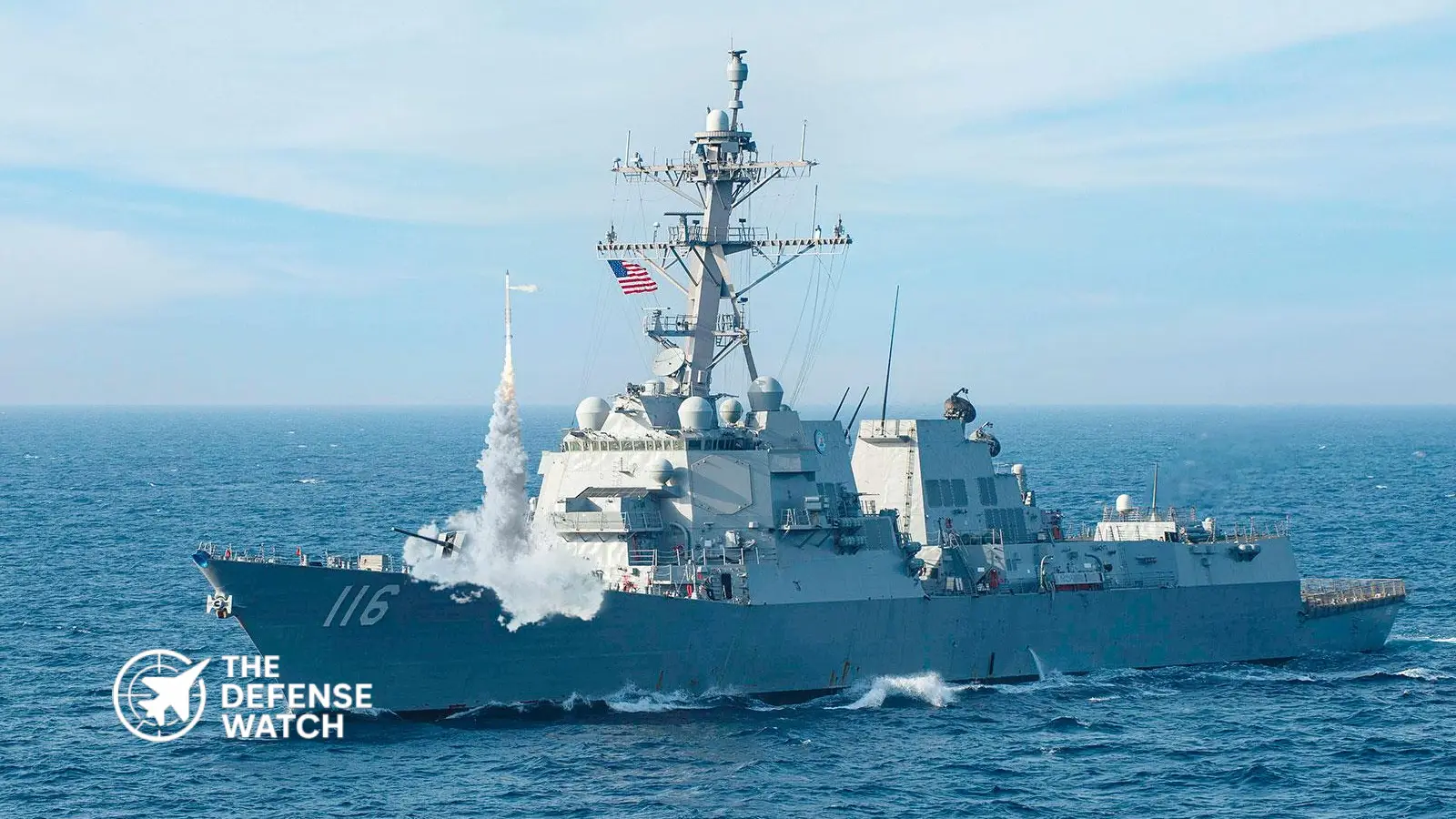
The AN/USQ-82(V) is a core element within modern U.S. Navy surface combat system architecture, serving as a command-and-control and combat direction capability closely associated with Aegis-equipped destroyers and next-generation naval combat integration efforts. While often less publicly visible than missile launchers or radar systems, the AN/USQ-82 family plays a critical role in sensor fusion, tactical data management, and weapon coordination aboard frontline warships.
The system is particularly relevant as the U.S. Navy accelerates distributed maritime operations and integrated air and missile defense concepts against increasingly sophisticated threats from near-peer competitors. Modern naval combat now depends heavily on the rapid processing and dissemination of targeting data from radars, electronic warfare systems, satellites, aircraft, and unmanned platforms. Engineering support contracts such as this ensure the combat system software baseline remains interoperable, cyber resilient, and compatible with evolving missile defense architectures.
The contract’s “cost-plus-fixed-fee” structure is also notable. In defense acquisition, this arrangement is commonly used for technically complex engineering efforts where program requirements may evolve over time. Under this model, the government reimburses allowable contractor costs while paying an additional fixed fee, reducing risk for contractors during ongoing systems integration and sustainment activities. Such contract structures are frequently associated with highly specialized naval combat software engineering and fleet modernization work.
Boeing’s continued role as a program design agent further indicates responsibility for lifecycle engineering support, troubleshooting, integration oversight, and technical configuration management. In practical terms, this means Boeing engineers will help maintain operational readiness across active fleet deployments while supporting future software and combat system upgrades.
Contract Breakdown & Details
Program Scope
The contract modification covers continued:
- AN/USQ-82(V) program design agent support
- Technical engineering services
- Combat system sustainment activities
- Fleet integration and configuration management
- Lifecycle software and systems support
International Participation
The contract combines procurement funding from:
- U.S. Navy: 93%
- Canada: 3%
- Australia: 2%
- Japan: 1%
- South Korea: 1%
Germany also contributes funding through the Foreign Military Sales structure.
Workshare Distribution
Work will be performed across multiple U.S. defense industrial locations:
- Huntington Beach, California: 68%
- Bath, Maine: 12%
- Pascagoula, Mississippi: 9%
- Arlington, Virginia: 6%
- Annapolis Junction, Maryland: 3%
- Tukwila, Washington: 2%
The geographic distribution aligns closely with major U.S. naval shipbuilding, systems integration, and defense engineering hubs.
Funding Breakdown
Key obligated funding sources include:
- Fiscal 2026 Navy Other Procurement: $6.81 million
- Fiscal 2024 Shipbuilding and Conversion Funds: $1.97 million
- Fiscal 2017 Shipbuilding and Conversion Funds: $1.37 million
- Fiscal 2021 Shipbuilding and Conversion Funds: $1.19 million
- Fiscal 2022 Shipbuilding and Conversion Funds: $1.18 million
- Fiscal 2023 Shipbuilding and Conversion Funds: $1.03 million
Additional allocations include:
- Research, Development, Test & Evaluation funds
- Operations and Maintenance funding
- Foreign Military Sales contributions from allied nations
The Navy noted that $356,165 in fiscal 2026 operations and maintenance funding will expire at the end of the current fiscal year.
Strategic Implications
The award arrives as the U.S. Navy and allied maritime forces continue investing heavily in integrated combat systems capable of countering advanced anti-ship missiles, electronic warfare threats, and increasingly contested maritime operating environments.
For allies such as Japan, Australia, and South Korea, participation in AN/USQ-82-related sustainment efforts supports broader interoperability goals with U.S. naval task forces. These interoperability initiatives are becoming increasingly central to Indo-Pacific deterrence planning, especially as regional navies seek tighter integration in ballistic missile defense and distributed fleet operations.
