Executive Summary:
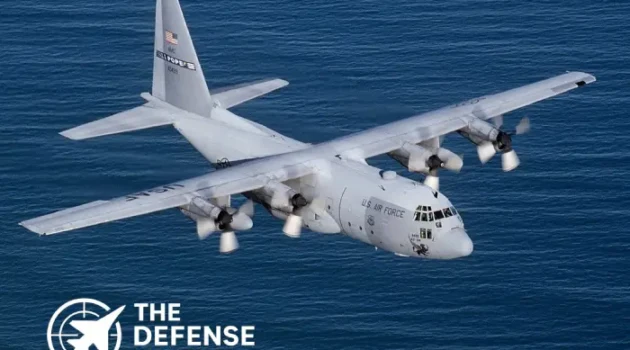
The U.S. Air Force has awarded three indefinite delivery, indefinite quantity contracts worth up to $343.2 million to support repair and overhaul of T56 engines powering the C-130 Hercules transport aircraft. The decade long program will strengthen sustainment capacity for U.S. forces and numerous Foreign Military Sales partners, ensuring continued readiness of one of the world’s most widely used tactical airlifters.
The T56 engine support contract has been awarded by the U.S. Air Force to three aerospace companies as part of a long term effort to sustain the operational readiness of the C-130 Hercules fleet. According to a U.S. Department of Defense contract announcement, the awards support repair and overhaul of non-commercial aircraft components used on T56 turboprop engines serving U.S. military aircraft and numerous allied operators.
The Air Force Sustainment Center at Tinker Air Force Base, Oklahoma, awarded the contracts as competitive acquisitions after receiving three offers. The agreements are structured as indefinite delivery, indefinite quantity (IDIQ), firm fixed price contracts with a combined ceiling value of $343,201,556.
Three Companies Selected For Long Term T56 Sustainment
The contract was divided among three established maintenance providers:
Company Contract Number Primary Work Location Segers Aero Corp. FA8121-26-D-B001 Fairhope, Alabama Standard Aero (San Antonio) Inc. FA8121-26-D-B002 San Antonio, Texas Turbopower LLC FA8121-26-D-B003 Opa-locka, Florida Additional work will also be performed in Winnipeg, Canada, reflecting the multinational industrial base supporting the T56 engine.
The contracts are expected to remain in effect through July 22, 2036, providing approximately ten years of sustainment support.
Only $1,500 in Fiscal Year 2026 Working Capital Funds was obligated at award, with $500 allocated to each contractor, as is common for IDIQ contracts where funding is committed through future task orders.
Supporting One Of The World’s Most Proven Military Airlifters
The T56 turboprop engine has powered the Lockheed Martin C-130 Hercules family for decades and remains one of the most widely operated military transport engine platforms in the world.
The engine supports numerous C-130 variants used for:
- Tactical airlift
- Humanitarian assistance
- Special operations
- Medical evacuation
- Maritime patrol
- Aerial firefighting
- Search and rescue
- Logistics support
Because many global operators continue flying upgraded Hercules aircraft, depot level engine maintenance remains a critical element of fleet readiness.
Foreign Military Sales Partners Included
The contract also supports the U.S. Foreign Military Sales (FMS) program, extending sustainment services to a broad international customer base.
Participating nations include:
- Argentina
- Austria
- Brazil
- Chile
- Colombia
- Ecuador
- Egypt
- France
- Greece
- Indonesia
- Israel
- Japan
- Jordan
- South Korea
- Malaysia
- Mexico
- Netherlands
- Pakistan
- Philippines
- Poland
- Portugal
- Romania
- Saudi Arabia
- Singapore
- South Africa
- Taiwan
- Thailand
- Tunisia
- Türkiye
The broad participation illustrates the enduring international footprint of the C-130 platform and highlights the importance of shared logistics networks supporting allied air mobility.
Why The Contract Matters
Although the contract primarily covers repair and overhaul work rather than new engine production, it represents an important investment in long term fleet availability.
Military transport aircraft often remain in service for decades, making sustainment programs as strategically important as new aircraft procurement. Depot level overhaul restores engine components to operational standards, reduces maintenance backlogs, and helps extend engine service life while lowering lifecycle costs.
For mobility forces, engine reliability directly influences mission readiness. Airlift aircraft routinely support rapid troop movement, humanitarian relief, disaster response, and combat logistics in regions where alternative transportation may be unavailable.
Sustaining Readiness Rather Than Buying New Aircraft
Modern defense planning increasingly emphasizes sustainment alongside procurement.
While next generation air mobility programs continue to evolve, the C-130 Hercules remains indispensable because of its ability to operate from short and austere runways while carrying substantial payloads into contested or remote environments.
Maintaining engine availability helps preserve that capability without requiring immediate fleet replacement. Investments in overhaul capacity also reduce operational disruptions caused by aging components and supply chain constraints.
The use of multiple contractors further diversifies industrial capacity, reducing reliance on a single maintenance provider while improving resilience across the defense sustainment enterprise.
Strategic Importance For Allied Air Mobility
The inclusion of nearly thirty Foreign Military Sales customers demonstrates that the T56 sustainment program supports more than U.S. operations.
Many allied air forces rely on the C-130 as their primary tactical transport aircraft. Shared maintenance standards and access to qualified repair facilities improve interoperability during coalition operations, humanitarian missions, and multinational exercises.
This common sustainment approach also allows partner nations to benefit from established U.S. logistics infrastructure while maintaining high fleet availability.
Contract Overview
Category Details Total Contract Value Up to $343,201,556 Contract Type Indefinite Delivery, Indefinite Quantity (IDIQ), Firm Fixed Price Purpose Repair and overhaul of T56 engine non-commercial aircraft parts Aircraft Supported C-130 Hercules Awarding Agency Air Force Sustainment Center Contract Duration Through July 22, 2036 Competition Three offers received Foreign Military Sales 29 partner nations Outlook
The new T56 joint follow-on contract reinforces the Air Force’s long term approach to sustaining one of the most heavily utilized military transport aircraft in the world. Rather than focusing solely on acquiring new platforms, the agreement strengthens the maintenance infrastructure that keeps existing fleets mission ready.
As the C-130 continues supporting global airlift, humanitarian assistance, and coalition operations, reliable engine overhaul capacity will remain essential to ensuring aircraft availability for both U.S. forces and allied operators over the next decade.